Buyer Fit Snapshot
| Best fit | Order Printed Mailers With Barcode for Faster Fulfillment projects where brand print, material claims, artwork control, MOQ, and repeat-order consistency need to be specified before quoting. |
|---|---|
| Quote inputs | Share finished size, material target, print colors, finish, packing count, annual reorder estimate, ship-to region, and any compliance wording. |
| Proofing check | Approve dieline scale, logo placement, barcode or warning zones, color tolerance, closure strength, and carton packing before bulk production. |
| Main risk | Vague material claims, crowded artwork, missing packing details, or unclear freight terms can make a low unit price expensive after revisions. |
Fast answer: Order Printed Mailers With Barcode for Faster Fulfillment should be specified like a repeatable production item. The safest quote records material, print method, finish, artwork proof, packing count, and reorder notes in one written spec.
Production checks before approval
Compare the actual filled-product size with the drawing, then confirm tolerance on folds, seals, hang holes, label areas, and retail display edges. Reserve space for logos, QR codes, warning copy, and material claims before decorative graphics fill the panel.
Quote comparison points
Review material grade, print process, finish, sampling route, tooling charges, carton quantity, and freight assumptions side by side. A quote is only useful when the supplier can repeat the same color, closure quality, and packing count on the next order.
Shipping moves better when the package itself helps identify the order before anyone has to peel back a label, open a tote, or stop the bench for a second check. If you order printed Mailers with Barcode, the mailer stops being a plain wrapper and starts doing a small but important job inside the workflow, and that matters a lot when a pack station is pushing hundreds of parcels through the building every day.
Buyers ask to order printed mailers with barcode for repeat SKU programs, subscription shipments, kitted bundles, and branded direct-to-consumer parcels because the outer package can carry useful information as well as protection. The right mailer can cut down on handoff mistakes, make internal sorting easier to follow, and keep the line moving with fewer interruptions, as long as the barcode is placed, sized, and printed with real production use in mind. I have seen perfectly good artwork fall apart on a live line because someone treated the barcode like a design detail instead of a working part of the pack flow.
Why order printed mailers with barcode can reduce shipping errors
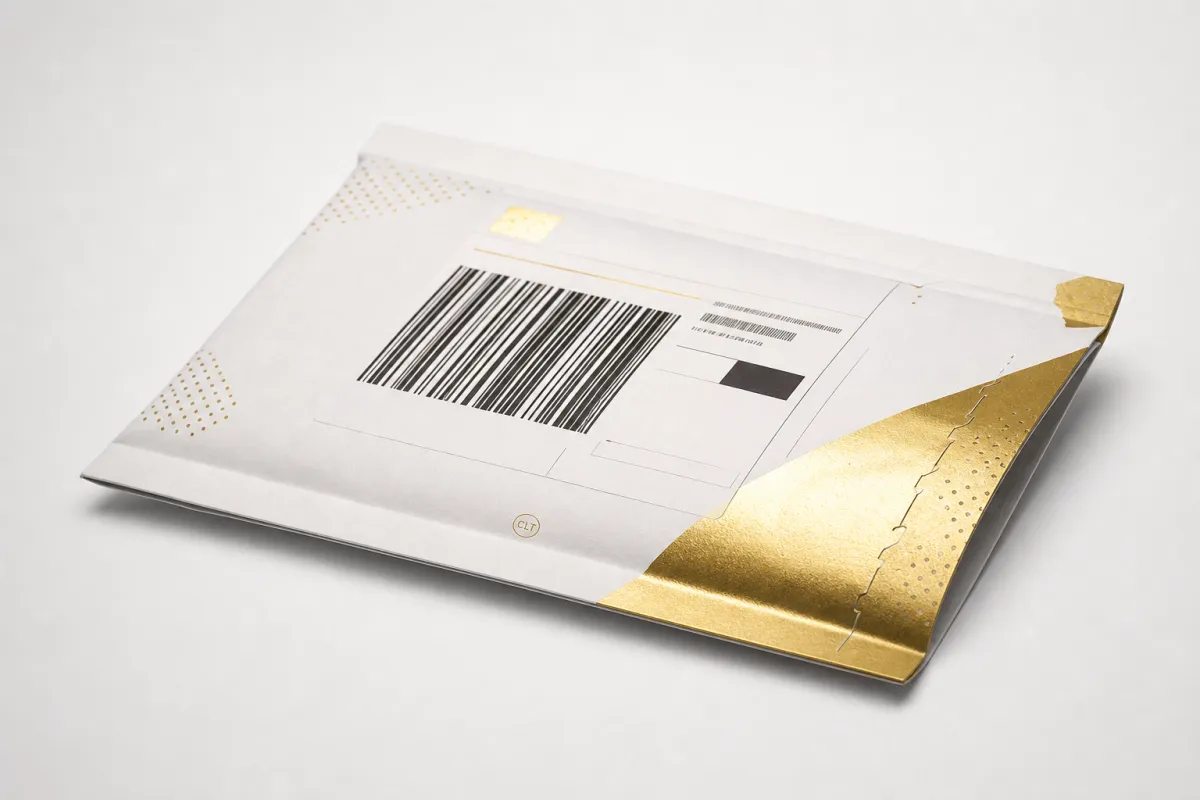
Picture a busy packing floor at the point where the order is already bagged, boxed, or staged, and the operator needs to confirm that the correct shipping stream is about to move out. A barcode printed directly on the mailer gives that operator a fixed reference point, so verification happens before the parcel reaches a carton, tote, or label station. That is not a decorative touch. It is a practical way to reduce the chance of sending the wrong outer package into the wrong order lane.
When teams order printed mailers with barcode, they usually want a package that can be recognized quickly from a distance and scanned without hesitation. In practice, that helps separate branded stock from plain inventory, especially where several mailer sizes live on the same rack or where different SKUs travel through one line. A plain gray poly bag may work well enough, but a fixed barcode on the mailer makes it easier to tell one order family from another before the contents are sealed.
Printed mailers fit best in operations that repeat. Subscription shipments are an obvious example because the outer package often stays the same while the contents change by month or assortment. Kitted orders also benefit, since a barcode on the mailer can tell the warehouse which bundle has been assembled and which lane it should follow. For direct-to-consumer parcels, the printed barcode can support internal routing, and for warehouse sorting it can help teams split product families quickly without opening the bag.
From a packaging buyer's point of view, the biggest gain is not flashy branding. It is fewer handoffs. Every handoff brings another chance for confusion, especially when the team is dealing with rush orders, shift changes, or temporary labor. If you order printed mailers with barcode and place the code where it can be seen consistently, the packaging itself becomes part of the control system, which is a better answer than relying on memory or a handwritten note at the end of a long shift.
- Repeat SKUs: the same mailer can carry the same barcode across every replenishment run.
- Subscription shipments: a fixed code helps identify recurring outbound sets quickly.
- Kitted orders: the mailer can signal which bundle is complete before carrier labeling.
- Internal sorting: warehouse teams can separate lanes faster when the outer packaging is standardized.
The strongest use case is the one where the barcode solves a real production problem instead of decorating the bag. When buyers order printed mailers with barcode for a process that already has clear SKU logic, the result is usually cleaner than trying to make the packaging do a job it was never meant to do. The barcode should support the pack line, not complicate it.
Product details for order printed mailers with barcode
A standard poly mailer is built from layered polyethylene film with heat-sealed seams and a pressure-sensitive closure that stays closed during ordinary parcel handling. That construction matters because the barcode is only useful if the mailer survives the trip. If the seam splits, the flap curls, or the print rubs off too early, the code stops serving the operation and turns into a problem. Buyers who order printed mailers with barcode need to think about the print and the substrate together.
There are a few practical ways to apply the barcode. Some buyers print the code directly into the artwork, usually inside a reserved blank area with strong contrast. Others dedicate one panel to scannable information and keep the branding on the opposite side. A third option pairs the printed barcode with another identifier if the workflow calls for it, such as a separate internal label or a sequential reference. The real goal is simple: make the code easy to find and easy to scan after the bag has been folded, stacked, and handled.
Branding choices matter too. A one-color layout keeps the print straightforward and often lowers cost, while a multi-color bag can support stronger shelf presence or a more polished branded shipping experience. Some buyers prefer a matte finish because it cuts glare when the barcode is scanned under warehouse lights. Others choose a gloss finish for appearance or brand consistency. None of those decisions are wrong on their own; the right answer depends on how the bag will actually be used once you order printed mailers with barcode.
On a packing line, the best barcode is the one that does not demand attention. It should sit in the same place, read the same way, and survive ordinary handling without becoming the reason a shipment gets paused.
Buyers should also verify whether the barcode is static or tied to a specific SKU, batch, or routing rule. A static code is simpler and easier to reorder. A variable code may help with internal logistics, but it can add prepress steps and proofing checks. The same logic applies to whether the code sits on the front, back, or flap area. Front placement is often easiest for scanning. Back placement can work well if the front is crowded with branding. Flap placement can be useful, but only if the code remains visible after the bag is sealed.
If you are comparing packaging formats, our Custom Poly Mailers page is a straightforward place to review the base structure, and our Custom Packaging Products page helps buyers match the mailer to the rest of the shipment system. The barcode is only one piece of the package. Size, closure, film thickness, and print layout all need to work together if you want to order printed mailers with barcode and get a result that holds up on the line.
The most useful mailer is not the one with the most ink coverage. It is the one that stays readable after filling, sealing, stacking, and transit. That is why a production-ready layout beats a pretty mockup. If the code looks good on screen but does not scan in the warehouse, the design has missed the point. When you order printed mailers with barcode, the specification has to respect the conditions the mailer will actually see.
Specifications to check before you order printed mailers with barcode
The first spec is the mailer size. A barcode can be perfect on paper and still fail if the code is squeezed too close to the edge, folded into a seam, or covered by artwork. Buyers should confirm bag dimensions, usable print area, and where the code will sit once the mailer is filled. If the bag size changes from a prior run, the artwork should be checked again rather than assumed to be correct. A lot of barcode headaches come from layout drift, not from the barcode itself.
Film thickness is the next item to review. Thinner bags may save a little money, but if the contents are sharp, dense, or bulky, the mailer needs enough gauge to resist puncture and tearing. Seal strength matters for the same reason. A barcode on the outside is only useful if the parcel stays intact through transport. Packaging buyers who order printed mailers with barcode usually want to know the film gauge, the seal construction, and whether the bag is meant for light apparel, soft goods, or more demanding parcel handling.
Barcode readability depends on contrast, quiet zone, and size. A high-contrast black code on a light background usually scans better than a code dropped into a busy pattern. If the mailer is dark, the code should be reversed carefully or isolated in a lighter panel. Very fine bars and tiny QR codes can look tidy in a design file but become hard to scan on a moving line. The best practice is simple: keep the code large enough to scan fast, and keep the space around it clean enough that the reader does not have to work for it.
Placement has its own limits. Do not put the barcode where folds, crimps, or tape will distort it. Do not let decorative graphics crowd the quiet zone. Do not place the code too close to a seam if the mailer will be stacked under weight or folded during fulfillment. If the order uses a QR code or a longer alphanumeric identifier, those details need even more care. A code can be valid in a file and still be a poor fit for the live line if the module size is too small.
For operations that want a testing reference, the ISTA site is useful because its distribution test methods are built around shipping stress, vibration, and handling conditions. That does not replace a production proof, but it gives buyers a practical framework for thinking about what a parcel may face after it leaves the dock. If you order printed mailers with barcode for a heavy shipment stream, it helps to think about the bag as a package in motion, not as a static sample on a desk.
A good proof should show more than a pretty layout. It should show actual barcode placement, the amount of open space around the code, the relationship between the code and the edge of the bag, and whether the artwork can still be read after the mailer is folded. A design mockup that hides those details is not enough. If you order printed mailers with barcode, ask for a proof that makes the barcode behavior visible before production starts.
- Dimensions: confirm width, length, and usable print area before artwork is locked.
- Film gauge: match the thickness to the contents and the handling environment.
- Contrast: keep the barcode high-contrast and away from busy graphics.
- Quiet zone: leave clear space around the code so scanners can lock on fast.
- Proof type: request a proof that shows the real barcode position, not just a concept image.
For teams that also want to think about waste handling or material recovery, the EPA recycling resources are a practical reference point, especially when the mailer is part of a broader sustainability discussion. Poly mailers are not treated the same way in every recycling stream, so it helps to set expectations early. If you order printed mailers with barcode, you should also think about what happens to the packaging after the box is opened, because that conversation often comes up with retail and subscription customers.
Pricing, MOQ, and quote details for order printed mailers with barcode
Cost is driven by a handful of variables: size, film gauge, print colors, barcode complexity, and quantity. A small run of Printed Poly Mailers with a single barcode block will usually cost more per unit than a larger replenishment order because the setup work is spread across fewer pieces. Buyers who order printed mailers with barcode should expect the quote to reflect prepress, proofing, print setup, and freight as separate parts of the landed cost. When those numbers are blended together, comparison gets messy fast.
For many common sizes, a basic one-color run can land in the low cents to the mid-thirties per unit depending on quantity and print coverage, while larger runs often improve the unit price. As a practical example rather than a fixed promise, a 5,000-piece order might sit around $0.18-$0.35 per unit for a straightforward layout, while 20,000 pieces may move closer to $0.12-$0.24 per unit when the specification is stable. Multi-color branding, heavier film, or variable barcode work can push that higher. Those numbers are not universal, but they are a realistic starting point for buyers who order printed mailers with barcode and want to sanity-check a quote.
MOQ matters because the economics of poly mailer printing are tied to setup. Artwork review, plate work if needed, and line preparation do not shrink much when the run is small. A small test order can help, but it is usually more expensive on a per-piece basis. The right MOQ depends on usage rate, storage space, and how often the barcode artwork might change. If the barcode stays stable for a long stretch, a larger run usually makes more sense. If the code is tied to a short campaign, a smaller run may be the safer move.
| Order Type | Best For | Typical MOQ | Relative Cost | Notes |
|---|---|---|---|---|
| One-color static barcode | Repeat SKU programs and simple routing | 5,000 pieces | Lowest | Cleanest proofing path and easiest reorder setup |
| Multi-color branded mailer | DTC packaging and brand-heavy shipments | 10,000 pieces | Moderate | More artwork coverage, higher print complexity |
| Variable barcode or batch code | Internal control, batch tracking, special projects | 10,000+ pieces | Higher | Requires tighter data handling and proof review |
| Heavy-gauge custom mailer | Bulky or sharper contents | 5,000-10,000 pieces | Higher | Better puncture resistance, often worth the extra cost |
When you compare quotes, ask for the price to be broken out by unit cost, setup, proofing, and freight. Freight can change the landed price more than some buyers expect, especially if the order ships cross-country or if the receiving location has limited dock availability. If the supplier only gives a single lump sum, it is hard to know whether the mailer is actually competitive. That is a weak way to order printed mailers with barcode because the packaging cost may look fine while the delivery cost quietly pushes the project over budget.
For recurring purchases, our Wholesale Programs page is useful because repeat buyers usually care about stable pricing, replenishment timing, and clear order history more than they care about one-off sample behavior. If the same barcode will be used across multiple runs, repeatability matters as much as the first quote. When buyers order printed mailers with barcode, a stable pricing structure often makes planning easier than chasing the lowest number on a single estimate.
A lowest-number quote is not always the strongest choice. A slightly higher price can be a better buy if it gives you better proofing, stronger film, and fewer handling problems. In packaging, a cheap mailer that fails in transit is not cheap at all. Buyers who order printed mailers with barcode are usually trying to reduce labor friction, and the quote should reflect that reality rather than just the ink count on the bag.
Process and timeline for order printed mailers with barcode
The cleanest projects follow a simple path. First, confirm the mailer size, film thickness, print colors, barcode type, and quantity. Second, send the barcode data and artwork together so the layout can be checked as one unit. Third, review the proof carefully. Fourth, approve production. Fifth, receive the finished mailers and check a small batch on the packing line before rolling the run into normal use. That sequence sounds basic, but it prevents a lot of avoidable delays when buyers order printed mailers with barcode.
- Spec review: confirm dimensions, material, barcode format, and quantity.
- Artwork check: verify contrast, quiet zone, and barcode placement.
- Proof approval: sign off on the exact layout before production starts.
- Production: print, seal, and inspect the run against the approved spec.
- Receiving: inspect cartons, sample scan the barcode, and store the inventory correctly.
What usually slows a project down is not the press itself. Missing files, low-contrast artwork, a barcode sent in the wrong format, or a last-minute change to bag size after the proof has already been built cause most of the delay. A barcode that is hard to read on screen is usually hard to read in production as well. If the team is not sure whether the file should be vector, raster, or data-driven, that needs to be clarified before the order is released. Buyers who order printed mailers with barcode should treat barcode data as a production asset, not as a casual graphic element.
A careful proofing step pays for itself quickly. It shows whether the code is too close to an edge, whether it sits inside a printed panel with enough contrast, and whether the final layout leaves enough clear space for scanners to do their work. It also exposes problems with rotated artwork or a barcode that looks acceptable on a screen but would scan poorly once printed on film. In practice, proofing is where most avoidable errors are caught, which is why a careful supplier spends time there before production begins.
Lead time depends on whether the order is a repeat run or a first-time custom layout. A clean reorder can move fairly quickly because the spec is already established and the barcode layout is unchanged. A first-time job often takes longer, especially if the artwork needs revision or the barcode structure has to be checked against the fulfillment process. A typical custom run may take around 12-18 business days after proof approval, but that can shift with order size and season. If the project is tied to a launch date, build in receiving time too. The mailers need to arrive before the campaign goes live, not after the first boxes are already waiting for packaging.
That part gets overlooked more often than it should. Production time is not the same as usable inventory time. A truck can deliver the mailers to your dock, but they still need to be counted, stored, and staged before the team can begin using them. If you order printed mailers with barcode for a new SKU or a seasonal promotion, give yourself enough time to test a few pieces on the actual packing line. That small check often catches placement issues, scanner angle problems, or a simple contrast mismatch before the full rollout starts. Honestly, that one step saves a lot of headaches.
If the order is part of a larger packaging change, it helps to review the related components together. A mailer moving into a new warehouse flow may need a matching insert, carton, or label logic. That is why our Custom Packaging Products and FAQ pages can help buyers coordinate the package structure rather than treating the mailer as an isolated item. When you order printed mailers with barcode, the best results usually come from a clear plan, not from reacting to each step one at a time.
Why choose us for order printed mailers with barcode
Packaging buyers tend to value the same things: clear communication, stable quality, and a supplier who understands what actually happens at the packing table. That is the practical advantage here. A good partner does not treat the barcode like any other decorative element. The barcode has to be checked for contrast, readable size, placement, and re-order consistency, because the real question is whether the mailer supports the operation every time it is used. That matters especially when you order printed mailers with barcode for repeat fulfillment.
Another benefit is spec discipline. A supplier who knows packaging should ask the questions that matter before anything is printed: Is the barcode static or variable? Will the code be scanned by handhelds, fixed scanners, or both? Is the bag going through a high-speed line or a manual pack bench? Does the mailer need extra opacity, a heavier film, or a more forgiving print panel? Those questions may sound basic, but they prevent a lot of expensive correction later. That is the difference between ordering a bag and ordering a working bag.
Consistency across reorders matters just as much as the first run. If the same barcode must scan the same way every time, the layout has to stay locked. The print area needs to be respected. The color values need to stay stable. The barcode should not drift from one reorder to the next. Buyers who order printed mailers with barcode often discover that a good first run is only half the job; the real test is whether the second and third runs behave exactly the same. That is where process and proof control matter.
If your team wants to compare formats before committing, the Custom Poly Mailers page gives a useful base reference, and the broader Custom Packaging Products catalog can help when a mailer needs to match cartons, inserts, or other brand elements. The point is not to sell more packaging than you need. The point is to keep the mailer aligned with the rest of the shipment system so you can order printed mailers with barcode and keep the line moving without surprises.
There is also value in choosing a partner who speaks plainly about trade-offs. A cleaner barcode layout may mean less decorative coverage. A thicker mailer may mean a slightly higher unit cost. A faster reorder may require keeping the spec unchanged. Those are normal packaging decisions, and they are easier to manage when someone explains them clearly instead of overselling the project. Buyers do not need hype. They need a mailer that scans, ships, and repeats reliably.
Next steps to order printed mailers with barcode
The easiest way to move forward is to gather the core details first: mailer size, material preference, barcode type, quantity, print colors, and whether the code is static, sequential, or tied to batches. If you already have artwork, send that with the barcode data in the same request. That lets the proofing team check placement, contrast, and scan safety as one package instead of piecing the order together later. Buyers who order printed mailers with barcode get the smoothest results when the request is complete on day one.
It also helps to confirm the timeline in the same message. Ask for MOQ, unit pricing, setup cost if any, target lead time, and shipping destination. Those are the numbers that determine the real landed cost, not just the piece price on the quote sheet. If the project has a launch date, say so early. A production plan works better when the supplier knows whether the mailers are for a routine replenishment or a time-sensitive shipment cycle.
Here is a simple approval sequence that keeps the process moving:
- Review the proof with the barcode placement visible.
- Confirm the final dimensions, film thickness, and print colors.
- Check whether the barcode is static or variable.
- Approve the lead time and freight destination.
- Release the order once every detail matches the packing plan.
If you want the fastest possible quote, send the dimension, barcode file or data format, quantity, color count, and delivery address together. A complete request reduces back-and-forth, which means fewer delays and fewer assumptions. That is especially useful when the mailer needs to support a warehouse launch, a seasonal campaign, or a new SKU set. The cleaner the brief, the better the result when you order printed mailers with barcode.
When the goal is to reduce sorting errors and keep the brand presentation tight, the best move is to order printed mailers with barcode with a layout that matches the real workflow, not just the artwork mockup. Send the specs, confirm the proof, and let the packaging do what it is supposed to do.
FAQ
Can I order printed mailers with barcode in a small MOQ?
Yes, though smaller runs usually carry a higher unit cost because setup, proofing, and print preparation are spread across fewer pieces. If you are testing a new packing flow, start with the smallest quantity that still gives you enough inventory for a real-world trial. Ask whether the MOQ changes based on size, color count, or whether the barcode is static or variable, since those details can move the price and the minimum.
What barcode types work best on printed poly mailers?
Simple, high-contrast barcodes usually scan best when they are printed at a readable size with clear quiet space around them. Code 128 and QR codes can both work well if the layout is disciplined. If the mailer is dark or busy, a light barcode block on a plain panel is usually easier to scan than a code buried inside decorative art. If you need QR codes or longer alphanumeric data, confirm the minimum size before approval.
How long does it take to produce printed mailers with barcode?
Timeline depends on proof approval, print complexity, order size, and whether the barcode data is ready when the request is submitted. Clean repeat orders move faster than first-time custom jobs because the artwork and barcode placement are already established. Build in time for review if the mailer is launching with a new SKU, a warehouse process change, or a seasonal promotion.
Do you need a separate label if the barcode is printed on the mailer?
Not always. It depends on whether the printed barcode is the scan point for internal routing or part of the shipping workflow. Many operations still use a carrier label for delivery data, while the printed barcode helps with picking, sorting, or SKU identification. Confirm the intended scan point before ordering so the printed code does not conflict with the shipping label.
What information should I send to quote order printed mailers with barcode?
Send the mailer dimensions, film thickness if known, print colors, barcode file or data format, quantity, and delivery destination. Include whether the barcode must be static or sequential, and specify if you need the code on the front, back, or flap. A complete request produces a cleaner quote because it reduces assumptions around setup, MOQ, and turnaround.
Before you approve production, scan at least three samples from the first carton: one from the top, one from the middle, and one from the bottom. If all three read cleanly under the same lighting and scanner you use on the floor, you are in good shape; if one struggles, fix the placement or contrast before the full lot goes live. That little check is boring, sure, but it is the kind of boring that saves money and keeps shipments moving.

