Buyer Fit Snapshot
| Best fit | Printed Poly Mailers for Ecommerce projects where brand print, material claims, artwork control, MOQ, and repeat-order consistency need to be specified before quoting. |
|---|---|
| Quote inputs | Share finished size, material target, print colors, finish, packing count, annual reorder estimate, ship-to region, and any compliance wording. |
| Proofing check | Approve dieline scale, logo placement, barcode or warning zones, color tolerance, closure strength, and carton packing before bulk production. |
| Main risk | Vague material claims, crowded artwork, missing packing details, or unclear freight terms can make a low unit price expensive after revisions. |
Fast answer: Printed Poly Mailers for Ecommerce: Production Review should be specified like a repeatable production item. The safest quote records material, print method, finish, artwork proof, packing count, and reorder notes in one written spec.
Production checks before approval
Compare the actual filled-product size with the drawing, then confirm tolerance on folds, seals, hang holes, label areas, and retail display edges. Reserve space for logos, QR codes, warning copy, and material claims before decorative graphics fill the panel.
Quote comparison points
Review material grade, print process, finish, sampling route, tooling charges, carton quantity, and freight assumptions side by side. A quote is only useful when the supplier can repeat the same color, closure quality, and packing count on the next order.
Printed Poly Mailers for Ecommerce: A Practical Guide
Printed Poly Mailers for ecommerce can look almost too simple to matter, which is exactly why they get underestimated. A mailer that costs only a few cents can shape how a customer judges the order before the bag is even opened, and that first impression tends to stick. It affects perceived value, repeat-purchase behavior, and whether the shipment feels like it came from a real brand or just another warehouse shelf.
If you are comparing packaging options, the art file is only one piece of the puzzle. The real decisions are operational: how fast the package moves on the packing line, how much it weighs, how well it holds up in transit, and what it does to total landed cost. For related packaging formats, see Custom Packaging Products and Custom Poly Mailers.
The tradeoff is straightforward, but not always simple. Printed Poly Mailers for ecommerce can improve brand perception and speed up fulfillment, yet the result depends on material choice, print coverage, minimum order quantity, lead time, and whether the mailer actually fits the product instead of fighting it.
Printed Poly Mailers for Ecommerce: Why Small Packages Matter
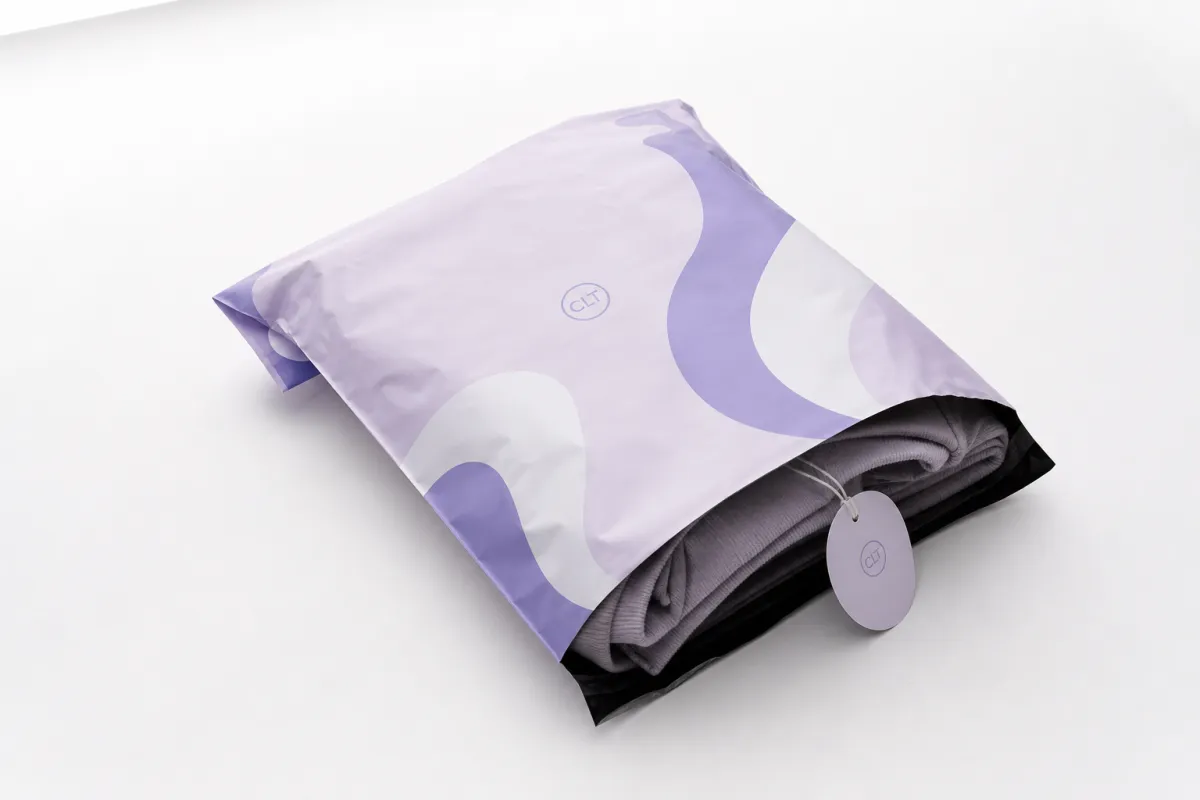
Printed Poly Mailers for ecommerce are easy to dismiss because they look like a small line item. That is the mistake. The outer package often carries more emotional weight than the insert or thank-you card, especially when the customer never sees a carton. A clean, branded mailer creates a sense of intention before the product is even touched. A generic bag does the opposite and makes the order feel interchangeable.
That perception matters because small parcels are often the only physical proof of your brand before the item is opened. A simple logo, a strong color block, or even a short message on printed poly mailers for ecommerce can make the order feel deliberate. For apparel brands, that effect is even stronger. So is the risk if the packaging looks flimsy, oversized, or just plain rushed.
From a packaging buyer's point of view, printed poly mailers for ecommerce make sense when the product is lightweight, flexible, and not easily crushed. Think tees, leggings, socks, beauty accessories, supplements, books, and flat accessory bundles. You are not paying to protect empty space. You are paying to move the item safely, quickly, and with enough visual identity to make the parcel feel like it came from a real brand, not a storage rack.
There is also a hard business case. A mailer usually weighs far less than a corrugated box with void fill, tape, and an outer label. That can reduce shipping weight, trim packing labor, and lower material handling at the station. On a per-order basis the difference can be small, yet the cumulative effect is not. If your team saves even 10 to 15 seconds per pack-out across 1,000 orders, you have reclaimed nearly 3 to 4 hours of labor. That is not marketing fluff. That is actual throughput.
The value is not automatic, though. Printed poly mailers for ecommerce work best when branding, price, and operational fit are aligned. The same mailer that looks premium on a launch-day campaign may be wasteful for a low-margin reorder. The strongest brands treat the format as a system choice, not a decoration choice.
- Brand effect: stronger first impression at the mailbox.
- Operational effect: less assembly than a box-and-fill setup.
- Shipping effect: lighter pack-out and fewer handling steps.
- Risk: bad sizing or weak film can erase the benefit fast.
How Printed Poly Mailers for Ecommerce Work in Fulfillment
Printed poly mailers for ecommerce fit neatly into a pick-pack-ship flow. The bag arrives preprinted, gets pulled from stock, is filled with the order, sealed, and handed to the carrier without any extra branding step. That sounds obvious, but it matters. Every added touchpoint slows the line. Box assembly, tape application, tissue placement, and void fill all add minutes. A mailer cuts that complexity down to a few motions.
The print layer handles the visual work. Some brands keep it simple with a one-color logo and a repeat pattern. Others use full-coverage graphics, seasonal messages, or a QR code that points to a product page or social channel. Printed poly mailers for ecommerce can carry a lot of personality even when the structural format is basic. That is one reason they are popular in apparel and accessory shipping, where brand expression does not need a heavy box to feel finished.
Protection comes from the material itself. Most mailers use polyethylene film with sealed side seams and a pressure-sensitive or hot-melt adhesive strip. The film helps resist moisture and scuffing. The closure adds tamper evidence. None of that makes the bag crush-proof, of course. It does make it suitable for products that can tolerate flex and transit vibration. For many lightweight SKUs, that is enough.
The operational advantage is easy to see on the packing table. A box line may need tape, labels, fillers, and a separate carton assembly step. Printed poly mailers for ecommerce skip most of that. The result is fewer labor touches, less material staging, and less clutter around the workstation. In high-volume peaks, those small differences matter more than people expect.
There is a customer-facing detail too. The parcel is visible before the product is opened, so the brand impression starts at the mailbox rather than at unboxing. A plain brown carton can still feel quality if the product is right, but a printed mailer tells the customer the shipment was considered from the start. That matters for first-order conversion, repeat purchase behavior, and social sharing.
"A mailer should do three jobs at once: protect the item, move fast on the line, and look like it belongs to the brand." That simple test filters out a lot of packaging that sounds good in a meeting and performs poorly in the warehouse.
For teams comparing formats, printed poly mailers for ecommerce often win on pack speed and parcel weight, while boxes win on rigid protection and stacking stability. The choice is not about which format is better in the abstract. It is about matching the package to the product and the fulfillment model.
Choosing Materials, Size, and Print Quality
Printed poly mailers for ecommerce are not all built the same. The first variable is film thickness, usually described in mils. A lighter-duty bag might sit around 2 to 2.5 mil, while a stronger everyday option often lands near 3 mil. Some brands step up to 4 mil for added puncture resistance or a more substantial feel. Thicker is not always better. It is better when the product is sharp, heavy, or more likely to stress the seams.
Size matters just as much. A mailer that is too tight can split at the seam or make the product look overstuffed. Too much extra room creates a sloppy package and can invite movement inside the bag. For printed poly mailers for ecommerce, the safest approach is to measure the folded, bundled, or bagged product first, then add just enough clearance for a clean seal. If your items vary a lot, size the mailer to the largest normal configuration rather than the smallest sample on the desk.
Print quality is partly an aesthetic question and partly a production question. One-color flexographic printing is common because it is economical and clean. Multi-color branding adds visual punch but can increase setup complexity. Glossy film usually looks brighter and more promotional. Matte film can feel more restrained and modern. Printed poly mailers for ecommerce should match the rest of the brand system, not just the mood board. A luxury skincare line and a streetwear label do not need the same surface finish.
Several functional factors deserve attention before you approve artwork:
- Opacity: enough coverage to protect privacy and hide contents.
- Adhesive strength: a seal that stays shut during sortation and last-mile handling.
- Tear resistance: enough toughness to survive conveyor contact and carton corners.
- Recycled content claims: only use statements you can document.
- Visual alignment: artwork should avoid fold lines, seals, and trim edges.
For durability testing, many suppliers reference film standards and transit simulation methods. The International Safe Transit Association has useful guidance on parcel testing protocols, including common distribution environments and package performance checks at ISTA. If you are comparing structure against other shipping formats, that kind of reference helps move the conversation from preference to performance.
Printed poly mailers for ecommerce should also be chosen with product category and return behavior in mind. A low-return basics brand may prioritize unit cost and packing speed. A premium apparel brand may pay more for better print coverage and stronger film because the package is part of the customer experience. A supplement brand may care more about privacy and tamper evidence. The right choice depends on the product, the shipping lane, and the promise you made on the product page.
One more detail belongs in the mix: if your packaging story includes paper inserts, labels, or a secondary carton, FSC-certified paper can support that broader message. The certification framework is maintained by the Forest Stewardship Council at FSC. That does not make a poly mailer automatically sustainable. It does, however, help you keep the rest of the packaging system more disciplined.
Printed Poly Mailers for Ecommerce Production Steps and Lead Time
Printed poly mailers for ecommerce move through a fairly standard production chain, but the schedule can slip if one step is not locked down. It starts with artwork setup, then proofing, then tooling if the design needs plates or cylinders, followed by printing, curing, cutting, sealing, packing, and freight booking. Simple in theory. Easy to delay in practice.
The largest slowdowns usually come from avoidable issues. Artwork revisions are a common culprit, especially when the design team and operations team are not using the same spec sheet. Color matching can also stretch the timeline if a brand wants a specific shade that needs adjustment on press. Compliance reviews are another delay point. If the artwork includes recyclability language, material claims, or postal markings, the supplier may ask for more approval before running the job.
Lead time depends on three variables more than anything else: print complexity, order size, and whether you are choosing a stock dimension or a custom size. Stock-size printed poly mailers for ecommerce are usually faster because the supplier already has the die line and bag dimensions approved. Custom dimensions take longer because the production line has to be set up differently and packaging freight has to be planned around the finished size.
For planning purposes, a realistic custom run often needs 10 to 20 business days after proof approval, plus transit time. If the freight is domestic and the route is simple, that may mean another few days. If the order is coming by ocean or crossing multiple handoff points, the buffer should be bigger. The worst timing mistake is easy to predict: the product lands first, and the bags are still in production.
A practical launch framework looks like this:
- Request samples from two or three suppliers.
- Approve artwork only after the sample is inspected with real products inside it.
- Place a pilot order before committing to full volume.
- Test the pilot in live fulfillment for seal speed, scuffing, and return handling.
- Scale once the bag proves itself across shipping lanes and pack stations.
Printed poly mailers for ecommerce also need to be scheduled around seasonal peaks. A Q4 campaign, a back-to-school push, or a new product launch can quickly expose a packaging shortage. The solution is not to overbuy blindly. It is to map packaging arrival before inventory arrival. That sounds basic, yet it is where many good-looking packaging plans break down.
If you are working with a supplier, ask for a timeline that separates proofing, production, and freight. A single lead-time number is too fuzzy. Better to know where the delay is likely to appear than to discover it when the boxes are already on the dock.
Printed Poly Mailers for Ecommerce Cost, Pricing, and MOQ Basics
Printed poly mailers for ecommerce are priced like most custom packaging: the more you standardize, the less you pay per unit. Film thickness, bag size, print colors, order quantity, freight method, and tooling all affect the quote. A two-color stock-size run is not the same as a full-coverage custom-size mailer, even if both are called "custom."
Here is the part that trips up a lot of new buyers. The cheapest unit price is not always the best short-term decision. If you buy too much to chase a lower number, you can tie up cash, take on storage pressure, and lock yourself into artwork that may be obsolete after one season. Printed poly mailers for ecommerce should be priced against both unit cost and business flexibility.
MOQ, or minimum order quantity, is the next variable. For stock-size printed poly mailers for ecommerce, many suppliers will quote lower minimums because the line setup is simpler. Custom-size bags usually require higher MOQs, sometimes 10,000 units or more, because the production changeover and waste allowance are higher. New brands often want to test several designs at once. That is sensible. It just means the first order should be planned around learning, not just savings.
The smartest comparison is total landed cost. That includes the print quote, plates or cylinders if needed, packaging freight, duties if imported, and any rush charges. A quote that looks favorable on paper can become expensive once you add inbound shipping. If you are comparing suppliers, ask them to break out the number line by line. Vague quotes hide too much.
For a rough planning range, many brands see these kinds of numbers at moderate volumes:
| Option | Typical Unit Cost | Best Fit | Watch-Out |
|---|---|---|---|
| Plain stock poly mailer | $0.07-$0.15 | Lowest-cost shipping for non-branded orders | No brand lift and little differentiation |
| Stock-size printed mailer | $0.16-$0.28 | Brands testing custom identity with controlled spend | Artwork must be simple to keep costs sane |
| Custom-size printed mailer | $0.22-$0.45 | Products that need a precise fit | Higher tooling, lead time, and MOQ pressure |
| Premium heavy-gauge printed mailer | $0.30-$0.60 | Heavier SKUs or higher-end brand presentation | Can be overkill for soft, lightweight items |
Those ranges are not universal. They move with quantity, print coverage, film thickness, and freight. They are still useful because they frame the decision in a realistic way. Printed poly mailers for ecommerce are cheap enough to matter at scale and visible enough to influence customer perception. That combination is why price alone is the wrong filter.
A simple budgeting method helps. Estimate cost per shipment, then compare it to the savings from lighter packing and faster fulfillment. After that, add the brand-value side of the ledger: lower complaint risk, better repeat behavior, and more willing social sharing. Those benefits are harder to quantify, but they still belong in the model. If a package performs well and helps the brand look coherent, it pays for itself in more ways than one.
If you need a quick quoting benchmark, ask for the same size, same film gauge, same print coverage, and same freight terms from each supplier. Anything less is an apples-to-oranges comparison.
Common Mistakes That Make Printed Poly Mailers for Ecommerce Fail
Printed poly mailers for ecommerce fail for predictable reasons. The first is sizing. A mailer that is too tight can split at the seal or make the contents bulge in a way that looks careless. A mailer that is too large can shift around, wrinkle badly, or leave the brand presentation looking unfinished. That is a packaging issue and a brand issue at the same time.
Artwork mistakes come next. Tiny logos disappear on a moving bag. Low contrast can make the design unreadable under warehouse lighting. Print areas that ignore fold lines or the closure strip can cut the design in half. Printed poly mailers for ecommerce need artwork that respects the physical shape of the bag, not just the digital canvas. Designing for a flat mockup and approving it without a real sample is a common and expensive mistake.
Operational mistakes cause just as much damage. Some brands under-order because they do not want to carry inventory. Then the packaging shortage hits right as traffic spikes. Others approve a proof without testing it on real products, only to discover that the product is too sharp, too bulky, or too slippery for the chosen film. Another frequent error is ignoring return flow. If a product comes back in the same bag, the mailer should be durable enough to survive a second trip, or the cost model changes.
There is also a temptation to overinvest in print style while underinvesting in performance. A premium finish cannot rescue a bag that tears in sortation. Printed poly mailers for ecommerce should always clear the basic durability threshold before any aesthetic decision is made. Packaging that looks great for five seconds and fails in transit is just expensive noise.
Sustainability claims deserve careful handling. Customers are increasingly skeptical, and regulators are not getting more forgiving. If a bag contains recycled content, say exactly how much and how it is verified. If it is recyclable in a specific stream, make the claim only where it is valid. The EPA's recycling guidance at EPA recycling guidance is a useful reference point for keeping language honest. Generalized green language can damage trust faster than plain packaging ever could.
Here is a short checklist that catches many avoidable problems:
- Test the mailer with the actual product, not a sample that is lighter or smaller.
- Review the artwork at full size and on a physical proof.
- Check seal strength after packing, handling, and a short transit simulation.
- Confirm the MOQ fits your storage and cash flow.
- Keep sustainability claims specific, documented, and current.
Expert Tips and Next Steps for Printed Poly Mailers for Ecommerce
If you want printed poly mailers for ecommerce to work as a business tool, start small and measure hard. A pilot run with one top-selling SKU is usually enough to tell you whether the size fits, whether the seal is fast enough, and whether the bag survives normal carrier handling. That beats guessing from a digital proof. It also gives your pack team a real chance to point out the weird little things that only show up once the order is actually on the bench.
Request samples from multiple suppliers. Not because every sample is a perfect comparison, but because samples expose the differences that sales sheets hide. Compare print sharpness, seal strength, opacity, and hand feel under actual packing conditions. Put the item inside. Close the bag. Shake it. Stack it. Carry it across the room. Printed poly mailers for ecommerce live or die on those small details.
A simple scorecard makes the decision cleaner. Rate each option on cost, lead time, aesthetics, and fulfillment efficiency. Then add one more line for risk. Risk is where the hidden costs sit: seam failure, artwork misalignment, overbuying, or a supplier that cannot hit the promised freight window. The cheapest quote often looks less attractive once risk is counted properly.
Keep the packaging system coherent. Inserts, labels, thank-you cards, and any other customer-facing piece should feel like one story. That does not mean everything must match perfectly. It means the package should sound like the same brand voice as the website and product pages. Printed poly mailers for ecommerce are strongest when they reinforce the broader identity rather than trying to carry it alone.
One practical way to move forward is to audit your current order profile first. Identify your top three SKUs, the average ship weight, the return rate, and the current cost per shipment. Then request quotes for two or three mailer formats. Ask for one plain control option and two branded options. That gives you a real comparison instead of a branding fantasy.
After that, make the decision with numbers, not instinct. Does the mailer reduce pack time? Does it hold up on the route? Does it make the parcel feel worth receiving? If the answer is yes, printed poly mailers for ecommerce are probably doing their job. If the answer is mixed, refine the size or film before placing a bigger order.
For brands that want a practical next step, the order of operations is straightforward: audit shipping costs, choose two or three candidate formats, get quotes, check sample performance, and then place a short test batch of printed poly mailers for ecommerce before committing to full production. That approach protects cash, protects schedule, and usually leads to a better-looking parcel on the first try.
Used well, printed poly mailers for ecommerce are not just a shipping supply. They are a control point for cost, speed, and brand memory, which is why the best programs treat them like a strategic packaging decision instead of a decoration order.
The clearest takeaway is simple: choose the smallest mailer that fits the real product, test it in live packing conditions, and buy only after the sample proves it can survive the route you actually ship. That is the part that keeps the package honest, and it is usually the difference between a mailer that looks good on a screen and one that earns its place in fulfillment.
What are printed poly mailers for ecommerce used for?
They are used to ship lightweight products such as apparel, accessories, and soft goods while adding branded presentation. Printed poly mailers for ecommerce also help reduce packaging weight and simplify packing compared with boxes for similar items.
How do I choose the right size for printed poly mailers for ecommerce?
Measure the product after folding, bundling, or adding any insert so the mailer is not too tight. Leave enough room for a clean seal and a little movement, but avoid oversizing because it adds waste and weakens presentation.
Are printed poly mailers for ecommerce expensive compared with plain mailers?
Printed versions usually cost more upfront because of setup and print charges. The real comparison should include branding value, reduced label use, and any savings from faster packing or lower shipping weight.
How long does it take to produce custom printed poly mailers for ecommerce?
Timing depends on artwork approval, print method, order quantity, and whether the bag size is stock or custom. Build in time for proofing and freight so the mailers arrive before product launch or peak season.
What mistakes should I avoid when ordering printed poly mailers for ecommerce?
Avoid unclear artwork, undersized bags, and ordering without testing the mailer on real products. Do not ignore lead time, minimum order quantity, or the total landed cost including shipping and setup.