Buyer Fit Snapshot
| Best fit | Custom Mailers with Barcode Labels projects where brand print, material claims, artwork control, MOQ, and repeat-order consistency need to be specified before quoting. |
|---|---|
| Quote inputs | Share finished size, material target, print colors, finish, packing count, annual reorder estimate, ship-to region, and any compliance wording. |
| Proofing check | Approve dieline scale, logo placement, barcode or warning zones, color tolerance, closure strength, and carton packing before bulk production. |
| Main risk | Vague material claims, crowded artwork, missing packing details, or unclear freight terms can make a low unit price expensive after revisions. |
Fast answer: Custom Mailers with Barcode Labels: Material, Adhesive, Artwork, and MOQ should be specified like a repeatable production item. The safest quote records material, print method, finish, artwork proof, packing count, and reorder notes in one written spec.
Production checks before approval
Compare the actual filled-product size with the drawing, then confirm tolerance on folds, seals, hang holes, label areas, and retail display edges. Reserve space for logos, QR codes, warning copy, and material claims before decorative graphics fill the panel.
Quote comparison points
Review material grade, print process, finish, sampling route, tooling charges, carton quantity, and freight assumptions side by side. A quote is only useful when the supplier can repeat the same color, closure quality, and packing count on the next order.
Custom Mailers With Barcode labels solve a problem that looks tiny on paper and gets expensive on the packing line: every extra handling step. A team can print the right label, peel it, line it up, and press it into place under time pressure, yet that extra motion is often where mis-ships, scan failures, and slowdowns start. Put the scannable identifier on the outside where it belongs, and the parcel can move through pick, pack, sort, and carrier handoff with less friction.
The idea is simple. The operational effect is not. In practice, custom mailers with barcode labels can improve order accuracy, shorten handling time, and make tracking steadier without forcing the warehouse to crawl. For brands that care about package branding, product packaging, and retail packaging that still performs in real shipping conditions, this is where design meets data. For teams comparing Custom Labels & Tags with broader Custom Packaging Products, the question stops being whether the parcel looks good and starts being whether it scans cleanly every time.
There is also a less obvious case for them. Standard mailers may cost less up front, but custom mailers with barcode labels can return value through fewer exceptions, less relabeling labor, and cleaner scan data at each checkpoint. That matters more as order counts climb, SKU counts multiply, and shipping teams get squeezed between speed and accuracy. A slightly smarter container can cost less than a cheap one that forces rework later.
Custom Mailers with Barcode Labels: Why They Matter
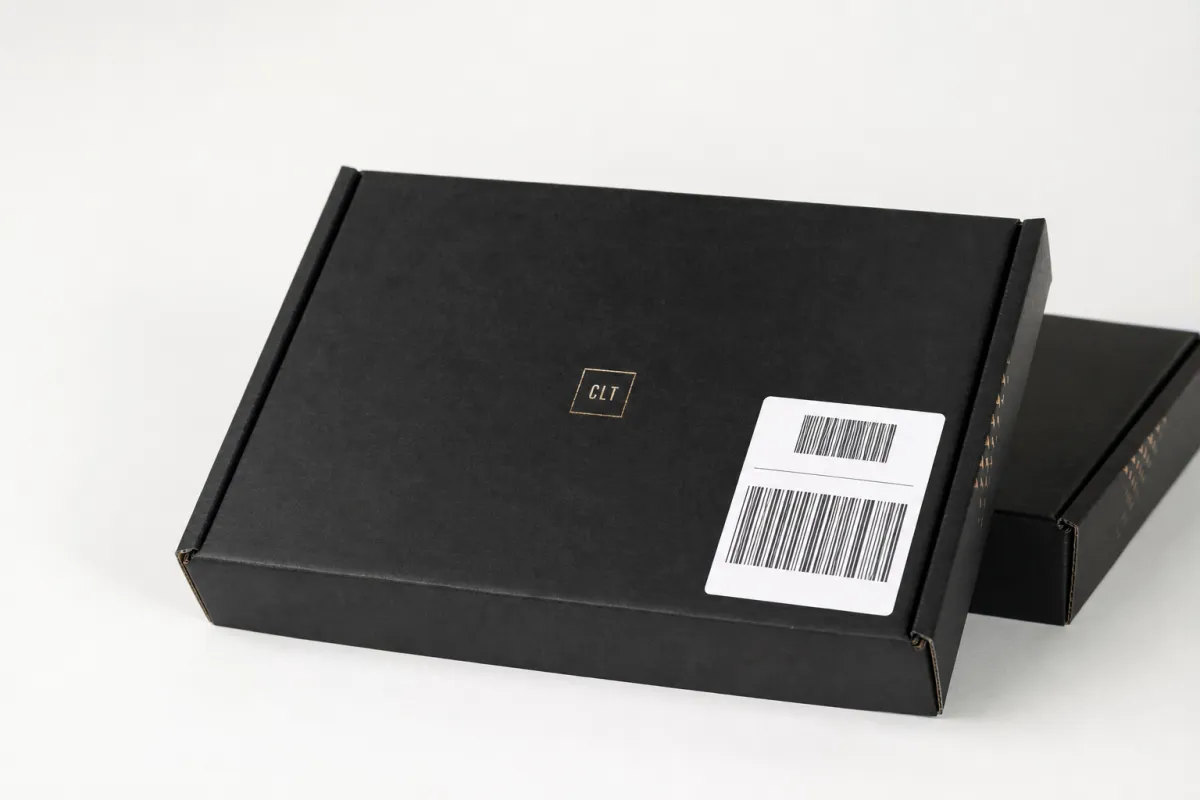
The warehouse reality is that the barcode itself is rarely the only issue. The bigger burden is the manual work wrapped around it. If a packer has to print a label, peel a backing, line it up, smooth it down, and then wait for adhesion before the parcel moves, another point of failure has entered the flow. Under volume pressure, that step becomes a bottleneck fast. Custom mailers with barcode labels reduce or remove that step, which is why they tend to matter more than they first appear to.
Put simply, custom mailers with barcode labels are shipping mailers designed to carry scannable identifiers on the exterior so the package can move through fulfillment with fewer manual checks. The barcode can be printed directly onto the mailer, placed on a designated panel, or built into a label area that is part of the package design. Either way, the mailer is no longer just protective packaging. It becomes part of the data chain.
That shift matters for three reasons. First, it speeds identification. A packer, sorter, or carrier can scan the parcel without hunting for the right label position. Second, it lowers mis-shipments. The barcode links the outside of the parcel to the order record, so the right item is less likely to drift into the wrong lane. Third, it improves traceability. If a shipment needs to be checked later, custom mailers with barcode labels give the operation a faster starting point because the code ties the physical package to the digital record.
From a packaging buyer's view, the comparison is direct. Standard mailers are cheap and flexible, but custom mailers with barcode labels are built for operational control. That control shows up in labor savings, cleaner scan data, fewer manual corrections, and less dependence on handwriting or generic packaging. For high-volume e-commerce, subscription shipments, or any business where product packaging and warehouse throughput are tightly linked, those gains can be concrete.
The code is not the hard part. The hard part is everything that happens between print, pack, fold, and handoff.
There is a branding angle too. A barcode panel can sit beside branded packaging without fighting it. Done well, the mailer still looks polished, still supports package branding, and still gives the warehouse what it needs. Done badly, the barcode gets buried under graphics, tucked into a seam, or printed on a finish that makes scanning awkward. The difference rarely looks dramatic in a mockup. It becomes obvious on the line.
For brands also using Custom Poly Mailers, custom mailers with barcode labels can act as a practical bridge between visual identity and logistics. They keep the front-end experience consistent while making the back-end process easier to run. That is a useful tradeoff, especially for teams trying to scale without adding headcount.
I have seen operations spend money on a beautiful mailer, only to watch the pack team tape a separate barcode label over the artwork because the original placement was off by half an inch. That is a silly kind of expensive. It is also common.
How Custom Mailers with Barcode Labels Work
The working model is usually straightforward. An order is picked, the barcode is matched to the order or shipment record, the item is packed into the mailer, and the outer barcode is scanned again during sorting or carrier intake. That second scan is where custom mailers with barcode labels prove their value. It confirms that the parcel leaving the pack station is the same parcel the system expects to see later.
There are two common production paths. One is direct printing on the mailer itself. The other is applying a barcode label to a designated panel during production or fulfillment. Direct printing is efficient when the code and design stay stable, the volume is predictable, and the mailer surface supports strong contrast. Label-based placement works better when data changes more often, when multiple shipment codes are needed, or when the packaging line needs flexibility across different SKUs. Both can work. The right choice depends on the warehouse system, the substrate, and how much variation the operation needs.
What the barcode can represent
Custom mailers with barcode labels do not need to encode the same thing every time. A barcode can represent an order ID, shipment ID, SKU group, batch number, return routing code, or a combination of those elements if the software supports it. The key is not stuffing as much information as possible into the symbol. The key is using a code that the warehouse software can read and reconcile without extra manual steps. A code that is technically rich but operationally awkward is not a win.
That is why many operations keep the barcode tied to a single event or record. A simple shipment ID is often easier to scan and track than a sprawling data string. In a calm meeting, that may sound conservative. In a busy pack room, simplicity is a feature. Custom mailers with barcode labels work best when the code supports the warehouse process instead of trying to replace it.
There is also a systems benefit. Once the mailer joins the data chain, teams can reconcile exceptions faster. If a parcel is delayed, damaged, or misrouted, the barcode gives the operation a clean place to start. That matters most during volume spikes, when multiple SKUs share similar shapes and sizes, and when the difference between one parcel and another is not obvious to the eye.
In larger operations, custom mailers with barcode labels can help standardize line behavior. When every mailer puts the code in the same spot, the scanner operator does less searching, training becomes easier, and errors usually drop. Small gains like that are easy to overlook in a spreadsheet. They are much easier to feel during a busy shift.
Cost and Pricing for Custom Mailers with Barcode Labels
Cost depends on more than the mailer itself. Material thickness, print complexity, barcode placement, number of SKUs, ink coverage, finishing, and whether the code is printed directly or added as a label all shape pricing. Custom mailers with barcode labels can be cost-effective at scale, but the unit price is influenced by several moving parts, not just the outer shell.
Minimum order quantity matters a great deal. Smaller runs usually raise the per-unit price because setup, proofing, and production changes get spread across fewer pieces. Larger runs lower the unit cost, sometimes sharply, but they also demand better forecasting and more storage. That is the tradeoff many buyers underestimate. A lower unit price only helps if the inventory gets used before specs change or a product line is retired.
There are also hidden costs that do not always show up in a quote. Setup fees, plate or proof charges, revision rounds, and the labor saved when labels are built into the packaging workflow all belong in the decision. If a team is comparing custom mailers with barcode labels to a cheaper generic mailer, the real comparison should include time spent printing labels, applying them, correcting errors, and handling rework. Labor is not free just because it sits on payroll.
For a practical picture, here is a simplified comparison. These are market-style ranges, not a promise, and they shift with quantity, artwork coverage, and material choice.
| Option | Typical Unit Cost at Mid-Size Runs | Lead Time | Best For |
|---|---|---|---|
| Standard mailer + separate barcode label | $0.10-$0.24 | Often 7-12 business days for mailers, plus label handling | Short runs, changing data, pilot launches |
| Custom mailers with barcode labels on a dedicated panel | $0.18-$0.40 | Often 12-18 business days after proof approval | Stable SKU sets, clean scan workflows, repeat orders |
| Fully printed mailer with integrated barcode and heavier branding | $0.28-$0.60+ | Often 15-25 business days depending on finish and volume | Brand-led packaging, higher visual impact, controlled operations |
The table points to a simple truth: custom mailers with barcode labels are not always the lowest unit-price option, but they can be cheaper by total process cost. If a warehouse saves even a few seconds per parcel and avoids a small share of relabeling or mis-sorts, the difference can add up quickly over thousands of orders. That is especially true for brands balancing product packaging and retail packaging with a heavy shipping load.
Price also changes with materials. Recycled paper mailers, coated paperboard, and printed poly formats do not behave the same way. If the code needs sharp contrast, the surface finish may need to be adjusted. If sustainability targets matter, teams may ask for FSC-certified paper options. For sourcing and forest stewardship context, the FSC standards are a useful reference point: fsc.org. For shipping durability, many teams also review transit-testing methods from ista.org so the mailer is not only attractive in a proof and fragile in motion.
That is why a low quote can be misleading. Custom mailers with barcode labels should be judged on unit cost, yes, but also on throughput, scan performance, and error reduction. A quote that looks expensive may be the better buy if it removes a whole set of downstream headaches.
One caution: if a supplier gives you a price that sounds unusually low, ask what is missing. Sometimes the answer is obvious once you ask about proof rounds, finish, or barcode validation. Sometimes it is hidden in the fine print, which is a headache nobody needs.
Process and Timeline: From Artwork to Delivery
A smooth rollout usually follows the same path: brief, dieline review, barcode placement mockup, proof approval, sample testing, production, and final shipping. Custom mailers with barcode labels do not need a complicated process, but they do need a disciplined one. Skipping a step often creates more delay later than it saves upfront.
The first step is the brief. That is where the supplier learns the mailer size, substrate, print method, barcode type, and how the code will be used in the warehouse. Then comes the dieline review. This is where placement can be checked against folds, flaps, seams, and any graphic elements that might compete with the code. The barcode should never be treated as leftover space. It needs a home.
What usually drives lead time
Lead time is shaped by order quantity, custom sizing, print method, barcode validation needs, and whether the supplier is producing from stock or from scratch. Custom mailers with barcode labels ordered from existing stock with a print-ready panel usually move faster than fully custom structures. A more complex format, heavier print coverage, or a finish change can extend the timeline. When a buyer wants both Custom Printed Boxes and matching mailers in the same launch, coordination can take longer still.
Most delays are predictable. Artwork revisions eat time. Unreadable barcode specs cause back-and-forth. Missing data fields hold up proofing. Late decisions about finish, adhesive, or mailer size can push the job out by days. The supply chain rarely fails in dramatic ways; it usually slows down at small handoff points. Custom mailers with barcode labels are no exception.
A sensible rollout includes a pilot window. A small test batch lets the team scan codes under real conditions before committing to a full production run. That means testing in the actual packing area, with the actual scanners, under the actual lighting the team uses every day. Bright light, dim light, gloves, conveyor movement, and folded mailers can all affect scan behavior. If the pilot fails, the fix is cheaper before full production than after 20,000 units are already on site.
For operations that run several packaging formats at once, this is also the point to coordinate with the broader packaging mix. A brand using custom printed Boxes for Retail kits and custom mailers with barcode labels for outbound shipping should make sure the visual system feels connected. The customer sees one brand. The warehouse sees one process. That alignment is good design, not decoration.
Key Design and Material Factors to Get Right
Materials affect scan reliability more than many teams expect. Matte, glossy, coated, and recycled surfaces all change barcode contrast and edge clarity. Custom mailers with barcode labels need a substrate that supports quick reading without making the code look muddy or washed out. If the finish drags down contrast, scanners can still work, but the process becomes less forgiving.
Placement matters just as much. Barcodes should sit on a flat, predictable area away from seams, folds, tape lines, and high-wear edges. A code that looks perfectly aligned on a flat artboard may become harder to scan once the mailer is folded, filled, or squeezed into a carton. That is why many teams reserve a dedicated panel for the code and treat that space as operational real estate. It is there to work, not to be filled with decorative elements.
Technical details that matter in the real world
Quiet zones, contrast ratio, size, orientation, and scanner type all matter. If the code will be scanned by handheld devices, the design can tolerate a different layout than a fixed conveyor scanner. Some operations use linear barcodes for simple shipping workflows. Others choose 2D codes because they can carry more data in a smaller area. The key is matching the barcode to the warehouse system, not to a trend.
Many buyers ask for a code that is visually tiny because they want to preserve design space. That can work, but only to a point. Custom mailers with barcode labels need enough clear space around the code for reliable scanning. A crowded panel, a dark background, or a pattern that competes with the barcode can slow the scanner down. The printer may still produce a technically correct image. The line may still reject it.
Mailer rigidity also plays a role. A stiff mailer can protect the code area better than a flimsy one, especially if the package rubs against bins or conveyors. Adhesive hold matters too. If the code is a label applied during production, it needs to stay flat and secure through shipping, humidity, and handling. Temperature swings can change adhesive behavior, so packaging teams should think beyond how the code looks and into how the pack behaves after it leaves the station.
For brands with strong package branding, the trick is balance. The barcode should not look like an afterthought, but it should not compete with the main visual story either. A clean design can keep the logo visible, the structure consistent, and the code easy to scan. That is especially useful in branded packaging programs where the mailer is part of the customer experience as well as the fulfillment process.
One practical test helps a lot: print or sample the exact placement and scan it with the same devices used in the warehouse. Then fold the mailer, fill it, tape it, and scan again. Custom mailers with barcode labels that pass on a flat desk but fail after packing are not ready. The test needs to reflect reality, not an idealized proof.
That is also where standards become useful. Teams often reference ISTA test procedures for transit behavior and use FSC-certified substrates when paper sourcing matters. The point is not to turn a mailer into a certification exercise. The point is to make sure the package performs as expected after it moves through the actual distribution path.
Common Mistakes When Ordering Barcode-Ready Mailers
The most common mistake is placing the barcode across a fold, flap, or seam. It sounds obvious, yet it happens more often than people like to admit. A technically correct code can still fail if the mailer shape distorts the symbol after packing. Custom mailers with barcode labels are only useful if the code survives contact with the final package form.
Low-contrast design choices are another problem. Dark backgrounds, busy graphics, metallic inks, and glossy finishes can all reduce scan speed or force the scanner to work harder. That does not always create a total failure. Sometimes it simply slows the line, which is almost as expensive because the delay gets spread across every parcel. A buyer might not notice the cost until volume rises and small inefficiencies begin stacking up.
Workflow mistakes matter too. Some teams choose the wrong barcode format for the warehouse system. Others skip preproduction scan tests. A few assume one mailer size can fit every SKU and then discover the code sits awkwardly on smaller formats. Custom mailers with barcode labels work best when the packaging spec is tied to a real operational use case, not a generalized idea of what ought to fit.
There is also a data problem that is easy to miss. If order fields are still changing, or if the routing rules are not final, the packaging order can get locked in too early. That creates revision costs later. In the same way, a team can forget that adhesive behavior changes with temperature and humidity, especially if labels are being applied in a space that is not climate controlled. None of that is dramatic. All of it costs money.
Training is the final weak point. Even a well-designed system can stumble if staff do not know where the scan area sits, what to do when a code fails, or who approves changes. A short SOP, with a photo of the barcode panel and a clear escalation path, can prevent a lot of confusion. Custom mailers with barcode labels should make work easier. If people have to guess, the system is not finished.
Here is a simple rule I trust: if the barcode cannot be scanned reliably after the mailer is folded and filled, the job is not done. That is true whether the program uses custom mailers with barcode labels, custom printed boxes, or another packaging format entirely. The package has to work in motion, not just on a screen.
Expert Tips and Next Steps for a Cleaner Rollout
Start small and stay specific. Choose one high-volume SKU, request samples, run scan tests in the actual packing area, and compare results against the current process. Custom mailers with barcode labels are easiest to validate when the test mirrors the real workflow. A pilot should tell you whether the design is worth scaling, not whether the mockup looks polished.
Vendor selection should be practical. Ask about barcode specs, material options, proofing method, MOQ, lead time, and whether the supplier can support repeat reorders without changing the code location. If the supplier cannot keep the panel consistent from batch to batch, the whole point of custom mailers with barcode labels weakens. Consistency is a feature, not a preference.
A simple internal SOP will help more than a long one. Document where the barcode lives, what to do if a code fails, and who approves revisions. Add one or two photos of the approved placement. That gives packers a reference point and lowers training friction. It also reduces the chance that a new employee improvises placement during a busy shift.
From a commercial standpoint, it is smart to audit the current error rate before changing anything. If you do not know how many mis-scans, relabels, or mis-shipments are happening now, you cannot measure the improvement later. Then estimate labor savings in minutes per 1,000 parcels. That small unit may look dull. It is how operational gain becomes visible. A 10-second reduction can feel minor until it is repeated thousands of times.
For brands building a wider packaging system, this is the moment to step back and look at the whole stack. Custom mailers with barcode labels should fit alongside product packaging, custom printed boxes, and branded packaging that still respects warehouse realities. The strongest package branding programs do not separate aesthetics from logistics. They make both jobs easier.
There is no need to overcomplicate the rollout. Test one batch, document the results, and then scale only after the data says the mailer performs in real conditions. If the code reads cleanly, the panel stays flat, and the line keeps moving, you have something useful. If not, revise before the next order. That is the real value of custom mailers with barcode labels: they can turn packaging into a control point instead of just a container.
One last practical point: keep the people who pack the orders in the loop. They are the ones who will tell you whether a barcode panel is too close to a seam, too shiny under the lights, or too awkward to scan one-handed. That feedback is worth more than a glossy proof, and it will save you from a pretty bad surprise later.
What should the barcode on custom mailers with barcode labels encode?
Most teams use an order ID or shipment ID because it ties directly to fulfillment and tracking records. Some operations encode a batch code or routing code when multiple packages share the same destination or production run. The best choice depends on what your warehouse software can read and reconcile without extra manual steps. Custom mailers with barcode labels work best when the data is simple enough to scan fast and specific enough to trace the parcel later.
Are custom mailers with barcode labels better than applying labels separately?
Usually, yes, because they remove one handling step and lower the chance of label misplacement. Integrated placement also keeps the barcode in the same location from order to order, which improves scanning consistency. Separate labels can still work, but they rely more heavily on operator discipline and alignment. If your team is chasing speed and cleaner data, custom mailers with barcode labels often make the process easier to standardize.
What barcode type works best for shipping mailers?
Linear codes are common for simple shipping workflows, while 2D codes can carry more data in a smaller space. The right format depends on scanner capability, data needs, and how much room the mailer design leaves for the code. A supplier should be able to confirm scanability before production starts. For many brands, custom mailers with barcode labels use the simplest code that still matches the warehouse system.
How do you test barcode readability before ordering at scale?
Print or sample the exact barcode placement and scan it with the same devices used in the warehouse. Test in real conditions: bright light, low light, moving conveyors, and after the mailer is folded or filled. Track failure points by code size, contrast, and placement so you can correct the design before a full run. That is the safest way to validate custom mailers with barcode labels before volume ramps up.
What MOQ should I expect for custom mailers with barcode labels?
MOQ varies by material, print method, and whether the barcode is printed directly or added as a separate label panel. Smaller MOQs are possible, but they often raise unit cost and may limit finishing or customization options. Ask suppliers for a pricing ladder so you can compare pilot quantities against full-production volumes. For many buyers, custom mailers with barcode labels become more economical once the program moves beyond a test run.
If the goal is faster fulfillment, fewer scan errors, and a cleaner handoff from packaging line to carrier, custom mailers with barcode labels deserve serious attention. The strongest versions do not just carry a parcel. They reduce waste, tighten data, and help the whole shipping process behave more predictably. The practical takeaway is simple: define the barcode, reserve the panel, test it in the real pack environment, and do not approve production until the code scans cleanly after the mailer is folded and filled.

