Dad Hats Private Label Order: Specs, MOQ, and Lead Time
A dad Hats Private Label order can look straightforward right up until the first sample lands with a crown that sits too tall, a visor curve that changes the profile, or embroidery that floats higher than the approved mockup. That is usually the moment buyers realize the hat was never just a blank. It is a set of tolerances, materials, and finishing choices that either hold together or drift apart.
The appeal is still obvious. Dad hats are easy to merchandise, familiar to consumers, and forgiving on fit. They also give you enough surface area for branding without forcing the kind of rigid construction that can slow development and inflate cost.
For brands, team stores, promo programs, and retail launches, that mix matters. If the build is defined cleanly from the start, the product can move from sample to reorder without a lot of back-and-forth. If it is not, every new run becomes a fresh argument about the same hat.
If the spec is vague, the sample is only a guess dressed up as approval.
Why dad hats win when you need retail-ready headwear fast
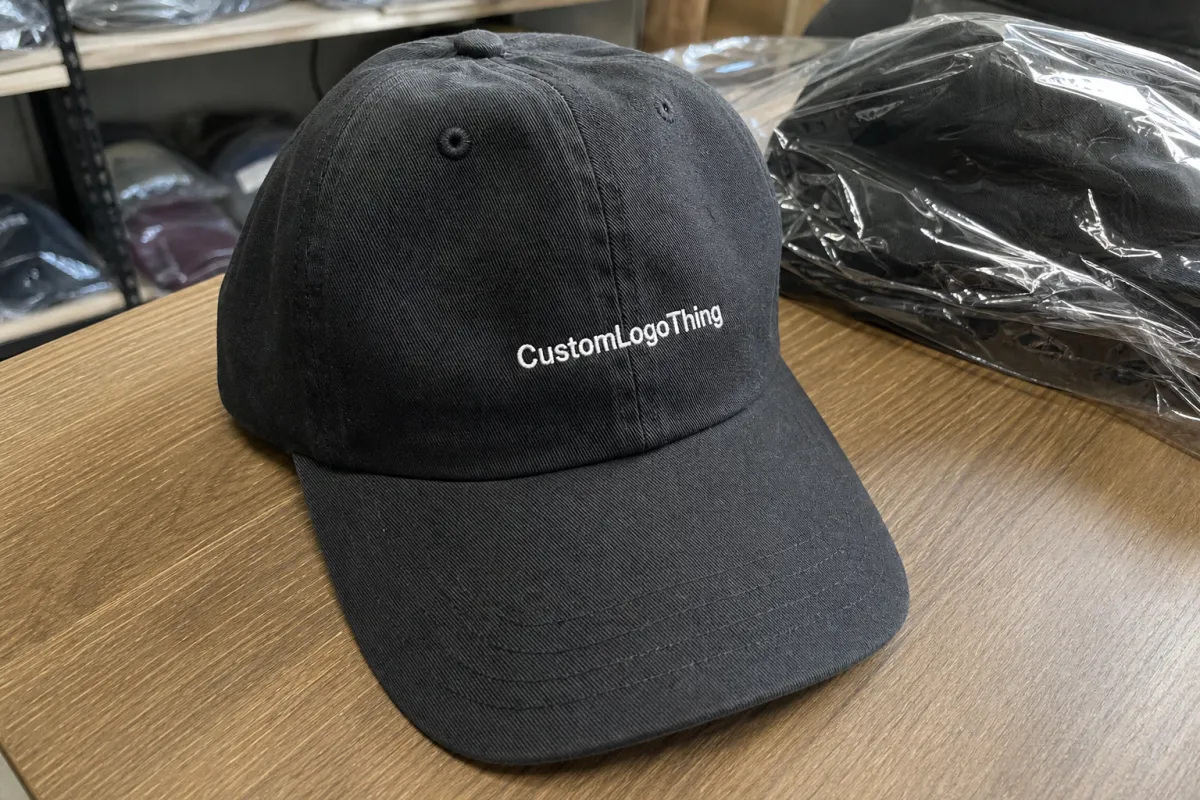
From a buyer's perspective, dad hats sit in a useful middle ground. The silhouette is familiar, the unstructured crown is less demanding than a structured cap, and the pre-curved visor usually falls within a comfortable range for most wearers. That lowers product risk before you even get into decoration.
They also sell across a wider age spread than trend-heavy silhouettes. A washed cotton dad hat in black, navy, khaki, or olive can support a retail line without chasing short-lived color stories. One clean embroidered logo, an interior woven label, and a solid closure can make the cap feel finished without pushing it into a premium tier it cannot support.
The practical advantage is repeatability. A style built on simple construction can be sampled, approved, and reordered with fewer points of failure than a more engineered hat. That matters if you are planning seasonal drops or replenishment, because the goal is not novelty for its own sake. It is consistency that survives scale.
What tends to go wrong is treating the cap like an empty canvas. Small changes in panel height, logo size, or visor curve can make the same style read as a different SKU. Buyers often notice the result before they can explain the cause, which is why the technical spec matters more than the mockup.
What to lock before your dad hats private label order
Before pricing starts, lock the construction. Crown profile, panel count, visor shape, and closure type all affect fit, look, and unit cost. The standard six-panel, low-profile, unstructured dad hat with a pre-curved brim remains the default for a reason: it is easy to wear, easy to decorate, and easy to understand on a shelf.
Change one of those core elements and you are no longer comparing the same product. A five-panel build shifts the front panel geometry. A lightly structured front changes how embroidery sits. A metal clasp changes the price, the fit feel, and sometimes the retail perception.
Decoration should be decided with the same discipline. Embroidery is usually the safest default because it holds up, photographs well, and rarely creates approval issues. Woven patches, printed patches, interior labels, seam tape, hang tags, and size stickers can make the product feel more private label than promotional, but each layer adds time and cost. If you want the inside of the cap to carry more brand weight, pair the exterior mark with Custom Labels & Tags so the details feel intentional rather than improvised.
- Crown structure: unstructured for a relaxed retail look, lightly structured if the front needs more shape retention.
- Panel count: six-panel is the common baseline; five-panel changes the silhouette and logo placement.
- Closure: self-fabric strap, brass buckle, tri-glide, or metal clasp each lands at a different price point.
- Color reference: use Pantone references or approved swatches, not screen matches.
- Branding stack: decide early whether the hat needs one clean exterior mark or a full retail treatment inside and out.
Fabric choice matters more than buyers sometimes expect. Cotton twill is the safest base. Garment-washed cotton gives a softer hand and a more broken-in feel. Brushed twill and pigment-dyed finishes can look excellent, but they can also introduce more variation from batch to batch. If the brand story depends on a specific finish, put that in writing before sampling starts.
Specs that control fit, finish, and reorder consistency
The technical pack should cover the details that actually change the outcome. For dad hats, that means brim curve, crown depth, sweatband material, stitch density, logo placement, and closure length. If those points are not defined, each reorder becomes a new discussion, and the factory will fill in the gaps with its own assumptions.
A useful sample approval process measures the same points every time. If the brim curve shifts, the logo can look too low or too high. If the crown depth changes, the hat can appear flatter or taller than the approved sample. If the strap travel is short, fit complaints will show up even when the cap technically matches the drawing.
Reasonable tolerances help, but they should be written against the specific build. For embroidery placement, a band of plus or minus 2 to 3 mm is often used on cleanly built caps. For general cap dimensions, plus or minus 0.5 cm may be acceptable on some styles. That is a guide, not a universal rule, because construction method and factory process matter.
Thread density is one of the details that separates a cap that looks finished from one that looks rushed. Thin embroidery can disappear on dark fabric, while dense fill can pucker the front panel if the backing or crown structure is too light. The same logo file can look sharp or sloppy depending on how it is stitched.
Inside details matter too. A cotton sweatband usually feels better than a rough synthetic one, especially on a cap meant for retail rather than event giveaway use. A clean top button and tidy seam finishing help the product hold its place next to higher-quality apparel. None of those details are dramatic. Together, they change the impression.
Packaging belongs in the spec sheet, not as a last-minute note. If the hats are going to a warehouse or retail partner, define polybag style, carton count, carton markings, and barcode placement before production starts. If distribution needs transit testing, ask whether the carton plan aligns with a standard such as ISTA. If hang tags or inserts need a paper claim that can stand up in review, FSC certified stock keeps the language clean.
That may feel like paperwork, but it is part of product control. A hat that arrives in the wrong bag, with the wrong label count, or with loose carton marking can cost more in warehouse handling than it did to sew. The cap is not finished when the stitching stops.
Cost, pricing, MOQ, and unit economics for private label
Good quotes break down the actual cost drivers. Blank cap cost, decoration, labeling, packaging, setup, and freight all affect the landed number. If a supplier only gives a single figure and refuses to split the line items, comparison becomes difficult on purpose.
| Build type | Typical MOQ | Unit price range | Best use |
|---|---|---|---|
| Simple embroidered dad hat, self-fabric strap | 100-300 pcs | $3.40-$5.20 | Launch tests, promo drops, lower-risk retail trials |
| Woven patch, interior woven label, buckle closure | 300-500 pcs | $4.80-$6.80 | Branded retail programs with a stronger finish |
| Fully branded build with hang tag, seam tape, custom sweatband | 500-1,000 pcs | $6.20-$9.50 | Store assortments, wholesale programs, premium launches |
Those figures are factory-side estimates, not landed costs. Freight, duty, and import handling sit on top. At small quantities, setup fees dominate the unit price. At larger quantities, decoration and packaging amortize better, so the per-hat number starts to behave more like a program and less like a one-off order.
MOQ is not just a manufacturing preference. It reflects how many pieces are needed to justify sampling, embroidery setup, carton labor, and fabric cutting. A supplier can sometimes lower MOQ, but the trade-off usually shows up in higher per-unit cost or fewer options on trim and finishing. A low MOQ is useful for testing demand. It is not always the cheapest way to replenish a winning style.
The cleanest way to protect margin is to compare quotes against the same spec sheet. A $0.35 woven label sounds small until it is multiplied across a few hundred hats and joined by hang tags, bagging, barcode labels, and a freight upgrade because the cartons changed size. That is how a quote that looks cheap on paper becomes expensive in practice.
One more point: a lean build is often easier to sell than an overloaded one. Most buyers do not notice five interior extras. They do notice fit, embroidery quality, and whether the cap feels deliberate. Spend on the details that affect the hand and the front-facing presentation first.
Process, timeline, and lead time from quote to delivery
The workflow is familiar enough: inquiry, spec confirmation, quote, sample development, sample approval, production, inspection, shipment. The friction comes from incomplete inputs. A blurry logo file, a screenshot instead of a color reference, or a missing carton detail can turn a short lead time into a longer one.
- Inquiry and spec confirmation: same day to 2 business days if the brief is complete.
- Quote and artwork check: 1 to 2 business days for clean files, longer if the logo needs redrawing.
- Sample development: often 7 to 14 business days.
- Revisions: 3 to 7 business days if the sample needs changes.
- Bulk production: often 12 to 20 business days after approval.
- Inspection and packing: 1 to 3 business days.
- Freight: air often takes 3 to 7 business days; ocean can run 20 to 35 days or more depending on lane and congestion.
A clean dad hats private label order can therefore land in roughly 4 to 8 weeks if approvals move fast and freight is by air. Ocean transit adds more time, but it can make better sense for replenishment or larger buys. The slowest step is usually not sewing. It is waiting on artwork revisions, color confirmation, or sample changes that should have been settled before production began.
Vector artwork saves time. So does a one-page spec sheet with measurements, finish notes, packaging instructions, and the intended destination. A JPG might be enough for early discussion, but it is not enough for production embroidery. The tighter the front end, the fewer surprises later.
That matters even more if the order includes more than one branding element. Once the cap has embroidery, a woven label, hang tag, and custom bagging, every delay compounds. The schedule is still manageable. It just stops forgiving casual input.
How to compare factories without buying a brochure
Ignore polished pitch decks until the technical proof is on the table. Recent production photos are useful. So are spec sheets, inspection notes, and examples of similar hats that were actually shipped. A pretty sample on its own proves very little.
The right questions are the practical ones. Can the factory keep embroidery placement consistent across repeats? What happens if the fabric lot runs short? Is there in-line checking or only end-of-line inspection? Can the supplier explain the difference between a self-fabric strap, a metal clasp, and a buckle without guessing? A clear answer is usually more valuable than a confident one.
Substitution policy is another useful filter. A solid supplier will say when a fabric color is unavailable, when a buckle finish changes, or when carton counts need adjusting for compression. A weak supplier hides that information until the order is already moving. That is how a simple cap order turns into a chain of small apologies.
Repeatability is the real test. The first sample is easy. The fifth production run is where consistency either holds or slips. Private label is less about making a nice hat once and more about making the same hat again without drift.
Common mistakes that turn a simple hat order into a headache
The biggest mistake is approving artwork before the hat construction is locked. A logo that feels centered on a flat screen can sit awkwardly on a low-profile front panel. The second mistake is choosing a closure before understanding its cost and fit impact. A brass buckle or metal clasp can lift the perceived value, but it also changes the unit economics and the adjustment range.
Packaging gets ignored more often than it should. If the hats need retail presentation, warehouse labeling, or carton specs for a distribution center, those instructions belong in the initial brief. Otherwise the factory may pack to its default method, and the rework cost can erase whatever was saved in the quote.
There is also a tendency to treat "one size fits most" as if it settles the fit discussion. It does not. Most adult dad hats fall somewhere around 56 to 61 cm with an adjustable closure, but comfort depends on crown depth, strap travel, forehead shape, and how much the visor curve sits off the face. The number on the spec sheet is only the beginning.
- Wrong order of decisions: art first, structure second. That reverses the build logic.
- Color assumptions: screen color is not fabric color. Use swatches or Pantone references.
- No pre-production sample: skipping it saves time now and can cost much more later.
- Loose packaging specs: warehouse handling is unforgiving when carton counts and labels are unclear.
- Overbuilt branding: too many layers can make the hat feel crowded rather than premium.
The simplest correction is to slow down before the order is placed. One approved sample, one locked spec sheet, and one written packing instruction set solve most of the problems that show up later. That is less dramatic than fixing a bad run after it ships, and a lot cheaper.
Next steps to place your dad hats private label order
Start with the basics and keep them fixed: cap style, fabric, closure, decoration method, colors, quantity, packaging, and destination. If those eight items are clear, the quote is usually useful. If they are not, the answer will be vague no matter how polished the email looks.
Send artwork in editable format and confirm the logo position. Front-center is not always the best choice. A slightly smaller mark or a lower placement can make the cap look less promotional and more retail-friendly. The right answer depends on the profile of the hat, not just the artwork file.
If the order needs branded neck labels, swing tags, or size stickers, keep those details aligned with the cap spec rather than treating them as add-ons. If the hats are part of a larger volume program, Wholesale Programs can help frame the reorder math. If you need to confirm label or packaging details, Custom Labels & Tags remains the most relevant reference. For common setup questions, the FAQ page is usually the fastest check.
Ask for a sample whenever the order includes multiple branding layers or any color matching that matters to the launch. Then compare quotes on the same spec sheet, not on different interpretations of the same product. A supplier should be pricing the hat you plan to buy, not the one they wish you had described.
The best outcome is rarely the most complicated one. It is the one with the fewest loose ends: approved sample, locked PO, and packing instructions treated as part of the product. That is how a dad hats private label order stays on budget and arrives ready to sell.
FAQ
What is the usual MOQ for a dad hats private label order?
MOQ depends on decoration method, factory setup, and how many trim details are involved. Simple embroidered caps can often start around 100 to 300 pieces, while more built-out private label styles usually move to 300 to 1,000 pieces. More branding steps generally mean a higher minimum because setup cost has to be spread across more units.
How long does a private label dad hat order usually take?
Sampling and bulk production should be treated as separate timelines. In many cases, sample development takes 7 to 14 business days, bulk production takes 12 to 20 business days after approval, and freight adds its own schedule on top. Fast approvals and complete specs shorten the timeline more than anything else.
What details should be in the spec sheet before I request a quote?
Include crown style, panel count, visor shape, closure, fabric, and logo method. Add target quantity, color references, packaging requirements, and destination zip code or port. The more complete the spec sheet, the fewer quote surprises you will have later.
Can I use embroidery and woven labels together on a dad hat private label order?
Yes, but each branding element adds cost and setup time. Combined branding works best when the logo is simple and the placement is planned early, because crowded front panels and overloaded interiors look messy fast. Ask the factory to confirm how the elements will fit before you approve the sample.
What is the best way to control unit cost on private label dad hats?
Keep the spec lean, reduce color changes, and avoid branding extras that do not help the sale. Order enough volume to spread setup and sampling costs across the run, and lock the design before production starts. That matters most on a dad hats private label order, because late revisions eat margin faster than the factory does.

