For brands planning a Woven Label Beanies private label order, the smallest details usually decide whether the hat feels retail-ready or unfinished. A well-placed woven label, a cuff that sits cleanly, and packaging that matches the price point can make a basic knit beanie read like a proper shelf item. Miss those details, and the product still exists, but it will not carry the same perceived value.
The practical goal is simple: get the first run right without mystery charges, vague specs, or a sampling loop that drifts for weeks. A private label order should feel controlled. If the quote changes every time you clarify the artwork, the process is already leaking time and margin.
Why woven labels make beanies look retail-ready
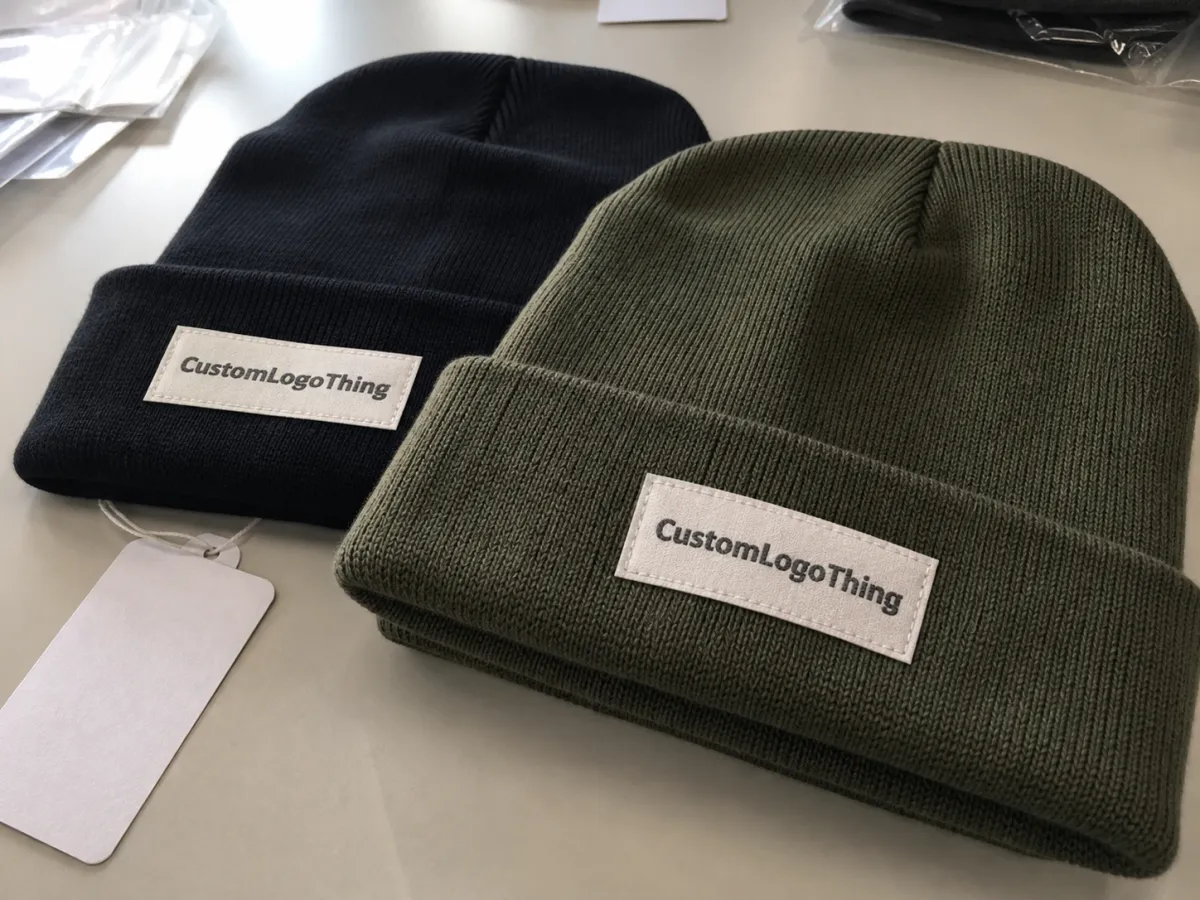
A woven label often looks more polished than print because the texture sits naturally against knit fabric. It keeps fine detail sharper, handles low-contrast logos better, and avoids the cracking that can show up on print after repeated stretching or folding. On a beanie, that matters. The surface is already busy, so the branding has to stay legible without fighting the yarn.
Woven labels usually win over embroidery, patches, or screen print in a few specific situations. Thin type reads better. Small logos stay cleaner. Multi-color marks keep their edges. On chunky rib knit, embroidery can look bulky. On soft acrylic or polyester blends, print may sink into the fabric and disappear at certain angles. A woven label gives a flatter, more controlled result.
There is also a repeatability advantage. A woven label is easier to standardize across colorways and reorder cycles than decoration that depends on stitch tension or print setup. That matters once the product is in a catalog. A design that looks clever in a mockup can age quickly if it is too trend-driven. A restrained woven label tends to hold up longer because it does not scream for attention.
Buyers notice trim before they notice sourcing language. On a shelf, in a gift box, or in a product photo, the label is part of the price signal. If the logo looks fuzzy in the proof, it will not become crisp after production. That is not pessimism. It is just how knit construction behaves.
If the logo is already hard to read on a digital proof, the finished beanie will not rescue it.
For retail, the lesson is even sharper. The beanie has to justify its price from a distance. A tidy woven label helps, but only if the placement, contrast, and scale are chosen with the fabric weight in mind. A 10 mm logo that looks fine on a screen can disappear into a heavy knit once the cuff stretches. That is why the sample matters more than the sales pitch.
What a private label beanie package should include
A proper private label setup is more than "put a logo on it." The package should define the beanie body, the woven label spec, the fold style, the packaging format, and any retail labeling required in your market. If the factory has to guess at those pieces, the quote gets loose and the sample round gets longer.
For most orders, the base package includes:
- Beanie construction - cuffed, uncuffed, slouch, pom, fleece-lined, or heavier winter knit.
- Woven label - size, fold type, color count, and sewing position.
- Packaging - polybag, kraft sleeve, hangtag, barcode sticker, or carton pack spec.
- Compliance details - fiber content, origin marking, care label, and SKU code.
Different beanie bodies change the production logic. A cuffed rib knit gives you a natural label panel. A slouch style can need a different placement so the label does not twist. Pom beanies and fleece-lined caps often need more careful sewing because the trim or lining can interfere with the seam. Heavy winter knits can also swallow small labels visually, which is exactly why placement matters.
Add-ons are where the quote starts to move. Hangtags, barcode stickers, insert cards, retail-ready bags, and carton marks all cost something. A kraft sleeve can look excellent, but only if it fits the product size and the brand story. If the order is small, a simpler package is often the better business decision. One clean woven label and a basic bag usually do more than three extras that slow approvals and barely affect sell-through.
That is why the package should be planned as one system. The beanie, the label, and the packaging all shape the final impression. If you need help comparing label formats and placement options, the Custom Labels & Tags page is a useful starting point.
For paper inserts or sleeves, FSC-certified stock can be a sensible choice when the brand wants a cleaner materials story. If shipping durability matters more, the testing language at ISTA is worth a look, because crushed cartons are an expensive way to lose margin.
Label specs that drive factory approval
Factories do not approve "a nice little logo." They need exact specs. The faster you define the label, the faster you get a real quote and a workable sample. The main inputs are straightforward: label size, fold type, weave density, thread count, color count, attachment method, and placement on the beanie.
The most common mistake is trying to cram too much detail into a tiny label. Thin strokes disappear. Small type turns muddy. Dark yarn can swallow contrast if the logo was designed for a bright screen, not a textured knit. Another issue is forgetting that beanies stretch and curve. An artwork file that looks balanced on paper can sit strangely once it is sewn onto a ribbed cuff.
Send clean production inputs the first time:
- Vector artwork - AI, EPS, or PDF with outlines.
- Pantone references - or at least a clear color target.
- Label dimensions - width and height, not a vague "small."
- Placement note - front cuff, side seam, back edge, or folded inside.
- Reference image - a rough mockup or sample photo helps the factory understand scale.
Some changes are cheap. Others are not. Adding one more thread color can push the price a little. Changing a fold style can add setup time. Moving the label from the cuff to the seam can affect sewing labor. Switching from a stock beanie to a fully custom knit changes the whole production path. None of that is dramatic, but all of it affects timing and cost.
A practical rule: if the logo cannot be read at actual beanie size in the proof, it will not look better after knit construction. The proof should settle the hard questions before bulk starts.
| Label style | Best for | Typical added cost | Notes |
|---|---|---|---|
| Flat woven label | Simple logos, lower price points | $0.05-$0.18 per unit | Best when detail is modest and placement is straightforward. |
| Folded woven label | Retail-ready cuffs and side seams | $0.08-$0.24 per unit | Cleaner finish, but fold choice affects sewing and setup. |
| Woven patch | More visual impact | $0.18-$0.45 per unit | Useful if the logo needs more presence than a small trim label. |
| Label plus hangtag package | Retail and gifting | $0.20-$0.60 per unit | Adds presentation value, but only if the SKU economics support it. |
Pricing, MOQ, and unit cost breakdown
The real cost is not just the label. It is the full chain: base beanie material, knit complexity, woven label setup, sewing labor, packaging, sampling, and freight. That is why two quotes that look close on paper can land very differently once the order is packed and shipped.
For a straightforward private label knit beanie order, the practical range usually looks like this:
- 500 units - often around $2.40-$4.10 per piece before freight for a simple stock-style beanie with one woven label and basic packaging.
- 1,000 units - often drops into $1.95-$3.40 per piece depending on yarn, stitch density, and label setup.
- 3,000 units and up - can move to $1.70-$2.90 per piece for the same kind of build if the artwork stays simple and the packaging is controlled.
Fully custom yarn colors, heavier gauge knits, fleece lining, pom details, or a more elaborate retail pack will move those numbers up. That is normal. What is not normal is a quote that hides sampling, label setup, shipping terms, or carton packing charges until the end. Buyers often think they found a low price and then discover the landed cost tells a different story.
Compare quotes on the full landed picture:
- Unit cost - the production number only.
- Setup cost - label programming, artwork prep, or special knitting plates.
- Sampling - pre-production review and revision rounds.
- Freight - air or sea, plus destination handling.
- Pack-out - bagging, tagging, carton marks, and palletization if needed.
The cheapest quote is often the one that leaves out the parts you actually need. That is not savings. That is deferred cost.
Production steps and timeline from proof to delivery
A clean Woven Label Beanies private label order follows a predictable path: spec review, digital proof, sample or pre-production approval, bulk production, quality check, packing, and shipping. If the supplier cannot explain those steps in plain language, expect delays later.
Typical timing looks like this:
- Proofing - 2-5 business days for a standard job, longer if artwork is messy.
- Sample or pre-production approval - often 7-14 days.
- Bulk production - commonly 20-35 days after approval.
- Shipping - separate from production, with air faster and sea cheaper.
The usual delay points are ordinary, which is why they are so annoying: unclear artwork, label revisions, changing the quantity after the proof is signed off, or waiting too long to approve the final packing details. Rush orders can help, but they do not erase physical production time. A factory can prioritize a line. It cannot invent hours.
Ask for the clock to start only when the spec is locked. Once the sample, artwork, and packing details are signed off, changes usually reset both the schedule and the cost. That is fair, even if nobody likes hearing it.
Quality control checks that prevent costly rework
Most beanie problems show up before bulk if someone is willing to check the boring stuff. The label should sit centered on the cuff or seam, the stitch line should not pucker the knit, and the logo should read cleanly from a normal viewing distance. If the sample fails at that level, bulk will only multiply the mistake.
The useful checks are practical, not theatrical: compare label colors against the approved target, tug the attachment point lightly to see whether the seam distorts, and inspect the reverse side for needle marks or loose threads. On fleece-lined styles, the label should not create a lump that bothers the inside fit. On softer knits, the fold should recover instead of curling permanently after packing.
If the order includes packaging, check carton dimensions, barcode readability, and whether the polybag or sleeve actually fits the beanie without crushing the cuff. Those little errors are expensive because they often show up after the goods are already boxed.
A decent supplier will also give you a defect tolerance in writing. That does not mean perfection. It means the rules are clear before the line starts.
How to choose a supplier that will not waste your first run
Pick the supplier that can explain limits without hiding behind vague language. A good one will talk through fabric weight, label placement, packaging choices, and defect tolerance without making everything sound magical. That usually tells you more than the sales page does.
Watch for quote gaps. No MOQ? Suspicious. No lead time? Suspicious. No shipping terms? Also suspicious. If the supplier cannot say whether the MOQ is per color, per design, or per total order, the number is probably doing more marketing than math.
Ask direct questions:
- Do you sew the label in-house or send it out?
- Can you match woven label colors against a Pantone target?
- What is the defect tolerance on stitching, sizing, and trim placement?
- How do you handle reorders so the second run matches the first?
- Can you pack by size, color, or SKU without charging for every small decision?
Suppliers that answer clearly usually save time later. They also tend to be more honest about what the first run can and cannot do. A sales deck can look polished while hiding weak production habits. A sample, a clear spec sheet, and a straight answer about MOQ tell you more.
A supplier should reduce uncertainty, not add a new layer of it.
If you are comparing wholesale or repeat-order structures, the Wholesale Programs page can help you think about the next run instead of treating every order like a fresh experiment. The FAQ page is also useful when you want fewer assumptions and more actual policy.
How to improve margins on your next reorder
Margin usually leaks in the same places: too many colorways, oversized packaging, overly complex labels, and order quantities that bounce around from SKU to SKU. That adds up faster than people expect. Then the warehouse becomes a museum of half-moving inventory.
A better way is to build a core-color strategy. Keep the best sellers in stock. Test seasonal colors with smaller runs. A simple black, charcoal, navy, or natural knit often covers more sales than teams think it will. The data usually backs this up once the first run sells through.
Simplifying the woven label can help too. On darker beanies, less art can read better. A cleaner mark often looks sharper and costs less to sew. There is no prize for stuffing every inch of fabric with decoration. The product still has to sell.
Reorder planning should also be tied to warehouse efficiency. Fewer variants mean easier picking, cleaner cartons, and less dead inventory. That matters whether you sell DTC, through retail, or through a distributor. Nobody enjoys paying to store stock that looked exciting in a mockup and flat in a sales report.
Review sell-through after the first run and cut anything that does not help conversion. If the hangtag did not move the needle, drop it. If a second label placement did not add value, remove it. If the bag looked nice but raised the landed cost too much, simplify it. That is how a Woven Label Beanies private label order turns into a repeatable program instead of a one-time test.
What to send for a fast quote and clean next step
If you want a fast quote, send the details that actually affect production. A useful request includes beanie style, colors, quantity by color, label size, label placement, packaging, delivery country, and target ship date. Leave out the story and keep the inputs clean.
If you do not have every spec yet, send the logo, a couple of reference photos, the target retail price, and a rough quantity range. That is enough for the supplier to sanity-check the build before you get dragged into a long back-and-forth loop.
Ask for a digital proof before bulk. That proof should show the label size, fold, color count, and placement on the actual beanie shape. It is a small step, but it saves expensive guessing.
The best next move is usually to lock the spec pack, review the sample, and move into bulk with the details fixed. Clean inputs create clean quotes. That part is unglamorous, which is probably why it works.
FAQ
What is the MOQ for a woven label beanies private label order?
Simple stock beanies often start around 300-500 pieces per color or style, depending on the factory. Fully custom yarns, fits, or packaging usually push the minimum higher. Ask whether MOQ is per color, per design, or per total order before comparing quotes.
How much does a woven label beanie usually cost?
Base knit quality, label setup, and packaging drive most of the price difference. The woven label itself usually adds only a small per-piece cost, but setup and sewing can move the number fast. Freight and packaging often affect landed cost more than the decoration does.
What files do I need to start the order?
Send a vector logo file, Pantone or color references, and the label size or placement you want. A reference photo or simple mockup helps the factory confirm scale and position. If you do not have full specs, start with artwork, target price, and quantity range.
How long does private label production usually take?
Proof or sample approval often takes 7-14 days, depending on how many revisions are needed. Bulk production is commonly 20-35 days after approval. Shipping time is separate and depends on whether you choose air or sea freight.
Can I mix colors or styles in one woven label beanie order?
Yes, but the MOQ may apply per color or per style instead of across the whole order. More variants usually mean more setup, packing, and inventory complexity. If cost matters, start with core colors first and add seasonal shades later.


