A boutique ships 300 hoodies in plain poly bags, then wonders why the unboxing feels like warehouse leftovers. The bag is cheap. The impression is cheaper. That is exactly where a Slider Lock Clothing Bags Small Batch Custom order earns its place: better presentation, cleaner handling, and no need to buy a terrifying mountain of packaging before the brand has earned the storage space.
Small batch does not mean sloppy. It means controlled. You choose a workable size, a realistic film thickness, a clean logo print, and a quantity that fits the drop. Not the fantasy version of the drop. The real one.
The best apparel packaging usually looks simple because the boring decisions were handled correctly: garment fit, closure strength, readable print, carton count, and enough lead time. Miss those details and the bag becomes another problem in the packing line. Very glamorous. Also very common.
Slider Lock Clothing Bags Small Batch Custom Order: Why Buyers Use Them
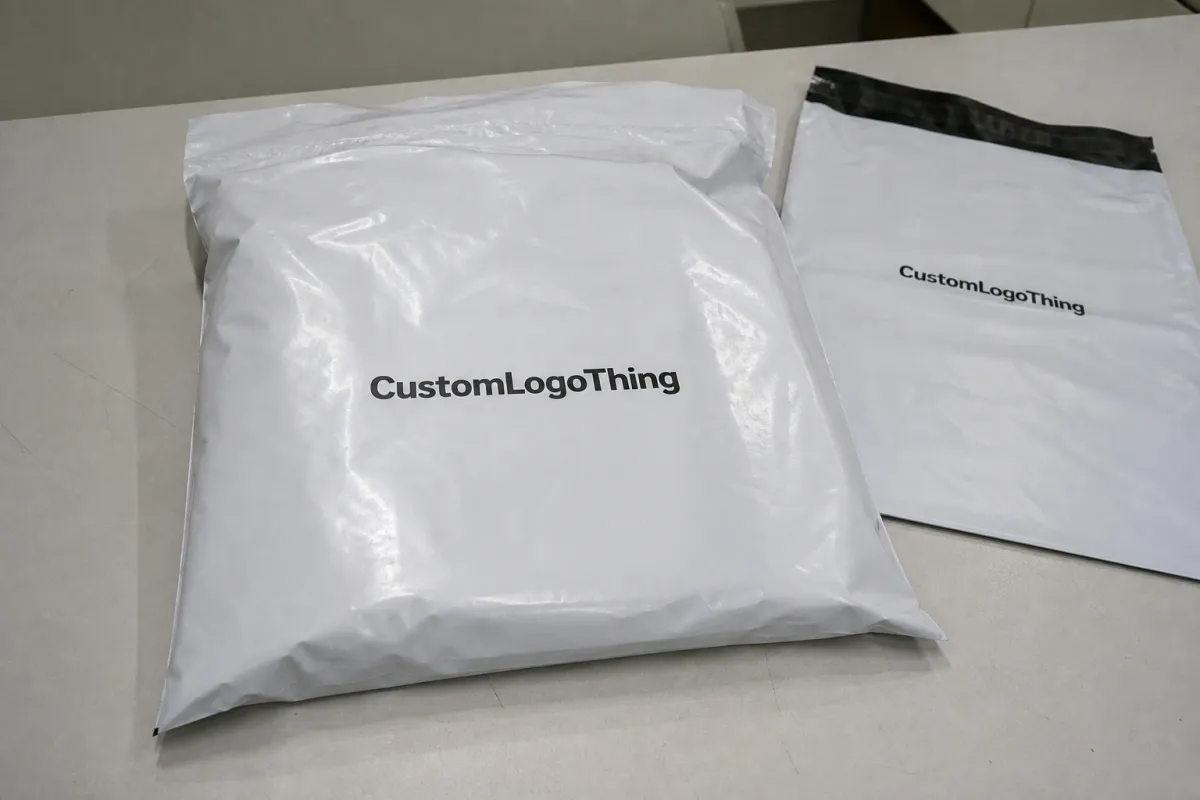
A Slider Lock Clothing bag protects folded apparel, keeps returns organized, and gives customers packaging they can reuse instead of immediately destroying it. For mixed-SKU packing teams, that matters. Size runs, colorways, bundle sets, dancewear kits, uniforms, subscription apparel, and merch drops are easier to manage when each garment stays clean, visible, and contained.
The slider closure is the upgrade over a basic adhesive flap. Adhesive strips are fine for one-way shipping, but they lose strength after opening, catch lint, and tear when someone inspects the garment. A slider lock opens and closes without turning the bag into trash on the first use. That helps with try-ons, returns, showroom samples, warehouse storage, and retail prep.
Buyers use these bags because the risk is manageable. A small custom run can be built around 300, 500, 1,000, or several thousand pieces depending on the size, print, and production route. Exact minimums depend on specs, not optimism. A stock-size clear bag with a one-color logo is a different job from a custom-size frosted bag with multi-color print and warning text.
If you already know your folded garment dimensions, logo file, target quantity, preferred film finish, and delivery deadline, a quote can move quickly. If not, expect questions. Bag size, film gauge, print colors, closure type, and shipping ZIP or postal code affect the final number. Revolutionary, apparently.
The point is not packaging theater. It is making sure your apparel arrives looking intentional, can be handled without constant repacking, and supports the way your fulfillment team actually works.
Product Details That Matter Before You Order
A Slider Lock Clothing bag is a flexible plastic bag with a built-in slider closure. It is designed for folded garments, accessories, sample sets, product kits, and retail-ready apparel packs. It is not a rigid mailer. It is not a display box. It is product packaging that usually goes inside a mailer, carton, shelf bin, showroom drawer, or fulfillment station.
Material choice sets the tone. LDPE is soft, flexible, and common for apparel packaging. PE blends can feel a little stronger in hand and may resist stretching better on heavier pieces. Frosted film gives a boutique look and hides minor handling marks. Clear film is better for barcode scanning, color visibility, warehouse sorting, and quick size checks during packing.
Closure quality matters more than buyers expect. The slider track needs clean alignment, the zipper profile should close without skipping, and the pull tab should move without jamming. A zipper that fails on the first opening is not a premium brand moment. It is a complaint wearing a tiny plastic handle.
Thickness should match garment weight. Light gauges work for tees, scarves, swimwear, socks, and babywear. Medium gauges are better for polos, leggings, uniforms, dancewear, and standard retail apparel. Thicker film adds durability and perceived value, but it also increases unit cost, carton weight, and freight. Packaging does not escape physics just because the logo looks cute.
Branding can stay simple or get ambitious. Common print areas include a front logo, back care notes, recycling icons, size labels, SKU zones, suffocation warnings, QR codes, website URLs, campaign slogans, and line art. One-color printing usually controls cost. Two-color printing improves retail impact. Full-coverage design can work, but only if the artwork is built for flexible plastic. Trying to print a museum mural on a bendy bag is how budgets go to die.
Finish options may include glossy clear, frosted matte, tinted film, opaque privacy film, and specialty textures depending on material availability. The best result is often boringly practical: strong contrast, readable text, and a logo large enough to recognize at arm's length.
Size, Thickness, Print, and Closure Specifications
Choose bag size based on folded garment dimensions, not apparel size labels. A medium hoodie and a medium silk blouse do not need the same bag. Obvious, yes. Missed constantly, also yes.
Fold the actual item the way your team will pack it. Measure width, height, and depth. Then add clearance so staff can slide the garment in quickly without stretching the side seals or crushing the fold. For many apparel pieces, adding about 0.5 to 1 inch to the width and 1 to 2 inches to the height is a practical starting point. Bulky garments need more room, especially if the fold has height.
| Apparel Type | Common Bag Range | Typical Thickness | Best Use Case |
|---|---|---|---|
| Socks, scarves, swimwear, babywear | Small format, often under 9 x 12 in. | About 2 mil | Lightweight retail packaging and sample kits |
| T-shirts, polos, leggings, dancewear | Mid-size format, often 10 x 13 to 12 x 16 in. | About 2.5 to 3 mil | Standard apparel fulfillment and store display |
| Hoodies, denim, robes, uniforms | Larger format, often 13 x 16 in. and above | About 3 to 4 mil | Heavier garments, repeated handling, returns |
Slider lock specs include the pull tab, zipper track, edge seal width, closure strength, and track alignment. Some orders also need hang holes for retail display, vent holes for air release, writable panels for sample rooms, or label zones for SKU stickers. If your fulfillment team scans through the bag, confirm barcode readability before production. Do not assume a scanner will love frosted film just because the mockup did.
Artwork should be production-ready. Vector files are preferred, usually AI, EPS, or a clean PDF. High-resolution PNG files may work for simple logos, but outlined fonts and clear color references reduce mistakes. Use Pantone references when color matching matters. Use CMYK references when the print method supports that route. The proof should show print size, placement, orientation, color, and any required safety text.
Compliance can affect the layout. Suffocation warnings may be required depending on bag opening size and sales market. Recycling symbols, country-specific wording, and retail barcode rules should be reviewed before printing. For broader packaging expectations, buyers can review resources from the International Safe Transit Association and recycling guidance from the U.S. Environmental Protection Agency.
Confirm carton packing details too. Case quantity, carton size, carton weight, and storage space matter. Custom bags are useful. A surprise pallet blocking a hallway is less useful.
Pricing, MOQ, and Unit Cost for Small Batch Runs
Pricing depends on bag size, film thickness, material type, print colors, print coverage, quantity, closure quality, sampling needs, and shipping destination. That is not sales fog. Those are the variables that move the number.
Small runs have higher unit costs because setup, plates or screens, ink, material preparation, machine time, proofing, inspection, and packing are spread across fewer bags. If you order 500 pieces, those fixed costs hit harder than they do at 5,000 pieces. That is why a Slider Lock Clothing Bags small batch custom order should be specified carefully before anyone compares quotes.
As a practical range, simple custom slider bags may land anywhere from higher cents per unit to over a dollar each on smaller orders, depending on size, gauge, print, and freight. Very small batches, specialty films, heavy gauges, or multi-color artwork can push the effective unit cost higher once setup charges are included. Larger runs usually price better, but only if you can actually use the inventory before a rebrand, size change, or packaging update makes it obsolete.
Simple one-color printed slider bags in stock sizes are usually the most small-batch friendly. Custom sizes, specialty films, heavy gauges, opaque materials, metallic inks, and multi-color artwork often push minimums higher. Not always, but often. The smartest budget move is asking for a stock-size option first, then comparing it against a fully custom size.
Setup charges matter. Artwork prep, plate or screen charges, pre-production samples, custom tooling, and freight can matter as much as the per-bag number on smaller orders. A quote that says the bag is cheap but hides freight is not a quote. It is a scavenger hunt.
Practical buying rule: do not compare a 2 mil clear stock bag against a 3 mil frosted custom-size printed slider bag and pretend they are the same product. They are not. Shocking, I know.
The tradeoffs are straightforward. Thinner film lowers cost but can feel flimsy. One-color print saves money but limits retail impact. Stock sizing reduces tooling and setup risk, but it may not fit the garment perfectly. A premium finish helps brand presentation, but it needs enough order volume to make financial sense.
For an accurate quote, send target quantity, exact bag dimensions, material preference, thickness, print colors, artwork file, shipping ZIP or postal code, and deadline. If you need other packaging for the same launch, Custom Logo Things can also help compare apparel bags with Custom Packaging Products such as mailers, inserts, labels, or custom printed boxes.
Process and Timeline From Quote to Delivery
The order path is simple if the information is complete: submit specs, review the quote, confirm artwork, approve the digital proof, approve a physical sample if needed, start production, inspect, pack, and ship. Skip steps and the job does not become faster. It becomes messier.
At the quote stage, a complete request is easier to price because the sales team is not guessing whether you mean 500 bags or 50,000, clear or frosted film, one-color logo or full-coverage print, stock size or custom dimensions. A Small Batch Custom order moves best when the buyer sends the basics upfront.
Proofing deserves attention. The digital proof should show bag size, print size, logo placement, colors, warning text, barcode zones, and orientation. Check it like money depends on it, because it does. If the logo is upside down, the production team will very efficiently make a large quantity of upside-down logos.
Sampling options vary by job. A digital proof is fastest. A material sample helps confirm thickness, clarity, frosted effect, and slider feel. A pre-production sample gives higher confidence before full production, especially for higher quantities, custom sizes, multi-color printing, or retail packaging that will be photographed.
Timeline depends on proof approval, material availability, production schedule, complexity, and shipping method. Simple printed stock-size runs often move faster. Custom sizes, specialty film, multi-color prints, sample approvals, and freight congestion add time. A realistic planning window may be a few weeks after proof approval for simpler work and longer for custom or imported production. Rush schedules should be discussed before artwork is finalized, not after the launch calendar starts smoking.
Delays usually come from incomplete artwork, late color changes, size uncertainty, slow payment approval, holiday production peaks, and last-minute design committees. The committee is often the true bottleneck. Everyone wants a say, nobody wants to own the deadline.
For apparel launches, build in buffer for photoshoots, influencer mailers, fulfillment setup, wholesale delivery windows, and retail floor dates. The bag should support the drop, not hold it hostage. Once the first run is approved, keep the same specs for reorders. Unit cost, proofing, and turnaround usually improve because the hard decisions are already made.
How to Avoid Expensive Ordering Mistakes
The first mistake is ordering by apparel size label. Do not do that. Fold the actual garment, measure the packed shape, and allow enough clearance for fast packing. A size large tee and a size large fleece pullover are not siblings. They are barely acquaintances.
The second mistake is choosing film that is too thin for the garment weight. Lightweight tees may be fine in about 2 mil film. Embroidered hoodies, denim, robes, and uniforms usually need 3 mil or heavier because they create pressure on the side seals and slider track during packing, stacking, and returns.
The third mistake is overdesigning the bag. Gradients, tiny legal text, weak contrast, heavy ink coverage, and delicate line art can increase cost while making the print harder to read on flexible plastic. Good packaging design respects the material. Bad design treats every surface like a brochure.
The fourth mistake is ignoring operational details. Barcode visibility, SKU labels, suffocation warnings, hang holes, venting, carton counts, and fulfillment handling all matter. A bag can look clean on a mockup and still annoy the warehouse every single day.
The fifth mistake is rushing approval without checking orientation. A beautiful upside-down logo is still upside down. Very custom. Not very useful.
Test one packed sample before full production whenever possible. Check garment fit, slider movement, seal strength, print visibility, stackability, and the customer opening experience. If returns are common in your business, put extra focus on closure durability. Reusable slider locks help with exchanges, showroom samples, storage, and customer return shipments.
Order slightly more than the exact launch count if the budget allows. Replacements, damaged cartons, photoshoots, late wholesale requests, and influencer kits can eat inventory fast. For a 300-piece drop, 330 to 375 bags may be more realistic than exactly 300. Exact-match ordering sounds efficient until one carton gets crushed.
Why Custom Logo Things Is Built for Practical Apparel Packaging
Custom Logo Things focuses on usable specs, not vague product packaging speeches. Buyers need the right bag, the right print, a clear proof, and a quote that makes sense. The goal is not to make packaging sound mystical. It is to get the item packed, protected, branded, and shipped.
The team helps match bag size, film thickness, print method, closure style, and quantity to the actual apparel use case. A dancewear brand may need clear bags for quick color checks. A hoodie drop may need thicker frosted film. A uniform supplier may care more about SKU labels and case counts than soft-touch effects. Different jobs need different specs. Amazing how that works.
Small batch support matters for brands that are not ready for massive production runs. Custom Logo Things can guide buyers through minimums, cost-saving stock sizes, simple logo prints, and reorder planning. A slider lock clothing Bags Small Batch Custom Order should be sized around the business stage, not around someone else's warehouse capacity.
Artwork help is practical too. The team can check logo quality, flag readability issues, advise on print placement, and help prepare files that production can actually use. If your logo file is a screenshot pulled from a social profile, say that early. It can usually be fixed, but pretending it is production art wastes time.
Quality control should focus on the details customers and packers will notice: slider function, seal consistency, print alignment, film clarity or finish, material thickness, carton packing, and spec matching before goods ship. For brands expanding into repeat wholesale or subscription volume, Wholesale Programs can help plan larger runs, repeat specs, and better pricing tiers.
Quote transparency matters. Buyers should see how quantity, size, thickness, print complexity, and freight affect the total instead of receiving a mystery price pulled from the packaging fog machine. Good-fit buyers care about clean presentation, realistic timelines, repeatable specs, and direct answers. Buyers looking for magical luxury packaging at bargain-bin pricing may need a brief relationship with reality first.
Custom packaging should make fulfillment smoother and brand presentation stronger. If it creates new problems for the warehouse, the packaging failed, no matter how nice it looked in the mockup.
Next Steps Before You Request a Quote
Before asking for pricing, gather the core details. Measure the folded garment. Choose a target bag size. Estimate quantity. Pick clear, frosted, tinted, or opaque film. Decide on thickness. Confirm the number of print colors. Gather the best logo file available.
- Product type: tee, hoodie, leggings, uniform set, swimwear, robe, accessory kit, or sample set.
- Bag dimensions: width, height, and any depth allowance based on the folded garment.
- Material preference: clear LDPE, frosted PE blend, tinted film, or opaque privacy film.
- Print details: logo location, number of colors, warning text, QR code, SKU zone, and barcode needs.
- Order details: total quantity, delivery address, deadline, and whether a sample is required.
Send photos of the folded garment and any current packaging if you have them. Photos help confirm whether the proposed size is realistic and whether the closure style fits the use case. They also prevent the classic problem where everyone agrees on dimensions and then discovers the garment was folded differently by the packing team.
State your priorities clearly. Lowest unit cost, fastest turnaround, premium feel, retail display, reusable returns, recycled-content options, and a tight launch deadline all point to different specs. If you are undecided, ask for a good-better-best quote: one practical budget option, one stronger retail option, and one premium option with upgraded film or finish.
Reorder planning is where brands save time. Keep artwork, approved specs, carton details, previous quantity, proof files, and delivery notes on record. Reorders are faster when nobody has to recreate the job from memory. For general ordering questions, the FAQ page is a useful starting point before sending final specs.
For a slider lock clothing bags Small Batch Custom order, the fastest path is sending complete specs upfront so production can quote, proof, and schedule without chasing basic details. Clean input creates a cleaner order. Funny how often that is the whole trick.
FAQ
What is the usual MOQ for custom slider lock clothing bags?
MOQ depends on size, material, print method, and whether the order uses a stock size or fully custom dimensions. Small batch orders are usually easier with a standard bag size and simple one-color printing. Custom sizes, specialty film, heavier thickness, and multi-color artwork typically require higher minimums.
How much do small batch custom clothing bags with slider locks cost?
Unit cost depends on dimensions, film thickness, print colors, quantity, setup charges, sampling, and freight. Smaller runs cost more per bag because setup and production time are spread across fewer units. Simple jobs may price in the higher cents per bag, while complex small runs can move above a dollar per unit after setup and shipping. Send quantity, bag size, material, thickness, artwork, print colors, and delivery location for an accurate quote.
Can I order slider zipper apparel bags with my logo in low quantities?
Yes, low-quantity orders may be possible depending on bag size, print complexity, and available production options. A simple logo on a stock-size slider bag is usually more small-batch friendly than a fully custom printed bag. If the budget is tight, ask for stock-size options before moving into custom tooling or specialty finishes.
What size slider lock bag do I need for folded clothing?
Measure the actual folded garment width, height, and depth instead of relying on apparel size labels. Add enough clearance so the garment slides in easily without stretching seams or stressing the closure. Heavier items like hoodies, denim, robes, and uniforms usually need larger bags and thicker film.
What is the lead time for a small custom order of slider clothing bags?
Lead time depends on proof approval, sampling requirements, material availability, production schedule, and shipping method. Simple printed stock-size orders usually move faster than custom-size, multi-color, or specialty film orders. To avoid delays, approve artwork quickly, confirm specs once, and provide the delivery deadline before quoting.
