Buyer Fit Snapshot
| Best fit | paper bag price with logo for packaging buyers comparing material specs, print proof, MOQ, unit cost, freight, and repeat-order risk where brand print, material, artwork control, and repeat-order consistency matter. |
|---|---|
| Quote inputs | Share finished size, material target, print colors, finish, packing count, annual reorder estimate, and delivery region. |
| Proofing check | Approve dieline scale, logo placement, barcode or warning zones, color tolerance, and any recyclable or compostable wording before bulk production. |
| Main risk | Vague material claims, crowded artwork, or missing packing details can create delays even when the unit price looks attractive. |
Fast answer: Paper Bag Price With Logo: Costs, Specs & Ordering should be specified like a repeatable production item. The safest quote includes material, print method, finish, artwork proof, carton packing, and reorder notes in one written spec.
What to confirm before approving the packaging proof
Check the product dimensions against the actual filled item, not only the sales mockup. Ask for tolerance on folds, seals, hang holes, label areas, and retail display edges. If the package carries a logo, QR code, warning copy, or legal claim, reserve that space before decorative graphics fill the panel.
How to compare quotes without losing quality
Compare board or film grade, print process, finish, sampling route, tooling charges, carton quantity, and freight assumptions side by side. A lower quote is only useful if the supplier can repeat the same color, closure quality, and packing count on the next order.
A paper bag price with logo can move more than most buyers expect. Two bags that look almost identical on a screen can end up in different price bands once paper weight, handle type, print coverage, finish, packing method, and freight are added to the calculation. The lowest-looking option is not always the least expensive order once the full bill arrives.
For a packaging buyer, the sharper question is not "What is the cheapest bag?" It is "What paper bag price with logo gives the right balance of presentation, durability, MOQ, and landed cost?" That framing protects margin, limits avoidable reorders, and cuts down on the familiar surprise of hidden charges after a quote appears settled.
Branded paper bags occupy an unusual spot in packaging. They are containers, yes, but they also function as moving media. A customer carrying one through a mall, food court, trade show floor, or city street extends the brand beyond the register. I have seen small design changes turn a forgettable bag into something customers keep for a second use, which is exactly why paper bag price with logo should be judged on measurable variables rather than guesswork.
Why Paper Bag Price With Logo Can Swing So Much
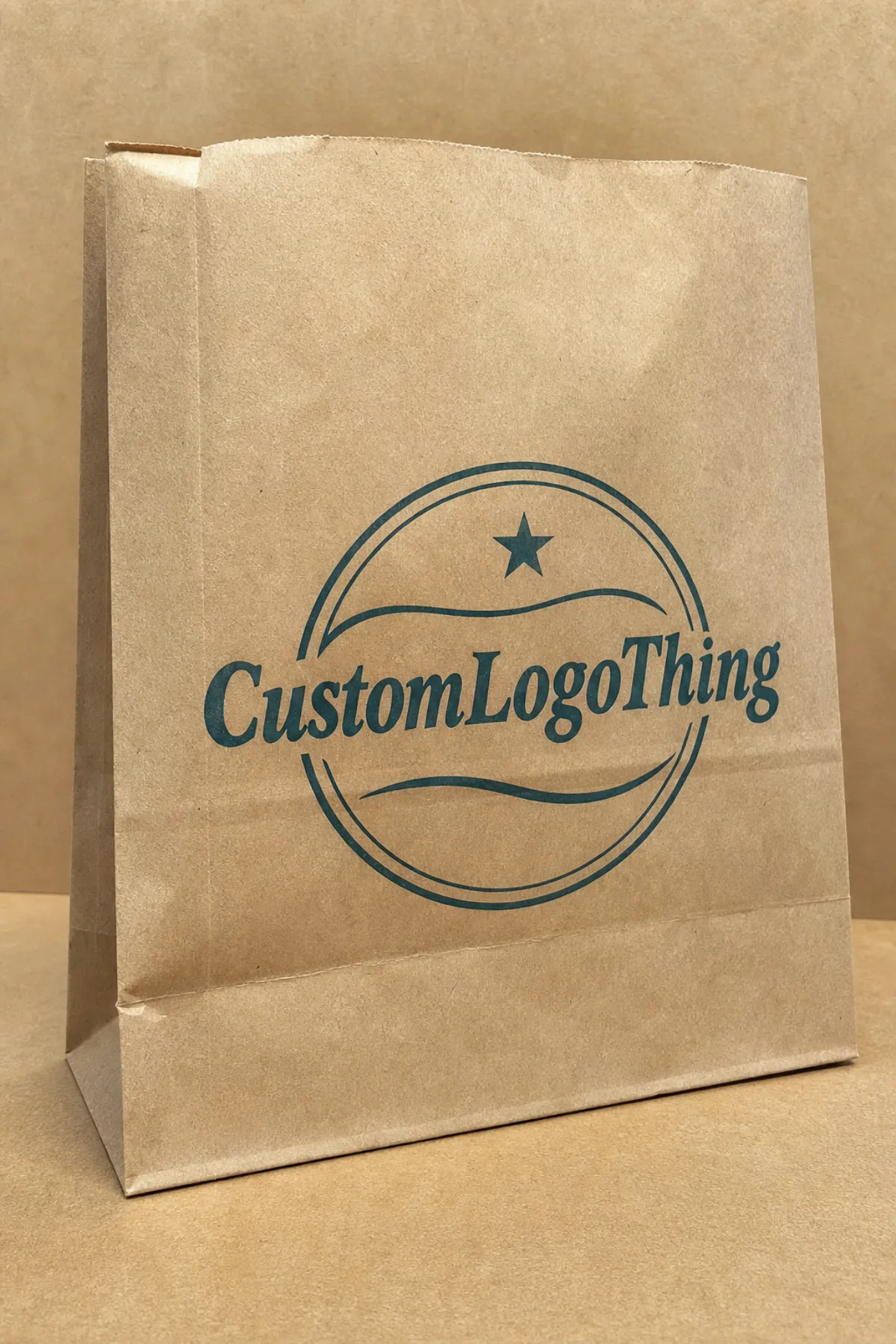
The most common mistake is assuming that two paper bags with similar dimensions ought to cost nearly the same. In reality, paper bag price with logo is shaped by a stack of small decisions: kraft versus coated stock, plain handles versus reinforced rope, one-color print versus full coverage, and a basic fold versus a premium laminated finish. Each choice adds a little cost. Those small increments compound quickly once the order grows.
Volume changes the math. A 500-piece run often carries a higher unit price than a 5,000-piece run because setup costs, proofing, and production changeovers are spread over fewer units. In many supplier quotes I have reviewed, that gap is not subtle; moving from a short run to a more efficient quantity can reduce unit cost by 15% to 35%, sometimes more when the artwork is simple. The trade-off is flexibility: a larger order lowers unit cost, but it also ties up cash and storage space.
Appearance and economics are not the same thing. A bag that looks plain can still be expensive if it uses heavier paper, a custom die-cut handle, or a special coating. The reverse happens too. A premium-looking bag can be surprisingly efficient if it uses a standard structure and a narrow print footprint. Paper bag price with logo rewards specification discipline more than visual ambition.
Another layer gets missed often: the bag keeps working after the sale. If a retailer hands out a flimsy bag that tears before the customer reaches the car, the brand absorbs a visible failure. If the bag is oversized and ornate for the use case, the buyer pays for features nobody notices. The right paper bag price with logo supports the product, the trip home, and the brand story without spending on details that do not change the customer experience.
People ask for a quote and then compare only the headline number. That number is incomplete unless it includes stock, handles, print method, carton pack, and delivery terms. Once those pieces are lined up correctly, paper bag price with logo becomes a procurement exercise instead of a guessing game.
Seasonal campaigns and short promotional windows raise the stakes again. A low minimum can matter more than a low unit cost if it keeps dead inventory off the shelf. For an evergreen retail program, the equation can flip. The smartest purchase is rarely the cheapest bag on paper; it is the one that fits the operating model behind the order.
Paper Bag Price With Logo: Product Options That Change Cost
Five paper bag formats drive most pricing conversations: Flat Paper Bags, SOS bags, twisted-handle shopping bags, rope-handle premium bags, and laminated retail bags. Each style serves a different commercial purpose, and each creates a different paper bag price with logo because the material use, labor steps, and finishing time are not the same.
Flat paper bags are usually the most economical. They suit bakeries, takeout counters, pharmacies, and lightweight retail items. SOS bags add structure and are often chosen for grocery or foodservice applications. Twisted-handle shopping bags sit in the middle of the market and are common for fashion, gifting, and branded retail. Rope-handle bags and laminated bags move toward premium presentation, which pushes paper bag price with logo higher because the build is more complex and the finish is more visible.
| Bag style | Typical use | Cost drivers | Common MOQ range | Typical unit price at mid-volume |
|---|---|---|---|---|
| Flat kraft bag | Light food, takeaway, inserts | Low paper usage, simple print | 1,000-5,000 | $0.04-$0.12 |
| SOS bag | Foodservice, grocery, carryout | More structure, moderate print area | 1,000-3,000 | $0.08-$0.20 |
| Twisted-handle bag | Retail, apparel, events | Handle assembly, larger panels | 500-3,000 | $0.15-$0.35 |
| Rope-handle premium bag | Gift, luxury, boutique | Reinforcement, upscale finish | 500-2,000 | $0.35-$0.95 |
| Laminated retail bag | Fashion, cosmetics, premium branding | Lamination, special inks, high visual coverage | 1,000-5,000 | $0.45-$1.20 |
Paper choice matters as much as bag style. Kraft stock usually keeps paper bag price with logo lower because it is familiar, widely sourced, and visually honest. Coated paper, heavier caliper stock, or recycled content with tighter sourcing controls can move pricing up. If the bag needs to feel sturdy and show color cleanly, a buyer may accept that increase. If the bag is purely functional, the extra spend may not make sense.
Size changes more than the drawing suggests. Larger bags use more raw material, but they also weigh more in freight, fit fewer units per carton, and sometimes need stronger handles or reinforcements. That creates a cascade effect. A bag that is only slightly bigger on the sketch can shift paper bag price with logo because sheet yield changes and packed carton count drops.
Handle choice is another direct cost lever. No-handle and cut-out options usually keep the order lean. Twisted paper handles add assembly labor. Rope handles, ribbon handles, or reinforced cardboard inserts are premium touches that improve brand perception, but they should be chosen deliberately. A buyer who matches the handle to the load and the customer journey usually gets a better paper bag price with logo than a buyer who loads on features for their own sake.
Finishes deserve careful attention. Gloss lamination, matte lamination, soft-touch coating, foil stamping, spot UV, and embossing all add processing steps. Some improve scuff resistance. Others lift shelf appeal. None are free. If the bag will be handled briefly and tossed, a basic finish can be enough. If the bag may be photographed, gifted, or reused, a higher-end surface can justify the extra spend.
The most cost-efficient bag is usually the one matched to the product. Over-specifying a bag can inflate paper bag price with logo by 20% or more without improving outcomes. Under-specifying it can create tear-outs, crushed corners, or weak handles. The middle ground is rarely dull. It is where disciplined packaging decisions live.
The lowest quote is rarely the lowest landed cost if it misses the right paper grade, the print coverage you actually need, or the finish that protects the bag in use.
Paper Bag Price With Logo Specifications That Matter
Good quoting starts with clean specifications. If the request is vague, paper bag price with logo turns into a moving target because the supplier has to fill in missing details. That slows the process and raises the risk of comparison errors. A buyer who sends dimensions, paper type, handle style, print colors, finish, and delivery location usually gets a tighter quote and fewer revisions.
The first specification is size. Length, width, and gusset depth determine how much material goes into each unit. The second is paper weight, often described in GSM or thickness. A lighter stock may work for lightweight retail goods, while a heavier stock is better for products with sharp edges, high fill weight, or a premium customer touchpoint. Those numbers affect both raw material use and paper bag price with logo.
Print method matters too. A simple one-color flexographic print can be efficient on kraft bags and high-volume runs. Offset printing supports finer detail and stronger brand color control. Specialty decoration can lift visual impact, but it also changes setup and inspection steps. If the artwork uses solid blocks of color, close registration, or full-bleed coverage, paper bag price with logo tends to rise because production has to work harder to hold consistency.
Artwork itself can alter cost. A design with tiny type, a full background, or print on both sides usually costs more than a single logo on one panel. If the bag requires exact brand colors, the supplier may need extra checks to hit the target. If the logo is simple and the print area is moderate, the order can stay more efficient. Buyers should ask whether the quote assumes one color, two colors, or full CMYK before comparing numbers.
- Dimensions: length, width, gusset, and handle drop.
- Paper grade: kraft, coated, recycled, or premium art paper.
- Paper weight: GSM or equivalent thickness.
- Print setup: flexo, offset, screen, or specialty decoration.
- Colors: one-sided, two-sided, or full coverage.
- Finish: matte, gloss, lamination, soft-touch, or no coating.
- Structure: bottom reinforcement, folded top, gusset depth, and handle attachment.
Structural details are easy to miss, yet they directly affect performance. Bottom reinforcement helps the bag handle heavier contents without flexing. A wider gusset gives more room for boxed products. Better fold quality helps the bag sit flat in packing and open cleanly at the counter. These are not cosmetic details. They are part of the reason paper bag price with logo can look low at first and then rise once the bag is specified properly.
For brands that need documentation, sourcing standards matter too. If the bag is part of a sustainability claim, ask about chain of custody and certification before final approval. FSC certification, for example, can help document responsible fiber sourcing. See FSC for current standard language and certification framework. That does not make a bag cheaper, but it can make the purchase easier to defend internally.
When the bag has to survive more than one touchpoint, shipping assumptions matter. If cartons are going into retail distribution or e-commerce consolidation, ask whether pack-out and palletization have been considered. For distribution testing references, ISTA provides widely used procedures for transport and handling verification. That kind of due diligence helps buyers keep paper bag price with logo aligned with actual use, not just a sample photo.
Clear specifications do more than sharpen the quote. They cut the back-and-forth that slows approvals. They reduce the risk of rework. They make it easier to compare suppliers because everyone is pricing the same bag. In commercial packaging, that matters more than most people admit. A precise request often lowers the true paper bag price with logo simply because it removes expensive ambiguity.
Cost, Pricing, MOQ: How to Read a Quote
A serious quote usually breaks into five parts: material, printing, finishing, packing, and delivery. If a supplier sends only one number with no detail, paper bag price with logo is harder to trust because the buyer cannot see where the money is going. The best quotes make the trade-offs visible. That speeds up procurement and makes the final decision cleaner.
What a quote should include
Ask whether the price includes prepress, plate charges, cylinders, artwork corrections, sampling, or proofing. Those items often sit outside the headline rate. On a small run, they can have a meaningful effect on the landed number. On a larger run, they may be diluted enough that the unit cost looks attractive. Either way, paper bag price with logo should be read as a package, not a single line item.
MOQ is not just a factory preference. It is the point where setup becomes economically reasonable. A 300-piece order might be possible, but if setup costs are fixed, the per-unit rate can climb quickly. A 3,000-piece order may look bigger on paper, yet it can bring the unit cost down sharply because the setup is spread over more bags. That is why paper bag price with logo often improves in steps rather than smoothly.
How to compare quotations fairly
Compare the same size, same paper grade, same number of colors, same handle type, same finish, and same delivery terms. Otherwise you are not comparing quotes; you are comparing different products. This is where many buyers get caught. One supplier quotes a basic stock bag. Another quotes a laminated version with reinforced handles. The paper bag price with logo looks wildly different, but the products are not equivalent.
If one quote looks too low, ask what changed. Did the paper weight drop? Is the print on one side instead of two? Are the handles simpler? Is freight excluded? Is the lead time longer than the other offer? Paper bag price with logo can be compressed by removing the very features that keep the bag useful. That may be fine, but only if the buyer knows it upfront.
The most useful comparison is landed cost. That means the bag price plus printing plus packing plus freight to the destination. A quote that looks slightly higher at the unit level can still win if it includes better carton efficiency, lower damage risk, or more predictable delivery. Buyers focused only on the first number often miss the real total. For paper bag price with logo, landed cost is the number that matters.
Think through two options. Option A is a lower MOQ with a higher unit rate, useful for a pop-up store or launch test. Option B is a larger run with a lower unit rate, useful for a stable retail program. Option A may be the right choice if storage is tight. Option B may be the right choice if the brand already knows the bag will move. Both are rational. The better paper bag price with logo depends on the business model, not the quote alone.
A quote is only useful when it tells you what is included, what is excluded, and which specification choices are actually driving the number.
Timing matters too. If a supplier is overloaded, they may sharpen price to fill production gaps, but lead time could stretch. If the schedule is open, a better delivery window may be available even if the unit price is slightly higher. Procurement teams should ask about both cost and capacity. A bag that lands late is expensive in a different way. The real paper bag price with logo includes the cost of missing the launch date.
For buyers managing cash flow, the decision usually comes down to balance. A smaller run preserves flexibility but usually raises the unit rate. A larger run improves efficiency but increases inventory risk. There is no universal answer. The right move is to compare three scenarios: the smallest acceptable run, the most economical run, and the run that best matches your actual sell-through. That comparison turns paper bag price with logo into a strategic choice instead of a guess.
Process, Timeline, and Lead Time From Quote to Delivery
A good order follows a predictable sequence: inquiry, specification review, quote approval, artwork submission, proofing, production, quality check, and shipping. If any step is rushed or incomplete, paper bag price with logo can climb because mistakes become corrections. Tight process discipline lowers risk. It also gives the buyer a clearer view of schedule and cost.
The first delay usually comes from incomplete inputs. If dimensions are missing, the supplier has to ask. If artwork is not print-ready, the file has to be corrected. If the buyer has not decided whether the print is one-sided or two-sided, the quote may have to be revised. Each revision slows the cycle. In practice, the fastest way to stabilize paper bag price with logo is to front-load the specification work.
Typical timeline by order type
For straightforward orders, proof approval to shipment often lands in the 12 to 15 business day range, assuming the factory schedule is open and the artwork is clean. More complex jobs with multiple colors, lamination, or specialty handles can move into the 15 to 25 business day range. Rush orders may be possible, but they usually trade time for flexibility and can raise the paper bag price with logo because production has to be reprioritized.
Sampling deserves attention. If the bag is new, a physical sample can prevent expensive surprises. It may add a few days, but it often saves more time later by confirming size, handle feel, print placement, and box fit. For a launch bag, that is usually money well spent. If the order is a reorder of a proven SKU, a sample may be unnecessary. The right paper bag price with logo depends on whether the design is proven or still being refined.
Quality checks are not optional on a serious program. The supplier should verify print alignment, color consistency, handle attachment, seam strength, and carton count before shipping. If the order is going to retail or foodservice, a weak inspection process can wipe out the savings from a lower quote. A bag that arrives damaged or off-spec is more expensive than a slightly higher quote with a cleaner process. That is especially true when the brand has fixed launch dates or seasonal windows.
Shipping terms also affect timing. Inland delivery, export consolidation, or split shipments can each change the calendar. A freight quote that looks attractive may not help if the bags miss the date the store opens. The buyer should confirm when the bags leave the production site, how they are packed, and who is responsible for transit. In commercial packaging, schedule certainty can be as valuable as a lower paper bag price with logo.
Distribution testing can matter for bags packed into larger cartons, especially if the cartons will be handled repeatedly. If your internal team wants a benchmark, ISTA procedures give a solid reference point for transport and handling expectations. That does not mean every paper bag order needs formal testing, but it does mean the buyer has a standard to point to when discussing pack-out and shipping durability.
Store openings and seasonal pushes need lead-time discipline. If bags are needed for a launch event, I would not leave the order until the last minute. Build in time for proofing, one revision, production, and a shipping cushion. A buyer who works backward from the launch date can keep paper bag price with logo under control because there is less pressure to pay rush premiums or approve a half-ready design.
Why Choose Us for Paper Bag Price With Logo Orders
Custom Logo Things is built for buyers who want commercial clarity rather than vague promises. The strongest reason to work with us is simple: we help turn paper bag price with logo into a specification decision. That means transparent quoting, careful review of bag structure, and direct guidance on where to spend and where to save.
For procurement teams, that matters because the quote is only the start of the transaction. The real value sits in repeatability. If the first order runs cleanly, the reorder is easier. If the proof is accurate, the print holds. If the bag matches the product, the customer experience is better. We focus on those mechanics because they protect margin better than flashy language ever could.
We also pay attention to the details that often get buried. Print coverage, paper caliper, handle type, reinforcement, finish, and carton pack all influence the final number. A buyer comparing paper bag price with logo across several suppliers should be able to see exactly what each supplier is quoting. If a cost difference comes from a heavier stock or a better finish, that is useful. If it comes from missing information, that is a problem waiting to happen.
There is a commercial advantage to working with a team that can think in both presentation and volume terms. A premium boutique bag may need a different structure than a foodservice carry bag. A retail chain may need a lower per-unit rate and a tighter reorder path. An ecommerce brand may care more about carton efficiency and shipping stability. We aim to match the bag to the use case so paper bag price with logo stays aligned with what the buyer actually needs.
What most people get wrong is assuming all suppliers quote the same way. They do not. Some bury setup. Some omit freight. Some assume a different paper grade. Some quote a bag that looks similar but is structurally different. We reduce that confusion by asking the right questions early, then building the quote around a clear spec sheet. That makes paper bag price with logo easier to trust and faster to approve.
We can also help when the project sits between two goals. Maybe the brand wants a more premium look, but the budget is fixed. Maybe the buyer wants the lowest unit rate, but the launch date is tight. Maybe the run is small now and larger later. Those are normal packaging decisions. The right answer is usually not extreme; it is balanced. We work that balance so paper bag price with logo supports the commercial outcome instead of fighting it.
That approach Works for Retail, foodservice, gifting, and promotional programs alike. The category changes, but the logic does not. Clear specs create better quotes. Better quotes create fewer surprises. Fewer surprises protect the budget. It is not glamorous. It is effective.
Next Steps to Confirm Your Paper Bag Price With Logo
Start with the minimum information a supplier needs to quote accurately: bag size, quantity, paper type, handle style, print colors, finish, and delivery location. If you have a sample or reference image, include that too. The faster the spec is locked, the tighter the paper bag price with logo will be.
If you are not sure which configuration is best, request two or three scenarios instead of one. Compare a plain kraft version, a mid-tier printed version, and a premium finished version. That gives you a pricing ladder and makes trade-offs visible. It is much easier to choose once you can see how paper bag price with logo changes across material and finishing levels.
Prepare artwork early. Ask whether the design will be one-sided, two-sided, or full coverage before you request final pricing. Confirm the print method. Check whether any special finish is truly necessary. A lot of delays come from artwork that is almost ready but not quite print-ready. That kind of gap can distort both lead time and paper bag price with logo.
Before approving the order, decide what you are optimizing for: the lowest unit price, the fastest lead time, or the strongest presentation. Those goals do not always align. If you choose one clearly, the supplier can quote the right bag instead of trying to guess what matters most. That is the cleanest path to an accurate paper bag price with logo.
If you have a spec sheet, send it. If you have a sample, send a photo. If you only have an idea, send the use case and target quantity. The more concrete the input, the more precise the quote. In packaging, precision is not a luxury. It is how paper bag price with logo gets confirmed quickly and without avoidable surprises.
How is paper bag price with logo calculated?
The main drivers are size, paper grade, print colors, handle type, and finish. Setup costs matter more on smaller runs because they are spread across fewer bags. Freight and packing can also change the landed price, especially for bulky orders, so the paper bag price with logo should always be read as a total package rather than a single unit number.
What MOQ should I expect for paper bags with a logo?
MOQ depends on the production method and the bag style you choose. Simpler bags usually support lower minimums than premium printed or finished bags. If you need a smaller run, expect a higher unit cost because setup is less diluted, which means the paper bag price with logo rises even when the bag itself looks simple.
Does paper bag price with logo include artwork setup?
Not always, so the quote should state whether prepress or plate charges are included. Ask if the price includes proofing, revisions, and final file checks. Confirm whether extra colors or full-bleed artwork create additional charges, because those items can change paper bag price with logo more than buyers expect.
Which bag style gives the lowest paper bag price with logo?
Flat and SOS-style bags are often the most economical. Lower print coverage and simpler handles usually keep costs down. The lowest price still depends on quantity, paper weight, and how the bag will be used, so the best paper bag price with logo is the one that matches the product instead of overbuilding it.
How long does it take to produce paper bags with a logo?
Lead time depends on quantity, print complexity, and proof approval speed. Straightforward orders move faster than multi-color or specialty-finish jobs. If you have a fixed launch date, confirm production and shipping timing before approving the order so the paper bag price with logo does not end up being cheap but late.
The practical takeaway is simple: lock the specification first, then compare suppliers on the same bag, the same packing terms, and the same delivery point. That is the fastest way to get a paper bag price with logo you can trust and a quote that holds up after production starts.


