Buyer Fit Snapshot
| Best fit | Paper Honeycomb Void Fill Supplier projects where brand print, material claims, artwork control, MOQ, and repeat-order consistency need to be specified before quoting. |
|---|---|
| Quote inputs | Share finished size, material target, print colors, finish, packing count, annual reorder estimate, ship-to region, and any compliance wording. |
| Proofing check | Approve dieline scale, logo placement, barcode or warning zones, color tolerance, closure strength, and carton packing before bulk production. |
| Main risk | Vague material claims, crowded artwork, missing packing details, or unclear freight terms can make a low unit price expensive after revisions. |
Fast answer: Paper Honeycomb Void Fill Supplier: Material, Print, Proofing, and Reorder Risk should be specified like a repeatable production item. The safest quote records material, print method, finish, artwork proof, packing count, and reorder notes in one written spec.
Production checks before approval
Compare the actual filled-product size with the drawing, then confirm tolerance on folds, seals, hang holes, label areas, and retail display edges. Reserve space for logos, QR codes, warning copy, and material claims before decorative graphics fill the panel.
Quote comparison points
Review material grade, print process, finish, sampling route, tooling charges, carton quantity, and freight assumptions side by side. A quote is only useful when the supplier can repeat the same color, closure quality, and packing count on the next order.
Paper Honeycomb Void Fill Supplier: Buying Guide Basics
A paper honeycomb void fill supplier can look like a modest line item until a carton reaches the destination with too much headspace, a product has shifted into one corner, and what left the dock in good shape comes back with scuffed edges, cracked closures, or a crushed insert. A paper honeycomb void fill supplier exists to turn that empty space into controlled restraint, holding the load in place with a paper-based structure instead of loose plastic fill. For brands trying to ship cleaner, lighter, and with less waste, this is often one of the first sustainable packaging options worth testing on the pack floor.
Not every paper honeycomb void fill supplier carries the same material, and that difference matters more than buyers sometimes expect. Paper grade, cell size, expansion ratio, roll width, and conversion consistency all shape how the product behaves at the packing station and inside the carton. A roll that opens evenly and keeps its form can speed up packing, while a weak or inconsistent roll can leave gaps, create extra labor, and still fail to keep the product steady in transit. The supplier matters as much as the material itself, especially once the cartons start moving through real parcel networks.
From a packaging buyer's point of view, the material needs to fit ordinary warehouse work without forcing a major equipment change. The right paper honeycomb void fill supplier should help with stock sizes, sample rolls, dispenser options, and practical advice on which cartons are a good fit and which need a different protective approach. E-commerce orders, retail replenishment, kitting, and mixed-SKU shipments are all common use cases, especially when the job is to stop movement rather than suspend a very fragile item in a full engineered shipper.
If you are comparing options, keep the goal simple: find a paper honeycomb void fill supplier that explains the material clearly, supports a real trial, and gives you enough detail to compare value instead of chasing the lowest roll price.
What a paper honeycomb void fill supplier actually does
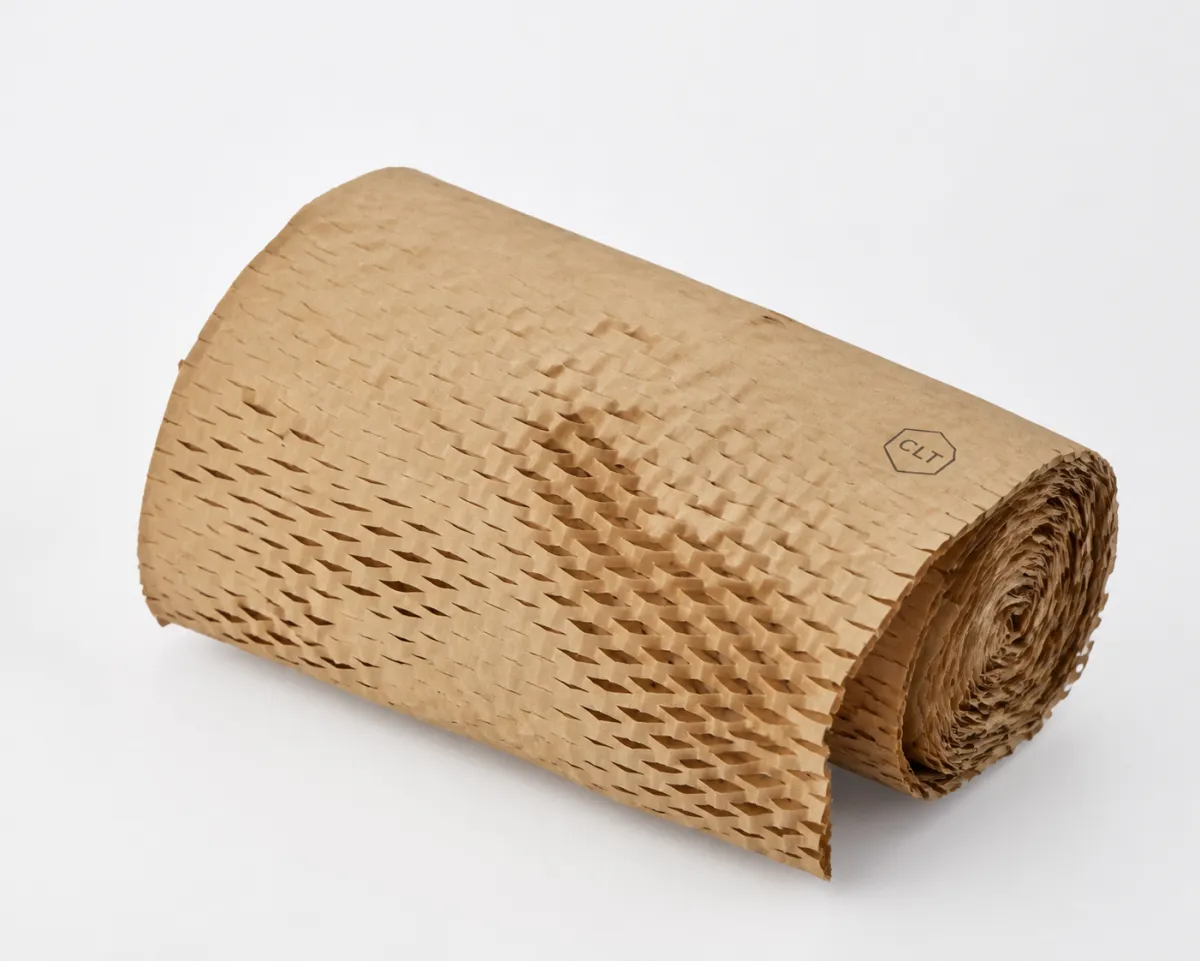
A paper honeycomb void fill supplier does more than ship rolls of paper. The better ones help match the fill pattern to the carton size, the product weight, and the amount of void space that needs to be controlled. The structure starts flat, then expands into a three-dimensional lattice that creates friction and holds its shape once it is packed around the product. That behavior matters on vibration-heavy parcel routes, where a carton that can move a little inside the shipper often moves a lot by the time it reaches the customer. A paper honeycomb void fill supplier should understand that dynamic well enough to recommend the right roll format without guesswork.
The material itself is simple in concept, yet very specific in performance. Paper honeycomb void fill is a paper-based structure that opens into cells, and those cells add bulk without creating the mess that comes with loose packing peanuts. As the web of paper locks together during expansion, the material creates a restrained cushion around the product and against the carton wall. That makes it useful for bottles with secondary packaging, bundled components, cosmetics, accessories, and other items that need to stay centered inside the shipper.
Supplier selection matters because not all honeycomb paper behaves the same way. Some rolls expand more aggressively, some are stiffer, and some hold better repeatability from roll to roll. A good paper honeycomb void fill supplier should be able to talk about basis weight, cell consistency, roll width, and how much void each roll typically covers. Stock widths often sit around 6 in. to 24 in., while larger or custom formats may call for extra setup and longer lead times. That kind of detail matters because a box that is 10 mm too loose can move enough to scuff a label, crack a closure, or rub a printed panel during transit.
I have seen teams try to compensate for poor fit by adding more material, and that usually just creates a slower pack-out without actually fixing the packing problem. The carton still has room to migrate if the fill pattern is wrong. A paper honeycomb void fill supplier that understands this will talk about restraint first and volume second.
A well-run supplier also helps with the basics that reduce friction on the floor:
- Stock roll sizes that match common carton dimensions
- Sample rolls for real pack-out testing
- Dispenser or workstation guidance for hand packing
- Clear advice on where the material fits and where a divider or insert is the better choice
The right paper honeycomb void fill supplier is not just selling paper; it is helping build a repeatable packing method that protects the product and keeps the line moving with less variation from one operator to the next.
How paper honeycomb void fill works inside a shipper
The mechanics are straightforward. Paper honeycomb void fill starts compact, then is stretched or expanded so the cells open into a 3D structure. Once opened, it has enough body to fill empty space, create friction, and resist spring-back after the carton is closed. A paper honeycomb void fill supplier should be able to explain not just the roll itself, but the way the paper behaves after it is packed around a product. The finished carton feels more settled, and the product is far less likely to migrate during handling.
Protective performance depends on contact, coverage, and fit. If the paper is used in the right quantity, it can reduce rattling, minimize rubbing, and absorb light impact before the product touches the carton wall. In a parcel network, that matters more than many people expect. A box does not need to be dropped from a great height to cause damage; repeated vibration, cornering force, and conveyor handling are enough to open a gap around the product. A paper honeycomb void fill supplier that understands that reality will focus on restraint first and appearance second.
"If the box can move, the box will move."
That is the basic rule on a packing floor. Paper honeycomb void fill works best where the carton has extra headspace, the product is already in a secondary package, or the shipment needs a tidy unboxing experience without loose debris. It is a strong choice for kitting work, e-commerce shipsets, cosmetic boxes, and mixed-SKU orders where the packer needs to close a carton quickly and keep the contents centered. A paper honeycomb void fill supplier should be honest about those strengths rather than pretending the material suits every item.
It also has limits, and those limits matter. Very fragile products may still need dividers, corner blocks, molded pulp, or a layered shipper design that spreads the load more evenly. Heavy glass, sharp edges, and high-drop-risk loads often need more than one protective component. The best paper honeycomb void fill supplier will say that plainly. In testing terms, it works best as a restraint and light-cushioning material, not as a replacement for a full engineered protective system.
On the warehouse side, the material can help keep the pack station cleaner than loose-fill alternatives. The paper is dispensed where needed, not poured across the floor, so cleanup is lower and the pack pattern is easier to standardize. That alone can matter when a team is packing hundreds of cartons per shift and needs the process to stay consistent from one operator to the next.
Paper honeycomb void fill supplier pricing: what drives cost
Price is where many buyers start, but the smartest paper honeycomb void fill supplier conversations begin with total cost, not roll cost. Paper grade, roll dimensions, expansion ratio, conversion steps, and order volume all affect the quote. A narrow stock roll from a standard run may be priced very differently from a wider custom format, even when both use similar paper. If you are not careful, the cheapest roll can end up being the most expensive option once labor, waste, and freight are counted.
For many moderate-volume programs, the material cost may translate to roughly $0.12-$0.35 per packed carton, before freight and labor, although wide cartons, high void volume, and lower order quantities can push that higher. That is why a paper honeycomb void fill supplier should be willing to discuss cost per protected shipment, not just the price of a roll or case. A good quote should make it easier to compare one format against another on a landed basis.
Minimum order quantity and case pack structure matter too. Small purchases often carry a higher unit cost because setup and conversion are spread across fewer rolls. Larger commitments can improve pricing, but they also create storage needs and tie up cash in inventory. In a busy warehouse, that inventory load is not a small detail. If the supplier wants you to buy by the pallet, you should know how many cartons or days of production that pallet actually supports.
Hidden costs are the ones buyers miss most often. A dispenser may add a one-time hardware cost. Training takes time. A pack pattern that looks neat but uses extra paper can quietly raise consumption by 15% or more. Freight can shift the landed number significantly, especially if rolls are bulky and ship across zones. A paper honeycomb void fill supplier should help you calculate all of that up front so you can compare real value instead of a teaser price.
Here is a simple comparison that many teams use during early sourcing:
| Option | Best Use | Typical Cost Impact | What to Watch |
|---|---|---|---|
| Standard stock roll | Common carton sizes, quick pilot runs | Lowest unit cost, often about $0.12-$0.25 per packed carton | May require more hand adjustment if voids vary |
| Wider stock roll with dispenser | Mixed-SKU lines and moderate volume | Medium cost, often about $0.18-$0.35 per packed carton | Hardware and training can add to startup cost |
| Custom width or special configuration | High-volume programs with repeat carton sizes | Higher setup cost, but better fit and less waste | Lead time may be longer after proof approval |
| Bulk pallet buy | Stable demand and multi-shift packing | Lower unit price, higher inventory commitment | Storage space, humidity, and stock rotation matter |
If you want a practical quote, ask the paper honeycomb void fill supplier to include freight, case count, expected consumption per carton, and any dispenser or setup charges. That landed number is the one that belongs in your internal cost model.
Process and timeline: from quote to first shipment
A paper honeycomb void fill supplier should have a clear path from first conversation to first shipment. The process usually starts with a discovery call or intake form. At that stage, the supplier needs carton dimensions, product weight, fragility concerns, pack-station speed, and any sustainability requirements that affect your buying decision. A paper honeycomb void fill supplier that asks those questions up front is usually more useful than one that jumps straight to a price per roll.
Sample testing is the next step, and it matters more than many teams expect. Ask for sample rolls or trial packs, then run them through actual orders with your own cartons and your own packers. Watch whether the box closes cleanly, whether the fill pattern stays in place, and how much material each order uses. If you are packing 50 to 150 cartons a day, even a small change in consumption can become visible within a week. The sample stage is where the paper honeycomb void fill supplier proves whether the product fits your line, not just the spec sheet.
It also helps to watch the first few packs closely instead of assuming the sample result will hold forever. A roll can behave well in a controlled test and then feel a little different when operators are moving fast, gloves are on, or the carton size changes by a small amount. That is not a failure of the material so much as a reminder that real packing environments are messy.
- Discovery: share carton sizes, product weight, void volume, and damage history.
- Sampling: test rolls in real packs and measure fit, speed, and waste.
- Quote review: compare unit price, MOQ, freight, and dispenser compatibility.
- Production: confirm stock timing or custom lead time before issuing the order.
- Rollout: train operators, document the fill pattern, and set reorder triggers.
Timelines depend on whether you are buying stock or custom. Stock items may move in 3 to 7 business days if inventory is available, while custom widths or special configurations often need 10 to 20 business days after proof approval. A paper honeycomb void fill supplier should be explicit about that window so you can align launch dates, replenishment cycles, and any customer commitments.
Rollout is where discipline pays off. Update packing instructions, define the fill pattern, and make sure supervisors know what good looks like at the station. If a team uses the new material differently from one shift to the next, the test data becomes noisy very quickly. A steady rollout protects service levels and helps you judge whether the paper honeycomb void fill supplier delivered a material change or simply a different pack habit.
Common mistakes when choosing a supplier
Choosing on price alone is probably the most common mistake. A low quote can hide thin paper, weak expansion, inconsistent rolls, or extra labor that eats away the savings. A paper honeycomb void fill supplier should be judged on the full picture: material behavior, throughput, support, and supply reliability. If the carton still arrives damaged, the cheapest roll was never cheap.
Another mistake is ignoring the relationship between void size and paper structure. A carton with 25 mm of headspace needs a different fill pattern than a carton with 70 mm of void. Underfilled boxes allow movement, but overstuffed boxes can bulge, crush product corners, or make the carton difficult to close. A paper honeycomb void fill supplier should help match the structure to the actual void, not just send a generic roll and hope the packer figures it out.
Skipping real-world testing is risky. The material should be tried in your own cartons, by your own packers, with your own products, because warehouse rhythm changes the outcome. A sample that looks great on a desk can behave differently when a line is moving at full speed and operators have thirty seconds to finish a pack. That is why the most reliable paper honeycomb void fill supplier will encourage a short pilot instead of asking you to buy blind.
Storage and handling are easy to overlook too. Humidity, dust, and rough handling can affect how consistently paper expands and how cleanly it feeds at the station. If rolls are stored too tightly or in poor conditions, the first few packs may not represent the rest of the shipment. This is especially relevant if you buy in bulk and hold inventory for several weeks.
For sustainability claims, make sure the paperwork matches the product. The EPA's recycling basics page at epa.gov/recycle is a useful starting point for understanding local recycling rules, and FSC chain-of-custody documentation can matter if your brand makes sourcing claims. A paper honeycomb void fill supplier should be able to tell you whether the material is plain paper, whether any coatings are involved, and what can safely be said on a customer-facing spec sheet.
The strongest packaging claim is the one you can defend with a spec sheet, a test result, and a real carton on the dock.
One last mistake: forgetting about replacement availability. A paper honeycomb void fill supplier that can support your first order but cannot support a steady replenishment schedule is a short-term fix, not a supply partner. If demand grows, you need repeatability in both material and lead time.
Expert tips for selecting the right paper honeycomb void fill supplier
Start with technical questions. A strong paper honeycomb void fill supplier should ask about carton strength, product fragility, shipping lane, and pack-station workflow before recommending a product. That tells you they understand the job is not just to sell paper, but to solve a shipping problem. I also like suppliers who can talk about basis weight, roll width, and expansion behavior without drifting into vague sales language.
Request repeatable specifications in writing. Paper grade, roll width, cell consistency, and batch tolerances should be documented so your packaging stays predictable over time. If the material changes a lot from lot to lot, your pack pattern can shift and the data you collected during sampling becomes less useful. A paper honeycomb void fill supplier that documents those details is usually easier to work with after the first purchase order has been placed.
Support matters as much as the paper. Ask whether the supplier offers dispenser recommendations, setup guidance, and pack-pattern suggestions for different carton sizes. A paper honeycomb void fill supplier that helps your team avoid awkward tear points and slow hand motions can save more labor than a slightly lower roll price ever would. That is especially true on lines packing 100 or more cartons per day, where ten seconds per carton turns into real labor hours by the end of the week.
A short trial matrix gives you better evidence than a long debate. Test two or three carton sizes, try a few fill patterns, and compare damage, labor time, scrap, and packer feedback. If your team can record how many rolls are used per 100 cartons, you will have a very useful baseline for future reorders. If the products are fragile enough to justify lab-style validation, review packaging distribution methods against ISTA guidance at ista.org and compare your shipment conditions with standards such as ISTA 3A or ASTM D4169.
- Ask for material specs in writing, not just a verbal quote
- Confirm expected lead times for stock and custom formats
- Check dispenser compatibility before you approve the pilot
- Track labor minutes, damage rate, and material use during testing
Finally, favor a paper honeycomb void fill supplier that can scale from a pilot run to regular replenishment without changing the product behavior. Supply continuity is part of protection. If the carton works in week one but the paper arrives late in week six, the packaging program is already fragile for reasons that have nothing to do with the product inside the box.
Next steps for sourcing a paper honeycomb void fill supplier
The easiest way to narrow the field is to start with your own packaging data. Measure average void space, note the most common carton sizes, and review damage records from the last 30 to 90 days. A paper honeycomb void fill supplier can only recommend the right format if you know how much space needs to be filled and where the pain points are showing up. If a box has 60 mm of extra headroom, that is a different problem from a carton that only needs the corners stabilized.
Shortlist a few suppliers, request samples, and compare them against actual orders before changing your standard pack-out. The best option is usually the one that works on your real line, with your real operators, at your real speed. A paper honeycomb void fill supplier should make that test easy by sending sample rolls, clarifying consumption, and explaining what the trial result means in plain language.
Once you choose a format, document the fill pattern, the reorder point, and the training notes. A simple one-page packing standard can prevent a lot of drift when staffing changes or volume increases. If the paper honeycomb void fill supplier recommends a dispenser or a specific hand-tear method, write that down too. The small process details are often the ones that keep damage down after the initial rollout.
Then set a review point after the first shipment cycle. Compare labor, protection, customer feedback, and material use against your baseline. If the material is using less paper than expected, or if the packers are fighting it at the station, adjust before scaling it to every SKU. A paper honeycomb void fill supplier that welcomes that kind of review is usually more interested in long-term fit than in a one-time sale.
The practical takeaway is simple: measure your voids, test the material in your own cartons, and choose the paper honeycomb void fill supplier that can prove repeatable fit, predictable supply, and honest support. That is the combination that keeps cartons tight, operators moving, and your packaging program from turning into a guessing game.
Frequently Asked Questions
How do I know if a paper honeycomb void fill supplier is right for my products?
A paper honeycomb void fill supplier is usually a strong fit when your products ship in cartons with extra headspace and need a clean, paper-based way to stop movement. It works especially well for mixed-SKU shipments, cosmetics, accessories, and other items that need restraint more than heavy-duty suspension. If your products are extremely fragile, test whether the paper should be paired with dividers or a secondary protective layer.
What should I compare when reviewing paper honeycomb void fill suppliers?
Compare paper grade, expansion behavior, available widths, MOQ, Lead Time, and dispenser compatibility rather than only looking at roll price. A paper honeycomb void fill supplier should also explain freight, storage needs, and how the product performs at your expected pack rate. Ask for samples and test them in your real cartons so you can judge fit, speed, and waste.
Is paper honeycomb void fill recyclable?
In many cases it is recyclable as a paper-based material, but local recycling rules still matter. Do not assume every facility accepts it in the same way, especially if the product has coatings, adhesives, or mixed-material components. A paper honeycomb void fill supplier should be able to clarify the exact build so you can make a responsible claim.
What does a paper honeycomb void fill supplier quote usually include?
A useful quote should show unit price, MOQ, case pack or pallet quantity, lead time, and freight assumptions. A paper honeycomb void fill supplier should also note whether dispenser equipment, samples, or setup support are included or billed separately. Ask for landed cost so you understand the real price per shipped carton, not just the material line item.
How fast can I switch to paper honeycomb void fill?
Stock items can often be tested and rolled out fairly quickly, while custom sizes or special configurations may add extra lead time. A paper honeycomb void fill supplier may be able to get samples to you in a few days, but plan for packer training and a short validation period before switching every shipment over. That careful rollout protects service levels and gives you time to confirm that the new process is actually saving labor and reducing damage.