Buyer Fit Snapshot
| Best fit | Paper Sleeve Packaging with Logo projects where brand print, material claims, artwork control, MOQ, and repeat-order consistency need to be specified before quoting. |
|---|---|
| Quote inputs | Share finished size, material target, print colors, finish, packing count, annual reorder estimate, ship-to region, and any compliance wording. |
| Proofing check | Approve dieline scale, logo placement, barcode or warning zones, color tolerance, closure strength, and carton packing before bulk production. |
| Main risk | Vague material claims, crowded artwork, missing packing details, or unclear freight terms can make a low unit price expensive after revisions. |
Fast answer: Paper Sleeve Packaging with Logo: What Works and Why should be specified like a repeatable production item. The safest quote records material, print method, finish, artwork proof, packing count, and reorder notes in one written spec.
Production checks before approval
Compare the actual filled-product size with the drawing, then confirm tolerance on folds, seals, hang holes, label areas, and retail display edges. Reserve space for logos, QR codes, warning copy, and material claims before decorative graphics fill the panel.
Quote comparison points
Review material grade, print process, finish, sampling route, tooling charges, carton quantity, and freight assumptions side by side. A quote is only useful when the supplier can repeat the same color, closure quality, and packing count on the next order.
Paper sleeve packaging with logo is one of those packaging moves that can make a plain carton, jar, tray, or bundle feel thought through without forcing a complete structural redesign. Brands reach for it because the change is simple, the branding payoff is immediate, and the base package can stay exactly where it is. One printed layer can shift how a product reads on shelf, and that matters when the goal is to look deliberate rather than improvised.
In packaging conversations, the first question is usually practical: do you really need a Custom Printed Box, or will a sleeve do the job better? For a lot of products, the sleeve is the cleaner answer. Paper sleeve packaging with logo can carry brand marks, ingredients, directions, promo copy, flavor codes, or seasonal artwork while the tray or carton underneath stays unchanged. That keeps the structure simpler and the production path easier to manage, which is especially useful when a team is trying to move fast without making a mess of the budget.
Customers notice signal before they read copy. A clean sleeve can make a basic retail package feel finished, even premium, even when the structure underneath is modest. Packaging is theater, only with more math and fewer chances to wing it. If the sleeve fits well, prints cleanly, and stays out of the product’s way, paper sleeve packaging with logo can do a great deal with very little material.
Custom Packaging Products is a useful place to compare sleeve options against other branded packaging formats, especially when you are weighing a sleeve against a folding carton or a full set of custom printed boxes. The point is not to spend on structure just because a structure exists. A band or wrap can solve the job cleanly when the product already has a stable base pack.
The rest comes down to fit, stock choice, print quality, cost, production timing, and the mistakes that make paper sleeve packaging with logo look rushed instead of polished. Those details decide whether the sleeve reads as a smart branding choice or a last-minute patch. I’ve seen beautiful artwork get dragged down by a bad fit more than once, and it is never the expensive flourish that saves the job. It is the basics.
How paper sleeve packaging with logo works from dieline to shelf
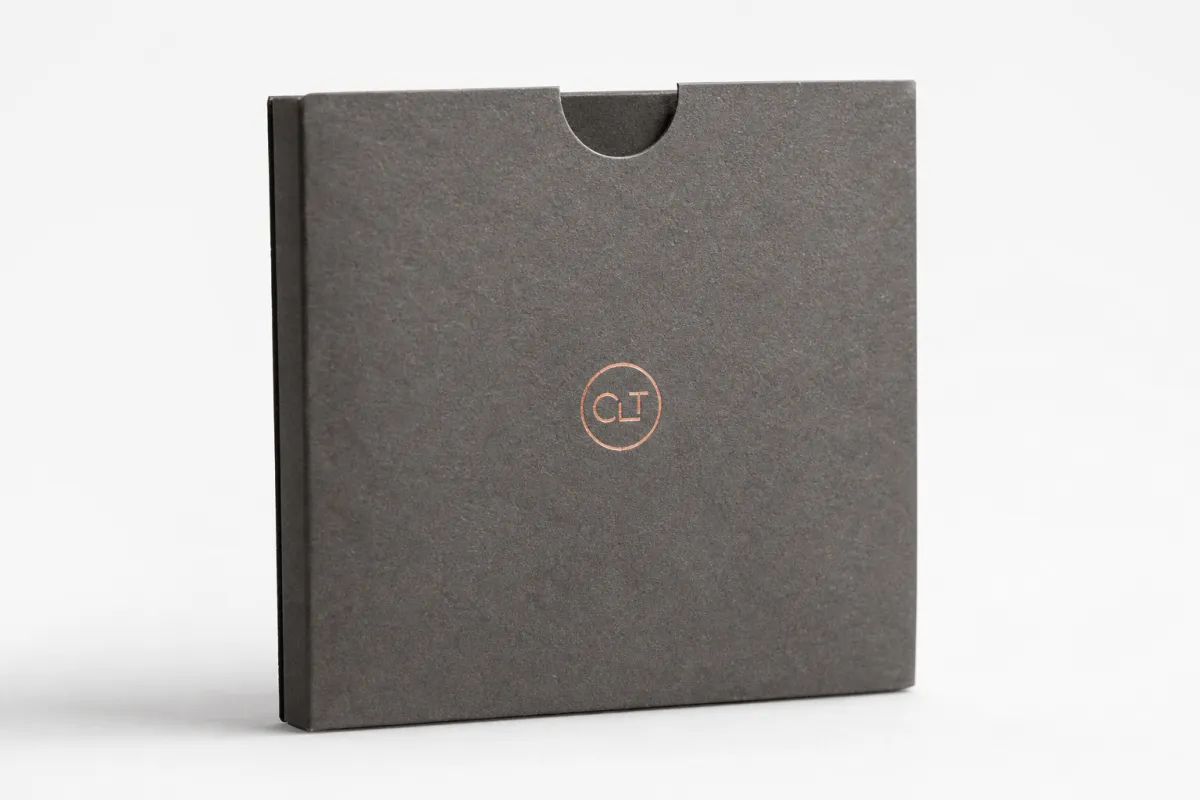
Paper sleeve packaging with logo begins as a flat printed sheet that is cut to a dieline, scored, folded, and either glued or left open depending on the application. The build is plain by design, which is exactly why it stays useful. You are not engineering a complex box from the ground up; you are wrapping an existing product in a branded layer that adds presence without adding much material.
In practical terms, the sleeve arrives flat. The packer wraps it around the product, carton, tray, or bundle, then secures it by friction, tuck, glue, or a simple tab. Paper sleeve packaging with logo works best when the base pack already has enough structure to hold the sleeve snugly. If the core package is stable, the sleeve can do its job without extra adhesive or awkward handling steps. If it is not stable, the sleeve starts acting like a problem instead of a solution.
The logo is not just decoration here. On paper sleeve packaging with logo, the logo anchors recognition at shelf distance, helps separate the product from nearby competition, and can support a launch message, flavor code, or campaign theme. The sleeve turns into a small billboard for product packaging, but one with real constraints: limited surface area, actual packing speed, and the need to survive handling in the warehouse and on the shelf.
Best-fit applications tend to be the ones that already have a solid underlying form:
- Inner cartons and subscription packs
- Cosmetic jars and skincare kits
- Candles, soaps, and wellness items
- Food trays, bakery sleeves, and multipacks
- Promo sets and seasonal gift bundles
The flexibility is the selling point. Paper sleeve packaging with logo lets one base package support multiple SKUs, limited editions, or regional variants without rebuilding the entire structure. For brands running several flavors or sizes, that can reduce packaging design friction and inventory headaches. One die line can support different art files, which is a lot easier than juggling several custom structures that each need their own production path.
That flexibility is also why paper sleeve packaging with logo shows up so often in launches. A new product can ship with a plain carton or tray, then gain stronger branded packaging through the sleeve while the team tests demand. If the item proves itself, the structure can evolve later. If it does not, the sleeve still gave the line a more polished retail packaging presence without a costly retool.
There is another quiet advantage here: sleeves make versioning easier. If one scent, flavor, or size needs a different front panel, you can usually change the printed wrap without touching the base pack. That saves a lot of headache during seasonal runs, and it is one reason paper sleeve packaging with logo has become such a dependable middle ground between labels and full structural packaging.
Key factors that make paper sleeve packaging with logo perform
Fit is the first test, and it is the one that gets ignored too often. If paper sleeve packaging with logo is too loose, it slides, twists, and looks sloppy on shelf. If it is too tight, assembly slows down and the edges can tear at the fold. The right sleeve size comes from the real filled product, not the idealized CAD file nobody can hold in their hands. Measure the thing that will actually be wrapped, then measure it again after product tolerances are included.
Stock choice comes next. SBS, coated board, kraft, and recycled paper all behave differently. A 14pt to 18pt board range is common for many sleeves, while heavier or more rigid constructions may make sense for larger packs. Paper sleeve packaging with logo printed on SBS usually gives sharper logo reproduction and a cleaner retail look. Kraft can feel more natural, but ink colors soften on the surface, which works if that is the brand story. If it is not, the result can feel like a compromise nobody asked for.
Print and finish matter just as much. Matte, gloss, soft-touch, foil, emboss, and spot UV each change the tone of the sleeve and the price. Paper sleeve packaging with logo does not need every effect on the menu. It needs one or two finishes that support the brand message. A matte sleeve with a strong logo can feel restrained and premium. A foil accent can help a launch or seasonal line. Too many finishes turn a sleeve into a crowded display of indecision, and that usually shows up faster than anyone expects.
Branding hierarchy is another quiet issue that has a real effect. The logo should be easy to spot at a glance, but the sleeve still needs room for product name, flavor, size, and required copy. Good package branding does not compete with itself. It leads with one clear message, then supports that message with secondary information that is easy to scan. If the eye has to work too hard, the design is asking the shelf to do the heavy lifting.
The logistics side matters too, and people often discover that only after production starts. Paper sleeve packaging with logo ships flat, so storage is efficient. That is useful. The folding direction, score depth, glue area, and pack-out method still affect line speed and damage rates. If the sleeve fights the assembly team, any savings can disappear in labor. A sleeve that adds five extra seconds per unit is not cheap anymore; it is just a different place to spend the budget.
For sourcing paper responsibly, FSC certification is a helpful reference point. Their site explains certified fiber standards clearly: FSC-certified paper and packaging guidance. If paper sleeve packaging with logo is part of a sustainability claim, the paper spec should support that claim without hand-waving. Trust gets damaged quickly when the material story and the actual spec do not line up.
One more check helps a lot: if the sleeve will move through distribution, ask whether the pack should survive vibration, compression, and handling without shifting. ISTA publishes test methods for transit risk, and even a light-touch version of those ideas can catch bad fits early: ISTA packaging testing standards. You do not need a lab romance. You need a sleeve that stays put and keeps its shape once it leaves the packing table.
There is also a practical color note that gets missed. On coated boards, dark solids and fine type usually hold up well. On kraft or recycled stocks, the same artwork can shift warmer and softer than it looked on screen. That does not make the job worse, but it does mean the design needs to be built for the stock, not only for the mockup. A good printer will call this out; a good brand team listens.
Cost, pricing, and MOQ for paper sleeve packaging with logo
Pricing for paper sleeve packaging with logo depends on the usual factors: size, paper stock, print coverage, finishing, dieline complexity, and whether the sleeve needs special die-cutting or gluing. The bigger the sheet, the more ink and board you use. The more elaborate the finish, the more steps the job requires. There is no mystery here, just setup cost and material use.
For a straightforward run of paper sleeve packaging with logo, short orders usually carry higher unit costs because the setup effort is spread over fewer pieces. Larger runs bring the per-unit cost down after tooling, trim waste, and press setup are absorbed across volume. That is why a 1,000-piece order may not look much cheaper than a 500-piece order on a unit basis, while a 5,000-piece order often starts to behave like a different product altogether.
MOQs exist because cutting, press setup, and waste do not care about budget pressure. Some digital or short-run producers can handle 250 to 500 sleeves, but the per-unit price climbs quickly. Traditional offset production often starts around 1,000 to 3,000 units for paper sleeve packaging with logo, depending on complexity and the vendor’s line setup. If you want the lowest sensible unit cost, volume helps. If you want speed and flexibility, smaller runs still work.
Here is a realistic comparison for common sleeve styles. These are working ranges, not promises carved into stone, because each project shifts once the actual dimensions and artwork are in front of the press.
| Option | Typical unit cost at 5,000 pcs | Best for | Tradeoff |
|---|---|---|---|
| 14pt SBS, 1-2 colors, no special finish | $0.10-$0.18 | Budget-sensitive launches and simple retail packs | Less tactile appeal, fewer premium cues |
| 16pt coated board, 4-color print, matte aqueous | $0.14-$0.24 | Most branded packaging projects | Moderate cost, moderate shelf impact |
| 18pt kraft or recycled board, 2-4 color print | $0.16-$0.28 | Natural, artisanal, or eco-positioned product packaging | Print colors soften more than on SBS |
| 16pt SBS with foil, emboss, or spot UV | $0.22-$0.45 | Premium launches and gift-ready retail packaging | Higher setup cost and more production steps |
If you need to save money, simplify the structure before you start trimming pennies from the print spec. Paper sleeve packaging with logo gets cheaper when you keep the board standard, reduce finishes, stay flat, and avoid unnecessary windows, odd cutouts, or elaborate lockups. Every extra feature asks for time, tooling, or scrap. Sometimes the cleaner option is the smarter one, even if it feels a little less exciting on a spec sheet.
To get a useful quote, send the dimensions of the filled product, the quantity, the stock preference, the print side count, any finish requirements, the deadline, and whether you need assembly support. If you can also share product photos or a rough mockup, even better. A good quote for paper sleeve packaging with logo is built around the actual object, not a polite guess.
Custom Packaging Products is also a useful place to compare sleeve pricing against other custom printed boxes and branded packaging structures. Sometimes the sleeve wins on total cost because it avoids a full die-cut build. Other times a simple carton is more efficient. Smart buying is not loyal to one format. It is loyal to the numbers, and that is usually where the honest answer lives.
Production steps and timeline for paper sleeve packaging with logo
The production flow for paper sleeve packaging with logo is straightforward, but every step still matters. It usually begins with spec gathering, then dieline setup, artwork prep, proofing, sampling, production, finishing, inspection, and shipment. Miss one handoff and the timeline starts to wobble. Packaging does not reward guesswork.
There are three approval checkpoints worth taking seriously. A dieline proof checks size, score placement, and fit. A print proof checks color, layout, and copy accuracy. A physical sample checks how paper sleeve packaging with logo behaves in the real world, which is the only place it actually has to work. A flat PDF can lie. A sample cannot.
Timeline depends on complexity. Simple paper sleeve packaging with logo often moves faster than a sleeve with foil, embossing, specialty coating, or multiple versioned SKUs. A straightforward run may take roughly 10 to 15 business days after proof approval, while more complex jobs can run longer once sampling and finishing are added. If revisions land late, the calendar stretches. Printing is not psychic.
Most delays are self-inflicted. Missing source files, unclear product dimensions, late copy changes, and color corrections create more trouble than the press does. If the sleeve needs to match other branded packaging pieces, such as labels or custom printed boxes, the artwork should be aligned before the job goes live. Chasing harmony after approval is how time gets burned with nothing to show for it.
Here is a practical sequence that keeps paper sleeve packaging with logo moving:
- Measure the filled product, not the empty shell.
- Confirm the sleeve’s wrap direction and seam position.
- Build the dieline and check clearances.
- Prepare vector artwork with live copy and barcode placement.
- Approve a print proof, then request a sample if the pack is new.
- Run production, inspect the first batch, and verify assembly speed.
- Release shipment only after the finished sleeve passes the fit check.
That sequence is plain, which is exactly the point. Boring is usually cheaper than fixing a full run. A lot of paper sleeve packaging with logo projects fail because the team wants speed at the same moment the job needs discipline. There is a difference between being efficient and being rushed, and packaging usually knows which one you chose.
For brands shipping sensitive or regulated products, paper sleeve packaging with logo should be treated as an outer branding layer, not a place to hide required information. If the sleeve covers ingredients, warnings, or barcodes, the layout may need to change before anything goes to print. The smarter move is to map the compliance copy first, then design around it. The sleeve should support product packaging, not interfere with it.
One detail that often gets overlooked is how the final pack will be handled by the retail team or the warehouse team. If the sleeve opens in the wrong direction, or the seam lands where a worker has to pinch and pull, the whole assembly process feels fussy. That kind of friction rarely shows up in a render, but it shows up very quickly in real life.
Common mistakes with paper sleeve packaging with logo
The most common mistake is fit. Brands guess dimensions from a drawing or from a previous package, then the sleeve slides, bunches, or buckles. Paper sleeve packaging with logo needs the real measured object, with tolerances, not a best-case assumption. Measure twice, sure, but more than that, measure the thing that will actually be wrapped.
Overdesign is the next trap. Too many colors, too much foil, and too much copy can make paper sleeve packaging with logo look more expensive without making it more effective. Some teams stack effects because they worry plain design will look cheap. Often the opposite is true. A clear sleeve with one strong logo and one supporting message feels more certain than a crowded sheet trying to prove itself.
Logo treatment is another weak point. Tiny logos, low-contrast color combinations, and hairline strokes disappear fast, especially on kraft or textured stock. Paper sleeve packaging with logo should be designed for actual press conditions, not for an idealized monitor. If the logo needs to be readable from arm’s length, give it enough size, enough contrast, and enough space around it. Don’t make the press work miracles.
Compliance mistakes can turn into expensive rework. Sleeves that block ingredients, legal notes, warning icons, or barcodes are a headache at retail and a bigger headache if you need to relabel a finished lot. Paper sleeve packaging with logo is a branding tool, but it still has to obey the rules of the product it wraps. Pretty does not outrank regulations, and packaging teams learn that the hard way when a lot is already printed.
Assembly planning is the hidden labor trap. If the sleeve requires constant adjustment or a fiddly closure, the line slows down. If the packer has to rotate the sleeve every time to find the seam or align the logo, labor cost climbs quickly. On a 10,000-unit run, even a few extra seconds per unit becomes real money. That is the part people forget while discussing print finishes.
A sleeve should make packing easier, not turn a simple job into a small ritual. If paper sleeve packaging with logo slows the line, the savings usually disappear before the shipment leaves the building.
There is also the shelf-read issue. Paper sleeve packaging with logo sometimes looks fine in a flat mockup and then loses impact once it sits on a crowded shelf next to louder competitors. That is why shelf distance matters. If a customer cannot tell what the item is in one glance, the sleeve is carrying the wrong hierarchy. A neat design that fails to communicate is still a failure, even if it looks polished in a sample folder.
One practical fix is to test at least two versions. One can be cleaner and more minimal; the other can carry a stronger product name or color block. Then compare them in a real setting. Good packaging design is often not the first idea. It is the one that survives contact with the shelf.
Expert tips and next steps for paper sleeve packaging with logo
Start with one hero SKU before rolling out five variants. That is the easiest way to prove size, print, and pack-out without stretching the team too thin. Paper sleeve packaging with logo works best when the first sample teaches you something useful. If the flagship item is right, the rest of the line becomes much easier to adapt.
Ask for a sample that matches the real product, not just a flat proof. A flat proof can tell you the artwork is arranged correctly. It cannot tell you whether the sleeve catches on a seam, slides during handling, or reads clearly at arm’s length. Paper sleeve packaging with logo should be judged in hand, under normal lighting, with the actual filled product inside. Anything less is just a guess with nicer paper.
Use one clear design rule: make the logo visible fast, then let secondary copy support the sale. That applies to paper sleeve packaging with logo, to labels, and to retail packaging in general. A sleeve can carry a lot of information, but not all of it deserves equal weight. If the hierarchy is muddy, the shelf response usually is too.
Compare total landed cost, not just print price. A sleeve that costs a little more per unit can still save money if it reduces damage, speeds assembly, lowers relabeling, or avoids a full custom die build. Paper sleeve packaging with logo should be judged like any other business input: what does it cost, what does it replace, and what does it prevent?
There is also value in stepping back and looking at the packaging system as a whole. If the sleeve is fighting with a label, a carton, or an insert, the answer may be to simplify the package family instead of making the sleeve carry every job at once. I’ve seen a tidy sleeve do more for a line than a stack of complicated features ever could.
Here is the simple action plan I recommend:
- Measure the finished product and confirm the wrap size.
- Collect artwork in vector format with final copy.
- Request a quote with quantity, stock, finish, and deadline.
- Approve a sample before full production.
- Check fit, logo clarity, and packing speed in hand.
If you are building out a broader packaging lineup, compare the sleeve against your other branded packaging options before committing. Sometimes paper sleeve packaging with logo is the right answer. Sometimes a simple carton or a larger set of custom printed boxes will do a better job. The point is to choose the structure that serves the product, not the one that sounds most impressive in a meeting.
Used well, paper sleeve packaging with logo gives you a fast way to sharpen presentation, support product packaging, and keep production sane. Used badly, it becomes another loose band of wasted budget. So measure carefully, spec plainly, and keep the design honest. If you want the cleanest result, start with the actual filled item, lock the hierarchy, and have the sample prove the fit Before You Print the run.
Frequently Asked Questions
How much does paper sleeve packaging with logo usually cost?
Pricing depends on stock, size, print coverage, finishing, and order quantity, so the same paper sleeve packaging with logo project can vary a lot from one run to the next. Short runs usually cost more per unit because setup and cutting expenses are spread across fewer pieces. The fastest way to get a useful number is to share dimensions, quantity, and finish requirements in one quote request.
What is the best paper stock for paper sleeve packaging with logo?
SBS and coated boards usually give the sharpest logo reproduction and the cleanest retail look for paper sleeve packaging with logo. Kraft or recycled stocks work well when the brand wants a more natural tone, but the printed color may look softer. Pick stock based on shelf position, brand story, and how much stiffness the sleeve needs during packing.
How long does paper sleeve packaging with logo take to produce?
The timeline usually includes proofing, sample approval, production, finishing, and shipping, so the real schedule is longer than the print time alone. Simple paper sleeve packaging with logo can move faster than a sleeve with specialty coatings or multiple revisions. Build in extra time if the artwork is still changing or if the sleeve has to match other packaging components.
Can paper sleeve packaging with logo work for food or cosmetics?
Yes, as long as the sleeve is designed for the application and does not block required labeling or safety information. Food and cosmetic packs may need specific inks, coatings, or placement rules depending on direct-contact requirements and local regulations. For sensitive products, paper sleeve packaging with logo often works best as an outer branding layer over an approved primary package.
How do I make sure my logo prints clearly on paper sleeve packaging with logo?
Use vector artwork, strong contrast, and line weights that survive real-world printing, not just screen viewing. Avoid tiny text and ultra-thin strokes, especially on kraft or textured stock where detail tends to soften. Request a print proof or sample so you can check color, placement, and legibility before the full run.
If you want the short version, paper sleeve packaging with logo works best when the fit is measured, the stock matches the brand, and the artwork respects the real production process. Do that, and the sleeve earns its keep. Skip those basics, and paper sleeve packaging with logo becomes a cheap-looking band that does not help the product at all.


