Choosing pe Garment Bags for Apparel Brands material choice guide sounds straightforward until the first sample lands on the table and the film feels too hazy, too stiff, or just a little too flimsy for the garment inside it. That reaction is normal. A garment bag can look insignificant in a cost spreadsheet and still change how a shirt hangs on a rack, how a coat survives a carton, and how a customer reads the product before touching it.
The material decision does more than protect fabric. It affects presentation, handling speed, warehouse durability, recycling claims, freight weight, and whether the finished pack feels premium or merely functional. For apparel teams, that is a lot of responsibility for a thin sleeve of polyethylene.
Most brands do not need the most expensive film. They need the right one. That usually means balancing clarity, thickness, seal performance, and the actual treatment the bag will see between packing and delivery.
What PE garment bags actually do on the rack and in transit
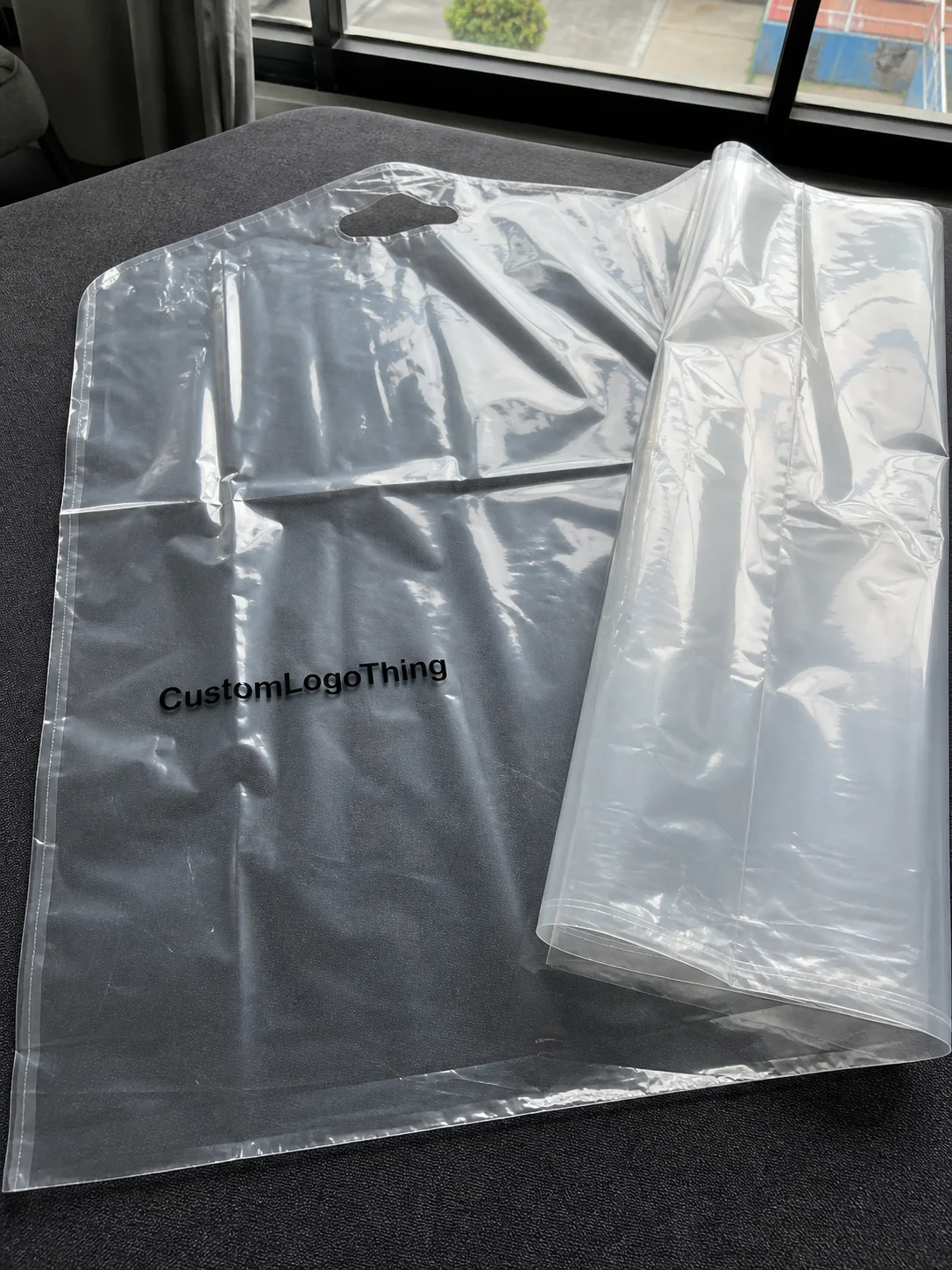
PE garment bags are polyethylene sleeves used to cover hanging or folded apparel during storage, shipping, and retail handling. They show up in basic distribution programs, seasonal apparel launches, and higher-end presentation packs because they are light, flexible, and easy to convert into custom sizes and print formats.
Their job is practical. Keep dust off the garment. Reduce abrasion from carton movement and hanger contact. Limit moisture exposure during transport. Preserve a pressed look long enough for the product to reach the next touchpoint in usable condition. If a bag does that well, the customer notices the garment, not the packaging.
Brands often choose PE over heavier films because it gives a workable middle ground: decent clarity, moisture resistance, low weight, and enough softness to avoid fighting the garment shape. Paper has a role, especially in outer packaging, but for hanging dresses, blouses, suits, or folded knits that still need visibility, PE usually handles the job with fewer compromises.
Still, one bag does not fit every use case. A sleeve for a lightweight tee is not the same as a bag for a structured jacket. The garment weight, packing method, and distribution channel all matter. That is why buying pe garment Bags for Apparel brands material choice guide style means matching film behavior to the workflow instead of starting with price alone.
“A garment bag is doing three jobs at once: protection, presentation, and handling. If one of those fails, the buyer notices quickly.”
How polyethylene film performs for apparel packaging
Polyethylene is not one single material in practice. LDPE, LLDPE, and blends behave differently enough that the buyer experience changes as soon as the bag is pulled over a hanger or packed into a carton. LDPE is usually softer and drapes better. LLDPE tends to improve puncture resistance and toughness. A blend can be tuned to sit between the two.
Film thickness is the first spec many teams compare, usually in gauge or micron. It has a direct effect on tear resistance, feel, and perceived quality. A lighter film may look fine in a sample photo and still feel underbuilt once the packing team starts handling it repeatedly. A thicker film can solve that, but too much thickness creates stiffness, more noise, and awkwardness around shoulder lines or hanger openings.
Clarity is another real variable, not just a visual preference. High transparency helps retail picking and product recognition. Frosted or lightly tinted film softens the appearance and can hide minor imperfections better, but it also reduces visibility. On a crowded rack, a restrained print on clear or lightly frosted film often reads cleaner than heavy coverage.
Other features change performance in small but important ways. Anti-static treatment matters in dry environments. Vent holes help reduce trapped air in hanging bags. Gussets add room for broader garments or layered folded pieces. Reinforced hanger holes reduce snags and tearing in high-touch workflows. None of those details are decorative if the bag moves through a real warehouse every day.
Recycled-content PE can also be part of the conversation. It supports lower virgin resin use and may help brands meet internal packaging targets, but the tradeoff is consistency. Clarity, odor, surface feel, and seal behavior can shift more than some teams expect from lot to lot. That does not make recycled-content film a bad option. It just means it needs tighter sample review.
| Film option | Typical feel | Best use case | Tradeoff |
|---|---|---|---|
| LDPE | Soft, flexible, clear | Retail presentation, light to medium garments | Can be less puncture resistant than blends |
| LLDPE | Tougher, slightly crisper | Shipping, heavier garments, higher handling stress | May feel less soft or premium on some applications |
| LDPE/LLDPE blend | Balanced clarity and strength | Most apparel packaging programs | Needs sample testing to confirm finish and seal quality |
| Recycled-content PE | Varies by resin source | Brands with sustainability targets | Clarity and consistency can shift from lot to lot |
Key factors to compare before you choose a film
The garment should lead the spec. Lightweight tees, satin blouses, structured jackets, and embellished dresses all need different levels of protection. A tee may be fine in a lighter sleeve. A coat with strong shoulders usually needs more puncture resistance, more room, and a material that will not split around the hanger hole after a few touches.
Length and width matter as much as resin choice. A bag that is too short exposes hems and makes the presentation look unfinished. A bag that is too narrow compresses the shoulder line or creates pressure points at the seams. Buyers often focus on thickness first, then discover later that the dimensions were the real problem.
Warehouse behavior is easy to overlook from a sample room. Bags can look perfect on a desk and then start wrinkling, clinging, or tearing once they are stacked in bulk cartons or moved through temperature swings. Cold dock areas, hot trailers, and dry storage spaces all affect how polyethylene behaves. Static can become more visible. Soft film can feel stiff. Thin film can become more vulnerable to corner punctures.
That is why transit testing matters. For higher-value apparel shipments, short tests that simulate shipping pressure, compression, and handling are worth the time. Standards such as ISTA procedures are useful references if the program includes mixed freight or long distribution paths. ISTA’s resources are available at ista.org.
Sustainability claims need practical limits. A lower-gauge film uses less resin, but it only works if the bag still survives the process. Recycled-content PE can support a packaging goal, but it should be tested for clarity, sealing, and odor. If a brand also uses paper-based outer packaging, that can be a useful pairing; it does not replace the need for a polyethylene bag where moisture resistance and visibility matter. The FSC site can help teams evaluating paper components elsewhere in the packaging system.
Comparison points that materially change the decision
- Garment weight: heavier items usually justify thicker film or stronger blends.
- Handling frequency: more touchpoints mean more abrasion and tear risk.
- Storage time: longer holds increase the value of dust and moisture protection.
- Presentation target: premium basics need cleaner clarity and controlled print placement.
- End-of-life plan: recycling instructions depend on local systems and bag construction.
Step-by-step material selection and approval process
The cleanest way to buy pe garment bags for apparel brands material choice guide style is to treat the selection as a short technical approval process, not a one-email purchase. Start with the garment itself. What is it? How is it packed? What must the bag protect against? Dust only? Moisture and scuffing? Repeated retail handling? Those answers narrow the field fast.
Next, shortlist two to four film structures. A clear LDPE sleeve, a slightly thicker LDPE/LLDPE blend with vent holes, and a recycled-content option are common starting points. Ask for production-relevant samples, not generic film swatches. A sample that uses a different gauge, seal style, or closure method can make the test meaningless.
Then test the bag in the actual workflow. Put the real garment on the real hanger. Fold it the way the packing team will fold it. Move it through the same path it will take in production. Check fit, opening speed, snag points, print visibility, seal integrity, and how the film behaves under warehouse lighting. A bag that looks polished in a still photo may wrinkle awkwardly after ten normal touches.
Approval should happen after that testing, not before. If the sample passes, lock artwork and production details. If it does not, adjust the structure, dimensions, or finish before print plates, film commitment, and scheduling are finalized. That order saves time and prevents the expensive kind of correction: the one made after the run is already in motion.
For internal coordination, a simple spec sheet should record resin type, thickness, dimensions, closure style, print method, and any extras such as gussets or venting. Reorders become much easier when design, sourcing, operations, and QA are reading the same page.
- Define the garment, channel, and protection goal.
- Shortlist two to four film structures and bag styles.
- Request production-relevant samples, not generic swatches.
- Test fit, handling, and appearance with the real product.
- Approve artwork and final spec only after the sample passes.
Cost and pricing drivers that change your unit cost
Unit cost usually comes down to a few variables, and they stack faster than most brands expect. Resin type, thickness, dimensions, printing, and special features such as gussets or venting all move the number. A plain clear sleeve can sit in a completely different range from a custom-printed presentation bag with reinforced hanger holes and a specific finish.
Volume matters just as much. Small runs absorb setup and conversion costs over fewer pieces, so the unit price usually rises. Larger programs spread tooling, print setup, and scheduling more efficiently, which brings the price down. That is why a brand ordering 5,000 units and a brand ordering 100,000 units are rarely buying the same economics, even if the bag looks similar.
Freight is easy to miss because bags are light but bulky. Master cartons, bundle counts, and folding style all affect shipping efficiency. Secondary operations can add cost too: perforation, special bundling, custom folding, and packaging into another component like a garment box or corrugated cardboard mailer all change labor time. If the pack-out process is awkward, the labor usually shows up in the quote later.
For planning purposes, many custom PE garment bag programs land somewhere around $0.08-$0.25 per unit, depending on quantity, film spec, and print complexity. That is a working range, not a promise. Market resin prices, freight distance, and rush scheduling can move it quickly.
| Spec element | Typical cost impact | Buyer note |
|---|---|---|
| Thicker film | Moderate increase | Adds strength and perceived quality |
| Custom size | Moderate increase | Useful when hanger profiles or garment lengths vary |
| Multiple print colors | Higher increase | Extra plates, setup, and registration checks |
| Gussets or vents | Small to moderate increase | Depends on tooling and conversion method |
| Recycled-content resin | Variable | Sometimes similar, sometimes higher depending on supply |
There is also a hidden cost in over-specifying. A premium finish or extra print coverage can look impressive on paper and add little value to the workflow. If the line team does not need it, the brand is paying for decoration rather than performance.
Process, timeline, and production steps from quote to delivery
The usual path starts with specification review, then moves to quoting, sample or proof approval, production scheduling, conversion, quality checks, and shipment. Stock sizes with minimal print can move faster. Custom structures, multiple colors, or special closures need more time because the setup is more complex.
Lead time depends most on three things: how quickly the spec is finalized, how complicated the print is, and whether the right material is already available. A simple run using stocked film often moves faster than a custom blend that needs a dedicated production slot. For many custom programs, a practical planning window is 12-20 business days after approval, though quantity and supplier workload can extend that.
Artwork delay is one of the most common schedule killers. A misplaced logo, unclear dimensions, or a late feature change can push a project back several days. Hanger holes, gussets, and venting are not cosmetic details; they affect tooling and conversion, so they need to be locked early. If the bags are tied to a seasonal launch or a retailer delivery date, build in buffer time instead of aiming for the last possible day.
Quality control should be part of the schedule, not an add-on. A basic check for dimension accuracy, seal integrity, print registration, and film consistency catches a lot of problems before shipment. For higher-risk programs, a short pilot run is often worth the extra day or two because it shows whether the bag fits the actual garment and survives the actual handling path.
Common mistakes brands make when buying garment bags
The first mistake is buying a bag that is too thin for the garment weight or handling conditions. That usually shows up as tearing at the hanger hole, wrinkling at the shoulders, or a bag that looks tired before it leaves the warehouse. A few cents saved per unit can disappear fast if packing teams have to rebag damaged pieces or if the presentation drops below brand standard.
The second mistake is over-specifying features that do not help the real workflow. Extra print colors, decorative finishes, or more venting than the garment needs can add cost without making the process easier. That kind of detail often looks better in a proposal than it does on a packing line.
Humidity, compression, and friction are other easy misses. In warm storage, film can cling more and wrinkle differently. In tight mixed loads, bags may be pressed against corrugated cardboard cartons or folded textiles, which changes the surface finish and handling behavior. What looks clean in a controlled sample review may perform differently in a real warehouse during a busy week.
Dimensional accuracy causes its own problems. Too short and the hem shows. Too narrow and the shoulder line gets crushed. Too much print near the opening and the logo starts to look off-center once the garment hangs. Good specifications account for garment length, hanger profile, closure style, and the actual folding method used in packing.
- Do not assume a thinner film is automatically better.
- Do not approve print without checking transparency and placement.
- Do not skip handling tests in your own warehouse conditions.
- Do not ignore how repeated retail handling changes wear patterns.
Expert tips for a smarter final specification and next steps
A side-by-side sample test with the actual garment, hanger, and folding method is the fastest way to spot weak points. That single step catches more issues than most teams expect, especially when they are moving from a stock sleeve to a custom-printed bag.
Ask for a spec sheet that spells out the essentials clearly. Resin type, thickness, dimensions, closure style, print method, and special features should all be documented. It keeps design, sourcing, operations, and QA aligned, and it protects the reorder process from guesswork.
If a line is new or a supplier is changing, a pilot run is worth considering. It gives real feedback on fit, handling, appearance, and pack-out speed before the full purchase order is committed. For brands balancing sustainability goals, that is also the time to compare downgauged film, recycled-content PE, and any paper-based outer packaging that may sit alongside the garment bag in the system.
The cleanest next step is to gather garment samples, target quantity, artwork files, and the actual protection requirements before asking for quotes. Then compare physical samples on the same garment and approve the final structure only after the bag proves itself in the real workflow. That approach keeps the material choice honest, the price realistic, and the presentation aligned with how the product will actually be packed and handled.
Start with the garment, not the bag. That is the simplest way to avoid paying for features the workflow does not need and missing the ones it does.
What material is best for PE garment bags for apparel brands when clarity matters most?
LDPE or a clear LDPE/LLDPE blend is often preferred when softness and visibility matter most. Higher clarity usually comes from the right resin selection and thickness balance, not from choosing the thinnest possible film.
How do I choose the right thickness for PE garment bags for apparel brands?
Match thickness to garment weight, handling conditions, and whether the bag will be reused or moved often. Lightweight tees may need a lighter gauge, while coats, suits, and shipping bags usually need more puncture resistance and a stronger feel.
Are recycled-content PE garment bags practical for apparel packaging?
Yes, recycled-content options can work well if the film still meets clarity, strength, and sealing requirements. Always test the exact material, because recycled content can affect appearance, feel, and consistency from lot to lot.
What drives the unit cost of custom PE garment bags most?
Material choice, thickness, size, print colors, and order quantity are usually the biggest drivers. Special features and freight can also move pricing more than brands expect, especially on smaller runs.
How long does it take to produce custom PE garment bags for apparel brands?
Timing depends on sample approval, print complexity, and material availability, but custom runs usually take longer than stock items. Fast decisions on artwork and specs help keep the schedule on track and reduce avoidable delays.


