Buyer Fit Snapshot
| Best fit | perforated cartons bulk for packaging buyers comparing material specs, print proof, MOQ, unit cost, freight, and repeat-order risk where brand print, material, artwork control, and repeat-order consistency matter. |
|---|---|
| Quote inputs | Share finished size, material target, print colors, finish, packing count, annual reorder estimate, and delivery region. |
| Proofing check | Approve dieline scale, logo placement, barcode or warning zones, color tolerance, and any recyclable or compostable wording before bulk production. |
| Main risk | Vague material claims, crowded artwork, or missing packing details can create delays even when the unit price looks attractive. |
Fast answer: Perforated Cartons Bulk: Specs, Pricing & Lead Times should be specified like a repeatable production item. The safest quote includes material, print method, finish, artwork proof, carton packing, and reorder notes in one written spec.
What to confirm before approving the packaging proof
Check the product dimensions against the actual filled item, not only the sales mockup. Ask for tolerance on folds, seals, hang holes, label areas, and retail display edges. If the package carries a logo, QR code, warning copy, or legal claim, reserve that space before decorative graphics fill the panel.
How to compare quotes without losing quality
Compare board or film grade, print process, finish, sampling route, tooling charges, carton quantity, and freight assumptions side by side. A lower quote is only useful if the supplier can repeat the same color, closure quality, and packing count on the next order.
Perforated Cartons Bulk: Specs, Pricing & Lead Times matters because a tear line can change the economics of a packing room faster than many buyers expect. The right opening feature trims labor, reduces knife use, and makes each pack-out less fragile from a process standpoint. If you are comparing perforated cartons bulk options, the real test is not only price; it is how the tear behaves, how the board survives handling, and how much time disappears from the line.
Packaging buyers often see cartons as a line item until a structure starts saving minutes. A perforated carton is not decoration. It has to sit in storage, print cleanly, stack on pallets, ride through freight, and still open the way it should when a customer or operator reaches for it. That balance is where packaging engineering earns its keep, especially at volume, where a small time gain per unit can turn into a meaningful labor reduction.
Custom logo packaging is usually judged by the final reveal, yet perforated cartons reward attention long before the customer touches the box. Board choice, cut pattern, perforation depth, and opening placement all influence the result. A well-designed carton opens with purpose. A weak one either tears past the target or sends the operator hunting for a blade.
Why Perforated Cartons Bulk Orders Cut Packing Time
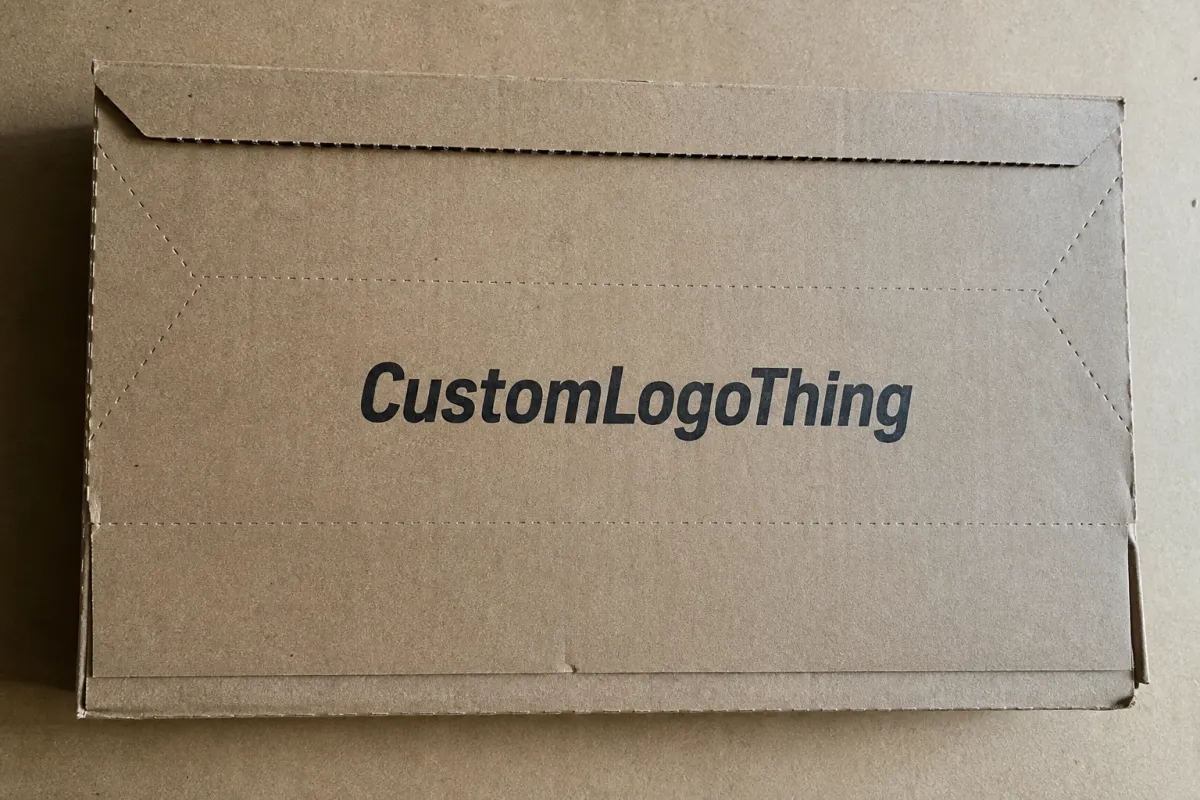
Speed matters in a busy packing room, although consistency usually matters more. A perforated opening creates a clear tear path, which lets operators access contents quickly without slicing at the carton. That small change can save seconds on every unit. Multiply that across a large run and the savings stop being small. Seconds become labor hours. Labor hours become budget lines.
Predictability is the quieter advantage. When the tear line is engineered properly, every carton opens the same way. Corners stay intact. Labels are less likely to peel. Product edges are less likely to get nicked. That is why perforated cartons bulk orders fit subscription kits, promotional mailers, retail replenishment boxes, sample packs, and warehouse-ready cartons that need fast access without sacrificing shipping performance.
Safety enters the picture too. Fewer knives at the bench means fewer cuts, fewer damaged inserts, and fewer accidental gouges into product surfaces. Supervisors notice that kind of stability because it lowers rework and keeps output more even across shifts. A packaging line with one less variable usually runs cleaner.
Think of perforation as a controlled failure point. The carton still has to endure shipping, stacking, and ordinary warehouse handling, then release only when the user is ready. That is why structure, flute choice, and perforation pattern cannot be treated as cosmetic choices. A light retail display carton and a heavy corrugated shipper need different opening behavior, even if they share the same artwork.
For a buyer running an e-commerce subscription program, the gain can be easy to measure. A packing associate who opens 1,500 cartons a day with a tear panel instead of a knife is not just moving faster; the line is also less dependent on blade discipline and retraining. The same logic shows up in store replenishment, where a backroom team needs to reach product quickly and move on to the next pallet.
Common benefit areas include:
- Subscription packs that need a consistent reveal.
- Sample kits where the contents must be accessed without extra tools.
- Retail-ready cartons that need a neat front opening.
- Replenishment boxes used in warehouse or store backroom settings.
- Promotional packaging where presentation and speed both matter.
Cost comparisons become clearer when labor is included. A design that saves 5 to 10 seconds per unit on a 10,000-piece run can return a useful amount of time very quickly. That is one reason buyers often settle into perforated cartons bulk sourcing after the structure proves itself in real production rather than in a drawing review.
“A good tear line saves time only if the carton still behaves like a proper shipper on the pallet.”
Product Details: Carton Styles, Board Grades, and Perforation Options
No single carton style fits every opening requirement. The starting point is always the product and the distribution channel. Mailer-style cartons, folding cartons, Corrugated Shipping Boxes, and custom sleeves with tear-away panels all handle perforation differently, especially when the opening has to stay hidden before use.
Lighter retail or presentation-oriented packaging often relies on folding cartons and paperboard sleeves made from 18pt to 24pt SBS, 350gsm artboard, or similar coated stock. Those boards support sharper print detail and a cleaner shelf presence, which matters when the carton is part of the brand display. Shipping-focused applications usually call for single-wall corrugated board, commonly E-flute, B-flute, or C-flute depending on weight and crush resistance. Heavier loads may push toward double-wall construction, particularly when cartons are stacked, palletized, or moved through rougher distribution networks.
Perforation style depends on the function. A tear strip works well when the opening needs to feel direct and linear. A partial-panel perforation fits jobs where the goal is to reveal a window or access flap without opening the whole carton. Full-access openings are used when the user should remove contents with very little resistance after the first tear. Some builds pair a score line with selective micro-perforation, which helps guide the break path while keeping the structure intact during transit.
Placement deserves equal attention. The tear line should stay clear of glue seams, major folds, and any area carrying structural load. It also needs to avoid critical artwork if the brand design depends on exact positioning around the opening. Good packaging engineers think about hand placement, flex points, and grain direction so the perforation releases cleanly instead of wandering across the panel.
Print and finishing should support the opening feature, not fight it. Flexographic printing remains common on corrugated cartons and fits high-volume runs with straightforward graphics. Litho-lamination usually appears when a more premium retail look is required, especially if the outer surface needs richer color and tighter registration. Aqueous coating adds scuff resistance without making the board feel heavily coated, and spot varnish or foil can be used carefully so they do not interfere with the tear area.
Internal components affect the structure too. Inserts, dividers, trays, and product restraints improve protection, but they also shift where the perforation belongs. If the product sits in an inner tray, the outer carton needs to expose that tray cleanly without snagging it. Tall or fragile items may need more clearance at the front panel so the user can remove the contents without twisting them.
A practical example helps here. A cosmetics sampler may need a shallow reveal panel that opens neatly on a retail shelf, while a replacement-parts kit for a distributor might need a full access flap so pickers can remove units without disturbing the rest of the case. Those are different jobs, even if both are called perforated cartons.
Typical perforation and carton combinations include:
- Mailer carton with front tear panel for e-commerce presentation and fast access.
- Corrugated shipper with strip tear for warehouse picks and replenishment cycles.
- Folded paperboard sleeve with reveal window for retail display and samples.
- Double-wall access box for heavier industrial or bulk product protection.
The practical point is straightforward: the carton has to open cleanly and still survive stacking pressure, vibration, and warehouse handling. That combination separates a clever-looking box from one that earns its keep.
Specifications to Confirm Before You Order
Production starts smoothly only when the spec sheet is precise. Begin with the inside dimensions: length, width, and depth. Add the opening orientation, the panel that should tear, and the exact area that should be exposed after opening. If the product uses an insert or tray, include those dimensions as well. A carton cannot be engineered properly in isolation.
Board strength comes next. For corrugated cartons, confirm flute profile, edge crush resistance, and burst performance. A lightweight product in a stable shipping lane may work fine with single-wall corrugated, while a heavier item moving through a more demanding distribution network may need stronger board or double-wall construction. Folding cartons depend just as much on caliper and paper grade, since the board must hold its shape around the perforated area.
Tolerances matter more than many buyers realize. Die lines need accuracy, folds need proper registration, and perforation depth has to stay consistent from run to run. Too deep, and the carton can fail before the user opens it. Too shallow, and the opening becomes stubborn enough to annoy anyone handling the package. Reliable suppliers will explain which dimensions need tight control and which ones can live within a practical band.
Pack-out behavior should be defined before the order is released. Will the carton ship flat or pre-assembled? How many folds happen at pack-out? Is the final assembly automated or done by hand? Those choices can shift the perforation placement and the amount of strength the surrounding board needs to keep.
Compliance questions belong early in the conversation. Food-related, retail, and regulated environments can each bring their own material requirements. Recycled content targets, food-contact concerns, and shelf presentation goals all affect material selection. Buyers who track sustainability may also want FSC-certified sources or recycled-content documentation. For distribution testing, many teams use methods associated with ISTA when the carton must survive drops, vibration, or compression before the tear line is ever used.
One common mistake is approving a layout before the opening behavior is confirmed. If a tear panel sits too close to a product window or a glued seam, the structure can look fine in prepress and fail on the line. Another is assuming a carton that opens well by hand will also behave under shipping load. Those are not the same test.
Confirm these items before approving the job:
- Exact inside dimensions and product orientation.
- Board grade, flute profile, or paperboard caliper.
- Perforation style, depth, and panel location.
- Print method, coverage, and finishing details.
- Pack-out method, palletization, and shipping route.
- Any compliance, recycling, or sustainability requirements.
“The cleaner the spec sheet, the fewer surprises in prepress, on press, and at receiving.”
That point keeps paying off. A clear spec sheet prevents expensive revisions later and gives the production team a stable target. For perforated cartons bulk production, clarity at the start usually saves more money than late-stage negotiation ever will.
Cost, Pricing, and MOQ for Perforated Cartons Bulk
Perforated cartons cost more variables than a standard box because the structure has to do extra work. Size, board grade, print coverage, die complexity, perforation detail, finishing, and custom tooling all push pricing in different directions. A basic tear panel on a single-wall mailer is one kind of job. A premium litho-laminated retail carton with a hidden access flap is another entirely.
Unit pricing usually falls as quantity rises, although the first run still carries setup costs for plates, dies, samples, and engineering time. That is why landed cost gives a better view than a unit price alone. A quote that looks slightly higher can still be cheaper overall if it reduces assembly labor, improves stacking, or avoids the cost of fixing a weak opening design.
Minimum order quantities exist for practical reasons. Press setup, die cutting, and finishing take time, and those costs must be spread across the run. For many custom perforated cartons, smaller structures often become economical around 1,000 to 3,000 pieces, while more complex printed cartons are usually better at 2,500 to 5,000 pieces and up. Smaller runs still happen, though the unit price tends to rise as the order shortens.
Here is a rough market picture buyers often use for planning. These are illustrative ranges, not fixed prices, but they help with budgeting before a formal quote arrives.
| Carton Type | Typical Use | Illustrative MOQ | Approx. Unit Cost at Volume | Notes |
|---|---|---|---|---|
| Single-wall corrugated mailer with simple tear panel | Subscription kits, e-commerce access, light retail packs | 1,000-3,000 | $0.42-$0.85 | Best when print coverage is modest and the perforation is straightforward. |
| Folding carton with reveal panel and premium print | Retail presentation, samples, branded inserts | 2,500-5,000 | $0.65-$1.40 | Often uses 18pt-24pt board, tighter registration, and a cleaner shelf look. |
| Double-wall corrugated access box | Heavier product, warehouse distribution, protective shipper | 1,000-2,000 | $1.10-$2.75 | Higher strength requirements and more demanding die work can raise cost. |
Those ranges move with print coverage, color count, coatings, embossing, foil, or unusual perforation geometry. A tear line that curves around artwork or a panel that needs security behavior takes more engineering time than a straight tear strip. Tight deadlines can also raise cost because production has less room to fit the job into a normal schedule.
If you want a sharper number, send dimensions, artwork files, board preference, target quantity, product weight, and any special opening or security requirement. Clear information speeds up the quote and reduces assumptions. It also helps to say whether the carton is for retail, shipping, or a hybrid use case because the pricing logic changes from one category to the next.
Spend can be managed without weakening the package. Simplifying print coverage, choosing a standard flute where the product allows it, and matching the order quantity to actual forecasted demand all help keep budgets steady. Repeat buyers often compare private pricing against the benefits available through our Wholesale Programs, especially when the carton will be reordered on a regular schedule.
A caution is worth keeping in view. Unusual structures, tightly controlled tear patterns, and projects that require multiple revisions can push cost upward faster than planned. Clean approvals and complete information save money. That is true on small jobs and even more true on perforated cartons bulk orders, where one change can alter the die, the print layout, and the finishing sequence.
Process and Timeline: From Quote to Shipment
The ordering sequence is usually direct, yet every step depends on the quality of the information that arrives at the start. A typical flow looks like this: inquiry and spec review, quotation, structural confirmation, artwork check, sampling if needed, production, finishing, packing, and freight scheduling. If any step is vague, the schedule can slip.
Delays usually come from familiar problems. Dimensions are incomplete. Print files are not final. A sample was requested but never approved. The customer wants to change the opening style after tooling has already begun. None of that is rare, but each issue adds time and brings avoidable cost with it. Buyers who organize the project early usually get a better result than buyers who try to repair the structure midway through production.
Timeline planning works better in ranges than in promises. Simpler perforated cartons with standard print can move fairly quickly after proof approval, while more elaborate cartons with premium finishes or custom die work need more time. As a working frame, many projects land in roughly 10 to 15 business days after final proof approval for straightforward jobs, while more complex orders may need 15 to 25 business days or more. Freight time is separate and depends on destination and service level.
Perforated work deserves extra attention in prepress and die making because the tear line has to perform in the field while still holding together in transit. The design team needs to think about cut depth, score placement, fold registration, and the way the board fibers behave under stress. A carton that looks strong on a screen may behave very differently on the floor if the tear line is too aggressive or the grain runs against the opening path.
Sampling is worth the time whenever opening behavior matters. Fragile, tall, awkward, or presentation-driven products all benefit from a prototype. A small sample run gives the buyer a chance to test hand feel, tear direction, access opening, stack behavior, and fit with internal components before committing to volume.
Logistics should be confirmed early too. Pallet configuration, carton counts per pallet, delivery destination, receiving hours, and staged release requirements all belong in the planning conversation. For larger perforated cartons bulk orders, palletization can affect freight cost almost as much as carton dimensions, so shipping should be planned with the same attention as the box structure itself.
A smooth order usually follows this path:
- Send complete dimensions, quantity, and product details.
- Approve the structural recommendation.
- Review artwork and production proof.
- Request a sample if the opening behavior is critical.
- Confirm timeline, pack-out, and shipping details.
- Release production only after final approval.
That sequence is routine for a reason. It keeps the project on track and puts procurement, design, and production in the same conversation from the start.
Why Choose Us for Custom Perforated Cartons
Buyers need more than a printer. They need a packaging partner that understands structure, board behavior, and the practical demands of production. Custom perforated cartons make that distinction obvious. The perforation changes how the carton opens, but it also changes how the box gets cut, folded, handled, and inspected. A supplier who focuses only on print will miss the engineering side of the job.
Our approach centers on making the carton manufacturable and useful, not just attractive. That means checking whether the tear line supports the product weight, whether the opening aligns with the intended hand motion, and whether the structure still behaves well after printing and finishing. On bulk runs, those details matter because a small flaw repeated across thousands of units turns into a real operational problem.
Quality control matters just as much. Die cutting, fold accuracy, print registration, and perforation consistency all affect how the carton performs in real use. If the perforation varies too much from sheet to sheet, the user experience becomes unpredictable. If registration drifts, the tear panel can land too close to artwork or structural seams. A careful production team watches for those problems before they spread through a run.
Communication keeps projects moving. A responsive quoting and production process helps buyers resolve spec questions before they become delays. If a dimension needs clarification or a material choice sits near the edge of feasibility, a practical answer early in the process can save days later. In packaging, speed usually comes from clear decisions rather than rushing the press.
Experience with high-volume custom packaging matters in a way that is easy to underestimate. A small structural change, such as shifting a panel by a fraction of an inch or moving the perforation away from a seam, can reduce manual labor or improve tear behavior across an entire order. Those gains compound when the carton runs in high quantities.
We also work across different packaging environments, which matters because the same perforation idea can serve very different goals. Retail cartons want a polished reveal. E-commerce cartons need predictable access. Industrial cartons put strength first and opening second. Promotional kits sit between those worlds, where branding and usability both need attention. That flexibility lets the structure fit the real job instead of forcing a generic box into every scenario.
For a warehouse team, that may mean a carton that can be opened with one hand while the other remains on a pallet jack. For a retail buyer, it may mean a tear panel that reveals the product without scuffing the print. For a subscription brand, it may mean a box that opens neatly on camera. The engineering changes with the use case, and the carton should too.
What buyers usually value most:
- Accurate engineering before tooling begins.
- Consistent perforation performance across the run.
- Material guidance based on product weight and handling.
- Clear communication from quote through shipment.
- Packaging that looks branded and works in the field.
For sustainability-focused programs, material choices can be aligned with recycled content goals or FSC-certified fiber sourcing. If your team needs paper provenance or packaging recovery documentation, those requirements should be discussed early so structure, board grade, and print finish all point in the same direction. For broader packaging and recycling context, many teams also reference resources from FSC during supplier evaluation.
The point is simple. A good perforated carton should help the operation, not complicate it. That standard matters most when the order volume is high and the margin for error is thin.
Next Steps for Ordering Perforated Cartons Bulk
If you are ready to move forward, gather the essentials first: product dimensions, target quantity, weight, desired opening style, print files, and any shipping or shelf display requirements. Those details form the basis of an accurate quote, and they tell the production team what kind of carton can actually be built without compromise.
If you are unsure whether the job needs single-wall corrugated, double-wall protection, or a cleaner paperboard presentation, ask for a structural recommendation first. That step often saves time before quoting because it narrows the field to a board grade and perforation pattern that suit the application. A useful recommendation should explain not just what will work, but why it will work.
Prototype samples matter most when the carton must open in a specific way or when the product is fragile, tall, heavy, or irregularly shaped. A sample lets you verify tear direction, hand feel, access width, and the way the package behaves after the first opening. That kind of test prevents surprises in a live production run.
Quote comparison should go beyond carton price alone. Assembly labor, freight, storage, and handling behavior all belong in the decision. A slightly more expensive carton may be the better purchase if it packs faster, stores flatter, or protects the product more reliably. Procurement teams usually get the best result when they evaluate the package as part of the full operating cost rather than as a standalone print item.
A simple path usually works best: send specs, approve structure, review proof, confirm timeline, and schedule production. That sequence keeps the project moving without unnecessary stops, and it gives everyone involved a clear set of checkpoints. For repeat programs, a strong first run becomes the baseline for future reorders, which makes procurement easier over time.
For teams building a new launch, the most productive next step is to treat the carton like a working component of the process, not an afterthought. Measure the product, define the opening, test the hand-off, and then order around the way the box will actually be used. That approach gives perforated cartons bulk orders a far better chance of working the first time.
If your goal is to source perforated cartons bulk with the right balance of cost, strength, and clean opening performance, the most useful move is to submit a complete spec package so the quote reflects the real carton rather than a rough guess. That is the fastest route to a price, a timeline, and a structure you can use with confidence.
Frequently Asked Questions
What are perforated cartons bulk orders best used for?
They work best when the carton must open quickly and predictably without knives or extra tools. Common uses include subscription kits, retail packs, sample mailers, and warehouse cartons that need fast access while still protecting the product during transport.
How do I choose the right perforation style for bulk cartons?
Match the tear pattern to the opening need: a light reveal, a full access panel, or a tear strip. The right choice depends on product weight, shipping stress, the carton style, and how the package will be handled after delivery.
What information is needed for a quote on perforated cartons bulk?
Provide exact dimensions, quantity, board preference, print requirements, and how the perforation should function. If possible, include artwork files and a reference sample so the quote reflects the actual structure rather than a loose estimate.
Does a perforated carton cost more than a standard carton?
Usually yes, because the die, setup, and structural engineering add complexity to production. The unit cost can still be very competitive at volume, especially when the design saves labor, reduces packaging steps, or cuts down on product damage.
How long does perforated cartons bulk production usually take?
Lead time depends on carton complexity, quantity, sampling needs, and print method. Clean specs and fast approvals shorten the schedule more than almost any other factor, which is why complete information at the start is so valuable.
For buyers comparing carton styles, the best results usually come from balancing opening behavior, protection, and line efficiency rather than chasing the lowest printed price. If you are preparing a reorder or a new launch, send a full spec package and ask for a structural recommendation so your perforated cartons bulk order is priced and built around the way the package will actually be used.


