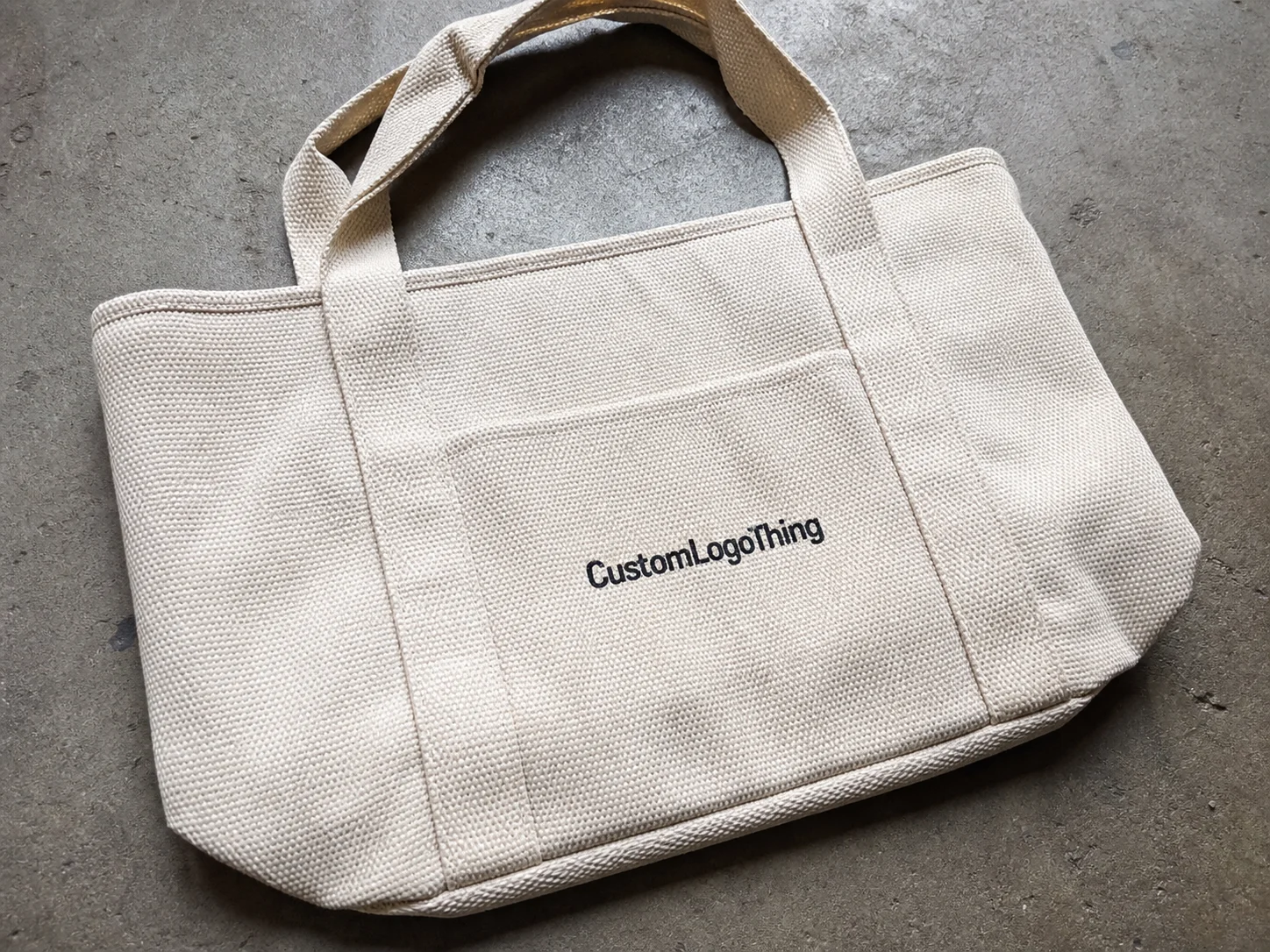
Personalized cinch bags no minimum are a practical answer to a specific problem: you need branded bags, but you do not need a warehouse full of them. That sounds straightforward. The actual buying process is less tidy. Material choice, print method, artwork quality, and turnaround all influence what is possible, especially once the order drops below the usual bulk range.
These bags work because they are simple. They close fast, pack light, and leave enough surface area for a logo, event name, or short message to read clearly. For welcome kits, school events, trade show handouts, product samples, and limited promo drops, that combination matters more than chasing the absolute lowest unit price.
Personalized cinch bags no minimum usually means there is no hard production floor on certain stock styles, but that does not mean every material, decoration method, or color is open at every quantity. The smarter way to buy is to treat the bag as a system: body fabric, size, closure, imprint method, and deadline all shape the final quote.
Why personalized cinch bags no minimum fit small-run needs
The real challenge in a small promotional order is not finding a bag. It is making the bag look intentional at a low quantity. That is where personalized cinch bags no minimum earn their value. They let a team test a campaign, outfit a single event, or support a short-term program without locking capital into excess inventory.
That flexibility is useful for buyers who do not have a year of demand visibility. A 50-piece order for a community event and a 500-piece order for a regional launch have different economics, different risks, and different timing pressure. A no-minimum program keeps both orders viable instead of forcing one to act like the other.
In practice, these bags show up in a familiar set of use cases:
- Employee welcome kits and onboarding packets
- School programs, clubs, and booster fundraisers
- Trade show giveaways and product sampling
- Nonprofit donor gifts and volunteer kits
- Limited-run promo drops and pilot campaigns
There is also a budgeting angle that gets overlooked. A strict minimum often pushes Buyers to Order far more than they can use in the near term. That is not efficient if the campaign is unproven. Lower-quantity ordering reduces the penalty for uncertainty. It also makes it easier to compare one or two styles before committing to a larger rollout later.
That said, “no minimum” is not a promise that every option is available in tiny quantities. Stock availability changes. Specialty materials can require more setup. Metallic inks, all-over coverage, or multi-location decoration can introduce a floor even if the core bag style itself has no minimum. That is normal production logic, not a red flag.
The best small-run orders tend to be the ones that stay simple. A clean logo, a sensible size, and one print location usually deliver better results than a complicated spec forced into a short run. If the goal is useful branded packaging rather than a design trophy, the no-minimum route often wins on both speed and sanity.
“The smallest orders usually reveal the most about a supplier’s process. Clean art, realistic specs, and one clear approval chain do more for timing than any rush fee.”
How the order process usually unfolds
Most orders follow the same basic path: quote request, artwork review, proof approval, production, finishing, and shipment. The manufacturing step is rarely the bottleneck. The delays usually happen before production begins, especially if the artwork needs cleanup or the buyer is still deciding between bag colors and imprint placement.
The fastest projects usually start with vector artwork, a defined quantity, and a firm decision on the bag style. If the logo arrives in AI, EPS, or a print-ready PDF, it can be sized properly with fewer revisions. If the art starts as a low-resolution file pulled from a website, expect extra handling time. That extra time can matter even on a small order because every revision creates another handoff.
Here is the part buyers underestimate: changing the art by even a little can affect the whole production schedule. A shift in logo size, a missing trademark line, or a new print location can require the proof to be rebuilt. On a narrow drawstring panel, those edits are not always cosmetic. They can change legibility, balance, and the practical imprint area.
Stock-based orders usually move faster than highly customized builds. A plain black or natural bag with a single-color imprint is generally easier to schedule than a specialty color with a full-color transfer and a hard ship date. If a rush is involved, it is better to identify the bottleneck early than to assume the schedule will absorb it later.
One useful habit is to send all order details together. Quantity, deadline, imprint location, shipping zip code, and approved artwork should arrive as one package. That keeps quote revisions to a minimum and makes the proof cycle shorter. It also reduces the chance that a small detail gets missed and has to be corrected after approval.
For routine questions about file formats, timing, and proofing, a supplier’s ordering FAQ is worth checking before the first round of back-and-forth begins. It will not solve a bad spec, but it often clears up the small uncertainties that stall a quote.
Materials, sizes, and print details that change the result
Material choice changes almost everything: how the bag feels, how it holds up, how the logo reads, and where the price lands. Polyester is common for lightweight promotional bags because it is economical and takes print cleanly. Nonwoven polypropylene is another frequent option for lower-cost programs that still need a decent visual finish. Cotton feels more substantial in hand, while mesh works well when breathability matters, such as for gym use or produce-style applications.
There is no universal best material. The right one depends on how the bag will be used and how long it needs to survive. A one-time event handout does not need the same build quality as a reusable bag for staff or volunteers. A small difference in fabric weight can change the experience more than a buyer expects. A thin bag may keep the order cheap, but if it wrinkles badly, sags, or feels flimsy, the logo inherits that impression.
Size matters twice. First, it determines capacity. Second, it determines how much printable space is available. A larger panel can accommodate a bigger logo and clearer text, which helps at events where the bag is seen from a distance. A smaller bag can be fine for sample packets or compact kits, but it may force the imprint to shrink more than the buyer planned.
Construction details deserve attention too. Reinforced corners, thicker cords, and tighter stitching can improve daily use enough to make the bag feel more substantial. That is not a cosmetic issue. If the drawstring frays or the seams pull early, the finished bag stops supporting the brand message and starts undermining it.
Decoration method is where the spec comes together. Screen printing is usually the best fit for bold logos, clean spot colors, and straightforward art. Digital transfer can handle more detail and color variation, especially when the design has gradients or fine type. Embroidery can look strong on certain fabrics, but it needs enough material density and enough budget to make sense. A design that looks perfect on screen may not reproduce well on a narrow or textured panel, so the print method has to match the bag body, not just the artwork.
Transit durability matters too, especially for orders that are packed with other items or shipped long distances before distribution. Standards from ISTA packaging and transit testing are useful because they frame the real issue: a promotional bag is not just a print surface, it is a handled, packed, and transported item. If the bag is part of a broader packaging program, the body material and closure need to hold up through that chain. For sustainability references, the Forest Stewardship Council is a solid reference point for responsibly sourced paper-based components in adjacent packaging work.
Typical buyers end up choosing between three broad directions. A lightweight polyester bag with one-color screen print is usually the best value for simple giveaways. A nonwoven polypropylene bag often sits in the middle, where cost and appearance are balanced. A cotton bag usually costs more, but it can be the right answer for a gift kit, a retail-style bundle, or a higher-perceived-value handout.
How pricing, MOQ, and unit cost are calculated
Pricing for personalized cinch bags no minimum comes down to a predictable set of variables: material, size, print colors, number of imprint locations, artwork complexity, and whether the timeline has been compressed. Change one of those and the quote usually changes too. That is not a gimmick. It is the cost structure of small-run production.
Low-quantity orders tend to cost more per unit because the fixed work is spread across fewer pieces. Someone still has to review the art, prepare the proof, set up the decoration method, check the sample or production run, and package the finished bags. None of that disappears because the order is small. In some cases, the setup work matters more than the print itself.
No minimum does not mean lowest price. In fact, a slightly larger order can drop the per-piece cost enough to matter, especially if the bags will be used in more than one event. But overbuying only makes sense if the extra inventory has a real use. Otherwise, the order should stay tight and match the actual need.
| Example option | Typical use | Relative unit cost | Notes |
|---|---|---|---|
| Polyester bag, one-color screen print | Giveaways, simple event kits | $0.90-$2.25 | Good for bold logos and smaller budgets |
| Nonwoven polypropylene, one- or two-color print | Promos, school or community programs | $1.10-$2.80 | Often the most practical low-cost balance |
| Cotton bag with more refined decoration | Premium kits, resale, gift packaging | $2.75-$6.50+ | Feels better in hand, but setup and labor can raise the price |
Those numbers are broad examples, not guarantees. Quantity, ink coverage, print placement, and rush timing can move them quickly. A 100-piece order is not priced the same way as a 500-piece order, even if the bag looks identical on paper. That is why like-for-like comparisons matter more than fixing attention on one line item.
The best way to read a quote is to compare total spend, expected durability, and how well the finished bag supports the campaign. A slightly higher unit cost can be justified if the print is cleaner and the bag feels more substantial. A cheap bag that fails in transit or looks thin in photos can cost more in brand damage than it saves on paper.
When buyers are unsure, asking for two or three versions of the same quote is useful. One lighter bag. One more durable bag. One higher-finish option. That comparison usually shows exactly where the real cost jumps are and which tradeoff is actually worth paying for.
Step-by-step checklist before you approve the proof
Start with the use case. Are these for a product launch, a volunteer event, a student program, or a customer gift? The answer determines the right material, size, and decoration method. A supplier can recommend options, but they still need a clear brief to work from.
Then gather the artwork in the cleanest format available. Confirm logo colors, spelling, any legal text, and the intended audience. If the brand has strict color rules, send them now rather than after the proof lands. The more complete the request package, the fewer round trips the order needs.
Before approving anything, review the proof line by line:
- Check print size and placement.
- Confirm the bag color and material.
- Verify the shipping address and timeline.
- Inspect text spelling, punctuation, and spacing.
- Make sure the imprint method matches the art detail.
It also helps to ask for a schedule that names proof approval, production start, estimated ship date, and transit time. A vague timeline is a warning sign. If any stage is unclear, get it clarified before approval. Small orders can move quickly, but only when the decision path is clean on the buyer side.
At this stage, discipline matters more than speed. A tiny mistake on the proof can become an expensive rework, and a rushed approval can lock in the wrong color, wrong size, or wrong placement. If the bags are tied to a launch or event, treat the checklist as a gate. Nothing moves until the details match.
A second pair of eyes helps too. Even experienced teams miss a typo or a misplaced logo when they are working fast. The proof is cheap to inspect and expensive to ignore. That is especially true for personalized cinch bags no minimum, where the total order may be small but the visibility of the finished piece is still high.
Common mistakes that raise cost or delay production
The most common issue is low-resolution artwork. A blurry file can look acceptable on a laptop screen, then fall apart once it has to be translated into a print-ready layout. If the design needs cleanup, time is lost. In some cases, the art changes more than the buyer expected during that cleanup.
Overly detailed graphics create another problem. Tiny text, thin lines, and subtle gradients are hard to reproduce cleanly on fabric. Stitching, weave, and ink spread all work against fine detail. On a cinch bag, strong contrast and simple shapes usually read better at the distances where people actually see the bag.
Imprint area mistakes are common too. Buyers sometimes assume the logo can be scaled indefinitely, but every bag has a practical printable zone. If the design is too large for the panel, the art has to be reduced or reworked. It is far better to learn that during quoting than after the proof is already approved.
Last-minute changes are expensive. Color swaps, deadline changes, and revised shipping instructions all interrupt the production plan. A small edit can trigger a full review cycle. That is why the smoothest orders usually start with stable specs and a single decision-maker.
One more practical point: a small run still deserves the same attention as a large one. Setup work does not get easier just because the quantity is lower. If anything, the margin for error gets thinner because there are fewer units to absorb a mistake. The order may be small, but the standard should not be.
Expert tips and next steps for a smarter quote
Ask for options if the brief is not settled. A supplier can often quote a lighter bag, a more durable bag, and a higher-finish bag side by side. That comparison is useful because it shows the actual cost of each upgrade, not just the headline price.
Choose high-contrast artwork whenever possible. Dark ink on a light bag, or a light print on a dark bag, usually reads better in photos and in busy event settings. High contrast also tends to survive fabric texture better than delicate tonal work. If the design has to be simplified, it is better to simplify early than to discover the issue after the proof is built.
Send one complete request package if you want an accurate quote the first time. Include quantity, target deadline, shipping zip code, logo files, preferred bag color, and the person who can approve the proof. If budget matters, say so. A realistic budget target helps narrow the choices to options That Actually Fit.
Keep the internal approval window short. Every extra handoff adds time. The quickest route from quote to shipment usually comes from the fewest approvals and the fewest unresolved questions. That is not a sales line. It is how production scheduling works.
If you are still deciding between styles, use the supplier’s FAQ as a fast reference for file formats, timing, and common order questions. It often removes the small uncertainties that slow the quote down.
For a small run, the goal is not to over-engineer the bag. The goal is to choose a material, print method, and quantity that fit the event or program in front of you. That is the advantage of personalized cinch Bags No Minimum: they let you buy only what you need while keeping the project practical, controlled, and easy to approve.
Are personalized cinch bags no minimum really available for small orders?
Yes, on selected styles and decoration methods. Availability still depends on stock, fabric, and the print process. Some programs support very small quantities, while others set a modest floor for certain colors, finishes, or imprint options.
What artwork file works best for personalized cinch bags no minimum?
Vector files such as AI, EPS, or PDF usually work best because they keep edges sharp at any print size. If only a raster file is available, send the highest-resolution version you have and keep the design as simple as possible.
How long do personalized cinch bags no minimum usually take to ship?
Timing depends on proof approval, stock availability, decoration method, and whether the order needs rush shipping. Ready-to-print artwork and fast approvals have the biggest impact on schedule.
Do personalized cinch bags no minimum cost more per bag?
Usually yes at very low quantities, because setup work is spread across fewer units. The better comparison is total order cost, print quality, and durability rather than unit price alone.
What details should I send to get the most accurate quote?
Include quantity, bag size, color, imprint location, artwork files, deadline, and shipping destination. If you have a budget target, share that too so the quote can be shaped around realistic options.