Personalized Drawstring Bags do their job quickly: the material, cord, and logo placement are visible the moment someone picks them up. That makes them useful for retail kits, sports packs, school programs, event giveaways, and travel bundles. They are simple, but the build still needs to be right.
The main decisions are practical. Material, size, closure style, decoration method, and finishing details all affect appearance, durability, Cost, and Turnaround. A mockup can show the layout. A production spec is what keeps the order on track.
Why Personalized Drawstring Bags Stand Out at First Touch
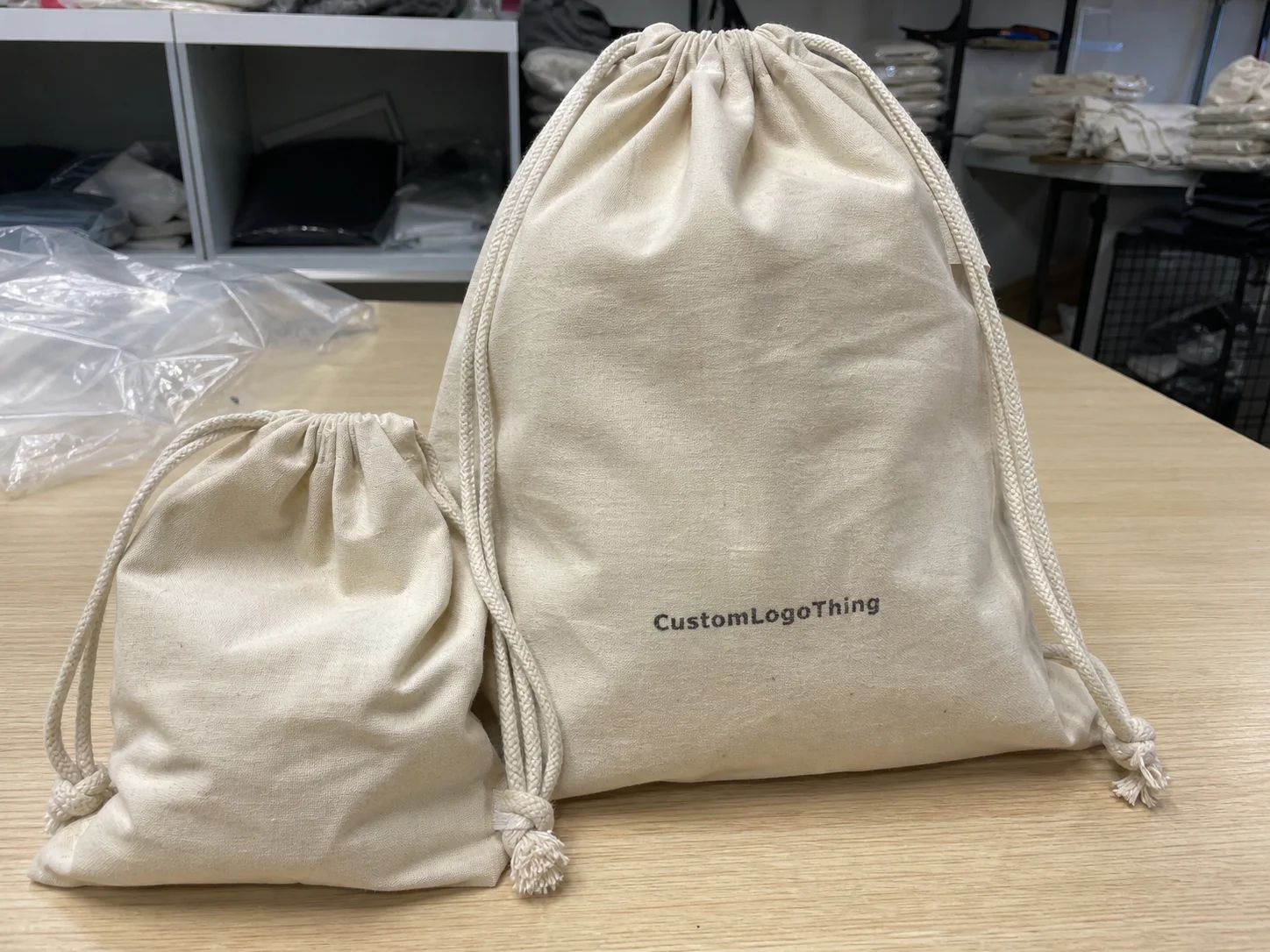
The first impression is usually tactile. A thin promotional bag feels different from a soft cotton one or a sturdier polyester version, and buyers notice that immediately. Recipients notice it too, even when the bag is meant to be a simple giveaway.
That is part of the appeal. A drawstring bag is easy to open, easy to pack, and more forgiving than a rigid box when the contents vary in shape. It also uses less space in storage and transit than many other packaging formats.
Compared with a poly mailer, the bag has a more substantial feel and tends to stay in use longer. Compared with a box, it is usually cheaper to store, simpler to pack, and easier to reuse. That combination makes the format useful when presentation matters but the budget is still controlled.
The catch is that the bag has to feel intentional. If the panel is too small, the print is oversized, or the fabric is so light that the seams pull, the product reads as cheap regardless of the logo. The value is in the build, not just the artwork.
For a packaging buyer, the bag is part of the product experience. If it needs to support retail presentation, event logistics, or repeated use, the spec should reflect that from the start.
How Materials, Closures, and Decoration Work Together
Material choice drives most of the rest of the order. Nonwoven polypropylene is common for promotional programs because it is light, economical, and easy to convert at scale. It works well when the goal is volume and the bag does not need a premium handfeel.
Cotton costs more, but it brings a softer feel and a more elevated look. Polyester sits in the middle for many buyers and is often chosen for sports, activewear, or repeated-use applications. Mesh is useful when breathability matters, like gym or laundry bags, but it narrows the decoration options.
Fabric weight matters as much as fabric type. A light nonwoven bag can feel flimsy even when the size is correct, while a heavier cotton or polyester bag can support more load and hold its shape better. If the contents include books, bottles, or boxed products, seam construction and the top channel matter.
The closure style affects both function and cost. A basic cord is fine for light promotional use. For heavier use, stronger cord stock, reinforced eyelets, and a better-stitched channel make a real difference. Cord material also changes the feel: cotton feels more natural, while polyester or nylon is usually more durable and less prone to fraying.
Shape is another practical choice. Flat bags are simpler and cheaper to produce. Gusseted bags hold more and are easier to pack when the contents are bulky or irregular. If the contents are flat, a flat bag is often enough. If the bag needs to carry a kit, shoes, or multiple items, gussets usually improve usability.
Decoration should match the substrate. Screen print is efficient for bold logos and simple spot-color art, especially on larger runs. Heat transfer can handle more detailed graphics and finer text, but the film and application settings have to be right. Embroidery gives a stitched premium look, but it works best on sturdier fabrics. Woven labels can be a good option when a refined finish is needed without covering a large panel.
There are limits buyers should account for early. Fine gradients, hairline type, and tiny legal copy are risky on fabric. The more textured the surface, the less forgiving the print. If the artwork depends on fine detail, the bag choice may need to change or the design may need simplification.
| Material | Typical Feel | Best Use | Common Price Range |
|---|---|---|---|
| Nonwoven polypropylene | Light, crisp, economical | Event giveaways, retail inserts, low-to-mid cost promotions | $0.35-$0.85 per unit at larger quantities |
| Cotton | Soft, natural, premium | Retail kits, lifestyle branding, reusable merch bags | $0.90-$2.20 per unit depending on size and print |
| Polyester | Smoother, more technical | Sports packs, activewear promotions, repeated use | $0.70-$1.80 per unit |
| Mesh | Breathable, lightweight | Gym, beach, laundry, breathable storage | $0.75-$1.90 per unit |
Practical rule: the nicer the fabric, the more the decoration method has to fit it. A premium cotton bag can carry embroidery well, but an ultra-light promotional bag usually looks cleaner with a simpler imprint and less coverage.
Personalized Drawstring Bags Cost, MOQ, and Quote Drivers
Pricing starts with the base construction and rises with every choice that adds material, setup, or labor. The main cost drivers are material, size, print coverage, number of decoration colors, cord upgrades, and any extra finishing such as folding, labeling, or polybagging. A one-color print on a stock nonwoven bag is a very different job from a sewn cotton bag with two print locations and a custom hangtag.
MOQ, or minimum order quantity, exists because setup costs do not disappear on small runs. Screens, plates, embroidery digitizing, cutter setup, proofing, and machine changeover all have to be covered somewhere. On a run of 300, those costs weigh heavily. On a run of 3,000, the unit economics usually improve fast.
Buyers should separate unit price from landed cost. The lowest quoted bag is not always the lowest project total once freight, rush charges, sample fees, and packaging upgrades are included. If the bags have to arrive for a tradeshow or store launch, timing may matter as much as the base price.
The quote that looks cheapest on paper is often the one with the most missing details. Ask what is included, not just what is priced.
Compare quotes only when the specs match. Ask each supplier to quote the same size, material weight, print method, number of colors, decoration position, packaging requirement, and destination. If those details differ, the numbers are not comparable.
For planning, many buyers see nonwoven promotional bags in the sub-dollar range at volume, while cotton and heavier polyester versions usually land higher. Small orders are almost always expensive per unit because setup costs dominate. A complete spec sheet is what turns a rough estimate into a quote that can actually be used.
Typical timelines vary as well. A stocked, simple bag with straightforward decoration may move in about 7 to 15 business days after proof approval, depending on production load and shipping distance. Custom sewn bags, multi-step decoration, or specialty finishes can take longer. Rush service is sometimes available, but it usually narrows material options and increases cost.
For packaging and testing expectations, industry resources like ISTA are useful when bags are shipping with retail goods or samples that need to survive distribution. For broader packaging education, the Flexible Packaging Association is a useful reference point, even if the bag itself is not flexible packaging in the strict sense.
Process and Turnaround: From Artwork to Finished Bags
The production path is straightforward, but delays usually come from missing information. A typical order starts with quantity, size, material, print method, and target ship date. Then the buyer sends artwork, the supplier prepares a proof, the proof gets approved, production starts, finishing happens, and the bags ship.
Artwork quality is a frequent bottleneck. Low-resolution logos, tiny text, color references pulled from a screen grab, or files built for web use instead of print create avoidable back-and-forth. Fabric printing is less forgiving than many buyers expect. Clean vector files reduce the risk.
Proofing is not a formality. It is the checkpoint that catches expensive mistakes before production starts. Logo size, placement, orientation, spelling, bag color, cord color, and imprint color all need a real check. If the order is brand-sensitive, a physical sample or a clear virtual mockup is worth the time.
Quality control should be specific. Good suppliers verify print registration, stitch consistency, seam strength, and cord alignment before shipping. On repeated-use bags, they may also check the top channel and pull tension so the cord does not bind or cut into the fabric. If the bags are for resale, fold and pack presentation matter too.
How to Choose Sizes, Colors, and Artwork That Print Cleanly
Size should be matched to the contents, not chosen by habit. A bag for a T-shirt and brochure needs different dimensions than one for a bottle, notebook, and accessory set. If the bag is too small, packing feels awkward. If it is too large, the contents slide around and the package looks unfinished.
Color choice is half visual and half technical. Light bag colors usually give better logo contrast and are easier to decorate cleanly. Darker substrates can look more premium, but they may require an underbase or a different print approach to keep the artwork readable.
Artwork should be built for fabric, not for a screen. Thick enough line weights, clear spacing, and strong logo shapes usually print better than delicate detail. Fine gradients and hairline text are where buyers get disappointed. A clean imprint keeps the brand visible without making the printer fight the material.
Use the bag like a real product, not a blank canvas. If it will be carried on one shoulder, cord length and panel size should feel comfortable. If it will be opened and closed repeatedly, the cinch action needs to stay smooth. For cotton and reusable sports bags, washability matters too.
Another detail people ignore until the last minute is the bag opening width. If the bags are being packed by hand, a wider opening can save labor. If they are meant for pre-packed kits, a tighter shape may look cleaner and reduce movement in transit. Those small choices affect both packing speed and presentation.
For buyers with sustainability requirements, certifications and chain-of-custody practices may matter more than usual. If recycled content, responsible sourcing, or paper-based components are part of the brief, check certification claims through FSC and confirm what is actually covered.
Common Ordering Mistakes That Delay Production or Raise Cost
The most common mistake is approving a proof too quickly. Spelling, logo placement, imprint size, and special color references all need a real review, especially if the bag has multiple decoration areas. A typo on a reusable item repeats on every unit.
Another problem is assuming every supplier means the same thing by a material description. One vendor’s lightweight polyester may feel very different from another vendor’s coated or heavier weave. If fabric weight, weave density, or finish is not specified, the buyer may receive something technically accurate and operationally wrong.
Freight planning is also often handled too late. A bag order can look affordable until shipping, rush timing, or a second imprint location changes the total. If the bags need to arrive for a launch date, the delivery window matters as much as the unit cost.
Vague end-use instructions cause avoidable rework. A bag for retail display may need a tighter fold and cleaner finishing than one meant for conference handouts. A kit bag may need a wider opening during packing. Those differences are small on paper, but they change the setup.
Another expensive mistake is overcomplicating a low-cost bag. If the budget is tight, choose one strong logo location and one clean material rather than forcing multiple colors, multiple placements, and specialty finishes into a structure that cannot support them well. Simplicity usually improves both cost and reliability.
Finally, reorder planning gets neglected. If the bag is likely to be reordered, save the approved artwork version, bag size, material spec, decoration method, and packaging format. That way the next run does not start from zero.
Best Next Steps Before You Request Quotes
Before requesting pricing, gather the basics: target quantity, bag size, preferred material, logo file, number of print colors, decoration location, and the date the bags need to arrive. Those details let a supplier quote something real instead of guessing.
If the order has brand sensitivity, unusual sizing, or a finish that needs to be seen in hand, ask for a sample, mockup, or proof. That small step can prevent an expensive mistake. It matters more on personalized drawstring bags than many buyers expect, because the product looks simple right up until it is produced poorly.
Compare two or three quotes on the same spec sheet. If one price is much lower, check what is missing. Is freight included? Is the proof included? Is setup included? Does the quote cover one decoration location or two? A lower unit price can disappear fast once the missing pieces are added back in.
It also helps to be clear about the end use. A bag for retail sale, a bag for a conference kit, and a bag for sports use are not the same spec with different names. They have different wear expectations, print tolerances, and presentation needs. The cleaner the brief, the better the outcome.
How are personalized drawstring bags priced for a custom order?
Pricing usually moves with material, size, decoration method, number of print colors, and order quantity. Setup, freight, and rush timing can change the final cost as much as the base unit price, especially on smaller runs.
What is a normal MOQ for personalized drawstring bags?
MOQ depends on construction and decoration method, so screen-printed runs and sewn custom bags may have different minimums. Ask whether the MOQ is based on a single design, a colorway, or a total quantity across sizes.
Which artwork files work best for personalized drawstring bags?
Vector files are usually best because they scale cleanly and keep text and logos sharp on fabric. If vector art is not available, use high-resolution files and keep line work and small text simple.
How long does turnaround usually take after proof approval?
Turnaround depends on stock, decoration complexity, and current production load, but the clock usually starts after final proof approval. Simple stocked runs may move in about 7 to 15 business days, while custom sewn or multi-step jobs can take longer.
What material is best for personalized drawstring bags used at events?
Nonwoven polypropylene is often a strong value choice for giveaways because it is lightweight and cost-effective. Cotton or thicker polyester is better when the bag needs a more premium feel, repeated use, or stronger branding impact.