Personalized Drawstring Bags No Minimum are a practical option when you need branded packaging without committing to a warehouse full of extras. That matters for pop-ups, school kits, trade show handouts, onboarding packs, and product launches where demand is still uncertain. A short run keeps the project flexible, and in many cases it keeps the risk where it belongs: on the supplier side of the conversation, not yours.
There is a trade-off. Small quantities almost always carry a higher unit price because the same work still has to happen: artwork checks, setup, proofing, printing, finishing, packing, and shipping. The savings come elsewhere. You avoid stale inventory, reduce storage issues, and skip the unpleasant surprise of discovering that a large order no one wanted is now your problem.
For buyers comparing quotes quickly, a supplier FAQ can help answer the basic artwork and proof questions before the order stalls. The details matter more than the headline phrase. “No minimum” sounds simple, but the useful question is what exactly is excluded: setup fees, color limits, decoration methods, or stock restrictions.
Why Small-Batch Drawstring Bags Can Punch Above Their Weight
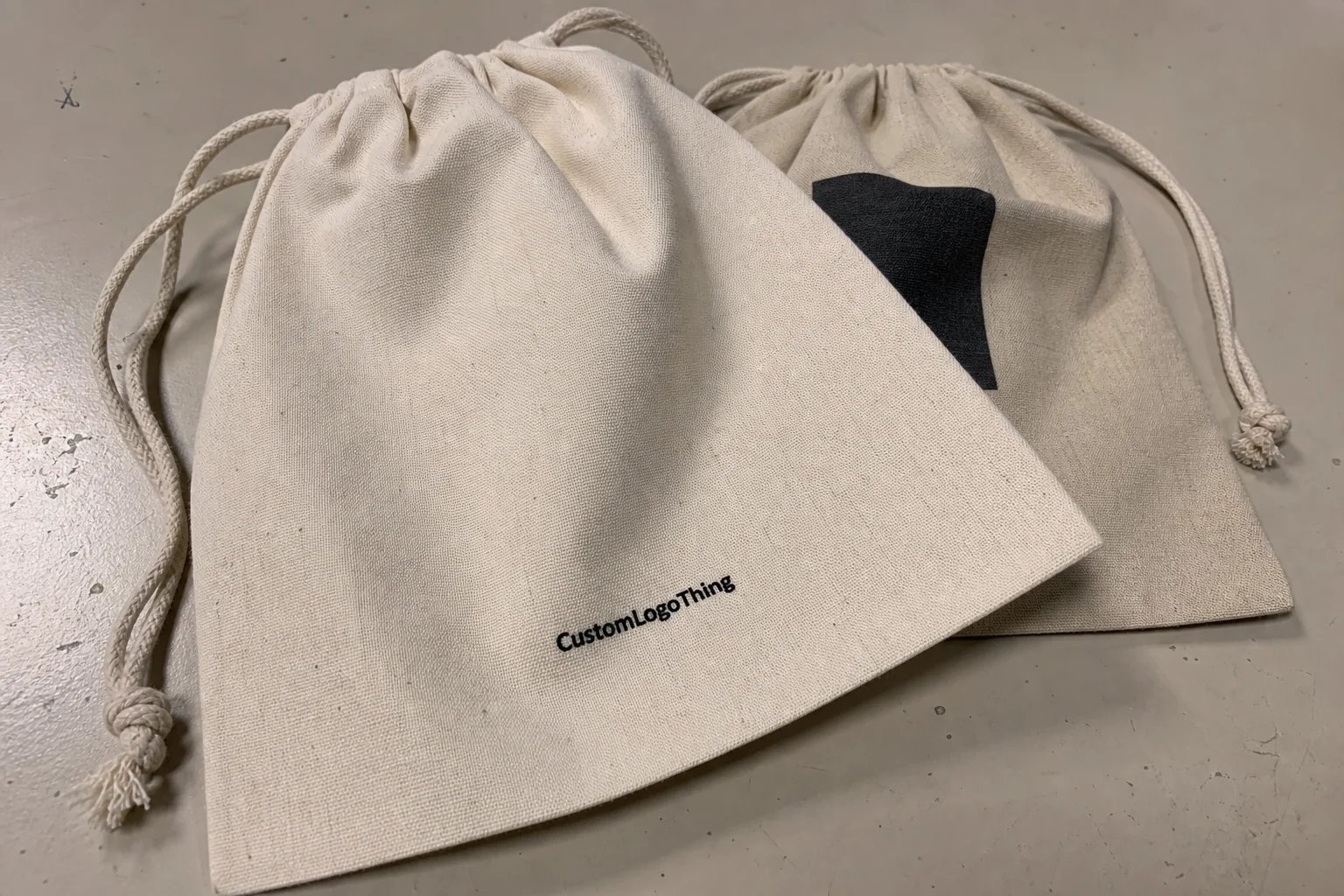
A short run can do a lot of work if the use case is narrow. Fifty to 250 bags may be enough for a conference welcome kit, a small membership drive, a donor thank-you pack, or a seasonal retail campaign. That is where personalized drawstring bags no minimum are strongest: they let you test an idea, validate a design, or fill a short-term need without pretending you know the final volume in advance.
Many buyers assume the main benefit is budget control. It is really inventory control. A startup may want to compare two logo layouts before scaling up. A school group may only need enough bags for a fundraiser. A retailer may want a holiday run and nothing left over in January. In those situations, a slightly higher per-unit cost can still be the smarter decision because it removes the risk of overbuying.
The math is not always intuitive. A 100-piece order can cost more per bag than a 1,000-piece order, yet the smaller order may cost less overall once you factor in warehousing, handling, and the possibility of reprinting the wrong design. It is also a useful way to see how the artwork behaves on the actual material. Logos that look crisp on screen can become too busy on fabric, and a color that looked clean in a mockup can feel muddy once it hits the bag.
A small order can look expensive on paper and still be cheaper in practice than a bigger buy that sits unused.
There is one caveat worth keeping in mind. No-minimum orders are not the same thing as no-rules orders. Some suppliers still apply setup charges, art fees, or decoration restrictions. Others only allow certain stock colors or specific print methods for low quantities. The label is helpful, but the order still needs to be checked line by line.
How the Order Process Works From Artwork to Delivery
The first order usually takes longer than a reorder, even with a small quantity. The process begins with a quote request, and the better the request, the fewer corrections you will need later. Send the bag size, material, color, print method, quantity, target delivery date, and any packaging requirements. If you need individual folding, polybagging, or alternate cord colors, say so early. Those details affect both Pricing and Lead time.
Once the supplier reviews the request, the next step is usually file validation. Vector artwork is the safest starting point because it scales without losing sharpness. High-resolution PDFs, EPS, and AI files are commonly preferred for that reason. PNG and JPEG files may still work, but low-resolution images can produce blurry edges, uneven line weights, or text that looks acceptable on a screen and weak in production.
Proofing is where a lot of orders are won or lost. A digital mockup should confirm placement, spacing, artwork size, and color interaction with the bag material. It will not always show the final shade perfectly, especially on textured or dyed fabrics, but it should answer the bigger questions. Is the logo centered? Is the message legible at a distance? Does the design crowd the drawstring area? A clean proof can save time; a sloppy approval can cost you a remake.
For first-time buyers, the common mistake is treating the proof like a formality. It is not. If the bag is printed too high, if the logo is too small, or if the text wraps awkwardly around a seam, that is usually visible before production begins. Fixing it at the proof stage is much cheaper than fixing it after the bags are packed.
Reorders move faster because the artwork has already been approved and the product spec is usually locked in. If you are placing a fresh order, build in extra time for revisions. If your event date is fixed, ask the supplier to separate production time from transit time so you can see the real schedule instead of a single date that hides the shipping gap.
Material, Print, and Size Choices That Change Performance
Material shapes more than the price. It affects drape, durability, print quality, and the impression the bag gives before anyone opens it. Polyester is common for promotional use because it is light, economical, and works well with many standard decoration methods. Cotton creates a softer look and often suits campus programs, lifestyle brands, and retail kits. Canvas feels heavier and more premium, though it adds cost and bulk. Nonwoven bags are usually the budget choice when short-term function matters more than long-term wear.
Size should follow what the bag needs to carry, not the other way around. A compact 8 x 10 inch format is fine for samples, small giveaways, or lightweight inserts. A 12 x 16 inch or larger bag works better for apparel, event kits, or heavier retail bundles. If the bag is too small, the drawcord closes awkwardly and the contents bunch at the top. If it is too large, the contents shift around and the presentation starts to feel loose rather than intentional.
Print method changes the result just as much as the bag itself. Screen printing is usually the most economical choice for simple one- or two-color artwork and is often practical for low-MOQ orders. Heat transfer can handle more detail and gradients, though the finish may feel less like part of the fabric. Embroidery gives a more premium look, but very fine lines and small text can get lost. Full-color decoration is useful for photo-style art, but it often pushes up both cost and lead time.
There are details buyers often miss until the sample is in hand. Reinforced stitching matters if the bag will carry books, bottles, or heavier catalogs. A thicker drawcord is easier to use and feels more durable. Gussets add capacity and help the bag sit better on a table. If sustainability claims are part of the order, ask what can actually be documented. For paper inserts or cartons, FSC certification may be relevant; for transport testing, ask whether the pack-out follows a known method such as an ISTA drop or vibration profile. You can read more about packaging and transit standards at ISTA and material sourcing at FSC.
In practical terms, personalized drawstring bags no minimum work best when the bag specification matches the job. A lightweight giveaway should not be overbuilt. A retail presentation bag should not be treated like disposable promo stock.
Pricing, MOQ, and Quote Factors Buyers Should Compare
Most quote differences come from six variables: material, size, print colors, decoration method, quantity, and shipping. The first three affect the physical product. The last three affect setup, labor, and logistics. Compare only unit price and you will miss the charges that often matter most on small orders.
Even with personalized drawstring bags no minimum, suppliers still carry fixed costs. Someone has to review the file, prepare the artwork, set up the press or transfer equipment, and pack the finished goods. That is why low quantities rarely scale neatly. A 50-piece order may look heavy on setup costs because those expenses are spread across very few units. At 500 pieces, the same setup is diluted and the quote looks far more normal.
These are the quote lines that deserve a second look:
| Quote Line | What It Covers | What to Watch |
|---|---|---|
| Unit price | Base bag cost plus standard decoration | Usually falls as quantity increases |
| Setup fee | Machine prep, screen creation, or file handling | May still apply on no-minimum orders |
| Artwork fee | File cleanup, redraw, or layout adjustments | Clean vector art can sometimes avoid this |
| Freight | Shipping from supplier to your location | Can outweigh the print cost on small runs |
| Rush charge | Expedited production or faster dispatch | Often the biggest surprise on deadline orders |
Price is not the same as value. A lower quote with vague proofing, poor communication, or unclear shipping terms can become expensive the moment the deadline slips. A slightly higher quote with better bag quality, cleaner artwork handling, and realistic timing is often the safer purchase. If the supplier will not separate production time from freight, ask for it. That gives you a real landed cost instead of a rough estimate.
One practical comparison rule helps a lot: compare only like with like. Same bag dimensions. Same fabric. Same print method. Same color count. Same delivery target. Otherwise you are not comparing suppliers; you are comparing different products.
Production Steps and Lead Time: What Happens After Approval
After proof approval, production usually follows a familiar sequence. The supplier schedules the job, prepares the files, and sets up the decoration method. That may mean screens, transfer material, embroidery programming, or another setup step depending on the print process. If the order is more complex, a preproduction sample may be made before the full run begins. Then the bags are printed, cured or dried, finished, folded, packed, and dispatched.
Lead time depends on both method and complexity. A simple one-color screen print on stock polyester may move faster than a full-color transfer on a specialty cotton bag. Larger quantities extend production time, and busy seasons slow everything down. Personalized drawstring bags no minimum are especially sensitive to scheduling because small runs often get fitted between larger orders. That is normal, but it means you should not confuse a quoted turnaround with the time the box will arrive at your door.
Delays usually come from the same few places. Artwork is the biggest one. Low-resolution logos, missing fonts, vague color instructions, or late text edits can all slow approval. The other common bottleneck is internal sign-off on the buyer’s side. Someone needs to approve the proof, and they are away from their desk. Shipping details can also hold things up if the address is incomplete or the receiving window is too narrow for the carrier.
For event-driven projects, split the timeline into two parts:
- Production time from proof approval to dispatch.
- Transit time from dispatch to delivery.
That separation sounds basic, but it prevents a lot of misunderstandings. A quote may say 10 business days for production and another 3 to 5 for shipping. If your event is on day 12, you do not really have a cushion. Rush production exists, but it only helps if art approval is fast and you are prepared for higher freight costs.
Common Mistakes That Increase Cost or Slow Delivery
The most expensive mistake is often the artwork file, not the bag. A logo saved at screen resolution can look acceptable on a laptop and fail in print. Tiny text can disappear on textured fabric. Thin lines may break up during decoration. If the artwork is complicated, simplify it before requesting a quote. That often improves legibility and lowers decoration risk at the same time.
Color direction causes trouble too. “Blue” is not enough. Navy, royal, cobalt, and teal behave differently on fabric and under different print methods. If brand color matters, provide a Pantone target or a close reference, but expect some shift on textile surfaces. A realistic supplier will tell you what can be matched and what will only be approximate.
Overdesign is another common problem. Bags have limited space, and it is tempting to fill every inch. The result is often crowded and hard to read from a distance. A cleaner imprint usually works better. For personalized drawstring bags no minimum, the most effective designs are often the simplest: few words, strong contrast, and a clear logo size that survives normal handling.
Material selection can create avoidable disappointment. Buyers sometimes choose the lowest-cost bag and then discover it wrinkles badly, feels flimsy, or tears under normal use. That is not a minor issue. A cheap-feeling bag can drag down the entire brand presentation. Saving a few cents per unit is rarely a win if the product looks disposable the moment it leaves the box.
Last-minute changes are another easy way to create delays. A revised size, a changed shipping address, or new artwork after proof approval can force the job back into scheduling. That may mean extra charges or a missed deadline. Clear approvals and complete order information are usually worth more than trying to squeeze every last cent out of the quote.
Next Steps Before You Request a Quote
A one-page spec sheet is the fastest way to improve quote accuracy. Include bag size, material, color, print method, quantity, deadline, shipping address, and any packing requirement such as bulk packing or individual folding. That single page usually produces better answers than a long back-and-forth thread because it removes ambiguity before the supplier starts pricing the job.
After that, gather the artwork. Use vector files whenever possible. Confirm exact spelling, URLs, compliance language, and any product claims before you send the request. Small orders leave less room for correction if a proof has to be redone, so the cleaner the initial file, the better the timeline.
Then ask for two or three comparable quotes. Comparable means the same bag, the same size, the same decoration method, the same color count, and the same deadline. Once the numbers come back, compare total landed cost rather than the headline unit price. If one option costs slightly more but gives you a sturdier bag, cleaner proofing, and clearer timing, that can easily be the better purchase.
If you are still testing the concept, start with a short run. Distribute the bags, watch how they are used, and see whether the design survives real handling. Do people keep them? Do they reuse them? Does the logo stay visible after a few trips? Those are the signals that matter more than a polished mockup. Once the design and quantity are validated, a larger reprint becomes easier to justify. Until then, personalized drawstring bags no minimum give you room to learn without locking up cash in inventory you have not proven yet.
Can personalized drawstring bags no minimum be ordered for a small event?
Yes. They are commonly used for pop-ups, team kits, school events, and launch giveaways where the quantity is still uncertain. Ask about setup or art fees first, because those charges can matter more on very small runs than the unit price itself. A proof is also worth requesting so the logo placement matches the event purpose.
What affects the price of no-minimum custom drawstring bags the most?
Material, print method, number of colors, bag size, and shipping usually drive the biggest differences. A simple design on a standard-size bag is usually less expensive than a full-color layout with fine detail. Rush orders and special finishing can raise the total even if the base price looks low.
How long does production usually take for a small custom order?
First-time orders often take longer because the artwork has to be reviewed and approved before production begins. Lead time depends on decoration method, inventory availability, and how quickly proofs are signed off. If you have a fixed event date, ask the supplier to separate production time from shipping time in the quote.
What artwork works best on personalized drawstring bags no minimum?
Clean vector logos usually print best because they stay sharp at different sizes. Simple designs with strong contrast are easier to read than crowded layouts with tiny text. If you only have a raster file, ask whether the resolution is high enough for the print method you want.
Is there a downside to choosing the lowest quote?
Yes. The lowest quote can hide higher setup fees, slower turnaround, or cheaper materials. Compare total landed cost, not just the unit price, so you know what you are actually paying. If proof quality or clear communication matters, pick the supplier that is most transparent about the full order process.