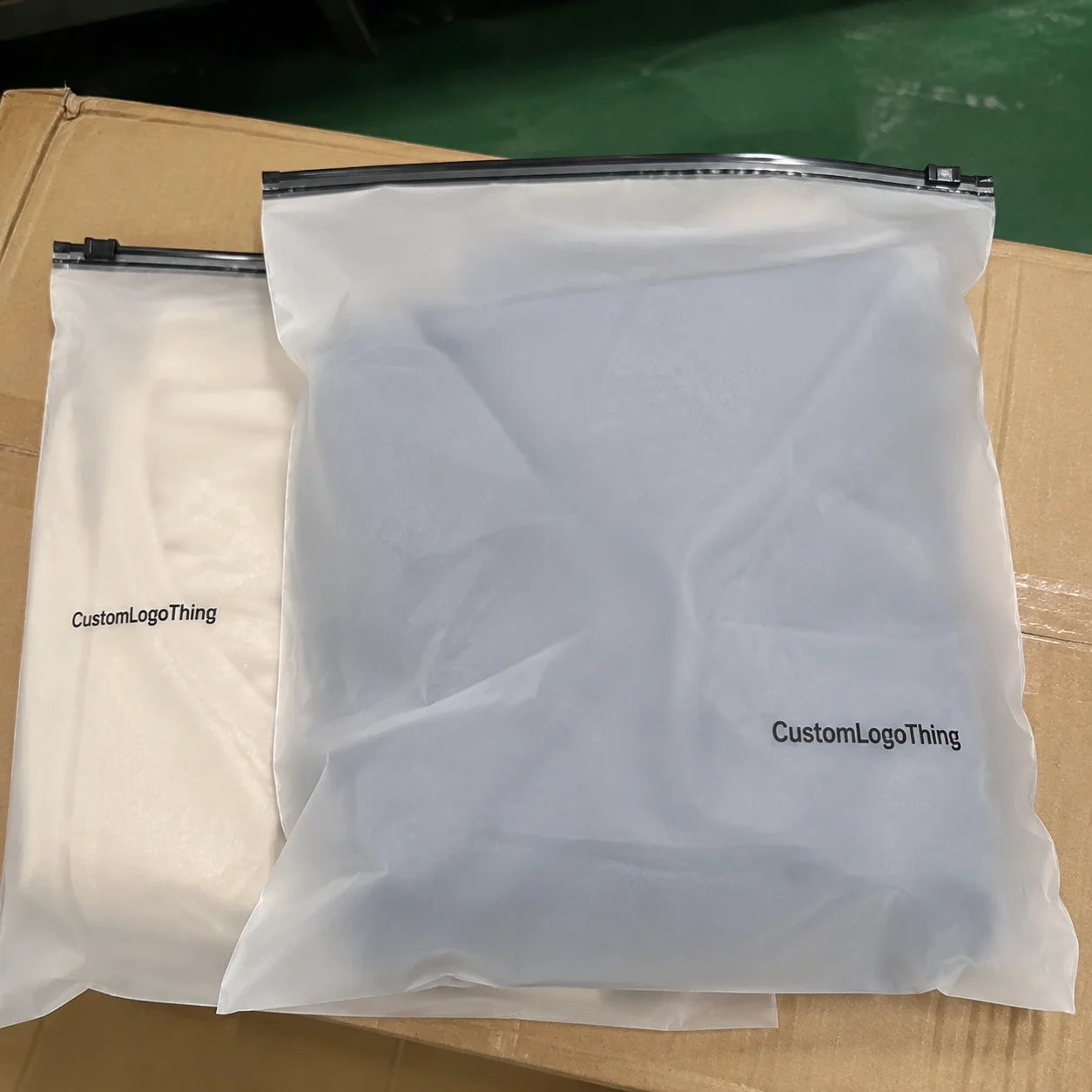
Buying personalized Garment Bags Wholesale is not just a branding exercise. It is a packaging decision with operational consequences. A garment bag has to protect fabric, keep pieces identifiable, and hold up to repeated handling without splitting at the hanger opening or fraying along a seam. If it fails, the garment inside often pays the price.
For buyers, the hard part is that the product looks simple until pricing starts to vary. One quote reflects a thin sleeve meant for light retail use. Another includes heavier film, stronger seams, a zipper, print setup, and carton packing that is actually usable in a warehouse. Same category, very different outcome. That is why the spec matters as much as the logo.
Retail brands use Printed Garment Bags for suits, coats, dresses, and premium apparel. Uniform programs use them for issue, repair returns, and seasonal storage. Bridal shops rely on them for gowns and bridesmaid dresses. Dry cleaners use them as branded handoff packaging. Event wardrobe teams use them for backstage sorting and transport. The use case changes the construction more than many first-time buyers expect.
Why personalized garment bags beat generic storage sleeves
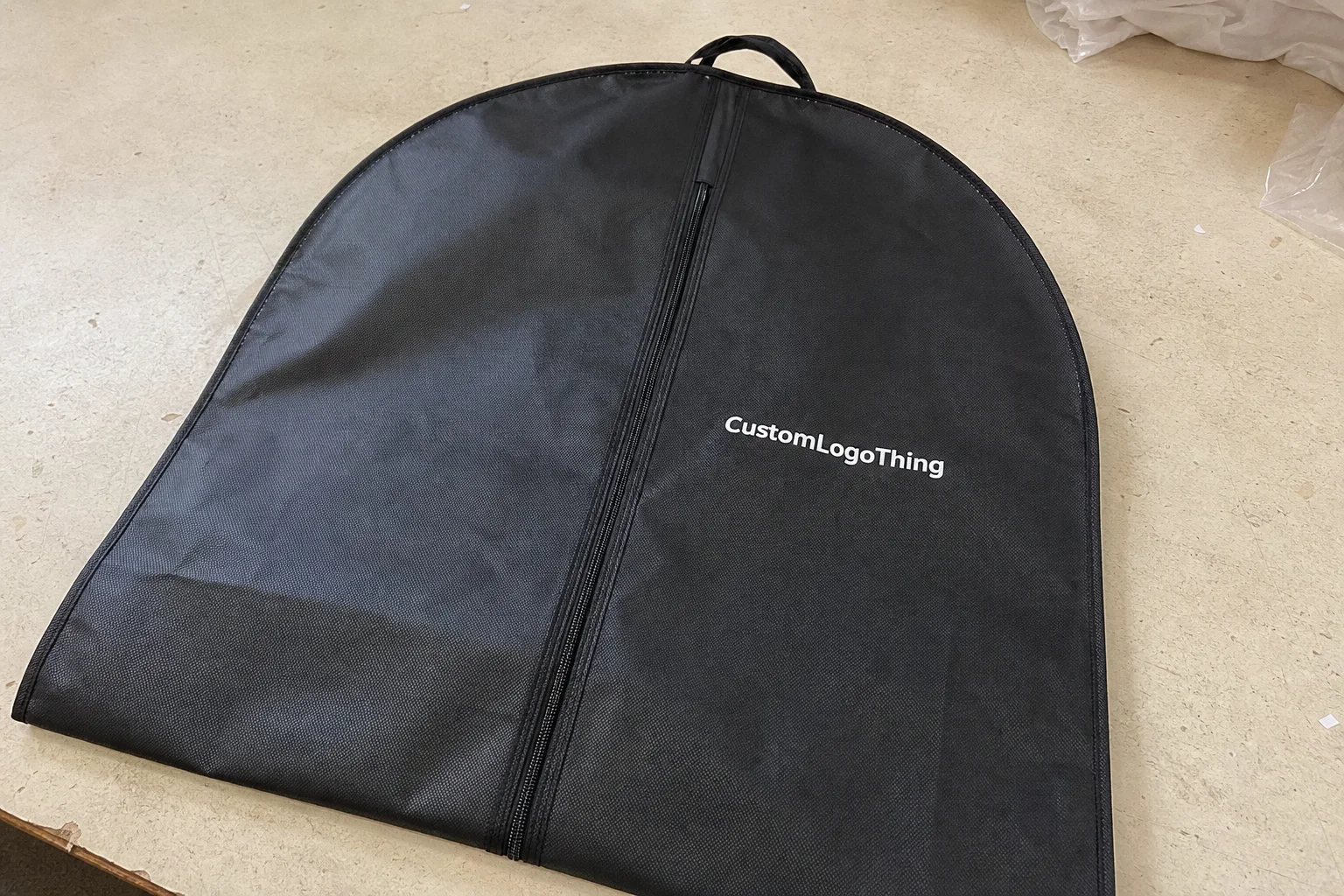
A generic sleeve covers a garment. A personalized bag does that, then adds identification, presentation, and a little control over the chaos that usually follows apparel handling. In a retail store, the bag may be the first branded item a customer touches. In a warehouse, it may be the fastest way to distinguish one size run from another. In a dry-cleaning operation, it reduces mix-ups during pickup and return.
The practical benefit is easy to underestimate. When every bag carries a logo, department name, size code, or simple visual mark, staff spend less time checking hangtags and less time asking what belongs where. That matters more as volume rises. Five bags are manageable. Five thousand bags expose every weak assumption in the process.
Good garment packaging does two jobs: protect the item and reduce handling mistakes. If it only does one, you are paying for a partial solution.
There is also a presentation issue. A wrinkled, overly thin bag can make premium apparel look temporary, even if the garment itself is expensive. On the other hand, a heavy bag with sloppy print or bad fit looks awkward fast. Buyers usually need to decide which risk is worse: cosmetic inconsistency or actual damage. In most apparel programs, damage wins. A missing print detail is annoying. A torn seam or scuffed hem is a cost.
The best wholesale orders usually come from buyers who know the environment the bag will live in. Retail display is different from back-of-house storage. Bridal transport is different from uniform issue. If the bag will move between departments, hang in a stockroom, or travel in a vehicle, durability matters more than a glossy first impression.
Material and print options for retail, uniforms, and events
Material choice usually determines whether the finished bag feels budget, mid-range, or premium. Clear PE and LDPE are common for low-cost runs because they are light, easy to source, and straightforward to print. They work well when visibility matters, such as in retail or warehouse sorting. Clear material helps staff identify the garment without opening the bag. That saves time, though it does not create a luxurious feel.
PP and non-woven options are often chosen when the buyer wants a more structured look. They tend to present better for retail packaging, premium uniforms, and reuse programs. Non-woven styles are especially useful when the bag will be handled repeatedly. They cost more than basic film, but they also tend to feel sturdier in the hand and resist rough treatment better.
Reusable woven styles sit at the heavier-duty end of the category. They make sense for coats, costumes, and garment sets that move often or stay in circulation for a long time. The higher price is not accidental. Stronger construction takes more material and usually more labor.
Print method should match both the material and the quantity. Flexographic printing is common for larger runs and simple graphics. Screen printing is often used for bold logos, especially when a buyer only needs one or two colors. Heat transfer can handle tighter detail on some substrates, but it is not always the lowest-cost path. For very small pilot orders, a label or applied mark can be a better test than a full custom print setup.
Here is a quick comparison that usually helps buyers narrow the field:
| Material | Best for | Typical buyer benefit | Main tradeoff |
|---|---|---|---|
| Clear PE | Retail, warehouse ID, budget runs | Low cost, easy visibility | Basic feel, less abrasion resistance |
| LDPE | Uniform programs, general storage | Flexible, printable, widely available | Can still feel thin if under-specified |
| PP | Retail presentation, branded handoff | Cleaner appearance, more structure | Usually costs more than PE |
| Non-woven | Premium apparel, reuse, events | Durable, better hand feel, stronger presentation | Higher unit cost and more storage bulk |
| Woven reusable | Heavy-duty transport, long-term reuse | Best handling strength | Not the lowest-cost option |
Construction details matter just as much as substrate. Zippers create a cleaner closure for high-value apparel. Hanging loops help during transport. A front pocket can hold tickets, size cards, or cleaning instructions. Reinforced seams are worth asking for if the garment is heavy or the bag is reused often. The hanger opening should match the hanger style in actual use. Too tight, and staff struggle with every piece. Too loose, and the bag rides awkwardly and looks unfinished.
Some buyers also need material characteristics beyond appearance. If the program is sensitive to static, moisture, or sorting conditions in a warehouse, those requirements should be stated early. A supplier cannot fix an overlooked handling need after production has started. That is how simple orders turn expensive.
Specs that actually matter before you place an order
Size is the first thing to confirm. Width, length, and gusset depth should match the garment, not a vague category name. A suit bag and a gown bag are not interchangeable. A coat bag needs different room than a shirt bag. If the garment has volume at the shoulders, a narrow sleeve can crease the fabric or force the seam to work harder than it should.
Thickness is the next filter, and this is where buyers often make the wrong comparison. Film gauge or material weight looks useful on paper, but it does not tell the whole story. A slightly heavier sheet with poor seam strength can still fail. A lighter one with better construction may perform fine for a retail program. The actual use environment matters: back-room storage, customer pickup, shipping, or repeated reuse all place different stress on the bag.
Packaging format is another detail that is easy to ignore until it causes labor issues. Bags can ship flat-folded, rolled, bundled, carton-packed, or in retail-ready packs. Flat-folding saves space. Retail-ready packing can save time in the store. For warehouse receiving, carton labels and accurate counts often matter more than presentation inside the carton.
Branding specs buyers should lock down
- Logo placement: center, upper corner, or repeated pattern.
- PMS color matching: useful when brand consistency matters across different packaging pieces.
- Print area limits: the bag size determines what artwork will fit cleanly.
- Artwork files: vector artwork usually gives the sharpest result.
- Repeat order files: saved approved specs reduce mistakes on reorders.
If the order has any compliance or handling requirements, ask for documentation on the material and the process before approving production. Packaging and transportation standards such as ISTA guidance can be useful when garment bags are part of a broader shipping system. For recycling or material-disposal claims, EPA recycling guidance is a useful baseline. Not every order needs a thick stack of paperwork, but the question should be asked before a purchase order goes out.
One more point that gets overlooked: the garment bag should fit the hanger, not just the garment. If the opening is designed for a slim retail hanger but the actual program uses a wider utility hanger, the fit will be off from the first day. That kind of mismatch shows up in the packing room, not in the sample photo.
Pricing, MOQ, and unit cost: what changes the quote
Pricing for personalized Garment Bags Wholesale usually comes down to a short list of variables. Size, material thickness, print colors, closure style, and quantity do most of the work. Add a custom size, zipper, pocket, multi-color print, and a low order quantity, and the quote will rise quickly. That is not a pricing trick; it is setup cost spreading over too few pieces.
Minimum order quantities vary by construction. Basic PE or LDPE styles can sometimes begin around 500 to 1,000 pieces for a standard size. Printed or specialty styles often make more sense at 1,000 to 3,000 pieces. Non-woven or woven reusable bags may require a higher MOQ because the labor and construction steps are more involved. Sample runs can be possible, but the unit price is usually much higher because the fixed cost is spread over fewer units.
For rough planning, low-cost clear bags often land around $0.12 to $0.30 per unit at larger quantities, depending on size, thickness, and print coverage. Mid-range printed PP or non-woven styles often fall around $0.35 to $1.20 per unit. Higher-end reusable or fully customized constructions can run above that. Small runs are more expensive than most first-time buyers expect. That difference is normal. The cost of making a few hundred bags is not the same as making a few thousand.
There are ways to control price without damaging the order. Standard sizes usually cost less than custom dimensions. One-color print is often cheaper than multi-color work. Fewer SKUs lower production complexity. A simpler closure can be enough if the bag is for storage rather than retail display. And ordering at a volume that spreads setup cost across the run can improve the unit price without compromising the spec.
- Use a standard size instead of a custom die line.
- Keep print to one color if the brand allows it.
- Reduce the number of SKUs in the first run.
- Choose a simpler closure if a zipper is not necessary.
- Order enough volume to dilute setup cost.
The cheapest quote is not always the best value. A thin bag that tears, a print that rubs off, or a zipper that fails in transit can create rework, complaints, and replacement costs. Those expenses usually show up later, which is why buyers sometimes feel surprised by a “cheap” order that turns into a costly one. The real comparison is not sticker price. It is cost per usable bag.
Process and timeline: from artwork approval to delivery
The cleanest ordering process is straightforward: inquiry, spec confirmation, artwork review, quote, sample approval, production, quality check, and shipment. If a supplier skips those steps or compresses them too hard, mistakes usually follow. Efficiency is useful. Omitted controls are not.
Artwork approval is one of the most important checkpoints. A proof should show logo placement, print size, and color expectations clearly enough that the production team can work from it. If a PMS match matters, it should be identified early. If the artwork includes small text, the size should be checked at full scale. Tiny details can disappear on film, especially on transparent or glossy substrates.
Lead time depends on complexity and factory workload. A simple standardized order may move through production in about 12 to 18 business days after proof approval. Custom sizes, multiple colors, specialty closures, or unusual packing instructions can extend that. Sampling may add several days to a couple of weeks depending on the material and the artwork. If the bags are tied to a store opening, event, or uniform rollout, buffer time is not optional. It is what keeps a small delay from becoming a larger problem.
Shipping method changes both timing and landed cost. Air freight is useful for urgent sample replacement or smaller rush orders. Sea freight generally offers better landed cost on larger quantities, but it requires more planning. Domestic freight or warehouse delivery becomes the practical choice once the shipment arrives in-market. If bags are headed to multiple receiving points, carton labels and counts should be confirmed before dispatch. That part is rarely glamorous, yet it prevents the receiving desk from becoming the bottleneck.
For high-value or brand-sensitive programs, a sample or pre-production proof is worth the time. It can catch a logo shift, a seam placement issue, or an awkward hanger opening before thousands of units are produced. That saves money and prevents the unpleasant kind of surprise that tends to arrive by email.
How we keep wholesale orders consistent, clean, and on spec
Consistency comes from process control, not from vague claims about quality. Incoming materials should be checked for thickness, surface finish, and color consistency. Printing should be monitored during the run, not only at the end. Final inspection should confirm count, print placement, carton labels, and packaging format before shipment.
Reorders go more smoothly when the approved spec is stored correctly. Artwork files, sample references, and production notes should be saved together. If the next order is supposed to match the first, the first order needs a clean record. That sounds basic because it is basic, but a surprising number of packaging problems start with an old proof, a lost file, or a buyer who assumed the previous dimensions had been saved correctly.
Packaging discipline matters too. Cartons should show quantity, style, and batch information. Palletization should protect bags from being crushed under load. Batch tracking makes issue resolution possible if a defect appears after delivery. Buyers care about this more than polished sales language. They want a shipment that arrives counted, packed properly, and ready to use.
Buyers do not need poetry. They need bags that arrive counted, packed correctly, and ready to use.
That is one reason many buyers stay with the same supplier once the spec is stable. Not because the product is magical, but because a repeatable process removes friction. Fewer defects. Less rework. Better replenishment planning. Cleaner warehouse handling. Those are the benefits that matter after the first order.
Next steps to get an accurate quote fast
If you want a useful quote for Personalized Garment Bags wholesale, send the basics up front: bag size, material preference, quantity, print artwork, intended use, and delivery location. If you have a target budget, include it. Guessing slows the process and usually makes quotes less accurate.
For a high-value garment or a brand-facing presentation, request a sample or spec sheet before approving production. For internal storage or routine handling, a detailed proof and confirmed spec may be enough. Compare quotes on landed cost, not only unit price. Freight, carton packing, and import handling can move the total more than buyers expect.
Before approving the order, confirm these points:
- Exact dimensions and hanger opening
- Material and thickness
- Print method and color count
- MOQ and reorder pricing
- Lead time after proof approval
- Packaging format and carton count
- Delivery terms and destination
The strongest orders are specific. Retail display, uniform storage, event transport, and dry-cleaning handoff all point to different constructions. A buyer who defines the use case early usually gets a more accurate quote and a better result. If you need a starting point, review our Wholesale Programs and gather the spec details before requesting pricing.
Personalized garment bags wholesale only make sense when the bag fits the garment, the print fits the brand, and the price fits the scale. Get those three aligned, and the order usually works. Miss one, and the cost shows up later in damaged goods, awkward handling, or avoidable reorders.
What is the minimum order for personalized garment bags wholesale?
MOQ depends on material and print method. Basic styles may start around 500 to 1,000 pieces, while custom-printed or specialty bags usually require higher quantities. Small pilot orders can sometimes be arranged, but the unit price is typically higher because setup costs are spread across fewer pieces.
Which material is best for personalized garment bags wholesale?
Clear PE or LDPE works well for low-cost visibility, PP gives a cleaner retail look, non-woven offers a sturdier premium feel, and woven reusable styles are better for heavy-duty handling. The best choice depends on whether the priority is presentation, protection, reuse, or budget.
How long does production take for personalized garment bags wholesale?
Simple orders may take about 12 to 18 business days after proof approval, while custom sizes, multiple colors, special closures, or unusual packing requirements can extend the timeline. Sampling may add additional days or weeks depending on the material and artwork.
Can I get my logo printed on personalized garment bags wholesale?
Yes. Logos can usually be printed in one or more colors depending on the material and print method. Vector artwork is preferred because it keeps edges cleaner and reduces scaling issues during production.
What should I compare when reviewing quotes for personalized garment bags wholesale?
Compare material thickness, print method, MOQ, packaging format, lead time, and shipping terms. The lowest quote is not always the best value if the bags arrive flimsy, misprinted, or packed in a way that creates receiving problems.