Personalized Honey Jar Labels do more than decorate a container. They help a jar look like a thoughtful gift, a retail-ready product, or a small-batch item that has been planned rather than assembled at the last minute. Buyers notice the package before they ever taste the honey, and that first impression tends to set the tone for everything that follows.
That is why Personalized Honey Jar Labels carry so much weight. The right label can make a simple glass jar feel custom-made and worth its shelf price. The wrong one can make excellent honey look awkward, cluttered, or strangely homemade in a way that works against the product instead of supporting it. Same honey. Very different outcome.
What personalized honey jar labels actually do for your packaging
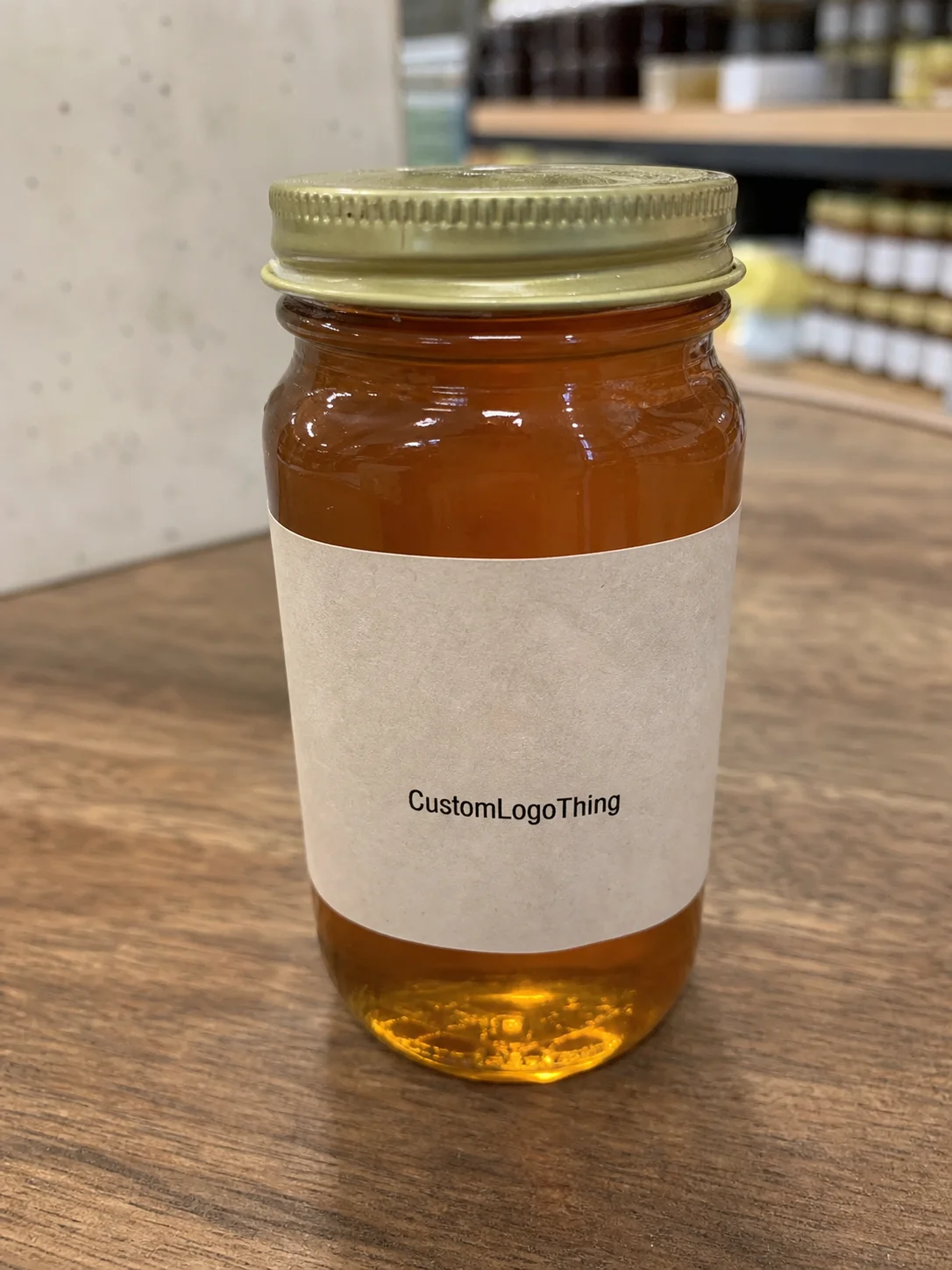
Honey is one of those products where packaging carries a large share of the selling job. The product itself is visually simple: amber liquid, glass jar, lid, and maybe a tamper band. That leaves the label responsible for branding, flavor identification, net weight, ingredient details, batch coding, and shelf appeal, all in a surprisingly small area.
For small-batch sellers, farm stores, wedding favors, and gift brands, labels are often the fastest way to move from “nice homemade product” to packaging that looks ready for retail. You do not need a custom jar mold or a full packaging overhaul. You need a Label That Fits the container cleanly, reads clearly, and matches the price point customers are seeing.
The label is not just decoration, and it is not just information. It has to do both jobs at once. Strong personalized honey jar labels create recognition at a glance while still leaving room for the practical details that matter once the jar is in someone’s hands. That balance is what separates polished packaging from crowded packaging.
A well-sized label can make a modest jar look intentional. A poorly sized one can make an expensive jar feel improvised.
That sounds blunt because packaging is blunt. A jar either looks considered or it does not. If the goal is a better presentation without redesigning the container itself, custom labels and tags are usually the most efficient first step. You can see how broader label options work here: Custom Labels & Tags.
For many brands, the goal is credibility rather than luxury for its own sake. The jar needs to feel aligned with the honey inside, the sales channel, and the expectations of the buyer. That is really what personalized labels are doing: translating the product into packaging that feels believable.
How custom honey jar labels work on real jars
The workflow sounds straightforward. Measure the jar, choose a label shape and material, send artwork, review a proof, approve production, then print and ship. The part that trips people up is that jars are not flat, and the usable label area is usually smaller than it looks at first glance. Curves, shoulders, ridges, and recessed panels all reduce the space available for text and graphics.
Round jars are the most common challenge. A wrap label might look perfect on a screen, then behave differently on an actual jar because the seam lands in an awkward spot or the label begins lifting near the overlap. Small jars need especially careful planning because a few millimeters can change the whole layout. On a 2 oz or 4 oz jar, even a modest mismeasurement can affect readability and alignment.
Material choice matters just as much as size. Paper labels are often the best value for dry shelf display and gift packaging. Polypropylene or polyester film labels perform better when the jars may face moisture, condensation, coolers, or repeated handling at markets. If the jars are going to ship through humid conditions or be touched frequently, waterproof construction is usually the safer decision.
Personalized honey jar labels are commonly produced in three formats:
- Singles for hand application or very small batches
- Rolls for faster labeling with a dispenser or applicator
- Sheets for test runs, short batches, or home application
Rolls are usually the better choice once volume begins to climb because they save labor and work well with semi-automated application. Sheets make more sense for short runs and flexible storage. Singles are practical if quantity is low and the labels are being applied one by one. The best format is the one that matches how you actually pack the jars, not the one that sounds most professional in a quote.
If your packaging has to survive condensation, refrigeration, or shipping stress, it helps to understand general packaging testing standards such as those from the ISTA packaging standards. Nobody wants a label that curls, smears, or slides halfway off before the jar even reaches the buyer.
Key factors that affect cost, pricing, and unit cost
Pricing for personalized honey jar labels is driven by a fairly predictable set of variables: material, size, finish, quantity, print colors, and die-cut shape. Artwork complexity can affect prep time, but the largest swings usually come from production specs rather than design style. A clean label in the wrong material still costs the wrong amount.
Entry-level paper labels are usually the lowest-cost option. For a simple small run, pricing may land around $0.12-$0.25 per unit, depending on size and quantity. Waterproof film labels often move into the $0.18-$0.40 per unit range for smaller orders because the stock costs more and the durability is higher. Specialty finishes can push the unit cost higher still.
Quantity has a major impact. A 500-label order carries a higher unit cost because setup is spread across fewer pieces. A 5,000-label order usually lowers the per-label price, though the upfront spend is obviously larger. That is the tradeoff: lower unit economics in exchange for a bigger invoice today. Buyers usually understand the math once they see the actual breakpoints.
Finish changes both appearance and cost. Matte is often the most practical choice for a natural, artisanal look. Gloss makes colors brighter and can perform well under retail lighting. Soft-touch feels premium, but it can be more than a honey product truly needs. Lamination improves durability, especially with handling and moisture. Textured stocks can look refined, though they are not always the best choice if fine type or barcodes need to stay crisp.
| Label option | Typical use | Approximate cost range | Tradeoff |
|---|---|---|---|
| Paper label | Dry shelf display, gifting, low-volume runs | $0.12-$0.25/unit | Lowest cost, less moisture resistance |
| Film label | Refrigerated storage, shipping, higher handling | $0.18-$0.40/unit | Better durability, higher material cost |
| Laminate or specialty finish | Premium retail, gift sets, upscale presentation | $0.25-$0.55/unit | Stronger shelf impact, more expensive |
Those ranges are only directional, not universal. Final pricing depends on dimensions, ink coverage, finishing method, and order quantity. Still, they are useful when comparing quotes that otherwise sound vague. Ask for pricing by size, material, and quantity so the numbers can be compared fairly. Otherwise the quote can look attractive until the hidden variables appear.
Printing method also shapes the economics. Digital printing is usually the practical starting point for short runs because setup is lighter and artwork changes are easier to handle. Flexographic printing can become more economical at higher volumes if the design stays consistent. For seasonal varieties, test runs, or small-batch flavor changes, digital often makes more sense.
Process and timeline: from artwork to delivery
Good production starts with the unglamorous details. The usual sequence is simple: Request a Quote, confirm jar dimensions, prepare artwork, review a proof, approve production, print, finish, and ship. Skip the preparation step and the job usually pays for it later in revisions or reprints.
Timing depends on how simple or specialized the order is. A straightforward digital run with standard paper labels may move in 7-10 business days after proof approval. Orders that include waterproof film, custom die-cut shapes, or specialty finishes often take 12-15 business days. Shipping time needs to be added on top of that. Rush production is possible, but only when the specs are already clean and the proof process moves quickly.
Most delays come from the same handful of issues:
- Missing jar measurements or incomplete specs
- Low-resolution logos or incorrect artwork files
- Late changes to ingredients, net weight, or compliance copy
- Slow proof approval because several people need to check the design
If the jars are going into retail or wholesale channels, the label copy has to be handled carefully. Depending on the market, that may include ingredients, net weight, business identity, and batch or lot coding. Sustainability claims may also shape material selection, and some buyers want FSC-certified paper as part of their packaging story. The FSC standards at fsc.org are a useful reference if paper sourcing matters to the brand.
A practical way to speed up the process is to collect the jar, the logo file, the text copy, and the quantity target before requesting a quote. That alone cuts down on back-and-forth more than many first-time buyers expect. It also makes the pricing more accurate, which is helpful when a packaging budget has to stay under control.
How to choose the right label size, material, and finish
Start with measurement, not design. Measure the usable flat area on the jar, not just the full circumference. Curves reduce usable space, and shoulders can cut into the height faster than expected. If the jar has a recessed panel, measure the panel itself rather than the overall glass height. Guessing here usually leads to bubbling, overhang, or labels that simply look too large for the container.
For round jars, think in terms of front label width, wrap length, and safe margins. If you want a front-only label, leave enough space around the edges so the design does not crowd the curve. If you want a wrap label, allow for overlap and place the seam where it will not interfere with key text or brand marks.
Material should match the use case rather than the aesthetic alone:
- Dry indoor shelf display: coated paper or BOPP paper-look stock
- Refrigerated storage: waterproof film with strong adhesive
- Gift sets and premium retail: matte laminate, soft-touch, or textured stock
- Farmers market sampling: durable label that still reads clearly under handling
- Shipping-heavy orders: film labels that resist scuffing and moisture
Finish should support the product story, not fight it. Matte usually feels rustic and calm. Gloss feels bright and polished. Laminate communicates durability and longer shelf life. Textured stock can feel premium, but it may soften fine detail. If the jar is small, readability matters more than decorative effects. That rule saves a lot of packaging regret.
For a general outside reference on packaging material considerations, the EPA’s food packaging resources are useful when sustainability is part of the decision. They are not about visual style; they help frame material choice against performance and waste.
Label hierarchy should stay simple. Brand name first. Product name second. Flavor or varietal third. Then the required details. If a customer cannot read the label from arm’s length, the design is doing too much and the jar is doing too little.
Common mistakes with personalized honey jar labels
The most expensive mistake is still the simplest one to avoid: guessing the jar size. Measure the actual jar in hand. Better yet, measure two or three samples if they are available. Jars can vary slightly between batches, and a label that fits one run may not fit the next exactly the same way.
Another common problem is text that is too small. Honey labels often try to fit the product name, ingredients, net weight, brand story, and marketing copy all at once. The result is tiny type and weak contrast. If the buyer has to squint to read the front panel, the label has already started losing its job.
Skipping compliance details can also create trouble. If the product is going through retail or wholesale, a label may need more than a nice logo. Batch or lot coding is useful for traceability. Net weight should be present if the jar is being sold as a packaged food product. Ingredient details need to be accurate and legible where required.
Adhesive choice is another quiet failure point. Cold storage, condensation, oily handling, and shipping stress all test the bond. A label that wrinkles, slides, or lifts at the corners makes the brand look cheap even when the honey is good. That problem is usually preventable with the right stock and adhesive pairing.
Common errors worth avoiding:
- Using a label shape that fights the jar curvature
- Choosing a finish that hurts readability
- Overcrowding the front panel with too many claims
- Forgetting to test adhesion under realistic conditions
- Approving artwork before checking the final dimensions
Most label failures are not really design failures. They are planning failures. That can be frustrating, because the design is the visible part and therefore gets blamed first. The real issue often shows up earlier, when someone skips measurement, rushes approval, or assumes the same template will work across different jar sizes.
Expert tips for better labeling decisions and next steps
If you are ordering personalized honey jar labels for the first time, avoid starting with a large print run. Order a proof set or a short test quantity first. A small sample run can reveal problems with wrap fit, color balance, font size, or adhesive performance before real money is tied up in inventory.
It also helps to keep two label versions in mind. One can be the retail-facing design with stronger shelf impact. The other can be a simpler version for bulk jars, seasonal lots, or gift add-ons. That gives you flexibility without redesigning the whole brand every time the use case changes.
Before requesting a quote, build a clean checklist:
- Exact jar measurements
- Label quantity
- Preferred material
- Finish choice
- Application method: sheet, roll, or single
- Timeline and delivery target
- Required legal text
That checklist saves time and usually saves money. It also makes it easier to get a useful recommendation instead of a generic one. The more exact the spec, the less guessing on both sides. That usually leads to a cleaner result and fewer unpleasant surprises.
When comparing quotes, ask about quantity breaks and finish changes. The difference between 500, 1,000, and 5,000 labels can be significant. The same is true when switching from plain paper to waterproof film or from a standard cut to a custom die shape. Those decisions shape both the look and the unit economics, so they should be treated as production choices, not just design preferences.
For most buyers, the smartest path is straightforward: gather the jar, measure the usable panel, decide whether durability or cost matters more, and request quotes that match the actual use case. That approach keeps the process practical and avoids the common trap of buying labels that look nice on paper but do not work well on the jar.
Done well, personalized honey jar labels turn a basic container into packaging that feels intentional, market-ready, and aligned with the price a buyer is expected to pay. Done poorly, they make even good honey look like an afterthought. In packaging, that difference is not small.
What size should personalized honey jar labels be for small jars?
Measure the flat area on the jar, not just the full circumference, because curves reduce usable space. Small jars often work best with narrow front labels or short wrap labels that leave clean margins. Always test the layout against the actual jar shape before ordering a full run.
Are personalized honey jar labels waterproof?
They can be, but only if the right material and finish are selected. Film labels with laminate or waterproof stock handle condensation, refrigeration, and handling much better than basic paper. If the jars will be chilled or washed, paper is usually the riskier choice.
How much do custom honey jar labels usually cost?
Price depends on quantity, material, size, finish, and shape. Smaller runs have a higher unit cost, while larger quantities usually reduce the per-label price. Special finishes and waterproof materials increase cost, but they also improve durability and shelf presence.
What information should be on honey jar labels?
At minimum, include the product name and brand name. For retail or wholesale, add net weight, ingredients, and any required compliance details. Batch or lot codes are useful for traceability, especially when the product is being sold in larger volumes.
How long does it take to produce personalized honey jar labels?
Simple orders move faster than custom shapes or specialty finishes. Most delays come from artwork problems, missing measurements, or slow proof approval. If faster turnaround matters, come prepared with the jar size, quantity, and print-ready artwork.