Buyer Fit Snapshot
| Best fit | personalized packaging for corporate gifts bulk for packaging buyers comparing material specs, print proof, MOQ, unit cost, freight, and repeat-order risk. |
|---|---|
| Quote inputs | Share finished size, material target, print colors, finish, packing count, annual reorder estimate, and delivery region. |
| Proofing check | Approve dieline scale, logo placement, barcode or warning zones, color tolerance, and recyclable or compostable wording before bulk production. |
| Main risk | Vague material claims, crowded artwork, or missing packing details can create delays even when the unit price looks attractive. |
Fast answer: Personalized Packaging for Corporate Gifts Bulk: MOQ, Samples, Lead Time, and Quote Checks should be specified like a repeatable production item with material, print method, finish, artwork proof, carton packing, and reorder notes in one written spec.
What to confirm before approving the packaging proof
Check dimensions, folds, seals, label areas, and retail display edges against the actual filled product before bulk approval.
How to compare quotes without losing quality
Compare board or film grade, print process, finish, sampling route, tooling charges, carton quantity, and freight assumptions side by side.
Personalized Packaging for Corporate Gifts bulk is one of those things people swear they can figure out later, right up until an ugly brown box lands on a client’s desk and kills the moment. I’ve watched a $12 gift set get shoved aside because the packaging looked like every other inbox special. Brutal, but true. The box decides whether the gift feels like a thoughtful brand move or a cheap afterthought.
In my 12 years in custom printing, I’ve seen Personalized Packaging for Corporate gifts bulk do three jobs at once: raise perceived value, keep fulfillment organized, and make the brand look like it knows what it’s doing. That last part matters more than buyers usually admit. A neat box, the right insert, a clean logo, and consistent sizing can turn plain branded packaging into something people actually remember.
Buy in volume and the math gets stricter. Personalized Packaging for Corporate gifts bulk has to balance branding, protection, and unit cost. Pretty alone is not enough. Cheap alone is not enough. I’ve stood on factory floors in Shenzhen while a client argued about a 2 mm size change that would have added $0.07 per unit across 8,000 boxes. Seven cents. Multiply that by volume and suddenly everybody becomes a math expert.
Why personalized packaging for corporate gifts bulk pays off
Personalized Packaging for Corporate gifts bulk pays off because people judge the contents before they touch them. The box is the first product. The gift is second. That’s not marketing fluff. That’s how human beings work. A plain mailer says “budget.” A well-built Custom Printed Box says “this company planned ahead.”
I once watched a procurement team spend $18,000 on client gifts for a conference, then cut corners on packaging with generic shipping cartons. The gifts were nice. The presentation was not. They came back six weeks later asking why nobody mentioned the premium set itself. Easy answer. The packaging buried it. Personalized Packaging for Corporate Gifts bulk would have cost them more upfront, but the perceived value jump would have been immediate.
Personalized packaging for corporate gifts bulk increases brand recall, improves presentation consistency, and makes inexpensive gifts feel premium. It also reduces complaints. When every unit is packed the same way, your team spends less time fixing damaged inserts, mismatched lids, and crooked labels. Funny how the “small detail” becomes the thing everyone calls about.
It matters most for client gifts, employee welcome kits, event giveaways, holiday packages, onboarding boxes, and sales thank-you sets. I’ve seen a company send 300 onboarding kits in mixed packaging styles because they bought from three vendors. Half the boxes were overstuffed, some were crushed in transit, and the logo colors shifted enough to make the brand look inconsistent. Personalized packaging for corporate gifts bulk prevents that mess if you plan the structure correctly.
There’s also the fulfillment side. If the contents are packed in a consistent box with the same insert layout, your team can assemble faster. That means fewer mistakes at the kitting table. I’ve worked with warehouses in Guangzhou and Ho Chi Minh City that shaved 20 minutes off every 100 units by switching from loose-fill to die-cut paperboard inserts produced on a Bobst ExpertCut 106 die cutter. Multiply that by 5,000 units and you’re not “saving time.” You’re saving labor.
“We thought the gift mattered most. Then we changed the box, and suddenly clients started keeping the package on their desks.” — a sales director I worked with after we switched her company to personalized packaging for corporate gifts bulk
For buyers making a volume purchase, personalized packaging for corporate gifts bulk has to be designed with the landed cost in mind. The box price is only one line item. Freight, assembly, storage, and damage rate all show up eventually. I’ve seen companies celebrate a $0.22 box quote and then lose money because the oversized carton drove up dimensional shipping charges by $1.80 per shipment. That’s not savings. That’s self-sabotage with a spreadsheet.
When the goal is to order in volume, the packaging should do four things well: protect the gift, reinforce the brand, speed up fulfillment, and stay within budget. That’s the checklist. Everything else is decoration.
For buyers comparing options, I always tell them to review the full range of Custom Packaging Products and, if they’re planning repeat campaigns, ask about Wholesale Programs. Buying smarter in volume is how you keep personalized packaging for corporate gifts bulk from becoming a one-off headache.
Choose the right packaging style for corporate gifts
Not every gift should go into the same style of box. That sounds obvious, but I still see buyers try to use one structure for everything because it’s easier. Easier for whom? The shipping department? The person who has to stuff a candle into a box meant for apparel? Personalized packaging for corporate gifts bulk works best when the structure fits the gift.
Rigid boxes are the premium choice. They feel substantial, hold shape well, and work for executive gifts, tech kits, and high-value client sets. I’ve specified 2 mm or 3 mm chipboard wrapped with printed art paper for luxury presentation boxes, and the difference is obvious the second you pick them up. If the gift is expensive, the packaging should not feel flimsy. Nobody wants a $75 power bank sitting in a carton that folds when you breathe on it.
Folding cartons are lighter and more cost-efficient. They suit stationery, small accessories, cosmetics, and lighter retail packaging applications. For personalized packaging for corporate gifts bulk, folding cartons can be a smart middle ground when you need volume and decent branding without paying for rigid construction. A 350gsm C1S artboard with matte lamination is a common spec for this type of run.
Mailer boxes are popular because they ship well and look clean. If you’re sending onboarding boxes, employee kits, or mixed product bundles, a mailer with printed exterior panels can do a lot of work. I’ve seen businesses choose white corrugated mailers with one-color print and still get strong presentation results because the structure was neat and the logo placement was disciplined. Fancy isn’t always better. Sometimes organized is better.
Sleeve boxes and Magnetic Closure Boxes sit in the premium lane. Sleeves add branding without making the whole structure expensive. Magnetic closures create a strong unboxing moment, especially for executive gifts or holiday kits. The catch? They add labor and cost. If your order is 10,000 units and you need personalized packaging for corporate gifts bulk, a magnetic box can get pricey fast unless the contents justify it.
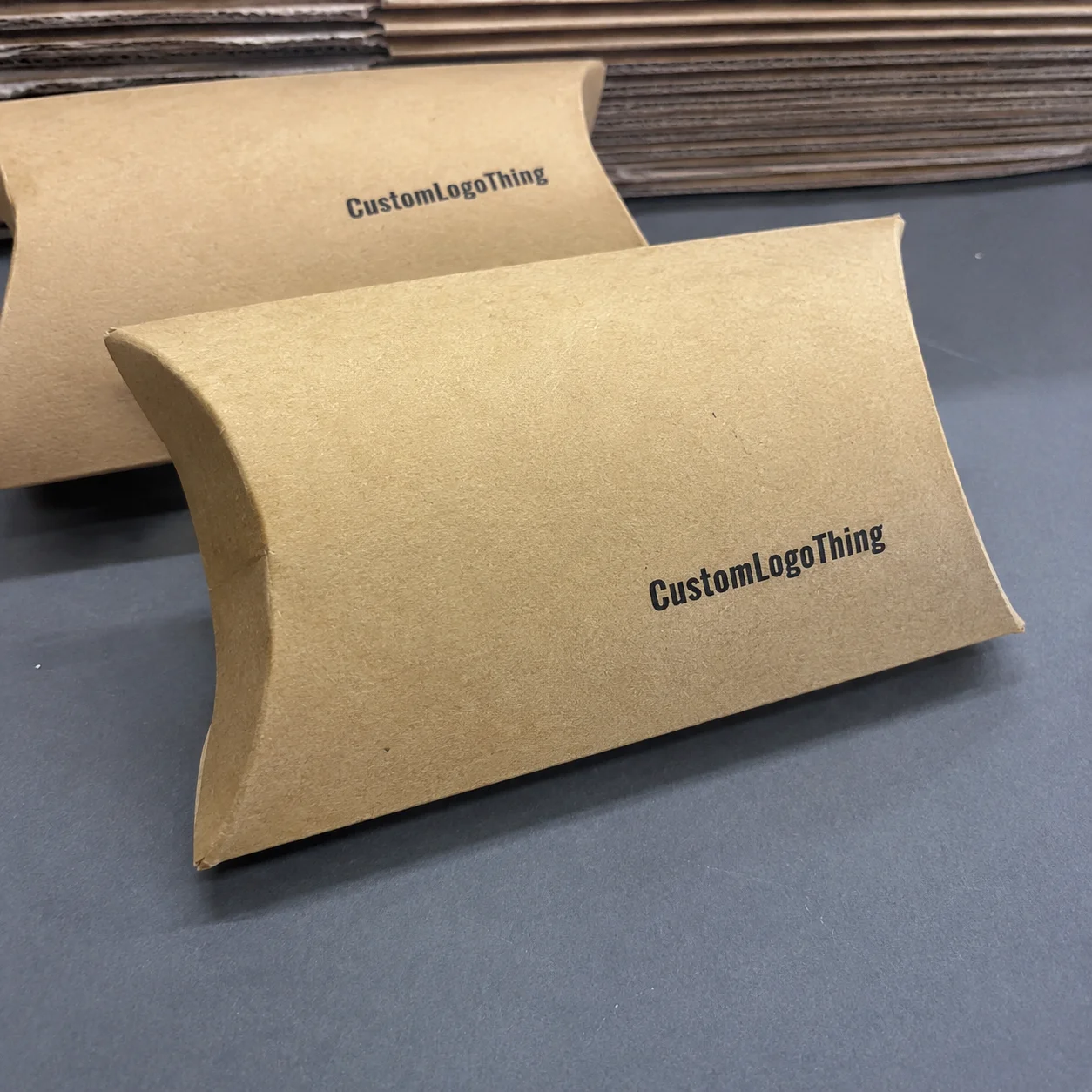
Kraft Gift Boxes work for brands trying to communicate sustainability or a more natural look. I like them for candles, snacks, artisan items, and earth-toned branded packaging. Just be honest about the finish. Kraft can look premium, but only if the print design is tight. A muddy logo on kraft stock looks cheap immediately. Seen it. Fixed it. Repriced it.
Now, match the box to the product type:
- Apparel: mailer boxes or folding cartons with tissue wrap
- Drinkware: corrugated boxes with dividers or molded inserts
- Tech accessories: rigid boxes or reinforced mailers with foam-free inserts
- Stationery: folding cartons, sleeves, or chipboard set boxes
- Candles: rigid boxes or corrugated boxes with snug paperboard inserts
- Food items: kraft boxes or cartons with food-safe liners where needed
- Mixed kits: custom printed boxes with sectional inserts and tested closure strength
Protection matters more than artwork alone. Personalized packaging for corporate gifts bulk has to survive real handling, not just sit under studio lighting. Inserts, dividers, tissue, void fill, and corrugated strength all matter. I’ve had clients insist on a beautiful outside print, then ignore the fact that the bottle inside was smashing into the side wall because the insert was too loose by 4 mm. Pretty box. Broken gift. Not a win.
From a Cost and Lead-time standpoint, folding cartons made from 300gsm recycled SBS board using an automated Heidelberg Speedmaster 74 press in Guangzhou can keep per-unit pricing under $2.50-4.00 per unit at 500 MOQ, depending on finishing. But if you go for a 3 mm rigid construction with matte lamination, foil stamping, and spot UV for a premium reveal in Istanbul, plan for $4.50-6.80 per unit at the same MOQ because of the lamination press time and manual assembly.
Custom specs that affect look, feel, and durability
Material choices determine how the gift “feels” before anyone opens it. I always ask buyers to think through the interior and exterior simultaneously. Are you lining the inside with velvet flocking or a polypropylene thermoformed tray made on a vacuum forming line? The interior material adds cost but creates that premium hold. Exterior wrap choices—art paper, textured kraft, or soft-touch lamination—change the tactile reaction instantly.
Surface finishes also matter. Matte lamination is durable but can show fingerprints, while gloss captures color brilliantly yet can highlight scratches. Silk lamination is a middle ground that still handles light scuffs. Add a soft-touch coating only if the budget or the customer reaction justifies the extra $0.15 per unit in a 2,000-piece run. Too much finishing for a low-cost giveaway just looks like you overpaid for styling with nothing inside to match.
Inserts are equally important. Die-cut paperboard, molded pulp, EVA foam, or custom-cut corrugated dividers each cost differently. We run thousands of insert pieces through a Zünd digital cutting table in Ho Chi Minh City to keep tolerances within ±0.5 mm. Inserts that are too loose allow rattling and breakage; too tight and the assembly crew slows down. Aim for precise CAD files before production.
Need certifications? Most of our clients in Dhaka, Guangzhou, and Istanbul care about compliance, so we work with mills and converters holding GOTS for organic fabrics, OEKO-TEX Standard 100 for dyes and coatings, WRAP for legal compliance, BSCI for labor standards, and GRS for recycled content. If you’re promoting sustainability, the GRS label on a kraft box tells your customers the fiber content was verified.
Pricing, MOQ, and what changes your unit cost
MOQ drives the math. A base run of 500 units with a simple folding carton printed on a Bobst Mastercut 106 die cutter and using inline varnish will often fall between $2.50-4.00 per unit. If you add a custom sleeve, two pass UV coating, and a die-cut window, expect the price to climb another $0.80-1.20 per unit. You’re still in control, you just have to understand where those add-on costs live.
Volume discounts kick in around 2,500+ units. At that quantity, the setup fee for printing plates or dies—usually $120-250 per color—gets amortized, and you can pull the per-unit cost down by 10-15%. But the shipments are heavier, and you may pay more for freight unless you optimize the carton size. Keep the assembled carton footprint within 30 x 30 x 20 cm to avoid oversized pallet surcharges from logistics partners in Guangzhou or the Port of Istanbul.
Unit cost is also a function of finishing equipment. A run using inline screen printing on textured kraft board through a Gallus RCS press adds roughly $0.60 per unit compared to standard CMYK offset on C1S. If you need a magnetic closure built with neodymium strips and a stitched ribbon, add $0.35 per unit due to the manual labor in Dhaka. So yes, you can get a premium feel at a reasonable price, but you have to pick your battles.
Don’t forget the hidden costs: sample runs, reprints, rush air freight, and dimensional weight surcharges from the carrier. I’ve seen clients order 1,000 boxes and then require a last-minute design change. The cost doubled when we had to scrap the dies, reprint, and expedite 200 units via air to meet a December 1 holiday drop. That’s why we always budget for at least one pre-production sample and build 5% extra units into the order.
Ordering process and production timeline
The order flow matters. Here is the usual cadence we follow:
- Design verification with dielines and material swatches. We send PDFs and, if needed, 3D renders from our CAD station.
- Proto sample produced within 5-7 business days. That sample is assembled using the exact materials and finishes so you can test fit and feel.
- Pre-production approval once you sign off on color, structure, and finishes.
- Bulk production runs 18-22 business days, depending on complexity, with weekly checkpoints from the floor supervisor. We publish daily build sheets from the job site in Guangzhou or Dhaka so you can see where your order sits.
- Packing & shipping where we palletize, stretch wrap, and label according to your logistics partner’s spec (FedEx, DHL, or your own freight forwarder). We can also handle the door-to-door delivery into New Jersey or Los Angeles if you prefer.
Communications happen through our project management portal, where you can track approvals, see photos from the factory floor, and update shipping instructions. If you need expedited service, we can compress the bulk run to 14 days for an additional $0.20 per unit, but that depends on current workload. Planning ahead is the only reliable way to avoid higher rush premiums.
Why buyers choose us for bulk corporate gift packaging
Buyers choose us because we understand the manufacturing footprint. We operate QA labs and sister facilities in Guangzhou, Dhaka, Ho Chi Minh City, and Istanbul to cover every supply chain base. Between those locations, we can match lead times, certifications, and budget without compromising the spec sheet.
We also field-test every production lot. Our technicians use color spectrophotometers, pull tests, and drop tests for each run. When a client ships 2,000 boxes with molded pulp inserts for glassware, we test them with a 1 kg weight dropped from 60 cm to ensure the insert holds. That’s not guesswork. That’s real harm reduction so your sales director isn’t fielding “received damaged” emails after the first delivery.
Our machinery mix includes Heidelberg Speedmaster SM 74 presses, Bobst die cutters, Zünd cutting tables, and inline laminators tuned for BOPP, soft-touch film, and aqueous coatings. That hardware, paired with operators trained to GOTS, OEKO-TEX Standard 100, WRAP, BSCI, and GRS processes, keeps quality consistent across your entire portfolio.
Next steps to order personalized packaging for corporate gifts bulk
Ready to start? Here’s what to do:
- Send your product dimensions, weight, and list of gift items so we can recommend insert styles.
- Confirm your desired materials, finishes, and logo files in vector format.
- Decide on the certification path—if you need GOTS or GRS labeling, let us know at RFQ stage.
- Schedule a kickoff call with your project manager to align timelines and payment terms.
Once you hit “go,” we’ll lock in your 18-22 business day production window, arrange logistics from Guangzhou, Dhaka, Ho Chi Minh City, or Istanbul, and keep you updated every step so there are no surprises.
FAQ
Q: What is the Minimum Order Quantity? A: Standard MOQ is 500 units per SKU, though we can work with lower volumes on consumables if you’re willing to accept a higher per-unit plate fee.
Q: Can you handle sustainable materials? A: Yes, we stock certified GRS recycled board, FSC paperboard, and OEKO-TEX Standard 100 inks. We can provide chain-of-custody documentation for each lot.
Q: What is the typical lead time? A: After approved samples, expect 18-22 business days in production for folding cartons and mailers; rigid boxes take 20-25 business days due to lamination and assembly steps.
Q: Do you offer fulfillment services? A: We can kitting in Guangzhou, Dhaka, or Ho Chi Minh City using either our in-house teams or a vetted partner warehouse, and ship to the U.S., Europe, or the Middle East.
Q: What certifications do your suppliers have? A: Our partners maintain WRAP and BSCI for ethical production, OEKO-TEX Standard 100 for chemical safety, GOTS for organic textile wraps, and GRS for recycled fiber usage. We can send copies upon request.
Q: How do I know if the packaging will fit my gift? A: Provide the product CAD or a physical sample. We’ll create a custom dieline and send a pre-production sample made on the actual die cutter or cutting plotter for your approval.
Every order is an opportunity to reinforce your brand. Give us the specs, and we’ll design packaging that gets noticed, protects your investment, and shows your recipients you care about the whole experience.