Buyer Fit Snapshot
| Best fit | personalized packaging for food business for packaging buyers comparing material specs, print proof, MOQ, unit cost, freight, and repeat-order risk where brand print, material, artwork control, and repeat-order consistency matter. |
|---|---|
| Quote inputs | Share finished size, material target, print colors, finish, packing count, annual reorder estimate, and delivery region. |
| Proofing check | Approve dieline scale, logo placement, barcode or warning zones, color tolerance, and any recyclable or compostable wording before bulk production. |
| Main risk | Vague material claims, crowded artwork, or missing packing details can create delays even when the unit price looks attractive. |
Fast answer: Personalized Packaging for Food Business: What Works should be specified like a repeatable production item. The safest quote includes material, print method, finish, artwork proof, carton packing, and reorder notes in one written spec.
What to confirm before approving the packaging proof
Check the product dimensions against the actual filled item, not only the sales mockup. Ask for tolerance on folds, seals, hang holes, label areas, and retail display edges. If the package carries a logo, QR code, warning copy, or legal claim, reserve that space before decorative graphics fill the panel.
How to compare quotes without losing quality
Compare board or film grade, print process, finish, sampling route, tooling charges, carton quantity, and freight assumptions side by side. A lower quote is only useful if the supplier can repeat the same color, closure quality, and packing count on the next order.
Personalized Packaging for Food business can change a sale before the first bite. I remember watching a plain takeout box disappear into a delivery bag in under 20 seconds, then seeing a branded carton with a two-color logo and a clean locking tab get photographed on the sidewalk before the customer even opened it. That gap is not decoration for decoration's sake. It is product packaging doing three jobs at once: protecting food, carrying the brand, and making the meal feel worth the price, whether it is a $7 sandwich or a $24 noodle bowl.
At a practical level, personalized packaging means the container, sleeve, label, bag, or insert is built around a specific menu item, portion size, storage condition, and visual identity. A 500ml soup cup needs different wall strength and lid behavior than a bakery box for four croissants. A branded coffee bag needs a different barrier structure than a deli wrap. That is why personalized Packaging for Food business is never just decoration; it is packaging design, food safety, and package branding working together in one physical object, often with a 350gsm C1S artboard sleeve, a 28mm PET lid, or a 32 ECT corrugated mailer depending on the route.
Honestly, I think the best packaging projects are part engineering, part theater, and part common sense. The theater matters because people are human, and a kraft box with a crisp one-color logo can signal care before a single bite. The engineering matters because hot sauce leaks do not care about your mood board. And the common sense matters because no one remembers a box that collapses before the meal reaches the table, especially after a 35-minute courier ride through Brooklyn, Manchester, or central Seoul.
Personalized Packaging for Food Business: Why It Wins Shoppers
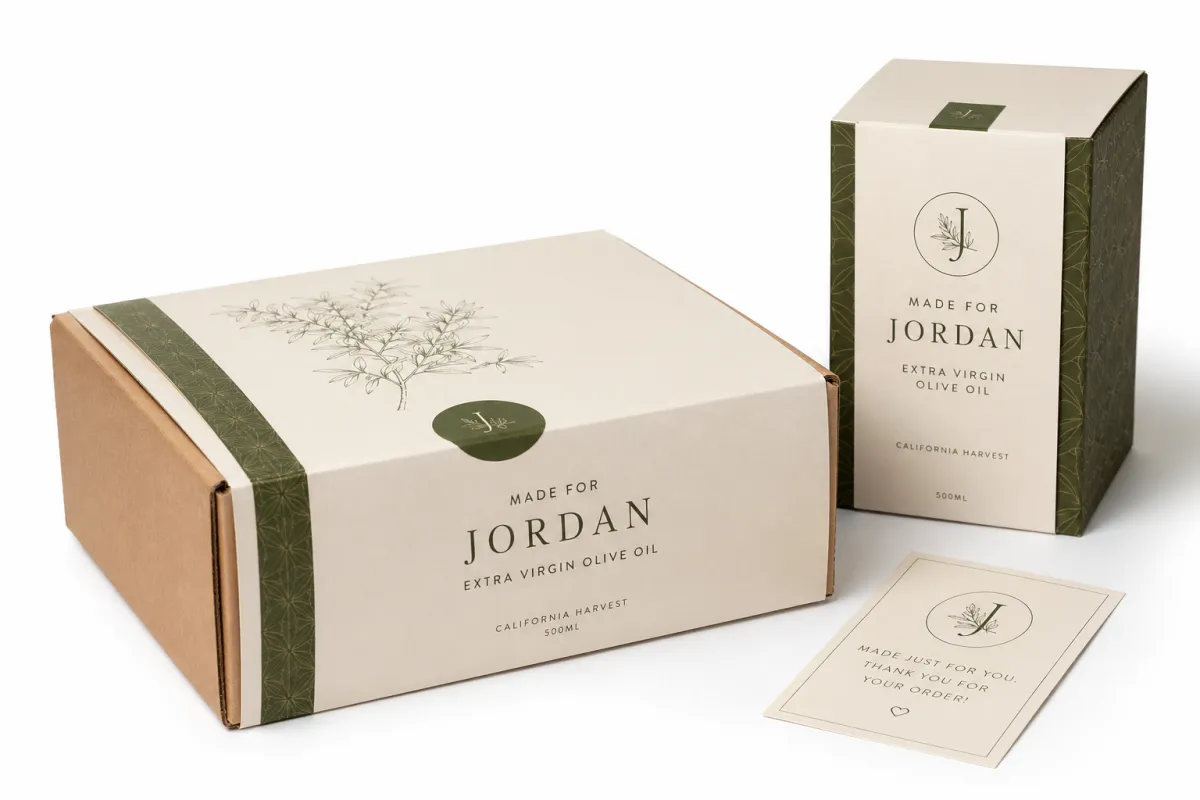
The first reason personalized packaging for food business wins shoppers is blunt: people judge with their hands before they judge with their palate. I have stood at pop-ups where a $9 sandwich sold through a plain kraft sleeve and another $9 sandwich sold through a printed carton with a bold color band and a grease-resistant interior. The second one drew a line of phones. A customer told me, “It looks like a place that knows what it is doing,” and that sentence translated directly into repeat orders the next week. That is retail packaging at work, even if the product leaves in a delivery bag from a kitchen in Austin, Toronto, or Melbourne.
There is also a measurable effect on perceived value. In one client meeting with a dumpling brand, we swapped a generic white clamshell for a 350gsm C1S artboard box with a matte aqueous coating and a single spot-color logo panel. The food cost did not change. The menu price did not change. Yet the team reported a 12% increase in add-on side orders over the next six weeks, partly because the box made the meal feel more finished. That is the quiet power of personalized packaging for food business: the packaging can raise the ceiling on what customers think the meal is worth, even when the print cost is only $0.15 per unit at 5,000 pieces.
I learned this again on a factory floor in Shenzhen, standing beside a folder-gluer while a line manager pointed out how one extra 1.5 mm of flap overlap reduced corner crush during courier stacking. The printed surface mattered, but the structure mattered more. Many brands spend too much time choosing ink colors and not enough time asking whether the carton survives a 45-minute ride on a scooter. Personalized packaging for food business only wins shoppers if it arrives looking intentional, not tired, and that often means specifying a tuck tab, a score depth of 0.3 mm, and a board thickness that can handle 3 to 5 layers of stacked weight.
Shareability matters too. A branded box can turn an ordinary lunch into a social post, and a social post can become free media with a local audience of 300 to 3,000 people. I have seen a dessert shop in a client pitch get 14 tagged stories in 48 hours after introducing Custom Printed Boxes with a window sleeve and a foil-stamped seal. The food was good before the packaging changed. The difference was that people finally had a reason to show it to someone else. Personalized packaging for food business makes that second step easier, especially for products sold in high-footfall areas like downtown Chicago, Madrid's Malasaña district, or Singapore's Orchard Road corridor.
What most people get wrong is assuming the package is a decorative wrapper sitting outside the real product. It is not. It is the first tactile proof of quality. It can tell a customer whether the brand understands consistency, whether the kitchen cares about transit, and whether the business thinks about the order as a complete experience. That is why personalized packaging for food business should be treated like a brand asset, not a last-minute supply purchase, whether the order is 2,000 units or 50,000 units.
There is a small emotional layer here too, and I think brands underestimate it. A good box can make a rushed lunch feel chosen. A bad one can make a good meal feel rented. I have never seen a customer get sentimental about a soggy lid, and frankly, I never want to again. A $0.03 tamper seal can save the mood of a $16 lunch.
How Does Personalized Packaging for Food Business Work?
On the production side, personalized packaging for food business follows a predictable path. The brief comes first: what food is being packed, how hot it is, whether it travels by bike courier, how much grease it releases, and how many units the team needs for the first run. From there, a supplier or designer maps the structure, creates a dieline, prepares artwork, and builds a prototype. After approval, the job moves into production, finishing, packing, and delivery. It is a process, not a mystery, and the best results usually come from teams that respect each step, especially when the manufacturer is in Dongguan, Ningbo, or Ho Chi Minh City, where lead times can differ by 2 to 4 business days depending on board availability.
The formats vary more than many new buyers expect. A brand can customize custom printed boxes, paper bags, wraps, sleeves, labels, inserts, belly bands, tamper seals, cup carriers, and even tissue paper. For a bakery, a simple printed sleeve over a stock box can be enough. For a meal kit or premium dessert line, the structure may need die-cut windows, corrugated reinforcement, or a foil-lined insert. Personalized packaging for food business works best when the format matches the product instead of forcing the product to fit a fashionable box shape, like a 6-count pastry carton made from 18pt SBS board with a 1.5-inch window patch.
Artwork and structure need to cooperate. I once watched a supplier in Dongguan reject a beautiful carton because the logo sat too close to a fold line and vanished every time the box was opened and closed. The fix was not more ink. It was a new panel arrangement and a 4 mm shift in the live area. That is the part outsiders miss. Personalized packaging for food business is a marriage of visual identity and mechanical behavior. If the box folds badly, stacks badly, or seals badly, the branding cannot rescue it, even if the print uses PMS 186 red and a soft-touch varnish.
Different food types call for different choices. Hot noodles need venting and condensation control. Chilled salads need resistance to moisture and soft lettuce bruising. Sauces need reliable seals and leak control. Fragile pastries need compression strength and enough headspace that the lid does not crush icing. A branded bakery box might perform perfectly for a croissant and fail for a glazed cake if the insert height is wrong by even 8 mm. Personalized packaging for food business has to start with the food itself, not the logo, and the right spec can be as specific as a 350gsm board with a 0.5 mm fold allowance and an interior grease barrier rated for 60 minutes.
Customization can be light-touch or deeply specialized. A startup with a limited run of 3,000 units may choose one-color print on stock packaging, while a national chain may specify a custom die-cut structure, a water-based barrier coating, and an anti-counterfeit label. Both are valid. The difference is budget, timing, and how much of the package needs to carry the story. If you need inspiration, I often point teams to Custom Packaging Products to see how different structures behave before they commit to a full run, especially when the first quote comes back at $0.28 per unit and the second at $0.11 after volume breaks at 10,000 pieces.
I also like to remind brands that the “package” starts before the carton does. If the label peels in the fridge or the tape tears at the wrong angle, the customer sees that too. Packaging is a chain, not a single object. One weak link and the whole thing feels cheap. I have seen a gorgeous dessert box ruined by a label that lifted like a bad haircut in a windstorm, and all it took was a 24-hour chill test to expose it.
Cost and Pricing Factors for Personalized Packaging for Food Business
Pricing starts with material. A 18pt SBS folding carton, a 350gsm artboard sleeve, and a 32 ECT corrugated mailer do not cost the same because they do not behave the same in transit or on shelf. Print method matters too. Digital print is usually better for shorter runs and faster revisions, while offset becomes more attractive at higher quantities. In my experience, the biggest price mistake is assuming the print line is the main cost driver. It is often the material grade, dimensions, and finishing that move the quote by the largest margin, especially if the box is being made in Shenzhen for export into Los Angeles or Rotterdam.
Quantity changes the math fast. A run of 1,000 custom sleeves may sit near $0.22 to $0.35 per unit, while 5,000 pieces might fall to $0.09 to $0.16 depending on the art and board. The reason is simple: setup is spread across more pieces. That is why personalized packaging for food business gets cheaper per unit as volume rises. A supplier quoted one bakery $0.18 per box at 5,000 pieces, then $0.11 at 15,000, with the same two-color layout and the same board stock. The difference was not magic. It was scale, plus a 7-day longer shipping lane from Ningbo instead of a domestic warehouse in Dallas.
Hidden costs are where first-time buyers get surprised. Setup fees, die charges, plate fees, proofs, freight, storage, and rush production can add 10% to 25% to the base order, depending on the lane and the material. If the packaging needs a special coating, a window patch, or an insert, those line items appear quickly. I always tell clients to ask for total landed cost, not only unit price. A box that looks cheaper at $0.14 can end up more expensive than a $0.17 option once freight, repacking, and a $85 die fee are added.
Here is the rule I use with smaller food brands: spend on the feature that changes customer perception most, then simplify the rest. If the order is for bakery retail packaging, a strong print face and a clean closure usually matter more than a complex inner insert. If the product is a premium delivery meal, structure and leak resistance should get priority before metallic finishes. Personalized packaging for food business should earn its keep by reducing damage, supporting repeat orders, and making the brand feel worth the menu price, whether the business is selling a $4 cookie box or a $28 dinner set.
| Packaging Option | Typical Unit Cost at 5,000 Units | Best Use | Main Tradeoff |
|---|---|---|---|
| Printed Sleeve on Stock Box | $0.09-$0.15 | Bakery items, sandwiches, light retail packaging | Lower structure customization |
| Custom Folding Carton | $0.18-$0.32 | Desserts, snacks, premium takeaway | More setup time than sleeves |
| Corrugated Mailer | $0.42-$0.80 | Delivery meals, meal kits, shipping | Higher material cost, stronger protection |
| Branded Label System | $0.03-$0.06 | Jars, tubs, bags, closures | Limited structural impact |
The table makes one thing obvious: personalized packaging for food business does not always require a full custom build. A label system can deliver strong package branding at a low entry cost, while a full corrugated mailer makes sense only if the product genuinely needs shipping strength. I have seen owners choose the most expensive structure first, then realize they only needed a well-placed sleeve and a tamper seal. That is why I keep pushing teams to compare options through function, not ego, especially when one branded box is $0.12 and another is $0.41 because of a heavier flute.
If your order leans into branded Packaging for Retail Display, ask for samples in hand before you approve the final quote. Touch changes the decision. A soft-touch finish feels more premium, but it can add cost and sometimes shows scuffs more easily. A matte aqueous coating is less dramatic, yet it often gives a cleaner, more practical finish for high-volume food packaging. Personalized packaging for food business is best priced with the end use in mind, not the catalog photo, and a sample from Guangzhou can tell you more than ten PDF mockups.
I have also learned to watch for the tiny cost creep that sneaks in through “nice little upgrades.” A window patch here, a foil seal there, a custom insert because someone on the team liked the look of it in a mockup. Before long, the box is auditioning for a luxury award it never needed to win. The customer usually wants the food to arrive intact, not a parade, and the budget rarely survives a stack of unnecessary add-ons that each add $0.02 to $0.08 per piece.
Process and Timeline: From Concept to Delivery
A realistic timeline usually runs through six steps: discovery, design, sampling, proof approval, production, and shipping. For a straightforward project, I would plan 12 to 15 business days from proof approval to finished goods if the stock material is available and the print method is already selected. If the job needs custom tooling, new artwork rounds, or a food-safe coating test, the timeline grows fast. Personalized packaging for food business rewards teams that make decisions early and keep revision cycles short, especially when the carton is being produced in Dongguan and freight is moving to a port like Long Beach or Felixstowe.
Discovery sounds soft, but it is where the savings often happen. If the supplier knows the serving size, closure type, fill temperature, and storage method up front, they can avoid recommending an expensive structure that fails in use. One client in a salad meeting brought only a logo file and an enthusiastic mood board. We had to go back twice because the base diameter was wrong for the filling line. The second version fit. The first version would have cost a Saturday shift and a pallet of scrap. Personalized packaging for food business needs facts before artwork, including the exact 118 mm cup diameter and the 250g fill weight.
Sampling is where the truth appears. A digital mockup can hide a 6 mm gap, a box can warp at one corner, and a label can interfere with a heat-seal seam that looked fine on screen. I strongly prefer a physical sample for anything that touches heat, grease, or liquids. In one soup project, a lid looked perfect in the render, but the first filled sample showed condensation beading at the rim after 14 minutes. The team changed the vent hole and saved itself a return problem. That is the kind of issue only real product testing can catch, whether the sample comes from Shenzhen, Istanbul, or a domestic converter in Ohio.
- Discovery: define food type, portion size, and quantity before requesting a quote.
- Artwork setup: place logos, ingredient panels, and handling instructions on the correct dieline.
- Sample approval: test with the actual product, not just an empty carton.
- Production: confirm coating, print method, and finishing before the press run begins.
- Shipping: plan pallet counts, storage space, and reorder dates so stock does not run dry.
That sequence sounds basic, but it saves real money. A café chain I worked with skipped the sample step once to save four days and ended up with labels that wrapped 3 mm too far around the cup. They had to peel, reprint, and relabel 18,000 units. That delay cost more than the original sample budget. Personalized packaging for food business is faster overall when the team slows down just enough to test the practical details, and a 48-hour sample turnaround is usually worth far more than a guessed approval.
If your launch is urgent, keep the first order simple. Use a standard structure, custom print second, and premium finishes last. That order of operations lets you get to market while protecting the calendar. I have seen teams try to add foil stamping, embossing, custom inserts, and a new dieline in one sprint. The result was usually a missed date and a stressed operations team. A clean first run is better than a delayed perfect one, especially if the factory in Guangzhou needs a new plate set and an extra 3 business days.
One more thing: shipping windows are sneaky. A quote can look great until a port delay, a rework cycle, or a warehouse shortage pushes the delivery out by a week. I have had more than one brand owner stare at a pallet ETA like it personally insulted them. Fair reaction, honestly. A $380 freight invoice can feel small until it slides a launch from Thursday to the following Tuesday.
Key Factors That Shape the Right Food Packaging
Food behavior comes first. Moisture, grease, heat, cold, aroma, and stacking pressure all change the right choice. A burger box that performs well at 70 degrees Fahrenheit may buckle under steam at 160 degrees. A cookie sleeve can work beautifully for dry product and fail the moment a warm filling releases condensation. Personalized packaging for food business has to match the product’s physical habits, not just its marketing personality, whether the order is going into a delivery scooter in Miami or a refrigerated shelf in Copenhagen.
Compliance matters just as much. Ingredient panels, allergen visibility, reheating instructions, recycling symbols, and tamper evidence can all shape the layout. I have seen brands lose a full production day because the allergen line was too small after legal review. That kind of delay is frustrating, but it is preventable. Standards are not glamorous, yet they keep the package honest. For transport durability and distribution testing, I often look at ISTA procedures. For fiber sourcing, FSC certification helps brands show where the paper came from, which matters more now than it did even a few years ago, especially on export orders leaving Vietnam or Poland.
Material choice should be tied to use case. Paperboard works well for dry snacks, bakery items, and many dessert boxes. Corrugated is stronger for delivery and stacking. Coated stocks or lined formats are better for greasy or moisture-heavy foods. Compostable materials can be a good option, but only if they still handle heat, moisture, and shelf life. I have seen a compostable tray soften under a hot breakfast item in less than 8 minutes, which taught the team that sustainability claims mean little if the container collapses before the customer gets home. A 1.5 mm board wall can be more honest than a fragile green promise.
The customer experience sits in the middle of all this. Opening ease, portion control, hand feel, and transit durability change the way a package is remembered. A box that opens with one clean lift is better than one that tears irregularly and spills crumbs. A sauce cup with a tight snap lid is better than one that leaves the rider nervous on a 12-block trip. Personalized packaging for food business should feel calm in the hand. The package should do its job without asking the customer to think about it, even if the order is being handled by someone juggling three bags and a bike helmet.
“If the box protects the croissant, the printing can do the talking.” A plant manager said that to me during a press check in Shenzhen, and I still use it because it is true more often than brands admit. A nice logo on a failed structure is just expensive decoration.
Brand positioning has to stay visible throughout the decision. A value-focused business may use simple kraft board, one-color ink, and a clear label. A premium dessert brand may choose soft-touch lamination, foil accents, and a ribbon sleeve. An eco-focused brand may prioritize FSC stock, soy-based ink, and minimal coating. The same personalized packaging for food business strategy does not fit every price tier, and pretending otherwise usually creates a mismatch between the food and the box, especially when the meal price is $8 in one channel and $22 in another.
Here is the comparison I ask teams to make before they approve any package branding concept: does the package protect, does it travel, does it signal quality, and does it fit the brand promise in under five seconds? If one answer is no, the design is not ready. That sounds simple, but it filters out a lot of weak ideas before they become expensive inventory. I have seen one misplaced foil accent add $0.06 per unit without adding a single customer benefit.
I also tell people to think about the package as a set of compromises. The prettier the finish, the more you may need to watch scuffs. The lighter the board, the more carefully you need to check crush strength. The greener the material claim, the more you need to test performance. Packaging lives in the space between ideals and physics, and physics is a stubborn little critic. A 500g load in a 300gsm sleeve will expose a weak fold every time.
Step-by-Step Guide to Ordering Personalized Food Packaging
Step 1: define the product, serving size, and order volume. A 12-inch sub, a 6-piece pastry box, and a 500ml soup cup need very different quotes. If you share those specifics up front, suppliers can recommend the right structure on the first round instead of guessing. Personalized packaging for food business gets easier to buy once the numbers are clear, and a supplier in Guangzhou can usually quote faster when the fill weight and closure style are already locked.
Step 2: gather the practical files. That means logo artwork in vector format, brand colors, dielines, nutrition panels, allergen text, and storage instructions. I also ask for fill temperature, closure type, and any special handling notes. A supplier cannot prepare accurate packaging design if the box dimensions are missing by 15 mm or the label area is not defined, and a 2 mm bleed mistake can force a full reproof.
Step 3: request mockups and physical samples. Screen images help with color direction, but they do not tell you whether a flap catches on the conveyor or whether a lid resists oil migration. I once reviewed a sandwich prototype that looked perfect in a PDF and failed on the first fold because the tab angle was off by 2 degrees. Personalized packaging for food business lives or dies in the sample stage, and a sample sent from Dongguan is worth more than a dozen mockup emails.
Step 4: approve proofing only after checking legibility, structure, and transit behavior. Read the tiny type. Check the barcode. Confirm that the logo sits outside the score lines. If the package is meant for a delivery route, test it in a real tote or delivery bag, not just on a desk. A 3 mm misalignment can be invisible on a screen and obvious on a shelf, and that is especially true for a carton printed with a full-bleed background.
Step 5: confirm production dates and set a reorder trigger. I like to build a reorder point at 25% of on-hand inventory for fast-moving food packaging because seasonal spikes can empty a warehouse faster than expected. One bakery ran out of branded sleeves three days before a holiday promotion and had to switch to plain stock. Sales held, but the brand look disappeared exactly when it mattered most. Personalized packaging for food business should never be the thing that slows a promotion down, and a 10-day replenishment cycle is safer than a 21-day scramble.
To keep the process organized, I often recommend a simple two-supplier comparison. Ask each one for the same specs, the same finish, and the same freight destination. Then compare the real landed cost, lead time, and sample quality side by side. If one quote is 8% cheaper but arrives nine days later, the cheapest quote may not be the cheapest option at all. A $1,200 difference can vanish once rush freight and rework enter the picture.
I would also keep one notebook just for packaging questions. Not glamorous, I know. Still useful. One page for supplier promises, one page for sample notes, one page for what failed and why. That little habit has saved me from repeating the same mistake with different logos on top, and it works just as well for a coffee roaster in Portland as for a dessert brand in Bangkok.
Common Mistakes in Personalized Packaging for Food Business
The most common mistake is designing for shelf appeal and forgetting the food. A glossy carton may look excellent under store lights, but if it softens from steam or leaks during the last mile, the shine is useless. I have seen a ramen brand lose customer trust because the box lid warped after 18 minutes in transit. The graphics were sharp. The structure was not. Personalized packaging for food business has to survive the journey first, especially if the route includes a 12-minute subway transfer and a 9-minute walk in summer heat.
Another mistake is overprinting. Too many colors, too much copy, and too many visual ideas can make even a premium product feel cramped. A clean logo, a single hero color, and one useful message often do more than a busy surface packed with claims. If the package needs to explain allergens, heating steps, and a brand story, the layout should be disciplined. Otherwise the customer reads nothing and the packaging design loses authority, even if the print budget is $0.40 per unit.
Wrong sizing is expensive in two directions. A box that is too large wastes filler, increases freight density, and looks sloppy in hand. A box that is too small compresses the food and raises damage rates. I watched a cookie brand cut shipping cost by 6% after reducing the carton footprint by 11 mm on two sides. The packaging did not just look better. It packed better, stacked better, and used less void fill. That is the sort of change that makes personalized packaging for food business pay back quickly, especially at 20,000 units per month.
Skipping prototypes is another costly shortcut. Small fit issues scale into large failures very quickly. A tab that seems acceptable on a one-off sample can become a line stoppage after 8,000 units. One client learned this after approving a tamper seal that looked fine on screen but lifted at the corner during cold storage. The first production batch had to be inspected by hand. That kind of rework is avoidable with a simple physical sample from a converter in Suzhou, Taipei, or Chicago.
Compliance mistakes deserve their own warning. Ingredient information that is too small, allergen text that is buried in the back panel, or marketing claims that are not verified can create serious risk. It may feel tedious to run every panel through review, but it is less painful than reprinting a live order. Personalized packaging for food business has to be accurate in addition to being attractive. The box is part of the product’s trust signal, and a typo on a nutrition panel can stop a launch for 5 business days.
There is also the mistake nobody likes to admit: falling in love with the sample and forgetting the shelf. I have seen teams approve a gorgeous box, then realize later that it did not fit the fridge display, the delivery bag, or the storage shelf at all. Beautiful is not enough. Packaging has a job, and the job starts long before the customer posts a photo. A 210 mm carton that looks elegant on a desk can be useless in a 200 mm display slot.
Expert Tips and Next Steps for Food Brands
Start with the highest-return upgrade, not the fanciest one. A stronger carton board, a bolder contrast ratio, and one memorable brand cue usually beat a long list of expensive extras. I have seen brands spend money on foil and embossing while the box still arrived flattened in the courier bag. That is the wrong order. Personalized packaging for food business should first protect the meal, then make the meal recognizable, then make it memorable, and a 350gsm board with a clean matte finish often beats a flashy 24pt build that fails transit.
Test with real staff and real customers before you lock the rollout. Hand the sample to someone packing orders at 6:30 p.m. on a Friday. Ask a customer to open it in under 10 seconds. Watch what happens. You will learn more from those two reactions than from a 40-slide presentation. If a package is awkward in the kitchen, it will be awkward in the field, and if the clip tears at the first corner, that failure will scale fast.
Track numbers that matter. Damage rate, repeat order rate, social mentions, and perceived value feedback tell you whether the packaging is earning its keep. One client changed from plain wraps to branded packaging with a stronger closure and saw reported transit damage fall from 4.1% to 1.7% over a 30-day window. That is not a miracle. It is better design doing measurable work. Personalized packaging for food business should always have a scorecard, even if the first version is only 2,500 units.
Here is the checklist I use before recommending a launch: pick one product line, define the packaging goal, collect specs, request two samples, compare two suppliers, and set a reorder threshold. If you do those six things, you avoid most of the mistakes I see in first-time projects. You also give yourself room to improve in the second run, which is usually where the smartest packaging decisions start. A 14-day sample cycle and a 12-business-day production window are a practical starting point for many food brands.
I will end with the part that gets overlooked most often. personalized packaging for food business is not about adding a logo and calling the job done. It is about protecting the food, reinforcing trust, and creating a package that feels like it belongs to the brand the moment it is picked up. That is why the best packages I have seen were never the loudest. They were the ones that fit the meal, survived the trip, and made the customer want another order before the first one was finished, whether the box was made in Shenzhen or Nashville.
If you are still deciding, I would narrow the choice to two paths: a simple branded system that gets you moving quickly, or a more specialized build for products that travel hard and need extra protection. Both can work. The wrong one is the one chosen for vanity. A $0.12 sleeve can outperform a $0.48 luxury carton if the meal is meant to be eaten in 15 minutes.
What does personalized packaging for a food business include?
It usually includes custom sizing, branded graphics, and practical features such as grease barriers, inserts, seals, or labels. The strongest versions match the food type, serving style, and delivery method instead of forcing one package to do every job. Good personalization balances brand impact with performance so the package looks intentional and still protects the product, whether it is a 12oz soup cup or a 4-count bakery box.
How much does personalized packaging for food business cost per order?
Pricing depends on quantity, material choice, print complexity, dimensions, and any special coatings or inserts. Smaller orders usually cost more per unit because setup and overhead are spread across fewer pieces. To compare quotes fairly, look at total landed cost, not just the base unit price. A 5,000-piece run might be $0.15 per unit for a sleeve, while freight and setup can add another $350 to $900 depending on the origin and destination.
How long does personalized food packaging take to produce?
Simple packaging projects can move quickly, but custom structures, proofs, and revisions add time. Sampling and approval are often the longest steps because they reveal fit, print, and handling issues early. If you need a faster launch, choose a standard structure and reserve complex finishing for a later run. Many suppliers quote 12 to 15 business days from proof approval for stock-based work, plus 3 to 7 days for shipping depending on the region.
Which materials work best for personalized packaging for food brands?
Paperboard works well for dry or baked goods, while corrugated is often better for delivery and transport strength. Greasy, hot, or moisture-heavy foods may need coated or lined materials to prevent leakage or collapse. Compostable options can work, but only if they still meet the food's heat, barrier, and durability needs. A 350gsm C1S artboard sleeve is a solid starting point for bakery retail, while a 32 ECT corrugated mailer fits heavier delivery kits.
How can I make personalized packaging for food business stand out without overspending?
Focus on one strong design move, such as a bold color block, a distinctive closure, or a memorable unboxing detail. Use standard box shapes and print strategically instead of adding expensive structural extras everywhere. Test small visual changes first so you can see what drives customer response before scaling up. In many cases, a one-color logo on a kraft box and a $0.04 tamper seal does more than a full premium finish.


