Buyer Fit Snapshot
| Best fit | Personalized Packaging for Retail Brands projects where brand print, material claims, artwork control, MOQ, and repeat-order consistency need to be specified before quoting. |
|---|---|
| Quote inputs | Share finished size, material target, print colors, finish, packing count, annual reorder estimate, ship-to region, and any compliance wording. |
| Proofing check | Approve dieline scale, logo placement, barcode or warning zones, color tolerance, closure strength, and carton packing before bulk production. |
| Main risk | Vague material claims, crowded artwork, missing packing details, or unclear freight terms can make a low unit price expensive after revisions. |
Fast answer: Personalized Packaging for Retail Brands: Production Spec, Color Control, and Delivery Risk should be specified like a repeatable production item. The safest quote records material, print method, finish, artwork proof, packing count, and reorder notes in one written spec.
Production checks before approval
Compare the actual filled-product size with the drawing, then confirm tolerance on folds, seals, hang holes, label areas, and retail display edges. Reserve space for logos, QR codes, warning copy, and material claims before decorative graphics fill the panel.
Quote comparison points
Review material grade, print process, finish, sampling route, tooling charges, carton quantity, and freight assumptions side by side. A quote is only useful when the supplier can repeat the same color, closure quality, and packing count on the next order.
Personalized Packaging for Retail Brands: Smart Basics
Personalized Packaging for Retail brands is one of those details shoppers feel before they can explain it. A package can look ordinary from across a store aisle and still change the whole read of a product once it is in hand. I have watched that happen in sample reviews more than once: two similar items, same category, same price band, and the one with the cleaner fit and tighter finish suddenly looks like the safer bet. The box has already started doing the selling.
That is the real job of Personalized Packaging for Retail brands. It turns packaging into part of the product story instead of treating it like a generic shell. A packaging buyer does not need decoration for decoration’s sake. What matters is packaging design that fits the product, the shelf, the shipping lane, and the opening moment the brand wants customers to remember.
A logo on a box is branding. Personalization goes further. It ties structure, print, coatings, inserts, and message placement into one system so the package feels deliberate from every angle. A rigid box with soft-touch lamination tells a different story than a simple folding carton. A sleeve wrapped around a kraft mailer sends yet another signal. Good package branding is readable, consistent, and suited to the item inside. It should never feel like the design team just had extra room to fill.
Retail teams use personalized Packaging for Retail brands across a wide mix of formats: gift-ready cartons for candles or cosmetics, subscription-style mailers for direct-to-consumer orders, seasonal cartons for promotions, premium sleeves for limited editions, and display-ready cartons that can move from shipper to shelf without a fuss. Personalization does not need to be extravagant to work. A lot of the time, it starts with product packaging that is correctly sized, carries focused graphics, and includes one or two interior details that make the opening feel considered. Kinda simple, really.
If you are comparing options for your own line, browse Custom Packaging Products and then study practical examples in Case Studies. Those two steps usually tell you more than a polished pitch deck, because packaging makes more sense once you can see how structure, print, and finish behave in real use.
What Does Personalized Packaging for Retail Brands Really Mean?
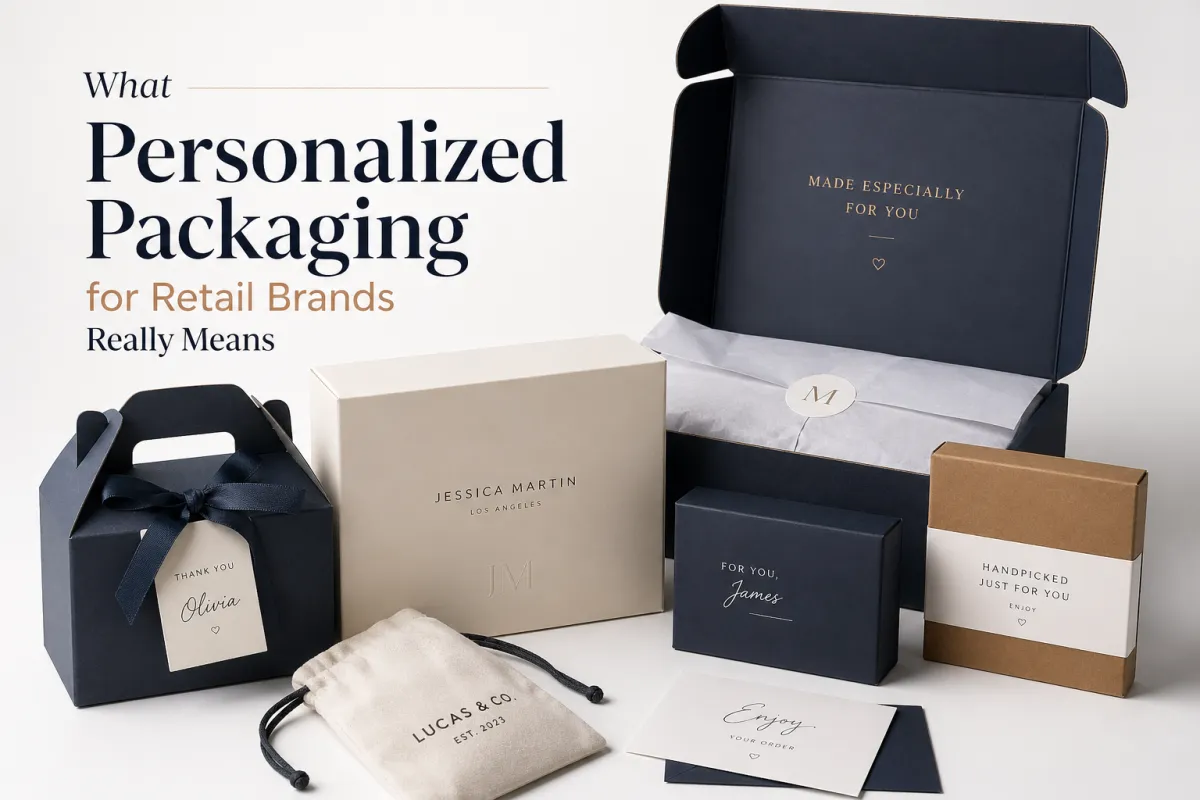
Personalized Packaging for Retail brands is packaging shaped around a brand’s audience, product dimensions, sales channel, and presentation goals. That sounds straightforward. In practice, it covers a lot of decisions teams often keep separate. A box can be personalized by size, artwork, finish, opening style, or the way it supports the product on a shelf. The strongest programs combine several of those moves so the final pack feels like it belongs to the product, not just to the warehouse.
Picture two products that are nearly identical in price and function. The one in a custom-fit carton with clear color hierarchy, a tidy insert, and a finish suited to the category usually earns more trust than the one shipped in an oversized stock mailer. That does not mean every item needs foil, embossing, or heavy ornament. It means Personalized Packaging for Retail brands uses retail packaging to shape perception, and perception matters on shelf, in hand, and at the doorstep.
There is a practical side to this as well. A folding carton printed with a logo is branding. A folding carton built around the product dimensions, the retailer’s shelf conditions, the shipping route, and the customer’s opening sequence is personalized packaging for retail brands. That broader approach often includes Custom Printed Boxes, inserts, tear strips, window panels, or a different closure style. It may also place the message inside the lid or under the tuck flap so the exterior stays clean while the brand voice still comes through.
A lot of confusion comes from assuming personalization has to be dramatic. It does not. A kraft mailer with a one-color logo, a matched interior print, and a folded paper insert can feel more premium than an overworked design crammed with messages. The best personalized Packaging for Retail brands usually looks controlled. It carries enough detail to feel tailored, but not so much that the surface becomes noisy. That restraint is often what makes it feel expensive.
“The strongest package often feels obvious only after you handle it. It fits cleanly, opens predictably, and leaves no doubt that the brand thought about the customer’s first ten seconds with the product.”
That is one reason this approach shows up so often in gift sets, seasonal drops, and premium everyday goods. In those categories, personalized packaging for retail brands is doing three jobs at once: protecting the product, explaining the brand, and helping the item stand out in a crowded retail environment.
How Personalized Packaging for Retail Brands Works
The production flow for personalized packaging for retail brands usually starts with a brief, not with artwork. A useful brief includes product dimensions, unit weight, fragility points, retail channel, target quantity, and the opening experience the brand wants to create. Once those basics are clear, packaging engineers or print suppliers can recommend a structure that supports the product instead of chasing a design that only looks good in a mockup.
Fit comes first. A package that is too loose needs void fill or an insert, which raises material use and can make the unboxing feel cheap. A package that is too tight slows packing and increases the risk of scuffing or corner damage. With personalized packaging for retail brands, dimensions are usually based on the product itself plus a small allowance for manufacturing tolerance, liner thickness, and any protective wrap. That kind of fit saves space, cuts shipping waste, and gives the opening a cleaner feel.
Structure comes next. A simple mailer might use corrugated E-flute or B-flute board, while a folding carton might use 18pt SBS or 350gsm C1S artboard. Premium programs may use 2mm rigid board wrapped in printed paper. Material choice is not just about appearance. It affects crush resistance, stackability, shelf presence, and how well personalized packaging for retail brands survives parcel handling or retail display.
Print method matters too. Digital printing works well for shorter runs, frequent artwork updates, and test launches because setup is lighter and changeovers are faster. Offset printing is a stronger fit for higher volumes where color consistency and fine detail matter across a large batch. Specialty finishes such as spot UV, foil stamping, embossing, debossing, matte lamination, gloss varnish, or soft-touch coating add another layer of control over how the package feels in the hand. Each one changes the perceived value of personalized packaging for retail brands in a different way.
Inserts and dividers are easy to overlook, yet they are where a lot of the engineering happens. A molded pulp tray, a corrugated insert, a paperboard cradle, or a folded divider can keep components from moving while still presenting them cleanly. That matters most in personalized packaging for retail brands that has to serve both retail display and shipping performance. If the product passes through a fulfillment center, the packaging should hold up under tape, handling, and stacking, not only look good on a render.
Versioning is another useful idea for teams with many SKUs. A brand can keep the same core package branding and vary color bands, inserts, or messaging by product line, sales channel, or campaign. That gives personalized packaging for retail brands a family resemblance without forcing every item into the exact same box size or finish. It is a practical way to manage variety while keeping the line visually coherent.
If shipping performance is part of the picture, testing matters. Packaging groups often refer to standards such as ISTA shipment testing protocols or ASTM-style distribution checks to see how packs behave under vibration, drop, and compression. That does not mean every retail carton needs a full lab program. It does mean personalized packaging for retail brands should be evaluated against the actual route it will travel, not only against the marketing deck.
And if sustainability is part of the brief, choices need to happen early. Recyclable fiber structures, FSC-certified paper options, water-based inks, and reduced material use can all support the goal, but they also affect print and finish decisions. The EPA has useful public guidance on materials and waste reduction at epa.gov, and that kind of framework keeps personalized packaging for retail brands tied to real material decisions rather than vague claims.
Key Factors That Shape Personalized Packaging for Retail Brands
Materials are usually the first budget and performance decision in personalized packaging for retail brands. Corrugated board is the workhorse for shipping strength and display stability. Folding carton stock is a strong choice for lighter products, cosmetics, supplements, stationery, and small gift items where print quality matters and the product is not especially heavy. Rigid board brings a more premium feel and stronger structure, which makes sense for higher-value goods, presentation sets, and limited editions. Specialty papers can add texture, color, or a more tactile surface, though they should be chosen with the print plan in mind because not every paper behaves the same under foil, lamination, or heavy ink coverage.
Print and finish choices shape the first impression fast. A matte surface can feel calm and restrained. Gloss raises contrast and helps color pop. Soft-touch coating gives the surface a velvety hand feel, although it can show scuffs more readily than some harder finishes. Embossing and debossing create depth without adding much visual clutter. Foil can bring emphasis to a logo, a badge, or a holiday edition. Used well, these details make personalized packaging for retail brands feel intentional. Used poorly, they become decoration for decoration’s sake.
Structural choices matter just as much. Closure style, panel count, stackability, and crush resistance all need to match the retail path. A pack that sits only on a boutique shelf can be lighter and more presentation-driven than one that has to survive parcel shipping, distribution centers, and repeated retail handling. A lot of packaging problems begin when teams design for the photo shoot and forget the warehouse. Personalized packaging for retail brands works best when the structure is chosen for the roughest part of the journey, not only the best-looking one.
Brand fit is the next filter. Typography, color systems, and imagery should support the category, not fight it. A luxury candle line may benefit from open space, restrained typography, and one strong material texture. A children’s accessory brand may need brighter color and a more playful panel rhythm. Both can use personalized packaging for retail brands, but the tone should match the buyer’s expectation. Overcrowding the panels with claims, icons, and slogans usually weakens the result, even if every message is technically true.
Sustainability and compliance shape the final call too. Recycled content can help, but only if the board still performs properly in the structure. Recyclable does not automatically mean every finish is appropriate, and a greener material choice is not the right choice if the product arrives damaged. If the pack includes product claims, barcodes, warning labels, or recycling marks, those elements need careful placement so they remain legible after printing and converting. That is another reason personalized packaging for retail brands should be designed as a system rather than a pile of unrelated details.
For teams comparing options, the table below is a useful starting point. The numbers are broad planning ranges because quantity, print coverage, and finish complexity shift the math quickly, but they help frame the conversation around personalized packaging for retail brands.
| Packaging option | Typical use | Approx. unit price range | Main strengths |
|---|---|---|---|
| Folding carton, 18pt SBS | Light retail items, small gifts, cosmetics, accessories | $0.18-$0.55 at 5,000+ units | Good print detail, compact storage, efficient for shelf display |
| Corrugated mailer, E-flute | E-commerce orders, hybrid retail and shipping programs | $0.42-$1.10 at 2,500+ units | Better protection, easy branding, stronger parcel performance |
| Rigid box, 2mm board | Premium sets, gift packaging, high-value presentation | $1.35-$4.50 at 1,000+ units | Strong structure, premium feel, excellent shelf and unboxing impact |
Those price bands are not a quote, and they should not be treated like one. They are a planning tool. The same personalized packaging for retail brands program can shift up or down quickly depending on coating choice, number of print passes, insert construction, and whether a custom die or tooling change is needed. Still, having a broad range keeps teams from assuming all packaging costs are either trivial or excessive.
Another useful source of discipline is the internal process itself. Before requesting pricing, gather the material target, the visual tone, the required finish, and the protection level the product needs. Then compare those choices against a sample pack or existing line. A good supplier can usually show where personalized packaging for retail brands can be simplified without losing shelf presence.
Personalized Packaging for Retail Brands: Process and Timeline
The timeline for personalized packaging for retail brands usually begins with discovery, then moves through structure, artwork, proofing, sampling, production, and shipping. A simple print update on an existing format may move fairly quickly. A new structure with custom inserts, specialty finishes, or multiple product versions takes longer because there are more decisions to confirm before the press run starts.
Discovery is where time is either saved or lost. If the supplier receives product dimensions, weight, pack-out method, target quantity, fulfillment route, retail display requirements, and brand assets in the right format, the project can move without much friction. If the brief arrives incomplete, the team spends days chasing basic details. For personalized packaging for retail brands, a clear brief usually matters more than a flashy concept board because accurate specs prevent rework later.
Sampling is where reality shows up. A paper stock that looked perfect on screen may feel too flimsy once folded. A coating may look elegant but scuff too easily in handling. A closure may need a small adjustment to stay aligned through repeated opening. This is why physical samples, dieline reviews, and proof checks are so valuable in personalized packaging for retail brands. You can spot issues on the bench that would be expensive to fix after the run is approved.
Delays tend to appear in the same few places. Artwork revisions, structural adjustments, and indecision about finishes are the usual culprits. A marketing team may want one more badge while operations wants a simpler pack-out. A sustainability review may change the paper choice. A retailer may request a different barcode location. None of that is unusual, but each change affects schedule. That is why personalized packaging for retail brands should be planned backward from the launch date, not forward from the first design meeting.
As a practical rule, simple updates to existing packaging can often fit into a shorter window, while new structures and multi-SKU programs need more lead time. A straightforward digital print job may move faster than a fully customized rigid box with foil and a die-cut insert. In many packaging programs, a realistic window from proof approval to finished goods can land around 12-15 business days for simpler jobs, while more complex work may need several additional weeks. The exact timing depends on the factory schedule, the supply of board or specialty paper, and how quickly approvals come back.
That timing becomes even more important for seasonal promotions. If a retail team waits until the promotion is nearly live, options disappear fast. It is better to build a buffer and treat the packaging schedule as part of the launch schedule. Personalized packaging for retail brands works best when the team has room to test, revise, and still receive the finished packs before fulfillment turns into a fire drill.
There is one more habit that saves time later: document what can flex and what cannot. Maybe the outer dimensions are fixed, but the inside print can change by season. Maybe the base structure stays the same while the sleeve artwork changes for campaigns. That kind of rule set makes future rounds of personalized packaging for retail brands easier because everyone knows which parts of the pack are locked and which parts are open for refresh.
Cost and Pricing for Personalized Packaging
Pricing for personalized packaging for retail brands is usually driven first by five things: material grade, print coverage, structural complexity, order quantity, and finish selection. After that, tooling, inserts, freight, and storage start to matter. A plain one-color folding carton is a very different expense than a rigid presentation box with foil, embossing, and a custom tray. The more parts the package has, the more labor and setup it takes to produce.
Quantity changes the equation sharply. Unit pricing usually falls as volume rises because setup costs are spread across more pieces. That is why a short run can look expensive on a per-unit basis even when the total spend is still manageable. For a test launch or limited drop, short-run personalized packaging for retail brands can still make sense because it lets the brand validate demand before committing to a larger production schedule. A higher unit price is not always the wrong choice if the risk is lower.
It helps to separate where the money is actually going. Sometimes the budget is better spent on stronger board and a cleaner insert instead of extra decoration. Sometimes the opposite is true, especially for shelf-first products where the outer appearance carries more weight than transit protection. Good personalized packaging for retail brands is a balancing act between presentation, protection, and margin. If a product only sells at a narrow margin, the packaging should support the sale without swallowing it.
Hidden costs are where many teams get surprised. Multiple proof rounds can add time and expense. Rush charges can show up if the schedule compresses. Freight may jump if the packaging is heavy or the cartons are bulky. Warehousing can become a problem if too many SKU-specific versions are created and each one needs its own stock position. SKU fragmentation is a quiet cost driver in personalized packaging for retail brands because every small variant adds complexity to inventory, picking, and replenishment.
A simple budgeting mindset helps. Match the packaging investment to product margin, shelf position, and customer lifetime value. A premium item sold in boutique retail can carry a richer unboxing experience. A volume item sold across many stores may need a simpler system that still looks polished. The phrase personalized packaging for retail brands should not be code for spending the same amount on every item. It should mean spending smartly where the brand and the customer will actually feel it.
| Cost factor | Lower-cost choice | Higher-cost choice | What changes |
|---|---|---|---|
| Material | Standard folding carton | Rigid board or specialty paper | Structure, feel, and shelf presence |
| One- or two-color digital print | Offset with full coverage and special effects | Color depth, consistency, and setup time | |
| Finish | Basic matte or aqueous coat | Soft-touch, foil, embossing, spot UV | Premium look, handling feel, and line complexity |
| Structure | Simple tuck-end carton | Custom insert with magnetic or rigid construction | Assembly time, presentation, and protection |
That kind of comparison is useful because it keeps the conversation honest. A buyer can decide whether the brand benefit of personalized packaging for retail brands is best achieved through a better board grade, a smarter insert, or a more refined print surface. Not every pack needs all three.
One more point: a packaging quote should be read in context, not in isolation. A slightly higher unit cost may be justified if the packaging reduces damage, improves shelf sell-through, or supports a premium price point. That is often the hidden logic behind personalized packaging for retail brands; it is not just a cost line, it is part of the product economics.
Common Mistakes When Designing Personalized Packaging for Retail Brands
Overdesign is probably the most common mistake in personalized packaging for retail brands. Teams add too many badges, too many finishes, and too many color accents until the pack stops feeling premium and starts feeling crowded. A clean panel with one strong focal point usually does more for trust than a box trying to say everything at once. If the product already has a lot going on visually, the packaging should calm it down, not compete with it.
Another easy mistake is choosing packaging before confirming the product measurements. It still happens often, especially when a new SKU is moving quickly through development. The box gets designed from a rough estimate, then the actual product arrives a few millimeters larger or smaller, and suddenly the insert is wrong or the closure feels awkward. With personalized packaging for retail brands, exact dimensions are not optional. They are the foundation that keeps the rest of the work useful.
Ignoring transit performance is another problem, particularly for retail packs that also ship through e-commerce or wholesale distribution. A box that looks beautiful on a shelf can still fail in a parcel lane if the corners crush, the insert loosens, or the coating scuffs too easily. That is why personalized packaging for retail brands should be stress-tested in a way that reflects the actual route it will travel. If a product is sold in-store but fulfilled from a central warehouse, the pack has to satisfy both jobs.
There can also be a gap between marketing expectations and operations reality. Marketing may want a highly decorative interior print, while the packing line needs a faster fold pattern. Operations may want a generic shipper, while the brand team wants a stronger retail reveal. Those tensions are normal, but they need to be settled early. The best personalized packaging for retail brands programs usually come from teams that talk to each other before the artwork is frozen.
Skipping prototype testing can create the most expensive problems of all. A closure that seemed secure on paper may pop open in transit. A soft-touch finish may mark more easily than expected. An insert may hold one sample perfectly and fail once the assembly line starts moving faster. A sample run is not busywork. It is the point where personalized packaging for retail brands either proves itself or exposes weak points before production creates a larger headache.
There is also a subtler mistake: treating every SKU as if it deserves its own completely separate package. That approach can turn the packaging system into a maintenance problem. A better move is to build one packaging language, then vary only what needs to change. That keeps personalized packaging for retail brands easier to manage across inventory, production, and future updates.
Expert Tips and Next Steps for Retail Teams
If I were advising a retail team starting a new packaging program, I would begin with one hero SKU or one product family. Test the structure, confirm the print behavior, and learn how the pack behaves in actual packing conditions before rolling the format across the full line. That approach keeps personalized packaging for retail brands grounded in evidence instead of assumption, and it usually saves money later because the team learns the right lessons once rather than repeating mistakes across many SKUs.
Build a packaging checklist before asking for quotes. Include product dimensions, unit weight, fragility points, order quantity, fulfillment method, retail display needs, sustainability goals, and brand rules for color, type, and logo placement. Once that checklist exists, the supplier conversation becomes much sharper. Personalized packaging for retail brands is easier to price and easier to design when everyone is looking at the same facts.
Request samples or digital proofs early, and do not treat them as a formality. A proof can reveal color shifts, dieline issues, and small alignment problems that are nearly invisible on a screen. A physical sample can show how a soft-touch coat feels, how a closure opens, and whether the package still looks polished after a few handling passes. That kind of testing is exactly why personalized packaging for retail brands tends to perform better when the team builds in review time instead of rushing straight to production.
Document what is fixed and what can flex. If the outer box size stays the same but the internal print changes by season, write that down. If one channel needs an extra barcode or a different claim panel, build that rule into the system. This makes future personalized packaging for retail brands updates quicker and less error-prone, especially when multiple people touch the files over time.
Here are the next practical steps I would take:
- Gather product specs, photographs, and pack-out details for the SKUs you want to improve.
- Set a realistic budget range based on your margin, not just your preference for a premium finish.
- Compare material options for both shelf impact and shipping performance.
- Map the timeline backward from launch, then give yourself a buffer for proofing and samples.
- Prepare artwork files, brand guidelines, and a short list of finish preferences for supplier review.
Once those pieces are in place, you are in a much stronger position to develop personalized packaging for retail brands that feels polished, ships well, and supports the product without wasting material or time. That is the point: the right package should make the item easier to sell, easier to ship, and easier to remember.
If you want to keep moving, review Custom Packaging Products for structure ideas, then check Case Studies to see how different categories approach print, fit, and finish. A good packaging decision is rarely just about one box. It is about building a system of personalized packaging for retail brands that holds together from the first sample through the final shipment.
FAQ
How do I choose the right personalized packaging for retail brands?
Start with product size, weight, fragility, and sales channel so the structure fits the job instead of forcing the product into a generic box. Then choose materials and finishes that match the brand position and the protection level needed during handling and shipping. Request samples or prototypes before you approve a full run so you can check fit, color, and usability in real conditions. That process is the most reliable way to narrow down personalized packaging for retail brands without guessing.
What affects the cost of personalized packaging for retail brands most?
Material choice, print method, order quantity, and structural complexity are usually the biggest cost drivers. Specialty finishes, custom inserts, and very small production runs can raise the unit price quickly. Reducing SKU fragmentation and simplifying artwork can often improve pricing without sacrificing brand impact. In most quoting rounds, those decisions matter more than people expect for personalized packaging for retail brands.
How long does the personalized packaging process usually take?
Simple print updates can move faster than fully custom structures, but approvals and proofing still matter. New tooling, specialty finishes, or multi-SKU packaging programs need more lead time for design, sampling, and production. Building in a buffer before launch helps avoid rush charges and inventory gaps. For personalized packaging for retail brands, that buffer often saves more money than it costs.
Can personalized packaging for retail brands still be sustainable?
Yes, if you choose recyclable or responsibly sourced materials and avoid unnecessary layers or overly complex structures. Right-sizing the pack reduces waste and can improve shipping efficiency at the same time. Sustainability should be planned alongside branding and protection, not treated as an afterthought. In practice, the best personalized packaging for retail brands often balances all three goals together.
What should I send a packaging supplier to get accurate recommendations?
Provide product dimensions, weight, quantity estimates, fulfillment method, and any retail display requirements. Include brand guidelines, artwork files, timeline goals, and any finish or sustainability preferences. The more complete the brief, the easier it is to compare options and avoid redesign later. That is especially true for personalized packaging for retail brands, where small specification gaps can change the quote and the structure.
Good packaging is quiet in the right way. It fits the product, protects the shipment, and gives the customer a clear reason to trust the brand before they ever touch the item. That is why personalized packaging for retail brands deserves real planning instead of a last-minute art file and a rushed order. Start with fit, material, finish, and timing, then test the first sample carefully. If it holds up there, the rest of the rollout gets a lot easier.