Buyer Fit Snapshot
| Best fit | Personalized Packaging for Retail Stores projects where brand print, material claims, artwork control, MOQ, and repeat-order consistency need to be specified before quoting. |
|---|---|
| Quote inputs | Share finished size, material target, print colors, finish, packing count, annual reorder estimate, ship-to region, and any compliance wording. |
| Proofing check | Approve dieline scale, logo placement, barcode or warning zones, color tolerance, closure strength, and carton packing before bulk production. |
| Main risk | Vague material claims, crowded artwork, missing packing details, or unclear freight terms can make a low unit price expensive after revisions. |
Fast answer: Personalized Packaging for Retail Stores: Material, Print, Proofing, and Reorder Risk should be specified like a repeatable production item. The safest quote records material, print method, finish, artwork proof, packing count, and reorder notes in one written spec.
Production checks before approval
Compare the actual filled-product size with the drawing, then confirm tolerance on folds, seals, hang holes, label areas, and retail display edges. Reserve space for logos, QR codes, warning copy, and material claims before decorative graphics fill the panel.
Quote comparison points
Review material grade, print process, finish, sampling route, tooling charges, carton quantity, and freight assumptions side by side. A quote is only useful when the supplier can repeat the same color, closure quality, and packing count on the next order.
I remember standing in a Shenzhen packing room in Longhua, watching a plain kraft mailer sit next to a simple white carton with one crisp black logo. Same product. Same margin. Different outcome. The branded one got photographed, shared, and remembered. That’s the quiet power of personalized Packaging for Retail stores. It does not need to scream. It just needs to make the store feel like a place worth coming back to.
A lot of retailers still think packaging is just a container. That’s expensive thinking. personalized Packaging for Retail stores can change how people judge your merchandise before they even touch it. I’ve seen a $0.42 printed sleeve lift perceived value on a $16 candle line more than a $2.10 rigid box ever could, because the sleeve matched the store’s vibe and the season. That’s packaging design doing actual work, not just sitting there looking pretty.
If you want Better Shelf Appeal, stronger package branding, and fewer “this feels generic” reactions from customers, treat Personalized Packaging for Retail stores as a sales tool. Not decoration. Not a vanity line item. A sales tool. And yes, the details matter down to board grade, print method, and how many units you’re willing to commit to before your accountant starts making faces. A 350gsm C1S artboard carton behaves very differently from a 24pt rigid board, and the price difference can be $0.18 to $1.40 per unit depending on quantity and finishing.
Personalized Packaging for Retail Stores: What It Really Means
Here’s the simplest way I explain personalized Packaging for Retail stores to clients: it is packaging tailored to a specific store, product line, customer segment, season, or campaign. Not just “put the logo on the box and call it a day.” That’s custom printing, sure. But personalization goes one layer deeper. It makes the package feel intended for a specific retail moment, whether that moment is a March spring reset in Dallas or a November holiday push in Toronto.
The plainest box in the room often gets the least attention. I learned that in a Chicago client meeting on West Wacker where three sample cartons sat under fluorescent lights. One was plain white with a sticker. One had a standard logo. One had a small metallic accent and a seasonal message on the inside lid. Guess which one the buyer held onto for twenty seconds and showed the store manager? Yep. The one that felt considered. The one with the 1-color interior print and a $0.06 foil hit.
There’s a useful difference here:
- Standard packaging is generic. Same box, same label, same structure, used everywhere.
- Custom packaging is built to fit a product or brand, but may still be broad and reusable across channels.
- Personalized packaging for retail stores is targeted. It changes by store, audience, season, SKU, promotion, or loyalty tier.
That third layer is where the value shows up. A regional boutique chain might use the same folding carton structure, but change the color band for each location. A cosmetics shop might keep the outer box identical while customizing inserts by shade family. A gift retailer might use personalized Packaging for Retail stores with holiday sleeves, store-specific stickers, and thank-you cards that rotate by campaign. That’s still branded packaging, just smarter. I’ve seen one 12-store chain in Minneapolis and St. Paul use the same 350gsm C1S artboard box all year, then swap sleeve copy by neighborhood and event calendar.
Retailers use Personalized Packaging for Retail stores for a few practical reasons. It strengthens shelf presence. It helps customers remember the store after they leave. It makes gifting easier, which matters more than people admit. And it creates a Premium Unboxing Experience without forcing every SKU into a rigid box that costs too much to ship. A simple retail mailer at $0.33 per unit can do a lot more for repeat sales than a $3.90 showpiece that blows up freight.
Personalization can be subtle. A custom insert. A printed tissue sheet. A paper belly band. A shopping bag with store-specific messaging. Or it can be more visible, like full-color Custom Printed Boxes, foil accents, and seasonal labels. I’ve seen a small apparel retailer in Austin spend only $0.18 extra per unit on a printed sleeve and get better repeat purchase rates because the package looked thoughtful instead of mass-produced. That is not magic. That is smart retail packaging.
“We changed the sleeve, not the product, and customers started posting it.” That was a buyer from a seven-store concept shop in Austin. She was not exaggerating. The packaging did half the marketing.
Personalized Packaging for Retail stores is not about making everything flashy. It is about making the right thing feel deliberate. A box that fits the product snugly, prints cleanly, and carries a message customers actually notice is more powerful than ten layers of decoration that fall apart in transit. If your retail customer opens a carton in Portland or Phoenix and the lid pops loose, the brand story dies right there.
How Personalized Packaging for Retail Stores Works in a Retail Store
The process behind personalized Packaging for Retail stores is more structured than most people expect. You do not start with art. You start with the reason the packaging exists. That’s where retailers often trip over themselves. They ask for a “nice box” before deciding whether the package is meant for shelf display, gifting, pickup orders, or shipping. That order of operations costs money later, usually around $150 to $500 in redesign time on a small run.
Here’s the workflow I use with clients:
- Concept — define the retail goal: promotion, premium feel, seasonal push, loyalty gifting, or store differentiation.
- Artwork — build the design system, message hierarchy, and personalization rules.
- Dieline — confirm exact dimensions and construction.
- Material selection — choose paperboard, corrugated, rigid board, kraft, or recycled content.
- Sampling — test print, fit, finish, and color.
- Approval — sign off on measurements and proof.
- Production — run the approved quantity.
- Delivery — ship to your store, warehouse, or fulfillment partner.
Behind the scenes, a factory team is checking things like color drift, board warp, glue strength, and whether the window cutout lands where the product actually sits. I once watched a run for a jewelry retailer in Dongguan get held up because a foil stamp looked beautiful on screen but registered two millimeters off-center in person. Two millimeters. That’s the sort of thing that turns “premium” into “why does this look cheap?”
In retail, packaging components do more than hold the product. The outer box is the first impression. The insert keeps the item from sliding around. The label may carry price, SKU, or campaign copy. Tissue wrap protects and adds texture. A shopping bag extends the brand into the parking lot. A sticker can turn a plain carton into personalized Packaging for Retail stores without changing the full structure. A ribbon or thank-you card can be the difference between ordinary and gift-worthy. On a $24 gift set, a $0.09 sticker and a $0.14 tissue sheet can move the whole presentation up a tier.
Personalization can also be driven by business logic. I’ve seen it based on SKU, because one category needs more protection than another. I’ve seen it based on customer segment, because a premium buyer expects more polish. I’ve seen it based on store location, because a flagship store in downtown Denver should not get the same packaging cues as a suburban outlet in Aurora. And I’ve seen it based on loyalty tiers, where VIP orders get a custom insert and a message card while standard orders get a simpler version.
Print method changes the outcome too. Digital printing is the best friend of short runs and fast artwork changes. Offset printing is usually better when the run is larger and the unit price needs to come down. Flexo works well on certain corrugated jobs and repeat patterns. If you want personalized Packaging for Retail stores with frequent changes, digital often saves headaches. If you are locking in a big seasonal order of 8,000 to 20,000 units, offset can be the smarter move.
And yes, the factory matters. The better plants do board testing, color matching against a Pantone target, adhesive checks, and transit packing reviews. In Ningbo, I saw a plant reject a full carton run because the glue line on the dust flaps failed a 10-point pull test. The cheap quote you get from someone who skips that process is not cheap. It is deferred pain.
For retailers building a broader product line, it helps to view packaging as a system. Your Custom Packaging Products can include mailers, inserts, sleeves, and retail bags that all follow one brand language. That consistency is what makes Personalized Packaging for Retail stores feel intentional instead of random. A shared spec sheet across tote bags, folding cartons, and inserts can save 6 to 12 hours of rework every launch cycle.
Key Factors That Affect Design, Cost, and Performance
If you want Personalized Packaging for Retail stores to work, you have to balance three things at once: how it looks, how it costs, and how it performs in the real world. Retailers often optimize for the first one and forget the other two. Then they wonder why the boxes buckle on a busy sales floor or eat half the margin on a low-ticket item. A $9 accessory can’t carry a $1.85 package without a very good reason.
Material choice is where most of the money decisions live. Paperboard is common for folding cartons and lightweight product packaging. Corrugated board works better when you need crush resistance, shipping protection, or a sturdier feel. Rigid board is the luxury option, usually reserved for premium gifting, electronics, beauty, and higher-margin retail. Kraft has a natural look that fits earthy or minimalist brands. Recycled content matters if sustainability is part of the promise, and buyers do ask for it. I’ve had retail clients in Seattle and Vancouver insist on FSC-certified board because the chain’s merchandising team wanted a cleaner sourcing story, and that was a fair ask. For a mid-weight carton, 350gsm C1S artboard is often a good starting point; for a mailer, E-flute corrugated with kraft liner can handle much better stacking.
For sustainability credibility, I usually point people to real standards, not vague green talk. FSC certification matters for responsibly sourced fiber, and the EPA has solid guidance on source reduction and packaging waste reduction at EPA packaging guidance. If your retail customer base cares about environmental claims, you should care about being accurate. If you say “recyclable” on the box, make sure the board, coating, and adhesive actually support that claim in the markets you sell into.
Print quality is the next lever. Clean registration, rich blacks, and accurate skin tones can make or break retail packaging. Add-ons like foil stamping, embossing, debossing, spot UV, soft-touch coating, and window cutouts all change the feel. They also change the cost. A soft-touch laminated folding carton might add $0.10 to $0.22 per unit depending on size and quantity. Foil and embossing can add another $0.08 to $0.30 per unit. That sounds small until you order 20,000 units and suddenly your “tiny upgrade” becomes a four-figure decision. At 12,000 units, a 13-cent upgrade is $1,560. That is real money, not decorative confetti.
Here’s the part people forget: setup costs. There may be plate costs for offset or flexo, die costs for custom shapes, sample costs for prototyping, and freight charges for getting the cartons from the plant to your warehouse. I’ve seen a retailer get excited about a $0.31 unit price, then miss the $280 die charge, $160 sample cost, and $420 freight bill. Not catastrophic. Just annoying. Like all packaging budgets are, eventually. If you need a custom window cut on a carton from Ho Chi Minh City, expect tooling to add another $120 to $380 depending on complexity.
Minimum order quantities matter a lot in personalized packaging for retail stores. A small independent shop might only need 500 or 1,000 units, which usually pushes the unit price up. A chain with ten locations can often spread the setup cost across 10,000 units and bring the price down sharply. For example, a Custom Printed Mailer might be $0.94 each at 500 units, $0.54 each at 3,000 units, and $0.29 each at 10,000 units depending on size, board, and print coverage. That spread is normal. I quoted a boutique group in Los Angeles last spring and their 1,000-piece sleeve run came in at $0.41 each, while the 5,000-piece version dropped to $0.15 per unit because the plate and setup costs got diluted.
Packaging performance is not optional. If the box collapses, scuffs, or opens too easily, the design is useless. I’ve seen a beautiful rigid box fail because the magnetic closure was too weak for the product weight. It looked premium on the table. It looked foolish once the stock moved around. That’s why I like testing packaging under real conditions: stacking, carry-out, display lighting, and the hand feel of actual customers. A carton that passes a bench test in Guangzhou but fails under a 40-pound shelf stack in a store is not ready.
For structural and transit confidence, many brands use standards from organizations like ISTA for distribution testing. If you’re shipping retail-ready packs or direct-to-consumer orders, it is smart to know whether your design survives compression, vibration, and drops Before You Print 8,000 units. Better to learn that in a sample room than in a returns email. One 24-inch drop test in a warehouse in Ohio can save a whole season of headaches.
Sustainability also affects freight efficiency. Right-sized packaging reduces void space and shipping weight. That means less air, less material, and often lower freight cost. A box that is 20% smaller in volume can save serious money across a year of replenishment. That’s not theory. I’ve sat in replenishment meetings where a 9% size reduction saved enough to pay for upgraded print on the outer carton, about $0.07 per unit on a 14,000-unit replenishment schedule.
For product teams building coordinated branded packaging, I usually recommend a packaging family: one structure for high-value items, one for mid-tier SKUs, one for promotional use. That lets personalized packaging for retail stores scale without requiring a redesign every time a new campaign starts. A family approach also makes reorders faster because the die lines and board specs stay locked, often cutting approval time by 3 to 5 business days.
Step-by-Step Process to Create Personalized Packaging
The cleanest way to build personalized packaging for retail stores is to treat it like a project with checkpoints. Rush the early steps, and the factory will happily print your mistake at scale. I’ve seen that movie. It ends with a rework invoice. Usually for $600 to $2,500, depending on the run size and where the error happened.
Step 1: Define the goal. Are you trying to improve brand awareness, support gifting, raise perceived value, run a seasonal promotion, or encourage repeat purchases? One goal per packaging system is ideal. If you try to solve five problems in one carton, you usually solve none of them well. A holiday launch in December needs different packaging logic than a January clearance run in a store on Queen Street in Toronto.
Step 2: Audit your products and channels. List every SKU, size, fragility level, and sales channel. Does the product sit on a shelf, go in a shopping bag, ship in a mailer, or get wrapped as a gift? I worked with a home fragrance brand in New Jersey that had three channel needs and one packaging template. The result was a box that looked fine in-store but wasted space in shipping. They later split the system, and costs dropped by $0.11 per unit on the e-commerce side.
Step 3: Choose the format and materials. If the product is delicate, corrugated or rigid may be worth it. If the item is light and shelf-facing, paperboard can be enough. If the brand is earthy and price-sensitive, kraft may fit better. If the product is premium and gifting matters, soft-touch lamination or foil can add the right finish. This is where personalized packaging for retail stores starts becoming practical instead of just attractive. For example, a 350gsm C1S artboard folding carton with matte aqueous coating may be perfect for cosmetics, while a 32 ECT corrugated mailer in brown kraft is better for shipping candles.
Step 4: Build artwork and personalization rules. Decide what changes by store, season, or customer type. Maybe the logo stays fixed while the message changes. Maybe location names rotate. Maybe a loyalty cardholder gets a different insert than a walk-in customer. The trick is making the rules simple enough that production can actually execute them without errors. Fancy systems collapse fast if your art file management is messy. A clear naming convention like Brand_StoreName_2025_Q4_Insert_v3 saves real time when the file goes to a printer in Dongguan or Suzhou.
Step 5: Approve samples and measurements. Do not skip this. I mean it. A sample is where you catch 80% of the expensive mistakes. Confirm product fit, print color, fold lines, glue points, and closure strength. I’ve rejected a sample on the spot because the insert made a $28 skincare jar tilt forward in the carton. The customer would have noticed. So would their returns department. One sample review can catch a 1.5 mm insert error before it becomes 6,000 bad boxes.
Step 6: Lock the production timeline. Agree on proof approval, mass production start, finishing, packing, and shipping milestones. If someone says “we can probably rush it,” ask for the actual schedule and the actual rush fee. In my experience, rush work is rarely cheap. A 15% to 25% surcharge is common when a factory has to re-sequence production or air-freight materials. Typical timelines are 12 to 15 business days from proof approval for simple digital runs, and 20 to 35 business days for foil, embossing, or complex structures.
Step 7: Roll out and inspect. When the cartons arrive, check random samples from multiple cases. Look for color consistency, crushed corners, print rub, and glue failure. Then track customer response. If the packaging is part of a promotion, measure what happened: add-on sales, repeat orders, social posts, or reduced damage claims. Otherwise you’re guessing. And guessing is a bad procurement strategy. I’ve seen one retailer in Miami spot a 7% corner-crush issue on the first pallet and stop the rollout before the rest of the order hit the floor.
One client in Atlanta used personalized packaging for retail stores for a holiday candle run. They kept the base box the same but changed the outer sleeve, tissue, and sticker. The total added cost was $0.27 per unit on a 4,000-piece order. They sold through the run two weeks faster than the previous season. That’s the sort of result worth paying attention to.
Process Timeline, Pricing, and What to Expect
Let’s talk numbers, because vague advice is useless. The timeline for personalized packaging for retail stores depends on complexity, quantity, and finish level. Simple digital-printed jobs can move in roughly 10 to 15 business days after proof approval. More complex jobs with foil, embossing, special coatings, or custom structures may take 20 to 35 business days before shipping. Add freight time on top of that. Air freight from Shenzhen to Chicago can take 4 to 7 days; ocean freight to Los Angeles can take 18 to 28 days depending on booking and customs.
In one supplier negotiation I remember clearly, a buyer wanted “quick” production on a 6,000-unit run of Custom Printed Boxes with soft-touch lamination and a foil logo. I asked them what quick meant. They said two weeks. I laughed. Not rudely. Just the kind of laugh you do when someone has no idea how finishing works. They ended up with a 24-business-day schedule, which was actually decent for that spec level. The factory in Shenzhen quoted it honestly, which already put them ahead of the guy promising miracles from a phone call.
Pricing varies, but here are realistic ballpark examples I’ve seen for personalized packaging for retail stores:
- Printed paperboard sleeve: about $0.12 to $0.38/unit at medium quantities.
- Folding carton with one-color or full-color print: about $0.18 to $0.72/unit depending on size and quantity.
- Corrugated mailer: about $0.39 to $1.25/unit depending on print coverage and board grade.
- Rigid gift box: about $1.20 to $4.80/unit depending on closure, wrap, and finishing.
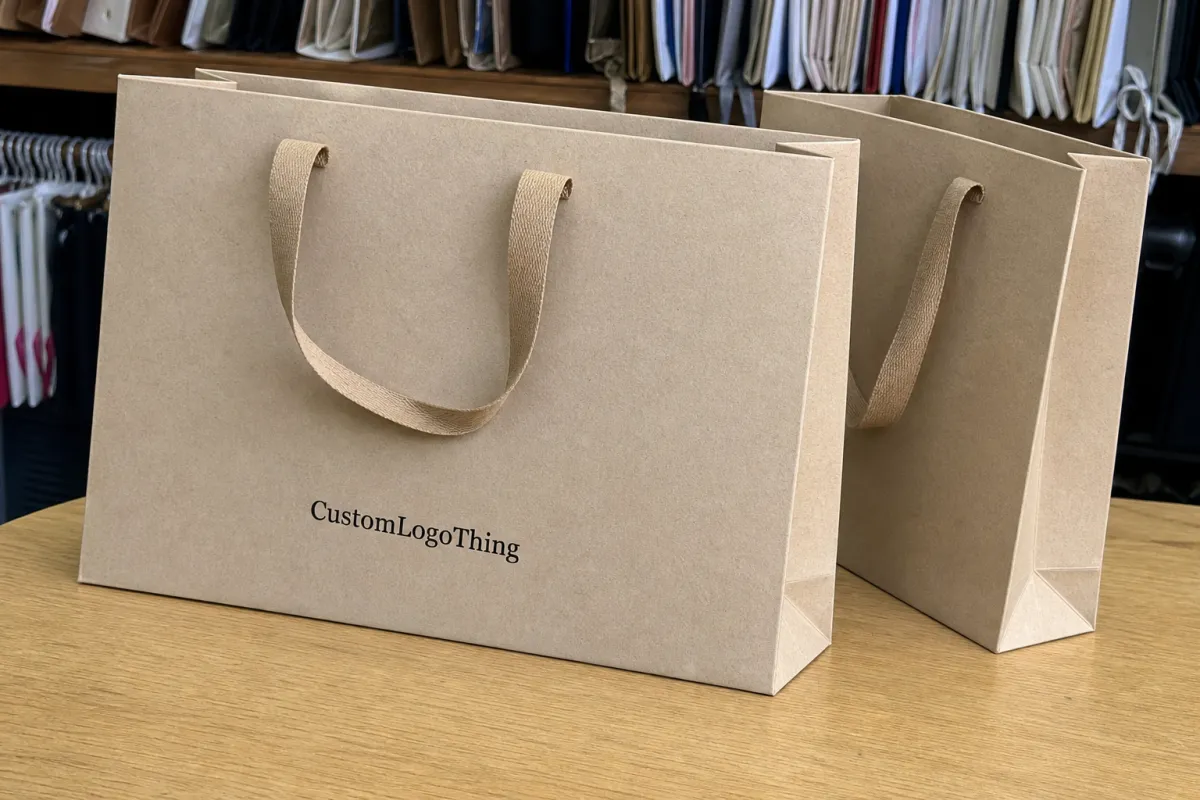
- Shopping bag: about $0.22 to $1.10/unit depending on paper weight, handles, and print complexity.
Those numbers are not promises. They are realistic ranges from the kinds of jobs I’ve handled and quoted. If someone offers you rigid boxes with foil and custom inserts for pennies, they are either leaving something out or planning to surprise you later. Usually both. On a 5,000-piece retail run, a custom sleeve can land at $0.15 per unit if the art is simple and the supplier is quoting from a plant in Shenzhen or Ningbo with standard tooling.
For small retail brands, unit cost matters more because every cent hits margin hard. A product with a $12 retail price and a 55% gross margin can’t absorb a $1.80 package unless the perceived value goes up enough to justify it. For multi-location stores, the calculus shifts. They can spread setup costs and sometimes accept a more premium package because volume smooths out the math. A 30-store group in Boston can justify a higher spend much faster than a single boutique in Savannah.
Hidden costs deserve their own line item. Art revisions can add designer hours. Proof corrections can delay launch. Freight damage can cause replacement orders. Poor forecasting can leave you overstocked in back rooms. I’ve watched retailers pay for 15,000 units when 8,000 would have been enough. That extra inventory sat for nine months and tied up cash that could have gone into displays or seasonal staffing. Very exciting for no one. Warehouse rent in places like New Jersey or California does not care about your optimism.
Here’s a practical budgeting framework I like for personalized packaging for retail stores: keep packaging cost between 3% and 8% of retail price for most mid-market items, and often higher for gifts or premium goods. If the product margin is thin, stay closer to the low end. If the packaging drives gifting or a luxury feel, a higher percentage can make sense. This depends on category, audience, and channel. It is not a universal law. A $48 fragrance set can carry more packaging spend than a $9 nail polish.
Also, don’t forget storage. Bigger runs lower the per-unit price, but they increase warehouse space and cash tied up in inventory. If your store or DC is already tight on room, a 30,000-unit order may be a bad idea even if the unit cost looks beautiful on paper. Paper does not have to live with your supply chain. You do. And neither does the store manager who has to stack cartons behind the seasonal display in Cleveland.
For brands that want coordinated retail packaging across multiple categories, I often recommend building a master spec sheet and sourcing plan. That way your Custom Packaging Products stay consistent across boxes, bags, sleeves, and inserts, which keeps personalized packaging for retail stores from turning into a messy one-off every quarter. A locked spec also helps suppliers quote faster, usually within 24 to 48 hours instead of a week of back-and-forth.
Common Mistakes Retail Stores Make With Personalized Packaging
First mistake: choosing packaging that looks gorgeous but fails in transit or on the shelf. I’ve seen a paperboard carton crush under a stack of heavier SKUs because the board caliper was too thin. Pretty is not enough. personalized packaging for retail stores must survive the handoff from warehouse to sales floor to customer bag. A 14pt board that works in a display cube may not survive a 30-pound shipper case.
Second mistake: over-designing the package until the cost outruns the product margin. You do not need hot foil, embossing, spot UV, and a magnetic closure for a $14 item unless the brand story really supports it. Sometimes a simple printed box with a smart insert and clean typography does more than a luxury spec pile-up. I’ve had clients save $0.65 to $1.10 per unit by cutting one finish that added flair but no sales lift. That money is usually better spent on better paper stock or a stronger insert.
Third mistake: ignoring exact sizing. Oversized packaging wastes material, adds shipping weight, and makes the product rattle around. A box that is 6 mm too wide can require extra tissue, extra inserts, or a filler solution that costs more over time. Packaging should fit the product, not the other way around. Sounds obvious. Yet here we are. I’ve seen a 92 mm jar packed in a 104 mm cavity because someone eyeballed it in a spreadsheet.
Fourth mistake: skipping samples. This is how teams discover color mismatch, weak adhesives, or poor print alignment after mass production has started. A sample should check fit, finish, print accuracy, and how the package behaves under actual handling. I still remember a bath brand in San Diego whose light blue box printed too purple under their store lighting. The sample caught it. If they had skipped that step, the whole run would have looked off. That mistake would have cost them about 2,000 units and one very unhappy merchandiser.
Fifth mistake: treating personalized packaging for retail stores as decoration only. It should support merchandising, promotions, and repeat sales. A package can carry a QR code to a loyalty offer. It can reinforce a seasonal display. It can help the associate tell a better product story. That is package branding with a job to do. A QR code on the inside flap costs almost nothing and can send customers to a $5 follow-up coupon.
What makes personalized packaging for retail stores actually sell?
If you want personalized packaging for retail stores to earn its keep, use it to solve one retail problem at a time. One problem. Not six. Premium gifting is one use. Seasonal promos are another. Loyalty recognition is another. Shelf differentiation is another. If the packaging has a clear mission, it is easier to design, quote, and test. A box that is doing one job well usually outperforms a fancy one trying to be everything.
Keep the design readable from three seconds away. I’m serious. In retail, you often have a shopper standing six feet away under harsh lighting while another customer is blocking half the display. If the logo, product name, and key message cannot be understood quickly, you’re wasting premium packaging real estate. Clean typography wins more often than busy art. In stores with 4,000K LED lighting, tiny script fonts turn into decorative nonsense.
Test the package in actual store conditions. Put it under bright LEDs. Stack it on a display table. Hand it to staff wearing gloves if that’s realistic for your category. Try carry-out in a paper bag and see whether corners scuff. A package that photographs well but tears after two handoffs is a bad investment. I’ve seen it happen with high-gloss Custom Printed Boxes that looked beautiful and scratched if you so much as breathed on them. A matte aqueous finish is often the safer choice when the package gets handled all day.
Work with suppliers who can show samples, explain MOQ clearly, and tell you the truth about lead times. I have far more respect for a factory that says “18 business days and no faster” than one that promises a miracle and misses the ship date. Transparency saves relationships. It also saves launch calendars. If your supplier won’t talk about board grade, print tolerances, or finishing risks, keep shopping. A supplier in Suzhou or Dongguan who gives you a real production window is worth more than one who says yes to everything.
Build for repeatability. That’s the move most retailers miss. A good packaging system can scale across locations without redesigning everything every season. Change the sleeve. Change the insert. Swap the label. Keep the base structure. That way personalized packaging for retail stores stays flexible without driving up design costs every quarter. A reusable dieline can save 2 to 3 weeks every time you launch a new promotion.
One of my favorite projects involved a beauty chain in Denver that used one rigid box structure and three interchangeable insert cards. The outer box stayed on brand all year. The insert shifted for new launches, loyalty gifts, and holiday sets. Their packaging budget stayed stable, and their merchandising team loved not having to rebuild from scratch every time they wanted a fresh look. That is the sweet spot. Their reorder landed at $1.95 per unit for 4,000 boxes, and the insert swap cost only $0.04 extra.
If you’re browsing materials, formats, and build ideas, I’d also suggest comparing your options against other Custom Packaging Products that fit your retail channel. Sometimes a sleeve plus a label does more than a fully printed carton. Sometimes a mailer does the job better than a rigid box. The right choice depends on fragility, brand goals, and how the customer actually receives the item. A store in Chicago with carry-out traffic has different needs from a fulfillment center in Phoenix.
And one more thing. Don’t chase novelty for its own sake. Personalized packaging for retail stores works best when it feels like it belongs to the brand, the product, and the buyer. If it looks like you tried too hard, customers feel that. They always do. They may not say it out loud, but they notice. A 1-color box with one smart message can outperform a three-finish circus if the message is clear.
Personalized Packaging for Retail Stores: decision table
| Decision area | Best fit | What to verify | Risk if skipped |
|---|---|---|---|
| Product fit | Protection, display, and unboxing consistency | Measurement, tolerance, material, and sample approval | A nice design fails because the product fit was guessed |
| Brand presentation | Logo visibility, finish, and customer perception | Print method, color target, texture, and proof review | Packaging protects the item but does not sell the brand |
| Operations | Packing speed, storage, shipping, and reorder control | Carton count, warehouse label, and repeat spec | The package is attractive but hard to pack or reorder |
FAQ
What is personalized packaging for retail stores, and how is it different from custom packaging?
Personalized packaging for retail stores is customized for a specific retail use case, like a store, product line, season, or customer segment. Custom packaging is the broader category; personalization is the strategic layer that makes it feel more targeted and relevant. A 350gsm C1S artboard carton printed for one holiday campaign is personalized; a generic logo box used everywhere is just custom.
How much does personalized packaging for retail stores usually cost?
Cost depends on material, print method, size, and quantity; short runs cost more per unit, while larger runs lower the unit price. For example, a printed sleeve might run $0.15 per unit for 5,000 pieces, while a Rigid Gift Box can land between $1.20 and $4.80 per unit depending on finish. Expect extra charges for samples, finishing, shipping, and rush production, so budget beyond just the quoted box price.
How long does personalized packaging take to produce for retail stores?
Timeline usually includes design, sampling, approval, production, finishing, and shipping, so fast turnarounds still need planning. Simple digital-printed jobs typically take 12 to 15 business days from proof approval, while complex, high-finish packaging with foil or embossing can take 20 to 35 business days before shipping. Freight from factories in Shenzhen, Dongguan, or Ningbo adds more time, especially if you choose ocean shipping.
What packaging formats work best for retail stores?
Popular formats include folding cartons, rigid boxes, corrugated mailers, shopping bags, sleeves, inserts, and labels. The best choice depends on product fragility, shelf display needs, customer experience goals, and shipping requirements. A lightweight item might do fine in a 350gsm C1S folding carton, while a fragile item may need E-flute corrugated protection.
How do I avoid mistakes when ordering personalized packaging for retail stores?
Always request samples, confirm measurements, and check color accuracy before full production. Match the packaging structure to your product and sales channel so the box looks good and performs well in real use. If your supplier cannot give you a proof, a timeline, and a clear MOQ, keep looking.
Bottom line: personalized packaging for retail stores works when it is designed with a real retail job in mind. It can lift shelf appeal, support gifting, improve brand recall, and help customers remember where they bought the product in the first place. In my experience, the smartest retailers treat personalized packaging for retail stores as part of product strategy, not as an afterthought. That small shift changes the whole conversation.
Start with one packaging format, one clear retail goal, and one realistic budget. Build the sample, test it in store lighting, and confirm the cost at your actual quantity before you place the order. If the package can hold the product, carry the brand message, and survive a real customer’s hands, you’ve got something worth printing. And honestly, that’s the whole point. A box from Guangzhou or Shenzhen that lands on a shelf in Chicago and makes a customer stop for five seconds has already paid part of its keep.