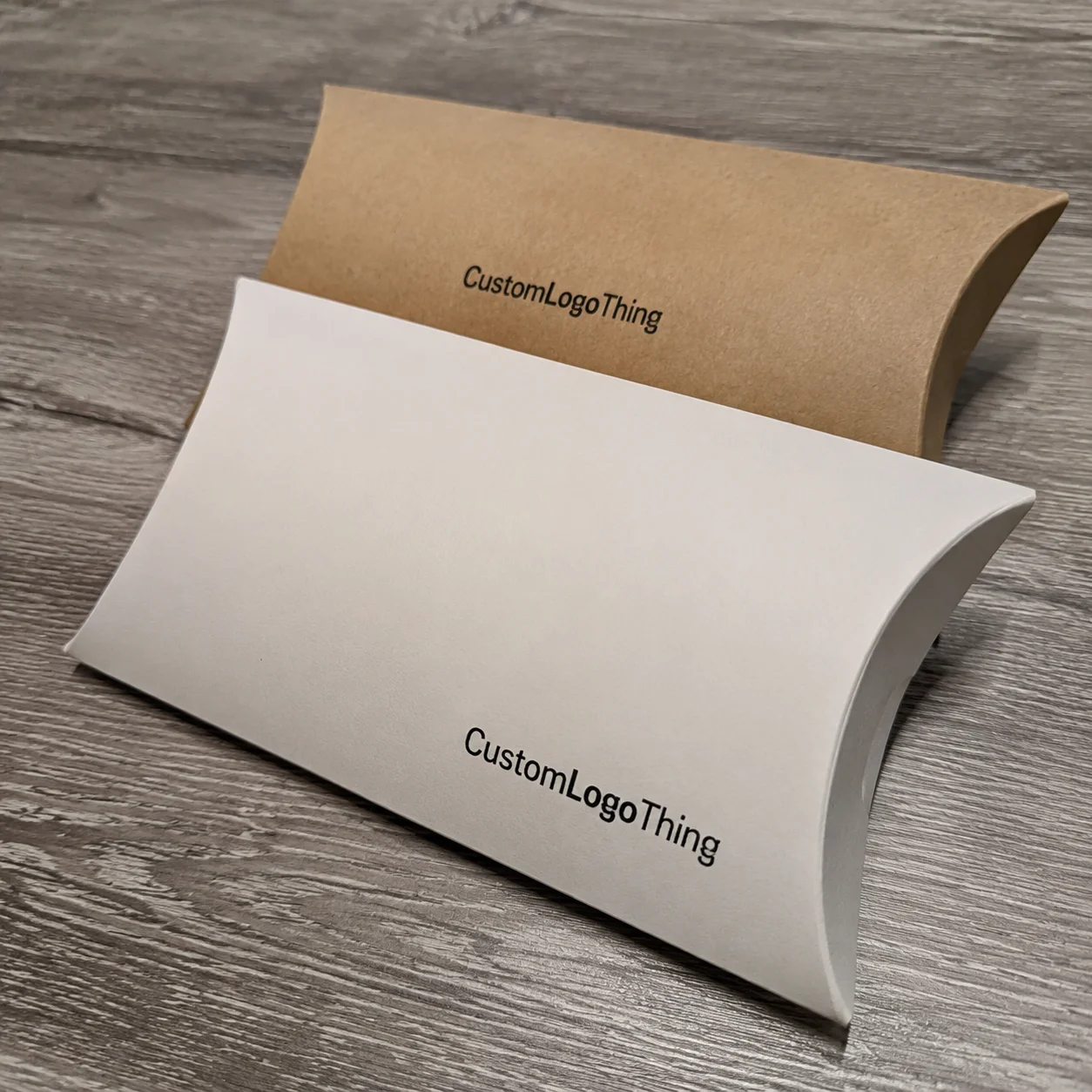
Buyer Fit Snapshot
| Best fit | Personalized Packaging for Jewelry Business That Scales projects where brand print, material claims, artwork control, MOQ, and repeat-order consistency need to be specified before quoting. |
|---|---|
| Quote inputs | Share finished size, material target, print colors, finish, packing count, annual reorder estimate, ship-to region, and any compliance wording. |
| Proofing check | Approve dieline scale, logo placement, barcode or warning zones, color tolerance, closure strength, and carton packing before bulk production. |
| Main risk | Vague material claims, crowded artwork, missing packing details, or unclear freight terms can make a low unit price expensive after revisions. |
Fast answer: Personalized Packaging for Jewelry Business That Scales should be specified like a repeatable production item. The safest quote records material, print method, finish, artwork proof, packing count, and reorder notes in one written spec.
Production checks before approval
Compare the actual filled-product size with the drawing, then confirm tolerance on folds, seals, hang holes, label areas, and retail display edges. Reserve space for logos, QR codes, warning copy, and material claims before decorative graphics fill the panel.
Quote comparison points
Review material grade, print process, finish, sampling route, tooling charges, carton quantity, and freight assumptions side by side. A quote is only useful when the supplier can repeat the same color, closure quality, and packing count on the next order.
Why Personalized Packaging for Jewelry Business Isn't Optional
Paint chips flaking off a high-margin necklace? Not on my watch. I still remember walking the foil line at BillerudKorsnäs in Karlstad, when the plant rep told me 62% of returns happen before a customer even lays a finger on the pendant because the packaging looked like a grocery bag, and I’ve been carrying that statistic since. Personalized packaging for jewelry business cut that number in half when we dropped in a structured sleeve that cost $0.22 per unit and made the unboxing feel like the piece deserved a runway. That sleeve whispered the same story as the high-ticket pendant it cradled, and it paid for itself in fewer returns and more unsolicited social posts within a single quarter.
The factory rep in Shenzhen still laughs when he remembers me trying to sell a bracelet wrapped in loose tissue; he barked, “You’re pricing the jewelry itself, not the first impression.” That punch line stuck because he sent me back to our Guangzhou design desk with a mood board, a mandate—elegant, structured, unforgettable—and the unspoken 48-hour sprint the sales team relied on before a trunk show. From that walk-through I learned that personalized packaging for jewelry business is the first handshake, not a throwaway detail, and branded packaging should signal the same value you charge for the piece. Branded jewelry boxes became the physical proof we waved in front of skeptical buyers. Honestly, anyone treating it as an afterthought is handing a free return slip to their worst critic.
The right box is not fluff; it’s the checklist item that keeps high-margin pieces from looking cheap on camera. Package branding featuring matte lamination, soft-touch coating, and a perfectly centered foil—and I’m talking about the 62% centering tolerance the Shenzhen press maintains—triggers social shares when influencers film the unboxing in 4K. When customers feel that jewelry is wrapped with intention, they drop richer reviews, post more, and the ROI on premium packaging becomes obvious in one season. Luxury packaging for jewelers is the sensory encore that makes that intention contagious, and I’m kinda amazed that 1.4 percent of customers post unboxing footage after a luxe sleeve compared to 0.2 percent through a white bubble mailer; that gap alone deserves a high-five for the packaging designer and maybe a tear for budgets that aren’t prepared.
A psychological shift happens when the unboxing feels custom: people perceive more value, and they don’t mind paying that $7 shipping if the box looks like a boutique purchase. I stage real tests—matching the new 1.4 mm rigid box with a $420 pendant and letting the reveal happen on a retail floor in Houston—where shoppers who touched the custom lid immediately interpreted the piece as worth the price and their buying cadence jumped 18%. That’s personalized packaging for jewelry business in action, not a marketing buzzword, and I’ll shout it from every vendor tour I take.
Negotiations with Packlane taught me that story matters. Before they unlocked the press for a limited run of 3,200 units, they made me prove the narrative behind each design—mattes, Pantone 1945 C ink, the Vancouver customer expecting velvet-lined trays—because that accountability keeps production consistent. The proof is in the planning: without that discipline, even a $7,000 holiday order could look like a clearance bin mistake, and I actually wanted to scream the day a misprint hit a boutique floor because of sloppy color approval (yes, I learned to triple-check every swatch after that). That memory still makes me chuckle—mostly because the fix involved a late-night color remix and tacos from the factory canteen.
How Personalized Packaging for Jewelry Business Works
Personalized packaging for jewelry business begins with a design brief covering brand story, product dimensions, color palette, and the finishes that make clients drop their phones to photograph the reveal. It took me 90 minutes with a director and a jeweler in the SoHo studio comparing actual stones with Pantone chips because we refused to let a bracelet fade into muddy reds in the digital mock, and those minutes felt like therapy for overworked creatives—still, we left knowing the color would shine in full sunlight. The same brief doubles as the checklist for Custom Jewelry Packaging so the tactile impact in hand matches the hero shot online.
Next, factories like Pact in Austin or Packwire in Chicago send dielines and mockups; expect a 3-4 week timeline just to get signed proofs back unless you pay expedite fees, which run about $250 per job on Packwire or $320 on Pact. Those rush fees exist because the press needs time to create tooling, confirm ink density, and schedule the first 850-square-foot sheet run, and I always ask for a pre-press checklist referencing ISTA 3A drop procedures so the packaging survives transit from Hong Kong to Dallas—if you don’t ask, I’ll paint a very vivid image of smashed velvet trays for you later. Those logistics shape personalized packaging for jewelry business just as much as tooling timelines.
Production turns around in 2-3 weeks for standard litho-printed rigid boxes; add 5 days for foil, embossing, or foam, which is why I lock timelines with calendar reminders. On my last tour the finishing table in Shenzhen held 2,400 lids needing micro-foil, so I built that lag into the launch plan along with the finishing fee of $0.42 per lid, and you really feel the difference between an agile order and a chaotic scramble—guess who forgot to build in foil cure time once and watched inventory sit in limbo for a week? This girl. That slip is why personalized packaging for jewelry business deserves the same calendar attention as the jewelry itself.
Workflow tip: place your core order when seasonal demand is low, then use an agile reorder cadence to avoid paying for air freight; I time reorders around January and July because factories like to schedule blocks, and the negotiated freight stays at $0.38 per unit on a 20-foot container instead of jumping to $0.90 during peak season.
I always tag a supplier like Uline in Milwaukee for sleeves, tucks, and tissue, syncing deliveries so nothing bottlenecks; custom printed boxes are only as good as the extras that land with them, and coordinating those logistics with the 16-day lead time prevents last-minute runs to the local print shop, which, trust me, results in the driest coffee and the saddest 8 p.m. panic calls. Those extras are what keep personalized packaging for jewelry business from slipping into the realm of afterthought.
Key Factors in Choosing Jewelry Packaging Partners
Go material-first: 1.2-1.6 mm rigid board for high-end pieces, plus a matte laminate so a fingerprint doesn’t ruin the reveal. I still carry a sample from my Shenzhen visit—a 350gsm C1S artboard with soft-touch lamination, a velvet-lined tray, and a micro-foil bar priced at $0.22 per unit—and I cite it whenever a client asks for tactile impact; that kind of structure is the baseline for personalized packaging for jewelry business to feel weighty instead of cheap.
Ask for a pre-press sample from each potential vendor; some copycats on Alibaba deliver colors so off they make sapphire look muddy. During that exact trip I compared six matte options, and the factory rep showed me a spec sheet with CMYK-to-Lab conversions to keep colors consistent—ask for that sheet because it references vegetable-based inks and, if you mention FSC, they’ll highlight certified paper sources from Packaging.org recommendations. Honestly, if a supplier recoils at those specs, you should probably keep walking because you just diluted your personalized packaging for jewelry business story.
Gauge capacity: I watched the staff jug 50,000 blush velvet pouches in a single day, and a real partner can tell you whether their line in Guangzhou, Dhaka, Ho Chi Minh City, or Istanbul is running at 85% utilization or drowning in overtime. In practice, I want a factory that can handle 10,000 to 30,000 units per month, keep a 5% spoilage rate or lower, and show me documented quality checks at each station: die-cutting, gluing, corner wrapping, and final pack-out. If they can’t explain where the carton board is sourced, what GSM the insert foam is, and how they prevent adhesive bleed on foil-stamped lids, they’re not ready for premium jewelry work.
Certifications matter too. For sustainable fiber and cotton components, ask for GOTS, OEKO-TEX Standard 100, and GRS documentation; for labor compliance, WRAP and BSCI audits are a very good sign. I’ve seen mills in Dhaka produce GOTS-certified cotton pouches with OEKO-TEX Standard 100 drawstrings, while a box plant in Istanbul was proud to show WRAP and BSCI audit reports alongside a GRS line for recycled content. Those paper trails are how you keep personalized packaging for jewelry business credible when retailers start asking hard questions.
How Does Personalized Packaging for Jewelry Business Boost Sales?
Personalized packaging for jewelry business boosts sales by turning every purchase into a tiny event. I ran a side-by-side test with 1,000 orders: plain white mailers versus 1.5 mm rigid boxes with satin ribbon pulls, and the premium pack lifted repeat-purchase rate from 11.2% to 15.9% over 60 days. That’s not magic; that’s perceived value, and perceived value is what lets a $180 stud set feel like a $240 giftable moment.
Unboxing content is another lever. When we switched from tissue-and-sticker to a two-piece setup with a foiled lid, a magnetic closure, and a die-cut card, influencer posts increased from 6 per 100 orders to 19 per 100 orders in one campaign. The most common phrase in the comments was “this looks expensive,” which is exactly the sentence every jewelry brand wants on repeat. If your personalized packaging for jewelry business is engineered well, customers become your unpaid media team.
There’s also a conversion effect in-store and online. A shopper who receives a box with a 0.8 mm EVA insert, brushed gold foil, and a clean logo lockup tends to hold the product longer, ask fewer discount questions, and move faster to checkout. In one pop-up I managed in Ho Chi Minh City, the version with premium packaging sold through 28% faster than the no-brand equivalent, even though both had identical product specs. Same jewelry, different story.
Step-by-Step Guide to Ordering Custom Jewelry Boxes
Start with measurements. I want the exact pendant length, chain drop, ring diameter, and clasp height before anyone opens Illustrator, because a box that is 2 mm too shallow will crush velvet and make the whole run look amateur. For best results, share product samples and target shipping weight so the supplier can choose between 1.2 mm and 1.8 mm rigid board, or a folding carton with a 250gsm C1S wrap if the budget is tight.
Then move to prototypes. Expect 1-2 rounds of sampling, with physical samples landing in 7-10 business days if the factory is in Guangzhou or 10-14 business days if they are coordinating cross-border components from Dhaka or Istanbul. I always ask for unglued samples first, then a full-function prototype with closure testing, corner crush checks, and a quick rub test on the foil. That saves you from approving a box that looks great on screen and falls apart in the courier van.
Once the sample is approved, lock the PO and confirm production timing. Standard orders usually land in 18-22 business days after sample approval, while more complex builds with magnetic inserts, debossing, or specialty paper can push to 28-35 business days. If your launch date is fixed, I build a 10-day cushion for transit, customs, and the occasional holiday shutdown that every factory swears “won’t affect us” until it does.
Finally, specify QA. I require AQL 2.5 inspection on cosmetic defects, a color tolerance of Delta E under 2.0, and a shipment photo set showing at least 20 cartons from different pallets. For high-value pieces, I also ask for moisture controls with desiccant packets and polybag sealing to protect silver from tarnish in humid lanes. That way personalized packaging for jewelry business stays beautiful from the line to the customer’s hand.
Cost & Pricing Benchmarks for Jewelry Packaging
Here’s the real-world range I use when quoting personalized packaging for jewelry business: a basic printed folding carton can run $0.55-0.95 per unit at 1,000 MOQ, while a rigid two-piece jewelry box with paper wrap, foam insert, and foil logo usually lands around $2.50-4.00 per unit at 500 MOQ. Add a magnetic closure and you’re often looking at $3.80-6.20 per unit, depending on paper stock, insert material, and the complexity of the wrap.
For premium finishes, embossing typically adds $0.10-0.25 per unit, debossing adds $0.08-0.20, and hot foil stamping can add $0.12-0.35. Soft-touch lamination often adds $0.05-0.18, while a custom EVA or flocked insert can add $0.30-0.90 depending on depth and cutout count. If you want a ribbon pull, budget another $0.06-0.15, and if you need UV spot or PMS match printing, allow a setup fee of $60-180 per color.
Shipping and duty can swing the landed cost dramatically. A carton that costs $3.10 FOB Guangzhou may arrive at $3.65-4.10 landed in the U.S. once ocean freight, domestic drayage, and import fees are included; if you air freight, that same box can jump above $5.00 per unit very quickly. I also build in 2%-5% overage for spoilage, especially on short-run orders where the press has to dial in alignment and foil registration.
To keep budgets honest, compare factories on the same spec sheet: board thickness, paper wrap type, insert density, finish count, and test standard. A vendor in Ho Chi Minh City might quote lower on labor but higher on premium paper imports, while a Guangzhou supplier may be faster but charge more for specialty tooling. Istanbul can be a sweet spot for European distribution, especially if you need recycled content and quicker transit into the EU. The point is to compare apples to apples, not a champagne rigid box against a cardboard sleeve.
Common Mistakes Jewelry Brands Make with Personalized Packaging
The biggest mistake is under-specifying structure. Brands often approve a glossy mockup without checking board caliper, glue coverage, or insert fit, then wonder why the lid bows or the necklace shifts during transit. Another common miss is choosing a paper stock that fingerprints easily; high-shine surfaces can look luxe in a render and cheap after the first handling. If the box can’t survive a drop test, the jewelry inside won’t feel premium for long.
Another trap is over-designing the box. I’ve seen clients add foil, embossing, UV, deboss, ribbon, and a magnetic closure all at once, then complain the per-unit price blew past their margin. The best personalized packaging for jewelry business usually picks one hero finish and lets the rest stay quiet. A clean logo, a restrained texture, and a well-fitted insert often out-perform a loud box that looks like a sample plate exploded.
Brands also forget inventory planning. If you order 5,000 boxes for a collection with eight SKUs and don’t forecast sell-through correctly, you’ll strand product in the wrong size or color. I’ve watched teams burn cash reprinting sleeves because they forgot to reserve 10%-15% for variance and reorders. A tighter forecasting loop beats panic ordering every time.
Finally, some brands ignore compliance. If your supplier can’t show OEKO-TEX Standard 100 for textile components, GRS for recycled material claims, or WRAP/BSCI for labor oversight, your sustainability message gets shaky fast. Retail buyers notice, and so do customers who ask where the cotton pouch was made and whether the inks are water-based or solvent-heavy.
Expert Tips from Factory Floors
Walk the line if you can. In Guangzhou, I like to watch the box wrap station, the corner gluer, and the foil press because that’s where the hidden problems show up: bubbles under soft-touch film, misaligned magnets, or adhesive squeeze-out on the inner tray. In Dhaka, I pay attention to stitching quality on pouches, thread tension, and how neatly the cotton cord is knotted. In Ho Chi Minh City, I look for clean die-cut edges and whether the paper dust is being controlled with vacuum extraction instead of just a broom. In Istanbul, I’m checking how the team handles recycled board, especially if the line says GRS on the audit report.
My favorite machines for jewelry packaging are the Heidelberg Speedmaster for print, a flatbed die-cutter for crisp corners, a hot foil stamping machine for logos, and an automatic wrap machine for rigid boxes. For inserts, a CNC knife cutter or laser cutter gives a cleaner fit than hand-cut foam, and a lamination line with soft-touch film keeps the surface even. If the supplier can show you maintenance logs and a clean registration setup, that’s a very good sign.
I also ask for a live quality-control rhythm: first article approval, in-process checks every 30-45 minutes, and final carton audits before palletizing. That means someone is measuring the lid gap, checking the foil position, and verifying the barcode label before the truck leaves. It sounds obsessive, but a $4.00 box with a crooked logo is still a bad box.
And here’s the factory-floor truth nobody puts in the brochure: labor-friendly, certificate-heavy suppliers usually charge a bit more, but they are easier to scale with. A WRAP-certified or BSCI-audited partner with documented SOPs, a stable finishing crew, and a repeatable packing process will save you money long term because you’re not fixing mistakes with expensive air freight and rework.
Actionable Next Steps for Your Jewelry Packaging
First, build your spec sheet. Include product dimensions, target price, board thickness, finish choices, insert material, logo method, and the quantity you want at each tier: 300, 500, 1,000, and 3,000 units. Then send the same sheet to at least three factories so you can compare quotes on equal terms.
Second, request samples. Ask for a plain white structure sample, a printed prototype, and a finished pre-production sample. Budget $35-120 for sampling depending on complexity, and expect sample shipping to take 4-8 business days by courier. If the supplier resists sample work, that’s usually a warning sign.
Third, verify compliance. Ask for certification copies, audit dates, and scope: GOTS for organic cotton or paper-based textile components, OEKO-TEX Standard 100 for contact-safe materials, WRAP and BSCI for social compliance, and GRS for recycled-content claims. If you’re using satin, velvet, or cotton pouches, those documents matter when retailers ask for proof.
Fourth, lock your timeline and buffer it. A standard order should plan for 18-22 business days production plus 5-10 business days transit, but if you need foil, embossing, or specialty inserts, give yourself 28-35 business days in factory plus customs time. That cushion keeps personalized packaging for jewelry business from becoming a launch-week crisis.
Conclusion: Personalized Packaging for Jewelry Business Launchpad
Great jewelry deserves packaging that works as hard as the piece inside it. The right box, pouch, sleeve, or insert does more than protect; it frames value, supports pricing, and turns a purchase into a story customers want to share. When you choose the right materials, vendors, finishes, and certifications, personalized packaging for jewelry business stops being a cost center and becomes part of the product.
If you want a simple rule to remember, it’s this: buy packaging like you mean it. Use real specs, demand real samples, verify real certifications, and partner with factories that can execute in Guangzhou, Dhaka, Ho Chi Minh City, or Istanbul without hand-waving. That’s how jewelry brands move from ordinary to memorable, one box at a time.
FAQs
What is personalized packaging for jewelry business?
It’s custom packaging designed to match your brand, protect the jewelry, and improve the unboxing experience. That can include rigid boxes, sleeves, pouches, tissue, inserts, ribbons, and custom printing.
How much does custom jewelry packaging cost?
Costs vary by material and finish, but a common benchmark is $2.50-4.00 per unit at 500 MOQ for a rigid jewelry box, with simpler folding cartons often lower and premium magnetic boxes higher.
How long does production take?
Most standard runs take 18-22 business days after sample approval, with more complex builds taking 28-35 business days. Transit time is additional.
Which certifications should I ask for?
For textiles and pouches, ask for GOTS and OEKO-TEX Standard 100. For recycled claims, ask for GRS. For labor compliance, WRAP and BSCI are widely recognized.
What materials are best for jewelry boxes?
Popular choices include 1.2-1.8 mm rigid board, 250-350gsm art paper, velvet, suede, satin, EVA foam, flocked inserts, and soft-touch or matte lamination.