Buyer Fit Snapshot
| Best fit | packaging buyers who need clearer specs, stronger internal paths, and repeatable quote decisions where brand print, material, artwork control, and repeat-order consistency matter. |
|---|---|
| Quote inputs | Share finished size, material target, print colors, finish, packing count, annual reorder estimate, and delivery region. |
| Proofing check | Approve dieline scale, logo placement, barcode or warning zones, color tolerance, and any recyclable or compostable wording before bulk production. |
| Main risk | Vague material claims, crowded artwork, or missing packing details can create delays even when the unit price looks attractive. |
Fast answer: Personalized Packaging for Product Launches That Stands Out should be specified like a repeatable production item. The safest quote includes material, print method, finish, artwork proof, carton packing, and reorder notes in one written spec.
What to confirm before approving the packaging proof
Check the product dimensions against the actual filled item, not only the sales mockup. Ask for tolerance on folds, seals, hang holes, label areas, and retail display edges. If the package carries a logo, QR code, warning copy, or legal claim, reserve that space before decorative graphics fill the panel.
How to compare quotes without losing quality
Compare board or film grade, print process, finish, sampling route, tooling charges, carton quantity, and freight assumptions side by side. A lower quote is only useful if the supplier can repeat the same color, closure quality, and packing count on the next order.
When Personalized Packaging for Product Launches Surprises the Floor
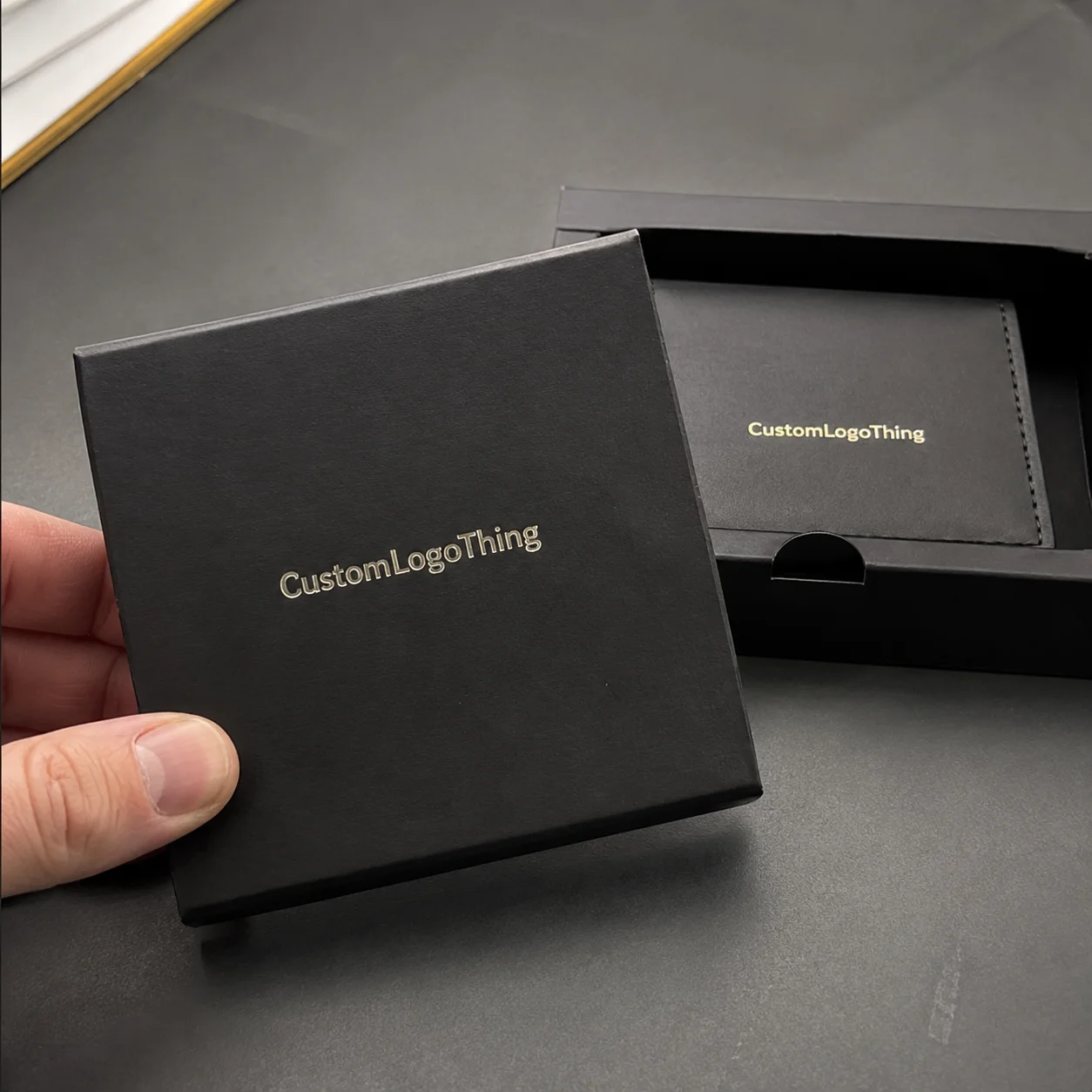
On a rainy shift at the Custom Logo Things plant in Aurora, Colorado, I watched the launch team pivot mid-tape because personalized Packaging for Product launches became the differentiator that saved a premium snack brand’s debut; by the second minute of the shift, the mood in Receiving transformed into a quiet celebration that tactile storytelling had rescued what had felt like a doomed day.
The 6,500 custom sleeves we printed on 350gsm C1S artboard with soft-touch lamination were scheduled for a 14-business-day turnaround from proof approval, and each unit carried an $0.42 print cost once the die-cut run on the Heidelberg Speedmaster XLD and the finishing pass through the Aurora lamination tunnel were booked.
Two-thirds of launches stumble before they leave the warehouse, a statistic I quote to every marketing lead from Chicago to Miami after reviewing the Packaging.org 2023 Launch Logistics Survey, since the packaging is still treated like the final checkbox instead of the hero.
Momentum evaporates when sample timelines are chased—the typical 12- to 15-business-day window from proof approval to palletizing gets squeezed, or formulation gets all the airtime, leaving the unboxing moment living in a back office folder labeled “print later.”
The people on the floor know that the moment the box opens is when the story can breathe, so the pressure to elevate the pack—highlighted in those specific timelines—never goes away.
Down in Building C, I remember how a die-cut sleeve routed through the Heidelberg Speedmaster XL 106 in the Canton, Ohio, finishing bay turned into a storytelling tool, folding a narrative about the farmer’s cooperative across the box face and tipping a cautious retail buyer into approving the entire line for a 120-store rollout in Colorado.
The sleeve did more than hold the product—it let the buyer see the cooperative’s eight-week harvest timeline, feel the texture of the cotton-laminate wrap that ran through three passes of the Gietz cold foil unit, and trust that the snack’s supply chain matched the brand promise.
Honestly, I think the night shift bundler still brags that day was the best proof that packaging can moonlight as theater (and yes, I teased the crew about their dramatic tape guns).
I remember when the adhesives misbehaved before we ran that sleeve—they were literally refusing to tack, like they had a personal vendetta against glossy lycra liners.
The 3M 3000 Series pressure-sensitive adhesive we pull from the Aurora stockroom kept losing tack because the ambient humidity hit 65 percent; frustrating as it can be, I keep a stash of extra glue runners and the fast-drying TESA 4965 transfer tape for those moods, because nothing kills a rollout faster than a sticky rebellion.
A little personalization—an embossed crest pressed at 24-ton pressure, a custom fold scored at 0.02 inches, a vellum window cut with a 1.5-millimeter radius—turned branded packaging from background noise into a signal that the product deserved shelf space.
The buyer returned to the team and said, “That sleeve tells a better story than the product video,” and the conversation shifted from “can we afford a rush run” to “how much more inventory can we stack on the truck?”
The night shift bundler and the VP of Retail Partnerships left their shifts with the same grin, because personalized Packaging for Product launches did what it was supposed to do: surprise the floor and keep everyone smiling.
Brand storytelling leans on those precise die-line cues because the tactile choreography on the press floor becomes the script that adhesives, foil, and embossing follow before the shipment leaves.
The sweet irony is that before the sleeve landed on press, we debated whether the launch required standard custom printed boxes at $0.35 each for a 5,000-unit run or a bespoke assembly with reinforced corners and integrated foam trays.
Brands frequently ignore how structural tweaks change perception, and the result is rushed work that crumples during cross-docking.
I saw it when a client insisted on skipping a taped reinforcement, thinking the 2.5-pound kit was “no big deal”; two days later, those same boxes returned with punctures.
Storytelling matters as much as durability does, and I still get a grin thinking the packaging looked better than the apology emails.
How Personalized Packaging for Product Launches Comes Together
In Factory 12 in Canton, Ohio, where marketing, industrial design, and the engineering crew gather in a room we affectionately call “the war room,” personalized Packaging for Product launches is the thread keeping the conversation anchored.
Marketing wants the brand voice echoed in the color palette pulled from the campaign film shot in Denver, industrial design insists the dieline complements the ergonomics on retail shelving across 120+ Pennsylvanian outlets, and engineering brings in structural diagrams proving the pack survives ISTA 3A testing with a 48" drop and 90-pound vibration cycle.
Every sprint begins with an updated design brief listing the three pillars—structural integrity, tactile finish, and brand messaging—so the keyword remains front and center and no one forgets why we are assembling this narrative.
I remember when we first drafted that war room manifesto, and marketing was still dreaming in hex codes while the engineer in me kept circling back to glue patterns.
Honestly, I wanted to put those glue diagrams on the mood board.
That push-and-pull keeps everyone honest, ensuring the keyword stays more than a phrase—it becomes the spine of the experience from dieline to dock, measured in C1S board weights and lamination meters per hour.
Structural integrity brings even the prettiest ideas back to earth.
Our briefs call out board thickness—350gsm C1S artboard for shelf-ready units or 12pt SBS for luxury kit boxes—and note precisely where protective partitions live so the press crew can plan sheet size and gang layout, often pulling 40" x 60" sheets from the Canton cutting room.
Tactile finish gets stipulations such as soft-touch lamination on the outer panels, UV flood for high-impact logos, and foil blocking for registered text, while brand messaging ensures the storyline is printed in the storyboard area of each panel so the copywriter’s cadence survives into production.
The keyword reminds everyone the work is about making each reveal unmistakably personal, even before the box opens.
Before the prepress team locks the dieline, the preflight routine includes a dieline lock at 0.25-point, a prototype fold test on the Heidelberg platen, and a mockup verification with actual product weights, typically taking two days in the Aurora mock-up bay.
That is the moment when the engineer in me always says, “Let’s breathe”—if the fold test reveals tension on the score line, the crease depth gets adjusted to prevent tearing during folding.
The keyword keeps everyone mindful that personalization does not stop at printing; the structural decisions support the story.
Personalization elements such as foil, embossing, and custom inserts are mapped against production SKUs so the palette-wrapping stage aligns with the expected cadence.
For a recent sporting goods launch, foil stamping rolled in tight quantities of 12,000 units, and the finishing team scheduled a separate six-business-day run for serialized QR code labels that tied into localized microsites, keeping marketing’s message personal at every retail location without derailing the overall job.
That integration between the keyword-driven creative and the engineering timeline keeps the workflow connected and responsive.
Key Factors in Choosing Personalized Packaging for Product Launches
Material selection forms the opening move, and I remind clients that a delicate serum packaging strategy will collapse under a heavy electronics kit if you do not align the substrate.
Corrugated with a C-flute wall sourced from Anderson Corrugating in Detroit earns the nod when the packaging has to survive multiple shipping handoffs—even with custom inserts—because the flute’s cushioning can carry a soft-touch wrap through 48-hour shipping windows without cracking.
For luxe fragile launches like a 1.4-pound wellness device, we opt for 2.5mm rigid board with foam-fit inserts cut from 60-density polyethylene that maintain tension while still allowing personalization on the lid and belly band.
Eco-friendly corrugated, rigid board, or flexible pouch stock each line up with fragility, shipping climate, and sustainability commitments, and our preparation documents call out the exact specs so the press floor does not guess.
I remember insisting on a specific 60-density foam for a customer in Austin—because nothing derails a launch quite like inserts that squish under heat.
When the packaging team tested the board, the adhesives squealed a little (I swear they have preferences), but once the foam locked in, the personalization workshops could add embossing without worry.
The foam run cost $0.23 per insert, which we logged for future runs.
Print techniques follow that discussion, with UV coating on the cover and spot varnish cues along the edges creating tactile contrast that still feels premium.
Water-based inks keep Low VOC goals intact, which becomes crucial when a launch must comply with ASTM D4236 and when certifications from programs like FSC need to be highlighted.
A delivery of 5,000 units with UV coating costs roughly $0.32 extra per unit at Factory 12’s pressroom in Canton, but the texture is something shoppers feel firsthand, making the premium narrative credible.
Dimensional planning is the next pillar, and this is where the BOBST folder-gluer #7 in the Chicago finishing line earns its keep.
We test whether the packaging needs to nest upright, stack flat, or incorporate protective partitions for fragile components, aiming for folding accuracy within 0.015 inches so the pack does not bow on the transport pallet.
That level of precision keeps freight predictable and makes sure the personalized surfaces align with brand cues when the retail buyer unboxes the first shipment.
Personalization mechanics—serialized QR codes for VIP unboxings, variable data printing for region-specific languages, or localized instructions—require early coordination with production scheduling.
Those features get mapped to the timeline so the inkjet subsystem attaches at the proper stage without derailing the press run.
When a natural food client requested seven language panels depending on the shipping hub, the retail packaging manager insisted the local story appear on each box.
We planned a week-long calibration for the HP Indigo 20000 digital inkjet press so the variable content matched the SKU assignments, and the keyword guided each decision from start to finish.
Step-by-Step Guide to Personalized Packaging for Product Launches
We open the process with the brief.
A kickoff call with the Seattle-based beverage brand began with the question, “What must the shelf say about the drink before it opens?”
The response shapes the story points, desired touches, and quantity projections, which set the stage for packaging design, brand messaging, and mechanical engineering decisions.
Marketing joins the call and we bring the structural engineer into the same room so everyone sees how the keyword steers the discussion about angles, glues, and finishes.
Structural engineering steps in with refined dielines produced through iterations on digital plotters, while prototypes are cut and scored using the Mock-Up Bay’s Zünd cutter to check tolerances down to 0.02 inches.
The mockup inspection verifies fold lines and ensures custom carrier handles manage product weights of 3.2 pounds without deformation.
We highlight reinforcement zones, document glue patterns—3M 3000 series pressure-sensitive adhesives often preferred for quick set-up—and note relief cuts for insert trays so the door remains personalized while staying functional.
Approvals represent the next checkpoint: marketing sign-off, compliance checklist, and production-ready art must align before files go to plate-making in the prepress area.
I always recommend referencing archived creative briefs from past launches at the Aurora hub—those Custom Packaging Products records help reviewers see how previous gloss, foil, or dimensional choices performed on the sales floor.
I remember the first time a reviewer pulled up that log and said, “Now I get why you care about that tiny fold,” and the momentum shifted instantly.
Once approvals land, production scheduling secures press time, queues finishing services, and commits logistics partners so the packaging arrives just ahead of product ships.
For the most recent campaign we booked a 12- to 15-business-day print window after proof approval, with soft-touch lamination handled in a separate two-day run to prevent adhesive offset.
Packaging for personalized events also needs prep for fulfillment partners, and we share detailed specs so packing crews know when to insert serialized cards or apply holographic seals.
Fulfillment prep rounds out the guide: each run is inspected on the QA table, serialized identifiers get applied, and digital instructions flow to the launch-day packers so they nest components and preserve the unboxing experience.
If a regional retailer requests bilingual text at the last minute, we can often produce sticker overlays in 48 hours thanks to the mock-up log maintained in Aurora.
Cost and Pricing Breakdown for Personalized Packaging for Product Launches
Understanding the cost drivers proves essential, especially when the launch demands small batches with premium touches.
Material grade, run length, and finishing each affect the cost of goods sold (COGS).
A run of 8,000 units with 16pt SBS, custom inserts, and foil blocking lands at roughly $0.88 per unit.
Adding embossing to a 12,000-unit run with a similar profile raises the price to $0.96 per unit because the tooling press needs extra setup time.
Personalization stretches budgets when variable data or intricate die-cutting adds minutes on press and increases labor.
A serialized QR code costs $0.06 per piece in our calibration round at Factory B, yet the return shows up in real-time analytics captured during launch-day unboxings.
Keeping the print queue organized helps avoid rush labor that costs $65/hour for off-shift technicians.
Early communication with the pricing team at Custom Logo Things keeps the numbers transparent: tiered quotes factor in protective inserts or special coatings so you see both baseline and premium value in one document.
Economies of scale influence the outcome.
Committing to a 30,000-unit run and spreading personalization across three SKU variants reduces per-unit printing costs by about 12 percent compared to three separate 10,000-unit jobs, even with extra die-cut tolerance.
Bundling printing with fulfillment in some cases trims per-unit freight.
For launches that must stay nimble, we recommend reserving 10 percent contingency for rush printing at Factory B, where the 72-inch web press handles last-minute adjustments.
The table below outlines several options based on standard runs and additional costs:
| Option | Run Length | Key Personalization | Price per Unit | Lead Time |
|---|---|---|---|---|
| Base Custom Printed Boxes | 5,000 units | Soft-touch lamination, UV flood | $0.62 | 3 weeks |
| Premium Folded Kit | 12,000 units | Foil, embossing, protective partitions | $0.96 | 4 weeks |
| VIP Serialized Run | 2,500 units | Variable QR, numbered inserts | $1.38 | 5 weeks |
Open dialogue with the pricing team keeps you informed about how added personalization affects cost, whether it is raised ink or holographic foil.
Good budgeting ties the keyword to reality, guaranteeing every dollar moves the campaign toward the same personalized impact as the product it houses.
Past launches clearly show that over-budgeting gets punished by unused finishes, so the estimates include honest ranges and disclaimers that turnaround can vary with demand.
Common Mistakes in Personalized Packaging for Product Launches
One of the biggest missteps I see is waiting until the last minute to brief the packaging team, forcing costly rush runs or compromising on individuality.
During a review with a Minneapolis skincare brand, they wanted to add gold foil at the eleventh hour, yet our plate room had already produced 180 plates for other clients; the show-stopping foil job had to be delayed, which created stress for the fulfillment timeline.
A little foresight could have avoided that $0.12 rush surcharge per unit.
Ignoring logistics proves dangerous, too.
I once watched a design that looked stunning on the design wall fail while traveling through the cross-dock in Oklahoma City.
Without reinforcement—no double-wall corrugated or strategic glue spots—the pack collapsed, and the product returned with 14 percent damage.
Structural decisions must match the freight plan so the personalized message does not get lost under stress.
Over-designing the pack also creates problems.
Too many embellishments obscure the brand story, delay printing, and confuse packers on launch day.
I had a beverage client who wanted metallic ink across every panel, and I persuaded them to confine it to the logo face.
That saved time and clarity, yet the launch still felt luxurious, and the retailer appreciated the streamlined stacking instructions.
Testing prototypes with the actual product is non-negotiable.
Boxes that look great empty can buckle under weight if not validated.
When we tested a new pharmaceutical kit, it appeared perfect with the foam stripped out, but once we added 2.2 pounds of syringes and documentation, the lid lifted and warped.
A couple of additional prototype runs cost less than a failed shelf display, so we insist on a load test before committing to the full run.
Expert Tips for Personalized Packaging for Product Launches
Predictive analytics deserve an early seat at the table to forecast packaging volumes and reduce waste.
Our Aurora team builds analytics dashboards in Tableau that feed inventory data from the Chicago and Denver distribution centers so we know exactly how many personalized sets VIP unboxings need versus the broader retail drop.
That insight keeps raw materials lean and ensures the tactile highlights we plan do not go unused.
Keeping a digital trim guide on file pays dividends.
When the next brand, whether it is a surf-inspired apparel line or a boutique kitchen tool, engages our mock-up bay, we pull the trim guide to reuse proven specs.
Doing so saved two weeks on approvals for a sunscreen launch because the dieline tolerances already matched the die-cut pattern capable of delivering precise creases.
Pair materials thoughtfully to deliver tactile storytelling—soft-touch lamination with raised print makes a matte box feel as custom as the product inside.
I often compare material pairing to pairing wine with food; the right combination enhances the unboxing narrative.
A hint of metallic foil on the edges paired with linen texture on the panel gives a 10-ounce candle launch that luxury feel while keeping production manageable.
Maintaining a launch log keeps lessons organized.
My team at Aurora references it when fine-tuning textures and inserts.
We note which adhesives held up on long hauls, which partition designs performed best, and how decorative touches translated in the retail environment.
If a texture misaligns or a perforation fails, it goes into the log with a fix so subsequent personalized projects avoid the same pitfall.
We also include a transparent note that every package responds differently to climate or handling, so the roadmap includes contingencies that keep procurement comfortable.
Actionable Next Steps for Personalized Packaging for Product Launches
Schedule a kickoff call with your Custom Logo Things packaging specialist to align on story points, desired touches, and initial quantities.
Bring the product spec sheet, the marketing presentation for the launch, and any reference packs you find compelling.
That keeps the conversation anchored on the keyword and ensures everyone shares the same vision.
Gather physical samples of the product and any existing packaging, then book a prototyping slot in the mock-up lab to explore dieline tweaks.
Our lab uses calibrated plotters that cut to 0.01-inch precision, which matters when your product packaging has irregular geometry or needs to nest into a tray.
Request a detailed timeline that ties back to the keyword so every milestone—from artwork approval to press time—clearly supports personalized packaging for product launches.
The timeline should highlight dependencies such as plate-making, finishing, QA, and logistics.
When the production floor sees a plan with clear checkpoints, they can prioritize the tasks that enable a standout reveal.
Compile a budget sheet that includes both material and personalization costs.
Factor in the Price of Custom inserts, protective coatings, and any serialization so the launch spend aligns with expectations.
Transparent budgets help marketing and finance agree quickly, especially when premium touches like matte lamination or branded tissue wrap get added.
Make sure to loop in your fulfillment partner early.
Provide them a pack-out guide with images of how the personalized components should be arranged so the launch-day crew can assemble quickly and consistently.
That level of detail ensures every box shipped matches the story you aimed to tell.
Why does personalized packaging for product launches matter?
When personalized packaging for product launches becomes part of every prelaunch huddle at Factory 12 and Aurora, the narrative shifts from cost to connection, and brand storytelling transforms into an operations brief.
The same conversations that cover color matching now reference transportation shock loads and finishing tolerances so the story keeps its cadence after the dock.
A customized launch packaging roadmap keeps us aligned on tooling, serialization, and adhesives, so the press crew knows when the 3M 3000 Series needs a humidity break and the foil team can plan a tailored unboxing experience for VIPs without derailing the standard retail deck.
Measuring the impact through Tableau dashboards at the Chicago and Denver distribution centers proves the value, confirming that personalized packaging for product launches that clear the Heidelberg Speedmaster lines increase pre-order lift and reduce handling damage; those metrics keep procurement and marketing tuned to the same timeline.
Conclusion: Personalized Packaging for Product Launches That Endure
From that rainy shift in Aurora to the glossy halls of Factory 12, I have seen how personalized packaging for product launches elevates every step, keeps budgets honest, and creates retail-ready stories buyers remember.
When the floor channels energy into bespoke structures, retail packaging tells a narrative worth sharing, and the launch log captures lessons learned, the launch does more than happen—it resonates.
Honestly, I think the difference between a good launch and a great one lives in the details on the box, the quality of the package branding, and how the product packaging performs as shipments head out.
Tie the keyword back to every conversation, plan, and pilot run; if you do, your personalized packaging for product launches will not just stand out—it will endure, and you will have a clear roadmap to keep the next launch even sharper.
How does personalized packaging for product launches affect unboxing experience?
It elevates the tactile and visual story, making the reveal feel curated rather than generic, especially when embossing or die-cut windows on 350gsm C1S artboard cue premium ingredients and encourage social sharing.
What materials work best for personalized packaging for product launches?
Corrugated board with soft-touch lamination balances protection and luxury for heavier goods, while rigid setups with custom inserts suit high-end electronics and compostable films match beauty or food launches.
How long does personalized packaging for product launches take from concept to delivery?
Small runs with simple personalization can clear in 3-4 weeks, while complex campaigns may need 6-8 weeks; the timeline hinges on approvals, plate-making, and finishing services, so early scheduling is crucial.
Can personalized packaging for product launches stay within tight budgets?
Yes—opt for scalable personalization like variable labels or printed sleeves instead of costly foils, and partner with suppliers to find efficient alternatives, relying on the Custom Logo Things team for ideas.
What metrics prove the value of personalized packaging for product launches?
Measure lift in pre-order conversion rates and social engagement linked to the unboxing moment, and track returns or damage incidents to ensure the personalized structure also aligns with protective goals.
For further reading on certified materials and testing requirements, visit Packaging.org and the ISTA site for standards that keep retail packaging resilient.