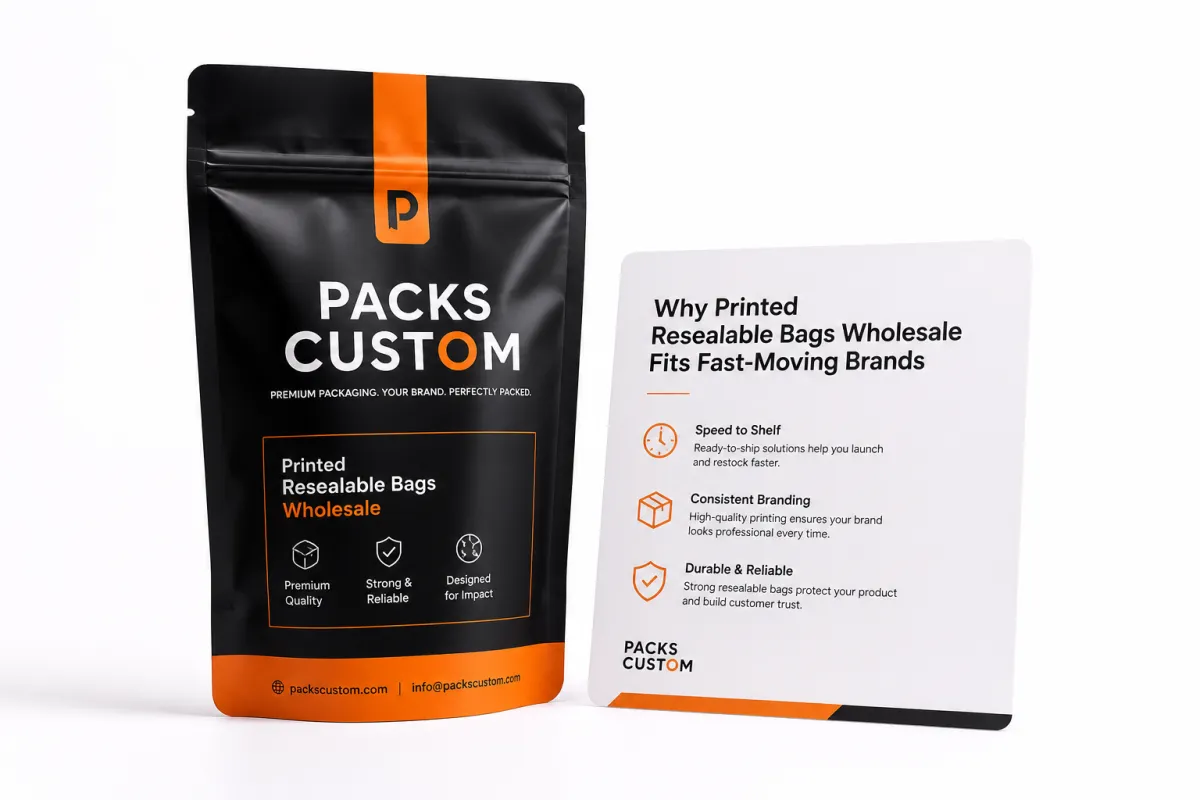
Buyer Fit Snapshot
| Best fit | personalized packaging solutions small business for packaging buyers comparing material specs, print proof, MOQ, unit cost, freight, and repeat-order risk where brand print, material, artwork control, and repeat-order consistency matter. |
|---|---|
| Quote inputs | Share finished size, material target, print colors, finish, packing count, annual reorder estimate, and delivery region. |
| Proofing check | Approve dieline scale, logo placement, barcode or warning zones, color tolerance, and any recyclable or compostable wording before bulk production. |
| Main risk | Vague material claims, crowded artwork, or missing packing details can create delays even when the unit price looks attractive. |
Fast answer: Personalized Packaging Solutions Small Business: Material, Print, MOQ, and Cost should be specified like a repeatable production item. The safest quote includes material, print method, finish, artwork proof, carton packing, and reorder notes in one written spec.
What to confirm before approving the packaging proof
Check the product dimensions against the actual filled item, not only the sales mockup. Ask for tolerance on folds, seals, hang holes, label areas, and retail display edges. If the package carries a logo, QR code, warning copy, or legal claim, reserve that space before decorative graphics fill the panel.
How to compare quotes without losing quality
Compare board or film grade, print process, finish, sampling route, tooling charges, carton quantity, and freight assumptions side by side. A lower quote is only useful if the supplier can repeat the same color, closure quality, and packing count on the next order.
Why Personalized Packaging Matters for Small Business Growth
Three seconds. That's how long it takes for a customer to form a first impression when a package shows up at their doorstep. I found this out the messy way—interviewed about a dozen e-commerce shoppers for a story a few years back, and one woman straight-up told me she'd returned an otherwise flawless product because the plain brown shipping box made her think it was damaged or tampered with. Didn't matter that the actual item inside was perfect. The box just... failed her.
Personalized packaging solutions for Small Business owners? They've become non-negotiable these days. We're living in an era where unboxing videos pull 52% more engagement than standard product content on social platforms. Here's the thing: every single package leaving your warehouse is a potential marketing touchpoint. It either reinforces your brand story or slowly undermines it.
Covering the packaging industry for five years taught me something weird—big brands dump millions into advertising, but you know what they genuinely can't replicate? That authentic feel. Custom packaging lets small businesses compete on experience instead of just outspending everyone. A nicely designed mailer box with a personalized thank-you note creates an emotional connection that no TV commercial can manufacture, period.
And the data backs this up (because, you know, I had to verify it myself). Research from multiple retail studies shows that brand consistency across all customer touchpoints—including packaging—increases customer retention by 23%. That's not just a number; it's real revenue staying in your business instead of flowing to competitors who end up spending a fortune trying to win those customers back.
Think about your own buying habits for a second. When you get a package wrapped in generic stuff versus one that clearly came from a brand that actually cared about presentation, which one sticks with you? Which one do you snap a photo of? Which one makes you feel like the business actually values you as a customer rather than just pushing a transaction through?
Your packaging is the first physical touchpoint between your brand and your customer. It either builds anticipation or destroys it within those critical first three seconds.
Small businesses honestly have everything to gain here. You can go toe-to-toe with corporations by creating unboxing experiences worth sharing—ones that generate user content, word-of-mouth referrals, and ultimately, loyal customers who pick you over cheaper alternatives simply because of how your brand makes them feel.
Types of Personalized Packaging Solutions Available
The packaging industry has shifted dramatically over the past decade. Small businesses now have access to options that, not too long ago, were reserved for enterprise clients with massive budgets. Walking through manufacturing facilities back in 2018, I was genuinely surprised by how much variety existed at price points small operations could actually manage.
A few main categories tend to come up again and again:
Custom Mailer Boxes
These are the workhorses of e-commerce shipping, no question about it. Custom mailer boxes are typically made from corrugated cardboard and offer full-color printing on the outside, inside, or both. They protect products during shipping while doubling as mobile billboards. Here's what gets me every time: a well-designed mailer box arrives at someone's home and sits in their entryway or on a doorstep—totally visible to everyone passing by. That kind of exposure has real dollar value.
Branded Poly Mailers
For businesses shipping soft goods, apparel, or subscription products, poly mailers are a cost-effective alternative to boxes. These lightweight, water-resistant envelopes can be printed with your logo and brand colors for a fraction of what corrugated options cost. Subscription box companies often rely on Poly Mailers for their outer shipping layer—they help reduce dimensional weight charges while still offering solid branding opportunities.
Kraft Paper and Tissue
For brands leaning into sustainability, kraft paper and tissue wrapping give you eco-friendly branding options. You can customize these with rubber stamps, printed designs, or stickers. Kraft paper is fully recyclable and biodegradable, which matters—a lot—to the growing segment of consumers who actually check for sustainable packaging before buying. The EPA has detailed guidance on recyclable materials for businesses trying to cut down their environmental footprint at epa.gov/recycle.
Labels, Stickers, and Tape
Look, not every small business is ready to commit to full custom boxes right off the bat, and that's completely fine. Custom labels, stickers, and printed tape give you an accessible entry point. Minimum orders often start at just 100 units, so these options work even for early-stage businesses watching their cash flow carefully. A branded shipping label or custom tape sealing your packages creates a cohesive experience without forcing you to rebuild your entire shipping operation.
Die-Cut Inserts and Foam Inserts
Product protection matters—but that doesn't mean inserts can't also look sharp. Die-cut foam or cardboard inserts, custom-shaped to hold your products securely, communicate professionalism and genuine care. When a customer opens a package and sees their product nestled perfectly in protective material with your logo on it, the message lands: this company thought about every detail.
Understanding the Costs: Budgeting for Custom Packaging
Let's talk money. The first question small business owners ask me about personalized packaging is almost always about cost. Can't blame them—you can't make smart strategic decisions without wrapping your head around the financial side. After years of digging into supplier pricing structures, I can tell you the range is way wider than most people expect.
Unit costs for personalized packaging can run anywhere from about $0.15 per label to $4.50 for full-size custom boxes. That spread might seem wild, but it reflects genuine differences in materials, printing methods, quantities, and customization complexity. Figuring out how to match your budget to Options That Actually move the needle for your brand? That's the real game.
Minimum order quantities (MOQs) trip up a lot of first-timers. Most suppliers want 100 to 500 units for custom-printed boxes, though some digital printing partners offer lower minimums if you're okay with paying more per unit. Labels and Stickers usually start at 250 to 500 unit minimums. Knowing these thresholds upfront saves you from those awkward moments when you discover your order of 50 boxes doesn't qualify for their custom printing service.
Setup fees catch plenty of first-time buyers completely off guard. These one-time charges cover preparing printing plates, creating custom dielines, and configuring machinery for your specific design. Expect setup fees to land somewhere between $50 to $500 depending on printing method and complexity. Digital printing has eliminated setup fees for many products, which honestly has been a game-changer for small businesses getting into custom packaging.
Always ask suppliers for a complete cost breakdown before approving production. Hidden costs like shipping, sample proofs, and color matching fees can add 15-25% to your initial quote.
Something worth knowing from my reporting days: bulk discounts of 15-30% are available at 1,000+ unit orders from most manufacturers. If you've got storage space and capital, ordering larger quantities brings your per-unit cost down significantly. Some businesses split bulk orders with complementary non-competing brands to share the savings—that's not a bad strategy if storage is tight.
For budgeting accurately, request quotes from at least three suppliers and compare pricing structures side by side. Pay attention to whether quotes include setup fees, shipping costs, and sample approvals. The cheapest initial quote isn't always the best deal once everything's factored in.
The Personalized Packaging Process: From Design to Delivery
Six to ten weeks. That's the typical timeline from initial concept to actually receiving your first Custom Packaging Order. I know—that sounds like a while, especially if you're used to ordering stock boxes and having them show up within days. But custom packaging involves multiple stages, and each one needs time, communication, and approvals.
The standard process breaks down like this:
Week 1-2: Design Phase
This phase involves creating or finalizing your artwork. Your supplier will send you dielines—templates showing exactly where your design will be printed on the physical package. You'll submit proofs, pick colors (usually Pantone or CMYK), and work through revisions. Already have brand assets ready to go? This phase moves much faster. Starting from scratch? Budget extra time for exploring different design directions.
Week 3-4: Sample Production and Approval
Before committing to full production, reputable suppliers create physical samples. These "first article" samples let you see and touch the actual packaging, verify color accuracy, and test how your product fits inside. This step prevents expensive mistakes in mass production. Seriously, actually unbox something with your new packaging during this phase—screen colors just don't tell the whole story.
Week 4-6: Production Run
Once you've given the thumbs up on samples, production kicks off. The actual manufacturing time depends on your order quantity, how complex your design is, and the supplier's current workload. Standard production runs for 500-1,000 units usually take 2-3 weeks at most domestic facilities.
Week 7-8: Quality Inspection and Shipping
Before your order ships, it should go through quality inspection. That means checking for color consistency, structural integrity, and proper sizing. Shipping logistics add more time, especially for international freight or during peak seasons like the holiday crunch.
The silver lining? Reorders from existing dies only take 3-4 weeks because the whole design phase gets skipped. Your dielines and color specs are already on file. Many suppliers offer rush production for 20-30% premiums if you're in a bind and need things faster.
Design Best Practices for Small Business Packaging
I've seen some stunning packaging designs and some absolute trainwrecks. After reviewing thousands of submissions across dozens of supplier facilities, certain patterns consistently separate the winners from the forgettable. These best practices hold up whether you're designing custom boxes, poly mailers, or branded tape.
Maintain Brand Consistency
Your packaging should be instantly recognizable as yours. That means matching Pantone colors precisely to your existing brand guidelines. Online color pickers and RGB hex codes don't translate all that accurately to print. Stick with Pantone colors, and you'll get consistent results across different print runs and even different suppliers.
Optimize for Printing Specifications
Design files should be set up in CMYK color mode at 300 DPI minimum resolution. Low-resolution artwork might look fine on a screen but will look pixelated or blurry when printed at package size. Honestly, I'd recommend working with a graphic designer who understands print production requirements—trying to create packaging designs yourself without that expertise often ends badly.
Include Essential Information
Every piece of packaging should carry your logo, tagline, and social media handles. This turns shipping materials into marketing assets that keep promoting your brand long after delivery. Don't forget recycle symbols if your packaging is recyclable—this matters more than ever to environmentally conscious consumers.
Balance White Space
One of the biggest mistakes I see? Overcrowding packaging with too much information and too many visual elements. Studies suggest that overcrowding reduces visual impact by roughly 40%. Your packaging design needs room to breathe. Give important elements space to stand out and grab attention.
Test your design at actual size before approving production. Colors appear different, text looks different, and spatial relationships shift when you hold a physical mockup instead of viewing on a screen.
Consider Structural Design
Packaging isn't just about surface graphics, ya know? The structural design—how the box opens, how inserts hold products, how sealing works—shapes the whole unboxing experience. A box that's tough to open creates friction; one that opens dramatically and reveals the product with a bit of flair? That creates genuine excitement.
Where to Source Personalized Packaging as a Small Business
The supplier landscape for custom packaging is fragmented, with options ranging from local print shops to massive overseas manufacturers. Each sourcing approach has its own strengths and trade-offs. Picking the right supplier can save you thousands—or cost you months of frustration.
U.S.-Based Manufacturers
Domestic suppliers offer faster turnaround, better quality control, and way easier communication. I toured facilities in Ohio and California and found production managers who actually answered phones and addressed concerns within hours rather than days. Domestic manufacturing typically costs 40-60% more than overseas options, but the reliability and speed often make it worth the premium for time-sensitive businesses.
Overseas Suppliers
Manufacturers in China, Vietnam, and other countries offer significant cost savings—sometimes 40-60% less—but require longer lead times of 8-12 weeks plus shipping. Communication barriers, time zone differences, and quality control challenges make overseas sourcing better suited for established businesses with packaging experience and some tolerance for delays.
Hybrid Approach
Lots of successful small businesses run a hybrid strategy: ordering stock boxes or mailers with custom labels from domestic suppliers for immediate needs while placing larger overseas orders for long-term inventory. This approach gives you flexibility while you gradually build out custom packaging capabilities.
Local Print Shops
Your neighborhood print shop can be surprisingly great for runs under 500 units. These shops often have digital printing equipment that can produce custom packaging with no setup fees. They're also more willing to work with small orders and provide more personalized service. The Packaging Machinery Manufacturers Institute (PMMI) keeps directories of verified packaging suppliers across various sizes and specialties.
Digital Printing Specialists
Digital printing tech has genuinely changed the game for small-run packaging by eliminating setup fees and reducing MOQs to as low as 25-50 units. Per-unit costs run higher, sure, but digital printing is perfect for testing designs, seasonal packaging variations, or businesses just starting to explore custom options. The ability to Print Variable Data (different designs in the same run) opens creative possibilities that traditional printing just can't touch.
Maximizing ROI from Your Custom Packaging Investment
Here's the question I always throw at suppliers and brand owners: What happens after that package lands at your customer's doorstep? Does it end up in the trash three seconds later, or does it keep working for your brand? The difference between businesses that waste money on packaging and those that multiply their investment comes down to understanding how to squeeze maximum value from every dollar.
Research shows that 62% of customers repurpose branded packaging. That cardboard box becomes storage in a garage, a moving container, or a creative canvas for kids. Every time that reused box sits in someone's home, it's a quiet reminder of your brand. This kind of organic, ongoing exposure? No direct advertising equivalent exists.
Social sharing might be the highest-ROI opportunity from custom packaging. Unboxing content generates exponential reach when customers share experiences on Instagram, TikTok, or YouTube. A single viral unboxing video can deliver more brand awareness than a year of paid advertising. The key is designing packaging that photographs beautifully and practically begs for sharing—think textured materials, surprise elements, or built-in photo opportunities.
Packaging quality influences repurchase decisions by 35%. Customers associate the unboxing experience with the product quality itself. Cheap packaging signals cheap products, even when that's objectively not true.
I'd suggest including trackable elements like QR codes on packaging that link to review pages, exclusive discounts, or social media profiles. This turns every package into a measurable marketing channel with concrete attribution data. You can test which designs drive more engagement by using different codes for different packaging versions—pretty useful for optimizing over time.
Seasonal packaging updates are another opportunity that often gets overlooked. Many suppliers let you update designs on existing inventory without losing your investment. A simple seasonal wrap, sticker, or insert transforms your standard Packaging for Holiday promotions without requiring new production runs or excess inventory sitting around.
At the end of the day, view packaging as part of your customer lifetime value calculation rather than a simple cost. The investment in Memorable Unboxing Experiences pays dividends through repeat purchases, referrals, and reduced price sensitivity. Customers who feel valued through premium experiences become brand advocates who bring in new customers at basically no acquisition cost to you.
Frequently Asked Questions
What Are the Best Personalized Packaging Solutions for Small Business Owners?
What is the minimum order quantity for personalized packaging?
Minimum order quantities vary quite a bit by product type and printing method:
- Most suppliers require 100-500 units for custom-printed boxes through traditional manufacturing
- Digital printing options bring MOQs down to 25-50 units—but per-unit costs run higher
- Labels and stickers usually start at 250-500 unit minimums
- Some manufacturers offer "no minimum" options with premium per-unit pricing of 2-3x standard rates
When evaluating MOQs, always figure out whether the total investment makes sense for your storage capacity and cash flow situation.
How much does custom packaging cost for small businesses?
Here's a realistic cost breakdown for common personalized packaging solutions:
- Custom mailer boxes: Figure $0.50-$2.50 per unit for standard-sized corrugated options
- Branded poly mailers: Usually $0.25-$0.75 per unit depending on size and printing complexity
- Custom labels: Generally $0.08-$0.25 per sticker depending on material and quantity
- Setup fees: $50-$200 for small-run digital printing; $200-$500+ for traditional flexographic or offset printing
These numbers assume domestic production at standard quality levels. Overseas manufacturing cuts costs by 40-60% but adds shipping and longer lead times to the equation.
How long does it take to receive custom packaging?
Timeline expectations vary by supplier location and production method:
- First-time orders: Budget 6-10 weeks including design, sampling, and production
- Reorders from existing dies: Run 2-4 weeks once specifications are on file
- Digital printing options: Can deliver in 7-14 days for urgent situations
- Overseas production: Plan for 8-12 weeks production plus 3-6 weeks shipping via ocean freight
Holiday seasons and quarter-end often cause delays. Build some buffer time into your production calendar—you'll thank yourself later.
Do I need design skills to create personalized packaging?
Not necessarily. Multiple pathways exist for businesses without in-house design capabilities:
- Most suppliers provide free templates and design guidelines that simplify the whole process
- Many suppliers offer in-house design services for $50-$150 per hour
- Free tools like Canva work fine for basic label and sticker designs
- Professional design ensures accurate color matching and print quality—definitely worth the investment for packaging representing your brand
My two cents: invest in professional design for primary packaging elements (boxes, mailers) while handling simpler items (labels, tape) yourself using templates.
What packaging materials work best for small products?
Material selection really depends on your specific product characteristics:
- Kraft cardboard: Durable, recyclable, and cost-effective for most applications
- Rigid boxes: Premium feel, ideal for jewelry, cosmetics, gifts, and higher-end products
- Poly mailers: Lightweight and water-resistant, perfect for apparel and soft goods
- Corrugated dividers: Keep fragile items like glassware or electronics from getting damaged during shipping
Always request samples of different materials before committing to large orders. The tactile difference matters More Than You might think initially.
What Are the Key Benefits of Custom Packaging for Small Business Growth?
Investing in bespoke packaging options delivers concrete advantages for growing brands:
- Brand differentiation: Stand out in crowded marketplaces where products compete for attention
- Customer retention: Consistent branding increases repeat purchase rates by 23% according to research
- Word-of-mouth marketing: Memorable unboxing experiences encourage social sharing and organic recommendations
- Perceived value: Quality packaging elevates how customers view your products' worth
- Professionalism: Polished shipping materials signal that you take your business seriously
Small Business Packaging suppliers increasingly offer flexible options that make these benefits accessible without enterprise-level budgets. The ROI calculation goes beyond direct sales to include brand equity, customer loyalty, and competitive positioning.

