Personalized Plastic Bags in bulk get judged fast. Usually by someone who has one hand full and the other already reaching for the next thing. That first touch says a lot about the product inside. If the film feels thin, the print looks muddy, or the seal gives out too early, the brand takes the hit immediately.
From a buyer’s side, the appeal is pretty straightforward: lower unit cost, fewer reorders, and a consistent look across stores, shipments, or events. The catch is that “custom” does not automatically mean “better.” A bag can look polished on a proof and still be wrong for the job once it hits the packing line.
The safest approach is practical. Choose the material, thickness, print method, and bag style based on how the bag will be handled, stored, and filled. That sounds unglamorous because it is. It also saves money.
Why Bulk Custom Bags Pay Off in Real Operations
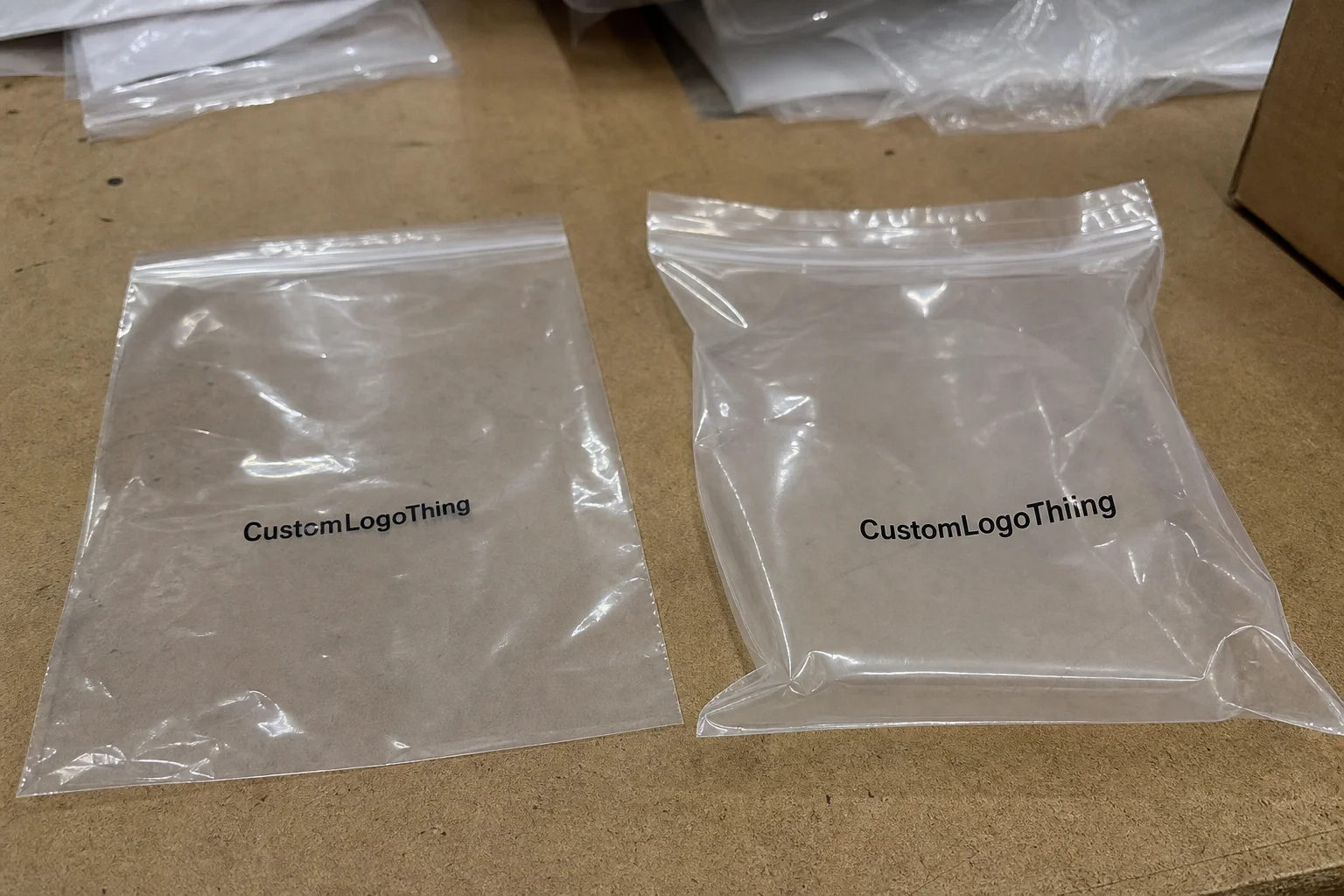
Bulk ordering works because packaging is a consumable that disappears quickly. A retailer, fulfillment team, or event organizer can burn through thousands of bags before anyone notices the reorder point slipping. Then the reorder becomes urgent, which is usually how expensive mistakes start. Ordering Personalized Plastic Bags in bulk reduces that scramble by creating a stable supply with predictable specs.
There is also a real cost benefit. The setup work for printed bags, whether that means plate creation or digital prepress, gets spread across the run. Once quantities move past a small test order, the unit price usually drops enough to matter. For teams that order the same spec every month or quarter, that consistency is often more valuable than chasing the absolute lowest quote on a single run.
Different operations need different performance. Retail checkout bags need decent load capacity and clean branding. Mail-order fulfillment needs a bag that protects the item and survives handling. Event giveaways need something that looks presentable and still holds up after being stuffed with samples, brochures, or small products. In each case, the bag has to perform first and promote second.
The right bag is not the prettiest proof. It is the one that survives handling, stacking, shipping, and repacking without causing complaints.
That is why buyers should think about seal strength, clarity, opacity, and load capacity before approving artwork. A clear bag may help showcase the product. An opaque bag may hide mixed inventory or make a presentation look cleaner. Personalized plastic bags in bulk deliver the most value when the spec is repeatable, the lead time stays predictable, and the order quantity is large enough to avoid constant replenishment.
Film Types, Print Options, and Bag Styles That Matter
Material choice changes how a bag feels, how it prints, and how it handles weight. LDPE is flexible and soft to the touch, which is why it shows up often in retail and mail applications. HDPE is lighter and crisper, and it is often used where economy matters more than a softer hand-feel. PP usually gives a cleaner, more rigid presentation, so it can work well when the package needs a sharper look and the contents are not especially rough on the film.
Bag style matters just as much as material. Flat bags are straightforward and economical. Gusseted bags expand for bulkier items. Wicketed bags are easier to dispense in fast packing areas. Merchandise bags work well at checkout counters, while mailers are built for shipping and tamper-resistant handling. It usually makes more sense to pick the bag style first and then fit the print plan to that construction. Otherwise, the artwork starts dictating a spec that the product may not need.
For printing, simple usually wins. One-color flexographic printing is economical and reliable, especially for logos, websites, or short brand marks. Multi-color work can look excellent, but it adds setup and increases the chance of registration variation. If the bag is small, or the logo has thin lines, a clean one-color print may outperform a crowded full-coverage design. Pretty artwork is nice. Legible artwork is better.
Surface finish and thickness also shape the result. A thicker film usually feels sturdier in hand, although that does not automatically make it the right choice. If the product has sharp edges, heavy corners, or awkward geometry, a heavier gauge can reduce punctures and returns. If the product is light and soft, extra thickness may only add cost.
Print location deserves more attention than it gets. Centered artwork is easier to proof and easier to repeat. Edge placement can look more intentional, but it needs tighter approval because slight shifts are visible. Repeating patterns can hide minor variation, but they also use more ink coverage and may complicate registration. The best choice depends on where the bag is used and how closely it is inspected.
For buyers checking broader packaging context, the Packaging Corporation of America site offers general industry resources, and the EPA is useful when disposal, recycling, or recovery claims need to be backed up with something more solid than a marketing line.
Size, Gauge, Seal Strength, and Print Specs to Confirm
Before requesting a quote, confirm the exact bag dimensions, gauge or thickness, gusset depth if there is one, print colors, and closure style. Those details drive both price and production method. A small change in one item can shift the quote more than buyers expect, especially when a supplier has to adjust tooling or line setup.
Gauge gets used loosely, so it helps to translate it into actual performance. Thicker film usually improves puncture resistance and gives the bag a stronger hand-feel, but it also increases material cost and can make the bag less flexible. If the product is soft and light, the extra thickness may not add much value. If the product is dense or has sharp corners, the added protection is often worth paying for.
Seal strength matters more than many teams realize. A bag can print beautifully and still fail in use if the seams do not hold under stress. For apparel, that might mean a bag that works at the counter but tears in shipping. For industrial parts, it might mean split seams during pallet movement. For food service, it can become a question of cleanliness, handling consistency, and how much abuse the bag can take before it gives up.
Dimensions should be checked against the real product shape, not just the catalog measurement. An item that is technically eight inches wide may still need a bag closer to ten inches wide because of inserts, toppers, or the extra tolerance needed to slide it in without wrinkling the print area. If the fit is tight, the artwork can distort and the seal area can get stressed.
| Bag Spec Area | What to Confirm | Why It Changes the Result |
|---|---|---|
| Width / Length | Finished internal or flat size | Affects fit, insertion ease, and shelf presentation |
| Gauge | Film thickness in the requested unit | Changes puncture resistance and price |
| Print Colors | One-color, two-color, or multi-color art | Impacts setup, cost, and registration complexity |
| Closure Type | Open-top, resealable, wicketed, or sealed | Determines workflow and end-use suitability |
| Artwork Placement | Center, edge, back panel, or repeating pattern | Affects visibility and proof approval |
If artwork placement, barcode position, or required compliance copy matters, ask for a production proof or pre-production sample. That extra step can prevent an expensive mistake, especially on personalized plastic bags in bulk where the entire run depends on one approved layout. A ten-minute review of the proof is cheaper than throwing away a finished order because a barcode ended up inside a seam.
One more practical detail: seal type and bag opening method affect how the bag behaves on the line. Open-top bags are flexible, but they can slow manual packing. Resealable styles add convenience, but that feature is not free. Wicketed bags move faster in some operations because they dispense cleanly, yet they are less useful if the packer needs individual loose bags. Matching the bag to the workflow matters more than choosing the most feature-heavy option.
Cost, Pricing, MOQ, and What Changes Your Quote
Pricing usually comes down to five things: material, thickness, size, print complexity, and quantity. Special features like hang holes, resealable closures, venting, and custom perforations can add cost because they change the tooling, production setup, or inspection requirements. Fancy is rarely free. Packaging vendors did not invent that rule, but they do live by it.
Large quantities lower unit cost, but that does not mean a bigger order is always the better buy. A low-cost one-color bag at 10,000 pieces may still be less useful than a slightly more expensive spec at 5,000 pieces if the second option actually matches the product and avoids dead inventory. Ordering too much of the wrong bag is still a bad purchase, even when the invoice looks “efficient.”
MOQ, or minimum order quantity, usually depends on the setup involved in the exact spec. A standard size with a simple logo may allow a lower entry point. A custom dimension, special film, or multi-color design generally requires a higher minimum because the supplier has to justify setup and line time. That is normal. It is not a hidden trick, even if buyers occasionally treat it like one.
Land cost includes more than the printed unit price. Freight to your warehouse or fulfillment site matters. So does packaging format, especially if the bags are loose-packed, boxed, or unit-counted. Proofing and revision rounds can add time and sometimes cost. Storage and handling matter too if the order arrives in multiple cartons or on pallets. If the quote ignores those pieces, it is not a real comparison.
Here is a practical breakdown of common buying paths for personalized plastic Bags in Bulk:
| Order Type | Typical Cost Pressure | Best For | Tradeoff |
|---|---|---|---|
| Standard size, one-color print | Lowest setup burden | Retail, checkout, simple branding | Less design flexibility |
| Custom size, one- to two-color print | Moderate setup and material cost | Specialty products and recurring fulfillment | Higher MOQ than stock specs |
| Custom size, multi-color print | Higher prepress and registration demands | Presentation-driven packaging | More proofing and tighter tolerances |
| Thicker film with added features | Material plus process cost | Heavy, sharp, or high-value items | Better performance, higher unit price |
When comparing quotes, ask for the same dimensions, gauge, print details, and pack-out format every time. Otherwise, one supplier may look cheaper simply because the spec is lighter or the packaging is less controlled. That is not a bargain. That is a comparison problem.
As a rough planning range, standard printed bags with simple specs often sit in a lower per-unit bracket once the order reaches a meaningful bulk volume, while custom sizes and multi-color work move upward quickly. Exact numbers depend on film market conditions, print method, and current factory capacity, so any “one-price-fits-all” answer is usually fiction with a logo on it.
Production Steps and Lead Time from Artwork to Delivery
The production path is straightforward, but it moves faster when the buyer is prepared. First comes artwork review and specification confirmation. Then the proof is generated. After approval, the supplier handles plate or print setup, production, inspection, and shipping.
Lead time grows for predictable reasons. Artwork changes are the most common. Thick film can take longer to run. Complex construction adds inspection time. Rush freight can move the shipment, but it does not fix a slow approval process, so the proof stage should be treated like a real deadline rather than a clerical step.
Before the order starts, prepare the practical items that keep production moving:
- Vector logo files, ideally AI, EPS, or a clean PDF
- Pantone references if color matching matters
- Exact bag dimensions and closure type
- Shipping address and receiving requirements
- Final usage count by location, channel, or campaign
Clear signoff saves time. If the bag must carry a barcode, SKU, recycling message, or compliance text, the proof should show that placement exactly as intended. The cleaner the approval, the fewer delays later. In many production runs, the schedule is driven less by machine time than by how quickly the buyer responds to the proof.
Typical lead times vary by spec. Simple stock-style printed bags can move relatively quickly once the artwork is approved. Custom dimensions, special gauges, and multi-color work usually take longer because setup, test runs, and inspection add steps. Shipping also matters. Ground freight can be cost-effective, but it extends the calendar. Air or rush freight shortens delivery time, though it rarely makes sense unless the order is urgent enough to justify the premium.
“Most delays I see are not manufacturing problems. They start with incomplete specs, fuzzy art files, or a buyer approving a proof that was never fully checked.”
For buyers managing logistics and sourcing claims, the FSC can be useful when paper components or broader packaging standards are part of the program, even if the bag itself is plastic. It is a reminder that packaging decisions often sit inside a wider compliance conversation.
How to Compare Suppliers Before You Place the Order
The cheapest quote is not always the best buy, especially on personalized plastic bags in bulk where repeatability matters. I would rather see a supplier explain the spec clearly than shave a few cents off the price and leave the buyer guessing about thickness, print method, or pack-out format.
Good suppliers are usually consistent in five areas: specification clarity, proofing process, print consistency, material sourcing consistency, and responsiveness. If they can answer detailed questions without changing the story every time, that is a good sign. If they cannot explain seal testing, dimensional tolerance, or reprint policy, that is a red flag.
Ask for samples whenever possible. A physical sample tells you more than a polished product page ever will. You can feel the film, check the print brightness, test the seal, and see how the bag behaves when loaded. For retail or fulfillment buyers, that hands-on check often prevents costly over-specification. It also catches under-specification before the warehouse does.
It helps to ask for the supplier’s written method or at least a clear process summary. You do not need factory secrets, but you do need enough detail to know whether the supplier can run the job as ordered. A good partner will often recommend a lighter or heavier spec based on use, which reduces waste and makes the order more practical. The bad ones just nod at everything and send a quote. Very comforting, right up until the order arrives wrong.
Quality control should not be abstract. Ask how the supplier checks film thickness, seal integrity, and print registration. Ask whether they inspect the first run, mid-run, and final pack-out. Ask what happens if the print shifts or the gauge is off spec. A supplier that can describe the checks in plain language is usually easier to work with than one that hides behind vague promises.
If you need broader purchasing support, Wholesale Programs can be a useful starting point for buyers planning recurring packaging demand rather than a one-time purchase.
Next Steps to Order the Right Bag for Your Run
The cleanest way to move forward is to build the quote around the exact use case. Confirm the bag type, dimensions, thickness, print colors, quantity, closure style, and target delivery date before asking for pricing. That gives you a quote you can actually use, not a rough guess that needs to be revised later.
Send artwork early, even if it is not perfect yet. A proof review window gives both sides time to catch placement issues, sizing concerns, or font problems before production starts. If budget is tight, ask for two spec options: one tuned for cost and another tuned for presentation or durability. That comparison is usually more useful than a single quote with no context.
Also decide how the bags should be packed. A standard bulk pack may be fine for some operations, but others need a more controlled carton count for warehousing or fulfillment accuracy. If your team is counting bags by location, the pack-out format becomes part of the job, not an afterthought.
Here is a quick pre-quote checklist:
- Bag type and style
- Finished size and gusset depth
- Film thickness
- Print colors and artwork file type
- Quantity and desired MOQ range
- Packing preference
- Delivery deadline
Order the spec that matches the job. That is the real discipline behind personalized plastic bags in bulk. If you want a quote that reflects pricing, MOQ, and timing accurately, send complete specs up front and ask for confirmation on print method, material, and pack-out before approval.
What is the minimum order for personalized plastic bags in bulk?
MOQ varies by bag style, film thickness, and print setup. Standard sizes and simpler print jobs usually allow lower minimums than custom dimensions or multi-color work. Ask for the minimum by exact spec set, not just by product category.
What information do I need to get an accurate quote for custom plastic bags?
Provide bag dimensions, material preference, thickness, print colors, quantity, and closure or style details. Include artwork files and any placement requirements so setup costs and print feasibility can be confirmed. Share your target delivery date to check whether the schedule is realistic.
Which plastic bag material is best for my product?
LDPE is flexible and common for retail and mail use. HDPE is lighter and often preferred for thin, economical carry bags. PP can offer a crisper appearance when presentation matters more than softness.
How long does production usually take after artwork approval?
Timing depends on quantity, print complexity, and current production load. Simple runs can move faster than thicker or highly customized specifications. Freight method also affects when the order arrives, even after production is finished.
Can I order personalized plastic bags in bulk with a simple one-color logo?
Yes, one-color artwork is often the most economical print option. Simple logos usually improve registration consistency and reduce setup complexity. This is a strong choice when the goal is clean branding and better unit cost.


