Buyer Fit Snapshot
| Best fit | personalized product boxes for retail stores for packaging buyers comparing material specs, print proof, MOQ, unit cost, freight, and repeat-order risk where brand print, material, artwork control, and repeat-order consistency matter. |
|---|---|
| Quote inputs | Share finished size, material target, print colors, finish, packing count, annual reorder estimate, and delivery region. |
| Proofing check | Approve dieline scale, logo placement, barcode or warning zones, color tolerance, and any recyclable or compostable wording before bulk production. |
| Main risk | Vague material claims, crowded artwork, or missing packing details can create delays even when the unit price looks attractive. |
Fast answer: Personalized Product Boxes for Retail Stores: Dieline, Finish, Proof, and Buyer Review should be specified like a repeatable production item. The safest quote includes material, print method, finish, artwork proof, carton packing, and reorder notes in one written spec.
What to confirm before approving the packaging proof
Check the product dimensions against the actual filled item, not only the sales mockup. Ask for tolerance on folds, seals, hang holes, label areas, and retail display edges. If the package carries a logo, QR code, warning copy, or legal claim, reserve that space before decorative graphics fill the panel.
How to compare quotes without losing quality
Compare board or film grade, print process, finish, sampling route, tooling charges, carton quantity, and freight assumptions side by side. A lower quote is only useful if the supplier can repeat the same color, closure quality, and packing count on the next order.
What Are Personalized Product Boxes and Why Do Retailers Need Them?
Every package that leaves your store is a silent salesperson. It speaks before your customers even open it, communicating brand values, quality expectations, and attention to detail. I've spent fifteen years watching how packaging transforms ordinary retail transactions into memorable brand experiences, and I can tell you that Personalized Product Boxes for retail stores represent one of the highest-ROI investments available to modern retailers.
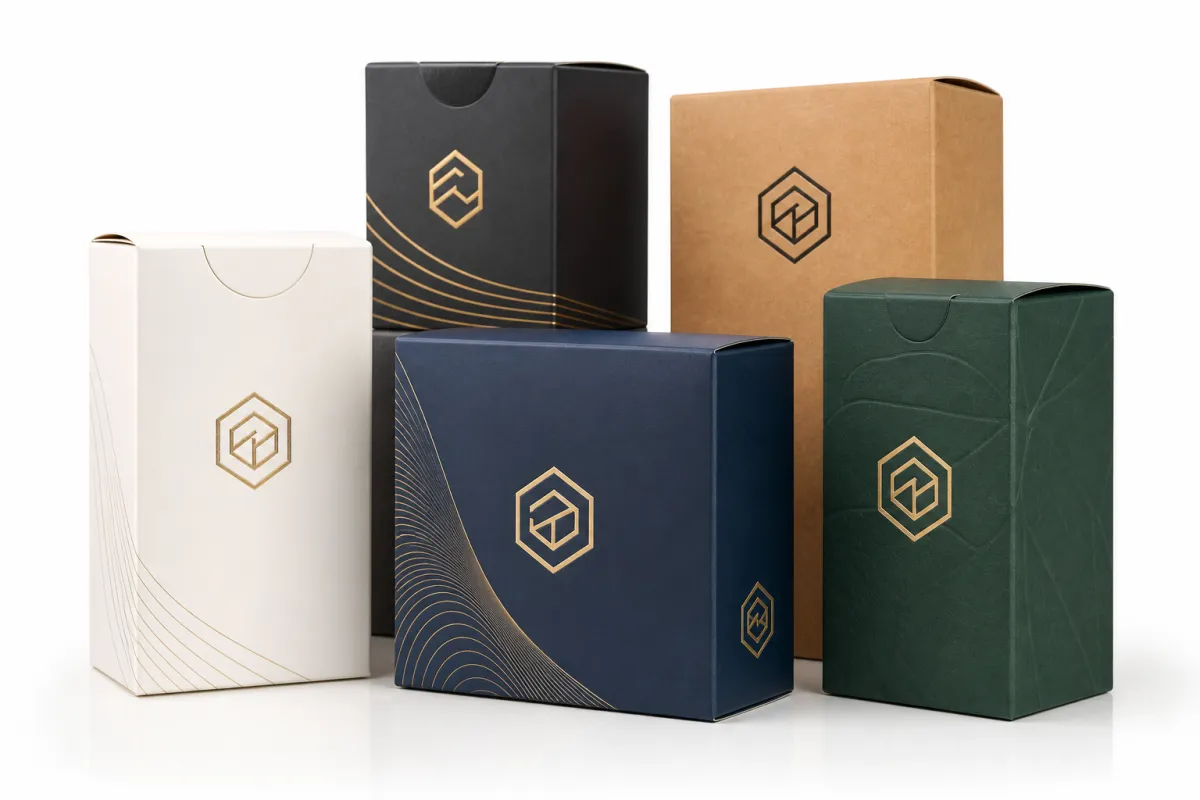
Here's where terminology trips up a lot of people, and honestly, getting this wrong costs real money. When I talk about personalized retail packaging, I mean boxes, containers, and wrapping specifically designed with your brand's identity elements—logo, colors, typography, and sometimes even individual customer names or messages. Customization, by contrast, typically means structural modifications to standard box formats: die-cut windows, custom dimensions, or specialized inserts. And then there's plain old standard retail boxes—the kind of boring brown corrugated shipping containers you see everywhere, offering zero brand differentiation.
The distinction matters huge for budgeting and expectations. True personalization commands premium pricing because it involves artwork creation, color matching, and often specialty printing processes. Customization focuses more on function—how the box protects, presents, or organizes products. Most retailers benefit from combining both approaches, but understanding which you actually need prevents scope creep and those budget surprises during production that make everyone uncomfortable.
The unboxing experience has become a critical touchpoint in the customer journey. Research consistently shows that 72% of consumers report packaging design influences their purchase decisions, and this percentage climbs even higher among millennial and Gen Z shoppers who document their purchases extensively on social platforms.
Think about the last time you received a beautifully packaged product. Maybe it was a phone case in a printed box with a pull-out drawer design, or cosmetics in a rigid setup box with tissue paper and a branded sleeve. That experience created an emotional response, didn't it? You felt the brand cared about more than just the transaction. That feeling translates directly into customer loyalty, word-of-mouth referrals, and willingness to pay premium prices.
For retail stores operating in crowded marketplaces, personalized packaging serves as a crucial differentiation tool. Your product might be identical to competitors in formulation, features, or value proposition, but when it arrives in a distinctive branded box, it occupies different mental territory in the customer's mind. They remember the experience of opening your package even when they forget the product details.
The psychology runs deeper than aesthetics, though. Unboxing activates what's called the "endowment effect"—people assign greater value to products they feel were specially prepared for them. Even modest personalization, like including a customer's name on a packing slip or using tissue paper in your brand colors, triggers this psychological response. For retail stores, this means Personalized Product Boxes can transform commodity shoppers into brand advocates who feel genuinely connected to your business.
5 Proven Benefits of Personalized Packaging for Retail Businesses
I've talked to dozens of retail owners who made the switch from generic boxes to personalized packaging. The patterns in their experiences are pretty consistent, and the data backs up what they told me. Let me walk you through the concrete advantages that justify the investment.
Benefit #1: Dramatically Increased Brand Recall
Studies on packaging effectiveness consistently show that branded boxes achieve 3-4x better brand recall compared to plain packaging. This isn't abstract marketing theory—it translates directly to your bottom line. When customers remember your brand, they return. When they return, they spend more. And when they need your category of product, your brand occupies the top-of-mind position where purchasing decisions get made.
One boutique cosmetics retailer I advised switched from white generic boxes to custom-printed containers with their signature coral color and minimalist typography. Within six months, their repeat purchase rate climbed from 23% to 34%. Customers mentioned the packaging in reviews unprompted, describing it as feeling "like receiving a gift" and noting that "the experience made me feel valued as a customer." That's word-of-mouth marketing you cannot buy.
Benefit #2: Social Media Amplification
Every Instagram unboxing video, every TikTok "what I got" post, every Facebook unboxing story represents earned media worth hundreds of dollars in advertising equivalent. When your packaging looks generic, it disappears into feeds. When it's distinctive and branded, it stops thumbs and generates comments like "where did you get that?"
A single viral unboxing post might reach 50,000+ people in your target demographic. At typical CPM rates for lifestyle and shopping content, that represents $1,500-$3,000 in earned media value from one package opened by one satisfied customer. Personalized packaging essentially transforms your shipping cost into advertising spend, compounding returns with every delivery.
Benefit #3: Perceived Value Increase of 30% or More
Consumer psychology research demonstrates that packaging quality strongly influences perceived product quality. Place the same item in a generic box versus a personalized branded container, and consumers estimate the branded version contains a product worth roughly 30% more. This perception affects both purchase decisions and satisfaction levels after purchase.
For retail stores, this means you can potentially justify higher price points, reduce discount dependency, and improve gross margins without changing anything about your actual products. The box becomes a value multiplier. I've seen artisan food producers successfully raise prices 15-20% simply by upgrading from standard bakery bags to custom-Printed Rigid Boxes with tissue wraps and branded stickers. The product inside tasted exactly the same—but customers paid more because the total experience felt premium.
Benefit #4: Competitive Differentiation
Retail environments are increasingly crowded. Even niche categories feature multiple competitors fighting for shelf space and digital attention. Generic packaging keeps you trapped in price-based competition where margins inevitably compress. Personalized boxes create perceived uniqueness that justifies premium positioning.
When your packaging carries your brand identity, you control the narrative. Customers compare your distinctive branded experience against competitors' plain boxes, and the comparison favors you even if your products are functionally equivalent. Differentiation through packaging requires no patents, no exclusive supplier arrangements, no special technology—just strategic investment in how your products present themselves.
Benefit #5: Emotional Connection Building
Retail transactions can feel transactional, especially with e-commerce growth. Customers order products, boxes arrive, money changes hands. Personalized packaging interrupts that mechanical flow by introducing emotional elements. The experience of opening a thoughtfully designed box triggers positive associations that transfer to your brand.
These emotional connections drive the kind of loyalty that survives price competition and inconvenience. When customers feel genuinely connected to your brand, they forgive occasional mistakes, wait for your new product launches, and recommend you to friends without prompting. You can explore our full range of Custom Packaging Products to see how various personalization options create these emotional touchpoints.
Design Strategies: Creating Impactful Personalized Retail Boxes
I've seen beautiful packaging designs fail and modest designs succeed spectacularly. The difference usually comes down to strategic fundamentals rather than artistic flair. Let me share the principles that separate effective personalized packaging from expensive wallpaper for boxes.
Color Psychology and Brand Consistency
Color choice for retail packaging isn't about personal preference—it's about psychology and category conventions. Red and yellow trigger appetite responses, making them standard for food packaging. Blue conveys trust and reliability, popular for health, finance, and technology products. Green signals natural and eco-friendly positioning, increasingly important as sustainability-conscious consumers grow in number.
Your brand colors should differentiate within your category while maintaining instant recognizability. If every competitor uses black, white might make you distinctive—but white requires careful photography consideration since it photographs differently than darker tones. The key is ensuring your packaging colors appear consistent across different lighting conditions, printing processes, and material types.
Consistency matters more than novelty. Your boxes should match your website, your store signage, your business cards, and your social media presence. When customers encounter your brand across multiple touchpoints with consistent visual language, brand recognition accelerates exponentially. Each touchpoint reinforces every other, building cumulative awareness that plain packaging can never achieve.
Typography and Logo Placement
Typography carries personality before customers consciously read words. Serif fonts suggest tradition, reliability, and established quality. Sans-serif fonts communicate modernity, efficiency, and approachability. Script fonts feel handcrafted, personal, and artisanal. Your packaging typography should match the emotional positioning of your brand.
Logo placement follows from reading patterns and functional requirements. Most consumers scan boxes from top to bottom and left to right, which makes top-center positioning effective for primary logo display. However, if your boxes sit on retail shelves edge-forward rather than face-forward, the side panels become your primary real estate. Know how your products display before finalizing design.
Size matters as much as position. A logo that's too small disappears. A logo that's too large loses sophistication and may look desperate. Aim for a logo that reads clearly at thumbnail size on e-commerce listings while maintaining elegance at full scale on physical boxes. Testing with print proofs before full production catches sizing issues before they become expensive problems.
Structural Design Elements for Protection
Beautiful boxes that fail to protect products create negative experiences that override all other packaging benefits. Structural design must address your specific product's fragility profile, shipping requirements, and storage conditions.
Corrugated cardboard provides excellent crush resistance for heavier items or products shipping through aggressive distribution networks. Rigid box stock offers premium presentation but limited structural protection without internal cushioning. Foam inserts, molded pulp, and custom die-cut foam all serve specific protection needs depending on what you're packaging.
Consider the journey your boxes will travel. Products that ship Direct to Consumers need stronger construction than items that travel from warehouse to retail shelf with minimal handling. If your retail boxes double as primary shipping containers, construction requirements increase accordingly. Talk openly with your packaging supplier about real-world conditions—reputable partners ask these questions rather than simply fulfilling orders.
Sustainable Materials and Consumer Preferences
The EPA reports that packaging materials represent the largest portion of municipal solid waste, and consumer awareness of this issue continues growing. Sustainable Packaging Options have evolved from premium-priced niche products to viable mainstream solutions with cost parity to conventional materials in many applications.
Kraft paperboard offers natural brown aesthetics with excellent recyclability. Recycled content materials reduce virgin resource consumption while signaling environmental responsibility. Soy-based inks and water-based coatings enable compostability for certain applications. These options don't require sacrificing visual appeal—many sustainable materials achieve the same quality finish as conventional alternatives.
Consumer research consistently shows willingness to pay slightly more for sustainable packaging, particularly among younger demographics. However, greenwashing—making environmental claims without substance—draws increasing backlash. Ensure any sustainability claims on your packaging are verifiable and accurate. Vague "eco-friendly" language without specifics can damage credibility with environmentally conscious customers.
Balancing Aesthetics with Functionality
The best retail packaging achieves harmony between visual appeal and practical function. Complex designs that require assembly time frustrate staff and slow operations. Premium materials that add significant weight increase shipping costs. Intricate printing that requires extended production timelines limits responsiveness to market changes.
I recommend evaluating packaging designs against operational realities: How quickly can staff package products? How much storage space do flat-packed materials require? What are the per-unit shipping weights? How does packaging hold up through realistic handling? Designs that score perfectly on aesthetic metrics but fail operationally create ongoing problems that erode any brand benefits.
Customization Options for Every Retail Product Type
Different products present different packaging challenges. A fragile perfume bottle needs entirely different treatment than a stack of t-shirts or a bundle of cables. Let me walk through specific customization approaches that address common retail product categories.
Fashion and Apparel
Clothing packaging typically involves three considerations: size variations, presentation elements, and protective wrapping. Apparel boxes need accurate sizing to prevent movement during shipping while avoiding excessive material costs from oversized containers.
Tissue paper inserts serve dual purposes—preventing movement and adding premium presentation. Branded tissue in your accent colors elevates even simple boxes. For higher-end apparel, belly bands (printed paper strips around the box center), satin ribbon closures, and custom-stamped tissue transform unboxing into events.
Garment bags integrated into box designs protect clothing during shipping while allowing customers to view contents without opening. This works particularly well for e-commerce-focused retailers shipping directly to consumers. Die-cut handles on boxes enable convenient carrying, extending brand visibility when customers transport purchases.
Cosmetics and Beauty
Beauty products demand packaging that protects fragile glass containers while presenting luxurious experiences. Magnetic Closure Boxes provide secure sealing without complicated mechanisms. Foam inserts precisely molded to product shapes prevent breakage and communicate premium quality through their precision.
Sample compartments represent powerful customization opportunities for cosmetics. Include miniature versions of other products, scent strips for fragrances, or bonus items that encourage trial of additional products. These inserts increase perceived value while driving cross-selling that improves customer lifetime value.
Mirror-friendly interior designs let customers evaluate products immediately upon opening. Laminated interior panels protect against product leakage while providing clean backgrounds for product photography. Window cutouts showcase actual products while maintaining sealed packaging integrity.
Food and Beverage
Food packaging carries regulatory requirements beyond aesthetic considerations. Food-safe materials, allergen information, and nutrition facts all need appropriate placement. Work with suppliers experienced in food packaging compliance to ensure your beautiful designs don't create legal exposure.
Freshness seals demonstrate product quality and safety while providing tamper evidence. Heat-sealed membranes under box lids or bag closures extend shelf life while creating satisfying opening experiences. Resealable elements add convenience for products intended for multiple uses.
Portion control packaging—individual serving sizes within larger boxes—addresses consumer needs for convenience and controlled consumption. This approach works particularly well for snacks, specialty teas, and health supplements where dosing matters. Clear windows showing actual product contents build trust through transparency.
Electronics and Technology
Electronic products require robust cushioning against shock and vibration during shipping. Custom Foam Inserts hold products securely while providing compartments for cables, chargers, manuals, and accessories. Wire management features keep charging cables organized rather than tangled.
Anti-static packaging materials protect sensitive electronics during storage and shipping. Polyurethane foam, anti-static bags, and conductive materials prevent electrostatic discharge damage. These requirements often mandate specific material choices that affect both cost and visual customization options.
Instruction integration—printing QR codes linking to setup videos or including quick-start guides in branded folders—adds value without significant cost increases. Branded USB drives containing digital manuals and exclusive content create memorable touches that differentiate electronics purchases.
Subscription Boxes
Subscription services face unique packaging challenges since customers receive regular deliveries requiring consistent experiences. Tiered packaging systems accommodate different subscription levels while maintaining brand coherence. Premium subscribers receive enhanced presentations; entry-level subscribers receive streamlined versions.
Reveal mechanics—the theatrical elements of opening—define subscription box experiences. Tissue paper layers that reveal products progressively, hidden compartments, and sequential unpacking sequences transform routine deliveries into anticipated events. These elements don't require expensive materials; they require thoughtful Design That Builds anticipation.
Consumable subscription boxes need packaging that handles repeated shipping without degradation. Reinforced construction and moisture-resistant materials ensure boxes maintain presentation quality through multiple deliveries. Consider how packaging will look by the fourth or fifth delivery, not just the first.
Understanding the Investment: Cost and Pricing of Custom Retail Boxes
Money talk time. I've watched too many retailers get excited about personalized packaging concepts only to encounter sticker shock during production quotes. Let me break down actual cost structures so you can plan budgets realistically and make informed decisions about where to invest versus economize.
Individual personalized retail boxes typically cost between $0.50 and $8.00 per unit depending on complexity, materials, and volume. This price range includes four major cost components:
- Materials: Cardboard or paperboard stock, printing inks, coatings, and any specialty materials represent 35-45% of total cost. Material prices fluctuate with commodity markets, so quotes have validity periods.
- Printing: Setup costs (plates, screens, digital files) plus per-unit printing charges account for 25-35% of total cost. More colors mean higher costs, but modern digital printing reduces color-based pricing for shorter runs.
- Tooling: Custom dies, embossing tools, and special machinery setup run $500-$5,000 depending on complexity. These one-time costs amortize across production runs, dramatically affecting per-unit pricing at lower volumes.
- Labor: Folding, assembly, quality inspection, and packing represent 15-25% of cost. Labor costs vary significantly by geographic region and automation level of the production facility.
Understanding these components helps identify where customization adds cost versus where it provides value. Structural modifications requiring new tooling add significant expense for small runs. Artwork changes affect only digital file preparation costs. Material upgrades affect the materials component directly.
Volume Tiers and Minimum Order Quantities
Minimum order quantities (MOQs) represent one of the biggest barriers for small retailers entering personalized packaging. Industry standard MOQs range from 250 units for simple digital print jobs to 2,500+ units for complex flexographic printing with custom dies.
Volume pricing follows predictable curves. Expect 40-60% per-unit cost reduction moving from 500-unit orders to 5,000-unit orders. Moving from 5,000 to 25,000 units typically yields another 20-30% reduction. These economies of scale come from fixed costs amortizing across more units and setup efficiencies at higher volumes.
Many suppliers now offer small-run digital printing options with MOQs as low as 50-100 units. Unit costs run significantly higher at these volumes—often double or triple per-unit pricing compared to standard quantities—but this flexibility enables market testing and seasonal variations without major commitments.
Price Comparison: Personalized vs. Generic Packaging
Generic brown corrugated boxes with no printing typically cost $0.15-$0.40 per unit at standard volumes. Basic personalized packaging with single-color printing on brown kraft might run $0.40-$0.75 per unit. Full-color printed boxes on white board with premium finishes often cost $1.50-$4.00 per unit.
This represents a 15-40% premium over generic options, a significant investment that requires justification through business outcomes. The calculation isn't just packaging cost—it's packaging cost relative to product margin and the revenue impact of perceived value increases.
For products with 50%+ gross margins, even a $2.00 box represents less than 4% of revenue at a $50 price point. If premium packaging increases perceived value by 15%, enables 10% higher pricing, or improves repeat purchase rates by 5%, the investment pays for itself easily. The math becomes challenging for low-margin products where packaging costs represent larger revenue percentages.
Hidden Costs to Budget For
Initial quotes often omit several expense categories that surprise unprepared buyers. Shipping costs from overseas production facilities can exceed product costs for lighter-weight items. Warehousing and storage requirements for large orders tie up capital and space. Setup time for new packaging systems involves staff training and potential process changes.
Quality control sampling adds expense but prevents larger problems. Ordering 5-10% overages for damaged units and future needs is standard practice. Currency exchange fluctuations affect international purchases unpredictably. Import duties and tariffs can dramatically increase landed costs for internationally produced packaging.
I recommend building 15-20% contingency into packaging budgets for these unknowns. Budgeting exactly to quoted prices sets up financial stress when realities emerge.
ROI Calculation Framework
Before committing to personalized packaging, model expected returns against costs. Key metrics to project include:
- Price premium achievable through improved perceived value
- Repeat purchase rate improvement from enhanced customer experience
- Social media amplification value from shareable unboxing content
- Customer acquisition value from referral increases
- Competitive advantage in customer acquisition and retention
The Institute of Packaging Professionals offers resources for calculating packaging ROI at packaging.org that provide frameworks beyond these basics. Conservative projections focusing only on direct price increases and repeat purchase improvements should justify investment for most retail applications. If your projections don't work with realistic assumptions, consider phased approaches that test concepts before full commitment.
The Production Process: Timeline from Concept to Shelf-Ready Boxes
Understanding production timelines prevents unrealistic expectations and scheduling disasters. I've seen retailers plan product launches around packaging delivery dates that proved impossible given manufacturing realities. Let me walk through actual production phases with honest timing estimates.
Phase 1: Design Consultation and Artwork Finalization
Initial projects require 1-2 weeks for design development and approval. This phase involves understanding your requirements, creating mockups, iterating on designs, and finalizing artwork files ready for production.
Design complexity drives timeline significantly. Simple single-color designs require minimal proofing. Full-color photographic imagery with complex layouts might need multiple revision rounds. Custom structural design requires engineering review and potential prototype development.
Artwork file preparation often surprises those unfamiliar with print production. Screen resolution requirements, color space specifications, and bleed settings must meet production standards. Reputable suppliers provide templates and guidelines that accelerate this phase if you involve them early.
Phase 2: Sample Development and Approval
Physical samples take 1-3 weeks depending on complexity and supplier location. Domestic suppliers typically move faster than overseas facilities but often at higher unit costs.
Sample review provides opportunity to verify color accuracy, material quality, structural integrity, and overall appearance before committing to full production. Skipping this phase risks expensive mistakes reaching customers. I've heard horror stories about entire production runs printed with wrong colors or boxes that didn't fit products—problems easily caught with proper sample review.
Approval timelines depend on your internal decision-making processes. If sample review requires multiple stakeholders or travel schedules, build additional buffer time. Standard practice includes one round of revisions without additional charges, with significant changes requiring scope adjustment.
Phase 3: Production Scheduling and Manufacturing
Actual manufacturing runs 2-6 weeks for standard orders, extending significantly for complex custom dies or high-volume production. Suppliers schedule production based on machine availability and production queue positions.
Rush orders typically incur 25-50% premium pricing and may require dedicated production runs rather than batching with other orders. If your timeline is tight, discuss rush options upfront rather than discovering limitations during the process.
Production complexity directly affects manufacturing duration. Simple litho-Printed Boxes with standard dimensions move faster than custom die-cut shapes with specialty coatings and embossing. Each additional process step—UV coating, foil stamping, embossing, window patching—adds handling time and potential scheduling constraints.
Phase 4: Quality Control, Packaging, and Shipping
Finished boxes require inspection, counting, and packing before shipping. Quality control typically includes random sampling against specifications, rejecting or reworking units failing to meet standards, and documentation of inspection results.
Packaging for transport uses protective materials preventing shipping damage. Overseas shipments require wooden palletization and export-grade packaging increasing costs and lead times. Domestic shipments offer more flexibility and faster delivery.
Shipping logistics deserve attention in your timeline planning. Ground freight typically takes 3-7 business days within continental regions. Expedited shipping options exist but add substantial cost. Port congestion, customs clearance, and weather events introduce variability beyond supplier control.
Total Timeline Range: 4-12 Weeks
Adding phases together, standard personalized packaging projects require 4-12 weeks from initial concept to delivery. Simple digital print jobs with existing dies might complete in 4-5 weeks. Complex custom structural designs with multiple finishing processes commonly extend to 10-12 weeks.
For planning purposes, assume the longer end of ranges unless your project is genuinely simple. Buffer time accommodates design revisions, sample issues, production challenges, and shipping delays that commonly arise. Building unrealistic timelines sets up disappointment and potentially forces expensive rush orders.
Implementation Checklist: Launching Personalized Boxes in Your Store
Design and production are only half the battle. Successful implementation requires operational preparation ensuring your new packaging enhances rather than disrupts customer experiences. Use this checklist to prepare your team and systems for the transition.
Inventory Assessment and Storage Planning
Calculate storage space required for your new packaging supplies. Measure flat-packed dimensions, stacking configurations, and environmental requirements. Factor in receiving workflows—how boxes move from delivery trucks into storage and from storage to packaging stations. Insufficient space planning creates bottlenecks that slow operations and frustrate staff.
Staff Training Development
Packaging changes affect workflows your team performs dozens or hundreds of times daily. Train staff on new assembly sequences, closure methods, and quality checkpoints. Create visual aids posted near packaging stations showing correct techniques. Monitor early production closely, collecting staff feedback about friction points requiring process adjustments.
System Integration Requirements
Update inventory management systems to reflect new box SKUs, quantities, and reorder points. Modify e-commerce listings if box dimensions affect shipping calculations. Review point-of-sale integrations ensuring product-to-packaging associations remain accurate. System updates prevent errors that create customer-facing problems like shipping mismatches or inventory discrepancies.
Are Personalized Product Boxes for Retail Stores Worth the Investment?
Evaluating whether Personalized Product Boxes for Retail stores justify their costs requires honest assessment of your specific circumstances. The answer depends heavily on your product margins, customer demographics, competitive positioning, and operational capabilities.
For high-margin retail products where perceived quality drives purchasing decisions, the investment typically delivers strong returns through price premiums and customer loyalty. Boutique cosmetics, artisan foods, premium electronics, and luxury apparel consistently see positive ROI from branded packaging because their customers value experiential elements alongside functional product attributes.
For commodity products competing primarily on price, packaging investment requires more careful justification. Generic boxes might serve adequately if your customers make purchasing decisions based primarily on cost rather than brand perception. However, even commodity categories benefit from differentiation that elevates your products above pure price competition.
The risk of NOT investing in personalized packaging deserves consideration alongside the costs of investing. In crowded markets, competitors with distinctive branding gradually erode your market position while your generic boxes communicate generic value. Every plain package sends a message that your brand lacks differentiation, professionalism, or attention to detail.
My recommendation: start small and test. Order minimum quantities of personalized product Boxes for Retail stores, implement them for a specific product line or customer segment, and measure actual results. Track repeat purchase rates, customer feedback mentions, social media engagement, and any price premium data. This empirical approach replaces speculation with evidence, enabling confident scaling of successful packaging strategies.
Personalized Product Boxes for Retail Stores: decision table
| Decision area | Best fit | What to verify | Risk if skipped |
|---|---|---|---|
| Board or flute choice | Product protection, stacking strength, and shipping distance | Caliper/flute, crush resistance, and sample fit | Weak structure or oversized cartons increase damage and freight cost |
| Print and finish | Retail presentation, unboxing, and shelf recognition | Color proof, coating, scuff resistance, and logo placement | A good dieline can still look cheap if finish and color drift |
| Packing method | Hand packing, ecommerce fulfillment, or retail-ready cartons | Inner count, master carton, label position, and warehouse handling | Good packaging slows operations if pack-out is ignored |
Frequently Asked Questions
What's the Minimum Order Quantity for personalized product Boxes for Retail Stores?
Minimum order quantities vary by supplier and printing method, ranging from 50 units for digital print runs to 2,500+ units for traditional flexographic printing with custom dies. Higher quantities reduce per-unit costs but require greater upfront investment and storage capacity.
How long does it take to receive Custom Retail Packaging?
Standard production timelines range from 4-12 weeks from concept approval to delivery. Simple digital print jobs might complete in 4-5 weeks, while complex custom structural designs with specialty finishes commonly extend to 10-12 weeks. Build additional buffer time for shipping, especially for international orders.
Can I use personalized boxes for both in-store and e-commerce fulfillment?
Yes, many retailers use the same packaging across channels. However, consider that e-commerce shipping requires more robust construction than shelf display. If your boxes serve primarily e-commerce functions, prioritize protection over presentation features that add cost without shipping value.
What file formats do packaging suppliers need for custom printing?
Most suppliers require print-ready PDFs with embedded fonts, 300 DPI images, and appropriate bleed settings. They typically provide templates with exact dimensions and bleeds. Avoid designs created in PowerPoint or low-resolution web graphics—these don't meet print production standards.
How do I ensure color accuracy in my packaging?
Request physical samples before full production runs. Request color proofs showing how designs will appear printed on your specific materials. Specify Pantone (PMS) colors for critical brand elements rather than relying on CMYK approximations that vary across printing conditions. Establish color tolerance standards acceptable for your brand consistency requirements.


