Buyer Fit Snapshot
| Best fit | custom printed boxes with logo design for packaging buyers comparing material specs, print proof, MOQ, unit cost, freight, and repeat-order risk where brand print, material, artwork control, and repeat-order consistency matter. |
|---|---|
| Quote inputs | Share finished size, material target, print colors, finish, packing count, annual reorder estimate, and delivery region. |
| Proofing check | Approve dieline scale, logo placement, barcode or warning zones, color tolerance, and any recyclable or compostable wording before bulk production. |
| Main risk | Vague material claims, crowded artwork, or missing packing details can create delays even when the unit price looks attractive. |
Fast answer: Custom Printed Boxes with Logo Design: Dieline, Finish, Proof, and Buyer Review should be specified like a repeatable production item. The safest quote includes material, print method, finish, artwork proof, carton packing, and reorder notes in one written spec.
What to confirm before approving the packaging proof
Check the product dimensions against the actual filled item, not only the sales mockup. Ask for tolerance on folds, seals, hang holes, label areas, and retail display edges. If the package carries a logo, QR code, warning copy, or legal claim, reserve that space before decorative graphics fill the panel.
How to compare quotes without losing quality
Compare board or film grade, print process, finish, sampling route, tooling charges, carton quantity, and freight assumptions side by side. A lower quote is only useful if the supplier can repeat the same color, closure quality, and packing count on the next order.
Why Custom Printed Boxes with Logo Design Matter for Your Brand
Three seconds. That's all it takes for a customer to form a first impression when a package lands on their doorstep. Three seconds to decide whether your brand feels premium or cheap, trustworthy or forgettable. I've spent fifteen years studying how packaging shapes consumer behavior, and I can tell you without hesitation: your custom printed Boxes with Logo design are doing more heavy lifting than your latest advertising campaign.
The numbers back this up in ways that should make every business owner reconsider their packaging strategy. Research consistently shows that 72% of consumers say packaging design influences their purchase decisions. Nearly three-quarters of your potential customers are making judgments based on what your product arrives in—not just what's inside. In an era where e-commerce commands an increasingly dominant share of retail spending, that humble shipping box has become your most visible marketing asset.
Brand recognition doesn't happen by accident. When I consult with companies struggling to stand out, I often find generic brown boxes with no visual identity, no color palette, no personality whatsoever. These brands are essentially throwing marketing dollars in the trash every time they ship an order. Studies show that brand recognition increases by 80% when companies maintain consistent visual identity across all packaging touchpoints. Your logo, your colors, your typography—all of it working in harmony creates a cohesive experience that sticks in consumers' minds.
The unboxing phenomenon keeps me up at night—in a good way. We live in an age where unboxing videos generate millions of views on YouTube and Instagram. Customers don't just open packages anymore—they document the experience, share it with friends, and post it for their followers to see. Research indicates that 65% of shoppers share photos of unique packaging on social media. Every time someone receives your product, you have an opportunity for organic, word-of-mouth marketing that reaches far beyond your immediate customer.
"Your packaging is the first physical touchpoint between your brand and your customer. Make it count."
Generic packaging doesn't trigger that emotional response. It gets tossed aside, forgotten, ignored. Custom boxes with your logo transform a mundane delivery into a branded experience. They signal to customers that you care about the details, that you take pride in your presentation, that your brand is worth remembering.
The crowded marketplace argument seals the deal. Competition has never been fiercer. Standing out requires every advantage, and custom printed Boxes With Logo design deliver exactly that. They're not just containers—they're conversation starters, brand ambassadors, and repeat marketing vehicles all rolled into one.
Types of Custom Printed Boxes with Logo Design for Every Product
Not all Custom Printed Boxes are created equal, and picking the right style for your product is critical. After reviewing hundreds of packaging implementations, I can tell you that mismatched boxes create cognitive dissonance. A luxury skincare brand using cheap mailer boxes? The disconnect undermines perceived value instantly. Let me break down the main categories and their ideal applications.
Mailer boxes have become the workhorse of e-commerce shipping. They're constructed from corrugated material with an integrated self-locking base and flap closure—no tape required. Subscription services, direct-to-consumer brands, and online retailers have embraced these because they deliver both protection and presentation. The outside can feature your full-color logo and branding, while the inside often includes Custom Tissue Paper or inserts that elevate the unboxing moment. Mailer boxes work exceptionally well for clothing, accessories, small electronics, and subscription box services where presentation matters.
Product Boxes with Logo serve retail environments where products sit on shelves competing for attention. These are typically SBS (solid bleached sulfate) cartons that offer excellent print quality and a smooth surface for vibrant graphics. Think cosmetics counters, health food stores, boutique retail shops—anywhere your packaging needs to catch eyes and communicate product benefits at a glance. Product boxes often include hanging tabs or counter displays, making them functional marketing tools that work even when you're not actively selling.
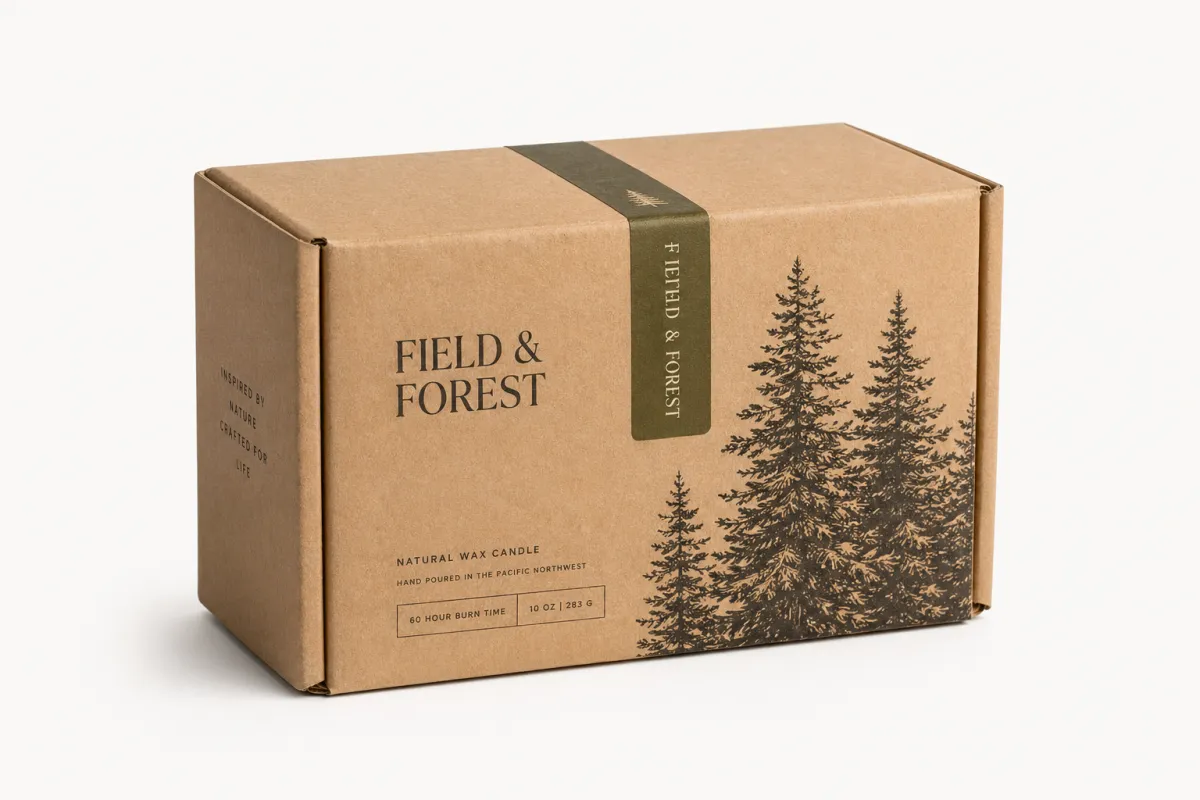
Kraft boxes tap into the eco-conscious consumer segment that's growing exponentially. The natural brown kraft material communicates sustainability, craftsmanship, and authenticity. These work beautifully for artisan foods, organic products, handmade goods, and brands positioning themselves as environmentally responsible. That earthy aesthetic has evolved from "hippie packaging" to a legitimate premium positioning strategy. Major brands now use unbleached kraft specifically because consumers associate it with transparency and environmental responsibility.
Rigid boxes represent the premium tier of Custom Logo Boxes. Constructed from thick, non-collapsible materials, these boxes feel substantial the moment you pick them up. They're the standard for luxury goods: electronics, jewelry, high-end watches, premium spirits. The tactile experience of opening a rigid box—often with a magnetic closure or custom insert—creates an emotional moment that justifies higher price points. If your brand aspires to premium positioning, rigid boxes are worth the investment.
Shipping boxes prioritize durability above all else, but that doesn't mean they can't carry your brand. Corrugated Shipping Boxes with your logo printed on the outside serve double duty: protecting your product during transit while promoting your brand to anyone who handles the package. The FedEx driver sees it. The postal worker sees it. The neighbor who receives the package when you're not home sees it. Every single touchpoint is a branding opportunity.
The Design Process: Creating Eye-Catching Custom Printed Boxes with Your Logo
The gap between a good Custom Printed Box and a forgettable one often comes down to design decisions that seem minor but deliver major impact. I've reviewed thousands of box designs, and the difference between winners and losers typically comes down to color, placement, and understanding how customers actually look at packaging.
Color psychology isn't woo-woo nonsense—it's backed by hard neuroscience. Studies consistently show that 62-90% of product assessment is based on color alone. When customers scan your box on a shelf or encounter it in their delivery pile, color registers before text, before logo, before anything else. This means your color palette needs to do heavy lifting: communicating your brand personality, evoking the right emotional response, and ensuring you stand out from competitors.
Logo placement requires strategic thinking beyond "put it on the box." Here's the rule I teach clients: where does the customer's eye go first? On mailer boxes, that's typically the top panel or the front face. The upper third of the front panel captures the most attention. Your logo should sit here with enough breathing room to register clearly. Avoid cramming logos into corners where they get lost. If you have a tagline or secondary brand element, place it below or on the back panel where it doesn't compete for attention.
File specifications trip up more businesses than you'd imagine. Before sending designs to any manufacturer, understand these requirements:
- Resolution: 300 DPI minimum for print-quality reproduction. Anything lower will look pixelated or blurry when printed at production scale.
- Color mode: CMYK only. RGB submissions get converted automatically, and the results often disappoint—colors shift, vibrancy decreases, what you see on screen doesn't match what comes off the press.
- Bleed: Extend design elements 3mm beyond the trim line on all sides. This accounts for tiny shifts during the cutting process.
- Safe zones: Keep critical text and logo elements at least 5mm inside the trim line to avoid accidental cropping.
Typography hierarchy deserves more attention than it typically receives. Your box has limited real estate, and customers spend mere seconds scanning it. Use typography strategically to guide their attention: primary information (product name, key benefit) in large, bold type; secondary information (ingredients, instructions) smaller; fine print in subtle, unobtrusive sizing. When everything fights for attention, nothing stands out.
The DIY versus professional designer debate deserves honest analysis. Design tools like Canva have democratized creativity, and for simple box designs, they can deliver acceptable results. But professional designers understand print production intimately—they know how colors behave on different substrates, how to optimize files for specific print methods, and How to Create designs that translate flawlessly from screen to physical product. For brands serious about branded packaging as a marketing investment, professional design typically delivers measurable returns through better print quality and more effective visual communication.
Custom Printed Boxes with Logo Design Costs and Pricing Factors
Money talks, and understanding the economics of custom printed Boxes with Logo design is essential for budgeting correctly. I've seen businesses blow their entire marketing budget on premium packaging or, conversely, choose the cheapest option and undermine their entire brand positioning. Let's get into the numbers.
Minimum order quantities (MOQs) represent the first cost consideration. Most manufacturers require minimum orders between 50 and 500 units depending on their production capabilities and the box type. Some specialty suppliers offer no-MOQ options, but expect to pay a significant premium—often 2-3 times the per-unit cost compared to standard quantities. If you're a startup testing a new product, consider starting with smaller quantities to validate your packaging choices before committing to volume orders.
Per-unit economics follow predictable patterns. Here's the reality: per-unit costs drop 40-60% when ordering quantities above 1,000 boxes. This is classic economies of scale—setup costs get amortized across more units, and production efficiency improves with larger runs. A box that costs $2.50 at 100-unit quantity might drop to $1.20 at 1,000 units, then to $0.85 at 5,000 units. For businesses with predictable demand, volume ordering delivers substantial savings.
Multiple variables affect your final price:
- Dimensions: Larger boxes require more material and may exceed standard sheet sizes, increasing costs.
- Material choice: Standard cardstock sits at the economy end; premium rigid materials cost significantly more.
- Print method: Flexography offers lower per-unit costs for simple designs; offset lithography delivers superior quality for complex graphics.
- Finishing options: Matte lamination, soft-touch coatings, UV spot accents, and foil stamping all add costs but create differentiation.
For standard specifications—a 10x10x4 inch mailer box with standard cardstock, CMYK printing, and matte lamination—expect to pay roughly $0.80-$4.50 per box based on quantity ordered. Premium rigid boxes with similar finishing options typically run $3.00-$8.00 per unit. Economy kraft boxes without lamination can start as low as $0.50 per unit at volume.
"Hidden costs sink budgets faster than anything else. Always ask about setup fees, template charges, and rush order premiums before signing."
Watch out for hidden costs that inflate final invoices. Setup fees, sometimes called plate fees or tooling charges, can run $50-$500 depending on complexity. Template charges for custom dielines add another $25-$150. Rush order premiums typically range from 25-40% on top of standard pricing. The cheapest quote isn't always the cheapest job—read the fine print carefully.
Production Timeline: From Design to Delivery of Your Custom Boxes
Timing kills more packaging launches than quality issues ever do. I've watched brands scramble for weeks because they didn't account for production schedules, revision cycles, and shipping transit times. Let me walk you through realistic timelines so you can plan accordingly.
Standard production for custom printed Boxes with Logo design typically requires 7-12 business days after design approval. This assumes your files are print-ready with no issues requiring clarification. The production phase includes print setup, color calibration, actual printing, cutting, folding, and finishing processes. Complex finishing options—foil stamping, embossing, custom inserts—can extend this window considerably.
Design revision cycles often surprise businesses expecting rapid turnaround. After submitting initial designs, expect 24-48 hours per revision cycle for feedback and corrections. If your design requires three rounds of revisions, you're looking at potentially a full week just for the approval process. Build this into your timeline from day one.
Rush production exists but demands premium pricing. If you need boxes in a hurry, expect to pay 25-40% more for production turns of 3-5 business days. Some suppliers offer even tighter timelines for critical situations, but quality often suffers when things get rushed. I've seen rushed orders come back with misaligned colors, cutting errors, or finishing defects that would have been caught with adequate production time.
Shipping transit adds variable time to your total timeline. Domestic US shipping typically takes 3-7 days depending on the supplier's location and your chosen service level. International orders? Plan for 2-4 weeks minimum including customs clearance, which can introduce unpredictable delays.
Smart buffer planning prevents last-minute crises. My recommendation: order 2-3 weeks before your product launch or marketing campaign. This provides a comfortable cushion for production issues, shipping delays, or quality problems requiring reorders. Brands that treat packaging as an afterthought end up paying rush premiums or, worse, launching without their branded packaging.
Consider your supplier's location when evaluating shipping times. Working with manufacturers on the opposite coast adds days to transit compared to regional suppliers. Some businesses maintain relationships with multiple suppliers to balance cost optimization against delivery speed requirements.
What Materials and Finishes Are Available for Custom Printed Boxes with Logo Design?
The substrate your Custom Printed Boxes are made from communicates brand values before customers even see your design. Material choice affects everything: perceived quality, environmental footprint, product protection, and ultimately, your bottom line. Let's examine the options systematically.
Cardstock weights determine the tactile experience and structural integrity of your boxes. 14pt cardstock serves as the standard option—cost-effective and suitable for lightweight products. 18pt cardstock offers a medium-weight feel with better durability and structural stability. 24pt cardstock delivers premium rigidity that approaches rigid box construction, commanding higher prices but creating a substantially more substantial impression. The weight difference seems subtle until you hold the boxes in your hands—then the difference becomes immediately apparent.
Corrugated flute options serve different functional requirements. The flute is the wavy inner layer that provides cushioning and stacking strength. E-flute offers a thin profile with smooth printing surfaces—ideal for retail boxes where aesthetics Matter More Than extreme protection. B-flute provides superior stacking strength and impact protection—better suited for Shipping Boxes That endure rough handling. BC-flute combines both for heavy-duty applications requiring maximum protection.
Finishing options transform ordinary boxes into Premium Packaging Experiences:
- Matte lamination: Reduces glare, adds durability, and creates a sophisticated, understated look.
- Gloss coating: Enhances color vibrancy and creates visual pop, but shows fingerprints easily.
- Soft-touch lamination: Creates a velvet-like texture that signals luxury and encourages tactile engagement.
- UV spot accents: Highlights specific design elements with a glossy raised effect that draws attention.
- Foil stamping: Metallic finishes in gold, silver, copper, or custom colors create premium perception.
Sustainability is no longer optional for many brands. Consumer demand for eco-friendly packaging continues accelerating, making sustainable materials both an ethical choice and a marketing advantage. Available options include 100% recycled kraft paper, soy-based inks instead of petroleum derivatives, water-based coatings, and biodegradable protective fills. These materials often cost slightly more but resonate strongly with environmentally conscious consumers who make up an increasingly valuable market segment.
Material choice directly affects product protection. A beautiful box that fails to protect its contents delivers zero value. Evaluate your product's fragility, weight, and shipping requirements honestly. Sometimes a plain corrugated box with your logo on the outside, protecting an inner product box, makes more sense than one box trying to do everything.
Maximizing ROI: Using Custom Printed Boxes with Logo Design as Marketing Tools
Your custom printed Boxes with Logo design represent a marketing investment, not just a packaging expense. When I help clients optimize their packaging strategy, we always discuss how to extract maximum value from every dollar spent on boxes. Here's how smart brands transform packaging costs into marketing returns.
Every shipment becomes a brand ambassador when your boxes work overtime. The package your customer receives doesn't exist in isolation—it travels through warehouses, sits on porches, gets handled by delivery drivers, and catches the attention of everyone who sees it. Branded boxes turn every shipping touchpoint into a marketing impression. Studies show that packages with professional branding generate significantly higher perceived value than generic alternatives, even when the products inside are identical.
QR codes bridge physical and digital experiences seamlessly. A QR code on your box linking to product reviews, social media profiles, exclusive content, or loyalty program signups transforms passive recipients into engaged customers. I've seen conversion rates from QR codes on packaging range from 3% to 15% depending on the offer and audience. That's substantial ROI from a small addition to your design.
Seasonal and limited-edition box designs create urgency and collector appeal. When customers know that special packaging is available only for a limited time, they rush to purchase before availability ends. Holiday-themed boxes, collaboration designs, and anniversary editions generate buzz and drive purchases that wouldn't otherwise occur. Some collectors keep the boxes themselves, essentially creating permanent brand ambassadors displayed on shelves across their homes.
Social sharing multiplies your marketing reach exponentially. When customers share unboxing videos or photos, they expose your brand to their entire social network—typically hundreds or thousands of people—for free. Branded unboxing content consistently outperforms standard product photography in engagement metrics across platforms. The investment in premium custom logo boxes pays dividends through this organic reach that traditional advertising cannot match at equivalent cost.
"Track what people share, measure the engagement, and use those insights to refine your packaging strategy continuously."
Measuring impact requires systematic tracking. Monitor social media mentions related to your packaging, track engagement metrics on QR code destinations, and collect customer feedback specifically about unboxing experiences. Several analytics tools can help quantify the marketing value of your packaging investment. Brands that measure consistently discover insights that inform better decisions over time.
Consider exploring our Custom Packaging Products to see how different packaging styles might serve your brand's specific marketing objectives and budget requirements.
Frequently Asked Questions
What is the minimum order quantity for custom printed boxes with logo design?
Most manufacturers require minimum orders between 50 and 500 units depending on the supplier and box specifications. Some suppliers have responded to market demand by offering no-MOQ options, but expect to pay significantly higher per-unit costs—typically 2-3 times more than standard quantity pricing. Orders below 100 units often carry such premium pricing that brands find it more cost-effective to split orders with complementary brands or businesses to meet volume thresholds while sharing inventory.
How long does it take to receive custom logo boxes after ordering?
Production typically requires 7-12 business days following final design approval, assuming no revision cycles are needed. Add 3-7 days for standard domestic shipping within the continental United States. International orders may require 3-4 weeks total including production, international transit, and customs clearance processes. Rush production options exist in 3-5 day windows but typically add 25-40% premiums to standard costs. Build adequate buffer time into your launch planning to avoid expensive rush fees or missed marketing windows.
What file formats are required for custom printed boxes with logo design?
Acceptable formats typically include PDF, AI (Adobe Illustrator), EPS, or high-resolution TIFF files. Resolution must be 300 DPI minimum for print-quality reproduction—lower resolution files will appear pixelated or blurry when scaled for production. CMYK color mode is required; RGB submissions get automatically converted and often experience color shifts that disappoint. Include 3mm bleed on all design edges and maintain safe zones of at least 5mm inside the trim line for critical text and logo elements to prevent accidental cropping during cutting.
How much do custom printed boxes with logo design cost per unit?
Standard 10x10x4 inch mailer boxes range from $0.80-$2.50 per unit at quantities of 500 or more. Premium rigid Boxes with Logo Printing typically cost $3.00-$6.00 per unit depending on construction and finishing options. Economy kraft boxes without lamination start around $0.50 per unit at volume quantities. Price decreases substantially with quantity—increasing from 500 to 2,500 unit orders typically reduces per-unit costs by 40-60% due to setup cost amortization and production efficiency gains.
Can I get samples before placing a full order for custom printed boxes with logo?
Most suppliers offer pre-production samples ranging from $20-$100 depending on box complexity and finishing options. These physical samples let you verify material quality, actual color reproduction, and structural integrity before committing to full production runs. Digital proofs (PDF format) are typically provided free and allow design review before production begins, catching errors while corrections remain inexpensive. Request samples 2-3 weeks before your final order deadline to account for sample production time, shipping, and any revisions needed based on sample review.
For more information about sustainable packaging options and industry standards, visit the Packaging Machinery Manufacturers Institute and the EPA's Sustainable Packaging resources.


