Two zipper pouches can look identical on a proof and still behave very differently once they are packed, counted, palletized, and received. That is the whole reason zipper pouches for apparel Unit Cost Breakdown requests matter. Apparel buyers are not just comparing a bag price. They are comparing protection, shelf presentation, warehouse handling, and the chance of rework after delivery.
The cheapest pouch on paper is often not the cheapest pouch in use. A better zipper track, a cleaner seal, or tighter dimensional control can save time later, especially on folded shirts, socks, intimates, and accessory sets that need to arrive neat and stay that way. The real question is simple: what specification gives you the right unit cost without creating hidden costs in receiving, fulfillment, or customer presentation?
A useful quote should show more than cost per piece. It should show how film gauge, zipper style, print coverage, carton count, and freight terms change the landed number.
That is the practical frame for any buyer looking at an apparel zipper pouch quote. Below, I break down what moves cost, what usually does not, and where you can trim spend without making the pouch feel flimsy or underbuilt for the product it carries.
Why the Cheapest Apparel Pouch Can Cost More Per Unit
The first mistake is assuming two pouches with the same open size should cost about the same. They rarely do. A clear pouch made from 2.0 mil film with a basic zipper track is a different product from a 3.5 mil pouch with stronger side seals, tighter tolerance control, and a better closure feel. One may be fine for a one-time inner pack. The other may hold up better through repeated handling, retail display, or distribution to multiple stores.
There is also fallout. If a pouch arrives with inconsistent seals, crooked trim, or a zipper that does not close cleanly, the buyer does not just pay for the bad pouch. The team also pays for sorting, repacking, complaint handling, and sometimes replacement stock. Cheap packaging has a way of getting expensive after the shipment lands. Very efficient. Very annoying.
Unit cost is driven by more than the bag itself. Material gauge, zipper style, print coverage, carton configuration, freight method, and whether pouches are packed loose or pre-counted for the warehouse all change the final number. For apparel programs, those details matter because the pouch has to protect a garment fold, support presentation, and still fit inside a margin that makes sense for the SKU.
Buyers usually ask for this breakdown for a reason: the packaging has to work in a real operation. It has to move through the warehouse fast, look clean on the shelf, and avoid creating extra touch points for the apparel team. A low quote that creates labor later is not a win. It is just a delayed invoice.
Apparel-Safe Construction and Finishing Choices
For apparel, the most common formats are flat pouches, side-gusset pouches, and reclosable zipper styles with or without a hang hole. Flat pouches are usually the cleanest choice for folded tees, undergarments, and accessories. Side-gusset pouches add depth, which helps with bulkier garments or when the front panel needs to look fuller on shelf. Hang holes help in retail, but they are not necessary for warehouse-only use.
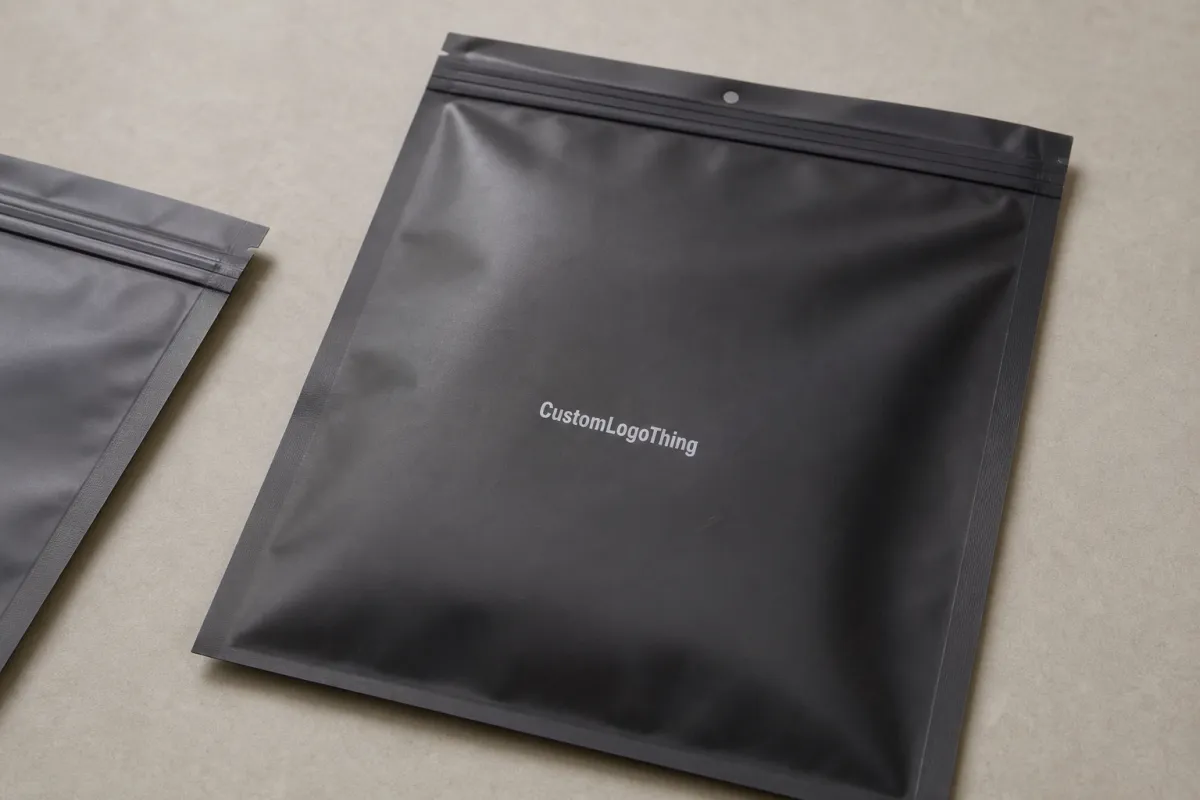
Clarity matters more than many buyers expect. If the pouch is meant to show garment color, size, or fold quality, a clear film with good optical clarity usually does the job best. If the goal is a more premium look, a matte finish or soft-touch layer can work, but it has to be balanced against cost and scuff resistance during transit. For some programs, a plain clear pouch with a clean label is more useful than a heavily decorated one.
The zipper deserves real attention. A lightweight closure may be fine for a low-touch inner pack, but repeated opening and closing calls for better track engagement and more reliable alignment. I also pay attention to how the seal behaves after the pouch is filled. If the closure area is too tight or too loose, the user notices immediately, and so does the risk of damage during handling.
Decoration should support the job, not complicate it. A one-color logo, a label-ready panel, or a simple full-panel print often gives enough branding without driving unnecessary tooling fees or slowing production. If the apparel buyer needs barcode space, size labeling, or SKU-specific marking, that has to be locked early. Label placement can affect the usable face area and the production layout.
From a packaging buyer’s point of view, the right pouch depends on three questions:
- Is the pouch for e-commerce fulfillment, retail display, or both?
- Does the garment need visibility, dust protection, or a stronger premium feel?
- Will the warehouse team pack it by hand, or does it need to run through a standard process efficiently?
For traceability and handling durability, buyers should also think about packaging tests. If the pouch will be shipped through rough distribution lanes, it is smart to ask whether samples were checked against relevant transport testing such as ISTA methods. If the program includes paper inserts or recycled board labels, sourcing can also be aligned with FSC expectations where that matters to the brand.
Specifications That Move Cost, Fit, and Shelf Appeal
Before anyone quotes accurately, the spec sheet needs to be tight. The most important inputs are finished open size, usable depth, film thickness, zipper type, seam style, print colors, and any perforation or tear-notch requirement. A vague size description like “fits a shirt” is not enough. A fitted polo, a folded hoodie, and a two-piece sock set all behave differently inside the same pouch width.
Film thickness has a direct effect on both feel and cost. Heavier film usually improves stiffness, clarity retention, and perceived quality, which can be useful if the pouch sits on a retail fixture. Lighter film can reduce material cost, but it may need more careful packing to avoid wrinkling, seal stress, or a soft, collapsed appearance. Thin is not automatically smart. Thin and cheap can turn into soft, crooked, and annoying.
Size affects more than capacity. It changes material yield, carton count, pallet efficiency, and how many finished pouches fit into a shipping case. If the pouch is oversized, you pay for extra film and freight. If it is too tight, the garment may wrinkle or make the zipper harder to close. That is why dimensional consistency matters so much in apparel programs; even a small swing in panel width can slow packing and create visible inconsistencies on the shelf.
One detail buyers sometimes miss is how the pouch is packed for shipment. Loose-packed pouches usually cost less to prepare than individually pre-counted or kit-packed units, but warehouse teams may prefer one method over another based on their own receiving workflow. If the receiving dock needs pre-counted bundles or carton labels by SKU, that has to be in the spec before the quote is issued.
| Option | Typical Use | Indicative Cost Effect | Best For |
|---|---|---|---|
| Clear flat pouch, standard zipper | Folded tees, socks, small accessories | Lower cost per piece at higher MOQ | Warehouse packs and simple retail presentation |
| Heavier-gauge flat pouch | Heavier garments, premium presentation | Moderate increase in unit cost | Better stiffness and cleaner feel |
| Side-gusset zipper pouch | Bulkier sets, layered apparel | Higher material and converting cost | Extra depth and a fuller shelf profile |
| Printed pouch with matte finish | Brand-led retail programs | Higher setup charges and finishing cost | Visual impact and more premium positioning |
That table is the reminder buyers need. Structure drives price. Not just style. A plain pouch may be the best fit for one SKU, while a printed premium pouch may be better for another if it reduces inserts, improves display, or keeps the garment protected longer.
Pricing, MOQ, and What Shapes Unit Cost
When buyers ask for pricing, they should ask for the quote in separate buckets. Setup charges, tooling fees, printed film, zipper hardware, conversion labor, inspection, packing, and freight should each be visible. That makes it much easier to compare suppliers fairly and see where the real cost difference is coming from.
MOQ matters because the same press setup or converting run can be spread across very different quantities. A small run usually carries a higher cost per piece because the setup burden is heavier. Larger runs often reach better bulk pricing through more efficient material usage and steadier production speed. For apparel programs with multiple sizes or colors, consolidating volumes into one pouch spec can improve the price break without changing the garment itself.
For planning purposes, buyers often see pricing ranges like these for a standard clear zipper pouch used in apparel packaging:
- 5,000 pieces: often around $0.18-$0.30 per unit, depending on size and print coverage
- 10,000 pieces: often around $0.12-$0.22 per unit with better material efficiency
- 25,000 pieces: often around $0.08-$0.16 per unit if the spec stays simple
Those are planning numbers, not a promise. The actual quote depends on film gauge, zipper style, decoration, carton size, and whether the order moves by ocean, truck, or expedited freight. A matte finish, a special barcode area, or tighter dimensional tolerance can increase cost, but the tradeoff may be worth it if the pouch reduces damage or speeds up handling.
The most useful move is to ask for tiered pricing by volume. Then compare the step from MOQ to the next volume break. In many cases, the buyer can see whether it is smarter to split SKUs, consolidate colorways, or increase the order a little to bring the cost per piece down in a meaningful way. That is the kind of zipper pouches for apparel Unit Cost Breakdown work that supports an actual purchasing decision, not just a spreadsheet exercise.
Production Process and Lead Time From Proof to Shipment
The production sequence is usually straightforward, but delays happen when the details are not locked. The normal flow is spec review, artwork check, sample or pre-production approval, material sourcing, conversion, inspection, packing, and dispatch. If the project is simple and the artwork is clean, the process can move quickly. If the design includes custom print, special film, or a unique zipper component, the schedule stretches.
Lead time is often lost in the same places: late artwork changes, missing barcode information, unclear carton labeling, or approval delays from the brand or distribution team. A sample may be approved in a day, but that does not mean full production will move at the same speed if the run needs imported components or a special finishing step. Buyers planning for a seasonal launch should build in cushion between pouch arrival and the apparel receiving date. Tight calendars have a way of getting tighter.
For most apparel packaging programs, I separate sample timing from production timing. A sample confirms fit, clarity, and zipper feel. Production timing depends on actual material availability, the number of print colors, and the finishing method. If the warehouse wants the pouches counted by carton or labeled to a specific receiving code, that should be added before the production clock starts, not after.
A clean approval process saves money. Every revision after proof approval can create extra handling, extra inspection, and sometimes a repeat setup. That is why a complete approval package matters: final artwork, exact dimensions, closure style, carton count, and delivery window. It keeps the order moving and reduces the chance of an expensive pause in the middle of the run.
What Buyers Should Check Before Approving a Supplier
Supplier selection should be based on measurable facts, not polished sales language. Ask about dimensional tolerance, seal consistency, print accuracy, packaging counts, and whether the quote includes the same freight terms you plan to compare. If one supplier quotes ex-works and another quotes delivered, the numbers will not mean the same thing until they are normalized.
Hidden costs show up more often than people admit. Rush charges, repeat proof fees, revised artwork, carton label changes, and split-ship handling can quietly push landed cost above target. On apparel programs, that matters because packaging orders often move alongside production schedules that already have little slack. A supplier that explains those items clearly is usually easier to work with than one that leaves them buried in fine print.
The better packaging partners can also help simplify the spec. Sometimes a buyer wants a premium look, but the smart answer is a cleaner film, a more consistent zipper, or a label-ready surface that eliminates unnecessary print steps. That kind of guidance improves both the unit cost and the day-to-day handling experience.
Quality control is not just about defects; it is a cost control tool. A pouch that arrives flat, clean, correctly counted, and packed to the agreed carton spec reduces labor on the receiving dock and gets the order into inventory faster. That matters as much as the quoted price, because a low-cost pouch that creates receiving headaches is not really low cost.
Next Steps for a Faster, More Accurate Quote
If you want a clean Zipper Pouches for Apparel unit cost breakdown, gather the basics before requesting pricing. That means finished pouch size, garment type, quantity by size or color, print artwork, target delivery date, and whether the pouch is for retail display or warehouse-only packaging. The tighter the brief, the faster the quote and the more reliable the comparison.
Send a reference sample if you have one, even if it came from another supplier. A sample helps the quote team judge film thickness, clarity, zipper feel, and overall presentation instead of guessing from a description. If your current pouch works well but costs too much, the sample also gives a clear benchmark for reducing cost without changing the look too much.
Ask for a landed-cost view that includes freight and carton counts. That is the fastest way to compare options against an internal budget, because it shows the number that actually matters to the apparel team. Once you have that, the decision path is usually simple: confirm specs, compare volume tiers, approve the best-fit sample, and release production with the delivery window tied to the launch schedule.
For buyers managing multiple SKUs, the smartest move is usually consistency. One well-chosen spec can simplify buying, reduce confusion on the warehouse floor, and improve bulk pricing across the program. Zipper Pouches for Apparel unit cost breakdown questions are really about control: control of fit, control of appearance, and control of landed cost from the first quote to the last carton received.
What affects zipper pouches for apparel unit cost the most?
Film thickness, pouch size, zipper style, and print coverage usually move the price more than the basic shape. MOQ and freight method also matter because they change how much setup and shipping cost gets spread across each pouch. Adding matte finishes, special labels, or tighter tolerances can raise cost, but they may also reduce damage and handling issues.
What MOQ is typical for custom apparel zipper pouches?
MOQ depends on size, print complexity, and whether the pouch uses standard or custom film and zipper components. Smaller runs are possible, but the unit price is usually higher because setup and conversion costs are spread across fewer pieces. If multiple garment styles share one pouch spec, consolidating volumes can improve the price break.
Which material is best for reducing unit cost without looking cheap?
A clear, appropriately gauged film is often the best balance for apparel because it keeps the product visible and avoids unnecessary decoration cost. The right thickness should protect the garment and hold shape without adding more material than the application needs. If shelf presentation matters, a simple premium finish can sometimes outperform a heavier film at a similar landed cost.
How long does production usually take for apparel zipper pouches?
Lead time depends on artwork approval, material availability, and the complexity of the pouch specification. Sample review is usually faster than full production, but any changes after approval can extend the schedule. The safest plan is to confirm the ship date after the spec and artwork are locked, not before.
Can I get a sample before placing a full order?
Yes, and for apparel programs it is often the best way to confirm fold fit, clarity, zipper feel, and overall presentation. A sample helps catch issues like incorrect sizing, weak closure action, or poor panel clarity before the full run starts. If you already have a reference pouch, sending it speeds up matching and improves quote accuracy.

