Personalized Zip Lock Bags do more than hold a product. A properly specified bag can improve shelf appeal, keep contents fresher, and make the package easier to handle after opening. That combination sounds modest, but it explains why custom resealable packaging keeps appearing in categories that care about presentation, protection, and repeat use.
The catch is that not every custom bag performs the same way. A design that looks sharp in a mockup can feel flimsy in hand, seal inconsistently, or create unnecessary cost once production starts. The real work is matching the structure to the product instead of treating the bag as a decorative afterthought.
That is why buyers who order these bags repeatedly tend to think in terms of film thickness, closure style, print coverage, and production tolerances. A good package is not only branded. It is measurable.
Personalized zip lock bags: what they are and why brands use them
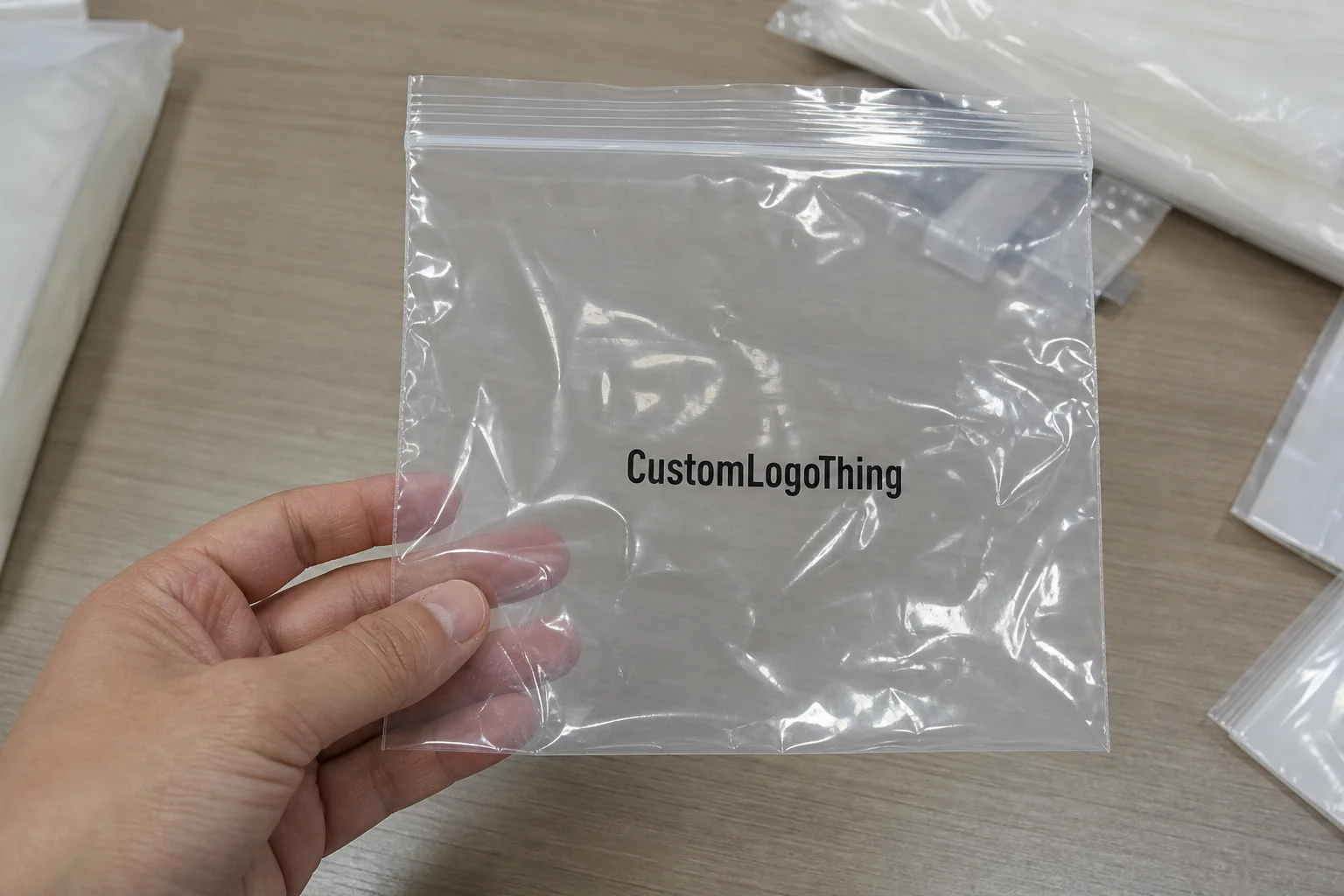
At the simplest level, personalized zip lock bags are resealable bags made to a buyer’s specifications. That can mean custom printing, custom dimensions, special film thickness, or a combination of those elements. Some are made for retail shelves. Others are used for sample kits, accessories, hardware, internal sorting, or promotional packs. What makes them personalized is that the packaging is built around a specific use case rather than pulled from a standard stock bin.
Brands use them for two reasons that usually travel together: function and appearance. A plain clear bag can store a product, but a branded resealable bag can protect it, signal quality, and make it easier for the customer to remember the product later. For small consumer goods, packaging often has a larger influence on perceived value than the raw material cost would suggest. For operational use, custom sizing can reduce wasted space and make inventory handling cleaner.
The practical comparison is simple.
- Stock bags are usually cheaper and faster to source.
- Custom bags are better when fit, branding, or protection matter.
- Personalized zip lock bags make the most sense when the package itself supports the sale, storage, or user experience.
Common applications include snacks, cosmetics, accessories, e-commerce kits, medical or wellness samples, hardware, and small components. If the product is handled several times, displayed on a shelf, or shipped directly to the end user, the resealable feature becomes part of the product value. The bag does not disappear after first opening; it keeps doing work.
“Packaging is often judged in seconds. If the closure feels weak, the print looks off, or the bag is too soft for the contents, buyers notice before they ever touch the product.”
How the customization process works from artwork to sealing
The ordering process is usually more structured than buyers expect. It starts with dimensions, then moves to material selection, print method, artwork review, proof approval, production, and shipment. If one of those steps is vague, the quote becomes less reliable and the final bag is more likely to miss the intended fit.
Most suppliers will ask for finished size, closure style, quantity, artwork files, and the weight or type of product going inside. If the bag needs a hang hole, child-resistant closure, tamper-evident feature, or extra thickness, those details should be provided early. A product sample or a clear product photo is useful when the item is irregularly shaped, fragile, or likely to shift inside the package.
Artwork placement matters more than many buyers realize. The zipper area and side seals occupy real space, and graphics cannot always extend everywhere. On some bag structures, printing sits on the outer layer. On others, it is protected by a laminate or built into a multilayer film. That affects durability, color sharpness, and cost. It also changes how the finished bag feels in the hand.
Here is a useful way to compare common construction choices:
| Option | Typical use | Strengths | Trade-offs |
|---|---|---|---|
| Surface-printed clear bag | Samples, light products, promo items | Lower cost, fast branding, product visibility | Less coverage, more exposure to scuffing |
| Laminated printed pouch | Premium retail, food, cosmetics | Better graphic protection, stronger shelf presence | Higher unit cost, more setup steps |
| Fully custom structure | Higher-value products, specialty protection needs | Maximum control over appearance and performance | Higher MOQ and longer lead time |
Proofs are the main safeguard against expensive mistakes. A proof can reveal that a logo is too close to a seal line, that legal text is too small to read, or that the chosen color contrast disappears on the selected film. For products with irregular proportions, a prototype bag can be more useful than a long email chain. One sample often answers the sizing question faster than a dozen revisions.
For broader packaging terminology and testing awareness, the Institute of Packaging Professionals remains a solid reference point.
Cost, pricing, and MOQ factors that change your quote
Pricing for personalized zip lock bags usually comes down to six variables: material thickness, bag size, print colors, closure type, quantity, and special finishes. Change one of those and the quote can move more than expected. A switch from a simple clear bag to a thicker printed structure, for example, can raise the unit price even if the dimensions stay the same.
MOQ matters because setup costs get spread across the order. That is why 5,000 bags can cost much less per unit than 1,000 bags, even though the overall spend is higher. The factory still has to prepare the film, print files, machine settings, and quality checks. More units simply dilute those fixed costs.
For mid-volume orders, buyers often see rough ranges like these:
- Plain clear stock-style bag: roughly $0.08-$0.18 per unit
- Custom printed bag: roughly $0.18-$0.35 per unit
- Heavier printed or specialty-closure bag: often $0.30-$0.60+ per unit
Those figures are directional, not universal. They change with size, gauge, artwork coverage, supplier region, and shipping distance. Freight can matter as much as the unit price on smaller orders, and setup charges can quietly erase the apparent savings of a low quote.
That is where buyers often get misled. One quote may include print preparation while another lists it separately. One supplier may quote a thinner film that looks similar in a spreadsheet but feels very different in use. Comparing unit price alone gives a false sense of precision. Landed cost is the number that actually matters.
To compare quotes properly, ask each supplier for the same information:
- Finished bag dimensions
- Material thickness and type
- Print method and number of colors
- Closure style
- MOQ
- Artwork or setup charges
- Estimated shipping cost
- Production lead time
If the budget is tight, there are practical ways to simplify without damaging performance. A standard bag size usually costs less than a custom odd size. A one-color print can reduce setup compared with full-coverage graphics. For some products, a clear bag with a strong label panel is enough. The goal is to preserve fit and function while trimming features that do not add real value.
Production steps and timeline: what happens after approval
Once the proof is approved, production follows a fairly fixed sequence. Material is sourced, printing begins, the film is cured or dried as required, the bag is converted into its final shape, quality checks are completed, and the order is packed for shipment. If the bag uses a zipper, that feature must be aligned correctly during conversion so the closure works cleanly after filling.
Lead time depends on print complexity, bag size, factory workload, and whether any materials are in stock. A straightforward run may be ready in about 12-15 business days after approval. More complex jobs can take longer, especially if they involve several print colors, specialty films, or layered structures. Lead time is separate from shipping time, and that distinction gets blurred all the time. A bag can finish production quickly and still arrive late if freight moves slowly.
What slows the schedule most often? Artwork revisions, color matching questions, missing dieline details, sample changes, and last-minute copy edits. The pattern is predictable. The fewer unresolved decisions before approval, the smoother the production run tends to be.
Communication checkpoints help keep the order moving. Buyers should expect updates around proof approval, material confirmation, print start, and completion. If the supplier goes quiet for too long, ask for a status check. Silence is not always a warning sign, but packaging orders should never feel like they are moving without oversight.
Rush orders can be possible, but they usually carry a premium and leave less room for corrections. A compressed timeline turns small issues into large ones. A color adjustment that might have been fixed with one more proof can become a missed ship date. Rush production makes sense only when the spec is already locked and the artwork is final.
For freight planning and transit stress, packaging testers often refer to standards such as ISTA. Not every bag order needs formal distribution testing, but fragile, premium, or weight-sensitive products benefit from thinking that way before launch rather than after the first complaint.
Material, size, and closure choices that affect performance
Material thickness affects feel, puncture resistance, and the buyer’s impression of quality. Thin film can work for lightweight items or internal organization, but it may feel too soft for retail presentation. Thicker gauges usually resist tearing better and provide more structure. That said, thicker is not always the right answer. For some products, too much stiffness makes the bag harder to fill or less efficient to ship.
Size should be matched to the product, not guessed from a catalog photo. A bag that seems close enough on paper can become too tight once the product is inside. Fill volume matters, especially for snacks, apparel, powders, and kits with multiple components. If the product shifts shape during packing, the headspace above the fill becomes part of the sizing decision too.
Closure choice changes how the bag will be used. Standard zipper closures handle most retail and storage applications. Child-resistant closures may be necessary for regulated products. Tamper-evident features send a clear message that the bag has not been opened. Heavy-duty closures make more sense for repeated opening and closing, or for products that put stress on the seal line.
Clarity, gloss, and opacity are visual choices, but they also affect branding. A highly clear bag showcases the product. A matte or opaque finish can hide inconsistencies and create a more premium impression. Some buyers want both: visibility in one zone and branding in another. That is where material planning starts to overlap with design planning.
Different product types place different demands on the bag:
- Powders need consistent sealing and low leak risk.
- Snacks need freshness retention and easy resealing.
- Apparel needs volume and tear resistance.
- Small parts need puncture resistance and easy inventory handling.
Storage and transit conditions matter as well. Heat can affect film behavior. Moisture can change how some products sit inside the bag. Heavy stacking can deform a light closure if the structure is too thin. If the package will sit in a warehouse, in a warm vehicle, or under compression, that should be communicated early. It changes the material recommendation more often than buyers expect.
Food and supplement buyers also need to think about compliance and freshness performance. The bag may need to work as both a retail package and a barrier against odor loss, oil migration, or moisture exchange. That is where film choice and seal consistency become more than cosmetic decisions.
Common ordering mistakes that create waste or delays
The most common mistake is choosing size by outer dimensions alone instead of actual fill volume. A buyer looks at product length, adds a little extra, and assumes the bag will fit. Then the zipper sits too close to the product, or the package bulges in a way that hurts shelf presentation. A bag should fit the product and the intended visual shape, not just the numbers on a ruler.
Artwork errors create their own kind of damage. Low-resolution files can print fuzzy. Missing dieline details can push a logo into a seal area. Tiny legal text can vanish once it is reduced to fit the print panel. If compliance copy matters, treat it as part of the packaging specification rather than a line to be squeezed in later.
There is also the classic pricing trap: picking a supplier by unit cost alone. If the MOQ is too high, the apparent bargain can lock up cash in inventory. If freight is expensive, the landed cost can rise quickly. If setup charges are large, a low piece price stops being relevant. Packaging should be compared on the full order cost, not the quote headline.
Proofing mistakes are expensive because they surface late. Incorrect color assumptions, unreadable text, weak contrast, and missing product claims all become harder to fix once production begins. Late-stage revisions usually trigger extra cost or a reset in the schedule. Once tooling or setup is underway, every correction has a ripple effect.
One more issue gets overlooked: the bag may be strong enough in general but wrong for the specific product weight or closure stress. That mismatch can produce failures that look random even though they are predictable. A powder pouch, a lightweight accessory bag, and a heavy hardware pouch do not need the same film gauge or seal design.
Expert tips for better branding, durability, and repeat orders
If the bag needs to do real branding work, design for shelf distance. That means strong contrast, a clear hierarchy, and a logo that still reads when the bag is small or partially filled. Many buyers overdesign small packaging. Too much copy, too many colors, and too little breathing room can make the pack harder to read, not more impressive. In a small format, restraint usually prints better than clutter.
Test a sample run if the product is moisture-sensitive, oily, granular, or oddly shaped. That advice may sound conservative, but one small pilot can expose seal problems, print scuffing, or fill-line issues before a large order is committed. For higher-value products, that early test often pays back quickly.
Keep exact specs after approval. Save the approved dimensions, film gauge, print file version, and closure note in one place. That makes reorders easier and reduces version drift across product lines. A reorder should feel boring. In packaging procurement, boring is a good sign.
Resealable packaging can also support the brand story without saying much at all. It can suggest freshness, convenience, and repeat use in a way that plain packaging cannot. That is the practical value of personalized Zip Lock Bags: they can function as packaging, but they also shape the customer’s expectation of the product.
If sustainability is part of the buying decision, ask what material options are available and whether any structure can incorporate recycled content or improved recovery potential. For broader environmental context, the EPA recycling resources are a useful starting point. Actual recyclability still depends on the specific film structure and the local waste system, so claims should be checked rather than assumed.
Next steps: build a spec sheet before you request quotes
Before requesting pricing, write the basics into one spec sheet: product dimensions, fill weight, print area, number of colors, quantity, target ship date, and closure style. Add a product photo if you have one. That single step removes a lot of guesswork and gives suppliers a better chance of quoting accurately the first time.
Then compare at least two quotes against the same spec. If one supplier quotes a different material or print method, you are not comparing equal options. Ask for a proof and a production timeline together, not separately. A quote without a schedule only tells half the story.
If the product is new, fragile, or intended for retail, a small pilot order can be the most efficient first move. It lets you confirm fit, print quality, and handling before the larger run. Once the structure is approved, lock it in. Reorders should be faster and more predictable than the first round.
That is the practical path with personalized zip lock bags: define the spec carefully, approve the artwork with discipline, and plan the reorder cycle before inventory runs low. Buyers who work that way usually spend less time fixing avoidable errors and more time using packaging as a measurable part of the product.
What details do I need to order personalized zip lock bags?
Have the bag size, product weight, closure style, print colors, quantity, and artwork ready before requesting a quote. If possible, include a photo or sample of the product so the supplier can check fit and function.
How much do personalized zip lock bags usually cost?
Pricing depends on size, material thickness, print coverage, color count, and quantity. Larger orders usually lower unit cost, while setup, shipping, and rush charges can raise the total.
What is the typical turnaround for personalized zip lock bags?
Turnaround depends on proof approval, print complexity, production load, and shipping distance. Standard jobs move faster when artwork is final and bag specs are already decided.
Can I use personalized zip lock bags for food products?
Yes, if the material and closure are suitable for the product and intended storage conditions. For food applications, ask about freshness, seal performance, and any compliance requirements before ordering.
What is the biggest mistake buyers make with personalized zip lock bags?
The most common mistake is choosing the wrong size or ignoring the true fill volume of the product. A close second is approving artwork without checking text size, colors, and placement on the final proof.


