Pet treat Pom Pom Beanies Bulk Order planning is not about ordering cute hats because a mockup looked fun in a meeting. Cute helps, but it is not a buying strategy. The real work is matching a seasonal merch item to customer behavior, store count, campaign timing, fulfillment capacity, decoration limits, and margin.
A pet treat brand might use branded Pom Pom Beanies in holiday gift bundles, adoption event kits, subscription box inserts, retail counter displays, staff uniforms, loyalty rewards, or wholesale launch packs. That can be a smart move when the beanie feels connected to the brand and useful to the customer. It is a weaker move when it looks like leftover promo merchandise shoved into a carton because somebody found a cheap blank hat.
Customers can spot poor merch. Almost as quickly as dogs spot dropped bacon.
Used well, bulk beanies can lift average order value, support wholesale promotions, reward repeat buyers, and put your logo outside in cold weather without forcing the brand into a full apparel program. The trap is treating a wearable product like a sticker order. Hats have fit, stretch, yarn, cuff height, decoration, packaging, freight, and retail presentation issues. Ignore those details and a simple winter promotion can turn into a soft, expensive inventory problem.
Pet Treat Pom Pom Beanies Bulk Order Planning Starts With Sell-Through
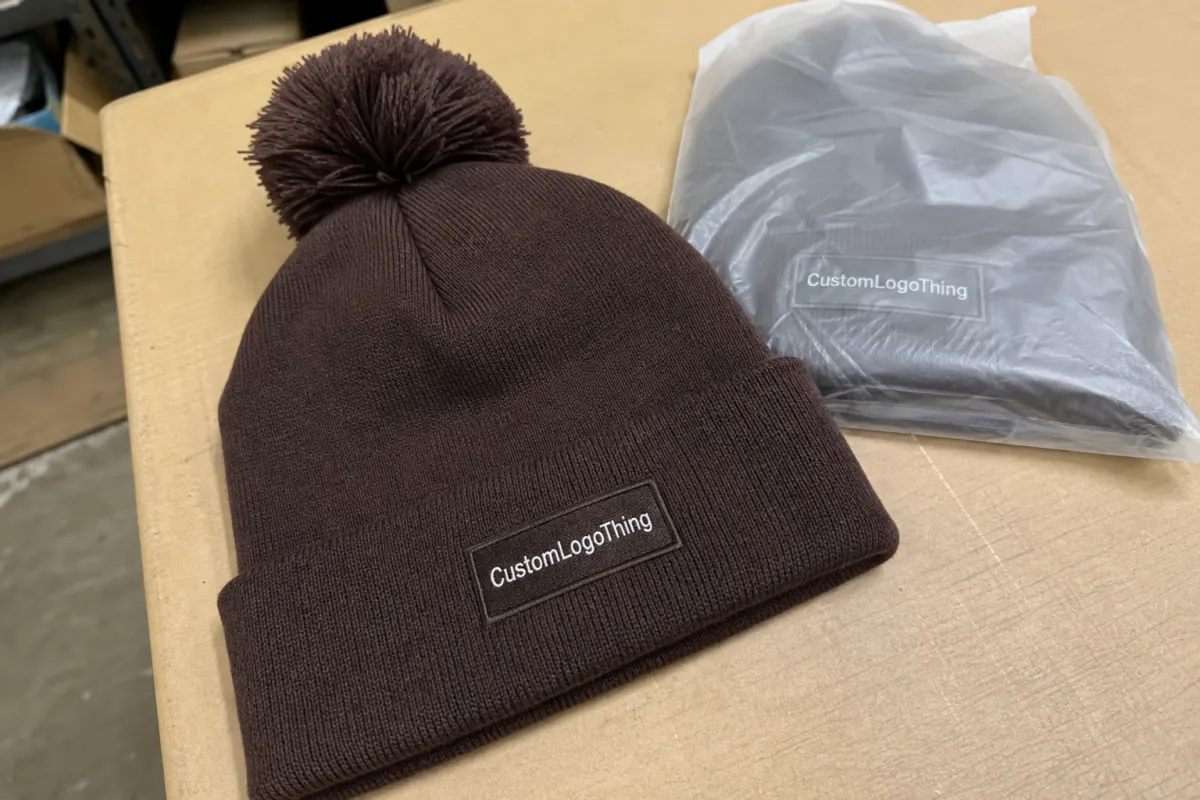
Start with the buyer path. Who gets the beanie, why would they want it, and how many units can you realistically move during the campaign window? A dog bakery selling winter treat boxes has a different use case than a rescue group selling merch at weekend adoption events. A subscription box brand needs carton-ready consistency. A pet store group may need UPC labels, size labels, PO references, and split shipments to more than one receiving point.
That is why the first step is sell-through math, not decoration fantasy. If you have 20 retail counters and each location can move 15 hats per month for two cold months, 600 units may be sensible. If you have one event, one folding table, and a small email list, 1,000 units may be optimism wearing a pom pom.
Before asking for a quote, decide what job the beanie has to do:
- Resale merch: Needs a stronger retail look, clean packaging, and a landed cost that leaves usable margin.
- Gift-with-purchase: Needs controlled unit cost, broad color appeal, and simple fulfillment because it supports another sale.
- Staff uniforms: Needs comfort, durability, and reorder consistency more than premium hang tags.
- Influencer seeding: Needs photo-friendly styling, clean presentation, and enough extra units for late additions.
- Wholesale kits: Needs carton labels, predictable packing, and easy receiving for store teams.
From a buyer's point of view, the sequence is simple: use case first, specs second, price third. Reverse that order and you get random numbers for random hats. That is not sourcing. That is gambling by email.
Practical rule: If the beanie will be sold, design it like a product. If it will be given away, still design it like it carries your brand reputation. Because it does.
Campaign type also affects order quantity. A winter subscription insert needs enough units to match subscriber count plus replacements. A retail launch may need opening inventory, backup stock, and sales samples. A rescue fundraiser may need a tighter first run with reorder options if demand proves stronger than expected. The right quantity is rarely the number that looks best in a price break table; it is the number the campaign can move without tying up cash after the weather turns.
Best Pom Pom Beanie Styles for Pet Treat Brands
Not every pom pom beanie belongs in a pet brand merch program. Some styles photograph well but wear poorly. Some look inexpensive after one stretch. Some hold a logo nicely but miss the customer completely. The best choice depends on buyer expectations, retail price, logo complexity, and brand personality.
| Style | Best Use | Typical Branding Fit | Buyer Watchout |
|---|---|---|---|
| Classic cuffed pom pom beanie | Resale, giveaways, staff, wholesale kits | Embroidery, woven patch, leather patch | Check cuff height and stretch recovery |
| Chunky knit beanie | Premium winter bundles | Patch or folded label | Direct embroidery can fight the knit texture |
| Ribbed acrylic beanie | Cost-controlled bulk campaigns | Embroidery or woven patch | Thin rib knits can pucker if stitching is dense |
| Two-tone pom style | Playful dog bakery or seasonal drops | Embroidery or patch | Color balance can get loud fast |
| Faux fur pom upgrade | Boutique retail presentation | Leather patch or woven patch | Adds cost and may require better packaging |
Cuffed beanies usually win for branded pet treat orders. The cuff gives a clean decoration zone, fits most adults, photographs well, and works with embroidery or patches without fighting the knit structure. For many programs, a 2.75- to 3.5-inch cuff gives enough room for a 2- to 2.5-inch-wide logo mark or a small rectangular patch, though the final size should be checked against the actual blank.
Decoration changes the entire read of the hat. Direct embroidery is durable and cost-effective for simple logos with bold shapes. Woven patches handle smaller text, mascot artwork, and multi-color brand marks more cleanly. Faux leather patches create a boutique retail feel, especially with debossed or laser-etched logos. Rubber or PVC patches suit outdoor, sporty, or trail-focused treat brands. A folded label can work for subtle merch, though it may be too quiet for a retail counter display.
Brand personality should guide the style choice. Premium freeze-dried treat brands often look better in charcoal, oatmeal, forest, cream, black, or burgundy with a leather or woven patch. Playful dog bakeries can use brighter yarns, contrast poms, and friendlier embroidered marks. Rescue campaigns usually need budget-friendly acrylic with clear, bold decoration that reads from a few feet away.
Color is where orders can drift. Brand colors matter, but wearability matters more. A neon orange beanie might match the logo perfectly and still sit in a box after the campaign ends. Navy, charcoal, forest, cream, oatmeal, burgundy, and black tend to sell through more easily because real people have coats, not brand guideline binders.
Packaging belongs in the style conversation, too. Individual polybags, belly bands, hang tags, size stickers, retail barcode labels, and bundle-ready packing all affect fulfillment speed. If your team is assembling 2,000 holiday treat kits, the difference between loose bulk hats and pre-bagged, labeled units is labor, accuracy, and sanity.
Specifications to Lock Before You Ask for a Quote
A clean quote starts with clean specifications. Vague requests create vague pricing, then everyone acts surprised when the invoice changes. For pet treat Pom Pom Beanies Bulk Order planning, send enough detail for the supplier to quote the same product you actually want to buy.
Prepare these basics before reaching out:
- Quantity range, such as 250, 500, or 1,000 units
- Beanie style, yarn material, and preferred color
- Pom type, such as matching yarn pom, contrast pom, or faux fur pom
- Cuff height, logo size, and decoration method
- Artwork file format and brand color references
- Packaging needs, including polybags, hang tags, UPC labels, or carton labels
- Ship-to address, in-hand date, and any split shipment instructions
Acrylic is the standard for cost-effective bulk beanies. It is lightweight, widely available, easy to color, and practical for giveaway or resale programs. Recycled yarn can support a sustainability message, though availability, certification, and color options vary. Wool blends feel warmer and more premium, but they raise unit cost and care requirements. Fleece lining adds comfort in colder regions, yet it changes fit, thickness, and packing volume.
Most adult Pom Pom Beanies are sold as one-size-fits-most. That does not mean one-size-fits-everyone-with-dignity. Ask for sample measurements, stretch range, cuff dimensions, and usable decoration area. Guessing fit is how a brand ends up with beanies that look fine flat on a table and strange on a human head.
Artwork needs discipline. Vector files such as AI, EPS, or editable PDF are preferred for embroidery, patch development, and clean production proofs. PNG files can help as visual references, but a low-resolution PNG is not production art. Tiny taglines, thin outlines, gradients, and detailed pet illustrations may need simplification. A good supplier should say that early, not after production starts and the sample looks like a stitched potato.
If the beanies are sold through retail or included in subscription kits, compliance and labeling may matter. Fiber content, care instructions, country of origin, packaging warnings, and retail labeling should be confirmed before production. Brands making sustainability claims should also understand what the claim applies to: the yarn, the patch, the hang tag, the polybag, or the shipping carton. The Forest Stewardship Council is a useful reference for paper-based hang tags and packaging claims, while transit and packaging questions can be checked through organizations such as ISTA.
Build a one-page spec sheet. Quantity, style, material, color, decoration, logo size, packaging, ship-to address, and deadline are enough for a serious first pass. Suppliers can then compare the same product instead of sending unrelated numbers for unrelated hats.
Cost, Pricing, MOQ, and Unit Cost Drivers
There is no universal flat price for custom Pom Pom Beanies. There is math. Bulk pricing depends on quantity, yarn type, decoration method, logo complexity, number of colors, patch material, packaging, freight, and rush requirements.
For stock beanies with simple embroidery, many suppliers start in the 100 to 300 unit range. That is often the practical entry point for smaller pet treat brands, rescue fundraisers, and event teams. Custom patches, custom yarn colors, custom pom combinations, or fully custom beanie construction usually make more sense at 500 to 1,000 or more units because setup time, material planning, and production handling need volume.
Unit cost tradeoffs are real. Embroidery is usually efficient for a simple logo, especially one or two thread colors. Woven patches handle detail better and can make a small mascot or product mark look cleaner. Leather and PVC patches add a premium or outdoor feel, but they bring setup, material, and placement costs. Custom yarn colors can look sharp, though they often require higher minimums and longer lead times.
| Order Type | Practical MOQ Range | Typical Cost Position | Best Fit |
|---|---|---|---|
| Stock cuffed beanie with embroidery | 100-300 units | Lower to mid | Giveaways, staff, event merch |
| Stock beanie with woven patch | 250-500 units | Mid | Detailed pet logos, retail bundles |
| Faux leather patch beanie | 250-500 units | Mid to premium | Boutique treat brands, gift sets |
| Fully custom yarn color or construction | 500-1,000+ units | Premium | Retail programs, chain store launches |
If the beanie will retail, start with the target landed cost. A $28 retail beanie cannot carry a $19 landed cost unless the finance team enjoys pain. For many merch programs, buyers aim for a landed cost that leaves room for wholesale pricing, promotional discounts, fulfillment labor, damaged units, and returns. The exact margin depends on the sales channel, but ignoring it early is how branded merch becomes very soft inventory with very real carrying cost.
Hidden costs deserve a hard look: digitizing, patch molds, pre-production samples, freight, individual packaging, hang tags, carton labeling, split shipments, duties if applicable, and storage if the order arrives before the launch window. None of these are exotic. They are normal. They are also the line items people forget while staring at the unit price.
Ask for tiered quotes at three quantities, such as 250, 500, and 1,000 units. Price breaks are not always linear. Sometimes the 500-unit tier saves enough to justify the higher quantity. Sometimes it does not. Comparing embroidered cuff beanies, woven patch beanies, and leather patch beanies against the same use case gives a clearer picture than picking the fanciest option because it looks good in a mockup.
Brands planning larger retail or wholesale programs can also review Wholesale Programs to think through repeat ordering, bulk pricing, and campaign quantities before locking a spec.
Process and Timeline From Artwork to Delivery
The usual production path is not complicated, but it needs order. Submit specs and artwork. Receive the quote. Approve the digital mockup. Approve a sample or pre-production proof if the order needs one. Start bulk production. Complete quality control. Pack the goods. Ship. Confirm delivery.
Simple stock beanies with embroidery can often move faster than fully custom knit beanies. A reasonable planning window may be a few weeks from clean artwork and proof approval, depending on production queue, quantity, and freight method. Custom patches, custom colors, retail packaging, special labels, and sample approvals add time. Plan in weeks, not vibes.
Proofing has two levels. A digital mockup confirms placement, general scale, and color direction. A physical sample confirms stitch quality, patch feel, knit structure, fit, and whether the logo actually works on the chosen beanie. For retail resale, influencer campaigns, first-time specs, or larger bulk orders, sample approval is usually worth the extra time. For a tight event deadline, skipping the sample may be acceptable, but call it what it is: a risk decision.
Seasonal pressure is rough on beanie orders. Winter merch should be planned before cold-weather demand peaks. Waiting until the first frost to order pom pom beanies is not a strategy; it is a weather report with consequences. Holiday gift bundles, subscription box packing schedules, and adoption event calendars should be mapped backward from the date goods must be in hand, not the date someone remembers to ask for pricing.
Artwork review can speed the order or stall it. Clean vector art, Pantone references, brand guidelines, and logo usage rules reduce back-and-forth. Messy art creates redraw fees, unclear proofs, and production delays. If your pet treat logo has tiny ingredient text, a detailed dog face, a ribbon banner, and three gradients, expect a supplier to simplify it for stitching or patch production.
Shipping decisions should not wait until production is finished. Domestic freight, express shipping, split shipments to warehouses, direct delivery to event locations, and retail-ready carton labeling should be decided early. A carton marked by style, color, quantity, and PO number can save a warehouse team hours. A mystery carton full of loose hats does the opposite.
Build backward from the event date, retail launch, or subscription box packing deadline. Add buffer for sample review, final proof approval, production queue, freight, receiving, and any kitting labor. Buffer is not wasted time. It is protection against normal production reality.
Quality Checks That Prevent Expensive Beanie Mistakes
Beanie quality is not just softness. Soft is nice. Soft and badly shaped is still bad. Buyers should check knit density, stretch recovery, cuff structure, pom attachment, logo placement, thread tension, patch edges, color consistency, and packaging accuracy.
Decoration brings its own risks. Embroidery can pucker on a thin knit if the stitch count is too heavy. Patches can look crooked if the cuff shifts during placement. Small lettering can fill in. High-contrast logos expose every alignment flaw. A black patch on a cream cuff is not forgiving, which is fine if production is controlled and frustrating if it is not.
A pet treat company may sell food, but the merch still reflects the brand. If the hat feels flimsy, customers may wonder where else corners were cut. Fair? Maybe not. Real? Absolutely. Quality control belongs in the buying conversation before goods ship.
Inspection should cover:
- Final quantity by style, color, and decoration
- Beanie color consistency against approved sample or standard
- Logo placement, logo size, and decoration alignment
- Loose threads, damaged poms, weak seams, and distorted cuffs
- Patch edge quality, stitch security, adhesive performance where applicable, and label placement
- Individual polybags, hang tags, UPC labels, and carton labels
If beanies go to retail stores or fulfillment centers, packaging consistency is not optional. UPC stickers, hang tags, belly bands, individual bags, and carton labels prevent receiving problems. Warehouse teams should not need detective training to receive a merch order.
Order a small overrun when budget allows. Five percent is a common planning cushion for influencer kits, staff uniforms, event sales, and late wholesale additions, though the right number depends on total quantity and campaign risk. Replacements disappear quickly once sales teams, field reps, and last-minute partners see finished merch.
The goal is not the fanciest beanie possible. The goal is the right beanie at the right spec, delivered with enough quality control to protect the brand and enough cost control to protect the margin.
Next Steps to Place a Clean Bulk Beanie Order
A clean order starts with decisions. Choose the use case. Set the target quantity. Pick one or two beanie styles. Decide the decoration method. Confirm packaging needs. Gather artwork. Set the in-hand date. Simple list, large difference.
For a fast quote, send the logo file, brand colors, preferred beanie color, quantity range, delivery address, packaging requirements, retail or giveaway use, and any hard deadline. If you are unsure, ask for options. A strong quote request might compare embroidered cuff beanies, woven patch beanies, and leather patch beanies at 250, 500, and 1,000 units.
Samples are worth considering for resale, premium gift bundles, larger orders, new supplier relationships, or artwork with small details. Skip samples only if the schedule is tight and the risk is acceptable. Do not pretend the risk vanished because the calendar got rude.
Approve the boring details: cuff height, logo size, thread colors, patch shape, carton labels, individual bags, shipping method, and packing sequence. Boring details are where expensive mistakes like to hide. If you need general production answers before quoting, Custom Logo Things also keeps a practical FAQ for common order questions.
If the goal is a winter promotion, subscription box insert, pet event giveaway, wholesale kit, or retail merch drop, start with specs and quantities first. Then price the decoration options. That order of operations gives you better quotes, cleaner proofs, fewer surprises, and merch people actually want to wear.
FAQ
What is the best MOQ for custom pet treat pom pom beanies?
For stock beanies with simple embroidery, many buyers should plan around 100 to 300 units as a practical starting range. For custom patches, custom colors, or fully custom beanie construction, 500 to 1,000 or more units usually gives better pricing and production efficiency. Ask for tiered pricing so you can compare the real cost difference between 250, 500, and 1,000 units.
How early should I start bulk order planning for pet brand beanies?
Start several weeks before your launch date for basic stock beanies, and earlier for custom colors, patches, samples, or retail packaging. Build backward from the event, retail drop, or subscription box packing date, then add buffer for proof approvals and freight. Holiday and cold-weather campaigns need earlier planning because production queues fill up fast.
What decoration method works best for pom pom beanies with pet treat logos?
Embroidery works well for simple logos with bold shapes and limited small text. Woven patches are better for detailed logos, mascot artwork, or brand marks with multiple colors. Leather or faux leather patches create a premium retail look, but they may not suit every playful pet treat brand.
Can I order pom pom beanies for resale with retail packaging?
Yes, retail-ready options can include hang tags, belly bands, individual bags, UPC labels, size labels, and carton labeling. Confirm these requirements before quoting because packaging affects unit cost, packing time, and freight. If the beanies go to retail stores or fulfillment centers, clean labeling prevents receiving problems.
What information do I need for a pet treat beanie bulk quote?
Send your quantity range, logo file, preferred beanie style, colors, decoration method, packaging needs, delivery address, and target in-hand date. Include whether the beanies are for resale, giveaways, staff use, influencer kits, or wholesale promotions. If you are unsure on specs, ask for two or three quote options so you can compare cost, quality, and timeline.


