Chocolate Pom Pom Beanies Bulk Order Planning Tips
Start With Demand Math
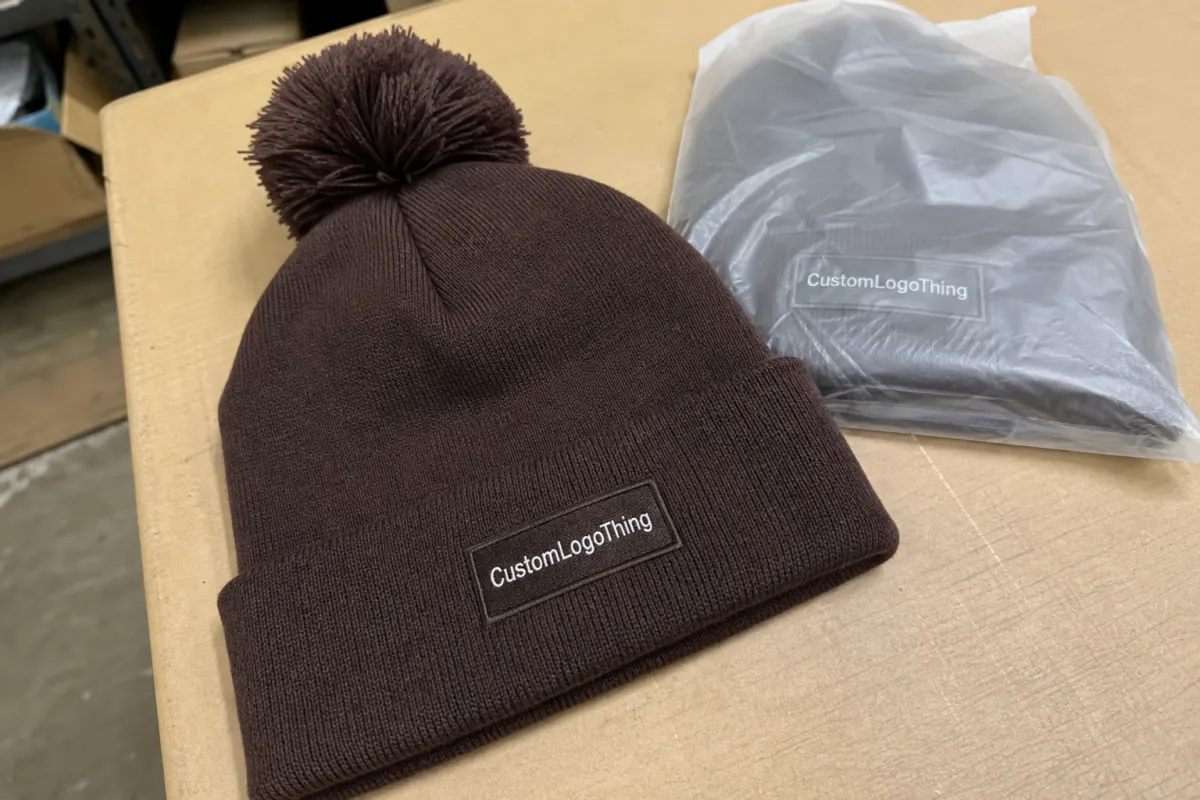
A winter event buyer can order 500 beanies and still end up with only 420 usable units on the distribution table. The shortage may not come from production at all. It often comes from missing overage, unclear staff versus retail allocation, late artwork approval, or cartons that arrive without labels separating VIP kits, volunteer gear, and resale inventory. That is why chocolate pom pom Beanies Bulk Order Planning needs to begin before the mockup stage.
A beanie looks simple from the outside, but bulk ordering gives it a longer list of variables than most buyers expect. Quantity, yarn weight, cuff height, pom size, decoration method, artwork format, delivery date, packaging, carton labels, and ship-to instructions all influence whether the order lands cleanly or turns into a sorting project two days before an event.
Chocolate brown earns its place in cold-weather merchandise because it is softer than black, warmer than navy, and more forgiving than cream or light gray. It sits naturally beside outdoor uniforms, coffee shop aprons, brewery merch, cannabis retail branding, resort gift programs, construction layers, and hospitality kits. The color feels seasonal without becoming loud, and it photographs well with kraft packaging, tan patches, cream thread, and muted winter palettes.
Buyers sometimes treat a beanie as a casual apparel item. Packaging and procurement teams tend to see the risk sooner. The visible surface gets the creative attention, but the hidden specifications control the outcome: fabric weight, knit density, cuff stability, pom attachment, stitch count, decoration tolerance, carton sorting, and whether every unit is individually bagged or bulk packed.
Buying rule: if a detail affects appearance, distribution, receiving, resale, or customer experience, it belongs in the quote request before proof approval.
The common failures are not dramatic. One-size-fits-most is treated as universal. Thread colors are approved from a screen rather than a physical reference. A reorder is assumed even though the first run uses a custom yarn shade. No one adds 5% overage for new hires, lost inventory, influencer seeding, damaged units, or walk-in event demand. Those gaps become visible only after the order is already moving, and by then the options are usually more expensive.
Product Details Buyers Should Lock Before Quoting
Chocolate Pom Pom Beanies are knit winter hats in a cocoa, espresso, mocha, walnut, or dark brown shade, finished with a pom on top and customized with embroidery, woven patches, chenille patches, leatherette patches, clamp labels, hang tags, or retail-ready packaging. That definition sounds basic, but nearly every word can affect cost, production timing, and buyer satisfaction.
Start with the construction. A cuffed rib knit beanie gives the decorator a stable branding zone, often around 2.5 to 3.5 inches high after folding. An uncuffed beanie feels more relaxed, though it gives less control over logo placement because the fabric stretches differently on the head. Cable knit has a stronger seasonal texture, which can be beautiful for retail but less friendly to fine embroidery. A solid chocolate yarn gives a clean uniform look. A contrast pom or two-tone knit can make the piece more merch-driven, but it also adds another approval point.
Brown shades need discipline. A supplier may call three different yarns “chocolate,” while one reads as espresso, one as milk chocolate, and one as taupe under warehouse lighting. If the shade matters to the brand, ask for a physical sample, an approved color reference, or a swatch from the intended yarn. PMS matching is not exact on dyed yarn, especially on textured knit goods, and a clear supplier should say so before the order is approved.
The pom is not just a playful add-on. It changes the silhouette, the shelf presence, the shipping cube, and the way the hat feels in a uniform program. Larger poms, often around 3.5 to 4.5 inches in diameter, give stronger visual impact for retail displays and social content. Denser, tighter poms tend to work better for staff programs and outdoor workwear because they shed less and look less costume-like. A matching chocolate pom feels polished; cream, tan, caramel, or striped poms push the item toward seasonal merchandise.
- Centered cuff embroidery: best for simple marks, short wordmarks, staff programs, and event giveaways.
- Side patch placement: useful for premium retail styling or quieter brand visibility.
- Woven clamp label: effective for small logos and edge branding without a large front mark.
- Retail hang tag: helpful for campus stores, ski lodges, breweries, boutiques, and resale programs.
For paid campaigns, winter launches, retail drops, or fixed event dates, request a pre-production proof when timing allows. Digital artwork can show approximate placement, but a physical sample reveals stretch, texture, shade, logo visibility, and pom behavior in normal light. If the budget or schedule does not allow a full sample, ask for the closest available blank sample and a decoration proof with exact dimensions.
Specs That Control Comfort, Durability, and Brand Perception
A useful quote request reads more like a spec sheet than a wish list. Ask for the knit material, yarn weight, finished beanie height, cuff height, pom diameter, stretch range, decoration dimensions, final folded appearance, packing method, carton count, and labeling requirements. That amount of detail may feel heavy for a hat, but it prevents disputes after the goods are decorated.
Acrylic remains the standard workhorse for bulk beanies because it is cost-effective, color-stable, easy to decorate, and generally durable for promotional and retail use. Wool blends can feel warmer and more premium, sometimes with a noticeably softer hand, but they may raise unit cost and require clearer care instructions. Recycled yarns can support sustainability goals, though color options may be narrower and production windows less flexible. If sustainability claims will appear on hang tags or product pages, ask for documentation rather than relying on a vague recycled-content note. For paper tags, backer cards, or FSC-certified packaging components, buyers can reference the Forest Stewardship Council for responsible sourcing context.
Knit density deserves close attention. Looser knits can feel soft and casual, yet they may distort embroidery, especially on thin letters, small icons, or circular seals. Tighter rib knits usually hold direct embroidery and patches more consistently because the decoration zone stretches less. On a folded cuff, a 2.25-inch-wide logo may look balanced; a 4-inch mark may curve toward the side seam and lose readability.
Choose the logo method around the artwork, not around habit. Direct embroidery works for bold marks, simple icons, and limited color counts. Woven patches preserve small details and crisp edges. Chenille patches create a collegiate or winter-sport look for university stores, spirit campaigns, and resort merchandise. Leatherette patches suit rustic coffee brands, outdoor retailers, cannabis shops, lodge programs, and gift kits, especially in tan, saddle, or debossed brown tones.
| Logo Method | Best Use | Watchout | Typical Buyer Fit |
|---|---|---|---|
| Direct embroidery | Simple logos, bold shapes, 1-6 thread colors | Tiny text and gradients usually fail | Staff uniforms, event giveaways |
| Woven patch | Small details and clean retail finish | Patch setup can add cost | Merch stores, breweries, universities |
| Leatherette patch | Outdoor, rustic, premium styling | Fine contrast depends on deboss depth | Coffee brands, lodges, cannabis retail |
| Clamp label | Subtle edge branding | Less front-facing visibility | Corporate gifting, private label kits |
Decoration size is where many attractive ideas start to break down. A tall vertical logo may fit on a screen but look cramped on a 3-inch cuff. Fine script can fill with thread. A patch with a thick border may feel stiff against a very soft knit. If the brand mark has fine details, request a decoration recommendation instead of forcing direct embroidery onto a surface that will not support it well.
Packaging should be quoted with the product, not added after approval. Individual poly bags protect against dust and moisture during transit. Hang tags help retail teams merchandise the item. Barcode labels, size stickers, and carton labels matter if the beanies move through a warehouse, campus store, resort shop, fulfillment center, or gift-kit assembly line. A supplier familiar with custom merchandise and packaging control should treat those details as part of the same procurement conversation, not as late-stage extras.
Pricing, MOQ, and Unit Cost Factors for Bulk Beanie Orders
Final cost depends on quantity, blank availability, material, decoration method, logo complexity, sample needs, packaging, freight, and deadline. A low unit number that excludes setup, packing, or shipping is not a complete comparison. Buyers get better decisions when they compare landed pricing, with the same assumptions shown on every quote.
MOQ depends on the production path. Stock blank beanies with embroidery or patches may support lower minimums, sometimes near 100 pieces depending on decoration and inventory. Custom yarn colors, jacquard knit patterns, private-label trim, specialty poms, custom retail bundles, and woven-in artwork usually require higher quantities because setup and sourcing costs have to be spread across the run. For a one-time giveaway, stock styles may be smarter. For a repeat merch program, higher minimums can justify a more distinctive product.
The first units absorb fixed costs: artwork cleanup, embroidery digitizing, patch mold or loom setup, proofing, sample handling, packing instructions, production prep, and quality checks. Larger runs spread those costs across more pieces. That is why a 250-piece quote can look disproportionately expensive compared with 1,000 pieces, even if the base beanie has not changed.
| Quantity Tier | Typical Planning Use | Cost Behavior | Buyer Question |
|---|---|---|---|
| 100 pieces | Small team, VIP kit, test merch | Higher unit cost due to setup | Can stock blanks meet the deadline? |
| 250 pieces | Event staff, local campaign | Moderate setup impact | Is a patch more cost-effective than detailed embroidery? |
| 500 pieces | Winter race, employee gift, store drop | Better price breaks often begin | Should 5%-8% overage be added? |
| 1,000 pieces | Regional campaign, resort retail | Fixed costs spread efficiently | Do carton labels and SKU separation need to be specified? |
| 2,500 pieces | Large program, private label run | Custom options become more practical | Is landed pricing locked with freight and packaging? |
Common quote add-ons include digitizing, patch setup, PMS color matching attempts, individual bagging, hang tags, barcode labels, carton labels, split shipments, rush production, and expedited freight. Depending on the project, decoration and packaging can add roughly $0.35 to $2.50 or more per unit. Freight can move even more sharply because knit winter goods are bulky for their weight, and pom styles usually take more carton space than flat cuff beanies.
The cheapest unit price may not be the lowest total cost. Late delivery creates replacement spending. Poor carton organization creates labor at receiving. Missing retail labels can delay store placement. A slightly higher unit price with accurate packing, clear proofing, and dependable timing may be less expensive once the full program is measured. Custom Logo Things buyers can also review broader ordering support through Wholesale Programs when quantity tiers, repeat runs, and program pricing are part of the decision.
Process, Lead Time, and Production Steps From Quote to Delivery
The process is manageable when every approval has an owner: inquiry, spec confirmation, artwork review, quote approval, digital proof, sample or pre-production approval, bulk production, quality check, packing, shipping, and receiving. Miss one step, and the calendar gets tight quickly.
Lead time starts after approvals, not after the first email. That single misunderstanding costs seasonal buyers a week more often than any technical production issue. If the logo is sent on Monday but the proof sits in review until Friday, production has not quietly been running in the background. The clock starts after the supplier has approved art, confirmed specs, payment or a purchase order if required, and shipping details.
Typical timing variables include stock availability, decoration queue, patch production, packaging requirements, freight method, holiday congestion, and whether the order ships domestically or crosses a border. A stock acrylic beanie with direct embroidery may move much faster than a custom yarn color with woven patches and retail packaging. If the order needs a physical pre-production sample, add time for sample production, shipping, internal review, and revision if the first version is not approved.
The blockers are usually ordinary: incomplete logo files, unclear chocolate shade, undecided patch size, late purchase order, missing ship-to addresses, and internal approval chains with too many people reviewing the same proof. Vector artwork helps. AI, EPS, PDF, or SVG files usually give decorators cleaner output than a low-resolution PNG copied from a website header.
Proofing discipline is not bureaucracy; it is loss prevention. Check spelling, logo scale, thread colors, patch colors, cuff fold, pom color, hang tag copy, barcode placement, carton labels, and ship-to data before approving production. For packing performance and transit risk, standards from the International Safe Transit Association are a useful reference point when buyers are building larger retail, warehouse, or kit programs.
- Set the in-hands date first, then work backward.
- Assign internal deadlines for artwork, proof approval, payment, and shipping confirmation.
- Add buffer before winter events, campus store drops, resort openings, and employee gifting cycles.
- Confirm whether the order ships to one warehouse, several departments, or multiple destinations.
If the delivery date is fixed, say so in the first inquiry. A supplier can then recommend stock styles, simpler decoration, faster packing, or freight choices that protect the date. It is better to design a clean product that arrives on time than a more elaborate product that misses the season.
Risk Checks That Prevent Bulk Order Mistakes
Most failed bulk beanie orders are not manufacturing disasters. They are unresolved questions. No one owned shade approval. No one checked the logo on a folded cuff. No one told receiving that 12 cartons would contain three decoration versions. The product may be technically correct and still operationally wrong.
Start with color. Confirm whether the selected beanie is chocolate brown, espresso, cocoa, walnut, or another brown tone. Ask whether the sample represents the bulk dye lot or only the closest available reference. Dark browns can shift more visibly under warm retail lighting than buyers expect, especially beside tan patches, cream embroidery, kraft tags, or black outerwear.
Then test the decoration. A logo that looks balanced on a flat PDF may be too tall on a 3-inch cuff. Embroidery can pull knit fabric. Patch edges can feel firm if the beanie body is very soft. Clamp labels may disappear if placed too close to a side seam. Approve location, dimensions, and folded appearance together, not as separate guesses.
Physical samples are valuable because digital mockups hide texture, stretch, and light behavior. A mockup can show placement. A sample shows whether the logo stays readable when the hat is worn, whether the pom feels securely attached, and whether the chocolate shade works beside uniforms, packaging, or store fixtures. For premium retail, ask about acceptable tolerances for size, shade, and decoration placement before production begins.
Quantity planning needs realism. Add overage for new hires, event walk-ins, lost inventory, influencer seeding, damaged units, and replacement needs. For stock styles, reorders may be possible. For custom colors, custom patches, or private-label packaging, a small reorder can be slow or uneconomical. Five percent overage is often a safe starting point; high-traffic events and retail launches may justify more.
- Confirm carton counts and total unit count before shipment.
- Request carton labels by SKU, logo version, destination, or department.
- Ask for a packing list that receiving can reconcile quickly.
- Separate retail units from staff units if packaging differs.
- Document acceptable tolerance for shade, size, and placement.
Quality control should include both appearance and function. Check that the cuff folds evenly, the pom is firmly attached, the decoration is centered within the approved tolerance, loose threads are trimmed, and labels or hang tags match the packing instructions. For larger programs, a photo report before shipment can help catch carton labeling or decoration-version mix-ups before the goods leave the production floor.
Risk management protects brand value. A beanie that arrives late, looks different from the proof, or requires manual re-sorting can erase every cent saved by a cheaper quote. Treat chocolate Pom Pom Beanies Bulk Order planning as a controlled procurement process, not a last-minute merch buy.
Build a Cleaner Quote Request
Before requesting a quote, build a short buying brief. It does not need to be polished. It needs to be specific. Quantity tier, target delivery date, chocolate shade, beanie style, logo method, packaging requirements, and shipping destination are the essentials.
Send the vector logo file with the first inquiry if possible. Include preferred decoration size, event date or in-hands date, budget range if known, and whether the order needs individual bags, hang tags, barcode labels, size stickers, or carton labeling. If the beanies are for resale, say that early. Retail-ready packing has a different standard than bulk-packed staff apparel.
If the team is undecided, ask for two or three quote paths. A practical option might use a stock acrylic rib knit with direct embroidery. A more retail-forward option might use a woven patch and individual poly bags. A premium option could include a wool-blend feel, leatherette patch, hang tag, barcode label, and carton-level SKU separation. Comparing those paths gives purchasing, marketing, and operations a shared decision table instead of a loose debate over taste.
Custom Logo Things can help buyers evaluate custom beanie options through the same lens used in packaging procurement: visible branding, production control, packing accuracy, and delivery reliability. That matters because a winter hat is both product and package. It carries the logo, creates the first tactile impression, and often becomes part of a gift kit, store display, employee uniform program, or seasonal merch release.
Before purchase order approval, run one final internal check. Marketing verifies logo accuracy and color direction. Operations confirms delivery date and packing needs. Finance reviews landed cost rather than partial unit cost. Receiving confirms carton labels, ship-to details, and any SKU separation. For broader ordering questions, the Custom Logo Things FAQ can help clarify common proofing, production, and shipping steps.
A strong bulk order is not complicated; it is documented. Good planning gives the team fewer surprises before money, time, and winter inventory are committed.
FAQ
What information is needed for chocolate pom pom beanies bulk order planning?
Provide quantity, target delivery date, logo file, preferred decoration method, chocolate color reference, shipping address, and packaging requirements. If the order supports resale or event distribution, include hang tags, barcode labels, individual bagging, carton labels, and any ship-to separation instructions.
What MOQ should I expect for custom chocolate pom pom beanies?
MOQ depends on whether the order uses stock blanks or fully custom construction. Stock beanies with embroidery or patches often allow lower minimums, while custom yarn colors, woven-in designs, private-label packaging, specialty poms, and custom trims typically require higher quantities.
How long does a bulk order of chocolate pom pom beanies take?
Timing depends on stock availability, artwork approval, decoration method, sample requirements, packaging, and freight method. Count lead time after proof approval, not from the first inquiry. If the delivery date is fixed, approve artwork quickly and confirm shipping details early.
Which logo method works best on chocolate pom pom beanies?
Direct embroidery works well for simple logos with bold shapes and limited colors. Woven patches, leatherette patches, chenille patches, and clamp labels are better for small text, detailed artwork, or a more retail-ready branded look.
How can I reduce unit cost on a chocolate pom pom beanie bulk order?
Increase quantity to reach better price tiers, simplify the logo, use stock beanie colors, avoid rush freight, and confirm packaging needs before quoting. Ask for landed pricing so decoration, setup, packing, and shipping are compared together instead of as incomplete line items.


