Pet treat Shipping Tubes Cost is never just a line on a quote sheet. It affects how the product rides through distribution, how it presents on shelf, and how much of the budget survives after freight, handling, and spoilage are counted. A low number can look great on paper, then turn messy once the first cases arrive dented, the cap fit is off, or the fulfillment team has to rework every unit before it ships. For brands balancing ecommerce shipping, retail display, and subscription pack-outs, the real question is not only Pet Treat Shipping Tubes cost, but whether the tube design actually fits the treat, the channel, and the way the product will be handled.
Pet treat shipping tubes cost should be evaluated as total landed cost, not as a per-unit quote in isolation. A tube that saves three cents can quietly add ten cents or more in labor, freight, or damage exposure, and that math adds up fast. Protection, dimensional weight, shelf appeal, and brand presentation all live in the same decision tree. The right answer depends on fill weight, treat shape, closure style, and the shipping materials already built into the supply chain. If one of those pieces is off, the quote is gonna be the least interesting part of the problem.
“If the tube looks premium but fails in transit, the quote was never cheap.”
Pet Treat Shipping Tubes Cost: why the cheapest quote can fail
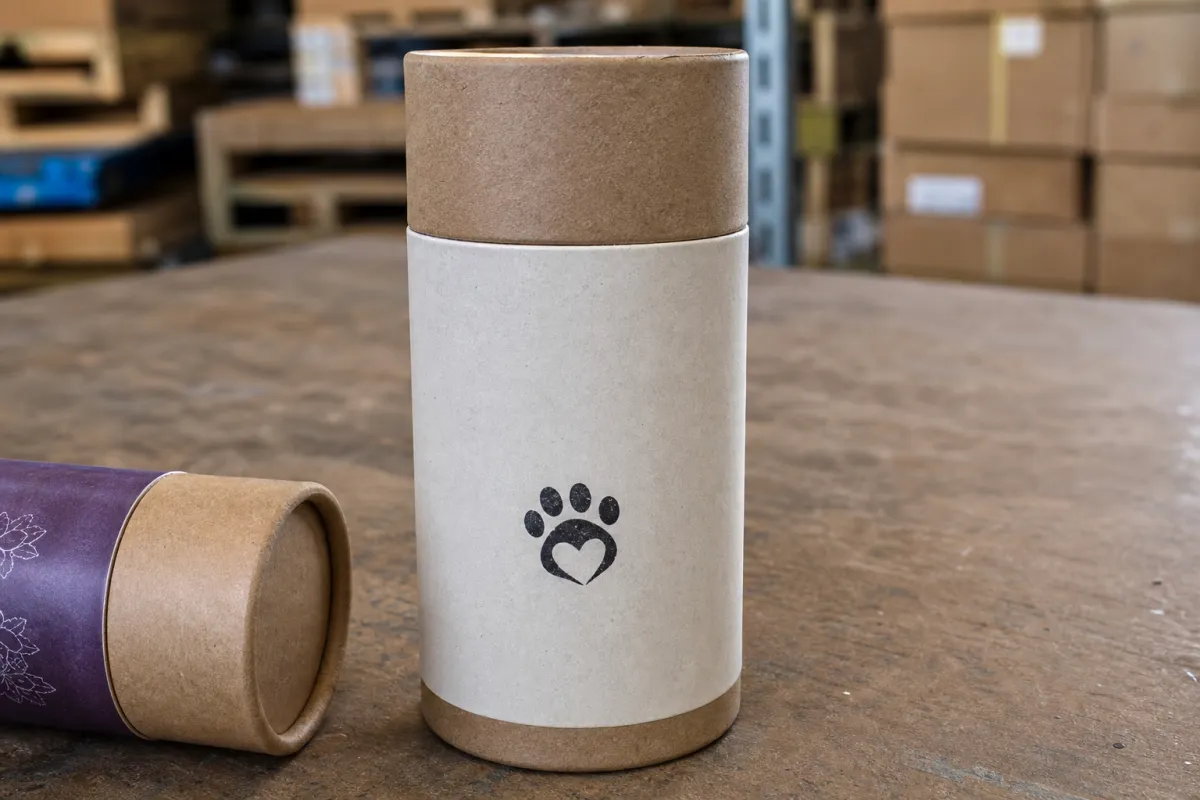
Pet treat shipping tubes cost is often judged before the buyer has compared damage risk, stackability, and the actual pack-out method. A quote that comes in 12% lower may depend on thinner wall stock, a looser cap fit, or a lighter finish. That might be fine for a dry biscuit sampler. It is a bad fit for oily jerky sticks, freeze-dried snacks, or products that move through parcel networks with plenty of handling pressure.
In packaging reviews I have seen the first failure show up as compression, not print. A tube that collapses under a carton corner or a pallet load creates two costs at once: replacement product and labor to inspect, repack, or reship. Pet treat shipping tubes cost should therefore include returns, claims, and the brand damage that comes with a broken presentation. One cracked tube in a subscription box can sour the whole unboxing moment, even if the treat itself is perfectly good.
Freight can shift the math just as quickly. A tube with a slightly larger diameter may trigger dimensional weight charges that wipe out the savings from cheaper board. A longer format can increase cubic volume across trays, shipper cartons, and master cases. Pet treat shipping tubes cost should be checked against cube efficiency, not only the print quote. The most efficient design usually uses less air, not simply less paper.
Retail buyers think about the tube differently from direct-to-consumer teams. On shelf, the package is competing with dozens of treats and supplements, and customers make snap judgments. If the label buckles, the cap scuffs, or the finish reads dull, the product feels less valuable even when the formula is excellent. A well-built packaging spec turns pet treat shipping tubes cost into a merchandising tool instead of a hidden expense.
The cheapest quote usually misses one of four things: crush resistance, seal integrity, print quality, or fulfillment speed. That is why buyers should ask how the price changes when the spec moves from a basic paperboard cylinder to a rigid tube with printed sleeves, a tamper-evident seal, or an internal insert. Those details can shift pet treat shipping tubes cost by cents per unit, while the wrong choice can shift customer retention by a lot more.
For teams that need a broader packaging mix, it helps to compare tubes with other Custom Packaging Products, especially if the same brand also ships flat goods, samples, or boxed kits. A tube may fit one SKU while a mailer or folding carton fits another. Pet treat shipping tubes cost works best as one part of a wider shipping materials strategy, not as a standalone purchase.
Product Details: what custom pet treat shipping tubes include
Custom pet treat shipping tubes are not a single structure. Common formats include paperboard cylinders, rigid tubes with metal or plastic ends, windowed styles, sleeve-and-insert constructions, and fully printed wraps over a plain core. Each version changes pet treat shipping tubes cost, but each one also changes how the product behaves in transit and on shelf. Buyers should start with the treat itself, not the packaging catalog.
For biscuits and hard cookies, a standard paperboard cylinder with capped ends may be enough if the product is dry and stable. For chews, jerky, or products with a strong aroma profile, a tighter closure and a more protective lining usually make sense. Freeze-dried treats often benefit from a structure that limits dusting and helps the pack look clean, especially when the order is moving through ecommerce shipping and the customer opens the carton as part of the brand experience. In those cases, pet treat shipping tubes cost is tied directly to product behavior.
Windowed tubes can help show the treat color or shape, but the window also creates a structural and barrier tradeoff. A large opening can weaken stiffness. A thin film can wrinkle or scuff. None of that means windows should be avoided. It means the design needs a purpose. Pet treat shipping tubes cost may rise a little for a window, yet the shelf impact can justify the increase if the brand depends on visual proof of quality.
Branding choices go further than many buyers expect. Full-wrap print, QR codes, batch identifiers, tamper-evident seals, seasonal graphics, and internal inserts all affect the quote. If the tube is meant for promotions or sampling, an internal insert can create a cleaner opening experience and stabilize the product. If the tube is meant for recurring order fulfillment, repeatability matters more than novelty. A buyer should ask whether the specification will still be easy to reorder six months later. That question can save more than pet treat shipping tubes cost itself.
- Paperboard cylinders: good for lighter treats, sample packs, and promotional runs.
- Rigid tubes: better for premium presentation, heavier fills, and stronger crush resistance.
- Windowed styles: useful for visibility, but they need careful structural planning.
- Sleeve-and-insert designs: useful when the brand needs print flexibility or seasonal artwork.
If the packaging program also uses flexible formats, a tube can sit alongside Custom Poly Mailers for lighter ecommerce shipments and Custom Shipping Boxes for higher-protection orders. That comparison matters because the right transit packaging choice changes the final cost stack, not only the carton design. Pet treat shipping tubes cost should be compared against the whole packout, including inner cushioning and the outer shipper size.
Specifications that affect performance and shelf life
The biggest mistake buyers make is treating the tube as a generic container. Pet treat shipping tubes cost changes quickly once dimensions, wall thickness, and barrier needs are specified. A 2.5 inch diameter tube for bite-sized biscuits will not price the same as a 4 inch tube for large chews. Length matters too, since every extra inch can affect master carton count, pallet density, and freight class.
Fit tolerance is one of the most overlooked numbers in the spec. If the cap is too tight, line workers slow down and closures deform. If it is too loose, the unit opens during transit or in a retail tote. The right tolerance depends on the closure system and the fill weight. A buyer should ask for sample testing with the actual product, not just a mock-up. That is the practical way to control pet treat shipping tubes cost without gambling on a full run.
Material selection also moves the price. Kraft board often delivers a natural look and a solid sustainability story. SBS board supports brighter print and a smoother retail finish. Recycled content can help with environmental positioning, but the buyer should confirm whether the board still offers enough crush strength and moisture performance. For treated or aromatic snacks, a barrier liner may be worth the added spend. Used well, pet treat shipping tubes cost buys more than a container; it buys shelf life protection and fewer headaches after launch.
Print and finish are not decoration alone. CMYK print handles detailed artwork and photography. PMS colors give tighter brand matching. Matte finish can read more premium, while gloss can boost contrast and color saturation. Soft-touch lamination creates a tactile feel, though it adds cost and can be more sensitive to scuffing. Protective varnish may be the better choice if the pack will be handled often or stacked in distribution. Pet treat shipping tubes cost changes with each finish choice, and the best spec is the one that fits the channel instead of just looking good in a proof.
Food-safe inks and coatings should be discussed early. If the treat is low-odor and dry, the requirements are usually straightforward. If it is oily, aromatic, or shipped in humid conditions, the buyer should ask for a moisture-resistant structure and confirm whether the inks, adhesives, and inner surfaces are suitable for the intended use. Standards matter here. Teams that need validation often reference ISTA testing protocols for distribution performance, and for paper sourcing or recycled fiber claims, many brands also ask for FSC chain-of-custody documentation.
Humidity resistance and stackability matter most in warehouse storage. A tube can look perfect on day one and still fail after two weeks in a hot dock or a damp storage area. Pet treat shipping tubes cost should therefore include performance expectations, not only artwork approval. If the package is headed into ambient distribution, ask for crush testing, drop testing, and closure testing that match the actual shipping lane. Buyers do not need lab theater; they need proof that the tube survives the real route.
Pet Treat Shipping Tubes Cost: pricing, MOQ, and unit cost
Pet treat shipping tubes cost is driven by a short list of variables, and once those variables are clear, the quote becomes much easier to compare. Size, board grade, print coverage, finishing, inserts, caps, and shipping destination do most of the work. MOQ matters too, because setup and tooling are fixed costs that get spread across the order. The smaller the run, the higher the cost per finished tube.
For planning purposes, a sample or prototype stage may cost anywhere from $120 to $350 in setup plus $0.80 to $2.50 per unit, depending on complexity. A pilot run of 500 to 1,000 units often lands around $0.95 to $2.10 each. A 3,000 to 5,000 unit production run can fall into the $0.38 to $0.95 range for simpler structures, while premium builds with special finishes, barrier liners, or complex closures can sit above that. Reorders usually improve the unit cost if nothing changes. Pet treat shipping tubes cost gets better with scale, but only when the spec stays stable.
That is why buyers should request tiered pricing. Ask for 500, 1,000, and 5,000 unit scenarios. Compare the numbers on a landed basis, not just ex-works pricing. Freight, overage, scrap allowance, and expected waste rate all matter. A quote that is 8% lower on paper can become more expensive once shipping and spoilage are added. Pet treat shipping tubes cost should always be viewed through landed cost and usable yield, because that is where the budget either holds together or quietly slips away.
| Order Stage | Typical Use | Typical Unit Cost Range | MOQ Signal | What Changes the Price |
|---|---|---|---|---|
| Sample / prototype | Fit checks, artwork review, transit test | $0.80 - $2.50 | 1 - 50 pcs | Prepress time, hand assembly, special materials |
| Pilot run | Retail validation, ecommerce launch, internal approval | $0.95 - $2.10 | 500 - 1,000 pcs | Lower press efficiency, setup spread, insert complexity |
| Production run | Core launch volume, recurring orders | $0.38 - $0.95 | 3,000 - 5,000 pcs | Board grade, print coverage, finish, closures |
| Reorder volume | Stable SKUs with repeat demand | $0.24 - $0.68 | 10,000+ pcs | Less artwork setup, better press utilization, smoother freight planning |
The table gives a useful starting point, but pet treat shipping tubes cost can still move sharply if the design includes a window, a metal lid, embossing, or a specialty coating. Buyers should also ask whether the quoted MOQ is a hard minimum or simply the point where pricing becomes efficient. Those are not the same. Sometimes a vendor can produce a smaller run, yet the unit cost rises because setup time barely changes.
Waste is the other piece that gets ignored. A ten percent overage may be normal in some production environments, but the buyer should know whether the quote includes usable overage or dead stock. Seasonal artwork makes waste feel more painful. Evergreen SKUs can absorb extra quantity more easily. Pet treat shipping tubes cost only looks simple until someone asks what happens to the last 200 units.
Buyers who want a broader sense of packaging spend can compare tube pricing against other transit packaging categories, especially if the same project also needs branded pouches or cartons. The goal is not to choose the cheapest structure every time. The goal is to make sure pet treat shipping tubes cost is competitive relative to protection, decoration, and fulfillment labor.
Process, timeline, and lead time from proof to delivery
The production path is usually straightforward, yet approvals are where time disappears. A standard workflow starts with a brief, then a dieline, artwork setup, proof approval, sampling, production, finishing, packing, and freight booking. Pet treat shipping tubes cost can rise if that sequence gets interrupted, because every revision adds prepress time and sometimes new tooling. Buyers who want control should treat the schedule like a procurement project, not an afterthought.
A simple order with known dimensions and straightforward print may move from brief to proof in 2 to 4 business days. Sampling can add another 3 to 7 business days if a physical prototype is needed. Production often runs 10 to 18 business days after approval, depending on structure and finish. Freight then adds its own transit window. Pet treat shipping tubes cost is not only about the carton price; it is also about whether the order lands in time for launch, promo, or replenishment.
Two timing delays show up often. The first is artwork. Buyers submit files that need cleanup, color conversion, or dieline correction. The second is closure testing. If the cap, seal, or insert does not fit exactly right, the package may need another sample pass. That is why a buyer should confirm the fill method early. A tube used for order fulfillment needs different tolerances than a tube used for shelf display. Pet treat shipping tubes cost is easier to control when the spec is locked before the order is released.
Rush orders are possible, but they are not always wise. A rush can compress proofing and reduce room for testing, and that is risky on a food-adjacent package. If the project has a hard launch date, work backward through three checkpoints: artwork approval, sample sign-off, and freight departure. The closer the team gets to launch, the more expensive mistakes become. Pet treat shipping tubes cost should be reviewed alongside schedule risk so the buyer sees the real tradeoff, not just the deadline.
For buyers who need a repeatable program, it helps to keep a simple change log: dimensions, board grade, finish, closure type, and approved artwork version. That record makes reorders cleaner and reduces the chance of hidden drift. In packaging, tiny changes add up. A one-millimeter shift in diameter or a different varnish can change both appearance and unit cost. A good supplier should flag those changes before they become a headache. That discipline keeps pet treat shipping tubes cost steadier across repeat runs.
Why choose us for custom pet treat tubes
Buyers do not just want a price. They want a quote they can trust. That means quick response, structural guidance, prepress review, and clear communication when a file or spec needs correction. Our approach is practical: we help match the tube to the treat, the channel, and the budget. Pet treat shipping tubes cost is only useful if the packaging actually works in the real supply chain, and that means the spec has to hold up after sampling, freight, and a few handling surprises.
Repeatability is one reason buyers come back. The first run may be a rush to hit launch, but the second run should match it in size, print, and finish. If a reorder comes back with a looser cap or a different color density, the brand pays for it in complaints and extra checks. A stable process protects both margin and presentation. Pet treat shipping tubes cost becomes easier to manage when the production record is clean and the spec is documented.
We also focus on risk reduction before production starts. That includes measurement checks, artwork cleanup, sample validation, and flagging issues like heavy fill weight, scuff-prone finishes, or poor carton configuration. This is especially useful for mixed packaging programs that also use Custom Packaging Products across multiple channels. A supplier that can compare the tube with the rest of the packout often helps the buyer avoid overbuying and duplicate spend.
Strong communication is not a soft benefit. It changes the purchasing outcome. If a team understands whether a 1,000-unit run will cost more because of setup, whether a barrier liner is worth the premium, and whether a rush fee makes sense, the final decision improves. That is the standard we aim for. Pet treat shipping tubes cost should be clear enough that the buyer can present it internally without having to defend guesses, and that clarity saves time for everyone involved.
Buyers looking for adjacent solutions often pair tubes with Custom Shipping Boxes for outer protection or Custom Poly Mailers for lightweight secondary shipments. Packaging is rarely one SKU. It is a system. When the tube is part of that system, pet treat shipping tubes cost becomes more predictable and easier to scale.
“The best packaging quote is the one that stays accurate after sampling, freight, and production reality.”
Next steps: how to request a quote that is actually usable
Start with the numbers that change the structure. Give the supplier the exact diameter, length, fill weight, treat type, and whether the product is dry, oily, or aromatic. Then include the print coverage, finish preference, and any insert, window, or tamper-evident requirement. Pet treat shipping tubes cost gets much sharper when the quote is built from actual product data instead of a rough guess.
Next, define the channel. A retail shelf tube, a subscription box tube, and a warehouse sample tube do not share the same spec priorities. Retail needs visibility and brand presence. Ecommerce shipping needs crush resistance and efficient cube usage. Sample packs need controlled cost and fast production. If the use case is clear, the quote gets better. That is the fastest way to make pet treat shipping tubes cost meaningful instead of theoretical.
Ask for at least two or three quantity tiers. A good quote should show how the unit cost changes at 500, 1,000, and 5,000 units, plus any reorder pricing. If possible, request a sample or prototype before full production, especially if the closure fit is critical or the product has short shelf-life sensitivity. This is the point where a buyer can discover whether the tube needs a tighter cap, a heavier board, or a different inner finish. It is far cheaper to adjust the spec here than after a full run. Pet treat shipping tubes cost is most manageable when the test stage is taken seriously.
Finally, plan for the reorder. Keep approved artwork, the dieline version, and the measured sample on file. Note the approved board grade, finish, and any special instructions for pack-out or carton loading. That way the second order does not turn into a new project. If the team keeps those records, pet treat shipping tubes cost stays more stable, the lead time becomes more predictable, and the packaging can support growth instead of slowing it down. The practical takeaway is simple: quote from a real spec, test the structure before volume, and keep the approved details close so the next run does not drift.
What drives pet treat shipping tubes cost the most?
Size, Board Grade, and Print coverage usually have the biggest impact on pet treat shipping tubes cost. Caps, inserts, special coatings, and window features can raise the number quickly, especially on smaller runs. Freight and order quantity matter too, because the per-unit price drops as setup is spread across more pieces.
What MOQ should I expect for custom pet treat shipping tubes?
MOQ depends on structure, print method, and whether tooling is needed. A simple tube may have a lower threshold than a rigid, fully printed version with special finishing. Ask for tiered pricing so you can compare 500, 1,000, and 5,000 units before deciding whether pet treat shipping tubes cost fits the launch plan.
Are pet treat shipping tubes food-safe and moisture resistant?
They can be specified with food-safe inks, coatings, and liner options. Moisture resistance depends on the board, finish, and barrier construction you choose. For oily or aromatic treats, ask for samples and basic performance testing before approving the full order, because pet treat shipping tubes cost should reflect real product protection.
How long does a custom pet treat tube order take?
Artwork approval is often the first timing gate, followed by sampling or prepress review. Production lead time varies by structure and finish, while freight adds separate transit time. Rush options may exist, but they usually cost more and reduce flexibility, so pet treat shipping tubes cost and schedule should be reviewed together.
Should I sample pet treat shipping tubes before placing a full order?
Yes, especially if the fill weight, closure fit, or shelf presentation is new. Sampling helps confirm crush resistance, closure tension, and how the tube handles transit. Many buyers use the sample stage to catch artwork or sizing issues before paying for a full run, which keeps pet treat shipping tubes cost from turning into a correction expense.


