Pet Treat Twisted Handle Paper Bags Material Thickness Guide sounds dry on paper. In practice, it is one of the few packaging decisions that can quietly make or break a pet treat launch. Thickness changes how the bag stands, how the handle carries weight, how the folds survive transport, and how the pack reads on shelf. A pretty mockup is nice. A bag that still looks decent after filling, stacking, and being dragged around by a customer matters more.
That is the trap. A sample can look sharp under studio lighting and still feel flimsy once it is filled with actual product. Change the paper by 15 to 25 gsm and you may shift handle comfort, top-edge stability, crease behavior, and even how the bag prints. Not dramatic in a spec sheet. Very dramatic in the hand.
For pet treats, the bag usually has to do three jobs at once: protect product, support brand image, and survive real handling. Dry biscuits, soft chews, oily snacks, and mixed assortments all stress the bag differently. A thickness choice that works for one SKU can fail for the next. That is why the right guide needs more than a nice round gsm number.
"A paper spec only matters if it survives a real fill, a real carry, and a real warehouse."
Pet Treat Twisted Handle Paper Bags Material Thickness Guide: What Thickness Really Changes
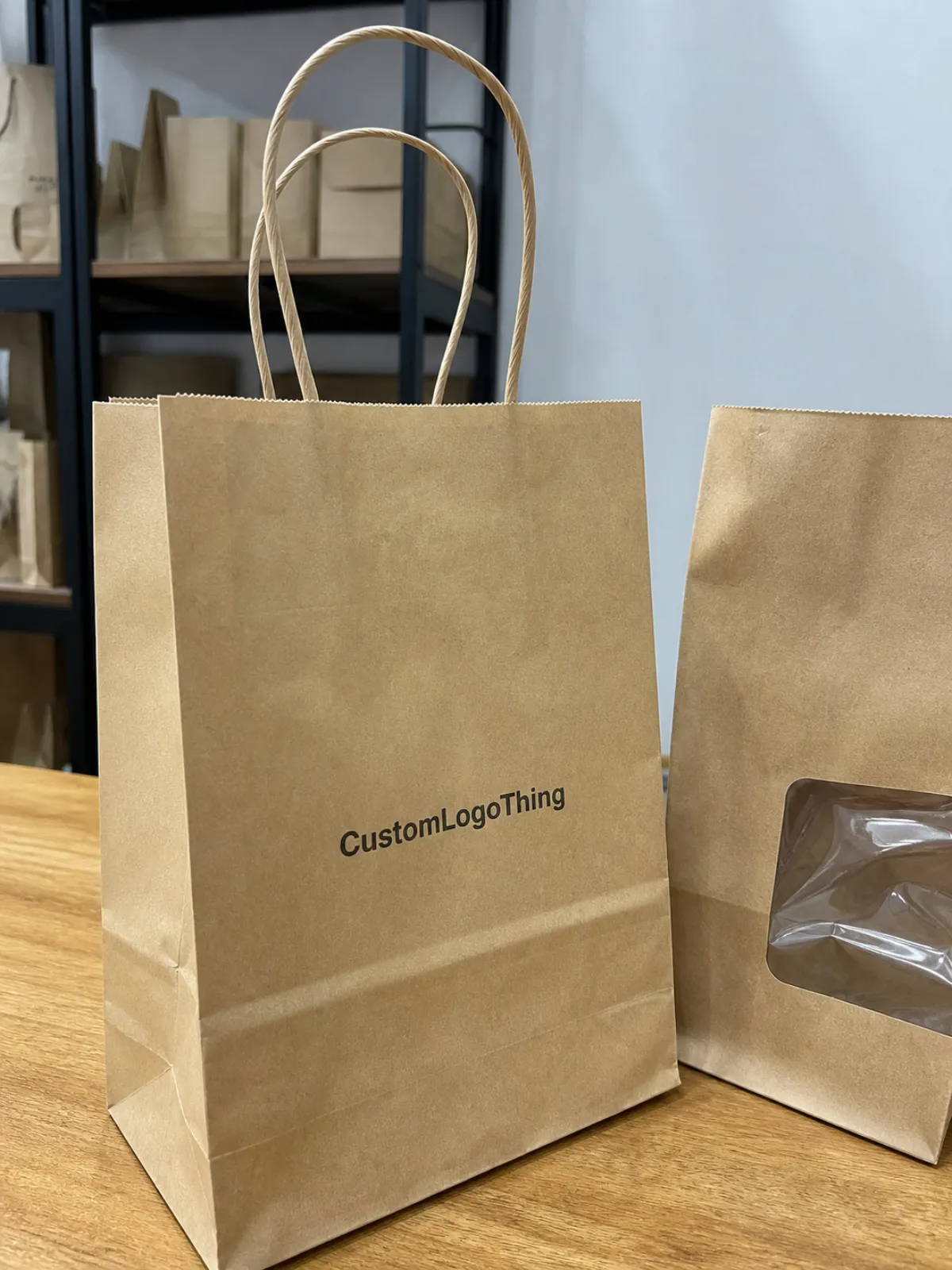
Thickness changes more than weight. It changes stiffness, fold memory, tear resistance, and how the bag behaves under load. With twisted handle bags, that matters twice as much because the handle transfers force into the top fold and the bonded anchor area. If that zone is too soft, the bag may still look fine empty but start to distort once a product sits inside it.
A thicker sheet usually gives a more upright stance and better shelf presence. The bag opens cleaner, stands straighter, and resists that tired, droopy look that makes a premium pack feel cheap. But extra thickness also makes forming harder. Too much body can cause cracking at the fold line, poor gluing, or resistance during machine conversion. More paper is not automatically better. It just moves the problem.
There is also the difference between how a bag feels in the hand and how it performs under repeated use. Buyers often test one sample, lift it once, and call it good. That is not enough. A shopper may pick up the bag, carry it to the register, put it in a cart, move it again at home, and then re-handle it several times while opening it. The handle and top edge need to survive all of that, not just a one-time lift.
In pet treats, failures often show up at the top fold, the handle glue line, or the gusset crease. The center panel is usually not the weak point. That is why thickness has to be judged as a system decision, not a one-variable fix. Body paper, handle construction, adhesive area, and fill shape all work together. If one piece is underbuilt, the bag will tell on itself quickly.
The practical takeaway is simple. For standard dry treats, mid-weight kraft often does the job. For heavier fills, oily contents, or larger retail packs, you usually need a stronger grade and a closer look at top reinforcement. If the bag has to hold its shape after shipping and shelf handling, thickness becomes part of the quality promise, not just a material choice.
How Paper Gauge, Fiber Mix, and Coatings Work Together
Paper specs get messy fast if people use thickness, basis weight, and caliper as if they mean the same thing. They do not. Basis weight tells you how much paper is in the sheet. Caliper tells you how much body it has in hand. Fiber mix tells you how the sheet folds, resists tearing, and behaves under pressure. Two papers can both read as 150 gsm and still make very different bags.
Virgin kraft tends to have a cleaner fiber structure and better tear resistance at the same weight. Recycled content can work well too, but the sheet may need more thickness to match stiffness. That is not a flaw. It is the tradeoff. If your brand brief requires FSC-certified paper or higher recycled content, plan for testing at more than one thickness rather than assuming one grade will do everything.
Coatings add another layer of complexity. A light grease barrier or surface treatment can help if the treats carry oils, aroma, or residue, but coating does not magically strengthen the bag. It mostly changes surface behavior and moisture resistance. The bag may still need a heavier sheet if the fill is dense or if the retail format demands a crisp upright stance.
Print finish matters too. A smoother sheet can improve fine detail and make small text easier to read, but that same smoothness can change the way the bag folds and feels. Heavy ink coverage can also affect stiffness. Sometimes the design team wants a premium matte look while operations wants easy folding on the line. Those two goals can coexist, but only if the paper spec is chosen with both in mind.
There is a good reason to keep transport standards in the conversation. Testing references such as ISTA help frame what the bag should survive in distribution, and sourcing references like FSC matter if environmental claims are part of the package. Neither one picks the paper for you. Both keep the conversation grounded in real requirements instead of wishful thinking.
One more thing buyers miss: humidity changes the game. Paper that feels crisp in a dry office can soften in a warehouse or a warm truck. Curl, waviness, and handle strain often show up after storage, not during the first sample check. If the supply chain is not climate-controlled, the spec should assume less-than-perfect conditions.
Key Factors That Set the Right Spec
The right thickness starts with the product, not the bag style. A 250 g pouch of dry biscuits behaves differently from a 1 kg bag of mixed treats, even if the outer dimensions are similar. Weight matters, but volume matters too. A light, wide pack can need more body than a smaller, denser one because the load spreads across a larger surface area.
Product texture changes the decision as well. Hard biscuits are usually cleaner on the inside of the pack. Soft chews can transfer oil or leave residue around the fold. Mixed assortments bring their own problems because the shapes do not stack evenly. If the contents press hard against the sidewall or top edge, the paper needs enough stiffness to recover after handling.
Handle construction is another big variable. Twisted handles look simple, but the bonded area is doing serious work. The handle needs enough glue area, enough top fold support, and enough paper body around the anchor point. Two bags can look nearly identical on a desk and behave very differently once filled. One may carry weight calmly. The other may start to oval out at the top after a few lifts.
Packaging teams also need to think about the shelf side of the equation. A bag that stands up cleanly looks deliberate. A bag that slouches signals lower value even if the product inside is identical. This matters in pet categories where the customer is often buying on trust, not on technical comparison. The outside of the pack needs to feel like it belongs next to premium food, not in a bargain bin.
Then there is the print system. Heavy graphics, dark coverage, and small type all have an impact on how the final pack looks. A more textured kraft sheet can give a natural look, but it may not reproduce fine detail as cleanly as a smoother stock. If the artwork depends on crisp logos, small nutrition text, or subtle color work, that should be checked before the order is locked. Thickness, finish, and print clarity are linked whether the team likes it or not.
Storage and shipping are not glamorous, but they are where weak specs get exposed. If the outer shipper crushes easily or the pallet wrap is sloppy, a strong bag can still arrive warped. That is one reason the bag spec should be reviewed alongside case pack count, shipper strength, and palletization. Packaging does not exist in a vacuum. It travels.
Sizing the Bag: Process and Timeline for Sampling
Start with a short, specific brief. Give the supplier the fill weight, bag dimensions, product type, print coverage, and any barrier requirement. If the treats are oily, fragile, or aromatic, say so plainly. Vague requests invite vague samples. That wastes time and usually leads to a second round anyway.
Ask for production-like samples, not loose paper swatches. A sheet of kraft tells you almost nothing about how the finished twisted handle bag will behave. You need the actual converting structure: the folds, the top reinforcement, the glued handle, and the gusset geometry. Paper by itself is not the finished item.
Once the samples arrive, fill them with the real product. Then test the bag the way a customer would. Lift it. Carry it. Set it down. Pick it up again. Do that more than once. If the bag starts to crush at the rim, crease oddly, or shift its shape after a few cycles, that is useful information, not a nuisance.
A simple review list keeps the feedback honest:
- Handle comfort - does the twisted handle sit into the hand cleanly, or does it pinch?
- Top-edge recovery - after loading, does the rim spring back or stay crushed?
- Gusset expansion - does the bag open to the intended width without bulging?
- Crease quality - do folds stay neat, or do they whiten and crack?
- Display behavior - does the bag stand straight under shelf pressure and lighting?
Use at least one distribution check before approval. A basic drop and vibration review catches problems that a visual signoff will miss. You do not need a huge lab program for every run, but you do need enough testing to find the obvious weak points. If the bags will travel far or sit in cartons for a while, this step is cheap compared with a damaged shipment.
Timelines vary more than buyers expect. If the base paper is already available, a sample round can move quickly. If the job needs a special coating, a different fiber mix, or a custom handle reinforcement, the schedule stretches. Custom printing and line availability also matter. For many projects, production lands around 12 to 15 business days after proof approval, but that depends on material stock and the converting queue.
Revisions move faster when the team agrees on the decision criteria before sampling starts. Put the product weight, carry expectations, shelf requirements, and any compliance needs in the same note. That reduces the back-and-forth and keeps the thickness decision tied to performance instead of whoever has the loudest opinion in the room.
Cost, MOQ, and Unit Price Tradeoffs
Heavier stock usually costs more, but the real cost is not just paper price. A thinner bag that wrinkles, tears, or arrives damaged creates waste, replacements, and complaints. That can erase the savings fast. Unit price looks good on a spreadsheet right up until the pack starts failing in the field.
MOQ can change with thickness, especially if the grade is unusual or the coating needs separate sourcing. A standard kraft stock may be easy to source. A specific recycled blend, barrier layer, or nonstandard width can push minimums higher. That is not the supplier being difficult. It is how converting works.
| Spec level | Typical stock | Best for | Relative unit cost | Practical note |
|---|---|---|---|---|
| Light | 120-130 gsm kraft | Small, dry treats with modest fill weight | Lowest | Works only if shelf time is short and the handle load stays low |
| Mid | 140-160 gsm kraft or blended stock | Most standard pet treat packs | Moderate | Often the best balance of feel, print quality, and durability |
| Heavy | 160-180 gsm premium kraft with reinforcement | Dense fills, oily treats, larger gift packs | Highest | Better stance, stronger handle support, and more resistance to forming issues |
For a 5,000-piece run, moving from a mid stock to a heavy stock can add roughly $0.03 to $0.07 per unit, depending on print coverage, handle build, and whether the bag is coated. That is a planning range, not a quote. Freight, carton specification, spoilage risk, and sample rounds can matter just as much as the paper delta.
If the order volume grows, the cost curve can change. A 20,000-piece run may absorb the higher material cost better than a 3,000-piece run because setup and sourcing are spread across more units. Still, do not chase the lowest unit price if the bag is carrying an expensive product. One failed shipment can cost more than the paper upgrade did.
Biodegradable claims deserve a careful read too. A lighter bag is not automatically a better environmental choice if it fails more often. Damaged packs mean waste. A slightly heavier sheet that survives transport and retail handling can be the cleaner decision in practice.
Common Thickness Mistakes That Cause Failures
The first mistake is choosing by feel alone. A stiff sample can feel premium in the hand and still fail once it is filled and stacked. Human touch helps, but it is not a load test. Paper has a habit of humbling confident spec sheets.
The second mistake is using thickness to fix a print problem. If the issue is dot gain, color mismatch, or poor contrast, a heavier sheet will not solve it by magic. Sometimes the right answer is better press control, a different coating, or a redesign of the artwork. Buying more paper to hide a print issue is an expensive workaround.
The third mistake is ignoring the handle bond and top fold. Those are the load-bearing parts of the bag. A small change in glue width or reinforcement often does more than a small change in gsm. If the top edge is weak, the bag may split or deform even when the body paper looks generous.
The fourth mistake is treating every pet treat SKU as the same. Dry biscuits, soft chews, freeze-dried pieces, and mixed assortments all load the bag differently. A pack with a tall fill profile may need more sidewall support. A wider, lower pack may need better top-edge recovery. Same category, different mechanical behavior.
The fifth mistake is skipping real-world testing. A hand sample on a desk tells you very little about warehouse handling, shelf pressure, or the way a customer will actually carry the bag. Add drop testing, repeated carry, and shelf display checks before signoff. If the supply chain is rough, add a humidity exposure step too. Short, dry tests miss the problems that show up in transit.
The sixth mistake is forgetting the shipper. A good bag can be bent or creased by a poor carton spec. If the outer case collapses, the inner pack gets punished before it even reaches retail. The bag spec and the secondary packaging should be reviewed together. Otherwise the weakest part wins.
What to Send Your Supplier Before You Order
Before pricing starts, send a compact spec sheet that covers product weight, bag dimensions, print coverage, handle style, and any grease or aroma concerns. If the treats are dense, oily, brittle, or highly aromatic, state that clearly. The more precise the brief, the less guesswork on the supplier side.
Ask for two or three thickness options, not just one. Side-by-side pricing makes the tradeoff obvious. It also helps procurement, marketing, and operations see the same decision instead of arguing from different assumptions. If one option is only slightly more expensive but materially better in carry and display, that usually becomes easy to justify.
Before approval, run the bag through the conditions it will actually face:
- Fill with the real product at target weight.
- Check handle comfort and top-edge recovery after repeated carries.
- Review shelf stance, carton fit, and stacking behavior.
- Confirm that the print still looks good on the chosen paper surface.
That sequence catches the problems that matter most. It also keeps the conversation practical. No one needs a dramatic theory about packaging. They need a bag that performs.
Lock the re-order spec as soon as the sample passes. Thickness, coating, handle style, and print build should be recorded together, not separately. That prevents spec drift later. Drift is a small word for a very annoying problem.
The simplest rule is still the best one: start with the actual fill weight, test the real bag, and choose the thinnest paper that still protects the product, supports the handle, and holds a clean shelf profile. That is the practical core of a pet treat Twisted Handle Paper bags material thickness guide.
What thickness works best for pet treat twisted handle paper bags?
There is no universal answer. For small, dry treats, 120 to 130 gsm can work if the fill is light and the bag is not handled much. Most standard pet treat packs land around 140 to 160 gsm. Heavier or oilier products often need 160 gsm or more, plus handle reinforcement. The real test is not the sheet on its own. It is the filled bag under carry and shelf conditions.
Does thicker paper always mean stronger pet treat bags?
No. Thickness helps, but fiber quality, fold design, glue area, and handle attachment matter too. A thicker sheet can still fail at the top edge if the bond is weak or the fold is poorly formed. Strength needs to be checked in the finished bag, not guessed from the material weight alone.
How does grease resistance affect thickness choice?
Grease resistance usually comes from a coating or liner, not from extra paper weight alone. If the treat is oily, the bag may need both barrier protection and enough body to keep its shape. Ask whether the coating changes fold behavior, print finish, or converting speed before you approve the spec.
What MOQ should I expect when changing paper thickness?
MOQ can rise if the paper grade is nonstandard, the coating is special, or the supplier needs to source a specific base paper width. Standard kraft options are usually easier to place in lower quantities. Custom specs often need a larger run to justify setup and sourcing.
How do I know if a sample thickness is good enough?
Fill the bag with the real product, then test carry comfort, shelf stance, and repeated handling. Check whether the top edge springs back or stays crushed. If possible, compare it against a second thickness so the difference is visible instead of theoretical.
Should I choose recycled paper or virgin kraft for pet treat bags?
Either can work. Virgin kraft usually offers stronger tear resistance and a cleaner finish at the same weight. Recycled content can be a good fit if the brand wants that profile, but it may need more thickness to match stiffness. The better choice depends on the product weight, print expectations, and shelf demands.

