Pet Treat Woven Label Beanies Material Sample Buying Guide
A Pet Treat Woven Label Beanies material sample guide matters because the sample tells you what the mockup cannot: scratchy label edges, weak cuff recovery, fuzzy artwork, and yarn that looks richer online than it does in daylight. Those are not minor defects. They decide whether the beanie feels deliberate or rushed.
Sampling is the first real check on whether the knit, yarn, woven label, and finish work together as one product. A good sample catches problems early and keeps you from paying for the same mistake in bulk.
What a Sample Reveals That a Mockup Cannot
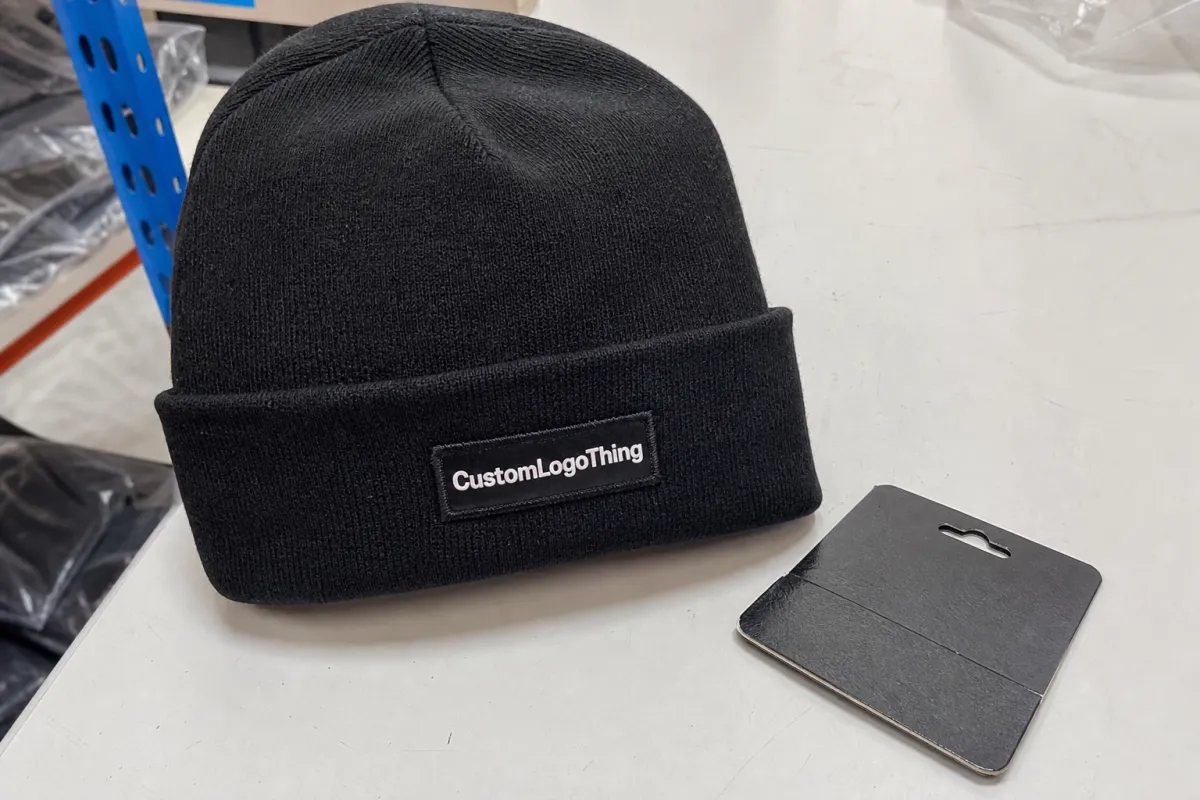
Digital visuals flatten texture and hide tension, so they can make an inconsistent knit look intentional. That is why the physical sample matters more than the render, especially when the beanie carries a pet treat brand and has to feel premium in hand as well as look correct on screen. Buyers are not judging artwork alone. They are judging feel, stretch, label placement, and whether the piece still looks clean after handling.
Check the basics first. Touch the fabric before reading the tag. Run a finger along the woven label edge; rough finishing there usually predicts discomfort later. Hold the beanie at arm’s length, then inspect it up close. Some artwork reads well from a distance but breaks apart at normal viewing range because the yarn count is too coarse or the label weave is too dense for the logo. If the cuff twists, the crown sags, or the label pulls the knit out of shape, the sample is already giving you useful information.
The most useful samples are not always the prettiest. They are the ones that expose tradeoffs clearly. A tighter knit may sharpen the logo but reduce softness. A wool blend may feel warmer but can be scratchier for sensitive wearers. A satin woven label can look smoother, yet show wear faster than a damask label if the edge finishing is weak. Sampling turns those decisions into evidence instead of guesses.
A sample is not a promise. It is a stress test.
Brief, Sampling Process, and Lead Time
The quality of the sample usually reflects the quality of the brief. A vague request forces the supplier to guess at details that should already be settled. A useful brief includes beanie size, target handfeel, yarn type, label size, logo artwork in vector format, color reference, and any packaging requirements. If the woven label includes small text, specify the minimum readable size.
Color control deserves its own line in the brief. Pantone references help, but a physical swatch is better when the brand is strict. Knit products interpret color differently than coated paper or screen visuals. Dark yarn can soften a logo, and heathered blends can break up contrast. The sample is where those differences become visible.
A simple sample cycle often follows this path: brief review, yarn and label recommendation, prototype build, internal inspection, then one revision round if needed. With a clean brief and standard materials, turnaround can be around 5-10 business days before shipping. Custom woven labels, tighter color matching, or a second revision can move that closer to 12-18 business days. Shipping adds another variable, so delays often come from waiting to review the package instead of the sample itself.
Approve the sample against a clear standard. The goal is not to admire it. The goal is to decide whether the construction is viable for bulk. Production can vary slightly from sample to run, but the sample sets the approved structure, finish, and visual target. If it does not meet that standard, approving it anyway only moves the problem downstream.
Packaging for Sample shipment does not need to be elaborate. In most cases, a corrugated cardboard mailer with kraft paper filler and a basic insert card is enough to protect shape and keep the review focused. If branded inserts are necessary, ask for FSC certified stock or recycled paper with a defined post-consumer waste content. For larger programs, the ISTA test framework is a practical reference for how shipping protection is usually evaluated.
Materials, Stitch Density, and Label Choices
Material choice drives both feel and price. Acrylic is usually the most economical route because it is easy to knit, consistent in mass production, and soft enough for a broad audience. It can pill sooner than higher-end yarns if the fiber quality is weak, so the sample should be checked after handling rather than judged only on first touch. Acrylic-wool blends feel heavier and warmer, but they also raise unit cost and can feel less comfortable to sensitive wearers. Recycled blends suit brands that want a sustainability story backed by actual material content, though recycled yarns can introduce texture variation that should be reviewed rather than assumed away.
For premium positioning, wool-heavy or merino blends add warmth and a more substantial handfeel. They also raise the stakes on comfort. Some wearers tolerate wool easily; others do not. That is why the sample should be worn, not just held.
Stitch density and knit gauge are just as important as fiber choice. A tighter knit usually improves logo clarity and structure, which helps when the label sits on a cuff and needs to stay aligned. The tradeoff is reduced plushness. A looser knit may feel softer at first but can blur detail and relax more after use. Small changes in tension can alter the final silhouette, especially on stretch-heavy designs.
Woven label construction deserves careful review because the label is often the first thing people notice up close. Damask labels are a strong choice for detailed logos and fine type because they usually provide cleaner resolution than cheaper alternatives. Satin labels have a smoother surface and can look more polished, but they also reveal wear and edge issues more quickly if the finishing is poor. Folded ends, heat-cut edges, and sewn-in placements each change the comfort level and the way the label sits after stretching.
Placement matters more than many buyers expect. A label that sits too close to a seam can twist. One that is too wide for the cuff can buckle under stretch. If the product is meant to carry a pet treat brand with a clean retail look, the label should feel integrated, not pasted on.
| Material option | Typical sample impact | Approx unit cost at 1,000 pcs | Best use case |
|---|---|---|---|
| 100% acrylic | Lowest; usually fastest to prototype | $2.20-$4.00 | Budget-conscious programs and broad color matching |
| Acrylic/wool blend | Moderate; requires closer handfeel review | $3.10-$5.20 | Warmth, heavier handfeel, and mid-range positioning |
| Recycled polyester/acrylic blend | Moderate to higher if yarn is special order | $3.20-$5.40 | Eco-positioned lines and recycled content messaging |
| Wool-heavy or merino blend | Higher; comfort and texture need careful review | $4.80-$8.00 | Premium positioning and colder-weather wear |
Those prices are planning ranges, not promises. Final cost depends on yarn availability, label complexity, finishing, and the supplier’s setup burden. A sample can look inexpensive until the details are counted, and a production quote can seem high until the supplier explains what is included.
Pricing, MOQ, and Quote Variables
Quote comparisons fall apart when suppliers bundle different things into different line items. One sample price may include label weaving and one revision. Another may exclude digitizing, shipping, or replacement sampling after artwork changes. A clean quote should say what is included, what is optional, and what triggers a change in cost.
For a straightforward prototype, a sample build often lands around $45-$90. More customized label work, extra revision rounds, or special packaging can move that closer to $100-$180. These are realistic working ranges for planning, not rules. Sample cost and production cost are linked, but not identical. A low-cost sample does not automatically mean a low-cost order if the bulk run needs additional setup or more precise finishing.
MOQ changes the economics more than many buyers expect. A smaller run spreads setup costs across fewer units, so unit price rises quickly. Under 500 pieces, the price is usually less forgiving than at 1,000 or 2,000 pieces. That is not a penalty. It is how knitting, label weaving, and finishing overhead work.
Ask for pricing that is easy to compare. A stripped-down sample price should not be stacked against a fully serviced production quote that includes packaging, hangtags, labeling, and shipping. Buyers often chase the lowest line item and then discover the missing costs later. That pattern is common, and it rarely ends well.
Packaging can also shift the quote. Corrugated cardboard mailers, kraft paper wraps, and biodegradable packaging each have different costs and different transit performance. Recycled materials and FSC certified paper are practical choices, but they should be selected because they fit the order and shipping risk, not because they sound polished in a deck.
Sample Review Checklist Before Approval
A disciplined review process catches issues that styling conversations miss. Check the sample in the order it will actually be used. If the team starts with color and ends with fit, they may miss a label edge that feels sharp or a cuff that distorts under normal stretch.
- Verify dimensions. Check crown height, cuff depth, total width, stretch range, and label placement against the spec sheet.
- Inspect the artwork. Read the logo at close range and from a normal viewing distance so the woven detail is judged both ways.
- Stretch and release. Pull the knit a few times and see whether it rebounds cleanly or keeps a distorted shape.
- Check skin contact. Rub the inside edge and label against the wrist or neck area; a rough sample usually stays rough in wear.
- Test wash behavior. Look for curling labels, seam drift, fuzzing, or color shift after a quick wash cycle.
- Record the result. Save photos, measurements, and a single revision list so everyone works from the same reference.
Some level of test discipline is smart, especially for larger programs. Ask whether the supplier has a consistent approach for colorfastness, abrasion, and wash stability. ASTM-style methods are a useful reference point even when the order does not require formal certification. The point is consistency, not paperwork.
Review the sample under the kind of light the customer will actually see. Studio lighting flatters knitwear. Retail shelves, office lighting, and overcast daylight do not. A woven label that reads sharp in a photo may look dull in normal light, and a texture that feels rich in a controlled room may feel rough after a few minutes of handling.
Mistakes That Slow Projects and Raise Costs
The first mistake is approving from a render. A render can hide thread sheen, uneven tension, and how a logo breaks when translated into yarn. The physical sample is the first real version of the item, so it needs to be treated as the decision point, not a formality.
Another common error is assuming one sample covers every version of the order. Different colorways, sizes, label placements, and knit tensions can behave differently even when they share the same base spec. A darker yarn may reduce contrast, and a deeper cuff can shift label placement.
Buyers also create delays by changing artwork after the woven label is approved. That forces another proof, another review cycle, and usually another round of back-and-forth. The same happens when tolerances are never written down. If nobody agrees on what counts as acceptable variation, every normal production difference turns into a dispute later.
Comfort gets neglected too often. A label can look polished and still feel irritating. A back-neck edge that scratches slightly in the sample usually feels worse after repeated wear. That is the kind of detail that turns a product into a return risk or a complaint.
Locking the Spec Without Overcomplicating It
Before approval, put the order on one page. Include exact size, yarn type, color target, woven label dimensions, placement, packaging notes, and acceptable tolerance. Keep the language direct. The supplier should be able to read it once and understand what matters most.
Confirm the timeline in writing and use real milestones. Sample revision date, approval deadline, production slot estimate, and shipping method should all be stated clearly. If packaging needs to arrive in a particular format, say so. If the sample should ship in corrugated cardboard with kraft filler, write that down. If recycled materials or post-consumer waste paper are required, specify the material standard rather than relying on a general sustainability claim.
Keep the approved sample, photos, notes, and revised quote in one shared location. The sales side, the design side, and the production side should all be looking at the same version. Three different “final” files is how small misunderstandings become expensive problems.
Used well, this guide is not just a buying aid. It is a filter for making sharper decisions about quality, cost, and finish. The best outcomes usually come from the most boring habits: measuring carefully, asking for specifics, and refusing to approve what still feels vague.
What should a pet treat woven label beanie sample include?
It should show the chosen yarn, knit structure, woven label construction, placement, and final dimensions. Ask for exact color targets, finishing notes, and any packaging or tagging details that affect the final look. If a sample leaves out one of those pieces, it is not showing the full product.
How long does a woven label beanie sample usually take?
Simple samples can move quickly once the artwork and materials are locked. Custom woven labels, color matching, or revision rounds add time, and shipping is often the part that slows the schedule most. A precise brief is the fastest way to keep timing under control.
What affects sample cost and final pricing the most?
Yarn choice, label complexity, number of colors, and revision rounds are the biggest drivers. Setup, digitizing, proofing, and shipping can also change the quote if they are not included up front. The sample price is only a partial signal, so ask for both sample and production pricing.
How many revisions are normal before approval?
One revision is common if the brief is clear and feedback is specific. Two rounds can happen when the sample needs fit, label, or color adjustments. If revisions keep expanding, the issue is usually the brief rather than the factory.
What should I compare between the sample and production run?
Check dimensions, color, label placement, knit feel, stretch recovery, and wash behavior. Make sure the bulk run matches the approved sample within the agreed tolerance, not by eye alone. Keep the approved sample close, because that is the version production should follow.


