Pet treat Woven Label Beanies Bulk Order planning succeeds or fails long before production starts. The main risks are late quoting, unclear proofing, and samples that arrive after the sell-through window has already narrowed. When that happens, even a good factory price does not protect the launch.
For pet brands, beanies work well for holiday bundles, adoption events, ecommerce add-ons, staff merch, and retail gift sets. Woven labels give the cap a cleaner retail finish than a plain knit body without adding much decoration cost. That makes the item useful, but also sensitive to small spec changes that affect repeatability.
Timing should be the first filter. A style that lands two weeks late may still work for internal merch, but it can miss a retail reset or seasonal display. Delays often come from small issues: one more proof correction, a label placement change, or a sample that needs another round. Those minutes add up quickly and can cost more than freight savings.
Compared with other decoration methods, woven labels sit in a practical middle ground. They usually cost less than embroidery on some runs, read cleaner than many heat transfers, and hold up better than printed decoration that can crack or fade. If your team already handles custom labels, insert cards, or co-branded packaging through Custom Labels & Tags, the beanie fits into the same sourcing workflow. That matters when one artwork has to work across ecommerce, retail shelves, and event kits.
A sample that arrives late can ruin the season even if the product is right. Price matters, but calendar control matters more.
Woven label details buyers should lock before sampling
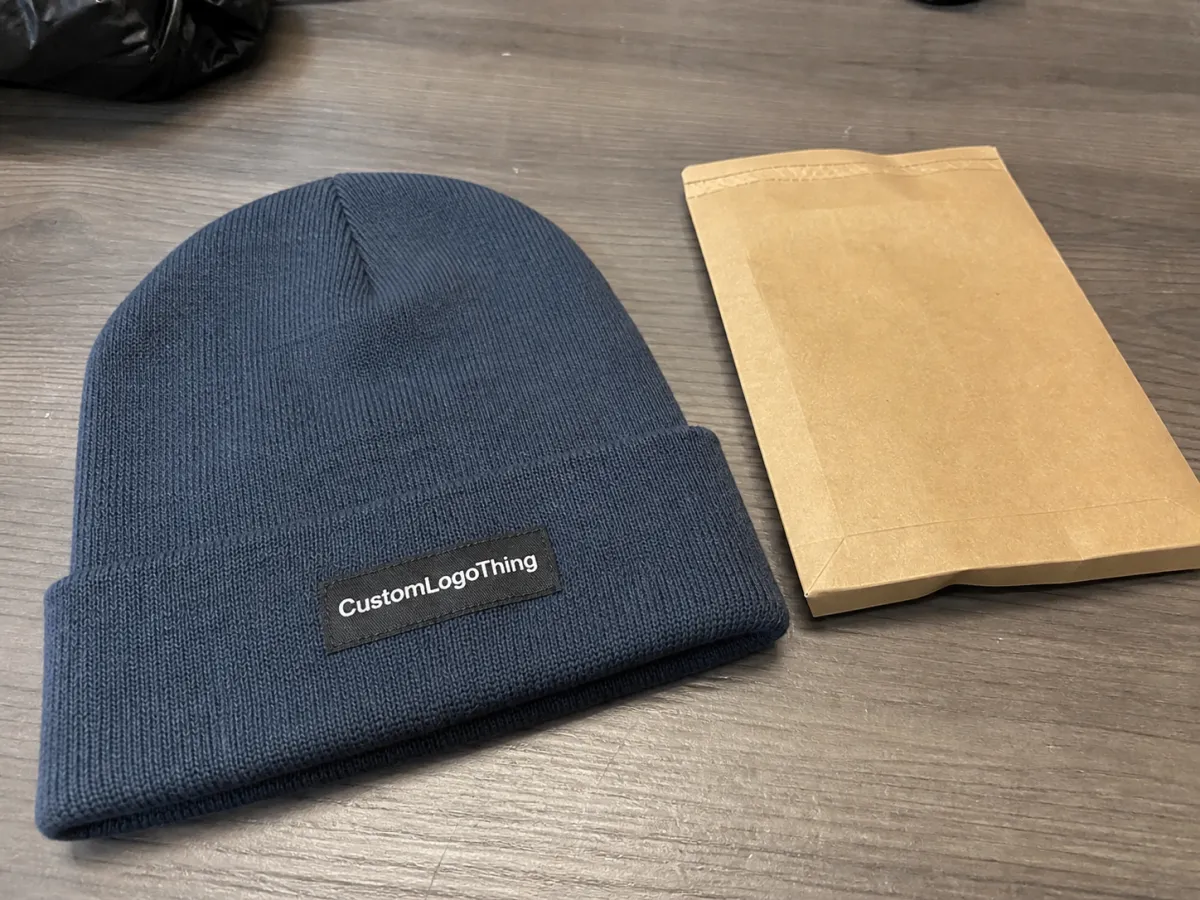
The first sample should not be a guessing exercise. Before anyone weaves thread, lock the label size, weave density, background color, edge finish, and attachment method. A sample is only useful when it reflects the final run closely enough to support a real approval decision.
Most woven labels for beanies land between 1.0 x 2.0 inches and 2.0 x 2.5 inches. Smaller labels keep the look quiet. Larger labels improve legibility and are easier to photograph on a cuff. For pet brand merchandise, the most common placements are front cuff, side seam, and, less often, lower hem. Each one changes how the item reads on shelf and in photos.
- Cuff placement gives the strongest visibility and performs well in ecommerce images.
- Side seam placement feels cleaner and suits more restrained retail assortments.
- Hem placement is softer visually and works when the brand wants a low-profile finish.
Artwork quality matters more than many buyers expect. Fine text, thin outlines, and gradients do not always survive the weave. The limit is structural, not cosmetic. Thread count carries only so much detail, so a busy logo can turn muddy. In practice, good buyers prepare a woven-label-specific file instead of forcing a print file into textile production.
A short checklist helps prevent approval mistakes:
- Contrast between the label background and the logo threads.
- Hand feel near the cuff edge and seam.
- Edge finish and whether cut ends feel soft or sharp.
- Stitch accuracy at the attachment points.
- Stretch recovery after the beanie is worn and returns to shape.
Buyers should also ask how the label interacts with hang tags, retail stickers, or polybag art. A label can look good alone and still clash with the pack-out. If the project includes broader merchandising, a supplier that understands Wholesale Programs is usually easier to work with because the product and packaging specs stay aligned. That reduces the kind of last-minute mismatch that appears after the first sample is already approved.
Knit structure, sizing, and decoration specs that affect repeat orders
Beanie construction decides whether a repeat order is straightforward or annoying. Buyers can approve the label and still run into trouble if the knit body, fit, or yarn feel changes from one batch to the next. For repeatable programs, define the base spec before discussing colorways or seasonal variations.
The most common construction options are rib knit, double-layer knit, and lined styles with fleece or thermal interiors. Rib knit is usually the most flexible and cost-friendly. Double-layer knit adds warmth and a cleaner interior. Lined options feel more substantial, but they also add cost, weight, and another point of inspection. The right choice depends on climate, target retail price, and whether the item is meant to feel promotional or premium.
Sizing deserves more attention than it usually gets. One-size-fits-most works for adults, but youth assortments and bundled promotions need clearer dimension targets. Ask for crown depth, cuff height, and unstretched circumference in writing. If the same design will move across multiple channels, those measurements should be fixed before the first production sample.
Yarn choice changes both price and hand feel. Acrylic is still common because it balances cost, weight, and color consistency. Recycled polyester works well for brands that want a more documented sustainability story. Wool blends feel warmer and more substantial, but they usually raise the price and may require a fit review because the knit behaves differently. If sustainability claims appear in packaging or inserts, ask for support documents rather than assuming marketing copy is enough.
Color matching is another place where schedules slip. Knitwear is never identical piece to piece, and small shade variation is normal within a tolerance. Still, buyers should specify a Pantone target for the knit yarn and a separate target for the woven label artwork. That creates a baseline for acceptable variance. If the project includes retail boxes, sleeves, or insert cards, it helps to confirm that the pack format aligns with recognized ship testing or carton-strength guidance such as ISTA testing guidance. Soft goods can still arrive damaged if the packing is careless.
| Order tier | Typical unit price | Setup or sample cost | Best fit | Tradeoff |
|---|---|---|---|---|
| 300-500 pcs | $5.20-$7.90 | $60-$120 | Test market, short seasonal drop, internal approval | Highest unit cost; fewer color or size options |
| 1,000-2,499 pcs | $3.20-$4.80 | $40-$80 | Retail launch, event kit, controlled reorder program | Better pricing, but still sensitive to spec changes |
| 5,000+ pcs | $2.10-$3.40 | $0-$50 | National rollout, ongoing wholesale, multi-channel demand | Lowest unit cost; requires tighter forecasting |
Those figures are directional, not universal. Fabric choice, label complexity, packing, and destination all move the quote. But the table still helps buyers see whether a supplier is truly competitive or just showing a low headline number. For bulk programs, that difference matters more than a single-unit savings of a few cents.
Cost, pricing, MOQ, and volume breakpoints to model early
Pricing for beanies with woven labels is built from multiple moving parts, not one number. Total quantity, knit structure, label detail, color count, and packaging requirements all affect the quote. If the supplier also has to add retail bagging, barcode stickers, or insert cards, the line item can shift quickly.
MOQ is the term that deserves the most attention. A lower MOQ helps test demand, but it usually raises unit cost because setup and labor are spread across fewer pieces. A higher MOQ improves the per-unit price, but it also increases inventory risk if the product does not move. The right breakpoint is a margin decision, not a status symbol.
Ask for tiered pricing. A supplier should be able to show the difference between 500, 1,000, 2,500, and 5,000 units so the savings curve is visible. In some cases, moving from 1,000 to 2,500 pieces lowers cost enough to support better packaging or a heavier hang tag. In other cases, the drop is too small to justify the extra inventory.
Artwork revisions are another hidden expense. Every extra proof cycle usually adds a day or two, and in peak season that delay has an actual cost. It is usually better to clean up the vector file before quoting than to save a little on design prep and lose a week in correction loops.
Use a quote structure that separates:
- Product cost for the beanie itself.
- Setup charges for label weaving or knit program setup.
- Sampling fees for preproduction checks.
- Freight, including air, sea, or domestic delivery.
- Special packing such as polybags, size stickers, or retail kits.
For brands that expect repeat wholesale demand, the first order should be planned like a reorderable item, not a one-time novelty. That means choosing a spec that can be repeated without special handling. If the first run is built around the most expensive version of the design, the next purchase can often be simplified without changing the brand look. That is a practical way to protect margin over time.
Production steps, lead time, and shipment milestones
The process is simple only if each handoff is defined. A typical schedule starts with artwork submission, moves to digital proofing, then sample approval, bulk production, inspection, and outbound freight. The sequence is standard. The risk comes from the small decisions hidden inside each step.
For most bulk beanie runs, a reasonable planning window after approval is often 12-18 business days for production, with sampling requiring another 5-10 business days depending on complexity. Freight is separate. Air shipping can move in days once booked, while sea freight may add several weeks, and customs clearance can extend the calendar further. Factory completion is not the same as landed delivery.
Lead time is most often lost in a few places:
- Incomplete artwork files that require redraws.
- Color revisions after the first proof.
- Label placement changes after sample review.
- Late sign-off on the preproduction sample.
- Packing instructions that arrive after production has started.
Request milestone dates in writing. Not just "production starts Monday," but the proof date, sample ship date, approval deadline, bulk completion date, carton count, and freight booking date. Marketing, retail, and fulfillment teams all need the same calendar. If one team thinks the launch is two weeks earlier than the others, someone ends up paying for the difference.
For seasonal programs, a small buffer is worth building in from the start. Seven days helps. Ten is better if the goods cross borders or move through a crowded freight lane. That is not pessimism. It is a realistic response to weather, port delays, and approval slippage.
What a reliable bulk supplier proves before you approve the PO
A strong quote is not enough. Buyers need evidence that the supplier can repeat the same result at scale. Start with production photos from prior runs, sample consistency, and a clear explanation of how the supplier controls color variation from one batch to the next. If they cannot describe the tolerance, that is a warning sign.
Responsive quoting is useful, but production support is what protects the order. A dependable partner will flag risk early. They will say if the artwork is too detailed, if a knit color is likely to shift, or if the requested pack format adds time. Weak suppliers often say yes to everything. That sounds friendly during quoting and expensive after approval.
Use the following documentation as a minimum approval set:
- Spec sheet with knit structure, dimensions, yarn type, and label placement.
- Artwork confirmation showing the approved woven label file.
- Signed sample or preproduction reference.
- Packing instructions covering carton count, label placement, and retail grouping.
- Shipment terms stating delivery date, freight method, and destination responsibility.
Service quality also shows up in how quickly and clearly the supplier answers the first round of questions. Fewer surprises on the final invoice. Fewer corrections to the label file. Fewer arguments about who approved what. In a wholesale program, that kind of control is worth real money because one mistake can be multiplied across multiple accounts.
Strong operations are not flashy. They are predictable. If the quote, proof, sample, and shipment all tell the same story, that is usually a better sign than a polished sales presentation. Good sourcing leaves a paper trail you can trust.
Next steps for confirming artwork, quantities, and delivery dates
Start by splitting demand into three buckets: sample units, launch units, and reorder units. That changes the quote immediately because it forces the buyer to think in channels instead of one blended number. A retail launch, an event kit, and a staff giveaway may all use the same beanie, but their quantity curves are not identical.
Next, prepare the files before requesting pricing. The cleanest quote request includes vector artwork, Pantone references, woven label copy, size range, placement preference, and packaging notes. If the supplier has to ask many follow-up questions, the timeline is already slipping. If printed inserts or paper packaging are involved, align that work with the supplier or with a separate packaging partner so the product and the presentation stay in step.
A practical quote request should also state:
- Target quantity by color or size split.
- Desired delivery date and acceptable buffer.
- Packaging format such as bulk carton, polybag, or retail-ready pack.
- Approval owner for artwork and sample sign-off.
- Reorder expectation if the style performs well.
Ask the supplier for a written timeline that ties each approval date to the next production step. Then confirm what would restart the clock. A revised label size, a different yarn shade, or a change in carton count can all push shipping by days or weeks. The point is not to remove every variable. The point is to know which ones are expensive.
If there is one rule worth following, it is this: do not approve a PO until the quote, sample, and delivery date all tell the same story. That is the practical heart of pet treat woven label Beanies Bulk Order Planning. Get the forecast right, lock the specs early, and the margin tends to follow.
What should I confirm before ordering pet treat woven label beanies in bulk?
Confirm label size, placement, yarn color, size range, and packing format before sampling. Ask for a written approval flow so artwork changes do not disrupt production.
How does MOQ affect pricing for woven label beanies?
Lower quantities usually carry a higher unit cost because setup and labor are spread across fewer pieces. Tiered quotes make the breakpoints visible so you can judge whether a larger run actually improves margin.
What artwork files do you need for a bulk beanie quote?
Send vector artwork when possible, plus Pantone color references and any label copy. A clean file reduces proof revisions and helps the supplier quote accurately.
How long does bulk production usually take after approval?
Lead time depends on quantity, sample approval speed, and decoration complexity. Shipping time should be added separately so the delivery date reflects transit, not just factory completion.
Can I split colors or sizes in one bulk order?
Often yes, but each variation can affect MOQ, pricing, and scheduling. Ask the supplier to show how mix-and-match options change the quote before you finalize the PO.
Why does this process matter for a repeat program?
Because Pet Treat Woven Label Beanies Bulk Order Planning works best when the first run is built like a reorderable item, not a one-time sample. That makes the next purchase faster, cleaner, and easier to price.


