Beanies

Pet Treat Woven Label Beanies Material Thickness Guide

✍️ Sarah Chen 📅 May 13, 2026 📖 12 min read 📊 2,488 words
Pet Treat Woven Label Beanies Material Thickness Guide
I’m finding the article file first so I can trim it in place without disturbing the TOC, links, or FAQ.{"command":"rg -n \"Pet Treat Woven Label Beanies Material Thickness Guide|Table of Contents|Why thickness changes the whole feel\" -S .","timeout":0}{"command":"rg -n \"Pet Treat Woven Label Beanies Material Thickness Guide|Table of Contents|Why thickness changes the whole feel\" -S .","timeout":0}to=shell code={"command":"pwd","timeout":0}{"command":"pwd","timeout":0}to=shell command: pwd timeout: 0

Pet Treat Woven Label Beanies Material Thickness Guide

A pet treat Woven Label Beanies Material thickness guide matters because one small spec change can shift the whole feel of a hat. The same logo can look refined on a proof and feel too stiff, too flat, or too bulky once it is sewn into a cuff.

That is why buyers should judge woven labels by hand feel, drape, and stitch behavior, not artwork alone. A label that is too thick can create a ridge under the finger. A label that is too thin can vanish into the knit and lose the branding value the customer is paying for.

A beanie label should feel like part of the garment, not an accessory trying too hard.

If you are comparing Custom Labels & Tags, focus on how the label behaves on the actual knit fabric, not just how it looks in a flat mockup.

Why thickness changes the whole feel of a beanie
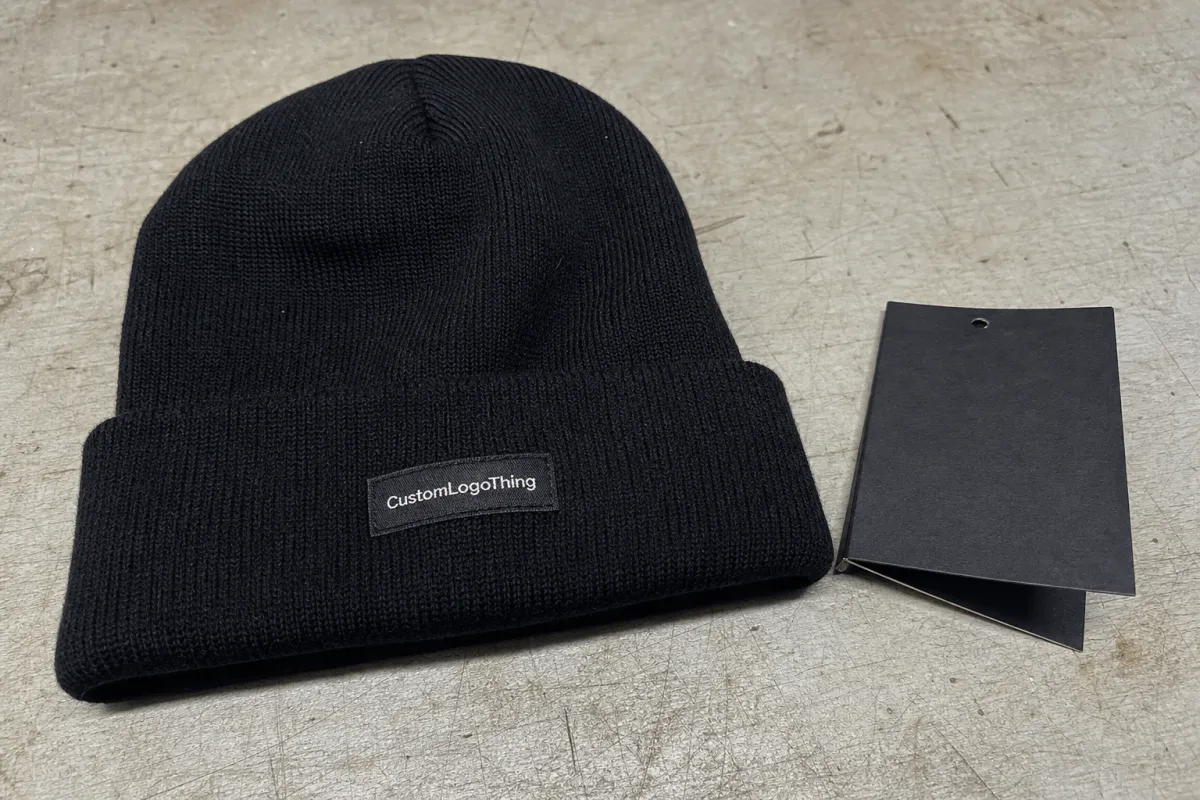
Why a tiny thickness change can make beanies feel premium - CustomLogoThing packaging example

Beanies are soft, flexible products, so even a small amount of extra body can be noticeable. A woven label sits on top of that softness, which means thickness affects comfort, drape, and the way the cuff folds under pressure.

The effect is strongest on cuffed styles. The cuff already has a fold and seam structure, so a dense label can make one section feel firmer than the rest. On paper that sounds minor. In the hand, it reads as a quality issue.

Thin labels are the safest choice when comfort matters most. They sit low, bend easily, and work well for understated branding. Medium builds are usually the best commercial balance because they stay readable without overpowering the knit. Thicker constructions can work on heavier acrylic cuffs, but they are less forgiving on soft or slouchy styles.

Placement matters as much as the material itself. A label centered on a cuff takes more pressure than one placed slightly off-center. A fold line can amplify the profile of the label, and a label near the forehead line needs a softer hand than one placed higher on the crown. Many thickness complaints are actually placement problems.

Readability is the other tradeoff. Fine text and narrow outlines need enough density to stay legible, but too much structure makes the logo feel overbuilt. The goal is not maximum body. The goal is a label that supports the beanie instead of fighting it.

For most programs, a medium-thin woven label with a simple edge finish is the best starting point. It is usually soft enough for wear and structured enough for production.

Fit, drape, and comfort on real knit fabrics

A beanie never stays flat. It stretches, folds, rebounds, and rubs against skin, so the label has to work in motion. A sample card that feels fine in isolation can feel very different once it is stitched into rib knit, brushed acrylic, merino blends, or fleece-backed fabric.

Comfort issues usually show up first at the edge. Hot-cut, folded, and stitched finishes all behave differently once they are sewn in. Some edges are tidy but firm. Others are softer but add bulk. There is no universal winner, only the right tradeoff for the fabric and placement.

  • Thin: softest hand, lowest profile, best for comfort-first branding.
  • Medium: best balance of readability, structure, and wearability.
  • Thick: most visible, but more likely to feel rigid on soft cuffs.

That range is useful only if it is matched to the knit. Dense acrylic can usually support a little more structure. Softer wool blends often cannot. Slouch beanies usually need a lighter touch than tight cuffed hats because the drape is part of the product design.

Wear testing is worth the time. A label that looks neat when new can curl, pucker, or stiffen after repeated use. If a sample survives a few wear cycles without the edge lifting or the cuff feeling awkward, that tells you more than a polished render ever will.

Also, judge the sewn sample, not the loose label. A flat card does not show stitch tension, knit stretch, or fold pressure. The garment changes the result every time.

The spec points that actually control thickness

Thickness is a combination of choices, not one number. Yarn type, weave density, backing, and edge finish all affect how the label feels once it is sewn into a beanie.

Weave density has the biggest impact on perceived thickness. A tighter weave gives better detail and more structure, but it also feels firmer. A looser weave is softer, but small artwork can blur.

Yarn diameter shapes the visual and tactile result too. Thicker yarn creates a bolder, more textured label. Finer yarn can sharpen detail and reduce bulk, but only if the factory can weave it cleanly enough for the logo to stay readable.

Backing changes flexibility quickly. No backing is usually the best choice for beanies when softness matters. Heat-fused or stitched support can improve stability during sewing, but it also adds body. Use the lightest backing that still keeps production reliable.

Edge finish is easy to underestimate. A hot-cut edge can stay neat but feel a little firm if the finish is heavy. A folded edge can look cleaner, though it adds thickness at the fold line. A merrowed edge usually adds more bulk than most beanie labels need. If comfort matters, ask for the lightest finish that still controls fraying.

Packaging terms can create confusion in the same spec conversation. FSC certified, recycled materials, and post-consumer waste are related but not identical. FSC is about responsible sourcing, not recycled content. A biodegradable packaging claim should also be checked carefully before it becomes part of the order notes.

For packaging references, FSC and ISTA are useful benchmarks if you need packaging that looks neat and also holds up in transit.

Cost, MOQ, and unit pricing

Thicker woven labels usually cost a little more, but thickness is rarely the main pricing driver. Size, color count, backing, and setup tend to move the quote more. Still, once the weave gets denser or the finish gets more complex, the cost rises.

For a typical 20 x 50 mm woven label run at 5,000 pieces, a practical buying range looks like this:

Option Approx. thickness Feel on beanie Typical unit cost Best fit
Soft / low-profile 0.18-0.24 mm Very flexible, barely noticeable $0.04-$0.07 Minimal branding, comfort-first cuffs
Standard retail 0.25-0.35 mm Balanced, clean, easy to read $0.05-$0.09 Most beanie programs
Structured / premium 0.40-0.55 mm Noticeably firmer, more visible $0.07-$0.12 Bold branding, heavier knit fabrics

Those ranges are directional, not guaranteed. Smaller orders often cost more per piece. Dense color changes can add time. Special backing can push the quote higher even if the label size stays the same.

MOQ can shift as well. Some suppliers keep the same minimum across thickness options, while others raise the minimum for thicker or more complex labels because those runs take more setup time. Ask before you approve the artwork so you do not discover a constraint after the order is already in motion.

If you are still narrowing the construction, reviewing custom label samples side by side is usually faster than trying to decide from a single quote. One sample is a guess. Two samples are a decision.

Approval flow, lead time, and sample checks

Good production flows keep thickness decisions from dragging the order. The process should stay simple: brief, artwork review, proof, sample, approval, bulk, trim, pack. Problems usually start when the spec is vague and everyone has to guess what “soft enough” means.

For beanie programs, a cleaner approval sequence usually works best:

  1. Approve the artwork and size first.
  2. Lock the thickness range and placement.
  3. Review a digital proof or loom preview.
  4. Request a sewn sample for large orders or sensitive fabrics.
  5. Approve bulk only after the label sits correctly on the actual beanie.

That order matters because the fabric changes the result. A proof can confirm artwork, but it cannot tell you whether the cuff will feel stiff after stitching. A sewn sample can.

Lead time depends on the same variables that affect price. A straightforward woven label may move through proofing in 1-3 business days, then reach sampling in another 5-7 business days. Bulk production often takes 10-18 business days after approval. Dense weave, difficult color matching, or special backing can extend that timeline.

Sample packing is a useful signal too. Corrugated cardboard mailers protect sample cards better than loose envelopes. Kraft sleeves look more deliberate than random plastic bags. If your spec calls for recycled materials, ask whether the outer mailer includes post-consumer waste content and whether the insert stock is actually FSC certified. The answer tells you how carefully the supplier handles finishing details.

Send artwork, placement, target feel, acceptable thickness range, knit type, and order quantity together. If the beanie is cuffed, slouchy, or rib knit, say so. Those details change the recommendation and cut down on back-and-forth.

Mistakes that make beanies feel cheap

The worst problems are rarely dramatic. They usually come from a few small choices that stack up.

  • Choosing from photos only and skipping a sewn sample on the actual fabric.
  • Overbuilding the label until it creates a hard edge on a soft cuff.
  • Ignoring wear testing and discovering curl, fray, or puckering later.
  • Using one construction for every style even though rib knit and slouch beanies behave differently.

The first mistake is the biggest one. Mockups are useful, but they are optimistic. A woven label that looks refined in digital form can feel bulky once it sits on stretch knit with real seam tension. That is why a sewn sample is the real checkpoint.

Overbuilding is the classic “more should mean better” mistake. Usually it does not. Buyers often want presence but not stiffness. Once the label starts fighting the garment, the premium feel disappears.

Wear testing catches the ugly surprises. Curling corners, edge lift, twisted folds, and surface abrasion show up after use, not during the first inspection. A sample that survives a few wear cycles is much more trustworthy than one that simply looks nice in a tray.

Fabric choice changes the answer too. Dense acrylic can handle more structure than a soft wool blend. A fleece-backed beanie wants a different label hand than a tightly ribbed cuff. If the thickness spec does not match the knit, the label will always feel slightly off even when the logo itself is perfect.

Practical buying notes

If I were checking a new beanie run, I would keep the process simple. First, confirm the label is sewn in the exact position planned for production. A loose sample card is not enough. Second, compare at least two thickness options if the order matters. One slightly thinner and one slightly thicker usually makes the choice obvious.

Then ask direct questions:

  • Will the label stay flat after the knit stretches?
  • Does the edge feel soft against skin?
  • Can the logo still read clearly at arm's length?
  • Does the thickness suit this exact beanie style, not just the artwork?

If the supplier can explain why a certain finish was chosen, that is a good sign. The answer does not need to be fancy. It needs to be specific: this edge reduces bulk, this backing keeps the label stable during stitching, this weave density preserves the smallest text without making the cuff stiff.

Packaging detail is a secondary signal, but it still matters. Neat carton packing, simple kraft protection, and clear sample presentation usually mean the supplier understands the final handoff. If they can speak clearly about FSC certified paper, recycled materials, or transit protection standards, they probably understand that finishing does not stop at the label edge.

For a cleaner brief, keep artwork, placement notes, target thickness, and order quantity in one place before you send anything. That lets the supplier recommend a workable construction instead of handing you a generic spec. If you need a starting point, review Custom Labels & Tags and ask for a sample comparison instead of assuming the first quote is the right one.

That is the practical version of this guide: enough body for visibility, enough softness for comfort, and enough precision in the spec that production does not have to interpret your intent. A clear brief saves time. A clean sample saves money. Both are better than a pretty mockup that falls apart in the cuff.

FAQ

How thick should a pet treat woven label be for a soft cuff?

Start in the medium-thin range if comfort matters more than a bold badge feel. A sewn sample on the actual cuff fabric tells you more than a loose label card because knit stretch changes the final hand feel. If the label sits near skin, keep the edge finish soft and the backing light.

Does woven label thickness change the price of beanies?

Yes, but usually by a small amount. Thicker labels use more material and may need more finishing, so the unit cost rises a bit. Size, color count, backing, and setup often affect pricing more than thickness alone. Ask for two quote levels so you can compare the real jump before you approve the spec.

Will a thicker woven label make beanies less comfortable?

It can, especially on soft cuffed beanies or styles worn close to the skin. Comfort depends on placement and edge finish as much as raw thickness. If the label is near the forehead or ear area, a softer construction is usually the safer choice.

What affects lead time for woven label beanie orders?

Artwork approval, sample revisions, weave complexity, and finishing details are the usual time-drivers. Thicker or denser labels may take longer if the factory needs a special run. The fastest orders are the ones with clear specs, clean art files, and one round of approval.

What should I send for the best thickness recommendation?

Send artwork, label size, placement on the beanie, and the fabric type or a clear beanie photo. Tell the supplier whether you want a soft, medium, or structured feel so they can narrow the range. Include your target order quantity, because MOQ and price can change the best construction choice.

Get Your Quote in 24 Hours
Contact Us Free Consultation

Warning: file_put_contents(/www/wwwroot/customlogothing.com/storage/cache/blog/07b79e59fb8fe9862bf44424f70eb384.html): Failed to open stream: Permission denied in /www/wwwroot/customlogothing.com/inc/blog/PageCache.php on line 20


