Planning Clear Zipper Bag Orders for B2B: Lead Time, MOQ, and Cost
Clear zipper bag Lead Time and MOQ are usually determined by the spec, not by the quote request. A stock bag can move quickly. Once the size, zipper profile, thickness, or print changes, the minimum order and schedule usually change with it.
For buyers, the useful question is not just “how fast” or “how many.” It is whether the bag can be made at the right size, with the right closure, at a cost that still works after freight, inspection, and any rework risk. If you need a refresher on common packaging terms before requesting pricing, the packaging FAQ is a simple place to start.
Clear zipper bags lead time and MOQ: what B2B buyers should expect
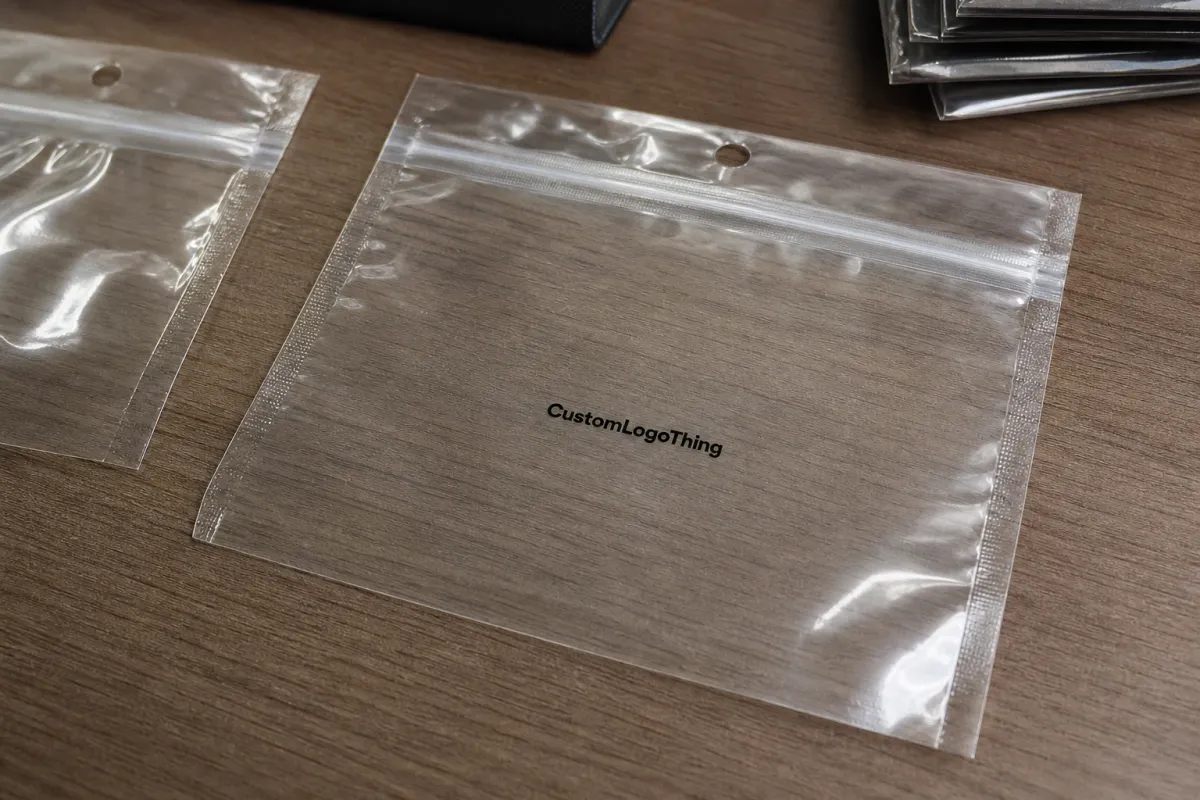
Plain stock-style Clear Zipper Bags are the fastest option because the material, size, and closure are already set. Semi-custom runs take longer because the bag still has to be matched to your dimensions and artwork. Fully custom work adds more steps, and those steps usually push both MOQ and Lead Time upward.
For planning, stock bags can sometimes ship in about 3-7 business days if they are already available. Semi-custom runs often land in the 10-15 business day range after proof approval. Fully custom orders are commonly 15-25 business days, and can run longer if artwork needs cleanup or material must be sourced first. Freight is separate and should be planned on its own timeline.
MOQ follows the same pattern. Inventory-style bags may start at a few hundred or a thousand pieces. Printed bags usually start higher, often around 3,000-5,000 pieces. If you change size, zipper style, thickness, or packaging format, the minimum often climbs because the run has to cover setup time, waste, and line changeovers.
The fastest quotes usually come from buyers who send complete specs:
- Final dimensions with width, height, and gusset depth if needed.
- Film thickness in mil or micron.
- Closure type such as single-track zipper, double-track zipper, or slider.
- Print plan with colors, side count, and artwork format.
- Quantity and delivery target so the quote matches the real schedule.
That is the difference between a usable commercial answer and a long thread of back-and-forth. Buyers do not need more jargon. They need a clear price, a clear minimum, and a realistic ship date.
Bag styles, sizes, and material choices that affect order planning
Not every clear zipper bag behaves the same way in production. Flat pouches are simple and efficient. Gusseted bags create more usable volume. Stand-up styles need more attention to the base structure and bottom seal. Zipper-top storage bags are straightforward, but the exact zipper profile still changes machine setup and seal behavior.
Material choice matters as much as shape. LDPE is common when buyers want softness and good clarity. LLDPE is often chosen when toughness and stretch resistance matter more. Some programs use co-extruded PE blends for a balance of clarity, sealability, and tear resistance. If the bag needs to sit on a retail shelf, clarity, gloss, and print registration matter more. If it is for internal storage or sample handling, strength and closure performance may matter more than appearance.
Dimensions also change the order plan. A small apparel bag is not treated the same way as a larger sample pouch or hardware bag. Bigger formats use more film, create more trim waste during setup, and may need a different cutting path. Add a hang hole, tear notch, reinforced seam, or heavier zipper track, and the production route changes again.
For buyers comparing options, the practical question is consistency. A simple flat pouch may not be the most exciting format, but if it runs cleanly, packs well, and reorders without correction, it usually costs less over the life of the program than a more complex format that keeps forcing adjustments.
| Style | Best use | Planning impact | Typical buyer tradeoff |
|---|---|---|---|
| Flat clear zipper bag | Apparel, parts, samples | Lower setup complexity | Simple and economical, but less volume |
| Gusseted zipper bag | Retail packing, bulk storage | More material and folding steps | Better capacity, slightly higher unit cost |
| Stand-up clear pouch | Display packaging, shelf use | More structure and tighter QC | Better presentation, higher MOQ pressure |
| Heavy-duty storage bag | Hardware, kits, industrial parts | Thicker film and stronger zipper specs | More durable, usually slower and pricier |
Specs to confirm before you request pricing
If you want a quote that means something, lock the spec before you send the RFQ. The most common mistakes are predictable: wrong size, missing zipper type, unclear print side, or artwork that still needs cleanup before it can go to press.
At minimum, confirm the bag dimensions, film thickness, material, zipper style, print placement, quantity, and carton pack count. If the order is a first run, say so. If it is a repeat, include the last approved spec so the supplier is not guessing.
Artwork matters even on a clear bag. A small logo in one corner is very different from a full-bleed print or multicolor branding layout. More print colors and more coverage usually mean more setup, more registration checks, and more waste during the first run. On a more complex job, tooling fees and color matching costs should be listed before approval.
It also helps to define quality expectations early. Good buyers ask about seal strength, clarity, odor, size tolerance, zipper engagement, and carton pack count. If the bags are going into food contact, retail distribution, or regulated markets, state that clearly. If the packaging will travel through a rough distribution chain, it is reasonable to ask whether the supplier evaluates cartons against ISTA transport test protocols.
One detail gets missed often: acceptable tolerance. A bag may be ordered at a nominal size, but the supplier still needs to know how much variation is acceptable before it becomes a reject. If the application is sensitive, say so upfront. For material or sustainability questions, broad packaging guidance is worth checking early, and the Packaging & Sustainable Design resources are a practical reference point.
Pricing, cost drivers, and MOQ bands for bulk orders
Bulk pricing is driven by a few simple variables. Size uses more film. Thickness uses more resin. A stronger zipper costs more than a basic one. Print complexity adds labor, setup, and waste. Faster timelines often add a rush charge. If there is a special structure or tighter tolerance, the unit cost usually moves up again.
Raw material prices also shift. Resin markets do not stay fixed for long, which matters on larger programs. That is one reason some factories keep quote validity windows short on custom packaging.
For planning, these are common commercial bands, though every supplier will vary:
| Order type | Typical MOQ | Indicative cost per piece | Lead time after approval |
|---|---|---|---|
| Plain stock clear zipper bags | 500-1,000 pcs | $0.05-$0.12 | 3-7 business days |
| Semi-custom with simple logo print | 3,000-5,000 pcs | $0.12-$0.24 | 10-15 business days |
| Fully custom size and print | 5,000-10,000 pcs | $0.18-$0.40+ | 15-25 business days |
Those numbers are not universal, but they are realistic enough to help a buyer budget. A lower MOQ often means a higher unit price because the run has less room to absorb setup charges, trim waste, and labor. That is why a small order can look inexpensive on paper and still cost more on a landed basis than a larger run that spreads the fixed costs across more pieces.
Check the cost points that are easiest to miss:
- Sample fees if a physical sample is needed.
- Production cost and cost per piece at each quantity band.
- Tooling fees for custom print or special construction.
- Freight from factory to warehouse or distribution center.
- Duties and taxes if the order crosses borders.
- Rush charges if the date is tight.
Standard sizes, fewer print colors, and plain stock options usually save money. Consolidating SKUs in one run can also lower unit cost if the spec stays close enough to the same machine setup. The cheapest piece is not always the cheapest program, so compare the bag cost against the cost of returns, repacking, or damaged contents.
Production workflow and lead time from RFQ to shipment
The production path is usually straightforward on paper. First comes the inquiry. Then the supplier reviews the spec, checks material availability, and confirms whether the job is stock, semi-custom, or fully custom. After that comes the artwork check, proof approval, sampling if needed, production, quality control, packing, and shipment.
Sample timing and mass-production timing are not the same thing. A plain sample may move quickly. A printed sample can take longer because the artwork has to be set, checked, and sometimes adjusted. Once the sample is approved, production can still be delayed if the buyer changes the size, switches zipper type, or sends revised artwork after proof release.
Seasonality matters too. Heavy production periods, holiday shutdowns, and raw-material shortages can add days or weeks to a normal schedule. If the bags must arrive in a narrow window, ask early whether the supplier has line capacity reserved, not just whether the quote looks good.
The common delay points are easy to spot:
- Missing dielines or wrong artwork dimensions.
- Unclear logo files that need cleanup.
- Late approval from the buyer's internal team.
- Spec changes after the quote is accepted.
- Shipment instructions that arrive after packing starts.
Quality control should match the use case. For a sample pouch, that may mean visual inspection and zipper fit. For a retail or industrial run, buyers should ask about seal integrity, print registration, thickness consistency, zipper cycle feel, and carton count. If the bags are going into long distribution chains, compression resistance and pack integrity matter more than they do on a short local shipment.
Freight choice changes the calendar too. Air freight can rescue a deadline, but the cost usually hurts. Ocean freight is better for volume and price, but the schedule is longer and more sensitive to port delays. Domestic ground is fine for local distribution, but it is still a separate leg that needs to be built into the plan. Buyers who track factory lead time and ignore shipping time often end up with a miss that was avoidable.
How repeat orders stay consistent and on schedule
Repeat orders are where a supplier earns trust or loses it. A first run can survive a little hand-holding. A reorder should not need the same discussion all over again. The best repeat programs keep the dimensions, clarity, zipper performance, carton pack count, and print position stable from run to run.
Approved samples matter here. So do saved specs and clean order history. If the supplier has the last approved artwork, the last packing configuration, and the last tolerance note, the next run becomes much easier to start. Less guessing means fewer mistakes, and fewer mistakes usually mean a better unit cost over time.
A good reorder file should read like production memory, not a sales thread. The most useful records are simple: the approved sample reference, the final artwork version, the bag dimensions as produced, the pack count per carton, any special handling notes, and the date the buyer signed off. That list is small, but it prevents a lot of avoidable confusion later.
Communication habits matter just as much as the technical side. Quick confirmations help. Direct answers help more. If the ship date changed, say so. If the quantity changed, say so before the proof is locked. If the color target changed, do not hide it in an email thread and hope no one notices.
If you want a cleaner internal process, the FAQ can help your team align on the basics before the reorder starts. Most delays are just avoidable confusion with a nicer label.
What to send for a fast quote and the next ordering step
A fast quote starts with a tight brief. Send the bag size, thickness, material, zipper type, print details, quantity, and delivery location. Add your deadline, and if you have one, your target budget. That helps the supplier Choose the Right production route instead of defaulting to the safest and most expensive answer.
Useful attachments make the process faster:
- Artwork files in a usable format.
- Reference photos if you are matching an existing bag.
- Compliance notes for food contact, retail, or export.
- Packaging targets like carton count or retail display requirements.
If the job is urgent, say that plainly. If the date is flexible, say that too. A supplier can often save money on a flexible order by choosing a standard material or a more efficient production slot. A rigid date with incomplete specs does the opposite because it forces the quote toward caution.
A master spec sheet helps on every reorder. Keep one version of the bag name, one version of the dimensions, one approved artwork file, and one final packing instruction set. If the team keeps editing those pieces in separate emails, the next quote becomes slower and less reliable.
The practical sequence is simple: send the spec, review the proof, approve quickly, and reserve production time before the calendar fills up. That is how buyers reduce rework, keep unit cost under control, and avoid the scramble for stock bags that never quite fit the job.
Frequently asked questions
What is the usual MOQ for clear zipper bags?
MOQ depends on size, thickness, and whether the order is plain or printed. Stock-style bags can start at a few hundred or a thousand pieces, while custom printed runs usually start higher. Compare the landed cost, not just the minimum.
How long is the lead time after artwork approval?
Lead time depends on whether the job is stock, semi-custom, or fully custom. Simple specs are faster than custom sizes or complex prints. Shipping method also changes the calendar because air, ocean, and ground move on different timelines.
Can I change the size or zipper style after I get a quote?
Yes, but changing dimensions, closure type, or thickness can affect pricing and timing. Even small revisions may require a new proof and a revised schedule. Finalize the spec before approval if the deadline matters.
Do you offer samples before I place the full order?
Yes, samples help confirm clarity, zipper feel, print placement, and overall size. Plain samples are usually faster than printed samples. Sample fees are often separate from production and may sometimes be credited back, depending on the project.
What details do you need to quote clear zipper bags accurately?
Send the bag dimensions, material thickness, zipper type, print colors, and total quantity. Add your delivery address, deadline, and any compliance or packaging requirements. Artwork files, reference photos, and a target budget help reduce back-and-forth.


