Printed zip lock bags Lead Time and MOQ are usually decided before the first bag is made. Size matters, but the bigger drivers are film choice, zipper style, print coverage, artwork readiness, and how much setup the plant has to absorb before it can run cleanly.
Two bags that look almost identical on a screen can still land in very different production lanes. One may use standard LDPE, a basic press-to-close track, and a one-color logo. The other may need thicker film, a different seal profile, tighter color matching, and extra inspection time.
For buyers, the useful question is not only “How much?” It is “What is the simplest build that still works, and what will it do to the schedule?” That is where packaging budgets are usually saved or lost.
Why a simple-looking zip lock bag order can slow a launch
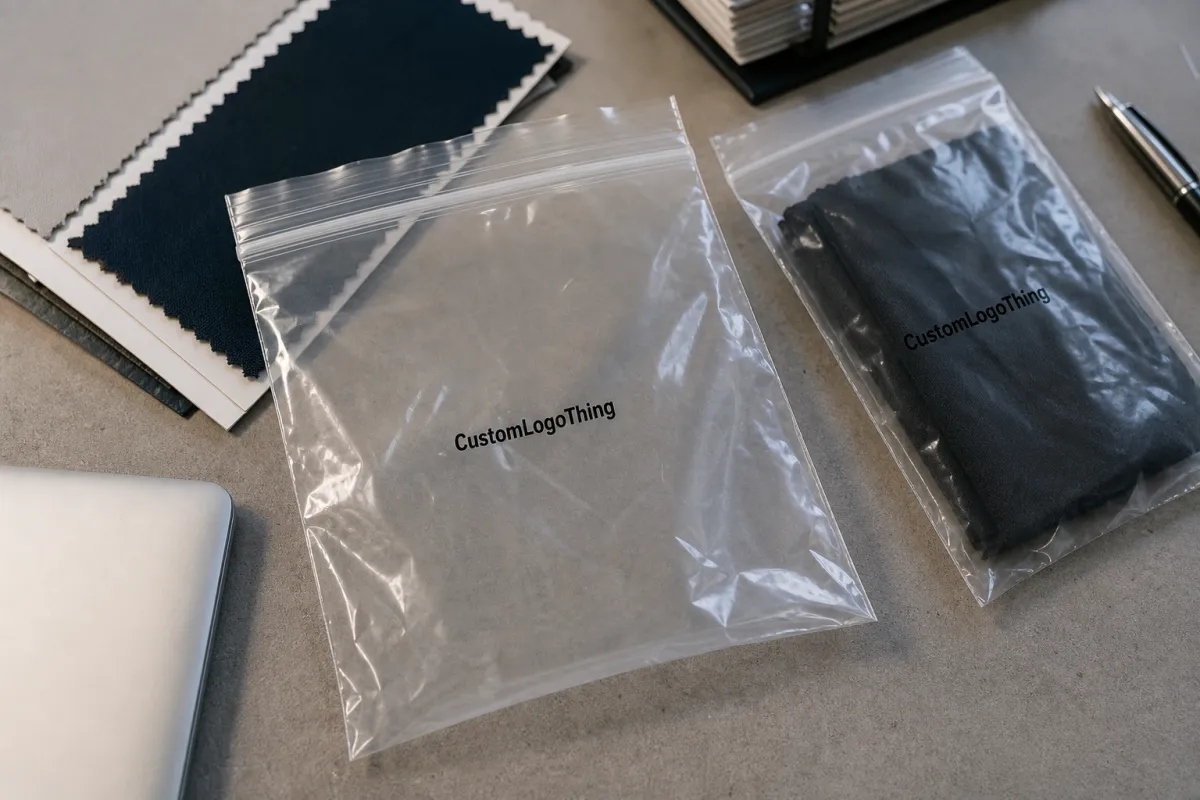
Printed Zip Lock Bags are popular because they protect the product, carry branding, and give the customer a closure they can reopen. That makes them useful for sample kits, cosmetics, small hardware, accessories, and retail inserts. The outside looks tidy. The production path is not always tidy.
Every order starts with a chain of decisions. Clear, frosted, or opaque? Standard zipper or heavier reclosable track? One-sided print or both faces? Each choice affects material usage, converting waste, setup time, and the amount of stock the factory has to reserve. That is why printed zip lock bags Lead Time and MOQ tend to follow setup complexity more than finished dimensions.
A good spec sheet saves time in prepress, sourcing, and scheduling. Missing dimensions are annoying. Missing zipper details are worse. A clean file with final artwork and a common structure can move quickly. A vague request with a pretty PDF attached usually creates a long email thread and a slower calendar slot.
If the finished pack has to survive parcel handling or mixed-carton transit, the testing guidance at ISTA is worth a look. For broader flexible-packaging terminology, Packaging.org is a useful reference.
Choose the right zipper, film, and print method
Start with the bag’s actual job. A sample bag does not need the same build as a bag holding sharp parts, and neither one needs the same structure as a food-adjacent or premium retail pack. The clearer the use case, the easier it is to narrow the material options without paying for features nobody needs.
Film selection matters. LDPE and LLDPE are both common in reclosable bags. LDPE is often a bit stiffer and easier to handle in some formats. LLDPE usually gives better puncture resistance and a softer hand feel. If the application needs extra barrier performance, a laminated or specialty structure may help, but that raises material cost and often pushes MOQ higher because the plant has to stage a less common build.
Zipper style matters too. A basic press-to-close track keeps the job simpler. A heavier zipper designed for repeated opening is a different build. It can change seal behavior, require more validation, and add cost before the first print plate is even considered.
Print method affects both appearance and economics. A one-color logo on one panel is easier to run than full-coverage art with multiple spot colors and fine type. If the artwork needs rich color, decide early whether the goal is a utility bag or a shelf-ready presentation. That decision changes the press setup, the number of plates or cylinders, and the unit cost.
- Use standard film and a standard zipper when speed and MOQ matter most.
- Use thicker or puncture-resistant film when the product can tear a lighter bag.
- Keep print coverage tight if you want a simpler production path and cleaner pricing.
- Approve the print method before sampling so the proof matches the final build.
What measurements and specs buyers need before quoting
The quote gets much more reliable once the supplier has the finished width, finished height, gusset depth if there is one, and the usable print area. Even a small change in dimensions can alter material yield. That changes both MOQ and unit pricing. A bag that looks only a little wider on paper may need a different nesting layout on the cutting table, which means more waste and a different material count.
Thickness deserves attention too. A 2 mil bag and a 4 mil bag can look nearly the same in a mockup, but they behave very differently in production and in the hand. Thicker film usually feels more substantial and can improve puncture resistance, but it also costs more and may slow the line if sealing needs closer control.
Send the artwork live area, not just the bag size. Print needs room away from zipper zones, seals, and edge margins. If the logo sits too close to the top, the supplier may have to shrink the art or adjust the construction. The same rule applies to barcodes. They need a clean quiet zone and a placement that survives flattening and packing.
Ask for the tolerance range on size and color. That matters if the bags have to match an existing line, a display fixture, or a regulated product presentation. A supplier can usually hold practical production tolerances, but the numbers should be agreed before artwork is approved.
How printed zip lock bags lead time and MOQ are set
Here is the blunt version: printed zip lock Bags Lead Time and MOQ are driven by production efficiency. The plant is balancing setup time, material waste, and line speed against the order size. A small run can still be efficient if the factory already stocks the right film and zipper. A larger run can still take longer if it needs special ordering, extra proofing, or a less common structure.
Lead time usually starts with prepress readiness. Final artwork, a correct dieline, and clear color targets move the order faster than almost anything else. If the supplier has to redraw the layout, fix low-resolution logos, or chase down print placement questions, the schedule slips before production even begins. Once proof approval is in hand, a standard order often runs in about 12 to 18 business days. Specialty structures, multiple print passes, or extra QC steps can push that to 3 to 5 weeks.
MOQ usually reflects the point where setup waste stops being painful. Standard sizes and simple graphics often support lower minimums, while custom structures, specialty films, or multi-color jobs push the minimum higher. A supplier may accept a smaller run, but the unit cost usually climbs because tooling and setup are spread across fewer bags.
If you want better pricing and a friendlier schedule, reuse an existing size when you can, keep print coverage focused, and reorder a proven spec instead of reinventing the build.
Pricing, MOQ, and unit cost: what changes the number
Buyers usually stare at the headline quote. Fair. But the better question is what that quote includes. A low number can look good until plates, samples, freight, overrun policy, and revision cycles show up. Compare offers on the same basis: same size, same material, same zipper, same print count, same artwork version, same delivery target.
| Option | Typical MOQ | Typical cost per piece | Typical lead time | Best fit |
|---|---|---|---|---|
| Standard clear bag, 1-color print | 5,000-10,000 pcs | $0.08-$0.16 | 12-18 business days | Sample kits, inserts, light retail use |
| Custom printed bag, 2-4 colors | 10,000-20,000 pcs | $0.14-$0.28 | 15-25 business days | Brand launches, retail shelf packs |
| Barrier or laminated structure | 15,000+ pcs | $0.22-$0.45 | 3-5 weeks | Higher protection, premium presentation |
These numbers are planning ranges, not promises. Standard film, simple art, and a common zipper usually sit near the lower end. Add detailed print, specialty film, or a more demanding closure, and the number climbs. That is normal. The factory is paying for more material complexity and more time on press.
Tooling fees can also matter more than buyers expect. Plates, cylinders, and setup charges are often minor on a bigger order and irritating on a short run. Some suppliers show them as separate line items. Others bury them inside the unit cost. Ask for a clean breakdown so you can compare quotes without guessing.
A useful quote request asks for two numbers: the best MOQ and the best unit cost at your forecast volume. That side-by-side view shows whether it is smarter to order smaller now or commit to a larger production lot and bring the piece price down.
Production steps from art approval to ship date
A clean production flow usually starts with RFQ review, then proofing, then sample approval if needed, followed by prepress, printing, converting, inspection, and final packing. That sequence sounds simple enough. It is not. Every step can save time or steal it. The biggest gains usually happen in the artwork phase, because bad files generate bad schedules.
Color checks matter because bags often use small logos, fine type, or simple brand marks that still need to look intentional. A weak proof with no Pantone reference can trigger avoidable revisions. Dieline confirmation matters for the same reason. If the zipper position, seal zone, or usable print area is off on the proof, the finished bag can look cramped even when the logo itself prints cleanly.
Barcode verification deserves its own checkpoint, especially for retail, warehouse, or fulfillment use. A barcode that scans in a PDF is not automatically production-ready. The supplier needs the final size, quiet zone, and placement so the code still works after printing and flattening.
Turnaround improves when artwork is final and materials are in stock, but a buyer should not expect a plant to skip curing, inspection, or pack-out checks just to shave a day. Good packaging comes from controlled process steps, not from cutting corners.
"A solid reorder file saves more time than a rushed approval ever will. When the bag spec, artwork, and carton plan are documented, the next order moves with fewer questions."
For repeat programs, ask the supplier to keep a reorder record with size, film, zipper style, print count, approved artwork version, and shipping format. That one habit makes the next quote faster and makes printed zip lock bags lead time and MOQ easier to forecast on future runs.
Why repeat buyers keep this bag format in rotation
Repeat buyers keep coming back to zip lock bags for one reason: consistency. A bag that closes cleanly, prints clearly, and arrives on schedule is easy to build around. Once a team has a proven spec, they can plan sample kits, seasonal launches, or accessory sets without rebuilding the packaging plan every time the product changes.
The best ordering process is not just a quote. It is a repeatable system. The supplier knows the approved dieline, the buyer knows the expected color range, and both sides know which details are fixed and which can flex. That shortens the path from approval to production and keeps the next order from starting at zero.
If you manage multiple SKUs, this format is practical because one structure can serve small parts, retail bundles, promotional kits, and light-duty product protection. The artwork changes. The bag does not have to. That consistency helps procurement, forecasting, and storage.
Many buyers over-specify the first order. They ask for custom features that do not improve the customer experience, then wonder why the quote is high and the schedule is long. A cleaner path is better: define the handling need, then add only the features that actually support it.
What to send before requesting a firm quote
A firm quote is easier when you send a complete spec package instead of a loose product idea. At minimum, include the finished size, film preference, zipper type, print colors, quantity target, artwork file, and needed ship date. If the bag will hold heavy, sensitive, or retail-facing contents, add those notes too.
It also helps to share storage conditions and any compliance concerns. If the product needs extra puncture resistance, moisture protection, or a cleaner shelf appearance, say so early. If cartons need to be packed a certain way, or if every inner pack needs a barcode label, include that. Small details keep the production plan aligned with how the order will actually be received and used.
When comparing options, ask for both the lowest MOQ and the best price at your forecast volume. That reveals the tradeoff clearly. A lower minimum can be useful for a test launch, while a larger run may make more sense for a product with steady demand. The right answer depends on inventory risk, cash flow, and how quickly the packaging will move.
If final art is not ready, send a marked-up sketch and a rough dieline anyway. A decent starting point is better than a vague description. It gives the supplier something real to price, and it usually cuts down on back-and-forth later.
What is the usual printed zip lock bags lead time and MOQ?
Lead time depends on artwork readiness, film availability, and print complexity. Standard builds with final files usually move fastest. MOQ is tied to setup efficiency and waste allowance, so common sizes and simpler graphics often support lower minimums. A supplier needs the size, material, print count, and quantity together before giving a reliable number.
Can I lower MOQ without changing the bag size?
Sometimes. Simplifying the print, using an existing film, or choosing a standard zipper can help. The tradeoff is usually higher unit cost, because setup is spread across fewer bags. The cleanest comparison is to ask for two quotes: one at the preferred MOQ and one at a larger volume.
Which artwork files help speed up a printed zip lock bag quote?
Editable vector artwork and a clear dieline are the fastest starting point. PMS color references, logo rules, and any barcode requirements reduce revision cycles later. If the layout is not final, a marked-up sketch is still better than a vague description.
Does zipper style affect unit cost and turnaround?
Yes. A heavier closure or specialty zipper can require different materials and more setup. A standard press-to-close style usually keeps the quote simpler than a custom closure designed for stronger hold or repeated use. The zipper choice should match the product before pricing is finalized.
What should I confirm before approving a printed zip lock bag sample?
Check size, color match, print placement, zipper action, and seal quality against the spec. Confirm the sample reflects the intended material thickness and finish, not just the visual look. Make sure any packaging, labeling, or carton configuration matches how you plan to receive the final order.


