Buyer Fit Snapshot
| Best fit | Plant Based Corrugated Boxes MOQ projects where brand print, material claims, artwork control, MOQ, and repeat-order consistency need to be specified before quoting. |
|---|---|
| Quote inputs | Share finished size, material target, print colors, finish, packing count, annual reorder estimate, ship-to region, and any compliance wording. |
| Proofing check | Approve dieline scale, logo placement, barcode or warning zones, color tolerance, closure strength, and carton packing before bulk production. |
| Main risk | Vague material claims, crowded artwork, missing packing details, or unclear freight terms can make a low unit price expensive after revisions. |
Fast answer: Plant Based Corrugated Boxes MOQ: Pricing, Specs, Lead Times should be specified like a repeatable production item. The safest quote records material, print method, finish, artwork proof, packing count, and reorder notes in one written spec.
Production checks before approval
Compare the actual filled-product size with the drawing, then confirm tolerance on folds, seals, hang holes, label areas, and retail display edges. Reserve space for logos, QR codes, warning copy, and material claims before decorative graphics fill the panel.
Quote comparison points
Review material grade, print process, finish, sampling route, tooling charges, carton quantity, and freight assumptions side by side. A quote is only useful when the supplier can repeat the same color, closure quality, and packing count on the next order.
Plant Based Corrugated Boxes MOQ: Pricing, Specs, Lead Times
If you are shopping for plant based corrugated boxes moq, the smallest number on the quote is only one part of the decision. A low minimum can look attractive on first pass, then freight, tooling, print setup, sample charges, and packout labor show up and change the math in a hurry. I have seen buyers get excited about a lower starting quantity, only to realize the final landed cost was higher than a slightly larger run that would have fit the launch better.
Plant based corrugated boxes are usually chosen for reasons that go beyond simple packaging. Brands want fiber-forward materials, less dependence on plastic-heavy components, and a box that still protects the product through shipping, storage, and shelf handling. Fair enough. The carton still has to do three jobs at once: protect the product, present the product well, and stay inside budget. That is why plant based corrugated boxes moq should be treated as a purchasing decision, not a badge for the smallest possible order. The right MOQ protects cash flow. The wrong one leaves you with dead stock, or worse, a shortage right when sales pick up.
Plant Based Corrugated Boxes MOQ: Why the Lowest Offer Is Not the Best Offer
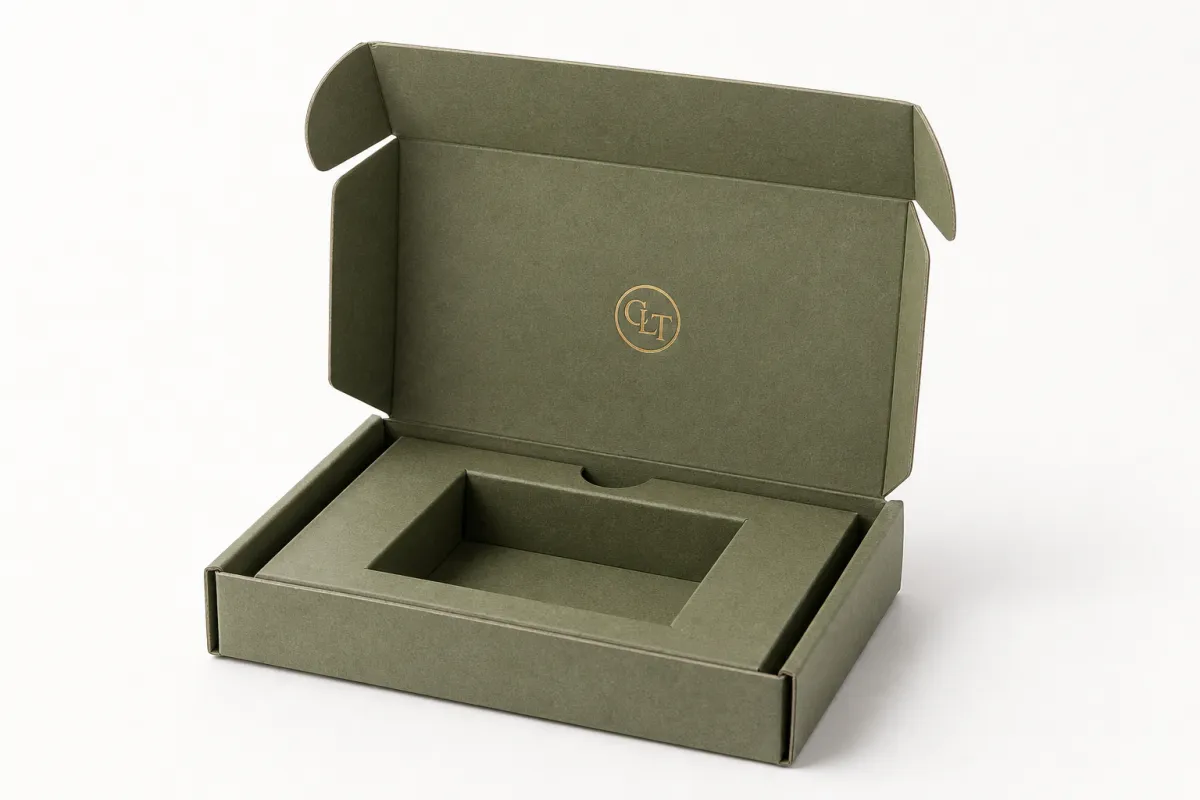
A low quote for plant based corrugated boxes moq can be a trap when the supplier leaves out the real production burden and the missing pieces show up later. It happens more often than people admit. Freight gets added after the fact. The dieline needs a revision. The print method shifts. A sample becomes “extra.” By the time those costs settle in, the first email and the final invoice barely resemble each other.
MOQ is not just a minimum order number. It is the point where setup charges, tooling, production waste, and finishing expenses stop dominating the project. A 500-box run carries a heavy share of fixed costs. A 5,000-box run usually spreads those costs far more efficiently. That is why plant based corrugated boxes moq should be reviewed across several quantity bands instead of treated like one flat number.
Inventory pressure matters just as much as unit price. Seasonal goods, subscription kits, and short-run retail programs do not reward overbuying. If your demand forecast misses the mark, boxes that were supposed to support a clean sustainability story can end up stacked in a warehouse for months. Under-ordering creates a different problem. You pay once for the first run, then pay again for rush production, split shipments, and hurried reorders. Those expenses are easy to ignore until they are already in the budget.
Buyers often ask for a lower MOQ because they want to test the market. That is a sensible instinct. The smarter move is to test the market with a box specification that can scale without forcing a full redesign on the second order. If the first run performs well, you want the same construction, same print standard, and same board grade ready for the next purchase. Consistency matters far more than shaving the starting quantity by a few hundred units.
In practical terms: the right plant based corrugated boxes moq balances launch risk, warehouse space, and the amount of capital tied up in packaging before the product has earned its place. That is the real tradeoff. Not the smallest number. The right number.
Product Details: What Plant Based Corrugated Boxes Actually Include
The phrase “plant based” gets used loosely, so it helps to define the packaging first. In plain terms, plant based corrugated boxes moq projects usually involve fiber-based board made from renewable inputs, with less reliance on fully synthetic materials. That does not make the box automatically sustainable in every sense. It means the board, sourcing, and print system are chosen to reduce plastic-heavy components where the application allows it.
Most plant based corrugated boxes fall into a few common formats:
- Mailer boxes for ecommerce, kits, and direct-to-consumer shipping
- Shipping boxes for bulk or protective transit packing
- Retail-ready cartons for shelf presentation and display
- Folding cartons with corrugated strength for lighter premium goods
- Inserts and dividers that keep bottles, jars, or accessories from moving around
Cosmetics, wellness products, and apparel often need more than a box that simply closes. The carton has to open cleanly, hold a neat presentation, and protect the product through handling and shipping. Food-adjacent goods may call for grease resistance or specific coatings. Lightweight ecommerce items may care more about cube efficiency than brute strength. The right plant based corrugated boxes moq depends on which of those functions matters most for the product in front of you.
When reviewing samples, a few details show up quickly. Board stiffness, edge crush, cut quality, print registration, and closure strength reveal whether the packaging is actually ready for use. A sloppy die-cut makes the box feel cheap even if the artwork looks polished. Soft board crushes at the corners. The wrong coating scuffs before the customer ever sees the package. A sample answers those questions before production locks in the result. That is why a sample matters. It tells you whether the plant based corrugated boxes moq is built for the real product, not just the mockup on screen.
Customization usually leaves room to move, but some changes are far less expensive than others. A simple one-color print, a standard flap style, and an existing box size tend to keep MOQ lower. Complex inserts, unusual dimensions, heavy graphic coverage, and specialty coatings raise the order threshold because the line needs more setup and more quality control. Packaging is not a charity, and it does not price itself like one.
Specifications That Affect Strength, Print, and Sustainability
Specifications are where plant based corrugated boxes moq projects become efficient or expensive. Board strength is the first place to look. Corrugated board is usually discussed by flute type and performance rating. E flute is thinner and works well for print presentation. B flute offers useful stacking strength. C flute is common for shipping. Double-wall options such as BC flute come into play when a product needs more protection or when the box will be palletized and stacked heavily.
The rating system matters too. Buyers may hear ECT or burst strength depending on the region and the box style. ECT, or edge crush test, is common for shipping performance. A 32 ECT box is suitable for many light ecommerce products. A 44 ECT box handles heavier contents and rougher transit more comfortably. If the right rating is unclear, test against the actual product weight, stack height, and shipping route. Guessing tends to become expensive in a hurry.
Print method changes both appearance and MOQ. Flexographic printing often makes sense for simple graphics and larger runs. Digital printing is useful for shorter runs and variable artwork, though the unit cost can be higher. Offset printing can deliver sharp visuals, but it usually asks for more setup and tighter sheet control. That is one reason plant based corrugated boxes moq pricing can vary so much between suppliers even when the box size looks identical on paper.
Finishing choices matter just as much. Water-based coatings are common because they protect the print without creating a heavy plastic feel. Matte finishes can look refined, though they need careful handling. No-lamination builds often suit brands that want a cleaner fiber story, but those builds still need enough surface treatment to prevent rub-off during transport. A box can be “green” in theory and still fail if the print flakes off before delivery.
Dimensions influence more than appearance. A few millimeters on each side can change board usage, shipping cube, and pallet density. Larger cartons consume more fiber per unit and raise freight costs because fewer boxes fit on a pallet and fewer pallets fit in a truck. That is one reason plant based corrugated boxes moq should be reviewed alongside packing efficiency instead of being judged by artwork alone.
Buyers often want proof points around recycled content, chain of custody, and fiber standards. FSC documentation is a familiar request, and the organization is available directly at FSC. If the packaging will move through parcel networks, transport testing matters too. The packaging industry relies heavily on the methods published by ISTA for distribution testing and package performance. Those references are not decoration. They help answer whether the box can survive the route it is actually going to take.
If your product has food contact concerns, ask for the exact compliance statement and coating details. Do not assume. That is where project mistakes happen, and plant based corrugated boxes moq orders are no exception.
Plant Based Corrugated Boxes MOQ, Cost, and Quote Breakdown
This is the part buyers really need: what drives plant based corrugated boxes moq pricing, and why one quote can look reasonable while another feels absurd. MOQ is usually tied to production setup, sheet size, number of colors, finishing steps, and whether the box needs a custom die. The more custom the structure, the higher the practical minimum. That is not a supplier trick. It is simply how the line gets paid back for setup time and process changeovers.
The biggest cost drivers usually include the following:
- Board grade and thickness - stronger board costs more and may require more material per unit
- Print coverage - full coverage and multiple colors raise setup and ink usage
- Tooling - custom dies, plates, and setup charges add fixed cost
- Coatings or finishes - aqueous, matte, soft-touch alternatives, and specialty treatments all affect pricing
- Inserts and partitions - extra components change both labor and material usage
- Freight - domestic and offshore production change landed cost in a very real way
Here is a realistic pricing view for plant based corrugated boxes moq projects. These are broad ranges, not promises, because print coverage, board spec, and shipping method can move the number:
| Quantity Band | Typical Unit Cost | What Usually Happens | Best Fit |
|---|---|---|---|
| 500 units | $1.20-$2.80 each | Tooling and setup charges have a big impact on unit cost | Launch tests, small retail pilots, sample market runs |
| 1,000 units | $0.85-$1.95 each | Fixed costs spread out, but shipping still matters | Early demand proof, limited seasonal programs |
| 3,000 units | $0.55-$1.20 each | Better bulk pricing starts to show up | Stable ecommerce or recurring subscription use |
| 5,000 units | $0.42-$0.95 each | Cost per piece improves if the spec is efficient | Established products, multi-channel sales, repeat orders |
Those ranges are why the best plant based corrugated boxes moq is not always the lowest possible quantity. If 1,000 units only costs a little less per piece than 500, the larger run may be the better buy because you avoid paying the setup penalty twice. If demand is still uncertain, a 500-piece test can still make sense even with a higher unit price. The point is not to worship the smallest MOQ. The point is to compare total landed cost with your actual launch risk in view.
“The cheapest MOQ is not the cheapest project if the boxes miss the fit or sit in storage for six months.”
A quote should clearly show tooling fees, samples, freight assumptions, print method, board spec, and lead time. If a supplier says “all-in” but will not spell out what is included, the quote is not really all-in. It is hiding in plain sight. For plant based corrugated boxes moq orders, I also want to know whether one MOQ applies to one SKU or whether multiple SKUs can be combined under the same run. That detail can save real money when a product line has more than one size.
The lowest run on paper is not always the lowest run in practice. A slightly higher MOQ can reduce waste, lower color variation, and improve production efficiency. That often makes the order better value overall. Packaging buyers care about unit cost, but the larger question is total project cost across the life of the packaging program.
If you need a broader product set while comparing options, review our Custom Packaging Products and our Custom Shipping Boxes to see how box styles and production formats affect pricing. For general ordering help, our FAQ is also useful.
Process, Timeline, and Production Steps From Quote to Delivery
The fastest plant based corrugated boxes moq project is the one that starts cleanly. The process usually moves through briefing, dieline review, sample or prototype, artwork proofing, production, quality control, and shipping. If any one of those steps gets vague, the schedule stretches. Packaging is very good at punishing unclear instructions.
Here is the practical timeline buyers should expect:
- Brief and quoting - 1 to 3 business days if the specs are clear
- Dieline and structure review - 2 to 5 business days for a custom layout
- Sample or prototype - 5 to 10 business days depending on complexity
- Proof approval - same day to several days, depending on internal sign-off
- Production - often 7 to 18 business days for standard builds, longer for complex print or inserts
- Freight - a few days domestically, longer for ocean shipments
Simple stock shapes with limited print can move fairly quickly. Custom structures with full coverage print, inserts, and specialty finishes take longer. That is normal. A realistic schedule is far better than a polished promise that falls apart the moment the sample stage begins.
Most delays come from avoidable issues: missing artwork, incorrect dimensions, a product weight that was never confirmed, or revision loops that keep changing the design after the dieline has already been sent to production. Once the artwork is final and the box spec is locked, the process becomes much more predictable. If you want faster turnaround, send the finished size, product weight, print area, and delivery target up front. That alone can save days on a plant based corrugated boxes moq project.
If the box is new to your team, ask for a prototype before approving full production. A prototype costs more time up front, but it catches fit issues, opening issues, and print placement issues before they become expensive mistakes. A sample is not a delay. It is insurance. A box that looks fine on screen often behaves differently once folded, packed, and stacked.
Plant based corrugated boxes moq buyers also need to think about shipping confirmation and QC checkpoints. Ask when approval photos will be shared, when production starts, and whether the supplier checks dimensions and print registration before carton-out. That kind of visibility prevents avoidable surprises.
Why Choose Us for Sustainable Corrugated Packaging
Custom Logo Things keeps the conversation simple: clear specs, realistic MOQ guidance, and no false sustainability claims. That matters because plant based corrugated boxes moq orders can go sideways quickly when a supplier overpromises on price and underdelivers on structure. A box that looks attractive in an estimate but fails in use is just expensive cardboard with branding on it.
Most buyers do not need a flashy pitch. They need a partner who can balance strength, print quality, and budget without overbuilding the box. If a lighter board grade will work, say so. If the product needs a stronger flute profile, say that too. Good packaging advice should reduce waste and prevent reprints. That is the job.
We also pay attention to the choices That Save Money later: accurate dimensions, sample support, and honest guidance on whether a lower MOQ is truly practical. Sometimes the right answer is a smaller run. Sometimes it is better to raise the quantity a little so the cost per piece improves enough to matter. That is the kind of tradeoff smart buyers appreciate in plant based corrugated boxes moq planning.
Response time matters. Consistency matters too. If a supplier keeps changing the spec after approval, the launch schedule gets pushed around. If the quote leaves out freight or tooling fees, the budget gets surprised later. That is not service. That is a bill waiting to happen. We prefer fewer surprises and clearer numbers.
For buyers comparing box programs, our plant based corrugated boxes moq guidance works best when you already know the product weight, box dimensions, and whether the packaging will ship individually or in master cartons. With those details, we can tell you whether your launch is better suited to a small pilot, a mid-size run, or a larger bulk pricing tier. Straight answer. No smoke.
Next Steps: How to Order the Right MOQ and Avoid Costly Rework
If you want to request a quote for plant based corrugated boxes moq, gather the basics before you ask. Send the box dimensions, product weight, target quantity, print area, finish preference, shipping destination, and needed delivery date. If the product needs inserts or a special fit, include that too. A vague request creates a vague quote, and then everyone wastes time pretending the numbers mean something.
Before you commit to a larger run, order one sample or prototype if the shape is new. You want to confirm three things: does the product fit properly, does the box survive handling, and does the presentation match the brand? If any of those answers feels shaky, fix it before the full order. That is how you protect budget and reduce rework on plant based corrugated boxes moq projects.
A practical decision path looks like this:
- Confirm the product dimensions and target board strength
- Ask for quotes at 2 to 3 quantity bands, not just one
- Check whether tooling fees, samples, freight, and setup charges are included
- Review one prototype or sample if the structure is custom
- Choose the MOQ that matches launch demand and storage space
If you are still comparing formats, our Custom Shipping Boxes page can help you judge which structure is best for transit performance, and our Custom Packaging Products page shows broader options if you are building a full packaging program. For quick ordering questions, our FAQ is a good place to start.
The honest answer on plant based corrugated boxes moq is simple: the right order quantity is the one that fits your product, your schedule, and your cash flow. Not the smallest quote. Not the loudest promise. The right balance. Request the numbers, review the sample, compare the unit cost across quantity bands, and approve the run only when the spec and the budget line up. That is how you order plant based corrugated boxes moq without paying for avoidable mistakes. And if the first estimate feels a little too good to be true, it probably is. Trust your numbers, not the shine.
Frequently Asked Questions
What is the typical MOQ for plant based corrugated boxes?
MOQ usually depends on print method, box style, and whether a custom die is needed. Simple unprinted or lightly printed runs can be lower; complex custom builds usually require a higher minimum. The real number should come from the quote, not a generic promise.
Why do plant based corrugated boxes cost more at low quantities?
Setup work, tooling, and print preparation are spread across fewer units. Lower volume orders also leave less room to absorb waste and shipping costs. The unit cost usually improves fast once the order moves into higher quantity bands.
Can I get a sample before approving the MOQ?
Yes, and you should if the box shape, fit, or print layout is new. A sample helps confirm strength, assembly, and product presentation before full production. Sampling can add time, but it usually saves money by avoiding a bad run.
What affects lead time for plant based corrugated boxes moq orders?
Artwork readiness, structural complexity, and print method are the biggest drivers. Approval speed matters too; delays on proofs or samples extend the schedule. Freight method can also change when the boxes actually arrive.
How do I compare quotes for plant based corrugated boxes?
Check whether tooling, samples, freight, and finishing are included. Compare the same specs across each supplier; cheap quotes often hide differences in board quality or print method. Ask for unit cost at multiple quantities so you can see where the best value actually starts.