Plastic bags for event giveaways wholesale sound straightforward until the boxes reach the venue and the real pressure starts. Bags get loaded with brochures, samples, bottled drinks, shirts, catalogs, and the occasional extra item that was never part of the original plan. If the bag splits at the registration table or sags in someone’s hand, the giveaway feels cheaper before anyone has even looked inside.
That is why the bag deserves more attention than it usually gets. The right construction keeps the contents together, protects printed inserts from getting bent, and gives the kit a cleaner presentation. For trade shows, conferences, festivals, recruitment fairs, store openings, and sponsorship activations, the bag is part of the package, not just a carrier.
Wholesale buying makes sense because event quantities are rarely small, and retail pricing adds unnecessary cost fast. The catch is that many buyers focus only on how many bags they need, not on how the event actually runs. The better decisions are about size, film type, handle style, print coverage, and the date the bags must be on site.
Why event giveaways need bags that survive the crowd
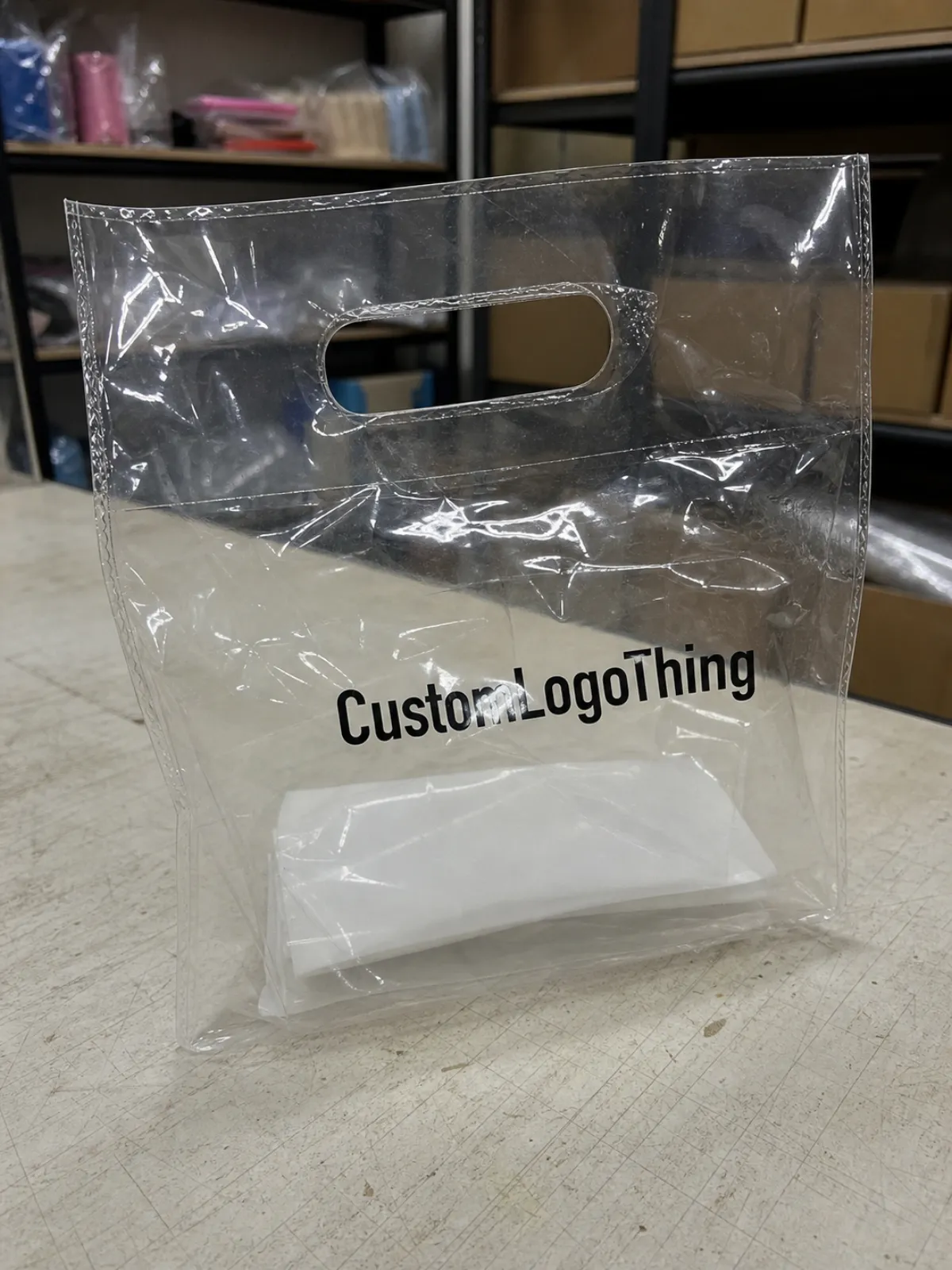
Event bags go through more abuse than most packaging categories. They are stacked, lifted, carried, dropped, and overfilled in a hurry. A flimsy bag makes the giveaway feel disposable. A well-built one supports the contents and makes the whole kit feel deliberate.
From a buyer’s point of view, the bag does three practical jobs. It keeps all the items together. It reduces the chance of damage to inserts, samples, and small products. It also adds perceived value without much added cost. That last part is easy to underestimate. A good bag can make a modest promo kit look organized and complete instead of improvised.
Common event uses tend to fall into a few groups:
- Trade shows with brochures, catalogs, and samples
- Conferences with notebooks, inserts, and branded gifts
- Festivals where the contents change from person to person
- Recruitment fairs with handouts and application materials
- Store openings with coupons, product samples, and small merch
- Sponsorship activations where the bag itself carries the brand around the venue
Wholesale orders are also the practical way to match attendance without paying a retail markup on every unit. They give room to choose a bag that actually fits the contents, instead of forcing everything into the cheapest size available. That is how people end up with stretched handles, wrinkled print, and kits that look rushed.
Before requesting quotes for plastic bags for event giveaways wholesale, define the basics first: bag type, dimensions, handle style, print area, and delivery deadline. Without those pieces, the quote is only a rough estimate, and rough estimates are where orders start drifting.
Bag styles, materials, and print options that actually work
Not every plastic bag performs the same way. Some are better for low-cost handouts. Others are better when the giveaway needs to feel more polished or get reused after the event. The material, thickness, and handle style should suit the contents, not a vague idea of what seems premium.
LDPE is softer and usually has a smoother hand feel. It works well for reusable event bags and for print that needs a cleaner surface. HDPE is lighter and often less expensive, which makes it a practical choice for simple distributions where the bag is mostly a carrier and not part of a longer-lasting branded package. If the event kit is expected to be reused, thicker construction is usually worth the added cost.
Handle style changes how the bag carries. A die-cut handle is simple and clean. A loop handle is more comfortable when the kit is heavier or the event asks people to carry the bag for a long time. A patch handle adds strength and is better when the contents have real weight. For bottled drinks, boxed samples, or apparel, the cheapest handle is often the wrong handle.
Print choice affects both price and appearance. A one-color logo on one side is usually the lowest-cost option. Multi-color branding increases the price, but it can make sense if the bag will be visible around the venue for hours. Larger graphics can work well for sponsor names, QR codes, short messages, or event-specific artwork. Fine lines and tiny type are risky on thin film, especially if the artwork file is not clean.
Clear, frosted, and colored bags each solve different problems:
- Clear: useful when contents should remain visible or when the kit is part of the display
- Frosted: cleaner and slightly more refined, with less exposure of the contents
- Colored: helpful for brand matching, higher visual impact, or hiding mixed contents
If the bag has to hold brochures and apparel, a mid-thickness LDPE bag or a heavier reusable polypropylene-style bag is usually safer than a thin disposable option. If it only holds leaflets and a pen, lighter film can be enough. The right choice is the one that survives the contents without wasting material.
Plastic printing has a few real limitations. Large, solid ink areas can show more variation from run to run than buyers expect. Exact color matching is possible in some cases, but it depends on the film, print method, and ink system. If the art uses hairline text, very small logos, or intricate outlines, simplify it before production starts. Plastic film is not kind to artwork that needs microscopic precision.
| Bag option | Best for | Typical feel | Tradeoff |
|---|---|---|---|
| HDPE die-cut bag | Low-cost handouts, simple kits | Light and thin | Less premium, lower weight tolerance |
| LDPE loop handle bag | Conferences, mixed giveaway sets | Softer and sturdier | Higher unit cost than basic film |
| Thicker reusable bag | Premium activations, heavier contents | Substantial and reusable | More setup cost, larger budget commitment |
Specifications buyers should confirm before ordering
Specs are where event bag orders stay organized or wander into avoidable problems. The supplier can only quote accurately when the dimensions and print requirements are clear. A request that says “standard bag, logo on front” invites guesswork, and guesswork is rarely cheap once production starts.
Confirm these items before requesting pricing:
- Width, gusset, and height
- Film thickness, usually measured in microns or mil depending on the supplier
- Handle type
- Printing sides and ink coverage
- Color count
- Bag finish: clear, frosted, matte, or colored
- Target quantity
Matching the bag to the giveaway contents is the fastest way to avoid waste. For brochures and catalogs, a flatter bag with enough height is often enough. For apparel, more gusset room matters so the contents do not bunch up and crease the print. For bottled drinks or boxed samples, thickness becomes more important because the weight transfers to the handles and seams.
A thicker bag often costs less than dealing with torn bags at the event. That sounds backwards until the hidden costs are counted: replacement orders, rush freight, staff time, and the brand impression created in front of attendees. Thin material is only economical if it actually survives the job.
Color matching also has limits. Exact Pantone matching on plastic is possible in some runs, but it depends on the film and the print setup. If the supplier asks for vector artwork, send AI, EPS, or a high-resolution PDF. If they request a dieline, use it. That layout shows where the artwork sits on the bag and helps prevent a logo from landing too close to a seam or handle.
For branded giveaways, asking for a spec sheet or proof layout before approval is a sensible habit. A bag can still be usable if the artwork lands slightly off, but it will not look as intentional. That difference shows more than many buyers expect, especially under event lighting or in photos.
For buyers who need to verify claims around material type or recyclability, independent references are useful. Guidance from the Association for Packaging and Processing Technologies can help clarify packaging terms, and the EPA’s waste and materials references at epa.gov can be a practical baseline when environmental language is part of the brief. That does not replace supplier documentation, but it helps keep the conversation grounded.
Plastic bags for event giveaways wholesale: pricing and MOQ basics
Pricing for plastic bags for event giveaways wholesale depends on five main variables: size, material, thickness, print colors, and quantity. Add rush timing or special packaging, and the total changes again. Production costs are not mysterious; they just respond to the details buyers choose.
MOQ, or minimum order quantity, depends on the manufacturing setup. Lower MOQ orders usually cost more per bag because setup fees are spread across fewer units. Larger quantities usually reduce the unit price, especially once print setup is already complete.
A small event does not always need the lowest unit price. If a local activation needs 800 bags, paying slightly more per unit for the exact size and print is usually smarter than buying 2,000 bags just to chase a lower line item. A larger campaign is different, especially if the same bag will be used across multiple stops. In that case, volume pricing starts to matter more.
Typical pricing ranges vary widely, but buyers usually see a structure like this when planning:
- Basic printed HDPE bags: lower entry cost, usually best for simple one-color giveaways
- Mid-range LDPE bags: moderate pricing, softer feel, better for branded kits
- Thicker reusable bags: higher cost, stronger carry performance, better presentation
The real difference between quotes is often not the bag itself but the extras around it: setup fees, print plates, freight, packaging format, and rush charges. Compare the landed cost, not just the base unit number. A quote that looks lower on paper can end up costing more once shipping and production add-ons are included.
Comparing suppliers only makes sense when the specs are identical. Same dimensions. Same thickness. Same print count. Same handle style. If the spec sheet is not matched line by line, the numbers are not truly comparable, even if they appear close.
“The cheapest quote is rarely the cheapest order. The bag that arrives on time, fits the kit, and survives the event is the one that saves money.”
Process, proofing, and turnaround: what happens after you request a quote
The order flow is usually simple: Request a Quote, confirm specs, review artwork, approve the proof, start production, then ship. The process only becomes complicated when the proof stage is treated casually. That is usually where mistakes get locked in.
A proof is the final checkpoint before the run starts. If the logo is scaled wrong, the barcode is too small, or the artwork sits too close to the seam, the best time to catch it is before production. Once the film is printed, the cost of a correction rises fast.
Realistic timing depends on the order size and how involved the print is. Standard production often takes around 12 to 20 business days after proof approval. Simpler runs may move a little faster. Multi-color artwork, special film, custom sizing, or larger quantities can extend the schedule. Rush orders are sometimes possible, but they usually cost more and leave less room for revisions.
Shipping deserves more attention than it usually gets. A good run that lands after the event does not help anyone. Build in buffer time for proof revisions, sample review, and transit. If the event date is fixed, count backward from the handout deadline rather than from the date you want to place the order.
For more involved campaigns, ask for either a digital mockup or a physical sample. A mockup is often enough for straightforward logo placement. A physical sample makes more sense when the bag must carry weight, the print area is unusually important, or the event package has a premium role. Skipping a sample can save time, but it can also leave avoidable questions about fit and finish.
Keeping approved artwork and final specs on file is useful for reorder planning. The next run is usually faster when the hard decisions have already been made and the previous order performed well.
What makes a wholesale packaging supplier worth using
A good supplier does more than send a price. They help narrow the bag choice, explain tradeoffs plainly, and flag production limits before the order gets too far along. That kind of communication saves time and prevents expensive misunderstandings.
These are the signs that matter most:
- Clear communication on MOQ and lead times
- Consistent print quality across repeated runs
- Real quality checks on seams, handles, and registration
- Ability to match specs for reorder consistency
- Helpful artwork support when files need cleanup
Manufacturing control matters because event work does not forgive inconsistency. If one batch looks right and the reorder comes in slightly off, the brand kit starts looking disjointed. That becomes even more noticeable when bags are used across multiple activations or a touring schedule.
In-house production or tightly managed sourcing often reduces surprises, though it is not a guarantee on its own. A supplier that can explain film type, thickness, and print limits in plain language is usually easier to work with than one that promises everything and clarifies nothing.
If you are comparing suppliers through a broader buying program, review the Wholesale Programs page and ask how they handle repeat orders, artwork storage, and reorder timing. Those details tend to matter more than a polished quote sheet.
If sustainability is part of the brief, ask for documentation rather than vague claims. Verify what part of the package is actually certified or recyclable. For example, FSC applies to paper-based materials, not plastic film. Mixing those categories up is an easy way to confuse procurement and marketing at the same time.
Good supplier behavior is practical and easy to recognize: they answer questions directly, identify tradeoffs early, and keep the order moving on schedule. Fancy language is not the point. Accuracy is.
Next steps to place the right order without overbuying
Before ordering plastic bags for event giveaways wholesale, gather three facts: what will go inside the bag, when the event happens, and how many people will actually receive one. That gives the quote a real starting point instead of a guess.
Then choose one target size and one backup option. The backup is there for edge cases, not for indecision. Send the logo files and preferred print colors with the first inquiry so proofing does not drag. If the branding has to look especially polished, ask for a digital mockup or sample before approval.
A useful order checklist stays short:
- Confirm giveaway contents and weight
- Set the delivery deadline with buffer time
- Select material, thickness, and handle style
- Approve the artwork proof carefully
- Lock the quantity before production starts
That sequence helps avoid overbuying while still producing bags that look intentional. Choose the Right size. Match the material to the contents. Check the proof. Then let production do its part.
Wholesale still makes sense when the bag is specified properly, the print is clean, and the timeline is realistic. If any of those pieces are off, the order becomes more expensive than it needed to be. Get those details right, and the bag does the work it is supposed to do.
Frequently asked questions
What size plastic bags work best for event giveaway kits?
Match the bag to the largest item in the kit, then add gusset room for brochures, apparel, or boxed samples. For mixed giveaways, a slightly oversized bag usually looks better than a tight fit that wrinkles print and stresses the handles.
What is a typical MOQ for plastic bags for event giveaways wholesale?
MOQ depends on material, print colors, and bag style, but lower-volume orders usually carry a higher unit price. Ask for tiered pricing so you can see where the real breakpoints are before deciding on quantity.
How much does custom printed plastic event bag pricing usually vary?
Price changes with size, thickness, number of print colors, and whether one or both sides are printed. Freight, setup, and rush production can affect the total substantially, so compare landed cost rather than the base unit price alone.
How long does production usually take for wholesale event bags?
Standard production often takes around 12 to 20 business days after proof approval, though simpler runs may move faster. Rush orders can shorten the timeline, but they usually cost more and allow less room for revisions.
Can I reorder the same plastic bags for future events?
Yes, if the supplier keeps your specs and artwork on file, reorder time is usually shorter. Confirm that the previous size, thickness, and print setup are saved exactly before placing the next run.


