Poly Mailer Bags unit cost for cosmetics is rarely the number that decides the purchase by itself. The real question is whether the mailer protects the product, supports the brand, and stays stable across reorders without driving up replacement or freight costs.
Cosmetic shipments are light, but the risk profile is not. Tubes dent, glass jars shift, cartons scuff, and customers judge the outer pack before they see the product. That is why buyers look at the bag as part protection, part presentation, and part operating cost.
The useful comparison is landed cost per piece. That means the bag price, print, setup, freight, and the hidden cost of damaged orders or unstable quality. If the quote does not help you see those pieces clearly, it is not helping you buy well.
Why cosmetics brands pay more attention to mailer cost than the mailer itself
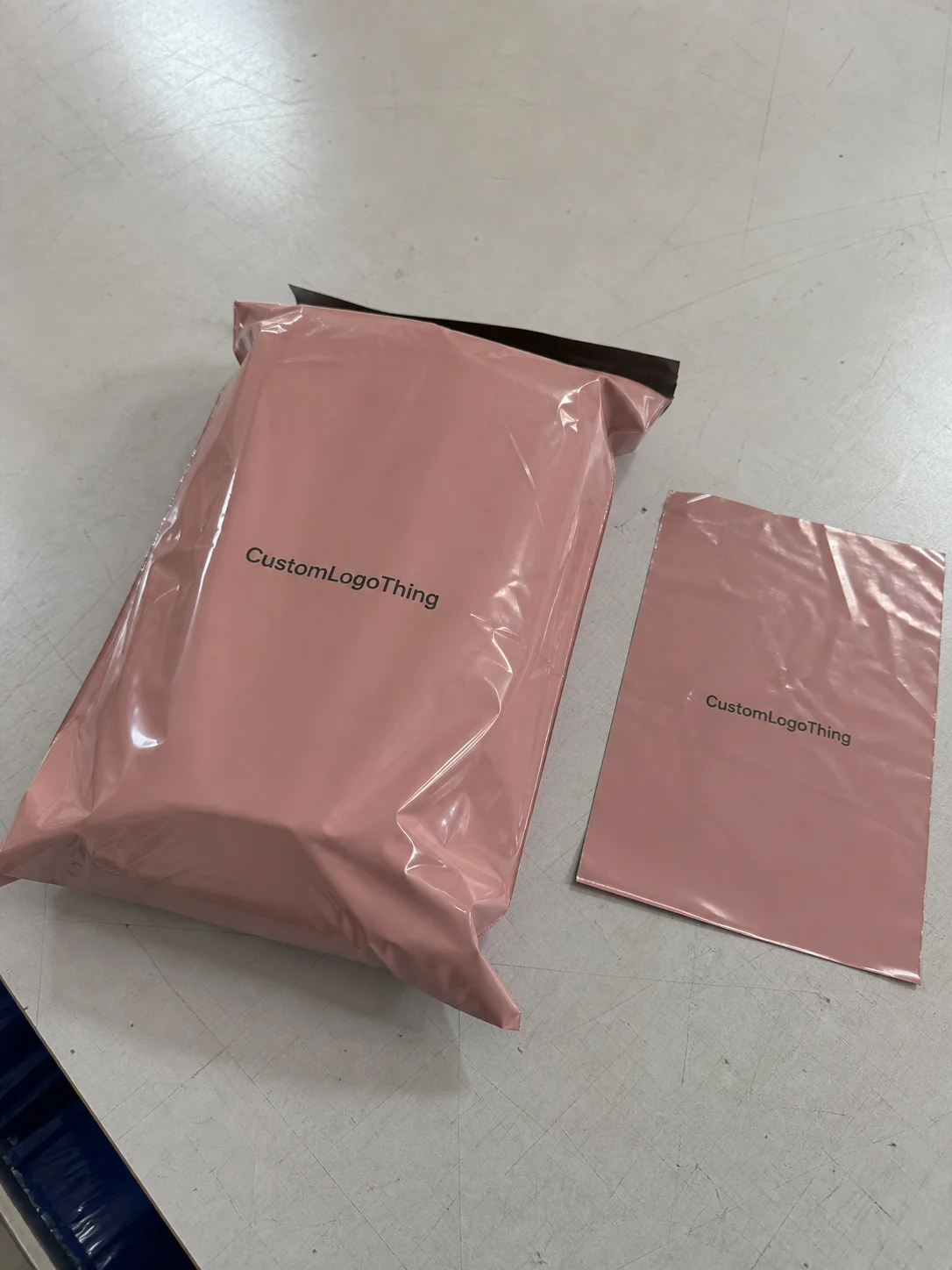
Cosmetic shipments are judged more strictly than plain ecommerce parcels. A basic gray mailer may work for low-value goods, but it is a poor fit for a premium serum set with glossy cartons and a customer expecting a clean unboxing. For beauty brands, the mailer has to do more than close a parcel.
Protection is the first test. Oversized bags let products slide around. Thin film can tear in sorting or during last-mile handling. Glass and rigid cartons need better puncture resistance and a dependable adhesive seal. If the mailer opens, scuffs, or collapses, the savings on paper disappear quickly in refunds and replacements.
Presentation is the second test. Opaque film, clean print, and consistent closure tell the customer the order was handled deliberately. Full-coverage designs usually look more finished than a small logo on bare film, but the finished look only helps if the bag also holds up in transit.
“The cheapest mailer becomes expensive after the first damaged shipment. Buyers usually remember the replacement cost longer than the savings.”
The right way to compare options is simple: compare unit price against expected damage rate, customer experience, and reorder stability. A bag that costs a little more but lowers returns or protects premium packaging often wins on total cost. That is the part procurement teams need to see before they approve a run.
- Cost per piece should include print, setup, and freight where possible.
- Damage rate matters most for glass, boxed sets, and fragile kits.
- Presentation quality matters more for DTC beauty and subscription programs.
- MOQ determines whether the quote reflects true bulk pricing.
Bag structures and print options that change the final spec
Three mailer structures show up most often in cosmetics. Standard polyethylene mailers are the simplest and usually the lowest-cost. Co-ex mailers use layered film for better strength and opacity. Padded variants add cushioning when the contents need more protection than thin film can provide.
Custom Poly Mailers sit in the middle ground where a brand can get privacy, branding, and basic protection without moving to a rigid carton. For many beauty products that already ship in retail boxes, this is the practical choice.
Print choice affects both appearance and cost. One-color logos are simpler to produce. Full-color graphics, matte finishes, and glossy finishes add complexity, more press setup, and more quality checks. Fine gradients or small text can also slow proofing because the supplier has to confirm that the artwork will print cleanly at production size.
Adhesive strength is not a minor detail. It determines whether the bag stays closed during warm storage or transit. Tear resistance matters if the mailer goes through automated sorting or gets stacked with heavier parcels. Opacity matters because beauty products should not arrive looking exposed through a translucent film.
Some products need a second layer. A premium serum, a fragile jar, or a boxed set may need an inner pouch, tissue, or insert card to keep the contents aligned and reduce scuffing. That extra layer can improve presentation and reduce movement inside the bag.
- Standard polyethylene: lowest cost, basic protection, suitable for lighter items.
- Co-ex mailer: stronger, more opaque, and better for branding.
- Opaque mailer: hides contents and supports a cleaner presentation.
- Padded mailer: higher cost, more cushioning, useful for fragile components.
Specifications buyers should lock down before quoting
Most quote problems start with vague specs. “Medium size” and “nice thickness” are not useful inputs. Suppliers need finished dimensions, film gauge, seal style, print area, color count, and whether the mailer needs a return strip. If the buyer is vague, the quote will be vague too.
For cosmetics, the spec needs to cover more than fit. Add resistance to scuffing, moisture, and transit punctures. Those are not luxury requirements. They are the difference between a clean delivery and a return.
Ask for finished sample dimensions, not just nominal size names. Packaging names are often inconsistent across suppliers, and a “10 x 13” from one source may not match another source’s usable space. That mismatch creates wasted inserts, poor fit, and unnecessary rework.
It helps to force every supplier to quote the same brief. If you compare a 2.5 mil opaque co-ex bag to a 4 mil padded mailer, you are not comparing prices. You are comparing different jobs.
Useful reference points can also help define the right protection level. Many brands use ISTA testing guidance when they want a realistic view of transit stress. If the packaging program includes cartons or paper inserts, FSC certification may matter in the sourcing brief. The aim is to reduce surprises before production starts.
- Finished width and length
- Film thickness in mil or microns
- Seal style and adhesive type
- Print method and number of colors
- Opacity requirement
- Return strip or tamper-evident feature
- Target product type, such as tubes, jars, or boxed sets
Poly mailer bags unit cost for cosmetics, pricing, MOQ, and quote drivers
Poly Mailer Bags unit cost for cosmetics moves for a few predictable reasons. Thickness is one. Print complexity is another. Order volume matters because setup and tooling get spread across more units. Freight matters too, especially when the quote looks good at the factory but loses value once the shipment is landed at the warehouse.
At low volume, unit cost is usually higher because setup charges are concentrated into fewer pieces. At higher volume, bulk pricing improves quickly, especially after the print setup is absorbed. The exact number depends on the spec, but the pattern is consistent: simpler bags and larger runs get the best pricing.
| Mailer option | Typical MOQ | Indicative unit cost | Best use case | Cost driver |
|---|---|---|---|---|
| Stock polyethylene mailer with one-color logo | 3,000 to 5,000 pcs | $0.08 to $0.14 | Simple ecommerce fulfillment | Lowest setup, limited print |
| Opaque co-ex mailer with branded print | 5,000 to 10,000 pcs | $0.12 to $0.22 | Beauty boxes, DTC cosmetics | Better film, better opacity, more print work |
| Full-coverage matte or glossy custom mailer | 10,000 pcs and up | $0.16 to $0.30 | Premium brand presentation | More press time, color control, finish complexity |
| Padded mailer | 5,000 pcs and up | $0.18 to $0.35 | Fragile jars, boxed sets, protective shipping | Extra material and cushioning |
Those ranges are working estimates, not promises. Film gauge, print area, packaging format, destination, and shipping method all move the final number. Hidden costs can also appear in artwork cleanup, plate charges, sample charges, special inks, split shipments, or export packing requirements.
The most useful comparison is landed unit cost. Factory price is only part of the story. If one supplier is cheaper on the quote sheet but more expensive on freight or packing, the lower quote may not be the better buy. Buyers usually get the clearest view by asking each supplier to quote the same line items:
- Unit price at the target quantity
- Setup charges or plate costs
- Artwork or file cleanup fees
- Sample cost and sample lead time
- Freight to the warehouse or 3PL
- Packaging method for shipment
That gives a usable comparison instead of a loose estimate. It also makes it easier to see where one quote is genuinely better and where it only looks better because key costs were left out.
Production steps and timeline from artwork to shipment
The production sequence is straightforward, but delays usually come from an incomplete brief. It starts with spec confirmation, then artwork approval, material sourcing, printing, curing, inspection, packing, and dispatch. If the quote stage was loose, production usually feels slower than it should.
Simple custom mailers move faster than full-coverage jobs with multiple colors or special finishes. A one-color branded bag usually needs less press setup and fewer checks than a glossy, fully printed design. Multi-color work requires tighter registration and more proofing. Special finishes add another control point.
A realistic schedule is often 12 to 15 business days after proof approval for straightforward custom mailers. More complex builds, peak-season orders, or special packing instructions add time. If the buyer changes the size after proofing, the schedule moves again. Production can only run cleanly if the brief is stable.
Rush orders are possible, but only when the artwork is ready and the spec is final. The fastest jobs are the ones with no surprises. The slowest are the ones that start with a logo file, then move to size changes, finish changes, and revised delivery expectations after the job is already in motion.
For higher-value cosmetics, a sample or prototype is usually worth the time. If the product is fragile, premium, or going into a subscription flow, one damaged run can cost more than a short delay. A sample confirms seal strength, print color, fit, and how the product sits inside the mailer before the full order starts.
Why cosmetic brands reorder the same mailer instead of chasing the lowest quote
Repeatability matters more than one-time savings. Cosmetic brands want the same color, the same seal strength, and the same unboxing feel every run. A lower quote that changes the look or fit is not a win. It just creates a future problem with a cheaper invoice attached to it.
Stable suppliers reduce failure points across reorders. That matters when the mailer is part of a subscription box, a DTC fulfillment flow, or a seasonal campaign where inventory has to match what is already on hand. Even a small shift in opacity or film thickness can create handling issues later.
Quality control should be specific. Check print alignment. Check seam integrity. Check opacity. Check carton packing consistency so the mailers arrive flat, clean, and usable. If the supplier cannot explain how the run is inspected, that is a warning sign.
Custom Packaging Products becomes useful once the mailer spec is stable, because brands usually start matching inserts, boxes, tape, and other shipping materials to the same quality level. That keeps the packaging program consistent instead of patched together.
There is also a planning benefit. A repeatable mailer makes forecasting easier for procurement, operations, and customer service. Spend is more predictable, packing is more predictable, and damage complaints are easier to control. That matters as much as the quoted unit price.
Next steps to get a usable cosmetic mailer quote fast
Send a tight brief. Include product type, finished bag size, target quantity, print colors, thickness preference, and whether the mailer ships alone or with inserts. If you already know your target cost, share it. A supplier can work backward from a real budget more easily than from a vague request for something cheap and premium at the same time.
Ask for two options. One should match your target spec. The other should be a value-engineered version that lowers cost without hurting the presentation too much. That second option is often where the final decision lives. Maybe one color can be removed. Maybe the bag can be slightly thinner. Maybe the finish can move from full matte coverage to a cleaner spot print.
For fragile, premium, or high-value cosmetics, request a sample or prototype before the full production run. The first order is not the place to guess on fit or seal performance.
A simple quote checklist keeps the process moving:
- Product type and shipping use
- Finished bag size
- Order quantity and target MOQ
- Print colors and coverage
- Thickness preference
- Need for return strip or tamper evidence
- Destination for landed pricing
- Deadline or launch date
Lock the spec, compare landed pricing, and set the reorder plan before the first production run. That is how buyers keep packaging cost under control without giving up protection, presentation, or repeatability.
What affects poly mailer bags unit cost for cosmetics the most?
Order quantity usually has the biggest impact because setup charges and material costs spread out as volume increases. Film thickness, print complexity, and special finishes can raise the unit price quickly. Shipping method and destination matter too if you are comparing delivered cost instead of factory-only pricing.
What MOQ is typical for custom cosmetic poly mailers?
MOQ depends on print method, size, and color count, but custom runs usually start at a few thousand pieces. Standard materials and simpler prints generally allow lower minimums than full-coverage designs. If the order is small, ask whether a stock mailer with custom branding is cheaper than a fully custom build.
How long does production usually take after artwork approval?
Simple jobs can move faster, while fully custom printed mailers usually need extra time for setup and quality checks. Artwork changes, sample approval delays, and busy production windows can extend the schedule. A clean spec and ready-to-print files are the fastest path to a predictable turnaround.
Can poly mailers work for fragile cosmetic products?
Yes, but only when the product and shipping method match the mailer specification. Glass, boxed sets, or premium kits may need thicker film, better cushioning, or a secondary inner pack. The goal is not just delivery, but delivery without crushed corners or ugly scuffs.
What should I send to get an accurate quote quickly?
Send size, quantity, material preference, print colors, artwork files, and whether you need stock or custom packaging. Include shipping destination and any deadline that affects production or freight. If you already know your target price, share it so the quote can be built around realistic options.


