For Custom Poly Mailer Bags for cosmetics brands, the real decision is not whether the packaging looks attractive on a mockup. It is whether the bag survives handling, keeps freight costs in check, and still gives the customer a clear brand impression before the product is even opened. Beauty shipments face more compression, sorting, stacking, and scuffing than many teams expect, so the outer package has to do practical work as well as visual work.
That is why many cosmetics teams are moving away from plain envelopes and toward printed mailers with tighter specifications. A well-chosen poly mailer can protect slim cartons, sample kits, and flat accessories while adding very little weight to the shipment. Used properly, it sits between product packaging and retail packaging: light, recognizable, and efficient enough for daily fulfillment.
Why cosmetics brands are switching to custom poly mailers
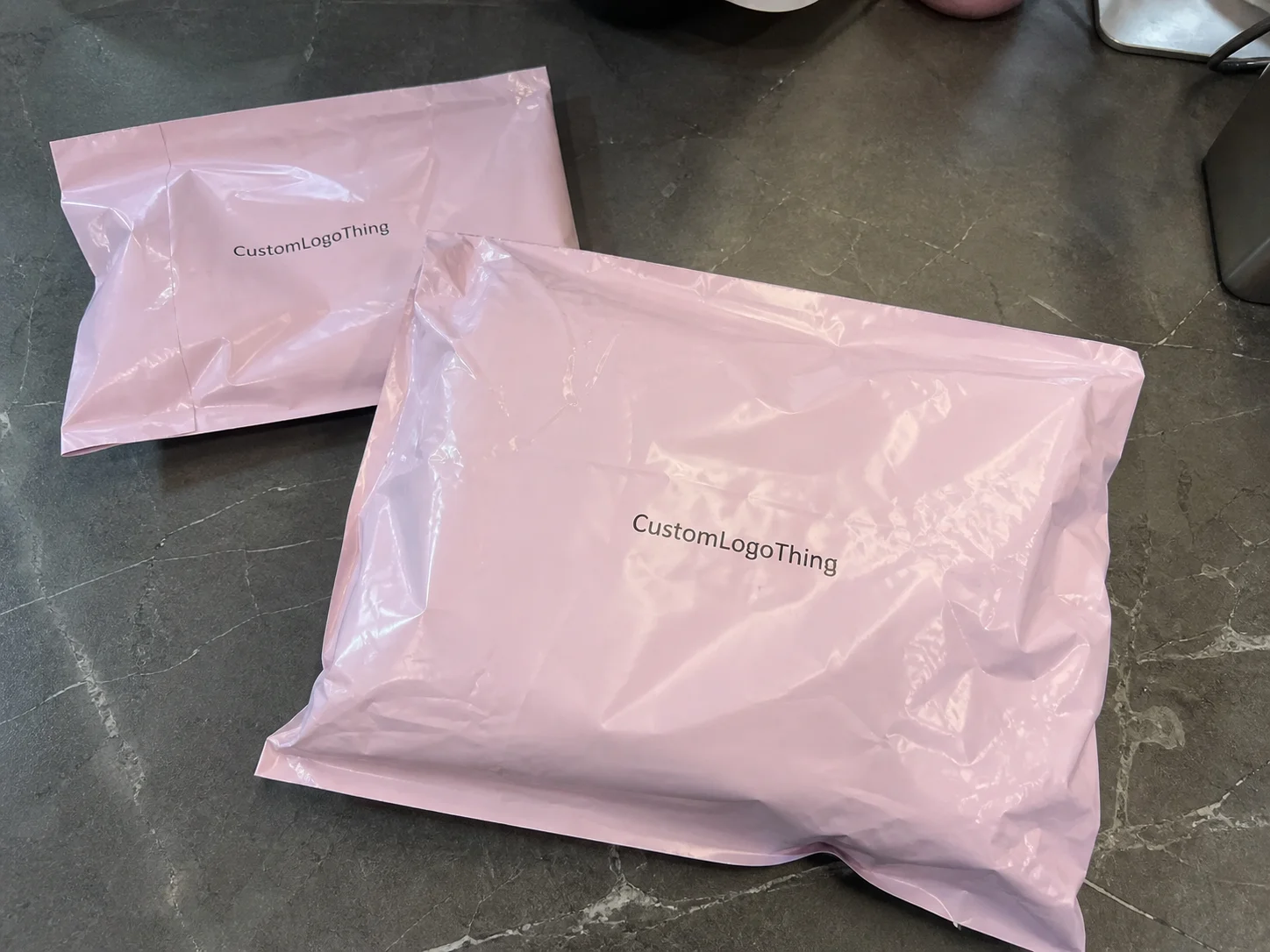
Cosmetics rarely travel as bare products. They move inside cartons, pouches, sleeves, tissue, or secondary wrapping, then get handled through sorting belts, stacked with heavier parcels, and compressed in carrier bins. The outer layer has to withstand that journey without becoming expensive overkill. That is the appeal of custom Poly Mailer Bags for cosmetics brands: they are light, water-resistant, easy to print, and far less burdensome to ship than rigid alternatives.
Plain poly mailers handle transport, but custom versions also support brand recognition and operational clarity. They carry the product, identify the brand, and shape the customer’s first impression before the box or pouch is opened. For direct-to-consumer beauty labels, subscription programs, launches, and sample kits, packaging is part of the customer experience and part of the marketing budget.
The cost tradeoff is usually more favorable than buyers expect. A printed mailer can feel premium while adding only grams to a parcel. Compare that with a custom printed box, which often brings higher material cost, more warehouse space, and greater dimensional-weight exposure. For lightweight beauty sets, the lower-cost outer format is often the smarter one.
There is also a repeat-order effect. Customers recognize a branded mailer quickly, and that recognition becomes part of the brand memory. In beauty, where product presentation matters almost as much as formulation claims, the outer package can help a customer remember the brand long after the first shipment.
In practice, teams use custom mailers for replenishment orders, influencer send-outs, seasonal kits, and launch drops where the assortment changes often. If your order mix includes DTC sales, subscriptions, and promotional bundles, it is worth comparing mailers against Custom Packaging Products more broadly. The answer is not always a box; sometimes it is a well-printed mailer that reduces waste and keeps shipping simple.
“A mailer does not need to be heavy to feel intentional. It needs the right size, a clean print, and a structure that matches the product inside.”
How custom poly mailer bags work for fragile beauty shipments
Most cosmetic mailers are made from polyethylene film. That gives the bag flexibility, moisture resistance, and decent abrasion protection without adding much weight. Film thickness, seal quality, and print coverage all affect how the mailer behaves in transit. A good bag resists conveyor scuffing and light rain at the doorstep. A poor one splits at the seam or punctures around a sharp edge.
For beauty shipments, the mailer is usually only one layer in the packout. Lip products in cartons, skincare jars in inserts, and flat tools in sleeves often ship safely in a mailer if the internal arrangement is disciplined. For glass, liquids, and higher-value sets, inner protection still matters. Bubble pouches, molded inserts, tissue wraps, or a box inside the mailer can dramatically reduce damage risk. The outer layer protects the parcel; the inner layer protects the product.
Common uses include lip liners, mascaras, sheet mask bundles, travel-size skincare, beauty tools, press-on nails, and promotional inserts. Some brands also ship apparel add-ons or sample cards in the same packout. The mailer is not a replacement for all other packaging. It is a light outer shell that can handle low-to-moderate risk shipments without making the order feel disposable.
Custom printing changes more than appearance. A logo or graphic can make the bag easier to identify at the warehouse, reduce the need for extra labels, and make tamper issues easier to notice. For some operations teams, that alone justifies the switch away from plain stock bags because it improves both brand presentation and fulfillment discipline.
Packaging engineering still matters. ASTM and ISTA testing standards are useful references if you are validating a new packout, especially for fragile, liquid, or high-margin products. If you want to review the transit-testing language buyers often reference, the International Safe Transit Association publishes material at ista.org. For recycled-content or paper-based alternatives, FSC guidance at fsc.org can help separate verified claims from vague marketing language.
Key specs that affect performance, look, and durability
Thickness is usually the first spec buyers ask about, and for good reason. Poly mailers are commonly described in mils, which makes it easier to compare wall strength. Thicker film usually means better puncture resistance, better opacity, and a more substantial hand feel. But thicker is not automatically better. If the bag is oversized or the contents are oddly shaped, extra thickness will not fix a poor fit.
For cosmetics, a practical approach is to match thickness to product risk. Lightweight sample kits can work in a thinner bag if they are flat and packed neatly. Sharper cartons, bundled sets, or items with corners usually deserve a thicker film. If the package will move through fulfillment at scale, paying slightly more for stronger film is often cheaper than replacing damaged shipments later.
Closure design matters more than many buyers realize. Self-seal adhesive strips are standard, but double-seal or returnable formats can help when reverse logistics are part of the business model. Tamper-evident details are also useful for higher-value beauty products. A customer should be able to see whether the package has been opened.
Print choices shape both the customer experience and the production economics. A one-color logo can look sharp and is usually easier to keep consistent across batches. Full-coverage graphics create stronger shelf-to-door branding, but they also raise setup complexity and can create visual risk if the artwork is too busy. Matte finishes tend to feel softer and more editorial; gloss looks brighter and more noticeable under light. Neither is universally better.
Size selection deserves more attention than it usually gets. Too small, and the filled package looks strained. Too large, and the contents shift, wrinkle, or raise shipping cost because the parcel dimensions are no longer efficient. That is where shipping math meets packaging design. A good size protects the product, looks intentional, and avoids wasted space.
| Option | Typical use | Strength | Brand impact |
|---|---|---|---|
| Thin stock poly mailer | Very light, flat items | Basic | Low |
| Custom printed standard mailer | DTC cosmetics, kits, samples | Good for most shipments | High |
| Thicker custom mailer with return seal | Heavier beauty sets, returns-friendly programs | Higher puncture and seal confidence | High |
| Mailer plus inner box or insert | Glass, liquids, premium bundles | Best protection | Highest |
If you want to claim recycled content, compostability, or other environmental features, verify the specification carefully. Buyers often confuse marketing language with actual performance. For brands that care about packaging sustainability, the safer path is to ask for documentation and compare it against the real shipping requirement, not just the label on the bag.
Custom poly mailer bags for cosmetics brands: process and timeline
The workflow is straightforward, but each step slows down if the inputs are vague. It usually starts with artwork submission, then proofing, sample review, production approval, manufacturing, and freight. Skip the prep work and the project tends to pay for it later in revisions or delays.
Artwork is where many projects start to wobble. Low-resolution logos, unconverted fonts, and color references that are too loose create avoidable back-and-forth. A proper dieline and a clear print area reduce that risk. If a brand asks for a design to feel “centered and elegant,” the production team still needs actual measurements. Vague instructions cost time.
Sampling is worth the effort, especially for cosmetics. A sample shows how the bag folds, how the seal holds, whether the finish feels right, and whether the print remains legible once the product is packed. Color is another area where surprises happen. A rich purple on screen can arrive flatter in print, and a black background can show scuffs more quickly than expected. Proofing is not paperwork for its own sake; it is where mistakes become cheap.
Typical timing depends on complexity, quantity, and freight. Simple orders with one-color print and clear artwork often move faster than full-coverage, multi-color packaging with special finishes. A realistic planning window is often about 12 to 15 business days from proof approval for straightforward production, then more time for freight. More complex work can take longer, especially if sampling is needed before approval.
Before requesting quotes, have these details ready:
- Finished product dimensions, not only SKU dimensions
- Target ship weight and likely add-ons
- Brand colors in a usable format
- Quantity targets for launch and replenishment
- Any return-policy or tamper-evidence requirements
That kind of preparation shortens the path from concept to production and helps the supplier quote accurately. It also reduces the chance that the final bag looks acceptable on paper but performs poorly in fulfillment.
Cost, MOQ, and unit price: what actually drives quotes
Price is driven by a small group of variables, and quantity usually sits at the top. Larger runs lower unit cost because setup is spread across more pieces. That is why MOQ is more than a gatekeeping number. It is the point where the economics stop feeling awkward. A 1,000-piece order and a 10,000-piece order are rarely the same conversation.
After quantity, the biggest variables are bag size, film thickness, print colors, finish, and special features. A larger mailer uses more material. A thicker film uses more resin. More print colors add setup complexity. Gloss and matte finishes each require different process considerations. Return seals, double seals, and tamper-evident details add more steps. None of this is mysterious, but it is easy to underestimate.
For budgeting, many beauty brands compare custom mailers with boxes, rigid cartons, or branded pouches. The mailer often wins on storage and shipping cost because it ships flat and weighs less. That advantage can matter a great deal for smaller teams with limited warehouse space. A stack of mailers occupies far less room than a pallet of rigid retail packaging.
Here is the part buyers sometimes miss: the landed cost is not only the quoted unit price. Freight, setup, plates or cylinders, sampling, rush production, and split shipments all matter. A low per-bag number can become a weak deal if logistics and rush charges grow around it. Ask for a quote breakdown so you can compare proposals on equal terms.
Below is a practical way to think about the cost stack.
| Cost driver | What it changes | Buyer impact |
|---|---|---|
| Quantity | Spread of setup cost | Biggest effect on unit price |
| Thickness | Material usage and durability | Better protection, higher material cost |
| Print coverage | Press time and complexity | Improves branding, increases setup risk |
| Special features | Seals, returnability, tamper evidence | Useful if operations need them, not otherwise |
| Freight | Landed cost and timing | Can erase savings on smaller orders |
For a cosmetics brand, the right question is not “What is the cheapest mailer?” It is “Which mailer gives me the lowest total cost without increasing damage, returns, or brand friction?” That is a much better purchasing lens.
Step-by-step: choosing the right mailer for your product mix
Step 1: classify the contents. Separate products by weight, fragility, and leakage risk. A flat sample set does not need the same protection as a glass serum bundle. This first sorting step prevents overbuying on low-risk items and underbuying on high-risk ones.
Step 2: define the job the mailer has to do. If the main goal is shipping efficiency, the solution will look different than a bag chosen primarily for presentation. Most beauty brands need both. That is where Custom Poly Mailers outperform plain stock options, because they can support branded packaging without dragging the parcel into box-level cost territory.
Step 3: match structure to risk. A thicker film, stronger seal, or double-seal format makes sense for heavier and sharper contents. If the product is fragile, the bag should not be expected to do all the work. Pair it with tissue, bubble wrap, or an internal carton where needed.
Step 4: finalize the artwork and dimensions together. Packaging design and production reality need to align here. If the artwork was created before the final size was chosen, the logo may look cramped, stretched, or lost after folding. Confirm the size first, then place the graphics with the actual packout in mind.
Step 5: test the first run. Send a small batch, inspect the results, and check for scuffing, seal performance, fit, and customer feedback. If you ship across multiple channels, compare the results in each one. A packout that works well in one warehouse can behave differently in another.
One practical test is to pack the worst-case order, not the easiest one. If the mailer survives the heaviest common kit, it will usually handle the lighter orders without trouble. That is a better stress test than judging by a perfect sample on a desk.
For brands selling seasonal bundles or mixed kits, this stepwise approach also helps prevent waste. You do not need one oversized mailer for every SKU. You need the right set of sizes and specs for the orders you actually ship.
Common mistakes cosmetics brands make with poly mailers
The most common mistake is choosing a mailer that looks premium but is too thin for the contents. A sharp-cornered carton or bundled set will find the weakness quickly. The failure may not show up on the first parcel. It often appears after a few hundred shipments, which is why early testing matters.
Another mistake is printing too much detail on too little surface. A beautiful design can become visually noisy once the bag is folded, sealed, and labeled. Strong package branding usually relies on restraint. Clear logo placement, readable type, and one or two strong visual cues often work better than crowded graphics.
Carrier rules can also erase savings. If the bag size pushes the shipment into a higher dimensional tier, the packaging that seemed cheaper on paper may cost more in transit. That is a common blind spot for teams focused only on unit price. Shipping math tends to correct optimism quickly.
Liquids, glass, and powders deserve special mention. A strong outer mailer does not remove the need for secondary protection. If the inner packout is sloppy, the outer bag cannot save the shipment from impact damage or leakage. A good outer shell complements the inner structure; it does not replace it.
Finally, do not order before measuring the actual packed product. Brands often measure the SKU itself, then forget the tissue, inserts, or branded card added later. The result is a bag that is too tight to seal neatly or so loose that the packout slides around. Neither feels professional.
Expert tips and next steps before you place an order
Ask for a sample that matches the real film thickness and print expectation, not a close substitute. Generic samples can mislead you about feel, seal strength, and color accuracy. If the sample is not representative, it is not very useful.
Build a short checklist before you request quotes:
- Product dimensions after packing
- Expected ship weight range
- Brand colors and logo files
- Quantity by SKU or kit type
- Timeline for launch and replenishment
Ask for the quote in a breakdown format. That makes it easier to compare unit cost, setup, freight, and any special features without guessing. It also helps you see whether a lower quote is actually lower or only missing a charge that will appear later.
Seasonality matters more than many brands expect. If you have launch spikes, holiday bundles, or subscription growth, place orders early enough to avoid rush production. Packaging delays tend to appear at the worst time, usually after marketing has already committed to a campaign date.
Before final approval, have operations, marketing, and fulfillment review the proof together. Operations will catch fit issues. Marketing will catch visual inconsistencies. Fulfillment will catch packaging friction. That three-way review is usually faster than correcting the wrong bag after it lands.
If you are comparing formats, look at Custom Poly Mailers alongside other Custom Packaging Products so you can judge the tradeoff between presentation, protection, and shipping cost. For many beauty brands, the strongest option is still custom Poly Mailer Bags for cosmetics brands, provided the spec matches the product and the packout is tested before scale.
Are custom poly mailer bags for cosmetics brands safe for glass skincare products?
Yes, but they should usually be paired with inner protection such as bubble wrap, inserts, or a box. The mailer protects against moisture, scuffing, and minor abrasion, not every impact event. For heavier glass items, choose thicker film and test a packed sample before ordering at scale.
What size should I choose for custom poly mailer bags for cosmetics brands?
Base the size on the finished packed dimensions, not only the product itself. Leave room for inserts, padding, and a clean seal without creating excess empty space. If you sell multiple SKUs, choose sizes around the most common order mix and test the outliers.
How long does production usually take for custom poly mailers?
Timing depends on artwork approval, sampling, print complexity, quantity, and freight method. Simple orders move faster than full-coverage, multi-color projects with custom finishes. Build extra time for proofing and sample review if color accuracy matters to your brand.
What affects the unit cost most when ordering custom poly mailers?
Quantity is usually the biggest driver, with larger runs lowering the per-bag price. Thickness, size, number of print colors, and special features can all raise the quote. Freight and setup charges can materially affect the total landed cost, especially on smaller orders.
Can I use custom poly mailer bags for cosmetics brands if I sell subscription boxes?
Yes, especially for lightweight kits, samples, and flat promotional bundles. If the contents are fragile or include liquids, add inner protection and consider drop-testing the packout. Subscription programs benefit from custom mailers because they reinforce brand recognition every month.


