Poly Mailers for Retail drops solve a narrow but expensive problem: the packaging has to move fast, stay cheap enough to protect margin, and still look deliberate when the customer opens the order. That combination sounds simple. It rarely is. A mailer can be light, attractive, and efficient, but only if the size, film, seal, and print are matched to the actual product instead of the imagined one.
The best use case is flexible merchandise: tees, hoodies, socks, swimwear, scarves, and small accessories that do not need crush protection. In that lane, poly mailers usually beat cartons on tare weight, labor time, and freight cube. They also keep moisture out better than a plain paperboard shipper. A carton still makes more sense for rigid goods, sharp edges, or items that can punch through thin film. That part is not glamorous, but it is the difference between a controlled fulfillment run and a wave of replacements.
A mailer should survive parcel handling and still feel like it belongs to the brand. If it only looks cheap on the purchase order, it usually looks cheaper on the porch.
There is a reason so many retail teams default to Mailers for Apparel drops. The economics are favorable, but only under the right conditions. Once the product becomes bulky, fragile, or prone to seam stress, the same package that once saved money can become a recurring loss.
Poly Mailers for Retail Drops: What They Actually Solve
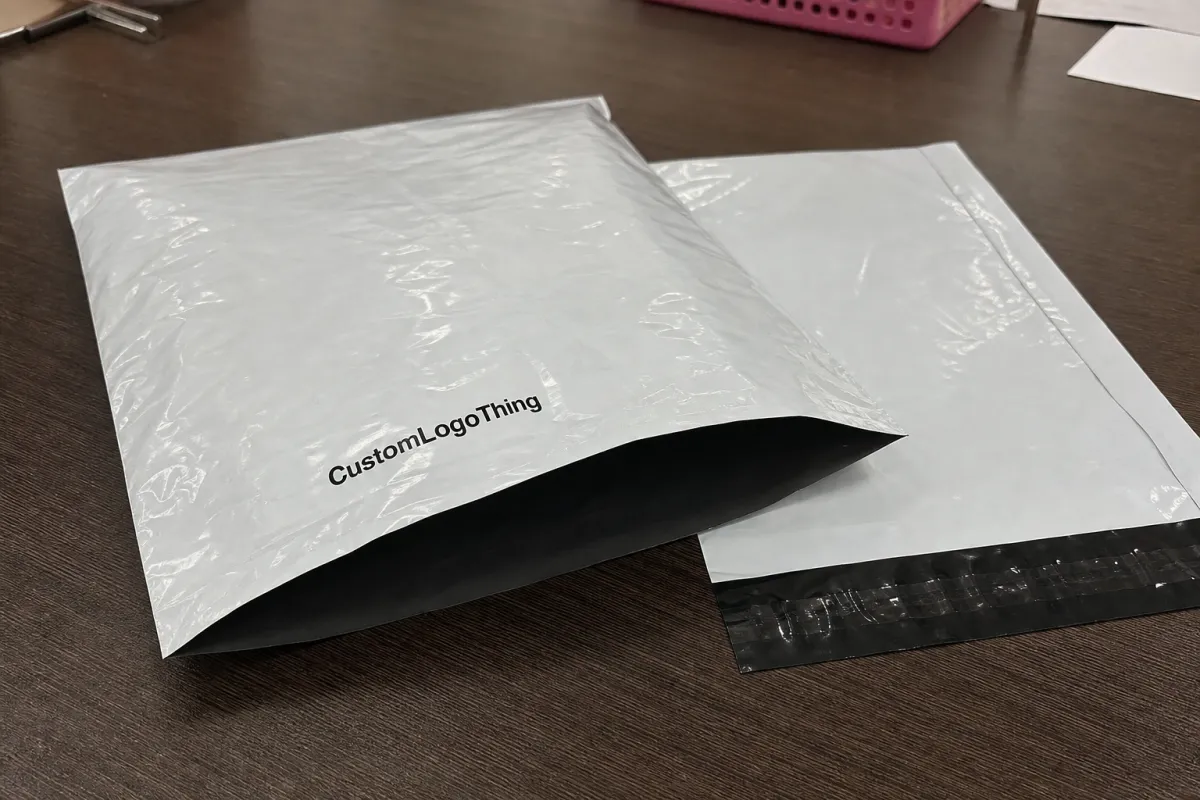
Retail drops compress the normal packaging timeline. Product arrives, inventory is counted, the packing team gets a short runway, and the customer expects a polished shipment before the momentum fades. Poly mailers help because they combine three functions in one item: basic protection, visual presentation, and fast pack-out. That matters more in a drop model than in steady replenishment, where there is more time to absorb inefficiency.
The weight savings are real. A poly mailer typically adds a fraction of the tare weight of a corrugated box plus tape, and it uses less material volume in storage and transit. On lower-cost domestic lanes, that can reduce the shipping bill enough to preserve margin. The savings are smaller on heavier zones and larger cartons, but they add up when a drop ships in volume. For a brand moving thousands of units, even a few cents per shipment turns into a meaningful line item.
There is a second effect that buyers often overlook: speed. A mailer that opens cleanly, accepts the folded garment without a fight, and seals in one pass keeps labor predictable. A box can also be efficient, but it introduces extra steps and more material handling. If the product does not need structural support, paying for that extra motion does not improve the customer experience. It just slows the line.
What the mailer does not do is absorb abuse. If the item has corners, hard components, glass, batteries, or a shape that shifts under pressure, the package can split, stretch, or open in transit. The bag may still look fine at the warehouse. That is a poor test. Parcel handling is a mix of compression, drag, vibration, and impact; a package has to tolerate all of it, not just sit neatly in a photo.
The best decision process starts with the product itself. Flat and soft usually means mailer-friendly. Bulky, rigid, or sharp usually means a box or a reinforced hybrid. That distinction is basic, yet it is where a surprising number of packaging problems begin.
How Mailers Work in a Fast Retail Drop Workflow
A good mailer supports the warehouse instead of making the warehouse adapt to it. The workflow is simple on paper: fold product, insert item, remove excess air, close the adhesive strip, apply the label, and move on. The details are what determine whether that sequence takes seconds or becomes a daily annoyance.
Opening width is one of those details. If the mouth is too narrow, the packer has to angle the product awkwardly or compress it more than the garment wants to be compressed. That can slow the line and crease the merch. If the opening is generous enough, insertion is smoother and the seal lands where it should. The same idea applies to the flap. A seal that requires a second press, a sticky zone that grabs too early, or an adhesive strip that fails in warm conditions all create friction where none should exist.
Film behavior matters too. Some bags curl aggressively or hold static, which sounds minor until labels start applying at an angle or the mailer wants to slide around the bench. Slightly stiffer film can improve handling, but too much stiffness can make the bag feel less premium and can complicate folding. The right balance depends on how the order is packed and how much real-world abuse the package is expected to take before it reaches the customer.
Label adhesion and barcode readability are part of the workflow, not an afterthought. A glossy or uneven surface can create bubbles. A wrinkled face can hide a scan code. A placement zone that is too close to the seal can interfere with closure. These are small issues individually. Together, they create delays that compound across a drop.
Size selection deserves more attention than it usually gets. Too tight, and the contents bulge, the seam is stressed, and the finished order looks overstuffed. Too large, and the pack-out appears sloppy while shipping cube climbs for no good reason. A good fit is not just about appearance. It is the difference between a bag that works with the product and a bag that keeps fighting it.
Cost, MOQ, and Unit Price That Actually Matter
Packaging quotes can look clean and still hide the real cost. The line item for the bag is only one part of the picture. Freight, storage, waste, rework, and damage replacement all change the final economics. A low unit price is meaningless if the adhesive fails, the film tears during pack-out, or the size is wrong and forces a second packaging pass.
Several factors move the price. Film thickness is one. Size is another. Print coverage can swing cost more than buyers expect, especially when multiple colors or full-bleed art are involved. Stock dimensions usually cost less than custom dimensions because the setup is simpler and production is more standardized. The more the mailer departs from a standard blank bag, the more planning and tooling the quote tends to include.
MOQ creates a different kind of tradeoff. Lower minimums are useful for seasonal drops, small tests, or a product line that is still changing. They reduce the risk of overbuying the wrong size or the wrong print. Larger runs usually lower unit cost because setup is spread over more pieces. That is normal manufacturing math. The difficult part is deciding whether the savings from scale are worth the storage commitment and the cash tied up in inventory.
Here is a realistic cost framework for poly mailers for retail drops. The numbers are approximate because country of origin, freight mode, print complexity, and destination all move the final price.
| Mailer type | Typical MOQ | Ballpark unit price | Best for | Main tradeoff |
|---|---|---|---|---|
| Stock unprinted mailer | 500-1,000 pcs | $0.08-$0.16 | Testing, backup inventory, low-risk apparel | Least branded and least customized |
| Custom one-color mailer | 3,000-5,000 pcs | $0.15-$0.28 | Repeat drops, controlled brand presentation | Setup cost and proofing time |
| Heavy-gauge full-color mailer | 5,000-10,000 pcs | $0.22-$0.45 | Higher-end apparel and stronger shelf appeal | Higher unit cost and longer production window |
That table is useful only if it is paired with the landed cost. A bag that arrives late, tears in transit, or forces the fulfillment team to rebag product was never the cheap option. It was just the first quote that looked attractive.
One more point that tends to get lost: sizing efficiency matters financially. A mailer that is slightly too large wastes freight cube and storage space. A mailer that is slightly too small wastes labor because the packer has to compress the contents or fight the seal. Those are not dramatic failures. They are worse. They hide in operations and slowly erode margin.
Process and Timeline: From Quote to Delivery
The production path is usually predictable: specs in, quote out, artwork proof, sample approval, production, inspection, packing, and freight booking. The more complete the initial brief, the less back-and-forth the project needs. Incomplete dimensions and half-finished artwork are the two fastest ways to stall an otherwise straightforward order.
Most delays happen before the machine even starts running. Someone has to decide on size, material, seal style, print coverage, and label area. If those decisions keep shifting after proof approval, the schedule expands. That is not a supplier mystery. It is a planning issue, and packaging tends to expose it quickly because the bag has to match both the product and the process.
For basic stock mailers, turnaround can be short. Custom-printed jobs take longer because they add setup, ink checks, color matching, and freight coordination. A sensible planning window is often 12-15 business days from proof approval for straightforward custom work, with extra time added for larger quantities, more complex artwork, or longer shipping lanes. If the drop date is fixed, the packaging decision should be made before the campaign starts, not after the fulfillment team is already waiting.
Production timelines also depend on the risk level of the order. A single-color logo on a standard size is one thing. A full-bleed print on a nonstandard dimension with a specific finish is another. The second order may still be routine from a manufacturing perspective, but it carries more touchpoints and more chances for a proof correction or freight delay. Good buyers leave room for that. Bad buyers assume every stage will behave like the fastest stage.
Specs That Decide Whether the Mailer Works
Film thickness is the first spec most buyers ask about, and for good reason. Lighter film lowers cost and keeps the package light, while heavier film improves puncture resistance and gives the bag a more substantial hand feel. For apparel, many projects land somewhere around 2.5 to 4 mil, or roughly 60 to 100 microns depending on the build and manufacturing method. That range is not a rule. It is a starting point.
The right gauge depends on product weight, folding method, route length, and how rough the parcel network is likely to be. A lightweight tee on a short domestic route does not need the same wall thickness as a bulky hoodie traveling farther through a busier network. Ask for a film spec that matches the product, not a generic “stronger is better” answer. Thicker is not always smarter if the item is soft and the cost target is tight.
Seal quality deserves equal attention. A weak adhesive strip can fail in hot environments, in cold environments, or after repeated handling. An underdesigned flap may peel back if the product inside exerts pressure on the seam. A mailer that opens in transit turns packaging savings into customer service work. That problem is especially expensive because it creates both a replacement shipment and a credibility issue.
Size should be derived from the folded item, not from whatever looked close in a catalog. A proper fit leaves enough room to insert the product cleanly and enough overlap for the seal to bite securely. Too much extra space makes the package look loose and can raise cube. Too little space makes the pack-out slow and can stress the seams. Both errors show up quickly in live packing, which is why sample testing matters.
Decoration quality is often underestimated. A print that rubs off in sorting or scuffs during transit will not feel premium, regardless of how good it looked in the proof. Ask how the decoration is applied, what finish is used, and how it behaves under abrasion. If the bag is being tested against standard film and seal expectations, references such as ISTA parcel testing protocols, ASTM D882 for film tensile properties, and ASTM F88 for seal strength provide a useful technical frame. A buyer does not need a laboratory for every order, but the numbers should mean something.
Recycling claims need the same discipline. Most poly mailers are made from polyethylene films such as LDPE or LLDPE, but that does not automatically make them curbside recyclable everywhere. Many municipal programs still reject flexible film. If sustainability is part of the buying brief, check what the local recovery stream accepts and what the supplier can document. Sources like the EPA recycling guidance, FSC, and industry resources such as packaging.org are useful starting points, especially when mixed materials or inserts are involved.
Print, Branding, and Unboxing Without Wasting Budget
Branding works best when it has restraint. A clean logo lockup, one repeated pattern, or a strong color block can carry more authority than a crowded print that tries to do everything at once. The package needs to be recognizable, not noisy. A well-executed mailer should read quickly from a distance and still hold up in a photo without demanding extra styling.
The scale of the drop should guide the print strategy. Small test runs usually benefit from simpler decoration because the product, audience, and pack-out are still being evaluated. Larger campaigns can support richer artwork, but more coverage is not automatically better. It increases cost, can complicate production, and can make the bag feel less premium if the design lacks hierarchy. Ink is not a substitute for taste.
The unboxing experience is built from the outer mailer and the supporting pieces around it. If the mailer color clashes with the label, if the insert card feels disconnected from the brand, or if the closure zone looks messy, the order loses polish even if the print itself is strong. The best packages make the system look intentional. The weakest ones expose every decision that was made separately.
There is also a practical side to branding: photos travel farther than packaging samples. A customer may not study the film gauge, but they will notice whether the bag photographs cleanly. That is why simple, crisp decoration often outperforms busy layouts. It survives compression, shadows, and user-generated content better than elaborate graphics that only work in perfect light.
For many retail drops, the most efficient visual strategy is to make the mailer look edited rather than expensive. Those are not the same thing. Edited means the package has a point of view and does not waste budget proving it.
Common Mistakes That Hurt Margin and Reputation
The first mistake is buying on price alone. Thin film, weak adhesive, and poor sizing look cheap on the quote sheet and expensive after the drop ships. Damage claims, customer service time, and replacement freight are real costs. A low number that creates more work is not a saving; it is a delayed expense.
The second mistake is overdoing the decoration. Too much print coverage can increase cost and lengthen lead time without making the bag more effective. If the design is already clear at a glance, adding more artwork often reduces contrast and makes the package feel busier than premium. Strong packaging usually has fewer moving parts than people expect.
Another common miss is ignoring how the order behaves in the pack-out. A bag can look fine on a proof sheet and fail once the garment, tag, dust bag, and label all occupy the same surface area. If the seal zone becomes crowded, the adhesive can catch poorly or the bag can wrinkle where the barcode needs to sit. Small in theory. Large in operations.
Late ordering causes its own damage. A rushed purchase pushes brands into emergency freight, temporary packaging, or a size that is “close enough.” None of those outcomes is ideal, and all of them are avoidable with a clear calendar. If the packaging depends on a hard launch date, the mailer should be confirmed early enough to absorb proof changes and transit time.
Testing is the last line of defense, and it should happen before the full run starts. A few sample packs through the actual line tell you more than a stack of emails. Check the seal, the label zone, the opening width, the feel of the film, and whether the bag stays flat enough for scanning. If something feels awkward in a small test, it usually gets worse under production pressure.
Next Steps: Build a Spec Sheet Before You Request Quotes
The cleanest quotes start with a clean brief. Send the product mix, folded dimensions, estimated quantity, target mailer size, print colors, preferred finish, and the ship-to location. If the drop is fixed, include the approval deadline as well. That gives suppliers enough information to quote the same build instead of making assumptions that later have to be corrected.
It helps to ask for three versions at once: a budget build, a mid-range build, and a premium build. That creates a real comparison instead of a race to the bottom. In many projects, the middle option ends up being the best balance of cost, protection, and appearance. The lowest-cost choice is often too thin or too plain. The highest-cost choice often spends money that the order does not need to spend.
Samples are worth the time. Paper specs cannot show how the film feels in the hand, how the seal behaves under pressure, or how the bag folds once product is inside. A small sample order can prevent a large mistake. That is especially true for retail drops, where the schedule is tight and the packaging has to be right the first time.
- Product details: folded size, weight, and whether the item has hard edges or bulky trim.
- Mailer size: width, length, and whether any gusset or expansion space is needed.
- Material: film gauge, color, and whether recycled content or PCR claims matter.
- Print: logo count, color count, coverage level, and finish preference.
- Timing: launch date, approval cutoff, and destination for freight planning.
Those five points are enough to separate a useful quote from a vague one. They also force a practical conversation about tradeoffs, which is where good packaging decisions usually happen. For poly mailers for retail drops, clarity beats cleverness more often than not.
Are poly mailers for retail drops strong enough for clothing?
Yes, for soft goods such as tees, hoodies, socks, and similar apparel. They work best with flat, flexible items that do not have sharp add-ons or rigid inserts. If the product has corners, heavy hardware, or crush-risk, a carton or a reinforced format is the safer choice.
What thickness should I choose for retail drop mailers?
Many apparel programs land between 2.5 and 4 mil, which is roughly 60 to 100 microns depending on the film build. Lighter film helps control cost and weight, while thicker film improves puncture resistance and hand feel. The right gauge is the lightest one that still survives packing and transit without tearing.
How do I estimate MOQ for custom poly mailers?
Start with the expected volume for the drop and the number of size or print variants you need. Lower MOQs are useful for testing, but they usually carry a higher per-bag cost. Ask for quotes at multiple quantities so you can see where the unit-price drop becomes worth the larger commitment.
What is a realistic lead time for custom retail mailers?
Simple stock orders can move quickly, while custom-printed work needs more time for proofing, color checks, production, and freight. A planning window of about 12-15 business days after proof approval is common for straightforward jobs, with extra buffer for larger quantities or more complex artwork. Tight launch dates leave very little room for revision.
What should I send when I request a quote for mailers?
Send product dimensions, order volume, target mailer size, print colors, finish preference, and the ship-to location. Include the launch date and any approval deadline so the timeline can be quoted accurately. If you want an apples-to-apples comparison, ask every supplier to quote the same film, thickness, and print coverage.
Used well, poly mailers for retail drops keep the merch light, the line moving, and the presentation consistent. Used badly, they turn into a cheap-looking decision that costs more to fix than a better spec would have cost in the first place. Buyers who get the fit, film, seal, and print right usually end up with fewer damages, less rework, and a package that holds its own in transit.


