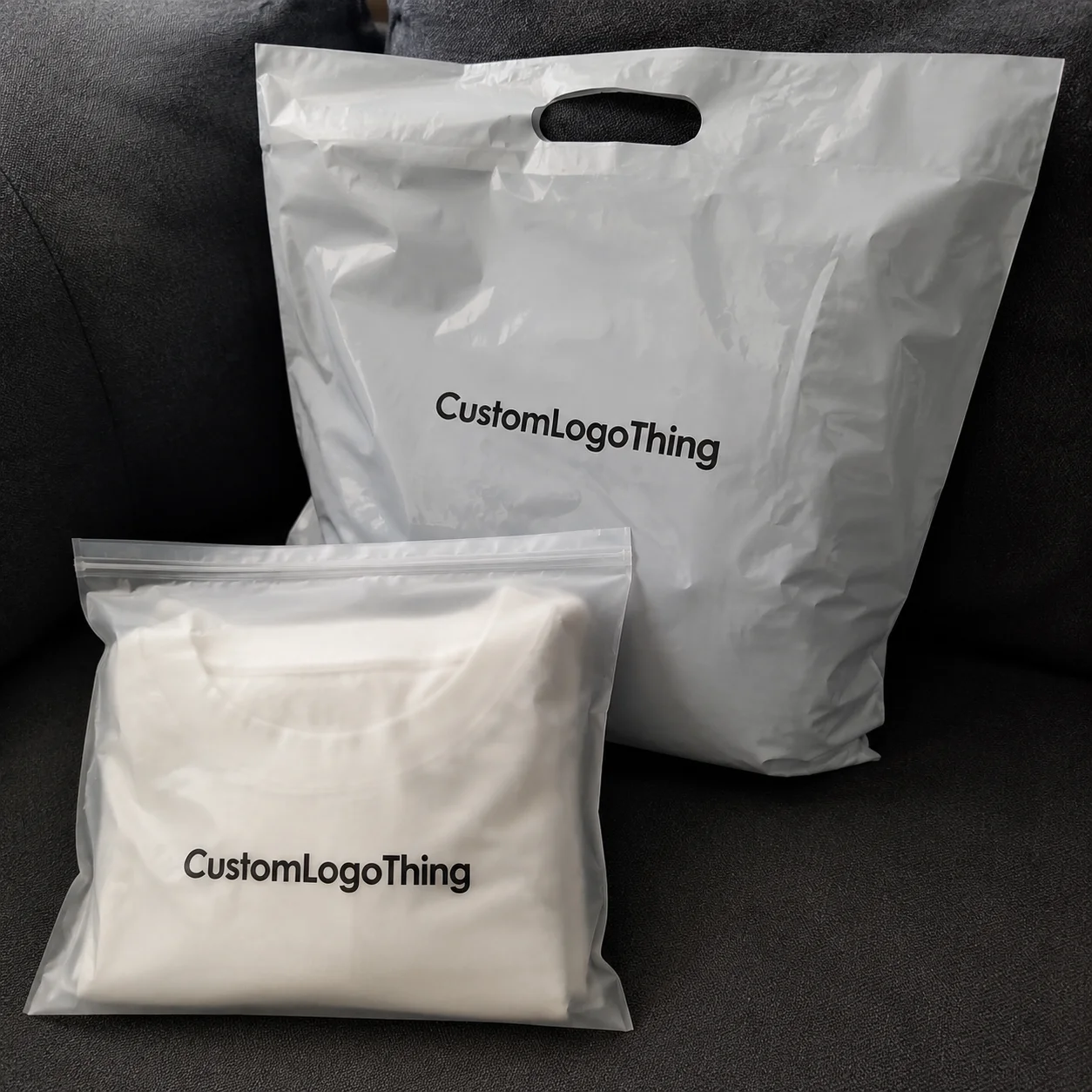
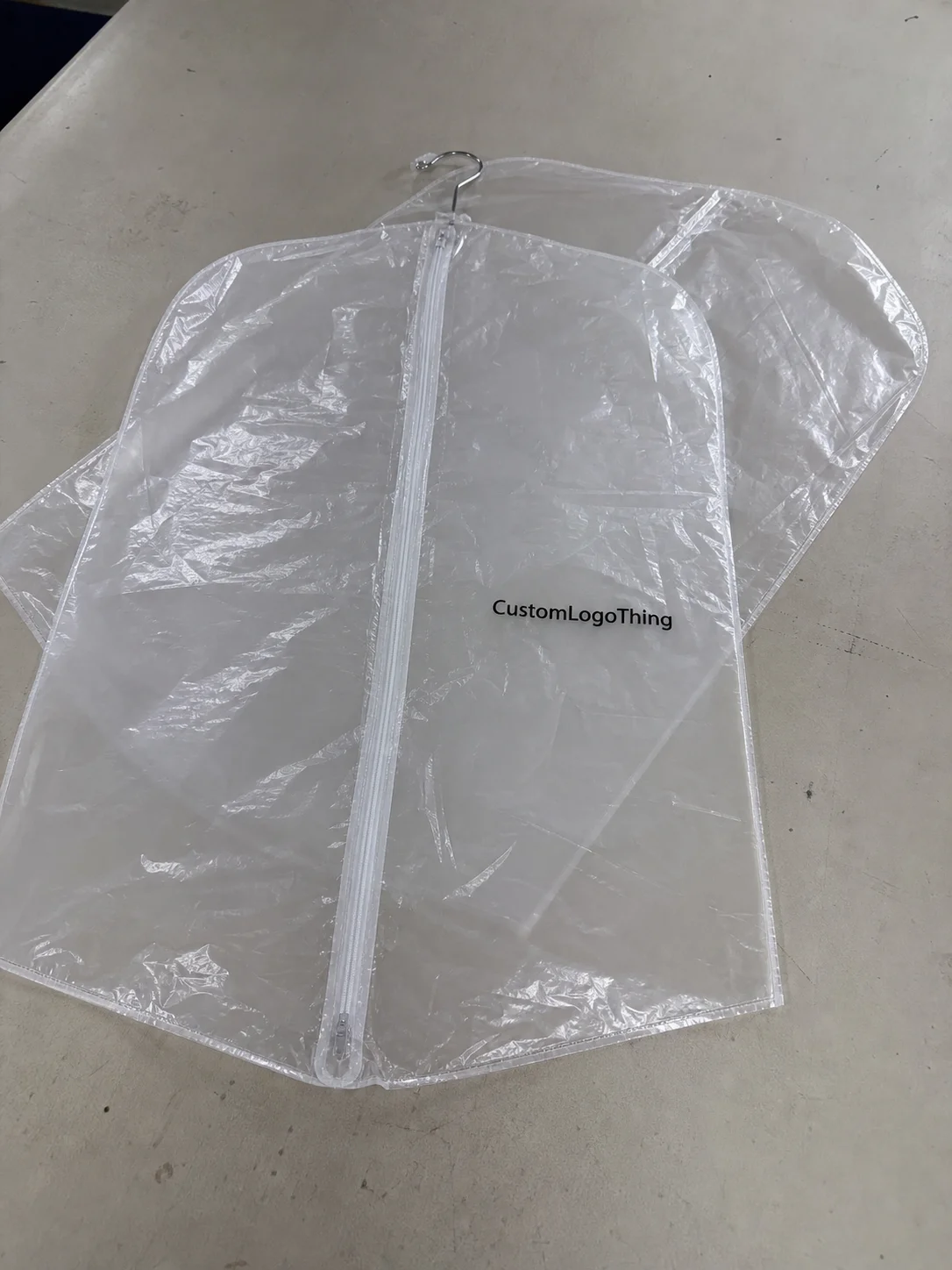
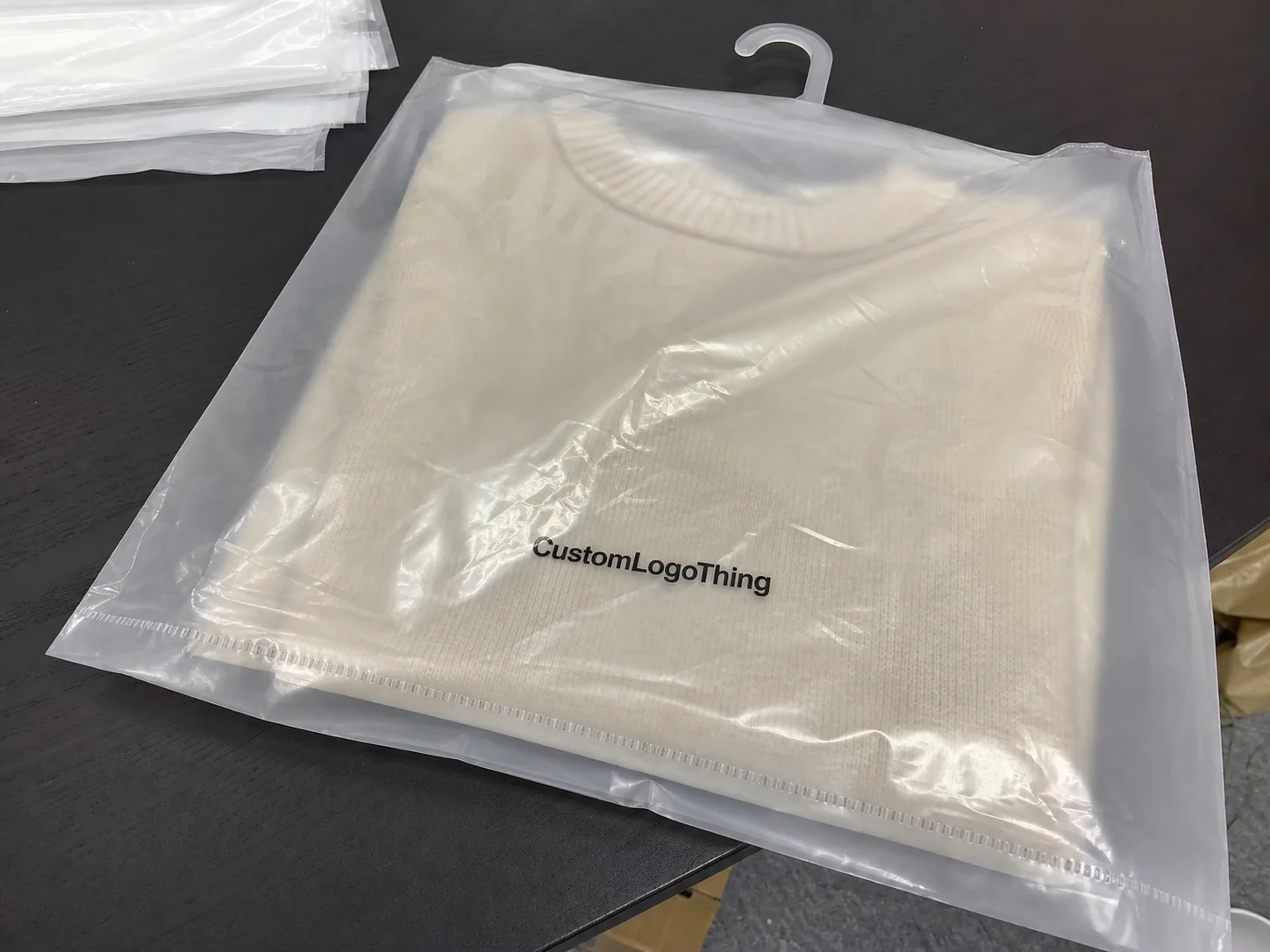
Buyer Fit Snapshot
| Best fit | Poly Mailers Pricing to Level Up Shipping projects where brand print, material claims, artwork control, MOQ, and repeat-order consistency need to be specified before quoting. |
|---|---|
| Quote inputs | Share finished size, material target, print colors, finish, packing count, annual reorder estimate, ship-to region, and any compliance wording. |
| Proofing check | Approve dieline scale, logo placement, barcode or warning zones, color tolerance, closure strength, and carton packing before bulk production. |
| Main risk | Vague material claims, crowded artwork, missing packing details, or unclear freight terms can make a low unit price expensive after revisions. |
Fast answer: Poly Mailers Pricing to Level Up Shipping: Film, Print, MOQ, and Carton Packing should be specified like a repeatable production item. The safest quote records material, print method, finish, artwork proof, packing count, and reorder notes in one written spec.
Production checks before approval
Compare the actual filled-product size with the drawing, then confirm tolerance on folds, seals, hang holes, label areas, and retail display edges. Reserve space for logos, QR codes, warning copy, and material claims before decorative graphics fill the panel.
Quote comparison points
Review material grade, print process, finish, sampling route, tooling charges, carton quantity, and freight assumptions side by side. A quote is only useful when the supplier can repeat the same color, closure quality, and packing count on the next order.
Why Poly Mailers Pricing Feels Like a Puzzle: Poly Mailers Pricing Guide Lessons
The first time I opened the Poly Mailers Pricing guide on an iPad at a Chicago sourcing table, I expected the numbers to clarify why shipping a single SKU across the Northeast suddenly spiked by $1,200 compared to our previous lane—only to discover the raw numbers had actually dropped by $0.03 per unit after pushing past 75,000 pieces.
I remember telling the team the guide was more cryptic than our espresso machine (and it was a mission to keep the caffeine flowing while we decoded it), yet somehow the numbers still mattered. The Buffalo-to-Boston lane that winter rerouted through Rochester, tacked on two extra days, and pushed that trucking invoice back into Stamford after 18 business days, so explaining the gap took another 30 minutes. Every time the poly mailers pricing guide proves confusing, I remind the team that clarity starts with properly labeling those lanes.
That contradiction—material costs down, freight up—was the hook for this entire deep dive. The guide lists resin costs, film gauge, and print complexity, yet offers no hint about how expedited lanes, dimensional weight fees, and warehouse handling inflate the final tally. I still remember the procurement director slamming the table when the trucking invoice arrived; even though the poly mailers pricing guide showed a $0.12 per-unit saving, the carrier hit us with $0.86 per pound because we rerouted around a winter storm.
Honestly, I think carriers enjoy tossing in surprise fees just to see how red my face can get (and yes, the whole room stared as if we’d collectively offended the logistics gods). The expedited lane from Newark to Providence cost an extra $0.07 per unit because the driver needed same-day clearance through toll lanes.
Let me define poly mailers precisely: lightweight bags crafted from 1.5 to 3 mil high-density polyethylene film, usually sealed with pressure-sensitive strips or peel-and-stick adhesives around $0.015 per strip, meant to protect apparel and soft goods while trimming dimensional weight.
That same guide that tracks pricing also highlights tear resistance measured by ASTM D1922, moisture barriers certified under ASTM F1249, and ISTA 6-FE compliance for flat parcels—metrics we cite whenever a customer asks if a mailer can survive a rough distribution cycle.
Brands treat the poly mailers pricing guide as their gauge for choosing which provider can match their aesthetics and keep per-unit costs under $0.30 for multi-color runs, and honestly, I think the guide needs a cheat sheet titled “What the heck does this really mean for your margins?”
The pricing feels opaque because the guide only shows part of the story. Resin prices swing—ethylene at $0.88 per pound in early spring, hexene at $1.10—and suppliers juggle multiple gauge layers, adhesives, tear strips, and hang tabs. By the time a brand is expected to fulfill a flash sale the following week, the emotional pressure of “ship now or refund thousands” overrides calm analysis, especially when those proofs take 12-15 business days from approval to final packing.
After decades on factory floors from Shenzhen to the Hudson Valley, my job is to translate those fuzzy numbers into a dependable map—knowing that the poly mailers pricing guide remains the compass but the territory extends beyond its pages.
I even tape a Post-it to my notebook that reads “demand rhythm = cost spike” so no one (including me) forgets the obvious during frantic calls.
At our Shenzhen facility, line three was pumping out custom poly mailers with non-slip lamination, churning 12,800 units per hour; the plant manager pointed to a resin tank that feeds a twin-screw extruder while explaining that switching to recycled content only moved the quoted per-unit price by $0.02 because the energy bill spiked instead.
I walked away thinking the energy charge had more drama than the resin price (and I’m not exaggerating—our CFO still teases me about the “energy thriller” tour). The poly mailers pricing guide may list recycled content, but the supplier’s electrical meter reading is what really makes the numbers dance.
When I cross-reference the poly mailers pricing guide with shipping envelope costs from our East Coast network, the numbers finally line up and I stop feeling like I’m chasing ghosts.
How Poly Mailers Pricing Works Behind the Scenes
The poly mailers pricing guide follows a production timeline, starting with resin procurement. Ethylene and propylene pellets arrive in 25-ton railcars from mills, and the cost per pound can swing 15 percent between the cheapest supplier and an FSC-approved sustainable resin vendor. That figure already folds in freight from the Gulf Port to our Birmingham warehouse, which is why I tell my team that “free freight” never really means free—it just means someone else is penciling in the cost elsewhere.
Shipping from the Gulf Port to Birmingham takes four to five business days even before customs and drayage add another $0.03 per pound, so the guide helps me remember that every transit leg carries a price tag right along with it.
Extruders then blend the resin with slip and anti-block additives, adding $0.01 to $0.03 depending on the recipe. A quoted price that begins at $0.16 for a 2 mil bag may climb to $0.21 when we need an opaque inner control layer or a scratch-resistant finish.
Flexographic setups with three to six color stations demand $380 in cylinder charges plus $0.005 to $0.04 per color per unit, and the setup itself lasts 3-4 business days before production can go live; digital printing skips the setup but tacks on about $0.09 once the run passes 5,000 pieces.
Honestly, I think digital printing only behaves once you stop asking it to tutor the math department and just give it a clean file (I’ve lost too many minutes arguing over dots per inch that shouldn’t exist). The poly mailers pricing guide reminds me to line item those additives so the arithmetic stays honest.
Finishing follows with adhesives, zippers, or tear lines. Pressure-sensitive tape costs $0.015 per unit for 1,500-piece rolls, while a die-cut notch for a hook adds another $0.02, covering the die’s wear and maintenance.
I remember negotiating with a retail client in Atlanta who wanted a resealable zip and a gusseted bottom; we listed those line items separately and saved $1,800 by bundling the gusset set-up with an upcoming mattress cover order. That little maneuver felt like scoring a secret menu item, if you ask me. The poly mailers pricing guide never lets those finishing costs vanish behind “handling.”
Shipping the finished goods piles on additional layers. Standard lead times from quote to delivery hover around 30 business days; squeeze that down to 12-15 days and the supplier charges a 12% rush fee, often calculated as $0.09 extra per linear foot processed rather than on the total order.
That rush fee is basically a panic tax (and yes, I make the supplier explain why 12% is reasonable every time). Batch your orders and the poly mailers pricing guide suddenly flattens, because tooling, proofing, and QA checks get amortized over 50,000 units instead of 10,000.
If you don’t anchor those surcharges back in the guide rows, the panic tax multiplies as fast as a storm reroute.
Each step appears in the guide, yet suppliers still love to sell you a “per-unit price” while keeping the work order separate. Procurement teams at our Custom Logo Things strategy sessions often flip straight to the final line without dissecting these hidden add-ons, even though the QA line sits at $0.04 and the rush proofing charge is $0.09 per color.
That oversight is partly why the guide exists—to remind buying teams that demand and delivery rhythms influence pricing as much as resin grade. I tell them it’s not a price list; it’s a mood ring for your product’s journey (and no, I didn’t invent the term, but I do stick it onto every project recap).
This poly mailers pricing guide mood ring keeps reminding us to question demand and delivery.
Key Factors Driving Poly Mailers Pricing
Polymer grade is the first real driver. Virgin resin from an ASTM-certified supplier adds $0.02 to $0.04 per unit compared to FDA-compliant recycled blends, yet it helps meet Sephora-level quality expectations for cosmetics clients. Barrier enhancements, like foil layers for opacity or EVOH inserts for oxygen-sensitive goods, add between $0.06 and $0.11 per mailer because the extrusion now needs a third adhesion film layer.
I warned a beauty brand that upgrading to the deluxe barrier might look fancy on shelves, but if we didn’t price it right the CFO would stage a protest (granted, it was a half-serious protest in the conference room). When I flip through the poly mailers pricing guide, polymer grade always sits at the top of the list and still somehow shocks everyone.
Gauge—thickness—often gets misread. A 2 mil mailer priced at $0.18 per unit in the guide performs differently from a 4 mil variant quoted at $0.31, yet many companies compare them because they’re the same size. I pushed a client in Indianapolis to convert everything into grams per square meter (gsm) and attach actual product weights; that way we could decide if the extra cost prevented returns.
Once they saw the math, they stopped asking why a thicker bag cost more and started asking how many returns it would save them. The poly mailers pricing guide spells out those combos, but you still need to pair them with real shipping data so the numbers make sense.
Printing complexity matters too. Polyester inks, metallic inks, and responsive coatings each trigger add-on charges. Our procurement dashboard shows a 2-color run of 12,000 units at $0.21, but adding a fourth color plus Pantone 186C simulation bumps the line to $0.26 because of extra proofing steps.
That’s when the metadata in the poly mailers pricing guide—volume, color count, custom sizing—becomes a roadmap. For instance, a 10% volume increase cuts unit costs by 5 to 8%, based on datasets from suppliers in Mexico and North Carolina, since setup charges spread across more units. At that point I may have muttered that the guide needed a mood ring to reflect stress levels for revisions.
Adhesives matter as well. Standard peel-and-seal tape adds $0.012, while permanent adhesives, cold chain formulations, or zippers push the cost above $0.03. Features such as RFID blocking, tear strips, or hang holes each carry their own setup expenses, so savvy buyers turn them into line items when comparing proposals.
Quality checks, rush freight, and warehousing hide behind vague “handling” fees unless you demand a breakdown. That’s why our notes now clearly list “QA verification per ISTA 6-FE” at $0.005 per unit and “rush freight for three-day delivery” at a flat $780 per shipment. Transparency is the only thing that keeps the poly mailers pricing guide from feeling like a magician’s trick.
Such transparency makes the poly mailers pricing guide actionable instead of mysterious. When I list adhesives at $0.012 per unit and QA verification at $0.005, people finally stop assuming “handling” means nothing and start asking how those numbers scale with volume. I actually feel a little smug when a client thanks me for explaining the difference between adhesives and intangibles (yes, I relish being the one who sees the decimal points others skip).
How Does the Poly Mailers Pricing Guide Answer My Supplier Questions?
When we sit across from a vendor, the poly mailers pricing guide becomes the scoreboard to settle shipping envelope costs or packaging cost analysis debates. I force the supplier to walk me through every row while I tap the guide, and if shipping envelope costs or freight lumps don’t match the terms we originally recorded, the negotiation stalls until someone explains the mismatch.
That pressure keeps everyone honest faster than a thousand Zoom calls ever could.
One trick I use is to print a mailing bag cost breakdown from the poly mailers pricing guide and add it to the contract binder. The supplier’s finance team may start with a high-level “per-unit” figure, but when the mailing bag cost breakdown brings resin, additives, printing, and QA into view, they usually drop a phantom fee or explain why their rush charges look the way they do.
Seeing the real numbers etched into the guide quiets the room and lets us argue about actual costs instead of guesswork.
The guide also powers our packaging cost analysis sessions. I ask the supplier to show me how the guide’s assumptions shift when we add a foil barrier, stretch-wrap, or special adhesives—and because those variables live inside the poly mailers pricing guide, we can test scenarios faster than waiting for a new quote.
It’s my favorite part of the sourcing dance, the moment when everyone agrees that numbers deserve a voice.
Step-by-Step Poly Mailers Pricing Calculation from the Poly Mailers Pricing Guide
This is the formula we use: start with base material cost, including resin, additives, and film extrusion. Add processing fees—printing ($0.01 to $0.07 per color), slitting and gusseting ($0.005), and adhesives ($0.012). Include packaging (bulk cartons, dunnage) and freight (domestic movements often run $0.20 per pound inbound and $0.24 outbound, with the inbound leg from Houston to Dallas taking five business days).
Finally, layer in overhead or margin targets—our procurement team tacks on a 12-15% buffer to cover unexpected resin spikes or small design tweaks. I scribbled this exact formula on a napkin during a late-night sourcing call in Mexico once, so yes, it has seen better paper stock than many of our RFQs. The poly mailers pricing guide gave me the context to prove that the math wasn’t arbitrary.
We capture these inputs in a worksheet with columns for quantity tiers (5k, 10k, 25k) and rows for each cost component. For example, a 10k order for 10x13-inch, 3 mil, Printed Poly Mailers might show:
| Component | Explanation | 5k | 10k | 25k |
|---|---|---|---|---|
| Base Resin/Film | Virgin resin with anti-block $0.88/lb | $0.14 | $0.12 | $0.10 |
| Printing | 3-color flexo plus varnish | $0.08 | $0.065 | $0.05 |
| Finishing | Peel-and-seal tape | $0.012 | $0.012 | $0.012 |
| Packing + QA | Carton, ISTA inspection | $0.03 | $0.025 | $0.02 |
| Freight | 2-day ground outbound, 6% pass-through | $0.05 | $0.045 | $0.04 |
| Margin Buffer | 15% of total | $0.043 | $0.038 | $0.032 |
| Total | $0.38 | $0.292 | $0.264 |
Plug the same worksheet into your procurement tool to capture variations. Increase the mailer to 12x15 inches and bump the run to 30k, and the resin cost creeps up to $0.11 while printing falls to $0.048, nudging the total to $0.258. Those exact numbers give you better leverage in supplier conversations, and trust me, suppliers notice when you can quote down to the thousandth of a cent.
The poly mailers pricing guide becomes the proof that you aren’t guessing—you're recording intention.
This worksheet works as a negotiation tool: send suppliers the line items and ask them to confirm or adjust each figure. During a recent negotiation with a Monterrey supplier, we reviewed this sheet line by line and spotted $0.017 of the quoted “handling” fee that was optional; removing it saved $340 on that 20k run.
Breaking quotes into material, processing, and logistics exposes the hidden margin and sharpens the poly mailers pricing guide. I still get a little thrill when a supplier admits they added a phantom fee, like I just caught them whispering behind the curtain.
Common Mistakes That Skew Poly Mailers Pricing
Believing the lowest sticker price equals the best deal ranks high on the mistake list. I reviewed a quote at $0.19 per mailer that completely skipped the $420 rush change that popped up after the art team requested a second proof. The more transparent quote at $0.22, with a two-proof revision cap, actually saved $180 on that 8k order.
I had to pause and remind the team that “cheap” doesn’t mean “true cost,” especially when they’re counting pennies while ignoring the rest of the crew handing over invoices. The poly mailers pricing guide makes those proof charges obvious if you’re willing to read past the headline number.
Mixing metrics causes confusion. Comparing per-unit prices for different thicknesses or volumes misrepresents true cost swings. For example, a 2 mil bag at 15k units for $0.22 may prove more expensive than a 4 mil bag at $0.28 per unit, once the added protection cuts return rates.
I push clients to convert to total landed cost per carton; that revealed a 5% savings when one customer switched to padded mailers for heavy electronics. I literally told them, “Stop comparing apples and rocks,” and yes, the frustration leaked into a grin.
Design revisions also bite budgets. Suppliers usually include two proofs; every extra round adds $80 to $120. That’s why we now lock revision limits into the initial contract, noting that revision three stays free if art approval happens within 48 hours.
Any delay bumps the price, so capturing expectations early keeps the poly mailers pricing guide accurate. (Also, if you’ve ever watched a designer fight with a proof, you know it’s best to set the rules before frustration takes over.)
Ignoring packaging waste or reorders creates bigger problems. A misrun of 22k instead of 20k produced 14,000 unusable mailers; I saw that on a tour at our Arizona co-packer. Without a waste clause, the client absorbed $2,600 of scrap before the supplier agreed to rerun.
The guide should therefore include a “waste allowance” line—mine lists 1.5% for standard runs and 3% for specialty sizes—to calculate the cost per usable unit. No one likes absorbing landfill charges, so mention it upfront and avoid a dramatic factory reset. That level of honesty is exactly what the poly mailers pricing guide is supposed to enforce.
Expert Tips to Optimize Poly Mailers Pricing
Packaging buyers I respect consistently consolidate SKU counts, pre-approve dielines, and stack demand to unlock price breaks. During a quarterly sourcing roundtable in Seattle, one CPG company saved $0.06 per unit on a 50k run after reducing their artwork palette from six colors to three and committing to two additional releases over the next nine months.
I told them, “You don’t need the rainbow if your customers only notice the logo,” and they actually took my advice, which felt like a rare win for my brutally honest side. The poly mailers pricing guide lets me point to the savings and say, “See? Color counts matter.”
Benchmark against multiple regional suppliers while factoring in freight. Our analytics dashboard compares quotes from North Carolina, Mexico, and Rhode Island, normalizing truckload rates and dimensional weights. That comparison also flags oddities, like when an east coast supplier tried to tack on a $0.02 “coast surcharge” despite shipping to the same NYC DC as the others.
I made them explain it, and they eventually admitted it was a legacy line item nobody had bothered to remove—classic. When I pull the poly mailers pricing guide, I call those legacy lines out before they sneak into the contract.
Procurement software keeps an eye on resin and freight spikes. The dashboard pulls real-time resin indexes, so when North American ethylene futures rise by 8%, we get an alert and lock in prices before suppliers increase bids. Building that relationship lets me tell suppliers, “Share upcoming contract renewals,” and they start revealing cost changes before they hit the published poly mailers pricing guide.
That’s when I feel a little superior, honestly—it’s like knowing the punchline before the comic even says it.
Encouraging suppliers to forecast alongside you pays off. A North Jersey manufacturer agreed to a 4% discount after we shared a 12-month forecast, letting them buy resin in one shipment and reduce extrusion downtime. That collaboration also cushions sudden energy surcharges or new ASTM moisture barrier requirements.
I keep reminding everyone that suppliers are people too; when they feel trusted, they usually return the favor with better pricing and fewer surprise charges. I keep the poly mailers pricing guide in the shared folder as proof we’re aligning forecasts.
Next Steps to Lock In Smart Poly Mailers Pricing
Start with an audit: count every poly mailer in your warehouses, check gauges, print specs, and note the last three quotes. Use the updated poly mailers pricing guide worksheet to calculate per-unit costs for 5k, 12k, and 25k runs so you have benchmarks before asking suppliers for new numbers. (I know, math again—but trust me, it costs less than a surprise invoice.)
Run a cost-benefit analysis comparing customization to stock options. A standard white mailer with a single-color logo costs about $0.17 per unit, while a fully custom color run with a matte finish sits at $0.29. Multiply those figures by projected order quantities and factor in freight to gauge whether the branding upside justifies the extra spend.
I had one founder argue that custom was non-negotiable; after running the numbers, he agreed to reserve the full-color run for launch-only promos and use stock options for the rest. The poly mailers pricing guide backed the decision every step of the way.
Schedule quarterly reviews that track resin and freight swings. At each session, document negotiation outcomes, including carrier invoices, resin price indexes, and any quality issues from the previous quarter. This keeps the poly mailers pricing guide in front of you when a new procurement round opens.
I usually block the last Friday of the quarter and call it “pricing hygiene day”—no emails, just spreadsheets and truth serum.
Document every negotiation. I keep a log with the date, negotiated volume, add-ons, and agreed lead time; that habit exposed a supplier repeatedly adding a $0.03 “labeling” surcharge we never used. Recording that allowed us to remove the fee from the next contract.
If you don’t track it, the surcharge will happily creep into your P&L like mold on bread. The guide only works if you write those conversations down.
Take the poly mailers pricing guide, adapt it to your spreadsheets, and treat every quote as a chance to question assumptions. Knowing where each cent lands lets you negotiate smarter, avoid surprises, and keep shipping costs aligned with the margins your CFO expects.
I still get a little thrill when a supplier sees our worksheet and goes, “Wow, you really drilled down,” because it reminds me that the guide isn’t just a document—it’s proof that we’re speaking the same language as the plants kicking out 2.3 million mailers every week. That’s your clear takeaway: if the guide is your reference, data-driven tracking is the action you actually need to lock in Smart Poly Mailers pricing.
How can I compare poly mailers pricing across multiple suppliers?
Create a standardized spreadsheet capturing size, thickness, print specs, minimum order quantity, and freight, and include data from supplier quotes in Atlanta, Los Angeles, and Monterrey so you’re not comparing empty cells. The matrix should list 10x13 3 mil and 12x15 4 mil runs alongside each provider’s MOQ and lead time, and align those entries with the poly mailers pricing guide you’ve been using all along.
Convert everything to a per-unit cost, add pass-through charges like $0.03 for corrugate cartons, $0.09 for rush proofs, and log them as separate columns. That way, a $0.05 carrier handling fee or a $0.015 extra adhesive charge isn’t hiding behind a lump sum that never quite matches the poly mailers pricing guide.
Request identical turnaround timelines so you compare apples to apples when checking poly mailers pricing proposals—say, 18 business days from proof approval to dock. I always say, “If the timelines differ, you’re comparing drama, not price,” and then I make them commit in writing.
What role does volume play in poly mailers pricing?
Larger runs dilute setup costs; many suppliers drop per-unit pricing once you reach volume thresholds such as 10k pieces, sometimes shaving $0.05 off the 3-color flexo run from $0.31 to $0.26. That’s the difference between a single lane and an ongoing program.
Ask suppliers for volume bands—5k, 10k, 25k—to see how each tier lowers resin and printing allocations in the pricing model, because a 5k run might list $0.14 for resin while a 25k run slides to $0.10. Those tiers let you forecast the savings for future launches.
Use projected shipping volume to forecast future purchases, then rely on commitments to secure better pricing bands; locking in 120k pieces per quarter got us down to $0.165 per unit on biweekly runs. I keep reminding teams that volume is their secret handshake with suppliers, and that handshake is worth real dollars.
Why do custom-printed poly mailers pricing quotes vary so much?
Differences come from printing methods (flexo vs. digital), number of colors, artwork prep, and special inks or coatings. Flexo cylinders cost $380 and take 3-4 business days to proof, while digital printing minimises setup but adds roughly $0.09 per unit after 5k pieces, so the math changes fast.
Complex prints need more setup time and proofing, which shows up as higher per-unit charges—think $80 to $120 per extra proof and a mandated 48-hour approval window. That’s why I always ask for the proof timeline before spending an hour fighting over Pantone 186C.
Standardize artwork and request prices for both stock and custom runs to isolate the true cost of printing—for example, a stock single-color run might be $0.16 while a four-color custom run jumps to $0.27. Honestly, I think standardizing art files could earn you a gold star in procurement school.
Can I negotiate better poly mailers pricing if I reorder frequently?
Yes—frequent orders show stable demand, so ask for a blanket pricing agreement or loyalty discount tied to cadence; our North Jersey supplier agreed to $0.165 per unit for biweekly 12k runs after we committed to six monthly replenishments. That cadence gave them visibility and gave us a reliable tier.
Share demand forecasts with your supplier to help them plan resin purchases, such as quarterly resin buys of 60 tons at $0.82 per pound, which justifies lower pricing and fewer rush fees. When they can lock in resin before the index jumps 8%, they pass the savings down.
Combine frequent small orders into larger ones to reduce freight and handling fees; merging two 10k runs saved $220 by eliminating the extra $0.011 per unit handling charge that the carrier tried to slip in. I always say, “More runs, fewer fights with freight.”
How should I factor shipping into my poly mailers pricing?
Include inbound freight for raw mailers plus outbound costs for finished goods; both can exceed material spend—our Dallas hub pays $0.19 per unit inbound from Houston and $0.24 outbound to New York. If you skip one leg, the landed cost is wrong.
Work with suppliers near your distribution hubs such as Columbus, Atlanta, or Phoenix to trim transit costs and compare landed cost versus delivered price. Even a $0.015 drop in drayage per unit adds up when you’re shipping 40k pieces a month.
Ask for dimensional weight pricing scenarios so you can budget for seasonality spikes—during November the carrier increased rates to $0.32 per unit once dimensional weight bumped 6% for peak fuel surcharges. I roll my eyes every time someone tells me “shipping is fixed”—nope, not when storms, fuel, and forklifts exist.
Additional insights appear on the custom packaging side of the business through resources like Custom Packaging Products, where we detail materials such as 350gsm C1S artboard inserts at $0.45 per sheet, and our Custom Poly Mailers offering, which mirrors the pricing discipline laid out above down to the $0.038 QA buffer line item. I always tie those notes back to the poly mailers pricing guide so procurement teams see the connection between resource costs and finished goods.
For deeper standards knowledge, consult Packaging.org and the ISTA standards, especially the 2023 updates to ASTM F1922 and F1249, so you can tie those quality benchmarks back to the poly mailers pricing guide strategy and keep every supplier accountable.