Pom Pom Beanies Cost Per Unit: What Buyers Need to See Before They Approve a Quote - the first number is rarely the final one. Pom style, knit structure, decoration, packaging, and order size all affect what lands in the factory quote and what lands on the invoice. Buyers usually get better pricing when the product is fully specified before the first round of quoting.
Why the First Quote Rarely Matches the Final Number
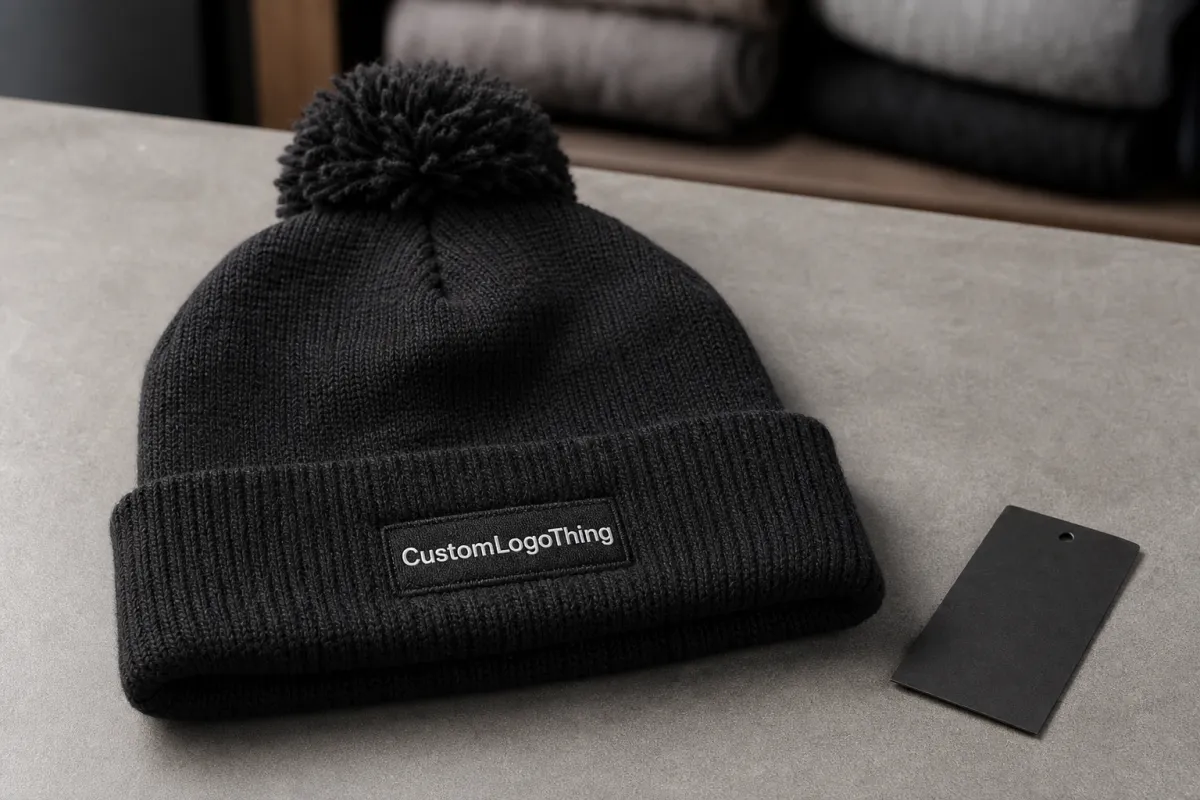
The first quote is often built on assumptions. A supplier may not yet know whether the pom is yarn, faux fur, or removable hardware, whether the logo is embroidery or a patch, or whether packaging is included. Once those choices are confirmed, the price usually changes because the factory can finally calculate the real material, labor, and finishing load.
This is normal, especially on small runs. Setup, sampling, and packing labor are spread across fewer pieces, so a 300-piece order usually costs more per unit than a 3,000-piece order with the same artwork. The useful question is not just what the quote says, but what the quote includes.
Two beanies that look similar can cost very differently to make. A flat knit cap with a woven label is not the same product as a double-layer beanie with dense embroidery and a faux fur pom. The buyer who understands that early can compare offers more accurately and avoid rework later.
A quote only helps if it matches the product you will actually receive.
Pom Pom Beanies Cost Per Unit: What Changes the Price
The main cost drivers are straightforward: yarn type, knit density, pom construction, decoration method, packaging, and quantity. Acrylic is usually the lowest-cost yarn and remains common for bulk beanies because it is consistent and easy to produce. Acrylic/wool blends, recycled blends, and heavier handfeel yarns raise material cost but can improve warmth and appearance.
Knit density matters more than many buyers expect. A tighter rib uses more yarn and more machine time. A double-layer body adds more material again, but it also creates a fuller shape and better insulation. Those upgrades may be worth it for winter retail programs, but they do raise the unit cost.
The pom is another clear cost lever. Yarn poms are usually the most economical. Faux fur poms look more premium, but they add material, trimming, and inspection work. Removable poms introduce hardware and extra handling, which usually increases cost rather than reducing it. Multi-color poms can look distinctive, but they also complicate sourcing and consistency.
Decoration can move the price almost as much as the base knit. Simple embroidery is often the easiest to control. Woven labels are tidy and efficient for smaller logos. Patches can look strong, but PVC and rubber versions may add tooling fees and proofing time. Knit-in logos usually sit at the premium end because the artwork becomes part of the fabric structure.
Order volume changes the math directly. At low quantity, setup charges and sample revisions hit hard. At higher volume, those same charges get diluted across more units. Freight, duties, and domestic handling also matter because they affect landed cost, which is the number procurement teams usually care about most.
| Build | Typical MOQ | Ballpark unit cost | What pushes it up |
|---|---|---|---|
| Basic cuffed acrylic beanie, yarn pom, woven label | 300-500 | $3.10-$4.60 | More colors, denser knit, gift packaging |
| Ribbed beanie, one-color embroidery, yarn pom | 500-1,000 | $4.20-$6.10 | Extra stitch count, larger pom, custom hang tag |
| Acrylic/wool blend, faux fur pom, patch decoration | 1,000+ | $5.90-$8.80 | Patch tooling fees, premium yarn, detailed artwork |
| Double-layer knit, knit-in logo, retail sleeve | 1,500+ | $7.00-$11.20 | Complex knit program, tighter tolerances, packing labor |
These ranges are only a guide, not a promise. If a quote lands well below them, ask what is missing. Freight, setup, packaging, or a decoration detail may have been left out of the first draft. The safest comparison is a quote that separates sample cost, production cost, packing, and shipping.
Product Details Buyers Need Before They Compare Samples
Before comparing samples, define the build. A cuffed beanie gives the best front branding area and a familiar retail shape. Slouchy styles feel more casual but can make logo placement less precise. Ribbed knits stretch well and hold structure. Double-layer constructions feel warmer and fuller, but they also use more yarn and finishing time.
The pom needs equal attention. Yarn poms are efficient and predictable. Faux fur poms create a softer, more premium look, but density and color tone can vary if the trim lot is not controlled closely. Removable poms add hardware and labor, so they usually cost more. Multi-color poms may stand out visually, but they add sourcing and inspection risk.
Decoration changes both cost and production risk. Embroidery is common because it is easy to proof and repeat. Woven labels work well for smaller logos or subtle branding. Patches are strong visually, but the factory needs the right substrate and attachment method. Knit-in logos are the most integrated option and usually the hardest to change late in the process.
A few shape choices help narrow the conversation quickly:
- Cuffed: strong front branding and the easiest retail shape to control.
- Slouchy: softer look, but less precise logo placement.
- Ribbed: structured stretch and a clean, familiar finish.
- Double-layer: warmer and fuller, with higher material and labor cost.
Sample review should check fit, cuff height, pom size, logo visibility, handfeel, and how the knit behaves after a few wears. A beanie can look fine on a table and still sit awkwardly on head, so the sample should be judged as a worn product, not just a flat one.
Specs to Lock Before You Request a Bulk Quote
A useful quote starts with a real spec sheet. Quantity is the first line, but the supplier also needs size range, color count, yarn type, pom style, decoration method, placement, and packaging request. Adult beanies often fall around 20-23 inches in circumference, but stretch and cuff height can change the final fit. If youth sizing is involved, say so early.
Artwork quality matters too. Vector files are easier to work with than flattened images because embroidery, woven labels, and patches all depend on clear outlines. Thin strokes can disappear on textured knitwear, and small type may not survive the translation from screen to yarn. If the logo is detailed or multi-color, the supplier should confirm whether it needs simplification.
Sample approval should confirm the details that matter most: fit, color match, logo scale, and pom shape. Ask for tolerance ranges in writing. Many knitwear programs allow small size variation, and Buyers Should Know that range before production starts. It also helps to confirm substitution rules in advance. If a yarn shade runs short, does the factory need approval before swapping it?
Packaging should stay practical unless retail presentation is part of the brief. If printed bands, inserts, or cartons are included, ask what paper stock is used and whether recycled or FSC-certified options are available. For carton durability and transit handling, ISTA testing is a useful reference point. It helps buyers think about crushed boxes, damaged labels, and avoidable returns.
Ask for sample cost, production cost, and shipping to be broken out separately. Once those are separated, the buying team can compare quotes without guessing where the margin went.
Process and Lead Time: From Artwork to Delivery
The usual path is quote, proof, sample, approval, production, inspection, and shipping. The order looks simple, but the pace depends on how quickly the buyer answers proof questions and how many revisions happen before sample approval. A fast quote only stays fast if the artwork is ready and the decision maker is available.
Lead time is shaped by three things: material availability, decoration complexity, and the number of sample changes. If the yarn colors already exist and the branding is a straightforward embroidery or label, the order can move quickly. If the beanie needs a custom pom, a knit-in logo, or special packaging, the schedule grows.
A realistic production window for a straightforward custom program is often about 12-20 business days after approval, while sampling can take another 5-10 business days depending on the build. Rush work is possible in some cases, but faster timing usually shows up as a higher landed cost.
Seasonal timing matters as well. The months before fall retail, holiday programs, and winter promotions are when yarn demand rises and trim stock narrows. A buyer who waits too long may still get the order made, but the choices get narrower. Confirming final volume early can save more money than chasing a last-minute discount.
A clean order packet usually includes the following:
- Final quantity and size range.
- Artwork in vector format.
- Decoration method and placement.
- Packing requirements and carton count.
- Shipping address and target delivery date.
Quality Checks That Protect the Unit Cost
The cheapest order is the one that does not need to be remade. That matters in knitwear because small issues can slip through if they are not checked early. A solid inspection plan reviews stitching consistency, pom attachment strength, logo placement, color accuracy, and measurements after blocking or pressing. The beanie should be checked both flat and on-head.
Pom attachment deserves special attention. A loose yarn pom can twist, sit off-center, or detach under stress. Faux fur poms need even density and a secure fastener or stitch point. If removable hardware is part of the design, test the closure and repeated use carefully. A weak attachment point can create returns that wipe out the savings from a lower unit price.
Color control is another common issue. Knitwear can vary slightly between yarn lots, and a beanie with multiple components may show those differences more clearly than buyers expect. Cuffs, body, and pom should be checked under the same lighting before shipment. If the logo uses a contrasting color, the edge definition should remain clear against the knit texture.
Packaging inspection matters too. Count the units, check the carton labels, and confirm whether the beanies are folded the same way in every box. It may seem minor, but it affects warehouse intake and retail presentation. A few minutes on packing review can prevent hours of sorting later.
Suppliers that document these checks usually deliver more consistent results. The process does not need to be elaborate; it just needs to be repeatable.
How to Compare Quotes Without Missing Hidden Costs
Comparing quotes is harder than comparing headline numbers because similar product names often hide different inclusions. One supplier may include a woven label, folded packing, and basic cartons. Another may leave those out and show a lower factory number. Both offers can look reasonable until the final invoice arrives.
The cleanest comparison is line by line. Ask each supplier to separate sample fee, setup fee, unit cost, packaging, extra decoration charges, and freight. If one quote includes a faux fur pom and another assumes yarn, they are not comparable. If one assumes one-color embroidery and another assumes multi-color artwork, the buyer is looking at two different products.
Ask for pricing at several volume tiers. A quote at 300, 500, 1,000, and 3,000 pieces shows whether the bulk discount is real or just cosmetic. Sometimes the price drop is meaningful. Sometimes it flattens early because decoration or packaging cost dominates the order. If moving from 500 to 1,000 pieces barely changes the unit cost, the buyer may be carrying inventory risk for little gain.
A good supplier should also explain what cannot be discounted. Custom knit programming, mold work, and specialty packaging take time and carry fixed costs. Honest pricing is usually more useful than aggressive pricing because it gives the buyer a number that can actually be managed.
Next Steps to Lock in Your Best Unit Cost
The fastest way to improve unit cost is to reduce uncertainty before the quote is finalized. Send quantity, size range, color list, decoration method, and artwork together instead of in pieces. Add the delivery target if there is one. That cuts down on assumptions and usually shortens the back-and-forth.
Then ask for tiered pricing and a landed-cost view. The landed cost is the number that matters once freight, duties, and handling are added. The factory price alone rarely tells the full story. A higher unit price with cleaner packing and better shipping terms can be better than a lower quote that arrives incomplete or late.
Keep the design focused where you can. One logo placement is usually more cost-effective than several. A yarn pom is often cheaper than faux fur. A single-color embroidery hit is simpler than a patch with multiple colors and a custom outline. Across a bulk order, those choices change the margin in a noticeable way.
Most of all, compare the final number against the product you actually want, not the lowest headline figure. A realistic quote, a clear proof, a workable schedule, and a clean inspection plan will usually save more money than squeezing the starting number by a few cents.
FAQ
How does order quantity affect pom pom beanies cost per unit?
Higher quantity usually lowers the unit cost because setup, sampling, and packing labor are spread across more pieces. Smaller runs carry more overhead per beanie, so the price per unit rises even when the design stays the same. Ask for tiered pricing at several breakpoints so you can see where the savings begin.
What minimum order quantity should I expect for custom pom pom beanies?
MOQ depends on the knit structure, decoration method, and how many color changes the design needs. Simple cuffed beanies with one logo placement often allow lower MOQ than knit-in designs or custom patch work. If you need a smaller run, simplify the build instead of asking the factory to manage too many variables at once.
Which decoration method usually gives the lowest unit cost?
Simple embroidery and woven labels are often more cost-effective than patches, knit-in logos, or multi-location branding. Keeping the logo to one placement also reduces labor and revision time. The cheapest option is not always the right one visually, so the final choice should balance appearance and budget.
How long does production usually take for custom pom pom beanies?
Sampling can add several business days, and the final schedule depends on yarn supply, decoration complexity, and how quickly the sample gets approved. Straightforward orders can move faster than custom knit-in builds. Shipping is separate, so ask for the full timeline from proof approval to delivery.
Can I get a sample before placing a bulk order?
Yes, and it is usually the safest move if fit, color, pom shape, or logo placement matters to the order. Ask whether the sample is a reference sample or a pre-production sample, because the two are not identical. Use it to confirm handfeel, sizing, and decoration before committing to the full run.

