Pom Pom Beanies for Retail Stores: Pricing, MOQ, Display
Pom Pom Beanies for retail stores look simple until the buyer has to balance cost, minimums, packaging, and sell-through. The item has to read well from a distance, feel decent in hand, arrive without damage, and still leave room for margin after freight and retail packing.
The best programs start with a clear purpose: who will buy it, where it will sit in the store, what price point it must hit, and how much decoration the customer is actually paying for. That is usually enough to narrow the material choice, the decoration method, and the order size.
Pom Pom Beanies for Retail Stores: What Buyers Miss
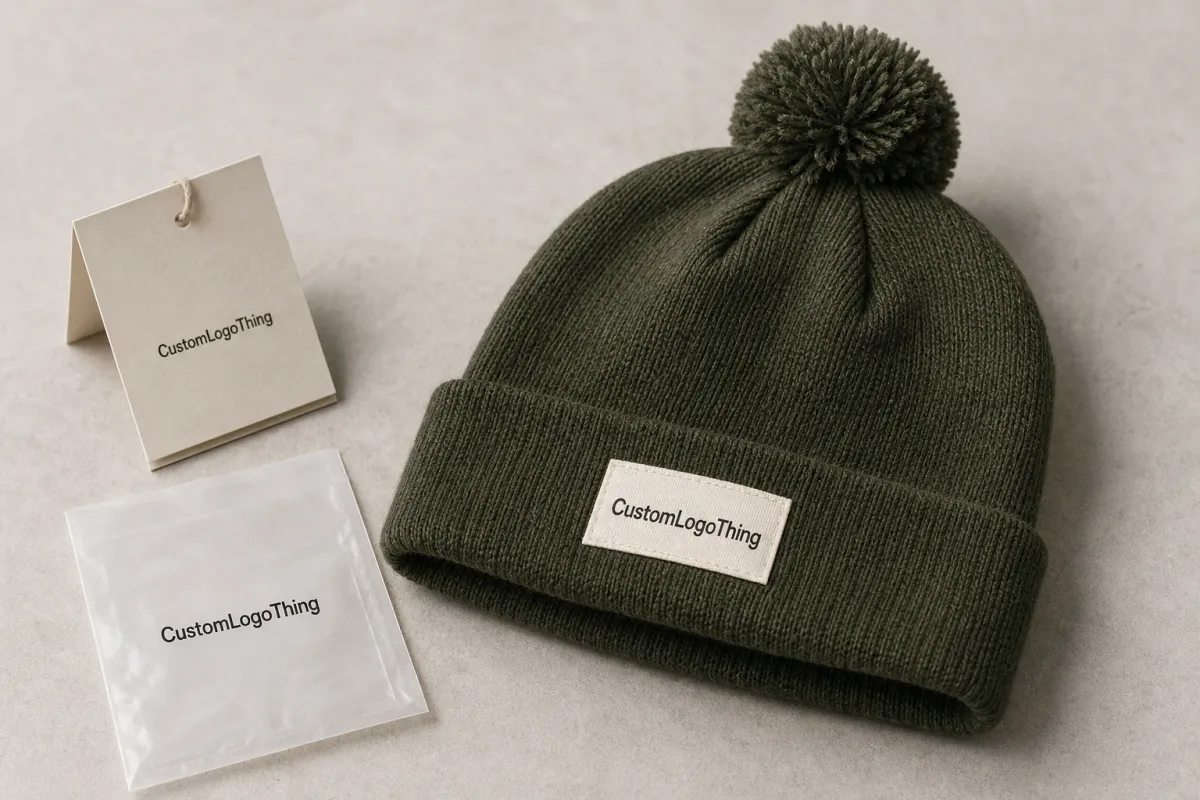
The pom changes the product. A plain knit cap is mostly functional; a pom style becomes more seasonal, more giftable, and more visual. That helps shelf appeal, but it also raises the bar on finish quality. If the pom is crooked, flat, or poorly attached, shoppers notice quickly.
Retail customers usually decide within seconds. They grab the beanie, feel the knit, check the stretch, and inspect the pom. For that reason, a clean silhouette often works better than an overly busy design. The product should be easy to understand immediately, especially at a midrange price.
The intended use should be settled before sampling begins. A ski shop needs warmth and durability. A gift shop needs color and presentation. A boutique may care more about a muted palette and simple branding. The wrong build can still be a good beanie, but it may not fit the store's customer.
Bulk is another detail buyers underestimate. Poms take up space, and space affects carton counts, backroom storage, and freight. If a store expects compact knit caps and receives bulky styles, inventory takes more room than planned. That matters most for seasonal shops and small stockrooms.
A few practical questions keep the order grounded:
- What is the landed cost at 300, 500, and 1,000 units?
- Does the pom hold its shape after packing and unpacking?
- Will the packaging fit the receiving and display workflow?
- Can staff restock it without reworking each unit?
How Retail Assortment and Merchandising Work
Assortment is where first orders often go wrong. Buyers sometimes assume that more colors will automatically create more sales, but a small knit program usually works better with a tighter line. Fewer colors are easier to explain, easier to display, and easier to reorder.
For boutiques, a compact palette usually wins: black, cream, oatmeal, charcoal, and maybe one seasonal accent. Gift shops can handle a brighter story if the price stays friendly and the packaging looks polished. Outdoor retailers often prefer warmer hand feel and dependable basics over trend-driven color.
One body style with controlled variations tends to be stronger than several unrelated shapes. It keeps the line coherent, simplifies receiving, and makes it easier to see which colors are actually moving. That also reduces the chance that a weak variant eats up space the customer never wants.
Display format matters just as much as color. Folded shelf stacks look neat but can hide the pom if packed too tightly. Peg hooks work well if the hangtag is readable and the packaging does not distort the knit. End caps are useful for seasonal pushes, while checkout placement only works if the price point is low enough for impulse buying.
Packaging affects labor. A retail bag protects the product, but it can slow down receiving and floor set. A simple belly band, card tag, or hangtag is often enough when the store team is small. That difference matters when ten dozen units arrive at once and someone has to place every item.
For most buyers, adult one-size styles are easier to manage than multiple size runs. Youth sizing can work, but it needs a clear plan. Without one, the wrong size becomes leftover inventory while the right one sells out too fast.
| Retail Build | Best For | Typical MOQ | Unit Price at 300-500 | Unit Price at 1,000-2,000 | Notes |
|---|---|---|---|---|---|
| Acrylic knit with woven label | Gift shops, general retail | 200-300 pcs | $4.80-$7.20 | $2.90-$4.50 | Lowest base cost; easy to color match; good entry-level retail program |
| Acrylic knit with embroidered patch | Boutiques, branded programs | 300-500 pcs | $5.40-$8.20 | $3.20-$5.10 | Higher setup, stronger perceived value, strong shelf read |
| Wool blend with custom pom | Cold-weather retailers | 500 pcs+ | $7.20-$11.00 | $4.60-$7.40 | Warmer hand feel; tighter margin math; better for premium positioning |
| Fleece-lined premium style | Outdoor, ski, winter specialty | 500-1,000 pcs | $8.50-$13.50 | $5.80-$9.20 | Comfort-driven, but heavier freight and more carton bulk |
For transit testing, it helps to ask whether the shipment is packed to an ISTA-style drop standard. If the retailer wants paper inserts or cards, FSC-certified paper is the cleaner path; see FSC for certification basics. Those details do not change the look of the product, but they do affect receiving and documentation.
Cost, MOQ, and Unit Pricing: What Changes the Quote
Yarn choice usually moves the price first. Acrylic is the most economical starting point and is forgiving in production. Wool blends feel warmer and more premium, which can support a higher shelf price, but they raise material cost and can tighten margin. Recycled yarns sit in the middle or upper-middle depending on supply and color consistency. Fleece-lined builds add both material and labor, so they are usually reserved for colder markets or higher price points.
Decoration is the next major cost driver. A woven label is generally cheaper than an embroidered patch or a custom leather-style piece. If the pom itself is custom colored, there is extra approval work because the shade has to be matched and repeated across the run. Buyers sometimes ask for a highly specific look, then wonder why the quote rises; the added work is the reason.
MOQ reflects yarn minimums, dye batches, setup time, and the number of variations in the order. Lower minimums usually mean fewer options or higher unit cost. That is normal. The key question is whether the MOQ matches real sell-through, not whether it sounds low in isolation.
A useful quote should break out the pieces clearly:
- Sample cost and shipping
- Tooling or setup fees
- Unit pricing by quantity break
- Packaging add-ons
- Freight terms and carton counts
Compare landed cost, not just factory cost. A style that looks cheap at origin can become expensive after hangtags, retail packaging, inbound freight, and receiving labor. Those costs add up fast across a 500-piece or 2,000-piece order.
If a vendor cannot explain what changes the price, the quote is incomplete.
Typical timing is straightforward. Sampling often takes 5 to 10 business days for a simple style. Production commonly runs 12 to 20 business days after sample approval if the materials are ready. Custom poms, special labels, tighter color matching, or more complex packaging can add time, so seasonal orders need extra cushion.
Production Steps and Turnaround: From Sample to Delivery
A good order starts with a precise brief. Body style, yarn weight, pom diameter, logo placement, label type, barcode position, carton markings, and packaging should all be defined before sampling. If one of those details is still unresolved, the sample becomes a moving target.
When the sample arrives, inspect it like a retail buyer protecting shelf performance. Look at knit density, stretch recovery, pom symmetry, label placement, and color in daylight. A digital proof helps with layout, but it cannot replace the hand feel of the real item. Small shifts in shade or texture matter once the product is on a hook or shelf.
The production flow is usually knitting, assembly, trimming, labeling, quality checks, and packing. The most common delay is not the machine work but the approvals. A slow sign-off on the hangtag, size label, or carton mark can push the schedule back without any manufacturing failure.
Quality control should be practical. Check that the pom is attached securely and centered, that the knit keeps its shape, that the cuff sits evenly, and that all units match the approved color closely enough to merchandize together. If the retailer plans to hang the beanies, packaging should not twist the crown or flatten the pom.
Carton compression matters too. Too much compression leaves the pom looking tired when the box opens. Too little raises freight cost and wastes space. The pack should protect the shape while still moving efficiently through transit.
For first runs, allow extra time for color matching and problem solving. Reorders move faster because the spec already exists. New programs need more cushion, especially before holiday or cold-weather launch windows.
Key Specs That Affect Fit, Feel, and Sell-Through
Fit has a bigger effect on sell-through than many buyers expect. A beanie with enough stretch to fit most adult heads without squeezing feels easier to buy and gift. If it is too tight, customers notice immediately. If it is too loose, the silhouette can look sloppy on display.
The pom attachment deserves close review. Sewn-on poms are the most secure and usually the safest choice for retail programs that expect heavy handling. Snap-on poms can be useful for styling or replacement, but they are less reassuring if the item will be touched often. Faux-fur poms can look more premium, though weaker fiber quality can lead to shedding or flattening.
Lining changes the position of the product. Fleece-lined styles work well in colder markets and can support a higher price. Unlined knits are lighter, cheaper, and easier to stack, which makes them better for milder climates or tourist retail. The right choice depends on weather, margin, and how the item fits into the rest of the assortment.
Color strategy should match the customer base. Conservative stores usually move neutral shades first: black, gray, navy, cream, oatmeal. More fashion-forward accounts can take one muted seasonal color or a brighter accent, but too many options create shelf noise and make reordering harder.
Branding should feel retail-ready, not heavy-handed. Inside labels need to be comfortable against the skin. Hangtags should carry the price and SKU clearly. Barcode placement should help the receiving team, not force them to hunt for a scan point. Small choices like these affect speed on the back end and confidence on the sales floor.
A practical spec checklist looks like this:
- Body size and stretch range
- Yarn content and weight
- Pom material and attachment method
- Label, patch, or embroidery placement
- Hangtag, barcode, and carton marking requirements
If sustainability documentation matters, ask for proof rather than general language. FSC paperwork for paper components, recycled content statements for yarn, and carton specifications are more useful than vague claims. Retail teams need documents they can verify.
Common Ordering Mistakes That Hurt Retail Sell-Through
Overbuying novelty colors before testing the basics is one of the fastest ways to create dead stock. A bright seasonal shade may look strong in a rendering and then sit while the neutral colors move. That is usually a demand mismatch, not a design failure.
Packaging bulk causes trouble more often than buyers expect. Once the pom, tag, and retail bag are added, carton size can grow quickly. That affects freight, warehouse space, and receiving labor. If carton dimensions have not been reviewed, the cost picture is incomplete.
Skipping the physical sample is another expensive habit. Poms vary from unit to unit, and knit tension can shift the hand feel enough to change how the product hangs or stacks. A photo approval cannot catch that. Buyers who skip sampling often find out too late.
Lowest-price buying can also backfire. A cheap beanie that pills, loses shape, or sheds its pom costs more once returns, markdowns, or complaints show up. Saving a dollar up front does not help if the item looks tired after a few touches.
Replenishment gets missed as well. If a style sells and the best color runs out, the program can lose momentum before the season ends. Set the reorder trigger before launch, including who approves it, how much stock remains at trigger point, and how long the next shipment takes.
In short:
- Test core colors before adding fashion colors.
- Ask for carton dimensions and pack counts, not just unit price.
- Approve the physical sample, not only the proof image.
- Check fit, finish, and pom attachment under handling.
- Plan replenishment before the first order ships.
Expert Tips and Next Steps for Store Buyers
A controlled first assortment usually performs better than a wide one. One neutral, one seasonal color, and one slightly upgraded version with a different label or lining can give a buyer a clear read on what customers actually pick up.
Ask for landed-cost comparisons across several quantity breaks. The best quote is not always the lowest sticker price. It is the one that shows where margin improves without forcing the store into inventory risk it cannot carry comfortably.
Match packaging to the labor available at store level. If the team is small, a simple tag, clear bag, or clean belly band may outperform a more elaborate presentation that needs extra handling. Retail presentation should make the product easier to sell and easier to stock.
Build a reorder trigger before the first shipment lands. Decide the sales pace that signals replenishment, the time required to produce the next lot, and the buffer needed to avoid an empty hook. Good winter accessories often have a narrow selling window, and the best color in the line is usually the first to run out.
The strongest programs are built on clear specs, realistic lead times, and packaging that fits the store's workflow. Get those pieces right, and the product earns shelf space with less friction.
FAQ
What makes pom-pom beanies for retail stores easier to sell than plain beanies?
The pom adds visual interest and makes the product feel more seasonal and giftable. That can help it stand out near outerwear, accessories, or checkout without extra promotion.
How many colors should a retail store buy in a first pom-pom beanie order?
A first order usually works best with 2 to 4 colors. Start with core neutrals, then test one seasonal shade if the store wants variety. Too many colors can slow reorders and make the display less coherent.
What is a normal MOQ for custom pom-pom beanies?
MOQ depends on the yarn, decoration, and how custom the pom and packaging are. Simple programs can sometimes start around 200 to 300 pieces, while more customized builds often begin at 500 pieces or more.
How long does production usually take for retail pom-pom beanies?
Sampling often takes 5 to 10 business days for a straightforward build. After approval, production commonly takes 12 to 20 business days, with extra time needed for special labels, custom poms, or tighter color matching.
What should buyers check before ordering pom-pom beanies for retail stores?
Check fit, yarn content, pom attachment, label placement, barcode readability, and carton size before placing the order. It also helps to confirm how the product will be packed for retail so the receiving team does not have to rework it.