Sorting out a custom beanie order takes more than picking a color and sending a logo. The Pom Pom Beanies material and sizing guide matters because yarn, knit structure, and pom style change how the hat fits, how warm it feels, and how it looks on a head. Two samples can seem close on a table and still wear very differently.
The details that decide approval are usually the same ones buyers leave vague: fiber content, finished opening, crown depth, pom size, decoration method, and packing format. If those items are not defined early, the order can drift into revisions, rework, or a fit that looks fine in photos but fails in hand.
Pom Pom Beanies Material and Sizing Guide: the fit trap most buyers miss
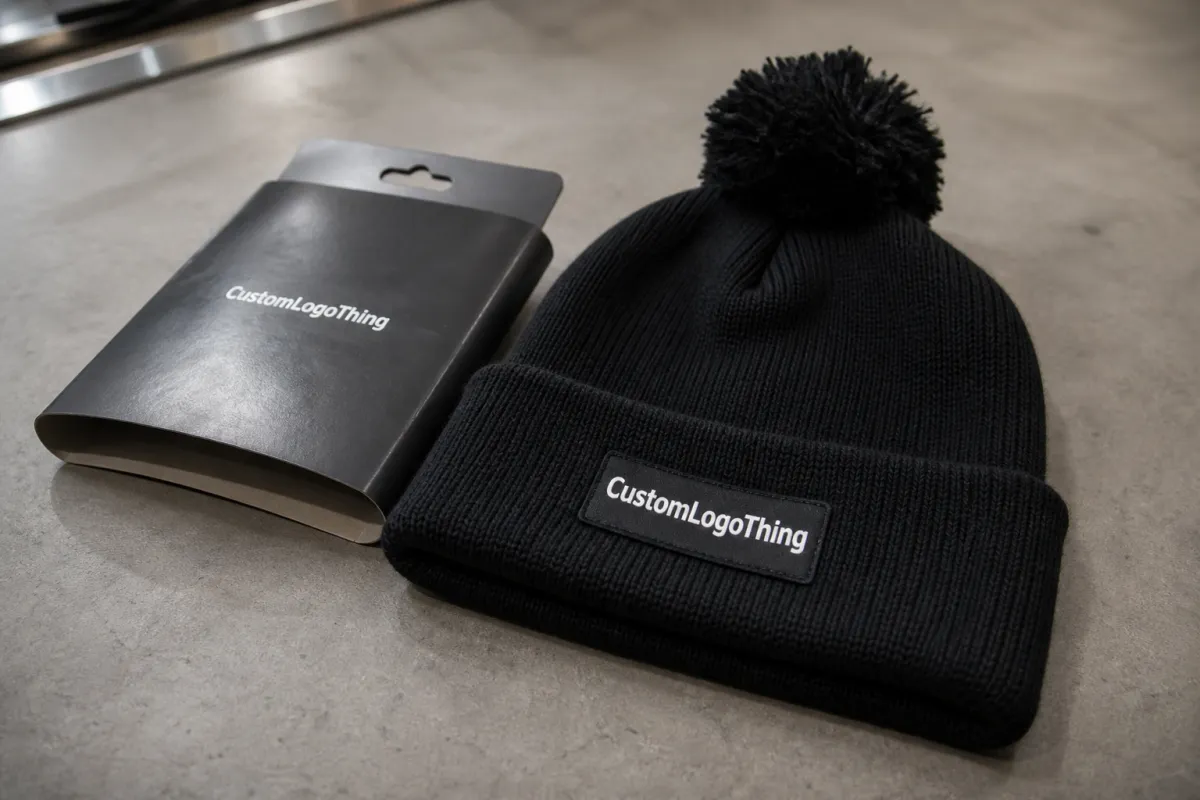
The pom changes the silhouette more than many buyers expect. A large faux-fur pom makes the crown look taller and more fashion-forward. A smaller yarn pom keeps the profile tighter and usually reads more practical. That visual weight matters when the logo is near the cuff or when the hat is meant to sit close to the head.
A useful spec sheet should name the fiber content, knit construction, finished opening, crown depth, pom size, and decoration method. Those numbers tell the factory what to make and tell the buyer what to expect. A generic “adult one size” label is not enough if the run includes retail, school, or promo use.
Fit also changes with yarn behavior. A dense acrylic knit often feels more controlled because it holds shape. A softer rib can stretch farther and relax more after wear. Add a high-mounted pom and the same hat can look less slouchy, even if the body measurements stay the same.
A spec sheet should describe how the beanie wears, not just what yarn it uses.
That is the point of a strong pom pom Beanies Material and Sizing guide: it gives both sides a shared reference before sampling starts, which lowers revision risk and makes bulk approval faster.
How knit structure changes warmth, stretch, and shape
Acrylic is the most common starting point because it is steady on price, consistent in color, and easy to decorate. It usually works well for embroidered logos, woven labels, and repeat orders where buyers want predictable results across sizes and colorways.
Wool and wool blends bring more warmth and a softer, premium handfeel. They also raise the care burden and often the unit price. If the hats will be sold at retail or worn in colder weather, wool blends can justify the cost, but buyers should confirm shrink behavior and washing expectations before bulk approval.
Recycled yarns are a good fit when the program needs a lower-impact story. They can support broader sustainability goals, especially when paired with recycled materials in packaging. The tradeoff is that recycled content can affect handfeel, shade consistency, and lead time, so sample timing matters more.
Construction changes the wearing profile as much as the fiber does. A rib knit stretches easily and holds the head closely. A cable knit adds texture and a heavier look. A double-layer build usually improves warmth and keeps the silhouette more stable, but it can also make the opening feel less forgiving if the measurement is too tight.
The pom type is part of the material decision. A yarn pom is lighter and generally cheaper. A faux-fur pom gives a fuller, more fashion-led finish but adds cost and can affect balance on the crown. The attachment method matters too. Sewn-in poms usually hold up better than weaker snap-in styles if the hats will be handled often, washed, or sold through retail.
Packaging should be chosen with the same practical mindset. Retail-ready orders may use corrugated cardboard shippers, kraft paper wraps, or FSC-certified inserts. If shipping performance matters, the ISTA testing framework is a useful reference. If paperboard is part of the build, the FSC chain-of-custody standard is worth confirming early rather than after sample approval.
Common material and structure tradeoffs
| Option | Handfeel and warmth | Cost impact | Best fit |
|---|---|---|---|
| Acrylic rib knit | Soft, flexible, moderate warmth | Usually the lowest | Promotions, schools, broad audience orders |
| Wool blend cable knit | Warmer, denser, more premium | Mid to higher | Retail programs and cold-weather use |
| Recycled yarn double-layer | Structured, comfortable, warmer | Mid, sometimes higher if sourcing is specific | Programs with sustainability targets |
| Faux-fur pom finish | Visual impact, slightly heavier top | Higher than yarn pom | Fashion-led assortments or gift sets |
Choosing size specs for adult, youth, and unisex runs
The cleanest way to size a beanie order is to measure the finished opening circumference, the relaxed stretch, and the crown depth. Those three numbers say far more than a size label. A typical adult beanie may sit around 18-20 inches relaxed and stretch to roughly 22-24 inches, while youth versions are often 1-2 inches smaller at the opening and slightly shallower in depth.
The right spec depends on the audience. A school order for older kids can work with one youth size and one adult size. A retail line may need a cuffed fit that sits lower. A lifestyle brand may want a slouchier shape with more crown depth. A cold-weather promo item may do better with a closer fit that holds the head and ears more tightly.
Do not assume one unisex size covers every use case. It can work for broad giveaway programs, but it is weaker for family bundles, mixed-age events, and retail assortments where fit expectations are higher. If the audience is broad, separate adult and youth specs or define acceptable measurement ranges up front.
Agree on tolerance ranges before sampling ends. A 1/4 inch variance on opening size and a similar range on crown depth is common for many knit programs, but the right limit depends on stitch density and production method. Clear pass/fail rules keep approval objective and reduce back-and-forth.
Wear testing matters as much as measuring. Have someone wear the sample for several minutes and check stretch recovery, ear coverage, and how the pom shifts the balance of the hat. A flat sample can hide problems that show up immediately once the beanie settles on a head.
Production steps and lead time from sample to shipment
The usual flow is spec review, material confirmation, sample knit, revision round, bulk approval, production, finishing, and final packing. The part that tends to add time is not the knitting itself but late changes to yarn, pom style, labels, or packaging.
For a simple acrylic beanie with standard embroidery, sampling may take 5-7 business days and bulk production may take about 12-20 business days after approval, depending on order size and factory load. More custom yarn sourcing, special labeling, or complex pom builds can extend that timeline.
Schedule slips usually come from approval delays. Artwork revisions, size tweaks, and packaging changes can add days if they land after the sample is already in motion. If the launch date is fixed, ask for checkpoint dates: sample-ready, revision deadline, bulk start, and ship-ready status.
Packaging should be tied to the production plan, not treated as an afterthought. If the order includes folded inserts, hang tags, or retail cartons made from kraft paper or corrugated cardboard, confirm whether the carton program needs standard, recycled, or FSC-certified materials before the sample is signed off.
Cost, pricing, MOQ, and unit cost drivers to compare
Pricing usually comes down to five levers: fiber choice, knit density, pom type, decoration method, and final packaging. A plain acrylic beanie with a woven label will land in a very different range than a wool-blend hat with a faux-fur pom, embroidery, custom tags, and retail pack-out.
MOQ changes the unit math. A small run of 100-200 pieces often carries more setup cost per hat because machine prep, yarn handling, and approval time are spread across fewer units. Larger runs usually reduce the per-unit price if the spec stays simple and repeatable.
As a planning range, many buyers see Custom Pom Pom Beanies around $2.10-$4.80 per unit at mid-range volumes. Premium builds can go higher depending on material, decoration, and packaging, while low minimum orders often cost more per unit because setup takes a larger share of the total.
Compare quotes line by line. One factory may include sampling, labeling, and basic polybagging, while another lists them separately. Freight assumptions matter too. If the quote does not specify carton counts, shipping mode, or destination handling, the landed cost can look lower than it really is.
Use a simple review frame:
| Quote element | What to confirm | Why it changes cost |
|---|---|---|
| Yarn type | Acrylic, wool blend, recycled content | Affects raw material price and sourcing time |
| Pom construction | Yarn pom or faux-fur pom | Changes labor, material use, and visual finish |
| Decoration | Embroidery, woven label, patch, or mix | Higher stitch counts and extra placements add time |
| Packaging | Standard polybag, kraft wrap, retail carton | More material and assembly changes the landed unit cost |
If sustainability is part of the brief, ask whether the packaging includes biodegradable packaging components or certified paperboard, and whether the carton plan can use recycled materials. That may not lower cost, but it can help avoid a late switch when the order is already in production.
Common ordering mistakes that create returns or rework
The biggest mistake is treating all beanies as if they fit the same. A one-size label is only a start. Stitch density, crown shape, and yarn stretch can change the wearing experience enough that two samples feel like different products, even when the named spec looks similar.
Another common miss is choosing the pom before testing attachment strength. That matters most for retail or high-handling programs. If the pom twists, loosens, or sheds after repeated use, the fix is usually more expensive after production than before it.
Washing behavior gets overlooked as well. Wool-rich hats may need careful care instructions, while acrylic styles usually hold shape more predictably. If the beanies will be gifted, sold, or worn often, a quick wash test is a low-cost way to catch shrinkage early.
Artwork placement can look correct on a flat sample and still shift when worn. A logo may move slightly because of stretch, cuff motion, or the visual weight of the pom. Small logos can disappear; oversized logos can crowd the hat. Worn photos and a live fit test are more reliable than a tabletop photo alone.
A sample that looks clean flat is not finished until it has been worn and checked.
Expert tips and next steps for a clean approval
The fastest way to reduce revisions is to put the order in one spec sheet with material, weight, finished measurements, pom size, logo placement, and the fit profile you want the factory to match. One document is easier to approve than a long email chain.
Sample before bulk, and test the sample in the way it will actually be used. Check comfort, stretch recovery, pom balance, and the way the hat sits after several minutes. If you are choosing between materials, ask for side-by-side samples so the differences between acrylic, wool blend, and recycled yarn are easier to judge.
A short approval checklist keeps the process disciplined:
- Confirm yarn and knit structure.
- Confirm fit and finished measurements.
- Confirm decoration method and placement.
- Confirm packaging, carton count, and labeling.
- Confirm final price and ship window.
That approach keeps the order controlled and makes the next run easier to repeat. The practical value of any pom pom Beanies Material and Sizing guide is simple: it turns a loose idea into measurable specs, then into a sample that still makes sense once someone wears it.
What is the best material for custom pom pom beanies?
Acrylic is often the easiest starting point because it is consistent, cost-effective, and handles color well. Wool or wool blends bring more warmth and a softer premium feel, but they also raise price and care expectations. Recycled yarns can support sustainability goals, though the buyer should confirm handfeel, color availability, and lead time early.
How do I choose the right size for pom pom beanies?
Measure the finished opening and crown depth, then compare those numbers to your target audience instead of relying on a generic size label. Test how much the knit stretches and whether it snaps back comfortably after wear. If the order serves mixed ages or head sizes, separate adult and youth specs usually work better than forcing one size to do everything.
Do pom pom beanies shrink or stretch after washing?
Yes, and the behavior depends on the yarn blend and knit structure. Wool-rich styles may need more careful washing, while acrylic options usually hold shape more predictably. Always test a sample care cycle before approving bulk if the beanies will be sold, gifted, or used repeatedly.
What affects the unit cost of custom pom pom beanies?
Fiber type, knit thickness, pom style, decoration method, and packaging all influence the final price. MOQ matters because setup and prep costs are spread across fewer or more units depending on the run size. Artwork changes, color matching, and special finishing steps can also add cost even when the base beanie looks similar.
How long does production usually take for pom pom beanies?
Timeline depends on sample approval speed, material availability, and how many custom details are included. Simple orders move faster than projects that require custom yarn colors, special labels, or multiple revision rounds. Ask for a milestone schedule that shows sample, bulk start, and ship-ready dates so planning stays realistic.


