Custom Pom Pom Beanies Bulk Order: Pricing, MOQ & Lead Time
A custom Pom Pom Beanies bulk order works because the product is easy to spot, easy to wear, and easy to explain. The pom adds shelf appeal, the cuff gives you a clean logo zone, and the finished hat feels more substantial than a plain knit cap. That makes it useful for retail, staff programs, winter events, campus stores, and gift bundles.
The buying decision is usually about balance: unit price, minimum order quantity, decoration quality, and the timeline to get the hats approved and shipped. Those variables matter more than the mockup alone. A good beanie can still miss the mark if the yarn feels wrong, the logo is too small, or the schedule does not leave room for proofing.
For repeat programs, the real value is consistency. Once the spec is set, reorders become easier to price, easier to approve, and less likely to produce surprises.
Why a Custom Pom Pom Beanies Bulk Order Moves Fast
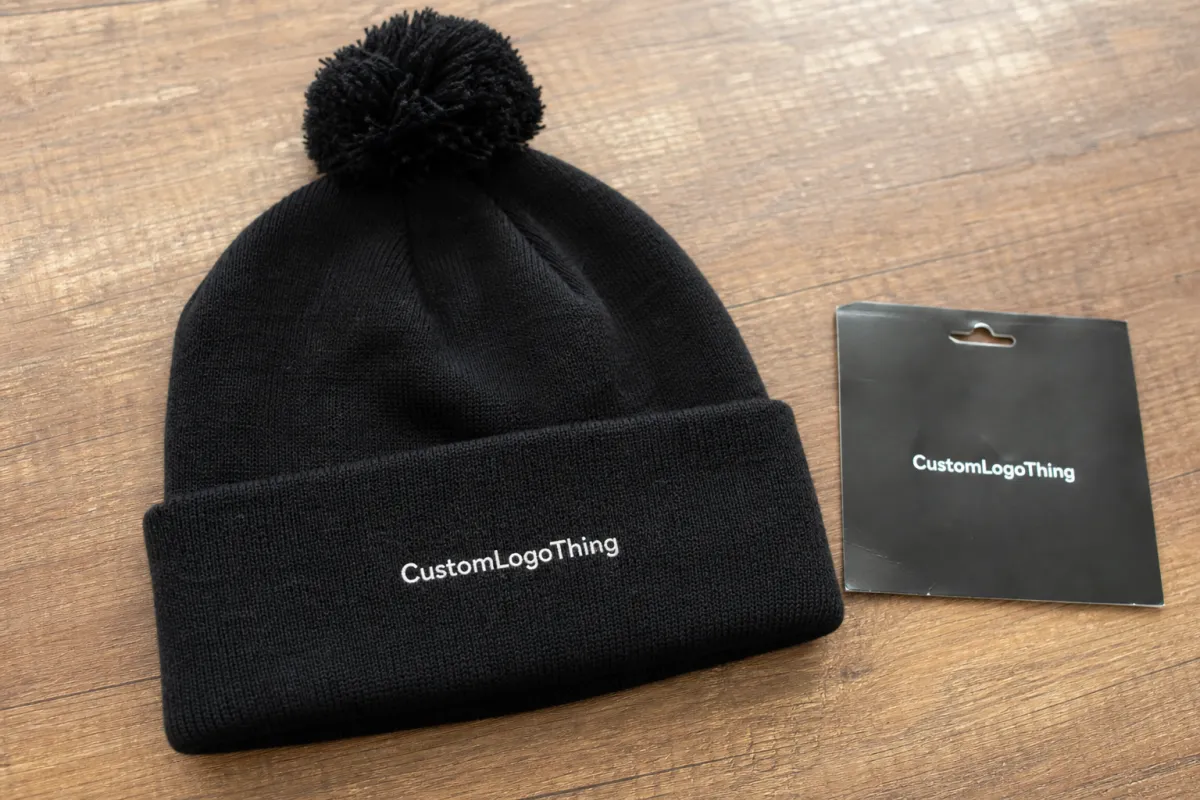
This product moves quickly because buyers understand it at a glance. It photographs well, reads clearly on a shelf, and works in cold-weather settings without much explanation. That makes it a practical choice when the goal is a product that can sell itself.
It shows up in a few common use cases: team merchandise, campus retail, outdoor shops, holiday promotions, and bundled gifts. The format is flexible enough to serve all of them, but the buying logic is the same. Buyers want a warm item with a strong front-facing presentation and a decoration method that survives real wear.
On the production side, larger runs help spread setup costs, simplify approval, and make future reorders easier. That matters when the beanie is part of a wider apparel or packaging program, because it keeps the order moving through one clean approval path instead of several loose ones.
A low unit price is not a good price if the artwork, color standard, and shipping terms are vague.
Ask for the essentials early: decoration limit, minimum quantity, proofing method, and lead time. A knit beanie should be quoted from a spec, not from a vague request.
Pom Pom Beanie Styles That Actually Sell
Style choice affects sell-through more than most buyers expect. A clean silhouette makes the logo look intentional. A cluttered one can make even good artwork feel off.
Cuffed beanies are the safest choice for most bulk orders because they give you a stable decoration area and a fit that works for many head sizes. Slouch beanies feel more relaxed and fashion-led, but logo placement is less predictable because the fabric drapes differently. Fleece-lined styles are better for colder markets and premium retail, though they cost more and often need more careful sampling.
The pom matters too. Common options are:
- Yarn poms: classic, lower cost, and easier to color match.
- Faux fur poms: fuller and more premium in appearance.
- Oversized poms: more visible on shelves and in photos.
- Removable poms: useful if washability or style flexibility matters.
- Color-matched poms: helpful when the branding needs a tighter visual system.
Material choice changes both feel and price. Acrylic is common because it is cost-effective and consistent at volume. Acrylic-wool blends can feel softer and less synthetic. Recycled yarns can support sustainability goals, but buyers should still check stretch, hand-feel, and color range before approving a large run. A sustainability claim is only useful if the finished hat still wears well.
Fit should not be left to assumption. One size fits most only works if crown depth, cuff height, and stretch range are tested against the actual spec. A hat that sits too shallow rides up; one that is too deep looks baggy. Those are small spec changes and large retail problems.
Decoration, Color Matching, and Logo Placement
Decoration should suit the knit surface, not fight it. For a custom Pom Pom Beanies bulk order, the most practical options are embroidery, woven patches, leatherette patches, and sewn-on labels. Each one behaves differently on thick knit fabric.
Embroidery is the standard choice for simple logos and short text, but small details can blur on knit. Thin lines and tiny lettering are the first things to suffer. Woven patches preserve detail better and often read more clearly from a distance. Leatherette patches give a more premium feel and can work well for retail or gift programs. Labels stay low-profile when the hat itself should remain soft and minimal.
Placement should follow the shape of the hat. The front cuff is the default. Side placement can work for compact logos. A patch centered above the cuff break can solve spacing problems on thicker rib knits. If the artwork feels forced, the placement is probably wrong even when the logo itself is fine.
Color matching needs realistic expectations. PMS references are useful, but yarn, thread, and ink never behave exactly the same way. A thread shade can look darker under indoor light. A yarn color can feel slightly warmer than the digital mockup. That is normal. What matters is whether the final combination still looks intentional. If the color is sensitive, a physical sample or strike-off is more valuable than a screen proof.
On thick knit, a small logo can disappear. A wider embroidery field or a patch usually gives a cleaner result.
Packaging should be considered at the same time. If the hats are going into retail sets, gift boxes, or bundled promotions, logo placement needs to support the full presentation, not compete with it.
Cost, Pricing, MOQ, and Unit Cost Breakpoints
Pricing is driven by material, knit complexity, pom construction, decoration method, labeling, and packaging. Buyers who compare only headline unit price often miss the real difference between quotes.
For a standard acrylic beanie with simple decoration, these ranges are a useful starting point:
| Order Tier | Typical Unit Price | Best Fit | Main Tradeoff |
|---|---|---|---|
| 50-99 units | $9.50-$14.00 | Small events, pilot merch, sample runs | Setup costs are spread across fewer pieces |
| 100-249 units | $7.25-$10.50 | Campus stores, staff gifts, boutique retail | Some premium yarn and decoration options may be limited |
| 250-499 units | $5.75-$8.25 | Retail, seasonal promotions, ski shops | Better pricing, but planning needs to be tighter |
| 500+ units | $4.75-$7.25 | Multi-location resale and larger branded programs | More storage space, longer planning, larger freight volume |
Prices rise if the order includes a faux fur pom, a custom knit pattern, custom-dyed yarn, or premium packaging. They can also rise if the first proof needs revision. Small changes add up because each adjustment touches labor, timing, and sometimes the material plan.
Common extra costs include:
- Setup fees: often $35-$120 depending on decoration method.
- Digitizing: usually $25-$60 for embroidery artwork.
- Shipping: can become significant once carton count grows.
- Rush charges: often add 15%-30%.
- Revision risk: increases when artwork, color, or placement is not approved carefully.
Compare quotes against the same spec sheet: same yarn, same decoration method, same packaging, same delivery terms. If any of those are missing, the cheaper number is incomplete, not better. That matters most on repeat orders, where consistency is part of the value.
For broader programs that pair apparel with branded packaging, a clear spec also keeps the order aligned with Custom Packaging Products or other retail-ready components.
Production Steps, Timeline, and Lead Time Expectations
A standard production flow follows a predictable sequence: artwork intake, mockup, sample or strike-off, bulk production, inspection, and shipment. The order only moves quickly if decisions are made quickly.
- Brief intake: quantity, target color, logo file, decoration method, and required delivery date.
- Mockup: placement and size are shown before production starts.
- Sample or strike-off: helpful for tighter artwork, strict placement, or exact color expectations.
- Bulk production: knitting, decoration, pom attachment, and finishing.
- Inspection: stitch review, logo check, and count verification.
- Shipment: carton packing, label application, and freight booking.
Lead time depends on how custom the build is. Straightforward runs with stock yarn and simple embroidery often land around 12-18 business days after approval. More complex orders, including custom knit patterns, specialty poms, or custom-dyed yarn, can move into the 18-30 business day range. Transit time comes after that, so the event date should always include shipping buffer.
The biggest delays are usually the boring ones: slow artwork feedback, repeated proof changes, color revisions, and late sample approvals. Rush service can shorten the calendar, but it usually narrows material choices and increases cost. That tradeoff is reasonable when the deadline is real.
If more than one product needs to land together, the schedule should be built around the slowest item. Coordinated packaging, apparel, and insert timing saves more time than pushing each item separately.
Quality Checks, Sizing, and Packaging Options
Quality control is mostly about preventing avoidable problems. Check stitch consistency, logo alignment, pom attachment strength, and overall finish before the carton is sealed. Loose threads, uneven cuffs, and weak pom stitching are the defects that show up immediately in retail.
Sizing deserves a real check, not a quick glance. Ask for crown height, cuff depth, and stretch range. A flat mockup can hide a fit issue that becomes obvious on a head form or a live wearer. If the hats are for retail, test them across more than one head size.
Packaging choices affect both presentation and cost. Common options include:
- Individual polybags: basic protection and easier wholesale handling.
- Size stickers: helpful for multi-color or assorted runs.
- Carton packing: efficient for freight and warehouse receiving.
- Barcode labels: useful for retail stock control.
- Retail inserts: stronger shelf presentation and clearer product info.
- Custom printed boxes: better for gift sets and higher-ticket packaging.
If sustainability is part of the brief, ask about recycled cartons or FSC-certified paper components. Packaging still needs to survive transit, so material claims should never outrun shipping reality. ISTA testing is a useful reference for package durability: ISTA. For paper tags, sleeves, or outer boxes, FSC-certified stock from FSC keeps the material claim straightforward.
In practice, the best packaging choice is the one that protects the hats, supports the shelf display, and does not add unnecessary handling steps. Simpler is often better, especially for large-volume replenishment orders.
How to Compare Quotes Without Getting Burned
Buyers usually compare the wrong thing first. They compare price. They should compare the spec. A low quote with missing details is not a bargain; it is an incomplete order wearing a nicer font.
Before approving a supplier, confirm these points in writing:
- Material: acrylic, blend, or recycled yarn.
- Decoration: embroidery, patch, woven label, or mixed method.
- MOQ: the exact quantity break and whether mixed colors are allowed.
- Sample policy: mockup only, strike-off, or physical sample.
- Packaging: polybag, carton pack, retail insert, or custom printed boxes.
- Shipping terms: who books freight and who pays for it.
Pay attention to wording. “Similar quality” means little. “Fast production” means little without dates. If a supplier will not commit to the proofing step, the order is being sold on hope rather than process.
The cleanest comparison method is straightforward: send the same artwork, the same placement request, the same yarn color, and the same packing instructions to every vendor. Then compare unit cost, setup fees, sample timing, and lead time side by side. That gives you a real read on value.
For recurring programs, save the approved spec, color references, and sample photos. Future orders get faster because the decisions are already documented. Pricing also becomes easier to predict, which is one of the main reasons a custom pom pom Beanies Bulk Order works well for repeat retail and seasonal merch programs.
If the standard approval questions are needed in one place, the FAQ is the quickest reference.
Next Steps for a Fast Reorder and Final Approval
To keep the order moving, send the core details together: quantity, target color, logo file, preferred decoration, delivery date, and packaging needs. That gives the quote an actual shape instead of a vague request that needs several follow-up emails to interpret.
Then ask for a mockup first. If the order is large, or if the logo has small detail, request a sample or strike-off before bulk production begins. That is the least expensive place to catch a sizing or placement issue.
Before production starts, compare the final quote against the approved spec line by line. If the logo size changed, the pom type changed, or the packaging changed, the price should change too. If it did not, something was missed.
The simplest approach is usually the best: clear art, clear quantities, clear packaging, and clear timing. That is how a custom pom pom Beanies Bulk Order gets approved, produced, and delivered without unnecessary friction.
What is the usual MOQ for a custom pom pom beanies bulk order?
MOQ depends on yarn type, decoration method, and whether the beanies are fully knit or patched after production. Common buying tiers are 50, 100, 250, or 500 units, with unit cost dropping as quantity rises. Ask whether mixed colors or mixed logo placements are allowed, because that can change the minimum.
How long does a custom pom pom beanies bulk order take?
Most schedules include mockup approval, sampling if needed, bulk production, inspection, and shipping. Simple runs move faster; detailed knit patterns, specialty poms, or color matching usually add time. Rush service may be possible, but it can increase cost and reduce material flexibility.
Can embroidery work on thick knit pom pom beanies?
Yes, but the design should stay simple enough for the knit surface and thread density. Small text, tiny details, and fine lines are riskier; a patch or woven label may read better. Always approve a sample or strike-off so the logo size and placement are confirmed before bulk production.
What changes the unit cost the most on bulk pom pom beanies?
Quantity, material quality, and decoration method usually have the biggest impact on price per unit. Pom construction, label type, packaging, and rush timing can also push the cost up. A clear spec sheet helps buyers compare quotes on the same basis instead of guessing.
Can I reorder the same custom pom pom beanies design later?
Yes, reorders are usually easier if the final artwork, color references, and approval notes are saved. The same design can still shift slightly if yarn lots, thread shades, or packaging specs change. Keeping the original spec sheet usually saves time and makes future pricing more predictable.

