Buyer Fit Snapshot
| Best fit | Printed Barcode Labels Wholesale projects where brand print, material claims, artwork control, MOQ, and repeat-order consistency need to be specified before quoting. |
|---|---|
| Quote inputs | Share finished size, material target, print colors, finish, packing count, annual reorder estimate, ship-to region, and any compliance wording. |
| Proofing check | Approve dieline scale, logo placement, barcode or warning zones, color tolerance, closure strength, and carton packing before bulk production. |
| Main risk | Vague material claims, crowded artwork, missing packing details, or unclear freight terms can make a low unit price expensive after revisions. |
Fast answer: Printed Barcode Labels Wholesale: Pricing, MOQ, Specs should be specified like a repeatable production item. The safest quote records material, print method, finish, artwork proof, packing count, and reorder notes in one written spec.
Production checks before approval
Compare the actual filled-product size with the drawing, then confirm tolerance on folds, seals, hang holes, label areas, and retail display edges. Reserve space for logos, QR codes, warning copy, and material claims before decorative graphics fill the panel.
Quote comparison points
Review material grade, print process, finish, sampling route, tooling charges, carton quantity, and freight assumptions side by side. A quote is only useful when the supplier can repeat the same color, closure quality, and packing count on the next order.
Printed Barcode Labels wholesale can sound straightforward until the first shipment lands on a damp dock, the adhesive starts to lose its grip, and a label that looked perfect in proof refuses to scan on the floor. That gap between a decent-looking label and a label that actually performs is the whole reason printed Barcode Labels Wholesale deserves real planning before anyone signs off on production.
I have seen buyers get drawn in by a low unit price, then pay for it three times over in relabeling, missed scans, interrupted picking, and inventory counts that never quite line up. Cheap labels only stay cheap until the first bad read. After that, the labor starts piling up quietly, and the budget leak is usually bigger than the original savings.
Wholesale should lower unit cost, sure, but it should also tighten repeatability. If the barcode stays crisp, the adhesive behaves the same from run to run, and the label spec holds steady across reorder cycles, the team spends less time correcting errors and more time moving product. That is why I tell buyers to judge printed barcode labels wholesale by scan performance, durability, and batch consistency first, and by quote price second.
Printed Barcode Labels Wholesale: Why Cheap Labels Cost More
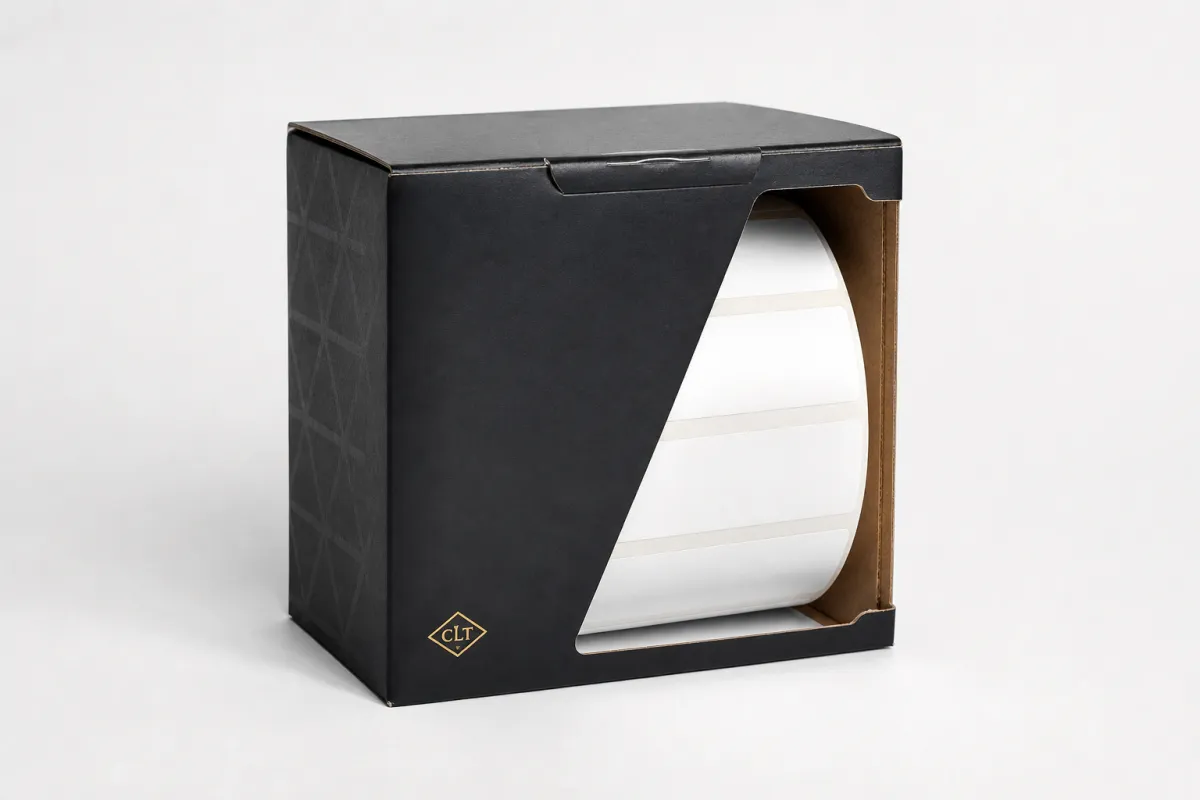
A common mistake is assuming every barcode label is interchangeable. They are not. A label that works on a dry corrugated carton may fail the moment it meets freezer condensation, pallet abrasion, or a curved bottle wall. With printed barcode labels wholesale, the face stock and adhesive have to fit the job or the savings disappear fast.
One failed scan can ripple through receiving, picking, cycle counts, and shipping confirmation all at once. If a line has to stop for relabeling, the order has already lost the plot. That turns into extra handling, extra checks, and extra downtime, and those hidden costs usually outrun whatever looked attractive on the first quote. I am not trying to be dramatic here; that is just how the math behaves on the floor.
Wholesale buying still makes sense. Larger volume spreads setup cost across more labels, and it gives a team a better shot at holding the same spec across repeat orders. That matters when labels are applied at speed and nobody has time to babysit the print quality. The real goal is not to buy a bigger stack of labels. The goal is to buy printed barcode labels wholesale that behave the same every time they are reordered.
One failed scan is rarely just a label problem. It usually turns into a labor problem, a shipping problem, and sometimes a customer service problem before anyone notices how much time has been lost.
If the label is going on cartons, pallets, retail packs, or cold-chain goods, it needs to survive the route and still read cleanly when a scanner hits it under real working conditions. That is why a useful wholesale order starts with the use case and works outward toward the substrate, adhesive, and barcode format. Skipping those details is not a shortcut. It is a gamble with expensive follow-up.
For regulated products, I would add one honest caveat: barcode accuracy alone does not solve compliance. Food, medical, and pharmaceutical programs may also need lot coding, traceability fields, or artwork reviewed against internal standards. The label supplier can help with print mechanics, but the buyer still owns the regulatory checklist.
Printed Barcode Labels Wholesale Product Options
There are three common routes for printed barcode labels wholesale: direct thermal, thermal transfer, and fully custom printed labels. Direct thermal fits shorter-life jobs such as shipping, internal routing, and high-volume warehouse labels. Thermal transfer holds up better when the label needs more durability, stronger abrasion resistance, or better performance under light and handling. Fully custom printed labels make sense when the barcode needs to share space with branding, warnings, ingredients, serial numbers, or a cleaner retail presentation.
Material selection matters just as much as the print method. Paper remains the workhorse for standard packaging because it is economical and easy to produce. Synthetic films, including polypropylene and polyester, are the better fit when moisture, cold storage, oil, or rough handling are part of the environment. If a product spends time in a freezer or on a damp dock, printed barcode labels wholesale on paper stock may be the wrong place to save money.
Shape and format affect the workflow too. Rolls are the standard choice for automatic and semi-automatic application. Sheets can work for short runs or office-style printing. Fanfold stacks make sense when shelf space is tight or the printer setup needs a flat feed. When buyers ask for printed barcode labels wholesale, the right format is usually the one that fits the printer and the application speed, not the one that sounds tidy in a spreadsheet.
Barcode content should follow the job rather than the trend. UPC and EAN are common in retail. Code 128 is useful for logistics and mixed data. QR codes are a practical option when more information needs to live inside a small footprint. Sequential numbers and variable data are critical for traceability, batch control, and inventory management. A solid printed barcode labels wholesale order can also carry logos, color blocks, warnings, or zone coding, as long as the design leaves enough quiet space around the symbol.
| Label Type | Best Use | Typical Wholesale Price Range | Main Tradeoff |
|---|---|---|---|
| Direct thermal paper | Shipping, internal routing, short-cycle warehouse use | $0.02-$0.06 each at higher volumes | Lower durability in heat, light, and abrasion |
| Thermal transfer paper | Retail cartons, shelf labels, moderate handling | $0.03-$0.08 each depending on ribbon and print coverage | Requires ribbon and a compatible printer |
| Synthetic film | Moisture, oil, freezer, outdoor, or heavy-handling environments | $0.05-$0.16 each | Higher material cost, stronger performance |
| Freezer-grade synthetic | Cold-chain, condensation, chilled packaging, frozen foods | $0.07-$0.20 each | More expensive, but much better hold in low temperatures |
The real question is not which option is “best.” It is which option matches the life of the label. A shipping label that needs to survive two days has very different demands from a pallet label that must stay readable for months in a warehouse. For teams planning printed barcode labels wholesale across several SKU families, standardizing the core size and roll format often saves time even when the face material changes from one use to the next.
For broader label programs, it can help to pair barcode labels with other packaging items from Custom Labels & Tags and keep replenishment organized through Wholesale Programs. That kind of purchasing structure is not flashy, but it tends to keep the whole operation easier to manage.
Transit-heavy products benefit from thinking in terms of drop, vibration, compression, and temperature swing. That habit is worth keeping. For a practical benchmark, the test methods used by the International Safe Transit Association offer a useful window into how packaging behaves in the distribution chain. For paper sourcing, the FSC remains the most recognized certification when managed forest claims matter.
Specifications That Keep Scanners Happy
A barcode can look clean to the eye and still fail once it hits the warehouse. A cramped quiet zone, squeezed bars, weak contrast, or a glossy surface can all create scan problems. With printed barcode labels wholesale, the scanner never cares how nice the artwork looks. It only cares whether the code reads quickly and reliably.
Barcode size should match the symbol type and the scan distance. A small Code 128 on a carton scanned from arm’s length invites trouble. The same issue shows up with QR codes packed too tightly beside logos or legal text. If the code is meant for handheld scanners, fixed-mount scanners, or mobile phones, say that early. printed barcode labels wholesale should be built around the actual reading distance, not around whatever happens to look tidy in a layout proof.
Ask for the practical specs before anyone starts quoting: label width and height, core size, outer roll diameter, liner type, adhesive type, and printer compatibility. If the labels will be printed in-house, confirm the printer model and ribbon type. If the labels are preprinted, clarify whether the barcode is fixed or variable. A clean printed barcode labels wholesale quote starts with those details, not with “something around this size.”
Environmental conditions matter more than many teams expect. Heat can soften adhesives, cold can make them brittle, moisture can break the bond, and chemicals can damage the print face. UV exposure fades some inks faster than buyers assume. Rough handling on corrugated cartons can scuff paper labels in a week. In practical terms, printed barcode labels wholesale needs to match the product route, not just the shelf life on a calendar.
If barcode performance is critical, ask for scan testing before full production. A sample that scans on one device in one office is not proof of success. Test the same label under the same lighting, distance, and angle you expect in the field. For 1D codes, an ANSI or ISO-grade scan check helps. For 2D symbols, the barcode should be validated against current quality standards before the run is approved. That extra step is far cheaper than reprinting thousands of labels.
One more practical detail: if the operation includes freezer storage, chilled packing, or humid docks, separate application temperature from service temperature. Those two get mixed up constantly. Some adhesives bond well after application but hate being installed in cold conditions. That distinction can decide whether printed barcode labels wholesale performs like a dependable production item or turns into a recurring headache.
I learned early on that “looks fine” is a weak test. In a bright office, a barcode can feel bulletproof; under a scanner on a moving line, the same label may read like a coin flip. That is why a proof review should include the actual material, not just a PDF on a monitor.
Printed Barcode Labels Wholesale Pricing, MOQ, and Quote Factors
Pricing for printed barcode labels wholesale is easy to understand once the actual variables are laid out. Label size, material, print colors, adhesive type, quantity, variable data, and finishing do most of the work. Bigger labels use more stock, so they cost more. Synthetic materials cost more than paper. Extra colors and special coatings add price. Variable numbering or serialized data adds setup work. None of that is mysterious. It is manufacturing.
MOQ is where buyers often get surprised. Many custom runs start around 500 to 1,000 labels, but the unit price usually improves once the order reaches 2,500, 5,000, or 10,000 pieces. The reason is simple: setup, artwork handling, and production prep are spread across more labels. Small lots are still useful, just more expensive per label. That is normal for printed barcode labels wholesale, not a penalty.
A practical way to read the cost curve is to think in bands. Lower-volume orders often land around $0.08-$0.25 per label depending on size and complexity. Mid-volume wholesale orders can fall into the $0.03-$0.12 range. Larger runs, especially with straightforward specs, can drop lower still. If someone hands you a very low quote, compare the material, adhesive, print method, and finish line by line. A cheaper-looking quote for printed barcode labels wholesale can become the expensive option once relabeling or downtime shows up.
Buyers should send a complete spec sheet before asking for pricing. Include label dimensions, barcode type, roll or sheet format, application method, surface material, environment, and expected annual volume. If artwork or a current sample already exists, send that too. The more complete the input, the less back-and-forth the project needs, and the more accurate the quote for printed barcode labels wholesale tends to be.
Hidden cost factors deserve a mention. A thicker stock may improve rigidity but require a different printer setup. A stronger adhesive may hold better on rough cartons while leaving residue on removal. Protective laminates can improve durability but may slow production or raise the price more than expected. If a team is comparing printed barcode labels wholesale across multiple SKUs, it helps to separate base price from upgrade costs so the real drivers are easy to see.
Repeat jobs usually come in with minimal setup, which makes pricing more predictable. First-time jobs with new artwork, custom die shapes, or serialized data often include prepress cost. That does not make the supplier expensive. It makes the quote honest. In wholesale buying, honest usually wins after the first reorder.
One thing I always tell procurement teams: do not compare a paper label quote against a synthetic label quote and call them equivalent. That is how bad decisions get disguised as savings. The cheapest line item is only meaningful if the label survives the route it is actually going to travel.
Printed Barcode Labels Wholesale Process, Timeline, and Turnaround
The ordering process should stay clean: request a quote, confirm specs, approve the artwork or data file, review a proof, run production, and ship. That is the normal path for printed barcode labels wholesale. If the process feels like a scavenger hunt, the project is likely to run longer than necessary.
Timeline depends on complexity. A repeat run with locked artwork can move in about 5 to 7 business days after proof approval. A fully custom job with new barcode data, special adhesive, or unusual sizing may take 10 to 15 business days. Detailed work with multiple SKUs or variable data can stretch beyond that. Planning printed barcode labels wholesale backwards from the launch date usually works better than waiting and hoping the quote date lines up with production needs.
The fastest projects usually have clean input. Missing barcode data, unclear label placement, inconsistent artwork files, and late design changes are the usual delays. A supplier cannot print what has not been finalized. If the code will be scanned in a high-risk setting, ask for a sample or proof early. For printed barcode labels wholesale, twenty minutes of review can save two days of rework.
The timing questions are basic because they need to be basic. How long does sampling take? How long does proof approval take? What is the production lead time once the proof is signed off? Is rush service available, and what does it cost? Clear answers to those questions keep the project from drifting into avoidable delay.
If the labels support a product launch, the procurement team should lock the spec before the packing schedule gets tight. Waiting until the final carton is already on the floor is how people end up paying for rush service, split shipments, and rework. That is not a strategy. It is panic dressed up as a purchase order.
A good supplier will also tell you when the requested spec is more than the application needs. That matters. A heavy laminate on a short-life shipping label is wasted money. A paper label in a freezer is a false economy. A supplier that pushes back with facts is usually more useful than one that agrees to everything and ships the wrong thing. That is especially true for printed barcode labels wholesale, where a bad fit shows up quickly.
In practice, the smoothest schedules come from teams that hand over complete information once, then leave room for a real proof cycle. That sounds obvious, but a lot of headaches start because somebody changes the size after prepress or swaps a barcode file at the last second. A little discipline here saves a lot of cleanup later.
Why Buy From Us
We keep this simple. You do not need a speech. You need printed barcode labels wholesale that scan cleanly, stick where they should, and arrive when the line is ready for them. That is the job. Everything else is decoration.
Our focus stays on production control. That means consistent materials, repeatable print quality, barcode verification, and clear communication when a spec needs adjustment. If a requested finish is likely to hurt scan performance or push the cost higher than it should be, we say so plainly. That kind of honesty saves everyone from a mess later.
We also work like a packaging supplier, not just a label printer. That matters because cartons, pallets, retail shelves, cold storage, and warehouse handling all create different stress points. The label has to fit the product flow. If you need printed barcode labels wholesale across multiple packaging formats, we can help sort out the spec without turning the conversation into a design lecture.
There is real value in a supplier who handles the boring parts well: fast quoting, clear proofing, useful artwork guidance, and sample support when the application is risky. Those are the things that keep a wholesale program moving. A good supplier saves time by preventing rework, not by pretending every order should be the cheapest number on the page.
For buyers comparing vendors, the real question is not “Who can print a barcode?” Plenty of shops can do that. The better question is who can deliver printed barcode labels wholesale with the right material, the right adhesive, and the same result on the next reorder.
Trust also comes from being willing to say “this spec needs more testing” or “this material is overbuilt for the application.” That may sound unglamorous, but it is how a label program stays dependable over time. I’d rather give a buyer a plain answer than a pretty one that causes trouble later.
Next Steps for Printed Barcode Labels Wholesale Orders
Before reaching out, gather the basics: label size, barcode type, quantity, application surface, storage environment, and whether the order needs rolls, sheets, or fanfold stacks. If there is an old label already in use, send it. If there is a product photo, send that too. Better input usually means a faster quote for printed barcode labels wholesale.
It also helps to say whether the label has to survive heat, cold, moisture, oil, abrasion, or outdoor exposure. Those details affect the stock and adhesive choice more than many people expect. A warehouse shipping label and a freezer label are not cousins. They are different species.
If the application is risky, ask for a sample. If the artwork is changing, ask for a proof. If the order will repeat every month, ask about reorder setup so the next run is faster. That is the practical way to buy printed barcode labels wholesale without turning procurement into guesswork.
Once the specs are clear, lock the production slot before inventory runs low. That part is boring, which is exactly why it gets skipped. It should not be skipped. A clean schedule protects the line, the budget, and the people who have to explain delays to operations.
So here is the blunt version: send the full spec sheet, include a sample if you have one, and ask for the right material instead of the cheapest sounding one. That is how printed barcode labels wholesale stays profitable instead of becoming another reprint story.
If you are still deciding, start by matching the label to its actual life on the product, not to the lowest price on the page. Once that match is right, the rest of the order tends to fall into place a lot more cleanly.
What should I check before ordering printed barcode labels wholesale?
Confirm label size, barcode type, adhesive, material, and printer compatibility before you ask for pricing. Match the label to the environment too. Shipping, retail, freezer, and warehouse handling each call for different specs. If the barcode will be scanned in a high-risk setting, ask for a sample or proof before you commit to full printed barcode labels wholesale production.
How does printed barcode labels wholesale pricing usually work?
Pricing depends on quantity, material, print complexity, adhesive type, and whether the data is fixed or variable. Higher quantities usually lower the unit cost because setup gets spread across more labels. Special finishes, extra colors, and durable synthetics increase cost. If two quotes look close, compare the actual spec line by line. That is where the real difference in printed barcode labels wholesale pricing tends to hide.
What MOQ is typical for printed barcode labels wholesale?
MOQ depends on the production method and material, but custom runs often start at a few hundred to a few thousand labels. Smaller orders are possible, though the unit cost is usually higher because setup costs do not disappear. If you know the label will reorder, it usually makes more sense to buy enough for the full cycle instead of splitting it into tiny batches. That is simply smarter printed barcode labels wholesale buying.
How long does printed barcode labels wholesale production take?
Simple repeat orders move faster than fully custom jobs. Proof approval, artwork changes, and special materials can extend the schedule. As a rough planning range, clean repeat work may ship in about 5 to 7 business days after approval, while more complex custom orders often take 10 to 15 business days or more. Ask about sample timing and full production turnaround before you commit.
Which material is best for printed barcode labels wholesale orders?
Paper works for standard shipping and retail use where moisture and abrasion are limited. Synthetic films fit better for freezer, outdoor, or heavy-handling conditions. The best choice depends on the surface, environment, and expected label life. If you are unsure, ask for a sample on the actual substrate before ordering full printed barcode labels wholesale quantities.
If you want a clean quote, send the full spec sheet, not a vague description and a hope. That is the fastest way to get printed barcode labels wholesale that fit your product, your scanner, and your production schedule without wasting stock or time.


