Buyer Fit Snapshot
| Best fit | Printed Bubble Mailers Wholesale projects where brand print, material claims, artwork control, MOQ, and repeat-order consistency need to be specified before quoting. |
|---|---|
| Quote inputs | Share finished size, material target, print colors, finish, packing count, annual reorder estimate, ship-to region, and any compliance wording. |
| Proofing check | Approve dieline scale, logo placement, barcode or warning zones, color tolerance, closure strength, and carton packing before bulk production. |
| Main risk | Vague material claims, crowded artwork, missing packing details, or unclear freight terms can make a low unit price expensive after revisions. |
Fast answer: Printed Bubble Mailers Wholesale: Specs, Pricing & Lead Time should be specified like a repeatable production item. The safest quote records material, print method, finish, artwork proof, packing count, and reorder notes in one written spec.
Production checks before approval
Compare the actual filled-product size with the drawing, then confirm tolerance on folds, seals, hang holes, label areas, and retail display edges. Reserve space for logos, QR codes, warning copy, and material claims before decorative graphics fill the panel.
Quote comparison points
Review material grade, print process, finish, sampling route, tooling charges, carton quantity, and freight assumptions side by side. A quote is only useful when the supplier can repeat the same color, closure quality, and packing count on the next order.
Printed Bubble Mailers Wholesale: Specs, Pricing & Lead Time
The first thing a customer touches is often not the product. It is the mailer, the seal, the outer layer that frames the brand before anything inside gets seen. If that shell feels generic, the brand inherits some of that flatness. That is why Printed Bubble Mailers wholesale matter more than many buyers admit. A well-made mailer protects the shipment and carries the brand name before the box even opens.
I have seen this play out in real fulfillment audits. A beauty brand with a modest product line changed nothing about the formula, the website, or the price. They switched from plain mailers to printed ones with a matte finish and a clean one-color logo. Returns did not magically disappear. But customer service stopped hearing the phrase “cheap packaging,” and that matters. Packaging does not replace product quality; it changes the first interpretation of it.
That matters for apparel, beauty, accessories, and subscription products. A plain mailer says, “We shipped it.” A branded one says, “We thought about this.” Same package. Different story. Customers notice the difference fast, often in the first few seconds after the parcel lands on a desk or porch.
The real job here is not to dress packaging up in marketing language. It is to Choose the Right size, the right material, the right print method, and the right order quantity without paying for errors that should have been caught upstream. With printed bubble mailers wholesale, the details shape the outcome. The wrong spec raises unit cost, the wrong quantity ties up cash, and the wrong finish leaves customers with an impression you did not intend to send.
Plain mailers protect. printed bubble mailers wholesale protect and market at the same time. That is the core value.
Printed Bubble Mailers Wholesale: The Branding Space You Ignore
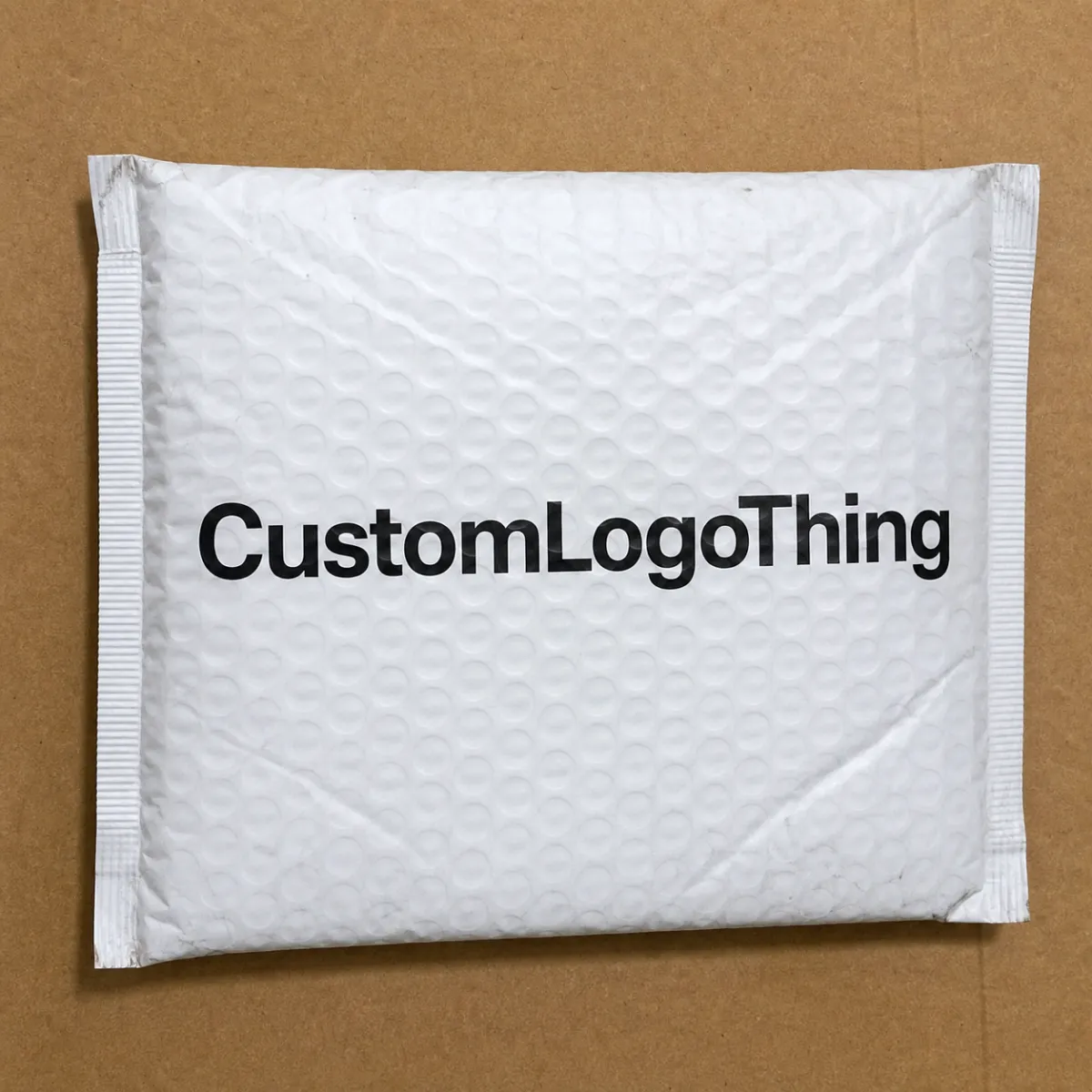
Most buyers focus on the product inside and treat the mailer like a piece of disposable infrastructure. That misses an important layer. The outer package is the first shelf your customer sees, even if it only moves from porch to countertop. A printed logo, a short line of copy, or a repeated pattern can make the shipment feel intentional rather than borrowed from a warehouse shelf.
From a packaging buyer’s point of view, printed bubble mailers wholesale sit in a useful middle zone. They cost less than a rigid box, weigh less than corrugated, and still give you enough surface area for branding. Shipping one sweater, a pair of lashes, a phone accessory, or a small refill pack does not require a heavy box to feel finished. The mailer can do the brand work without adding much labor.
Wholesale matters early because packaging is never a one-off creative exercise. You need repeatable print quality, steady supply, and pricing that does not jump every time you reorder. Random sourcing each month usually brings uneven color, poor fit, and freight costs that feel invented on the spot. That is not planning. That is a warehouse problem waiting for a label.
Plain mailers protect. printed bubble mailers wholesale protect and market at the same time. The branding pays off most when the same outer package shows up across multiple orders. Repetition does what a one-time insert cannot: it creates recognition without demanding attention.
If you are still deciding whether printed packaging justifies the step up, ask a sharper question. How many customer touchpoints does your current shipping setup waste? If the answer is the mailer, the insert, and part of the unboxing itself, a branded mailer is doing more work than it gets credit for.
There is a practical angle too. A printed mailer can help warehouse staff sort product lines faster, reduce mix-ups, and keep returns or replacement shipments easier to spot. That is not glamorous. It is useful. Useful packaging usually earns its keep, especially when a fulfillment team is moving at speed and every small cue helps.
One more thing that buyers sometimes miss: the mailer often outlasts the product in memory. A customer may throw away a shirt tag without thinking twice, but they remember the parcel that arrived with crisp print, a strong seal, and no dented corners. That memory becomes part of the brand record. Packaging is not a side note. It is evidence.
Printed Bubble Mailers Wholesale: Materials, Sizes, and Print Options
The structure of a bubble mailer looks simple from a distance. The choices inside it are where quality lives or dies. Most printed bubble mailers wholesale orders come down to four parts: the outer film, the bubble liner, the seal strip, and the print layer. If one piece is weak, the whole package feels cheaper than it should.
Outer film thickness is one of the first specs to check. Lightweight retail mailers often sit around 60 to 80 microns, while heavier-use options move closer to 90 to 120 microns. Thicker is not automatically better. Too thin, though, and the mailer starts feeling flimsy in hand, especially after stacking, courier sorting, and a few rough touches during fulfillment.
The bubble liner usually sits in the standard 3/16-inch range for general e-commerce shipping. Smaller bubbles can feel cleaner for slim items, while denser liners improve cushioning. The right choice depends on the product, the lane it ships through, and whether the item needs scratch protection or a little shock absorption. A soft cosmetic compact and a metal accessory do not face the same risks.
Size selection is where money disappears quietly. A mailer that is too large creates dead space, wastes material, and looks careless. A mailer that is too tight stresses the seams and slows packing. The best fit usually leaves just enough room for the item, a tissue wrap if needed, and a clean seal without forcing the product into the envelope like it is late for school.
- Small formats: Better for jewelry, cards, small cosmetics, and slim accessories.
- Mid-size formats: Common for apparel accessories, phone cases, beauty kits, and subscription items.
- Larger formats: Useful for folded garments, lightweight soft goods, and bundles that still need protection without a box.
Print options shape both cost and brand impact. A one-color logo on the front panel is usually the cleanest starting point. It is readable, controlled, and easier to repeat across reorders. Multi-color branding, back-panel messaging, or full-coverage art can create a stronger visual hit, but the jump in setup and production complexity is real.
Finish matters as much as ink. Gloss gives a brighter, retail-forward look. Matte feels softer and less reflective. Metallic films can stand out on a shelf or in social content, but they also show scuffs and fingerprints more readily. For brands with a quieter visual language, matte white or matte color films usually hold up better in everyday handling. For louder, more visual packaging, gloss can carry the artwork harder.
Ask for samples before you place a large printed bubble mailers wholesale order. A sample should answer five questions quickly: does the color match the artwork, does the seal strip close firmly, do the bubbles rebound after compression, does the logo sit cleanly away from seams, and does the material feel stiff enough for shipping. If the sample fails two of those five, do not hope production will rescue it. It rarely does.
Good sample questions: Does the print stay sharp on the fold line? Is the adhesive strong enough for repeated handling? Does the film wrinkle where the logo lands? Can the mailer take a few test drops without the seal opening? That is the sort of checking that saves people from expensive reorder mistakes.
One small but useful detail: ask where the print lands relative to the seam. A design can look perfect in a flat proof and still drift into a stress point once the film is folded and heat-sealed. That is the kind of production issue that shows up only after a carton is opened in receiving. Catch it earlier, and the order behaves like a professional purchase instead of a gamble.
Printed Bubble Mailers Wholesale: Specifications That Affect Performance
Spec sheets are easy to skim and easy to misread. The specs that matter are the ones that affect performance in transit. If you buy printed bubble mailers wholesale without reading the right numbers, you can end up with packaging that looks fine in the office and fails inside a delivery truck.
Start with puncture resistance and tear behavior. A mailer can look thick and still split at the seam if the film is weak or the seal is applied badly. That matters more than a fancy finish. Once the seal opens in transit, nobody cares how good the logo looked.
Bubble density is another practical point. Denser bubbles tend to hold shape better under pressure, which helps with apparel, soft goods, and light accessories. Shipping something with a sharp edge, like a metal component or a boxed part, calls for testing the liner carefully. Bubble mailers are not magic armor. They are a sensible layer of protection for the right kind of product.
Closure type also changes the user experience. A peel-and-seal strip is standard for most printed bubble mailers wholesale orders because it speeds packing and keeps the closure tidy. Some buyers ask for tamper-evident behavior, which makes sense for higher-value items. Others want a stronger adhesive because their fulfillment lane runs through warm warehouses or longer storage periods. Practical testing matters more than the spec sheet copy.
Product fit is not just about size. Weight, shape, sharp edges, and how the item moves inside the mailer all matter. Soft goods, cosmetics, accessories, stationery, and small electronics usually fit well. Heavy candles, brittle ceramics, and loose glass items usually do not. Could you force them in? Probably. Should you? No. That is how you create returns and those vague complaints about “damaged packaging” that hide a dozen avoidable mistakes.
Artwork specs deserve attention too. Buyers often send raster files that are too small, then wonder why the logo looks fuzzy. For printed bubble mailers wholesale, use vector artwork whenever possible, keep safe margins away from edges and seams, and simplify color layouts unless the run justifies more complexity. A one-color logo with strong contrast usually prints cleaner than a crowded design with tiny text. Tiny text on flexible film is where good intent goes to die.
Registration tolerance matters more than most people think. Fine lines, layered type, and color blocks that must line up exactly all become risk points. Mailer film flexes. Heat can move things slightly. Production runs need room for that reality. If the design only works when every pixel sits perfectly, the design is too fragile for packaging.
There are also standards worth knowing. Testing expectations from the International Safe Transit Association are useful if you want a stricter view of shipping performance, and sourcing paper-based components from FSC-certified supply chains can matter if your brand needs documented sustainability claims. Those standards do not make a weak mailer strong, but they give buyers a better framework for comparing claims.
Storage conditions matter too. Moisture, heat, and pallet pressure can affect adhesive performance and film appearance. A mailer stored in a dry, controlled warehouse behaves better than one left near a loading dock and crushed under random cartons. That detail sounds dull. It also explains a lot of packaging failures.
There is a common trap here. A buyer sees a sample that looks perfect on a desk, then the production run arrives six weeks later after sitting in a hot receiving area. The adhesive has aged, the film has warped slightly, and the stack does not behave the same way. Packaging is physical, not theoretical. A good supplier should talk about storage and transit conditions before the order ships.
Printed Bubble Mailers Wholesale Pricing, MOQ, and Quote Basics
Pricing for printed bubble mailers wholesale is driven by a few concrete variables: size, film thickness, print colors, print coverage, quantity, packaging configuration, and whether the job uses standard stock dimensions or custom tooling. If a supplier gives one number without asking those questions, they are either guessing or hoping you do not notice the gaps.
MOQ follows setup complexity. Simple one-color runs can start lower because they are faster to produce and easier to repeat. Multi-color art, special finishes, or full-coverage designs usually require larger minimums to justify the production setup. That is not a sales trick. It is the math of print and converting equipment.
Unit price usually drops as volume rises, but the tradeoff is obvious. Bigger runs improve per-piece cost while tying up more cash and storage space. If monthly usage is uncertain, buying a huge batch just to chase a lower unit price can backfire quickly. Cheap packaging that sits in a warehouse for ten months is not really cheap.
Here is a practical pricing picture buyers can actually use. These are planning ranges, not promises, because artwork, material choice, freight lane, and print coverage can move numbers around.
| Run Size | Typical Unit Price | Common MOQ | Lead Time | Best Fit |
|---|---|---|---|---|
| 1,000-2,499 pieces | $0.42-$0.68 | 1,000 pieces | 12-18 business days after proof approval | Pilot runs, seasonal drops, early product launches |
| 3,000-4,999 pieces | $0.28-$0.46 | 3,000 pieces | 12-16 business days after proof approval | Steady e-commerce volume, moderate reorder cycles |
| 5,000-9,999 pieces | $0.18-$0.32 | 5,000 pieces | 14-20 business days after proof approval | Growing brands with repeat packaging demand |
| 10,000+ pieces | $0.14-$0.24 | 10,000 pieces | 18-28 business days after proof approval | Stable programs and high-frequency fulfillment |
That table shows the part most buyers care about: volume lowers cost, but only if the order size matches real usage. Overbuy by 5,000 pieces and the savings start to look less impressive. Underbuy by 500 and you pay more per unit while inviting a stockout. Neither move is clever.
Hidden costs matter just as much as unit price. Ask about setup fees, proofing charges, sample charges, freight, and rush surcharges before comparing quotes. A clean-looking quote with expensive shipping is not a bargain. A low minimum with cheap freight may still be wrong if the inventory sits too long. Landed cost is the number that tells the truth.
- Setup fee: Often $75-$300 depending on print method and color count.
- Sampling: Free in some cases, but physical samples can carry a charge.
- Freight: Can swing sharply based on carton count, dimensional weight, and destination.
- Rush production: Expect a surcharge if the schedule gets compressed.
For a quote, send the supplier a clean brief: size, quantity, artwork count, finish, delivery address, and target timeline. If you have multiple sizes, state that separately. If you want one-color logo printing now and a fuller version later, say so. The cleaner the brief, the better the pricing. Vague briefs invite vague quotes, and vague quotes eat time.
printed bubble mailers wholesale buyers also need to watch for variation between sizes. A 6 x 10 mailer and a 10 x 13 mailer are not priced by simple area math. Larger units can create more waste, larger carton packs, and more complicated print runs. That is why exact dimensions matter more than “something around medium size.” Packaging professionals dislike that phrase for a reason.
One practical habit saves a surprising amount of money: compare quotes on landed cost per usable shipment, not just sticker price per thousand. A cheaper mailer that forces repacking or creates higher damage rates is not cheaper once you run the math. I have seen brands save a few hundred dollars on purchase price and lose far more in labor, rework, and customer complaints.
Printed Bubble Mailers Wholesale: Process, Timeline, and Lead Time
The process behind printed bubble mailers wholesale should be straightforward. If it feels chaotic, somebody skipped a step. A clean order usually moves through six stages: spec confirmation, artwork review, proofing, sample approval if needed, production, quality check, and shipping.
Spec confirmation comes first. Size, color, thickness, closure style, and print area get locked down here. If buyers change those after proofing, the schedule stretches. That is normal. It is also avoidable.
Artwork review usually follows. The supplier checks file format, resolution, safe margins, and placement. Good files save time. Vector logos, Pantone references, and simple layout notes reduce confusion. If your print file is a screenshot from a presentation deck, delays are almost guaranteed. The packaging team is not there to rescue a sloppy design file.
Proofing often takes one to three business days for straightforward jobs. Simple one-color orders move faster. More complex artwork, color matching, or custom packaging structures take longer. A digital proof shows placement and text, but it does not always reveal the full story on film sheen or color depth. That is why physical samples can be useful for anything that needs close color control.
Sampling usually adds five to ten business days if a physical sample is being made. Some buyers skip sampling to save time, which is fine when the artwork is simple and the supplier has repeatable print control. If the job has tight brand color requirements or a new material finish, sampling is money well spent.
Production timing for printed bubble mailers wholesale often lands in the 10 to 18 business day range after approval for simpler runs. Larger orders or more detailed artwork can stretch into the 18 to 28 business day zone. Freight is separate. Domestic shipping may take a few days. Longer transit lanes can take much longer. If your inventory plan assumes production and transit happen at the same speed, you will run out faster than expected.
Delays usually show up in the same places every time:
- Artwork revisions drag on because nobody wants to approve the final file.
- Color changes happen after proofing, which resets the queue.
- Sample approval takes too long because the buyer is waiting on internal sign-off.
- Freight decisions come late, so the finished order sits while shipping is arranged.
You can shorten lead time with a few practical habits. Send clean files up front. Decide the order size before requesting the quote. Keep color changes to a minimum. Approve the proof quickly. If a sample is necessary, give one person the authority to approve it instead of building a committee around a mailer. Packaging does not need a committee. It needs a yes.
One useful rule: if the product launch date is fixed, start packaging earlier than you think you need to. The packaging clock is rarely the only clock in the room. Product finalization, photography, web setup, and inventory booking all want time too. printed bubble mailers wholesale should be one of the first physical assets you lock, not the last thing you panic-buy.
Another timeline mistake shows up around holidays. Buyers often assume the mailer order can wait because the product itself is already finished. Then freight congestion, proof delays, and a small artwork revision stack up at once. The result is a launch that ships in plain mailers because the branded run missed the window. That is avoidable, but only if packaging gets the same attention as inventory.
Why Choose Us for Printed Bubble Mailers Wholesale
At Custom Logo Things, the value is not in dramatic claims. It is in consistency. Buyers need printed bubble mailers wholesale that stay close to spec, hold color across reorders, and arrive ready to use. That sounds basic because it is basic. Basic packaging done well keeps a shipping program from drifting into avoidable mess.
Consistency matters for color, sizing, and closure performance. If you reorder the same mailer six months later, it should not feel like a different product with the same artwork on top. Brands lose more trust from packaging drift than they realize. Customers may not describe the issue in technical terms, but they notice when the unboxing feels off.
Material selection matters too. Different film thicknesses, bubble constructions, and adhesive strengths work better for different product categories. A good supplier should explain the tradeoff between a lighter, cheaper mailer and a sturdier one that costs a bit more but reduces damage risk. That conversation often saves money later, when returns and replacements are no longer theoretical.
We also think in terms of logistics, not just artwork. A packaging run has to survive warehouse handling, carton packing, pallet stacking, and long shipping routes. If the mailer looks good but fails under ordinary transit pressure, the design is pointless. That is why sample support and print checks matter before a large order ships.
If your product line grows, packaging should scale without forcing you to rebuild the whole system. Some months call for a smaller reorder. Some months need a larger run for a launch or holiday cycle. printed bubble mailers wholesale should give you that flexibility without turning every reorder into a fresh negotiation.
There is also a broader packaging setup to think about. If you need more than mailers, our Wholesale Programs page is the best starting point for recurring orders, while Custom Packaging Products helps you compare the rest of the shipping kit. If a lighter format fits your product better, Custom Poly Mailers may be the smarter answer. Not every shipment needs the same packaging shape. That would be convenient, and packaging rarely rewards convenience.
The right supplier should also make quoting easy. Clear specs. Direct communication. Sample support when needed. No mysterious add-ons appearing after the fact. Buyers do not need drama. They need a packaging line that behaves the same way every time the order lands.
Trust also comes from saying what a mailer cannot do. Bubble mailers are excellent for light, low-profile, non-fragile items. They are not the right answer for glass, ceramics, or anything with sharp protrusions that can punch through film. That honesty matters more than trying to force one packaging format to cover every use case.
Printed Bubble Mailers Wholesale: Next Steps to Order
If you are ready to order printed bubble mailers wholesale, keep the process simple. Measure the product first. Choose two or three mailer sizes that fit it well. Decide whether you need front-only print or broader branding coverage. Pull your logo files together before asking for a quote. That alone saves a handful of back-and-forth emails.
Then compare supplier responses against the same checklist. Unit price matters, but so does MOQ, proof timing, sample availability, freight terms, and whether the supplier can explain the print limits directly. A cheap quote that ignores lead time is not helpful. A fast quote that cannot hold color is not helpful either.
A good buyer also thinks about inventory risk. If you are unsure about volume, start with a pilot run. Test the size. Test the seal. Test how the mailer looks in real packing conditions. Once the layout is confirmed and your usage rate is clearer, scale the order. That is a cleaner move than placing a huge first order just to feel decisive.
- Step 1: Measure the shipped product and allow room for inserts or tissue.
- Step 2: Pick the smallest mailer that protects the item without crushing it.
- Step 3: Choose your print coverage and color count.
- Step 4: Gather vector artwork, Pantone references, and delivery details.
- Step 5: Request a landed-cost quote and compare it line by line.
- Step 6: Approve the proof quickly so production stays on schedule.
There is no mystery here. The brands that get the best result from printed bubble mailers wholesale are the ones that treat packaging like part of operations, not a side project for the design team. They know the size, the finish, the MOQ, and the lead time before they place the order. That is how you avoid paying for packaging twice.
The most practical takeaway is simple: lock the product dimensions, confirm one sample, and compare two landed-cost quotes before you approve production. If those three pieces line up, the rest of the order tends to behave. If they do not, the cheapest quote can turn into the most expensive mistake.
For a first run, start with the smallest size that protects the product, keep the artwork clean, and choose a finish that will still look good after warehouse handling. That is the point where printed packaging starts earning its place instead of just occupying shelf space.
Questions Buyers Ask
What is the usual MOQ for printed bubble mailers wholesale orders?
MOQ usually depends on size, print method, and color count, but many custom runs start around 1,000 to 5,000 pieces. Simpler one-color jobs often sit at the lower end, while more detailed artwork or special finishes push the minimum up. If you need multiple sizes, expect each size to carry its own MOQ rather than one shared threshold.
How much do printed bubble mailers wholesale cost per unit?
Unit cost is driven by quantity, material thickness, print setup, and how many colors or sides are printed. Larger orders reduce the per-piece price, but the savings only help if you can store and use the inventory. Ask for a landed-cost quote so you can compare packaging, setup, and freight in one view.
How long does production take for custom printed bubble mailers wholesale?
A typical timeline includes proof approval, optional sampling, production, and shipping, with each step adding its own lead time. Simple jobs can move faster, while complex artwork or special materials usually take longer. The fastest way to avoid delays is to send clean files up front and approve the proof quickly.
Can printed bubble mailers wholesale be made in different sizes and colors?
Yes, most suppliers can produce multiple sizes and color options, but each variation can affect MOQ and price. Size choice should match the shipped product closely so you do not pay for oversized packaging. Color options depend on stock film availability and the print method, so confirm those details before finalizing artwork.
Are printed bubble mailers wholesale recyclable or eco-friendly?
That depends on the material construction, because some plastic bubble mailers need film-stream recycling instead of curbside bins. Some suppliers offer recycled content or alternative materials, but performance and print results can vary. The practical answer is to match the packaging to your shipping needs first, then choose the most responsible material that still protects the product.


