Buyer Fit Snapshot
| Best fit | Printed Bubble Mailers with Logo projects where brand print, material claims, artwork control, MOQ, and repeat-order consistency need to be specified before quoting. |
|---|---|
| Quote inputs | Share finished size, material target, print colors, finish, packing count, annual reorder estimate, ship-to region, and any compliance wording. |
| Proofing check | Approve dieline scale, logo placement, barcode or warning zones, color tolerance, closure strength, and carton packing before bulk production. |
| Main risk | Vague material claims, crowded artwork, missing packing details, or unclear freight terms can make a low unit price expensive after revisions. |
Fast answer: Printed Bubble Mailers with Logo: Film, Print, MOQ, and Carton Packing should be specified like a repeatable production item. The safest quote records material, print method, finish, artwork proof, packing count, and reorder notes in one written spec.
Production checks before approval
Compare the actual filled-product size with the drawing, then confirm tolerance on folds, seals, hang holes, label areas, and retail display edges. Reserve space for logos, QR codes, warning copy, and material claims before decorative graphics fill the panel.
Quote comparison points
Review material grade, print process, finish, sampling route, tooling charges, carton quantity, and freight assumptions side by side. A quote is only useful when the supplier can repeat the same color, closure quality, and packing count on the next order.
The outside of a parcel often does more selling than the product page ever will. That is why printed bubble Mailers with Logo deserve more attention than they usually get: they protect the shipment, set the tone before unboxing, and carry your brand across every mile of the delivery route.
From a packaging buyer's point of view, the mailer is not a throwaway wrapper. It is the first touchpoint for repeat customers, subscription orders, and direct-to-consumer shipments that rely on fast recognition, low damage rates, and a clean arrival. In practice, Printed Bubble Mailers with logo can reduce packing friction while making the brand look more deliberate, even when the product itself is small.
The real challenge sits in the middle of those two needs. You want a mailer that looks polished, yet it still has to hold up to warehouse handling, carrier pressure, and the occasional rough drop. The best printed bubble mailers with logo handle both jobs without forcing the operation to slow down, which is easier said than done when the packing line is already moving fast.
Printed Bubble Mailers With Logo: The Branding Surface People Ignore
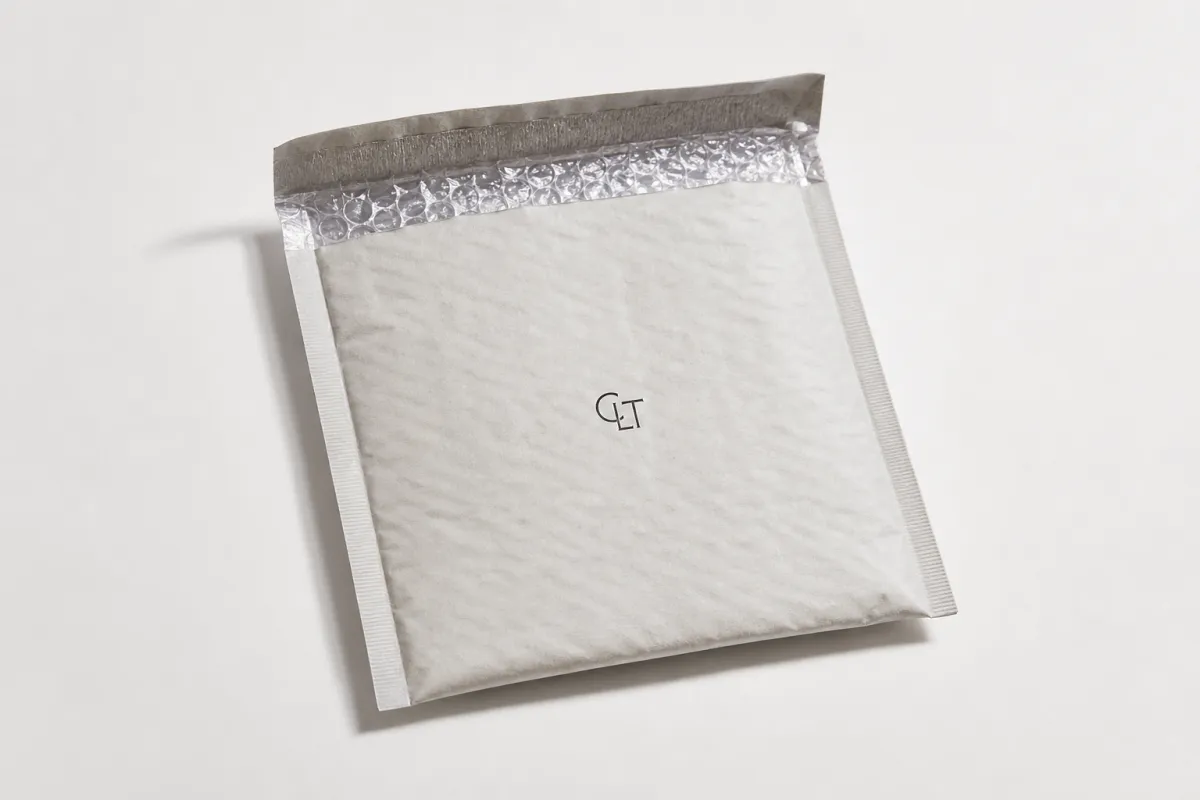
Many brands spend heavily on cartons, inserts, and tissue paper, then overlook the very surface the customer sees first. For apparel, cosmetics, accessories, and small electronics, the outer shipper may be handled more often than the product box inside. That makes printed bubble mailers with logo a surprisingly influential branding layer.
There is a practical advantage here that brand teams sometimes miss. A padded mailer can streamline packing because the product often ships in one step: item goes in, flap seals, label applies, and the parcel moves on. When the packout is tidy, printed bubble mailers with logo help warehouses move faster without making the shipment feel generic. I have seen teams shave off little pockets of time at every station just by standardizing the right size and print layout.
Customers notice that difference. A plain mailer says transport. A branded one says this was planned. For repeat purchases, subscription orders, and DTC replenishment programs, the outer package often becomes a memory cue. Even if the customer does not keep the mailer, they remember the look, the color, and the logo placement. That is why printed bubble mailers with logo can outlast the unboxing moment itself.
A branded mailer is not just packaging; it is a shipping banner that travels farther than most paid ads and arrives in a more trusted context.
People often miss one simple point: the mailer is not competing only with other packages. It is competing with clutter, fatigue, and speed. If the branding is clear enough to read in a few seconds, printed bubble mailers with logo become a small but measurable piece of customer recognition.
If you are mapping packaging by channel, it helps to think in terms of touchpoints. Custom Packaging Products can cover broader shipper needs, while Custom Poly Mailers are often better when you need a lighter outer layer with fewer bulk constraints. The right choice depends on product fragility, freight costs, and how much visual presence you want from the outside of the parcel.
There is a second truth worth stating plainly. A mailer with good print and strong seal integrity can do more than carry a logo. It can carry a return address, a simple care note, a QR code, or a seasonal message. In that sense, printed bubble mailers with logo are part marketing surface and part operational tool.
How Printed Bubble Mailers With Logo Work
The construction is straightforward, but the details matter. A typical mailer has an outer film or paper face, an inner bubble layer for cushioning, a pressure-sensitive adhesive flap, and a printable surface for branding. In printed bubble mailers with logo, those layers have to work together: the print must stay legible, the adhesive must close cleanly, and the bubbles still need to absorb normal transit impacts.
Most buyers ask first about print method, and for good reason. Flexographic printing is common for larger runs because it can keep unit cost down once setup is complete. Digital printing can support shorter runs or more complex art, though it may bring different cost structures and color limits. The choice changes how printed bubble mailers with logo look, how tightly colors match, and how much inventory risk you carry.
Materials also shift the character of the finished piece. Poly bubble mailers tend to be light, water resistant, and compact. Kraft-faced mailers add a paper-forward feel that can suit brands trying to look more natural or premium. Recycled-content options are increasingly common, especially when buyers want packaging that aligns with internal sustainability goals. For some programs, printed bubble mailers with logo become the easiest place to demonstrate those choices without redesigning the whole pack line.
Product fit matters just as much. Apparel in a folded polybag needs very different treatment than a small glass bottle with a sleeve or a book with corner protection. The best uses for printed bubble mailers with logo usually include:
- Apparel and soft goods that benefit from light cushioning and low parcel weight
- Cosmetics and beauty tools that need a clean exterior and modest impact protection
- Accessories, stationery, books, and small hardgoods with stable dimensions
- Supplement jars or pouches that ship inside a secondary pouch or insert
One operational detail matters more than the marketing team usually realizes: if the product line contains repeated sizes, the mailer can be standardized quickly. That is where printed bubble mailers with logo become useful as a system, not a one-off SKU. The warehouse team learns the size, the QC team learns the print, and the brand gets consistency shipment after shipment.
Key Factors That Shape Printed Bubble Mailers With Logo
Size is the first decision, and guessing is expensive. Packaging teams often start by thinking in product categories, but the smarter method is to map the top-selling SKU dimensions and build the mailer around the real packout. If 70% of shipments fit a slim format and the rest are outliers, the order plan should reflect that. In other words, printed bubble mailers with logo should fit the best-selling products first, not the average wish list.
Material choice changes both cost and customer perception. Poly tends to be the workhorse for durability and moisture resistance. Kraft-faced versions can look more tactile and less synthetic. Recycled-content film may carry a sustainability message, but the exact feel and strength depend on resin mix, thickness, and seal quality. When buyers compare printed bubble mailers with logo, they should ask how the material behaves in a real warehouse, not just how it looks in a sample photo.
Branding decisions also need discipline. A large logo is not always a better logo. If the art stretches too close to the edges, the print can feel crowded, especially on small sizes. One-color art often gives a cleaner read and lower setup burden, while full-color designs can help when the brand depends on gradients, illustrations, or seasonal graphics. With printed bubble mailers with logo, white space is not wasted space; it is often what lets the design breathe.
Then there are the operational questions that rarely make it into a design deck. How strong is the seal? How thick is the bubble layer? Will the print scuff if the cartons rub in transit? Does the adhesive still close after the mailer sits in a hot or cold warehouse? Those details decide whether printed bubble mailers with logo perform as intended once volume kicks in.
On the quality side, many packaging teams use test methods inspired by ISTA drop and distribution procedures, especially when the product is valuable or fragile. For broader packaging standards and buying guidance, the ISTA site is a useful reference point, while the FSC site can help when fiber sourcing or certified paper content is part of the brief. Standards do not eliminate judgment, but they do reduce guesswork.
A practical rule of thumb helps here:
- Use thinner, lighter mailers for soft goods and low-risk products where cost and postage matter most
- Use heavier or more structured mailers for items with sharp corners, rigid shapes, or higher damage sensitivity
- Use simpler print coverage when the order is small and the brand can live with one or two colors
- Use fuller coverage only when the visual payoff justifies setup and proofing time
That is the strategic point: printed bubble mailers with logo are not just about what the customer sees. They are about how the packer works, how the carrier treats the parcel, and how much tolerance the brand has for variation.
Process and Timeline: Production Steps for Printed Bubble Mailers With Logo
The process starts with a packaging brief, and a good brief prevents weeks of back-and-forth. At minimum, it should define size, quantity, material preference, logo files, brand colors, shipping use case, and whether the mailer must support retail, subscription, or warehouse fulfillment. The more precisely the brief is written, the easier it is to produce printed bubble mailers with logo that do not need expensive corrections later.
Artwork review is the next gate. Files should be checked for resolution, bleed, safe area, and color format before they reach production. If the logo is intricate, thin strokes may disappear on a textured or glossy surface. If the background is dark, contrast needs extra attention. Many suppliers will provide a digital proof or layout proof before the order moves ahead, and that proof is where a lot of printed bubble mailers with logo issues can be caught cheaply.
Sampling deserves more respect than it often gets. A flat proof on screen can hide alignment problems that show up instantly once the material wraps around the bubble structure. A physical sample tells you whether the flap closes cleanly, whether the logo sits where the eye expects it, and whether the print remains readable when the mailer is folded, stacked, or labeled. For printed bubble mailers with logo, one small sample run can save a lot of avoidable scrap.
Typical lead time depends on the production method, run size, and how busy the supplier is. Simple repeat orders can move in roughly 10 to 15 business days after approval, while more customized jobs often stretch to 15 to 25 business days. If the order requires special film, custom colors, or complex print coverage, the schedule can extend further. That means brands should plan printed bubble mailers with logo backwards from launch dates, not forward from wishful thinking.
Here is a practical planning sequence:
- Lock the product launch date and warehouse receiving window
- Confirm the top shipment sizes and forecast quantities by month
- Approve artwork only after the physical fit and print requirements are clear
- Add buffer time for proofs, transit, and possible rework
- Place the order early enough to absorb a supplier queue without risking stockouts
That schedule discipline matters because packaging delays often show up late in the launch process. Inventory may already be ready. The web store may already be live. But without printed bubble mailers with logo on the floor, the packing team is forced to substitute plain material or hold shipments until the right mailers arrive. Neither option looks good to the customer.
In the best runs, the workflow becomes predictable: brief, proof, sample, approve, produce, inspect, and receive. That is the point where printed bubble mailers with logo stop being a project and start behaving like a repeatable packaging standard.
Printed Bubble Mailers With Logo Cost and Pricing Factors
Pricing is where buyers often misread the market. The headline unit price can look attractive, but setup, freight, and proofing can change the real cost quickly. For printed bubble mailers with logo, the total landed cost is usually more useful than the sticker price because it captures what the business actually pays to get usable packaging into the warehouse.
Several inputs move the number. Material grade matters, as does thickness, surface finish, print coverage, and whether the design uses one color or multiple colors. Quantity is a major factor because setup costs get spread across more pieces as volume rises. For small runs, that setup burden can dominate the economics. That is why printed bubble mailers with logo often become much more cost-efficient at mid-volume than they appear at first glance.
Another hidden cost is the decision to chase perfection. If the design has too many spot colors, tight registration, or custom metallic effects, the production path becomes more expensive and more fragile. Buyers sometimes think a more elaborate design automatically adds brand value. Sometimes it does. Sometimes it simply raises cost and schedule risk. With printed bubble mailers with logo, simplicity often wins because it improves consistency and keeps the order practical.
Below is a simplified way many teams compare options before quoting:
| Option | Typical Use | Indicative Unit Price | What Drives the Cost |
|---|---|---|---|
| Standard poly bubble mailer, one-color print | Apparel, accessories, low-risk items | $0.18-$0.32 at 5,000 pieces | Lower setup burden, simpler print, high-volume efficiency |
| Kraft-faced padded mailer, one- to two-color print | Brand-forward ecommerce, lifestyle products | $0.22-$0.38 at 5,000 pieces | Surface material, finish, and moderate print coverage |
| Recycled-content mailer with custom print | Sustainability-led packaging programs | $0.24-$0.42 at 5,000 pieces | Resin content, sourcing constraints, and material variation |
| Short-run digitally printed mailer | Launches, test orders, limited campaigns | $0.35-$0.60 at 1,000 pieces | Low quantity, digital setup, and flexible artwork handling |
Those numbers are directional, not universal. Freight distance, carton pack-out, destination duties, and supplier location can shift the outcome quickly. Still, the table shows the basic pattern: the more customized the printed bubble mailers with logo, the more the buyer should expect to pay for flexibility.
MOQ thresholds matter too. A quote for 1,000 pieces may look high on paper, but if the brand is testing a new size or a seasonal campaign, that smaller run can be the right decision. If the design is stable and the SKU is proven, larger orders usually lower per-unit cost and reduce the number of reorders required through the year. For printed bubble mailers with logo, the right MOQ is less about pride and more about inventory math.
When comparing suppliers, ask for more than unit price. Ask about plate charges, proof fees, sample costs, freight terms, lead time, packaging configuration, and whether the supplier ships the mailers flat-packed or in bundled cartons. The total picture is what matters. A lower quote that arrives late or damages in transit is not really cheaper. That is especially true for printed bubble mailers with logo, where the packaging itself is part of the customer experience.
One useful habit is to compare the real cost per shipped order, not just the cost per mailer. If a better mailer reduces reprints, packing errors, or damage claims, the economics may favor the more expensive option. That is one of those packaging decisions that looks small in procurement and large in operations. Printed bubble mailers with logo sit right in that gap.
Common Mistakes When Ordering Printed Bubble Mailers With Logo
The most common mistake is also the easiest to avoid: choosing the wrong size. Too small, and the product bulges or wrinkles the seal. Too large, and the parcel wastes space, costs more to ship, and looks less intentional. Printed bubble mailers with logo work best when the product fits with a little breathing room for tissue, an insert, or a secondary pouch, but not much more.
Another error is overdesigning the logo. A highly detailed mark that looks elegant on a website can become muddy on a moving parcel if the lines are too thin or the contrast is too low. On a small mailer, the logo should read from a short distance and survive the reality of stacked cartons and warehouse lighting. That is not the same as looking beautiful in a mockup. With printed bubble mailers with logo, legibility usually beats complexity.
Buyers also forget the unboxing sequence. Where will the shipping label sit? Will a return label cover the brand mark? Do inserts block the front panel? Does the sealed flap hide part of the design? These questions sound basic, yet they often decide whether printed bubble mailers with logo feel polished or awkward.
Skipping samples is another expensive habit. Color on screen is not color on film, and a proof viewed under office lighting is not the same as a parcel seen in a packing area or on a customer doorstep. A sample catches the issues that only show up in hand: weak saturation, poor registration, warped type, or a logo that feels too small once the mailer is filled. For printed bubble mailers with logo, samples are not a luxury; they are insurance.
Finally, some teams buy on price alone and ignore performance. Weak seals, thin outer film, inconsistent bubbles, or sloppy print can create more harm than savings. A few cents saved on the purchase order can disappear quickly if claims, reships, or customer complaints rise. That is why printed bubble mailers with logo should be evaluated on durability, not just the invoice.
If you want a practical quality filter, use these questions before approval:
- Does the mailer fit the top three SKUs without forcing the closure?
- Does the logo stay readable at arm's length and after labeling?
- Does the adhesive hold after a standard seal test and light warehouse handling?
- Does the outer layer resist scuffing, smudging, or lifting at the edges?
- Does the packaging team know how to store and use it consistently?
Those checks sound simple, but they catch most of the issues that turn printed bubble mailers with logo into a pain point instead of an advantage.
Expert Tips and Next Steps for Printed Bubble Mailers With Logo
Start with a size matrix. If your business has five major SKUs, build the packaging plan around those dimensions instead of the most optimistic product fit. A simple matrix tells the team which mailer goes with which item, which keeps ordering cleaner and reduces last-minute substitutions. For printed bubble mailers with logo, that level of structure is often what makes the program scalable.
Next, ask for a printed proof or a sample set before any full production commitment. Even when the supplier has a strong track record, proofing still matters because artwork, substrate, and machine behavior can interact in unexpected ways. The goal is to spot the oddities early. A logo that is too dark, a barcode that does not scan well, or a fold line that cuts through the art is much easier to fix before a run of printed bubble mailers with logo is underway.
It also helps to set one simple brand rule for the outer package. Decide where the logo goes, how many colors are allowed, and whether any secondary message belongs on the mailer at all. A lot of packaging confusion comes from trying to do too much. A restrained rule set keeps printed bubble mailers with logo consistent across reorders, which is especially useful when different teams touch the same item over time.
Reorder timing deserves its own discipline. If the business ships 800 units a week and the lead time is three weeks plus transit, the team should not wait until the last pallet is open before reordering. Build a reorder point that includes a safety buffer for delays, peak season, and slower approvals. That is how printed bubble mailers with logo stay available when volume spikes.
There is also a broader packaging strategy hiding inside this purchase. If the mailer works well, it can become a repeatable standard across product launches, subscription renewals, and promotional drops. That consistency saves time and helps the brand look organized even when the catalog changes. A well-run program for printed bubble mailers with logo can reduce decision fatigue in purchasing and keep the fulfillment operation steady.
If you are building out the rest of your packaging stack, it can help to align the mailer with the rest of the shipping system, not against it. That means the insert style, label placement, and any outer carton choices should all work together. A mailer should not fight the process. It should support it. That is the difference between an isolated purchase and a packaging standard that makes sense.
My blunt view: the best printed bubble mailers with logo are the ones that customers barely think about because they arrive looking normal in the best possible way. The package feels deliberate. The logo is clear. The item is protected. The cost is under control. That combination is not flashy, but it is exactly what packaging buyers want.
What sizes are best for printed bubble mailers with logo?
Choose the smallest mailer that fits the product plus any insert or tissue without stressing the seal. Most teams get better results by building around top-selling SKUs first and then adding a second size for bundles or outliers. Test the fit with real products before placing a full order so printed bubble mailers with logo do not become oversized shipping weight.
Are printed bubble mailers with logo protective enough for fragile items?
They work well for light, non-breakable items and products that can handle normal parcel handling. For fragile goods, add internal cushioning or use a stronger format with more structure. Always test with drop handling, corner impact, and seal stress before committing to production, because printed bubble mailers with logo are not a substitute for proper protection design.
How much do printed bubble mailers with logo usually cost?
Pricing depends on size, material, print complexity, and quantity, so there is no single standard number. Small runs usually cost more per unit because setup is spread across fewer pieces, while larger runs generally improve the economics. Ask for a landed-cost quote that includes freight, proofs, and setup charges so you can compare printed bubble mailers with logo fairly.
How long does it take to produce printed bubble mailers with logo?
Lead time depends on artwork approval, print method, order size, and current factory workload. Simple runs can move faster, while custom colors or special materials usually add time. Build buffer time into your launch schedule so printed bubble mailers with logo do not become the bottleneck between inventory arrival and shipping.
Can I order printed bubble mailers with logo in small quantities?
Yes, but small orders usually cost more per unit because setup is distributed across fewer mailers. Ask suppliers about MOQ options, sample runs, or limited-color versions if volume is low. Use the smallest practical order to test design, fit, and customer response before scaling printed bubble mailers with logo into a standard program.
If you treat printed bubble mailers with logo as a real packaging system instead of a decorative afterthought, they can improve speed, reduce damage risk, and make every shipment look more intentional. The practical next step is simple: lock the size around your top SKUs, approve the artwork only after a physical sample passes seal and fit checks, and set a reorder point before inventory gets tight. That sequence keeps the packaging honest and the fulfillment line moving.


